 How to resolve AdBlock issue?
News
- Details
- Written by: LAKE COUNTY NEWS REPORTS

NORTHERN CALIFORNIA — The California Department of Fish and Wildlife reported this week that two new groups of wolves have been confirmed in Northern California — one in Tehama County and the other in western Lassen County.
If the department designates each as a pack, they would become the fifth and sixth confirmed wolf packs in the Golden State in 100 years.
“It brings me great joy to see California’s wolves continue to increase in number, aided by the strong state and federal protections here,” said Amaroq Weiss, senior wolf advocate with the Center for Biological Diversity. “Wolves rewild the landscape and that’s good not just for the wolves but for entire ecosystems.”
In March photographs of three wolves in Tehama County were captured on a trail camera on private land.
The western Lassen County group was documented on three different occasions during the first quarter of 2023.
The California Department of Fish and Wildlife is surveying these areas to determine if either group had pups this year, the sex of each of the groups’ members and whether any of them are related to wolves from California’s known packs.
California has three existing families of wolves: the Lassen pack, which was confirmed in 2017 and ranges across parts of Lassen and Plumas counties; the Whaleback pack, confirmed in late 2020 and early 2021 and ranges across eastern Siskiyou County; and the Beckwourth pack, confirmed in late spring of 2021 and whose territory is in eastern Plumas County.
This week’s report also included the sad note that a yearling Whaleback pup died after being struck by a vehicle on Highway 97 in January.
Late spring to early summer is when the department can determine if any of these wolf families has denned, signaling the potential for pups to be born.
The department will be checking on the reproductive status of the three existing packs as well as that of the two newly confirmed groups.
“I’m keeping my fingers crossed that these two new groups of wolves will officially become families by having pups of their own,” said Weiss. “I’m also looking forward to the department bestowing these wolf families with pack names to reflect their presence and significance.”
The first wolf in nearly a century to make California part of his range was OR-7, a radio-collared wolf from Oregon that entered California in late 2011. OR-7 traveled across seven northeastern counties in California before returning to southwestern Oregon, where he found a mate and settled down.
The original breeding male of the Lassen pack was the offspring of OR-7’s first litter and several others of OR-7’s offspring have also come to California, including the breeding female of the Whaleback pack.
California’s only other known wolf pack in modern times, the Shasta pack, was confirmed in summer 2015 but disappeared a few months later.
The gray wolf (Canis lupus) is native to California but was driven to extinction in the state by the mid-1920s.
After OR-7 dispersed from Oregon into California, the Center and allies successfully petitioned the state to fully protect wolves under California’s endangered species act.
Wolves are also federally protected in California under the federal Endangered Species Act. It is illegal to intentionally kill any wolves in the state.
- Details
- Written by: Katherine Engel, American University School of Public Affairs and Taryn Morrissey, American University School of Public Affairs

The Research Brief is a short take about interesting academic work.
The big idea
Roughly half of the people who would be affected by a proposed expansion of Supplemental Nutrition Assistance Program work requirements already do what’s needed to meet those requirements. There’s also evidence suggesting that many of the rest have caregiving or health conditions that prevent them from working.
Formerly known as food stamps, SNAP helps low-income people buy groceries.
Republicans want the federal government to make SNAP benefits for adults age 50 to 55 without dependents or disabilities contingent on spending 80 hours per month on work activities, which may include employment, short-term training and community service. This proposed change is in a package that the Republican-led House of Representatives passed in April 2023 that seeks to cut spending on several social programs.
Currently, the requirements only apply to adults under 50 without dependents who aren’t disabled.
We’re basing these estimates on our analysis of nationally representative time-diary data from the Bureau of Labor Statistics’ American Time Use Survey.
We analyzed the time that low-income Americans ages 50-55 who didn’t have a disability or child at home spent working, caring for others or dealing with their personal health and well-being from 2012 to 2021.
We found that in most years, more than half of them worked at least 20 hours per week. We estimated that, on average, those who met the work requirement actually worked about 41-51 hours per week – a full-time schedule.
We also determined that relative to their counterparts who met the work requirements, those who did not spent 10 times as much time managing their own health, five times as much time on child care, and more than five times as much time caring for an elderly or disabled adult.
Why it matters
The GOP bill is grounded in a belief that people who get SNAP benefits and aid through other assistance programs are not employed but capable of working, and that enforcing work requirements can increase employment and earnings.
This measure and several others like it are part of a package that would raise the debt limit to avert a potential U.S. default and a global economic crisis.
Our findings support widespread concerns that expanding SNAP work requirements would sever food assistance benefits for an estimated 275,000 low-income people between the ages of 50 and 55, including many with health conditions and who care for others.
That’s troubling because the cost of professional child care and elder care, as well as the care for the disabled, is very high in the U.S.
It’s reasonable to expect that the new work requirements would force many people to make hard choices between the caregiving arrangements for their loved ones and keeping their benefits. Also, since people who have poor health may not be able to work, they may find themselves unable to put food on the table if they lose SNAP benefits.
What other research is being done
SNAP is associated with many positive trends beyond getting enough to eat. These include spending less on health care, having better health and becoming more financially secure.
Further, when Americans use SNAP to buy groceries, studies have shown that it stimulates the economy where they live, supporting low-income communities.
Additional research has found that work requirements tied to aid programs don’t get more low-income people to enter the labor force. Studies also have found that these policies cause many people who are eligible for assistance to lose their benefits due to paperwork hassles and unclear guidelines.
Katherine Engel, PhD Student in Public Administration and Policy, American University School of Public Affairs and Taryn Morrissey, Professor of Public Administration and Policy, American University School of Public Affairs
This article is republished from The Conversation under a Creative Commons license. Read the original article.
- Details
- Written by: LAKE COUNTY NEWS REPORTS
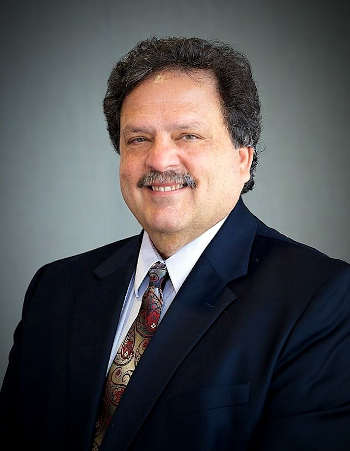
LAKE COUNTY, Calif. — Dr. James Houpis, Ph.D., interim chancellor of the Yuba Community College District, will retire on May 31, following a 40-plus year career in higher education.
Dr. Houpis was appointed as interim chancellor in 2021.
The district’s new chancellor, Shouan Pan, Ph.D., will take the helm on June 15.
“We have been fortunate to have a seasoned leader like Dr. Houpis leading us over the past two years as our interim chancellor. His academic and leadership experience, focus on students, and new strategic initiatives have left an indelible mark on the District,” said YCCD Board of Trustees President Juan Delgado. “Our students, faculty, administrators and staff are forever grateful for his efforts which have positioned both the District and our new chancellor for future success.”
Topping the list of Dr. Houpis’ contributions during his tenure at YCCD was the launch of a fully online campus, which will expand access to courses that not only support career advancement for working adults but also degree and educational certificate completion.
At a time when most YCCD students work at least part time, the online campus will provide much-needed flexibility, putting a community college education within reach for those who might otherwise be unable to attend college.
Beyond expanding access to coursework through the online campus, he also led strategies to increase high school student participation in the dual credit programs offered at both Yuba and Woodland Community Colleges and supported expanded enrollments in apprentice programs to support local workforce needs.
As an environmental scientist, it is no surprise that Dr. Houpis championed and led the district in developing a Climate Change Resolution.
Since the passage of Measure J in 2006, the district has made a concerted effort to ensure that all new buildings and renovations support the goal of developing environmentally sustainable campuses.
Through Dr. Houpis’ leadership, the district has doubled down on its commitment to reduce its carbon footprint and to model responsible, sustainable business practices across all district operations.
Dr. Houpis also stabilized the district’s finances, advanced the development of a resource allocation model to promote cost management, advanced salary equity for administrators and classified employees by initiating the district’s first compensation study, improved employee morale by actively working to build a more constructive internal culture, and updated campus websites to make them more functional for students.
“I accepted the interim chancellor role with the goal of making YCCD my last career move before retirement,” Dr. Houpis said. “As I reflect on my career, I’ve enjoyed every step of my journey — from being a research scientist studying the effects of air pollution and climate change, to serving as a faculty member and advising students, to shaping curriculum and developing student success initiatives as a provost, to hiring and mentoring administrators, faculty and staff as a program director and department chair, to leading campuses and overseeing district operations as a university provost, college president and interim chancellor.”
He added, “I’ve enjoyed my time at YCCD, and I’m proud of the work that we have achieved together. It has been my honor to work on behalf of our students, to support our outstanding leadership team, faculty, and staff, and to work in concert with the Board of Trustees to build upon YCCD’s many successes.”
Before joining YCCD, Dr. Houpis held leadership roles at other community colleges, including serving as president of Modesto Junior College and dean of academic support and learning technologies at Skyline College.
He also had a long and distinguished career in the California State University, or CSU, system, holding leadership and faculty positions at both CSU East Bay and CSU Chico.
Across the past four decades, Dr. Houpis has earned many grants and awards for innovation and excellence including the Paul Simon Teaching and Research Award, Accessibility Services Award of Appreciation and the Associated Students Award: Model of Shared Governance for Exemplary Service to Students.
He also has been selected for a fellowship with the Wheelhouse Center for Community College Leadership and Research.
Because of his reputation in higher education and expertise in environmental and biological sciences, Dr. Houpis has been chosen to serve as a reviewer for prestigious initiatives such as the Kuwait Foundation for the Advancement of Sciences and the U.S. Global Change Research Program.
He also received special recognition from the California Senate recognizing his continued efforts on behalf of Latino students and his strong support of programs helping students complete their studies on their way to lifelong success.
He co-authored three book chapters and has co-authored more than 50 professional journal articles, proceedings, and scholarly reports based on his research in environmental and biological science.
Dr. Houpis holds a Ph.D. in forest science from the University of California at Berkeley, a master’s degree in biology from San Diego State University, and a bachelor’s degree in environmental sciences from UC Berkeley.
- Details
- Written by: LAKE COUNTY NEWS REPORTS
The vacancy the Office of Education is seeking to fill is for the Board of Education Trustee Area 5, which covers the Kelseyville area.
The Trustee Area 5 seat has been held by Anna Rose Ravenwoode, a credentialed public school educator and experienced grant writer who was first elected to the board in 2018 and reelected last year.
Ravenwood died April 26 at the age of 72.
The Lake County Office of Education is accepting applications to fill the vacancy by appointment. The term of this appointment is until December 2024.
If an individual wishes to continue to serve after the term has expired, they will need to run for election in November of 2024. That term will end in December 2026.
Applicants must be at least 18 years old, reside within the boundaries of Area 5, be a registered voter at time of appointment, and not be legally disqualified from holding civic office.
The application should describe the applicant’s qualifications and interest in serving on the board.
Individuals who are employees of the Lake County Office of Education, a Lake County school district, Mendocino Community College or Yuba Community College are ineligible to serve.
Online applications can be found on the Lake County Office of Education website. Paper Applications are available at the Lake County Office of Education Lakeport office at 1152 S. Main St. Lakeport.
The deadline to submit an application is 12 p.m. Friday, June 2.
The Board of Education will conduct interviews in person on Wednesday, June 14.
For information and to apply, visit the Lake County Office of Education website.