 How to resolve AdBlock issue?
News
- Details
- Written by: LAKE COUNTY NEWS REPORTS
Forty-five people were killed in crashes in California during last year’s Memorial Day weekend, nearly a 30% increase from the same period in 2021.
The California Highway Patrol has a plan to help people arrive at their destinations safely, while reducing the number of deadly crashes on the state’s roads.
Beginning at 6:01 p.m. on Friday, May 26, the CHP will implement a statewide maximum enforcement period, or MEP, in anticipation of the increased traffic that often accompanies a holiday weekend.
The MEP will continue through 11:59 p.m. on Monday, May 29.
“The core mission of the CHP is to provide the highest level of Safety, Service, and Security to the communities we serve,” said CHP Commissioner Sean Duryee. “This holiday, motorists can expect to see additional CHP officers patrolling California’s roadways. All available uniformed members of this Department will be on patrol during this Memorial Day MEP. Our primary focus will be to enhance public safety, deter unsafe driving behavior, and when necessary, take appropriate enforcement action.”
In addition to assisting motorists and looking for traffic violations that often lead to serious injury or death, such as failure to wear a seat belt, speed, and distracted driving, CHP officers will be paying close attention to people who are suspected of driving under the influence (DUI) of drugs and/or alcohol.
CHP officers made nearly 900 DUI arrests during the Memorial Day MEP in 2022. Keep yourself and others who are on the road safe by designating a sober driver or using a ride-share service.
If you see or suspect an impaired driver, call 9-1-1 immediately. Be prepared to provide the dispatcher a description of the vehicle, the license plate number, location, and direction of travel. Your phone call may save someone’s life.
The CHP’s Memorial Day MEP coincides with the National Highway Traffic Safety Administration’s ongoing Click It or Ticket campaign, which continues through June 4. Seat belts save lives. Take two seconds to secure your safety and buckle up.
- Details
- Written by: Steven Pressman, The New School

Republicans and Democrats are again playing a game of chicken over the U.S. debt ceiling – with the nation’s financial stability at stake.
Treasury Secretary Janet Yellen recently said that June 1, 2023, is a “hard deadline” for raising the debt limit, currently set at US$31.38 trillion, to avoid an unprecedented default. The government hit the ceiling back in January and has been using “extraordinary measures” since then to keep paying its bills.
Last-minute negotiations between the White House and Republicans have been mostly fruitless as conservatives in the House push for big spending cuts and policy changes, while President Joe Biden has insisted on lifting the ceiling with no strings attached. They are expected to continue to meet in the coming days.
Economist Steven Pressman explains what the debt ceiling is and why we have it – and why it may be time to abolish it.
1. What is the debt ceiling?
Like the rest of us, governments must borrow when they spend more money than they receive. They do so by issuing bonds, which are IOUs that promise to repay the money in the future and make regular interest payments. Government debt is the total sum of all this borrowed money.
The debt ceiling, which Congress established a century ago, is the maximum amount the government can borrow. It’s a limit on the national debt.
2. What’s the national debt?
The U.S. government debt of $31.38 trillion is about 22% more than the value of all goods and services that will be produced in the U.S. economy this year.
Around one-quarter of this money the government actually owes itself. The Social Security Administration has accumulated a surplus and invests the extra money, currently $2.8 trillion, in government bonds. And the Federal Reserve holds $5.5 trillion in U.S. Treasurys.
The rest is public debt. As of October 2022, foreign countries, companies and individuals owned $7.2 trillion of U.S. government debt. Japan and China are the largest holders, with around $1 trillion each. The rest is owed to U.S. citizens and businesses, as well as state and local governments.
3. Why is there a borrowing limit?
Before 1917, Congress would authorize the government to borrow a fixed sum of money for a specified term. When loans were repaid, the government could not borrow again without asking Congress for approval.
The Second Liberty Bond Act of 1917, which created the debt ceiling, changed this. It allowed a continual rollover of debt without congressional approval.
Congress enacted this measure to let then-President Woodrow Wilson spend the money he deemed necessary to fight World War I without waiting for often-absent lawmakers to act. Congress, however, did not want to write the president a blank check, so it limited borrowing to $11.5 billion and required legislation for any increase.
The debt ceiling has been increased dozens of times since then and suspended on several occasions. The last change occurred in December 2021, when it was raised to $31.38 trillion.
4. What happens when the US hits the ceiling?
Whenever the U.S. nears its debt limit, the Treasury secretary can use “extraordinary measures” to conserve cash, which she indicated began on Jan. 19. One such measure is temporarily not funding retirement programs for government employees. The expectation will be that once the ceiling is raised, the government would make up the difference. But this will buy only a small amount of time.
If the debt ceiling isn’t raised before the Treasury Department exhausts its options, decisions will have to be made about who gets paid with daily tax revenues. Further borrowing will not be possible. Government employees or contractors may not be paid in full. Loans to small businesses or college students may stop.
When the government can’t pay all its bills, it is technically in default. Policymakers, economists and Wall Street are concerned about a calamitous financial and economic crisis. Many fear that a government default would have dire economic consequences – soaring interest rates, financial markets in panic and maybe an economic depression.
Under normal circumstances, once markets start panicking, Congress and the president usually act. This is what happened in 2013 when Republicans sought to use the debt ceiling to defund the Affordable Care Act.
But we no longer live in normal political times. The major political parties are more polarized than ever, and the concessions McCarthy gave right-wing Republicans may make it impossible to get a deal on the debt ceiling.
5. Is there a better way?
One possible solution is a legal loophole allowing the U.S. Treasury to mint platinum coins of any denomination. If the U.S. Treasury were to mint a $1 trillion coin and deposit it into its bank account at the Federal Reserve, the money could be used to pay for government programs or repay government bondholders. This could even be justified by appealing to Section 4 of the 14th Amendment to the U.S. Constitution: “The validity of the public debt of the United States … shall not be questioned.”
Few countries even have a debt ceiling. Other governments operate effectively without it. America could too. A debt ceiling is dysfunctional and periodically puts the U.S. economy in jeopardy because of political grandstanding.
The best solution would be to scrap the debt ceiling altogether. Congress already approved the spending and the tax laws that require more debt. Why should it also have to approve the additional borrowing?
It should be remembered that the original debt ceiling was put in place because Congress couldn’t meet quickly and approve needed spending to fight a war. In 1917 cross-country travel was by rail, requiring days to get to Washington. This made some sense then. Today, when Congress can vote online from home, this is no longer the case.
This article has been updated to reflect ongoing negotiations and the expected default deadline of June 1.
Steven Pressman, Part-Time Professor of Economics, The New School
This article is republished from The Conversation under a Creative Commons license. Read the original article.
- Details
- Written by: Debra Fredrickson

LAKE COUNTY, Calif. — It’s time to mark your calendars for this year’s annual Lake County Home Wine and Beer Makers’ Festival at Lakeport’s Library Park.
The event takes place from noon to 5 p.m. Saturday, June 10.
General admission is free. Wine and beer tasters will pay $30 in advance or $35 at the gate to taste samples from home wine and beer makers.
There will also be some of Lake County’s finest commercial wines available for tasting this year from Six Sigma, Smiling Dogs and Rosa D’Oro.
As it has over the past several decades, the Winefest features wine and beer tasting, along with a large variety of booths with artwork, crafts, clothing, and agricultural products for folks to wander through.
Music will be provided by The Hip Replacements, and several musicians from the Lake County Symphony will also be on hand to entertain during the day.

Attendees at this year’s event can expect a variety of delicious food choices from local vendors: La Catrina Food Truck offers a selection of Mexican favorites; The Noodle Bowl will provide their popular ramen bowls with grilled meat and vegetables; and Bing’s Kitchen again brings their tasty Filipino food (lumpia). Ripe Choice Farm and Catering, Villa’s Snow Cones, and Danae’s Desserts will also be there.
Volunteers of the LCSA Wine Club organize this yearly event to benefit the Lake County Symphony Association, or LCSA.
Proceeds are used to support LCSA’s activities, including in-school music programs for students, scholarships, concerts and underwriting of the Lake County Symphony and the Community & Youth Orchestra.
John Parkinson, music director and conductor for the last 43 years, will again be manning the symphony’s booth.
Now in its 21st year, the Winefest was started by the late Connel Murray — with other amateur winemakers who were supporters of the symphony — to raise funds for the Lake County Symphony.
As the Winefest expanded over the years, amateur and commercial beer makers were included — a welcome addition for beer lovers.
All amateur participants are eligible to win gold, silver and bronze ribbons given for a wide range of varietals and brews in the popular “Peoples’ Choice” awards voted on by attendees.
Home winemakers also have the chance to enter their creations for blind judging by experts the evening before the Winefest. Local participating commercial wineries and breweries are not eligible for prizes, which only go to the amateurs.

Visitors to the Winefest who choose not to indulge in wine tasting, can show support for the LCSA by placing bids on silent auction items or buying tickets for the “Barrel of Wine” raffle.
The silent auction includes items like original artwork, trips, hotel stays, and gift items donated by local businesses.
Congressman Mike Thompson has regularly donated a U.S. flag from the Capitol, along with products from his Lake County vineyard.
The popular “Barrel of Wine” raffle goes on all day long and gives the lucky winner approximately 36 bottles of assorted Lake County wines. The actual barrel used for the wines in the raffle will be available for bidders in the silent auction.
Wine makers, home brewers, and all nonfood vendors have until June 3 to reserve a spot at the Winefest.
There is no booth fee for home wine and beer makers, or commercial wineries who offer their wines for tasting. More details and applications can be found online at https://lakecountywinefest.com/.
Advance tickets are available at several Lakeport locations: Watershed Books, Wine in the Willows, and the Lake County Chamber of Commerce. Tickets can also be found at Laujor Estate Winery in Kelseyville, and online, through Eventbrite.
See Lake County Winefest on Facebook for the latest information.
Debra Fredrickson is a member of the Lake County Symphony Association.


- Details
- Written by: LAKE COUNTY NEWS REPORTS
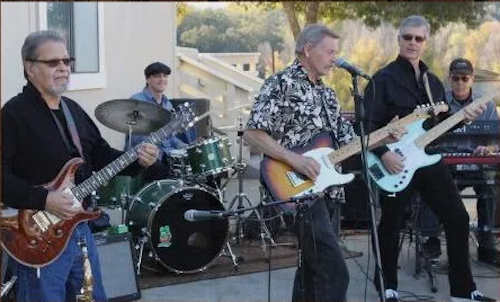
The event will take place from 10 a.m. to 3 p.m. Sunday, May 28, in downtown Lower Lake.
This year’s theme is “Then & Now.”
The day will feature a street fair from 10 a.m. to 3 p.m. with vendors and artisans, food trucks and live music, and the chance to stop in at town businesses.
The parade takes place at 11 a.m., with Lonne Sloan presiding as grand marshal.
For more information and applications for both vendors and the parade, visit the Lower Lake Community Action Group’s website.