How to resolve AdBlock issue?
Refresh this page
How to resolve AdBlock issue?

Refresh this page
Lake County News,California
  • Home
    • Registration Form
  • News
    • Education
    • Veterans
    • Community
      • Obituaries
      • Letters
      • Commentary
    • Police Logs
    • Business
    • Recreation
    • Health
    • Religion
    • Legals
    • Arts & Life
    • Regional
  • Calendar
  • Contact us
    • FAQs
    • Phones, E-Mail
    • Subscribe
  • Advertise Here
  • Login
How to resolve AdBlock issue?

Refresh this page

News

Wind advisory, flood watch in effect for Lake County

Details
Written by: Elizabeth Larson
Published: 21 December 2025

LAKE COUNTY, Calif. — High winds have triggered a wind advisory for Lake County and other parts of the North Coast region on Sunday.

The National Weather Service issued the wind advisory, which is in effect until noon on Sunday.

A flood watch remains effective for Lake County through 9 a.m. Monday due to the continuing rain that began late last week as part of an atmospheric river storm system.

Rainfall totals in inches for the 48-hour period ending at 12:30 a.m. Sunday are as follows:

• Elk Mountain: 3.35.
• High Glade Lookout (above Upper Lake): 1.52.
• Kelseyville: 0.74.
• Knoxville Creek: 1.30.
• Lake Pillsbury: 2.96.
• Lyons Valley: 1.94.
• Middletown: 0.13.
• North Cow Mountain: 2.0.
• Upper Lake: 1.64.

The forecast calls for heavy rain overnight and into Sunday, and continuing through Saturday. 

Email Elizabeth Larson at This email address is being protected from spambots. You need JavaScript enabled to view it.. Follow her on Twitter, @ERLarson, and on Bluesky, @erlarson.bsky.social. Find Lake County News on the following platforms: Facebook, @LakeCoNews; X, @LakeCoNews; Threads, @lakeconews, and on Bluesky, @lakeconews.bsky.social. 

Helping Paws: Dogs for Christmas

Details
Written by: Elizabeth Larson
Published: 21 December 2025

LAKE COUNTY, Calif. — During this Christmas week, there are many dogs at Lake County Animal Care and Control that would like to have new homes of their own for the holidays.

The dogs available for adoption this week include mixes of border collie, bulldog, cattle dog, Chihuahua, Doberman Pinscher, German shepherd, Great Pyrenees, husky, Labrador Retriever, pit bull terrier, terrier and shepherd.

Dogs that are adopted from Lake County Animal Care and Control are either neutered or spayed, microchipped and, if old enough, given a rabies shot and county license before being released to their new owner. License fees do not apply to residents of the cities of Lakeport or Clearlake.

Those animals shown on this page at the Lake County Animal Care and Control shelter have been cleared for adoption.

Call Lake County Animal Care and Control at 707-263-0278 or visit the shelter online for information on visiting or adopting.

The shelter is located at 4949 Helbush in Lakeport.

Email Elizabeth Larson at This email address is being protected from spambots. You need JavaScript enabled to view it.. Follow her on Twitter, @ERLarson, and on Bluesky, @erlarson.bsky.social. Find Lake County News on the following platforms: Facebook, @LakeCoNews; X, @LakeCoNews; Threads, @lakeconews, and on Bluesky, @lakeconews.bsky.social. 


Kennel#17 Sugar's preview photo

Kennel#17 Sugar

Kennel#14 Chief's preview photo
Kennel#14 Chief

Kennel#32 Feather's preview photo
Kennel#32 Feather

Kennel#12 Shylah's preview photo
Kennel#12 Shylah

Kennel#28 Mitzy's preview photo
Kennel#28 Mitzy

 Kennel#20 Gracie's preview photo
Kennel#20 Gracie

Kennel #29 Star's preview photo
Kennel #29 Star

Kennel#27 Lola's preview photo
Kennel#27 Lola

Kennel#9 Amore's preview photo
Kennel#9 Amore

Kennel#25a Charlie's preview photo
Kennel#25a Charlie

Kennel#25b Bear's preview photo
Kennel#25b Bear

Kennel#31a(Cleo)'s preview photo
Kennel#31a(Cleo)

Kennel#31b Baxter's preview photo
Kennel#31b Baxter

Kennel#24 Nelly's preview photo
Kennel#24 Nelly

Kennel#30 Rosa's preview photo
Kennel#30 Rosa

Kennel#8(Brut)'s preview photo
Kennel#8(Brut)

 
Kennel#15a Mufasa's preview photo
Kennel#15a Mufasa

Kennel#15b Terrance's preview photo
Kennel#15b Terrance

Kennel#3(Buddy)'s preview photo
Kennel#3(Buddy)

Kennel#4(Chance)'s preview photo
Kennel#4(Chance)

Kennel#26 Theo's preview photo
Kennel#26 Theo

Kennel#18 Ivy's preview photo
Kennel#18 Ivy

Kennel#13 Rosie's preview photo
Kennel#13 Rosie

Kennel#10's preview photo
Kennel#10

Kennel#11a's preview photo
Kennel#11a

Kennel#11b's preview photo
Kennel#11b
Kennel#7's preview photo
Kennel#7

Kennel#6's preview photo
Kennel#6

 Kennel#22a's preview photo
Kennel#22a

 Kennel#22b's preview photo
Kennel#22b

 Kennel#22c's preview photo
Kennel#22c

Kennel#34a's preview photo
Kennel#34a

Kennel#34b's preview photo
Kennel#34b

B#54 Little Lady's preview photo
B#54 Little Lady

Willow's preview photo
Willow

B#11(Brutus)'s preview photo
B#11(Brutus)

Kennel#19a Stella's preview photo
Kennel#19a Stella

Kennel#19b Aurora's preview photo
Kennel#19b Aurora

Kennel#19c Celeste's preview photo
Kennel#19c Celeste

Kennel#16 Polar's preview photo
Kennel#16 Polar


How to reduce gift-giving stress with your kids – a child psychologist’s tips for making magic and avoiding tears

Details
Written by: Angela J. Narayan, University of Denver
Published: 21 December 2025

’Tis the season … for gift-buying stress. Photo by Ryan Miller/Invision/AP

As a child, I loved being the center of attention. So it was a problem when my baby brother was born a day before my birthday. For years, I would beg my parents for a birthday gift “one day early.” My laid-back brother remembers thinking, “I don’t care about presents. Just give her mine!”

As an associate professor and child psychologist at the University of Denver who studies child development and parenting, I’ve come to learn about these types of challenges associated with gift giving. The holidays, while a magical time, can also be stressful. Society places an expectation on parents to buy gifts, regardless of their financial circumstances, and children themselves often feel a variety of complex emotions.

How children react to getting presents is partially linked to temperament, which is the variety of ways that children experience, perceive and interact with the world. Temperament is the precursor to personality – some people are introverts, while others are extroverts. Temperament is partially heritable. That means an introverted parent who feels social pressure to buy many gifts for their shy and easily overwhelmed child may be inadvertently causing stress.

Faced with this holiday conundrum, I’m often asked questions like “Is there a magic number of gifts to give my kids?” or “What gifts will hold my child’s attention the longest?”

While there isn’t an easy answer to either question, these tips and tricks can help parents be more thoughtful and intentional about gift giving, especially for children who are young.

The age rule

Young children cannot focus on a lot of things at once. A good rule of thumb is that a 1-year-old can focus only on one thing at a time. A 2-year-old can maybe focus on two things at most, and a 3-year-old maybe three things, and so on. Stop at five. Very few children actually need more than five gifts, so feel free to go lower.

The attention rule

I have often searched for the magical gift that will keep my children occupied for hours, and so far I haven’t found it. What I have found is that my children – ages 5 and 7 – get excited about the things that I get excited about. So I try to buy things that I think are fun. Ask yourself what you would like to play with if you got to be a child again. I bet your children would be eager to join you in those things.

The games rule

Card and board games are great gifts, often inexpensive, fun for many ages – excepting babies, of course – and capable of holding attention for a long time. Plus, they usually don’t take up much storage space. I love giving my kids games that are not only fun but also teach them helpful skills.

Collaborative games for preschoolers and early school-age children like the Fairy Game and Outfoxed teach problem-solving, teamwork and early reasoning skills. Games for elementary-age children, such as Sorry and Battleship, teach kids how to manage difficult situations, like not always being in the lead, being a good sport even if you’re behind, and losing gracefully.

Timeless card games like Uno and Memory, and newer ones like Sleeping Queens and Exploding Kittens, are great for using working memory, thinking flexibly, persisting and strategizing. Most importantly, playing games together supports positive family time, which is an excellent antidote to stress, bad moods or boredom.

The pressure rule

Imagine the holiday experience through the eyes of each of your children. Some children relish receiving gifts, like I did. Others, however, may feel self-conscious, overwhelmed by the sensory overload – all the textures, commotion and bright colors, not to mention people staring at them. The elements of surprise combined with the unspoken social pressure to be gracious and well regulated are challenging for any young child.

We expect small children to contain their excitement, delay gratification and react positively to the surprise. And then come up with a polite response. These are all complex requests, rarely directly or explicitly taught. It’s no wonder that many children show negative emotions, have tantrums, or even just say, “I’m tired!” during holiday celebrations.

That’s why beyond the precise nature of “the perfect gift,” we shouldn’t lose sight of what we should be doing. And that is investing in togetherness and helping kids learn skills like being patient and taking turns, strengthening memory capacities, planning ahead, not giving up, and that being a team player will pay off later. These skills pave the way for longer sustained attention, focus and concentration, as well as confidence.

My 7-year-old is becoming a skillful chess player because we have taught him the rules and strategy and helped him practice. Maybe this is the real magical gift – not the purchase itself, but the decision to invest in time with your child early.The Conversation

Angela J. Narayan, Associate Professor, Clinical Child Psychology Ph.D. program, University of Denver

This article is republished from The Conversation under a Creative Commons license. Read the original article.

Space News: What's powering these mysterious, bright blue cosmic flashes? Astronomers find a clue

Details
Written by: Robert Sanders
Published: 21 December 2025
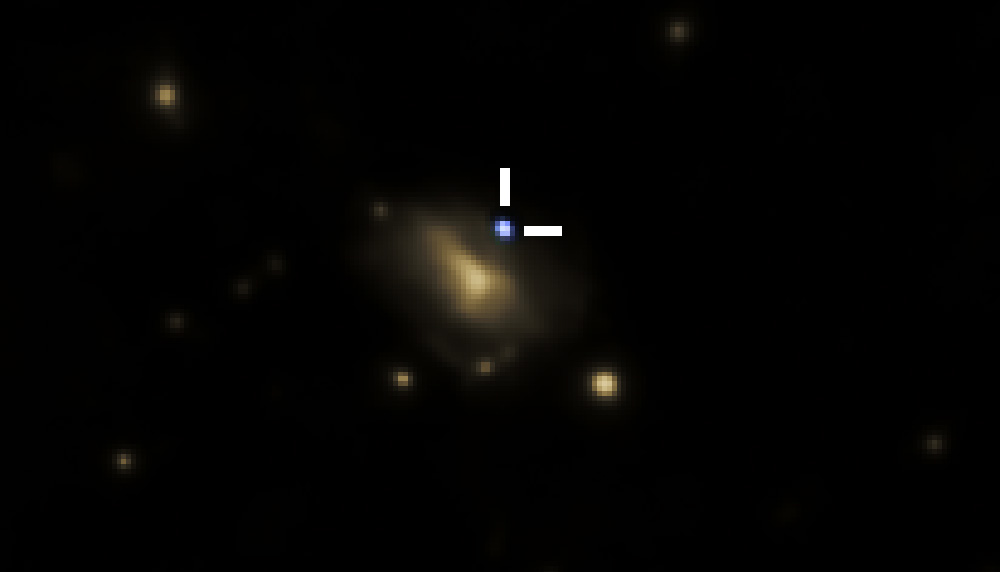
AT 2024wpp, a luminous fast blue optical transient, or LFBOT, is the bright blue spot at the upper right edge of its host galaxy, which is 1.1 billion light-years from Earth. (Image credit: Aidan Martas/UC Berkeley)


Among the more puzzling cosmic phenomena discovered over the past few decades are brief and very bright flashes of blue and ultraviolet light that gradually fade away, leaving behind faint X-ray and radio emissions. 

With slightly more than a dozen discovered so far, astronomers have debated whether they are produced by an unusual type of supernova or by interstellar gas falling into a black hole.

Analysis of the brightest such burst to date, discovered last year, shows that they’re neither.

Instead, a team of astronomers led by researchers from the University of California, Berkeley, concluded that these so-called luminous fast blue optical transients, or LFBOTs, are caused by an extreme tidal disruption, where a black hole of up to 100 times the mass of our sun completely shreds its massive star companion within days. 

The discovery resolves a decade-long conundrum but also illustrates the many varieties of stellar calamities that astronomers encounter, each with its characteristic spectrum of light — different wavelengths, different intensities — that evolves over time. 

Figuring out the processes that produce these unique light signatures tests current knowledge of the physics of black holes and helps astronomers understand the evolution of stars in our universe.

The inferred mass of the black hole — in a range sometimes referred to as intermediate-mass black holes — is also intriguing for astronomers. 

While black holes of more than 100 solar masses are known to exist because their mergers have been detected by gravitational wave experiments like the Laser Interferometer Gravitational-Wave Observatory, or LIGO, they’ve never been directly observed and how they grow to that size is still a mystery. 

Study of this and similar events could shed light on the stellar environment in which large black holes evolve alongside a massive stellar companion.

“Theorists have come up with many ways to explain how we get these large black holes, to explain what LIGO sees,” said Raffaella Margutti, UC Berkeley associate professor of astronomy and physics. “LFBOTs allow you to get at this question from a completely different angle. They also allow us to characterize the precise location where these things are inside their host galaxy, which adds more context in trying to understand how we end up with this setup — a very large black hole and a companion.”

LFBOTs got their name because they are bright — they’re visible over distances of hundreds of millions to billions of light-years — and last for only a few days, producing high-energy light ranging from the blue end of the optical spectrum through ultraviolet and X-ray. 

The first was seen in 2014, but the first with sufficient data to analyze was recorded in 2018 and, per the standard naming convention, was called AT 2018cow. 

The name led researchers to refer to it as the Cow, and subsequent LFBOTs have been called, tongue in cheek, the Koala (ZTF18abvkwla), the Tasmanian Devil (AT2022tsd) and the Finch (AT2023fhn).

The newest LFBOT, named AT 2024wpp (the Woodpecker, perhaps?), is analyzed in two papers recently accepted by The Astrophysical Journal Letters. UC Berkeley postdoctoral fellow Nayana A.J. is first author of an analysis of X-ray and radio emissions from AT 2024wpp, while Berkeley graduate student Natalie LeBaron is first author of an analysis of the optical, ultraviolet and near infrared emissions. Margutti is the senior author of both papers.

The realization that the transient outburst could not have resulted from a supernova came after the researchers calculated the energy emitted. It turned out to be 100 times greater than what would be produced in a normal supernova, which would require the conversion of about 10% of the rest-mass of the sun into energy over a very short time scale, mere weeks.

“The sheer amount of radiated energy from these bursts is so large that you can't power them with the collapse and explosion of a massive star — or any other type of normal stellar explosion,” LeBaron said. “The main message from AT 2024wpp is that the model that we started off with is wrong. It’s definitely not caused by an exploding star.”

The researchers hypothesize that the intense, high-energy light emitted during this extreme tidal disruption was a consequence of the long parasitic history of the black hole binary system. As they reconstruct this history, the black hole had been sucking material from its companion for a long time, completely enshrouding itself in a halo of material too far from the black hole for it to swallow.

Then, when the companion star finally got too close and was torn apart, the new material became entrained into a rotating disk of debris, called an accretion disk, and slammed against the existing material, generating X-ray, UV and blue light. Much of the gas from the companion also ended up swirling toward the poles of the black hole, where it was ejected as a jet of material. They calculated that the jets were traveling about 40% of the speed of light and generated radio waves when they encountered surrounding gas.

The estimated mass of the companion star that was shredded was more than 10 times the mass of the sun. It may have been what’s known as a Wolf-Rayet star, which are very hot and evolved, having already used up much of their hydrogen. This would explain the weak hydrogen emission from AT 2024wpp.

Like most LFBOTs, AT 2024wpp is located in a galaxy with active star formation, so large, young stars like these are expected. AT 2024wpp is 1.1 billion light-years away and between five and 10 times more luminous than AT 2018cow.

A large collection of telescopes was used to measure the various wavelengths of light emitted by the LFBOT. 

These included three X-ray telescopes, NASA’s Chandra X-ray Observatory, Swift-XRT and the Nuclear Spectroscopic Telescope Array (NuSTAR); radio telescopes such as the Atacama Large Millimeter/submillimeter Array (ALMA) and CSIRO’s Australia Telescope Compact Array (ATCA); the Ultra-Violet/Optical Telescope (UVOT) on NASA’s Neil Gehrels Swift Observatory; and ground-based optical telescopes, including the Keck, Lick and Gemini Observatories.

Because LFBOTs produce copious amounts of UV, the researchers are looking forward to the launch of two planned UV telescopes — ULTRASAT and UVEX, which involves numerous Berkeley scientists and will be operated by the Space Sciences Laboratory — in the coming years. 

These telescopes will be critical for discovering and rapidly characterizing more LFBOTs before they reach peak brightness, allowing astronomers to systematically probe the diversity of their environments and progenitor systems.

“Right now, we find only about one LFBOT per year. But once we have UV telescopes in place in space, then finding LFBOTs will become routine, like detecting gamma ray bursts today,” Nayana A.J. said.

Margutti is supported by the National Science Foundation (AST-2224255) and National Aeronautics and Space Administration (80NSSC22K1587, 80NSSC25K7591, 80NSSC22K0898).

Robert Sanders writes for the UC Berkeley News Center.

  1. Agencies, organizations partner to bring Christmas to child victims of crime
  2. Continuing atmospheric river storm forecast leads to flood watch for Lake County            
  3. Where the wild things thrive: Finding and protecting nature’s climate change safe havens
  • 58
  • 59
  • 60
  • 61
  • 62
  • 63
  • 64
  • 65
  • 66
  • 67
How to resolve AdBlock issue?

Refresh this page