How to resolve AdBlock issue?
Refresh this page
How to resolve AdBlock issue?
Refresh this page
Lake County News,California
  • Home
    • Registration Form
  • News
    • Education
    • Veterans
    • Community
      • Obituaries
      • Letters
      • Commentary
    • Police Logs
    • Business
    • Recreation
    • Health
    • Religion
    • Legals
    • Arts & Life
    • Regional
  • Calendar
  • Contact us
    • FAQs
    • Phones, E-Mail
    • Subscribe
  • Advertise Here
  • Login
How to resolve AdBlock issue?
Refresh this page

News

Clearlake, county of Lake among communities receiving state funding to build housing and infrastructure, address homelessness

Details
Written by: LAKE COUNTY NEWS REPORTS
Published: 22 December 2025

CLEARLAKE, Calif. — More than $52 million in grant funding has been awarded to revitalize communities and address homelessness, benefiting 53 counties statewide through 90 new projects, through federal Community Development Block Grants and 2024 Emergency Solutions Grants.

The city of Clearlake and North Coast Opportunities are among the awardees, announced by the Governor’s Office.

Clearlake will receive a $2.5 million planning and technical assistance grant.

“We’re delivering for our communities — full stop,” said Gov. Gavin Newsom. “Whether it’s housing, infrastructure or homelessness services, we’re stepping up and standing shoulder to shoulder with local leaders to make sure they have what they need. These grants are about strengthening neighborhoods and ensuring communities across California can thrive, while preserving the pride people have in the places they call home.”

The funding through the 2024 Community Development Block Grant, or CDBG, awards will fund 38 projects in 20 counties and provide more than 160,000 Californians with improved sewer and street infrastructure, public facilities, and recreational opportunities. 

Gov. Newsom announced that an additional $14.3 million in federal funds went to 52 projects across California serving 25 counties through 2024 Emergency Solutions Grants, or ESG, giving local governments and service providers yet another tool to support regional solutions to homelessness. Both federal programs are administered in California by the California Department of Housing and Community Development, or HCD.

“For more than 50 years, Community Development Block Grants have been a key tool for creating housing and economic opportunity in American communities,” said Business, Consumer Services and Housing Agency Secretary Tomiquia Moss. “From food banks to fire protection equipment, HCD is making these awards to help meet the critical needs of Californians and expand access to opportunity.”

CDBG awards included 18 grants totaling $4.6 million for public service activities such as advocacy for children in the court systems, operation of shelters for survivors of domestic violence, housing and shelter navigation for people experiencing homelessness, support for veterans experiencing behavioral health challenges, and nutrition and food access for seniors, as well as support for food banks, transportation, and utility assistance for low- to moderate-income Californians. 

“The CDBG grants awarded this year will foster improved quality of life for low-income Californians in rural communities in every corner of the state,” said HCD Director Gustavo Velasquez. “From the North Coast, to the colonias, our stewardship of federal funding will transform infrastructure and uplift some of our most vulnerable residents, building a stronger, more equitable California future.”

Examples from the CDBG awards include:

• An economic development grant for a business assistance loan program in Crescent City ($1.5 million)
• A homebuyer-assistance grant for a program in the City of Ukiah ($1.5 million)
• Six public facility improvement projects including parks and community centers ($18 million) in Capitola, Corning, Eureka, Firebaugh, and Oroville, as well as Imperial County. 
• Three infrastructure projects including sewer and street improvements ($9.9 million) in Dinuba, King, and Marysville. 
• Nine planning and technical assistance grants ($2.5 million)in Clearlake, Dinuba, Oroville, Shasta Lake, Weed, and Willows, as well as Imperial and Solano counties.

HCD also made 52 ESG awards serving 36 counties totaling $14.3 million to California counties and service providers to fund local solutions to homelessness. With ESG funding, recipients can:

• Engage individuals and families experiencing homelessness
• Improve emergency shelters for individuals and families experiencing homelessness by supporting operations and essential services for shelter residents
• Rapidly rehouse individuals and families experiencing homelessness
• Prevent families and individuals from becoming homeless

North Coast Opportunities received $280,486 in ESG funding for work in Lake County.

Woodland College’s Lake County Campus to hold express registration event Jan. 10

Details
Written by: Elizabeth Larson
Published: 22 December 2025

CLEARLAKE, Calif. — Woodland College’s Lake County Campus is planning a registration event to help students get ready for the spring semester.

The express registration event will take place from 10 a.m. to 2 p.m. Saturday, Jan. 10, in the Student Services Building at the Lake County Campus.

Registration already is underway for the upcoming semester, which starts Jan. 12.

College officials said express registration is meant to make registering and signing up for spring 2026 classes easy both for new and returning students.

Students will be able to meet with staff and counselors to get assistance with everything from applications to class registration. 

They can also get answers to financial aid questions and receive general student support during their visit.

Students can apply now or get more information at wcc.yccd.edu. 

The campus is located at 15880 Dam Road Extension, Clearlake.

For more information, call the campus at 707-995-7900.

Email Elizabeth Larson at This email address is being protected from spambots. You need JavaScript enabled to view it.. Follow her on Twitter, @ERLarson, and on Bluesky, @erlarson.bsky.social. Find Lake County News on the following platforms: Facebook, @LakeCoNews; X, @LakeCoNews; Threads, @lakeconews, and on Bluesky, @lakeconews.bsky.social. 

As millions of Americans face a steep rise in health insurance costs, lawmakers continue a century-long battle over who should pay for health care

Details
Written by: Robert Applebaum, Miami University
Published: 22 December 2025

Dec. 15, 2025 – the deadline for enrolling in a marketplace plan through the Affordable Care Act for 2026 – came and went without an agreement on the federal subsidies that kept ACA plans more affordable for many Americans. Despite a last-ditch attempt in the House to extend ACA subsidies, with Congress adjourning for the year on Dec. 19, it’s looking almost certain that Americans relying on ACA subsidies will face a steep increase in health care costs in 2026.

As a gerontologist who studies the U.S. health care system, I’m aware that disagreements about health care in America have a long history. The main bone of contention is whether providing health care is the responsibility of the government, or of individuals or their employers.

The ACA, passed in 2010 as the country’s first major piece of health legislation since the passage of Medicare and Medicaid in 1965, represents one more chapter in that long-standing debate. That debate explains why the health law has fueled so much political divisiveness – including a standoff that spurred a record-breaking 43-day-long government shutdown, which began on Oct. 1, 2025.

In my view, regardless of how Congress resolves, or doesn’t resolve, the current dispute over ACA subsidies, a durable U.S. health care policy will remain out of reach until lawmakers address the core question of who should shoulder the cost of health care.

The ACA’s roots

In the years before the ACA’s passage, some 49 million Americans – 15% of the population – lacked health insurance. This number had been rising in the wake of the 2008 recession. That’s because the majority of Americans ages 18 to 64 with health insurance receive their health benefits through their employer. In the 2008 downturn, people who lost their jobs basically lost their health care coverage.

Seated man talks to a doctor in a clinic waiting room.
The goal of the Affordable Care Act was to significantly decrease the number of Americans without health insurance. Drazen Zigic/iStock via Getty Images Plus

For those who believed government had a primary role in providing health insurance for its citizens, the growing number of people lacking coverage hit a crisis point that required an intervention. Those who place responsibility on individuals and employers saw the ACA as perversion of the government’s purpose. The political parties could find no common ground – and this challenge continues.

The major goal of the ACA was to reduce the number of uninsured Americans by about 30 million people, or to about 3% of the U.S. population. It got about halfway there: Today, about 26 million Americans, or 8%, are uninsured, though this number fluctuates based on changes in the economy and federal and state policy.

Health insurance for all?

The ACA implemented an array of strategies to accomplish this goal. Some were popular, such as allowing parents to keep their kids on their family insurance until age 26. Some were unpopular, such as the mandate that everyone must have insurance.

But two strategies in particular had the biggest impact on the number of uninsured. One was expanding the Medicaid program to include workers whose income was below 138% of the poverty line. The other was providing subsidies to people with low and moderate incomes that could help them buy health insurance through the ACA marketplace, a state or federal health exchange through which consumers could choose health insurance plans.

Medicaid expansion was controversial from the start. Originally, the ACA mandated it for all states, but the Supreme Court eventually ruled that it was up to each state, not the federal government, to decide whether to do so. As of December 2025, 40 states and the District of Columbia have implemented Medicaid expansion, insuring about 20 million Americans.

Meanwhile, the marketplace subsidies, which were designed to help people who were working but could not access an employer-based health plan, were not especially contentious early on. Everyone receiving a subsidy was required to contribute to their insurance plan’s monthly premium. People earning US$18,000 or less annually, which in 2010 was 115% of the income threshold set by the federal government as poverty level, contributed 2.1% of their plan’s cost, and those earning $60,240, which was 400% of the federal poverty level, contributed 10%. People making more than that were not eligible for subsidies at all.

In 2021, legislation passed by the Biden administration to stave off the economic impact of the COVID-19 pandemic increased the subsidy that people could receive. The law eliminated premiums entirely for the lowest income people and reduced the cost for those earning more. And, unlike before, people making more than 400% of the federal poverty level – about 10% of marketplace enrollees – could also get a subsidy.

These pandemic-era subsidies are set to expire at the end of 2025.

Cost versus coverage

If the COVID-19-era subsidies expire, health care costs would increase substantially for most consumers, as ACA subsidies return to their original levels. So someone making $45,000 annually will now need to pay $360 a month for health insurance, increasing their payment by 74%, or $153 monthly. What’s more, these changes come on top of price hikes to insurance plans themselves, which are estimated to increase by about 18% in 2026.

With these two factors combined, many ACA marketplace users could see their health insurance cost rise more than 100%. Some proponents of extending COVID-19-era subsidies contend that the rollback will result in an estimated 6 million to 7 million people leaving the ACA marketplace and that some 5 million of these Americans could become uninsured in 2026.

Congressional gridlock over a health care bill continues.

Policies in the tax and spending package signed into law by President Donald Trump in July 2025 are amplifying the challenge of keeping Americans insured. The Congressional Budget Office projects that the Medicaid cuts alone, stipulated in the package, may result in more than 7 million people becoming uninsured. Combined with other policy changes outlined in the law and the rollback of the ACA subsidies, that number could hit 16 million by 2034 – essentially wiping out the majority of gains in health insurance coverage that the ACA achieved since 2010.

Subsidy downsides

These enhanced ACA subsidies are so divisive now in part because they have dramatically driven up the federal government’s health care bill. Between 2021 and 2024, the number of people receiving subsidies doubled – resulting in many more people having health insurance, but also increasing federal ACA expenditures.

In 2025, almost 22 million Americans who purchased a marketplace plan received a federal subsidy to help with the costs, up from 9.2 million in 2020 – a 137% increase.

Those who oppose the extension counter that the subsidies cost the government too much and fund high earners who don’t need government support – and that temporary emergencies, even ones as serious as a pandemic, should not result in permanent changes.

Another critique is that employers are using the ACA to reduce their responsibility for employee coverage. Under the ACA, employers with more than 50 employees must provide health insurance, but for companies with fewer employers, that requirement is optional.

In 2010, 92% of employers with 25 to 49 workers offered health insurance, but by 2025, that proportion had dropped to 64%, suggesting that companies of this size are allowing the ACA to cover their employees.

Diverging solutions

The U.S. has the most expensive health care system in the world by far. The projected increase in the number of uninsured people over the next 10 years could result in even higher costs, as fewer people get preventive care and delayed health care interventions, ultimately leading to more complex medical care

Federal policy clearly shapes health insurance coverage, but state-level policies play a role too. Nationally, about 8% of people under age 65 were uninsured in 2023, yet that rate varied widely – from 3% in Massachusetts to 18.6% in Texas. States under Republican leadership on average have a higher percentage of uninsured people than do those under Democratic leadership, mirroring the political differences driving the national debate over who is responsible for shouldering the costs of health care.

With dueling ideologies come dueling solutions. For those who believe that the government is responsible for the health of its citizens, expanding health insurance coverage and financing this expansion through taxes presents a clear approach. For those who say the burden should fall on individuals, reliance on the free market drives the fix – on the premise that competition between health insurers and providers offers a more effective way to solve the cost challenges than a government intervention.

Without finding resolution on this core issue, the U.S. will likely still be embroiled in this same debate for years, if not decades, to come.The Conversation

Robert Applebaum, Senior Research Scholar in Gerontology, Miami University

This article is republished from The Conversation under a Creative Commons license. Read the original article.
Tradition of New Year’s 'First Day Hikes' to continue at Anderson Marsh State Historic Park 

Details
Written by: LAKE COUNTY NEWS REPORTS
Published: 21 December 2025
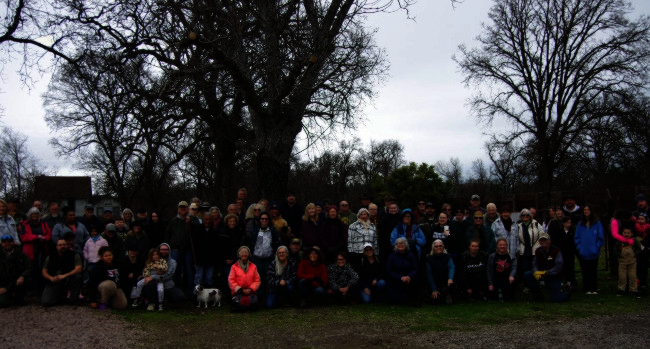
Participants in the “First Day Hike” on Jan. 1, 2025. Photo courtesy of the Anderson Marsh Interpretive Association.

LOWER LAKE, Calif. — Anderson Marsh State Historic Park will once again offer free, community hikes beginning at noon on New Year’s Day. 

The hikes are part of America's State Parks First Day Hikes program. 

The nationwide First Day Hikes program offers individuals and families an opportunity to begin the New Year by taking a healthy hike on January 1st at a state park close to home.  

Participants can choose between two routes. The first hike will be a leisurely trip to the end of the Dawa Qanoq’ana trail. Formerly known as the McVicar trail, “Dawa Qanoq’ana” means “south way in front of me” in the Pomo language.

This hike will go from the parking lot to the shores of Clear Lake across from Indian Island. This is a round-trip of about 7.5 miles of mainly flat terrain, with the first about 0.3 miles being accessible. This hike should take about three hours, depending on how many times we stop to admire what we see along the way.   

The second shorter hike covers a 3.5-mile loop over the Cache Creek, Marsh and Ridge trails, with the first about 0.5 miles being accessible. This hike should take about two hours.  

The New Year’s Day hikes will be led by State Parks volunteers associated with the Anderson Marsh Interpretive Association, or AMIA, along with State Parks Interpreters.  

“The event offers a wonderful opportunity to begin the New Year right by getting outside, enjoying nature and welcoming the New Year with friends and family on Jan. 1,” said Henry Bornstein, an AMIA Board member who is one of this year’s hike leaders.

Hikers will experience grasslands, oak woodlands, willow and cottonwood riparian habitats, and the tule marsh habitat of the Anderson Marsh Natural Preserve and may encounter a variety of migrating and resident birds and other wildlife.

Both hikes begin at noon at the park off Highway 53, between Lower Lake and Clearlake. 

Children of all ages are welcome when accompanied by an adult. Hikers should bring water and snacks, binoculars if they have them, and a hat for protection against the weather. Sturdy shoes that can handle a little mud are recommended. Participants on both hikes are welcome to walk part way and make an early return at their own pace.

No dogs are allowed on these trails, which pass through the Anderson Marsh Natural Preserve. Heavy rain will cancel the walks. 

For further information, the public is asked to contact AMIA at 707-995-2658 or This email address is being protected from spambots. You need JavaScript enabled to view it.. 

  1. Wind advisory, flood watch in effect for Lake County
  2. Helping Paws: Dogs for Christmas
  3. How to reduce gift-giving stress with your kids – a child psychologist’s tips for making magic and avoiding tears
  • 57
  • 58
  • 59
  • 60
  • 61
  • 62
  • 63
  • 64
  • 65
  • 66
How to resolve AdBlock issue?
Refresh this page
