 How to resolve AdBlock issue?
Recreation
- Details
- Written by: BoatUS
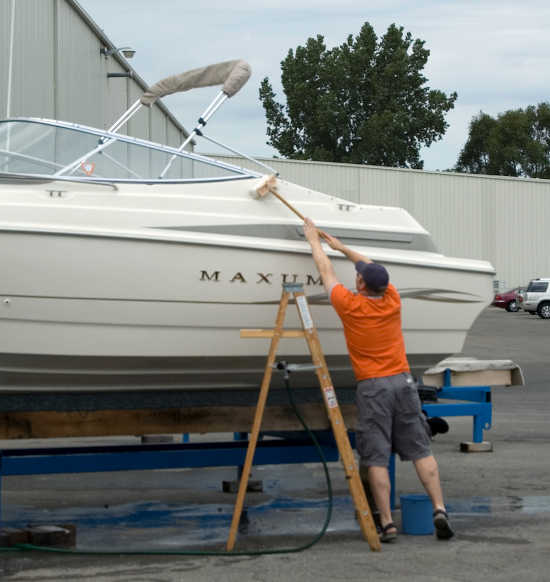
ALEXANDRIA, Va. – With boatyards, backyards, marinas and clubs now coming to life, spring commissioning time has arrived.
Boat Owners Association of The United States (BoatUS) has a Spring Commissioning Checklist to help boaters start the season right.
Before you launch:
Hose clamps should be inspected and replaced as necessary. Double clamp below-waterline connections, including all hose and fuel lines with marine-rated stainless hose clamps and keeping seacocks closed when you are away are wise moves.
Inspect cooling hoses for stiffness, rot, leaks and cracking. Make sure they fit snugly.
Replace deteriorated sacrificial anodes.
Inspect prop(s) for dings, pitting and distortion. Make sure cotter pins are secure. Grip the prop and try moving the shaft – if it’s loose, the cutless bearing (on inboard drive systems) may need to be replaced.
Check the rudderstock to ensure it hasn’t been bent.
Inspect the hull for blisters, distortions and stress cracks.
Make sure your engine intake sea strainer is not cracked or bent from ice, free of corrosion, and is clean and properly secured.
With inboards, check the engine shaft and rudder stuffing boxes for looseness. A stuffing box should only leak when the prop shaft is turning and needs to be inspected routinely.
Inspect and lubricate seacocks.
Use a garden hose to check for deck leaks at ports and hatches. Renew caulk or gaskets as necessary.
Inspect bilge pump and float switch to make sure they’re working properly.
Check stove and remote tanks for loose fittings and leaking hoses.
Inspect dock and anchor lines for chafing.
If equipped, ensure that the stern drain plug is installed
After the boat is launched, be sure to check all thru-hulls for leaks.
Engine outdrives and outboards:
Inspect rubber outdrive bellows for cracked, dried and/or deteriorated spots (look especially in the folds) and replace if suspect.
Check power steering and power trim oil levels.
Replace anodes that are more than half worn away.
Inspect outer jacket of control cables. Cracks or swelling indicate corrosion and mean that the cable must be replaced.
Engines and fuel systems:
Inspect fuel lines, including fill and vent hoses, for softness, brittleness or cracking. Check all joints for leaks, and make sure all lines are well supported with noncombustible clips or straps with smooth edges.
Inspect fuel tanks, fuel pumps and filters for leaks. Ensure portable tanks and lines are completely drained of stale fuel before filling with new fuel. Clamps should be snug and free of rust. Clean or replace fuel filters.
Every few years, remove and inspect exhaust manifolds for corrosion.
Charge battery. Clean and tighten electrical connections, especially both ends of battery cables. Wire-brush battery terminals and fill cells with distilled water (if applicable).
Inspect bilge blower hose for leaks.
Sailboat rigging:
Inspect swage fittings for cracks and heavy rust (some discoloration is acceptable). Inspect wire halyards and running backstays for “fishhooks” and rust.
Remove tape on turnbuckles and lubricate threads, preferably with Teflon. Replace old tape with fresh tape.
If you suspect the core around a chainplate is damp, remove the chainplate to inspect and make repairs.
Trailers:
Inspect tire treads and sidewalls for cracks or lack of tread and replace as necessary. Check air pressure — don’t forget the spare.
Inspect wheel bearings and repack as necessary.
Test all lights and winch to make sure they’re working properly. Inspect hitch chains.
Inspect trailer frame for rust. Sand and paint to prevent further deterioration.
Inspect brakes and brake fluid reservoir.
Safety:
Check expiration dates on flares. Inspect fire extinguishers. Replace if over 12 years old. Over 40 million Kidde extinguishers with plastic handles were recalled on Nov. 2, 2017.
Make sure you have properly sized and wearable life jackets in good condition for each passenger, including kids. Check inflatable life jacket cylinders.
Test smoke, carbon monoxide, fume and bilge alarms.
Check running lights and spare bulb inventory.
Update paper charts, chart plotter software.
Replenish first aid kit items that may have been used last season.
Be sure to get a free vessel safety check from the US Coast Guard Auxiliary or US Power Squadrons. Find out more at www.SafetySeal.net .
For the dock:
Check both ends of the shore power cable connections for burns, which indicate the cable and/or boat’s shore power inlet or the dock’s receptacle must be replaced.
Test ground-fault protection on your boat and private dock, and know how to prevent Electric Shock Drowning.
The paperwork:
Make sure your boat registration is up to date. Don’t forget your trailer tags.
Review your boat insurance policy and update coverage if needed. Provide a copy to your marina or club.
If applicable, ensure your BoatUS Towing Membership is in good standing. Log in to www.BoatUS.com/Account to check your membership status or join at www.BoatUS.com.
A downloadable PDF version of this spring commissioning checklist is available at www.BoatUS.com/spring-boat-commissioning-checklist.
- Details
- Written by: California Fish and Game Commission
The pintail daily bag limit has returned to two, and there have been some changes to accommodate a longer late season for white-fronted geese in the Northeastern Zone.
The commission also created a Special Management Area in the Klamath Basin, which is exempt from this change.
The following is a summary of the regulations:
Duck seasons
Northeastern Zone will be open for ducks from Oct. 6, 2018 through Jan. 18, 2019. Scaup season will be open from Oct. 6, 2018 through Dec. 2, 2019, and from Dec. 22, 2018 through Jan. 18, 2019.
Balance of State, Southern San Joaquin Valley and Southern California zones will be open from Oct. 20, 2018 through Jan. 27, 2019. Scaup season will be open from Nov. 3, 2018 through Jan. 27, 2019.
Colorado River Zone will be open from Oct. 19, 2018 through Jan. 27, 2019. Scaup season will be open from Nov. 3, 2018 through Jan. 27, 2019.
Bag limits
Seven ducks per day, which includes no more than two hen mallards (or Mexican-like ducks in the Colorado River Zone), two pintail, two canvasback, two redheads and three scaup (which may only be taken during the 86-day scaup season).
The possession limit for ducks is triple the daily bag limit.
Goose seasons
In the Northeastern Zone, the season will be open for white geese and white-fronted geese from Oct. 6, 2018 through Dec. 2, 2018, and Jan. 5-18, 2019 (except in the new Klamath Basin Special Management Area). The season will be open for large Canada geese from Oct. 6, 2018 through Jan. 13, 2019. In the Klamath Basin Special Management Area, the season will be open for white geese and white-fronted geese from Oct. 6, 2018 through Jan. 18, 2019.
Balance of State, Southern San Joaquin Valley and Southern California zones will be open from Oct. 20, 2018 through Jan. 27, 2019.
Balance of State Zone will also be open for early large Canada geese from Sept. 29, 2018 through Oct. 3, 2018 (except in the North Coast Special Management Area).
Balance of State Zone will also be open for late season white-fronted and white geese from Feb. 9-13, 2019.
Colorado River Zone will be open from Oct. 19, 2018 through Jan. 27, 2019.
Bag limits
Northeastern Zone, 30 total geese per day, which may include 20 white geese and 10 dark geese, of which only two may be large Canada geese.
Balance of State and Southern San Joaquin Valley zones, 30 total geese per day, which may include 20 white geese and 10 dark geese.
Southern California Zone, 23 total geese per day, which may include 20 white geese and three dark geese.
Colorado River Zone, 24 total geese per day, which may include 20 white geese and four dark geese.
The possession limit for geese is triple the daily bag limit.
The complete regulations will be posted at www.wildlife.ca.gov/Hunting/Waterfowl.
- Details
- Written by: California Department of Fish and Wildlife
This will open all commercial rock crab fishing from 40° 00.00 ' N. Lat. south to the California/Mexico border.
On Nov. 8, 2016, upon the recommendation of the state Office of Environmental Health Hazard Assessment, or OEHHA, CDFW Director Charlton H. Bonham submitted to the Office of Administrative Law an emergency rulemaking to close the commercial rock crab fishery north of Pigeon Point, San Mateo County.
Since that time, new authority established in the Fish and Game Code, section 5523, allowed the Director to open portions of the fishery upon the recommendation from the Director of OEHHA.
The fishery was last modified in March 2018, when it was opened between Salt Point, Sonoma County and the Sonoma/Mendocino County line.
State and federal laws prohibit the commercial distribution of seafood products that contain domoic acid levels above the federal action level of 30 parts per million in the viscera.
The recreational fishery for rock crab remains open statewide with a warning from the California Department of Public Health, or CDPH, to recreational anglers to avoid consuming the viscera of rock crab caught north of the Mendocino/Humboldt County line to the California/Oregon border.
Closure of the commercial rock crab fishery north of 40° 00.00 ' N. Lat. near the Mendocino/Humboldt County line to the California/Oregon border shall remain in effect until the Director of OEHHA, in consultation with the Director of CDPH, determines that domoic acid levels no longer pose a significant risk to public health and recommends the fishery be opened.
CDFW will continue to coordinate with fishermen, CDPH, and OEHHA to test domoic acid levels in rock crab within the closure area of the coast.
Domoic acid is a potent neurotoxin that can accumulate in shellfish, other invertebrates and sometimes fish. It causes illness and sometimes death in a variety of birds and marine mammals that consume affected organisms.
At low levels, domoic acid exposure can cause nausea, diarrhea and dizziness in humans. At higher levels, it can cause persistent short-term memory loss, seizures and can in some cases be fatal.
- Details
- Written by: California Department of Fish and Wildlife
Crappie is a sport fish common throughout California and most of North America. The bag limit for crappie is 25 fish per day.
In one case, a wildlife officer contacted three anglers in Madera County in the early morning hours of April 12 as they pulled their boat from a local lake. They were in combined possession of 404 crappie. Subtracting out a legal limit of 25 fish each, they were in possession of a combined overlimit of 329 crappie.
The three subjects are charged with a gross overlimit of crappie, possession of more than three times the bag limit and failure to show catch upon the demand of a wildlife officer.
If convicted, they each face a possible jail term, fines that will potentially range between $5,000 and $40,000, forfeiture of seized fishing equipment and suspension of their fishing privileges,
In total, wildlife officers issued a total of 10 crappie overlimit citations in the last week for 636 crappie in excess of the bag limit.
“We are pleased to see excellent conditions for crappie fishing right now and many honest anglers are catching a limit,” said CDFW Assistant Chief John Baker, who oversees the Central Enforcement District out of Fresno. “These gross overlimit cases are a prime example of poachers taking advantage of good conditions and depleting our state’s limited resources. This behavior should outrage the honest anglers who abide by the law.”
Anyone who believes they are witness to unlawful poaching or pollution activity is encouraged to call CalTIP, CDFW’s confidential secret witness program, at 888-334-2258 or send a text to tip411.
Both methods allow the public to provide wildlife officers with factual information to assist with investigations. Callers may remain anonymous, if desired, and a reward can result from successful capture and prosecution.