 How to resolve AdBlock issue?
Recreation
- Details
- Written by: California Department of Fish and Wildlife
The sub-bag limit for canary rockfish will increase from one fish to two fish within the RCG daily bag limit of 10 fish, effective Saturday, April 14, 2018.
Limited retention of canary rockfish in California's recreational fishery began last year as a result of the stock being declared rebuilt.
Because retention of canary rockfish had been prohibited in recreational fisheries off California for more than a decade, a one fish daily sub-bag limit was implemented as a matter of precaution. Catches were monitored weekly to ensure harvest limits were not exceeded.
"We saw great fishing in 2017 and higher than expected effort for rockfish," said CDFW Environmental Scientist Joanna Grebel. "Despite this, catches of canary rockfish under a one fish bag limit were less than predicted. We are excited to be able to offer additional opportunity in 2018."
Pursuant to California Code of Regulations Title 14, section 27.20(e), CDFW has the authority to make in-season modifications to the recreational fishery, including adjustments to bag and sub-bag limits.
CDFW encourages anglers to avoid known yelloweye rockfish hotspots when pursuing canary rockfish. Yelloweye rockfish cannot be retained and stringent annual limits on yelloweye rockfish bycatch mortality remain in effect for California's recreational groundfish fishery in 2018.
Bycatch mortality of yelloweye rockfish is monitored during the fishing season and modifications to regulations could be made if mortality amounts reach annual limits.
For more information regarding groundfish regulations, management, stock status information, fish identification tools and current catch trends, please visit the CDFW Marine Region Groundfish Central Web site at www.wildlife.ca.gov/Conservation/Marine/Groundfish .
- Details
- Written by: Editor
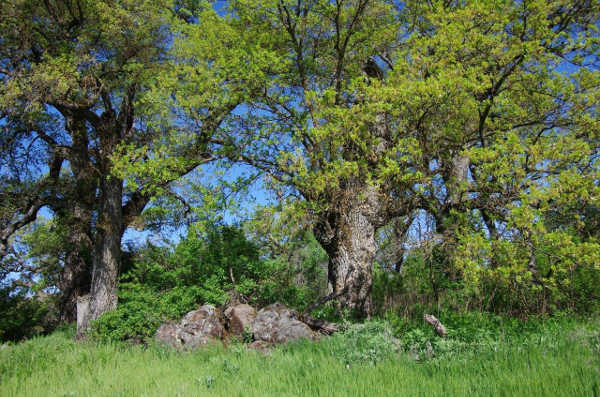
LOWER LAKE, Calif. – Anderson Marsh State Historic Park continues to hold monthly guided nature walks.
- Details
- Written by: Editor
The Human Race, coordinated by North Coast Opportunities, is a nationwide community 5K run and walk composed of teams raising funds for local nonprofit organizations.
With the many cutbacks in vital services throughout Mendocino County, there are dozens of nonprofits that can use your support.
It’s easy. First, pick the Mendocino County nonprofit you want to support. Second, register your team and decide if you and or your kids and teammates want to run or walk. Third, raise money from friends and relatives to donate to your nonprofit. Then turn in the money at Bank Night at NCO on April 30 from 3 to 6 p.m.
Join your team and dozens of others at the starting line at Alex Thomas Plaza on May 5 at 9 a.m.
Categories to participate are the 5k adult and child walk, 5K adult run, 5k child run, and the “Kids Fun Run.”
Entrants are expected to raise at least $25 each.
Each child and adult runner pays $30 if registration is received by April 24, or $35 on Race Day. A family rate for immediate family runners is $70.
Winners receive distance awards and prizes. Everyone who meets the minimum donation receives a commemorative T-shirt.
Any business or entity which would like to sponsor this worthy event is welcome. Any business or nonprofit that would like to join the Human Race Marketplace and set up a booth in Alex Thomas Plaza, the fee is $50 for businesses, free to nonprofits before April 18.
Coffee and pastries are available at the starting line and a taco truck and fun at the finish line.
For a registration packet visit the website www.MendoHumanRace.com. For more information call Kasie Gray, 707-391-7963 or email
- Details
- Written by: California Department of Fish and Wildlife
To determine the age of the clam do you only count the dark rings or do you count all of the rings? The rings indicate this guy is between 25 and 50 years old. (Michael)
Answer: CDFW marine biologist Christy Juhasz tells us that CDFW staff who conduct fisheries-independent Pismo clam surveys count and measure clams encountered and do not utilize an aging method.
That said, Christy was able to find references to aging Pismo clams using their annual rings in CDFW's 2006 Status of the Fisheries report, as well as in an article in the California Fish Bulletin No. 7.
The article, entitled "The Life-History and Growth of the Pismo Clam," was published in 1923 and examines this method in detail.
According to these reports, the age of Pismo clams can be determined by the darker rings that are laid during the fall/winter, perhaps due to prolonged periods of exposure to colder water, reduced food abundance or spawning. These would be the annual rings that can be counted to age individual clams.
The yearly rate of shell growth varies from individual to individual and considerably slows down as the clam ages. You can observe this rate of growth when you compare the greater distance found between adjacent annual rings toward the older part of shell (closer to the hinge) than the closer rings nearer to the newer section of the shell, near the growing margin.
More information concerning the growth rate can be found in the Status of the Fisheries report:
"The Pismo clam grows continuously throughout its life. As it grows the shell not only becomes thicker but increases in diameter. Growth varies considerably from month to month, with the greatest increase taking place in the spring, summer, and early fall months. The Pismo clam is about 0.009 inches (0.23 millimeters) at metamorphosis, and grows at an average rate of 0.84 inches (21.4 millimeters) for the first three years. Growth slows considerably as the clam ages, with the increase in shell length not more than 0.2 inches (5 millimeters) per year at age 10. Growth rates are dependent on water temperature and vary among beaches. A 4.5-inch (11.4-centimeter) clam could be from 5 to 9 years old. Along the central coast of California, clams are estimated to reach 4.5 inches (11.4 centimeters) between ages 7 and 8."
As for unofficial records, the oldest Pismo clam was collected from Zuma Beach and was estimated to be 53 years old, measuring only 5.25 inches (13.3 centimeters) across. The largest Pismo clam in California came from Pismo Beach and was 7.37 inches across and estimated to be 26 years old.
CDFW's official sport caught records don't reflect sizes quite this large. It appears that 6.75 inches is the current record.
What's new in turkey hunting?
Question: It has been a few years since I have been hunting but I hunted turkeys this past weekend with a friend and I'm glad he was with me because he told me there were new regulation changes for turkey hunting. Most important one was the need to use nonlead ammunition. Am I missing anything else? (Anonymous)
Answer: First of all, we're happy you're back! It is incumbent upon all hunters to review the laws and regulations any time before they return to the field, but especially if it is after a few years' absence.
Consulting with a friend can help, but going to the source is the best way to bring yourself up to date. The 2017-2018 Waterfowl and Upland Game Hunting regulations book is the place to start (see page 20) or go online.
There have been two significant changes over the past few years that should be highlighted: First, shooting hours for spring turkeys are now from one-half hour before sunrise to 5 p.m.
Second, nonlead shot is required when taking wild turkeys with a shotgun anywhere in the state except when hunting on licensed game bird clubs.
These regulations apply to both public and private land, including all national forests, Bureau of Land Management properties and California Department of Fish and Wildlife (CDFW) properties.
For more information on nonlead ammunition regulations, please visit www.wildlife.ca.gov/Hunting/Nonlead-Ammunition.
As of April 12, this column will publish biweekly. If you have a question for the California Department of Fish and Wildlife, please feel free to ask via email at