 How to resolve AdBlock issue?
Recreation
- Details
- Written by: California Department of Fish and Wildlife
The season's dates will be May 1 to June 15, July 1 to 15, Aug. 1 to 15, and Sept. 1 to Oct. 31, or until the quota is reached, whichever is earlier.
The 2018 recreational Pacific halibut quota for the California subarea is 30,940 pounds – about 4,000 pounds less than the 2017 quota.
Since 2015, the California Department of Fish and Wildlife has managed the Pacific halibut fishery to keep catches within the state's recreational fishery quota.
The open dates are not guaranteed days, and the fishery could be closed early if it is determined that projected catches will exceed the California quota.
Again this year, CDFW will monitor catches of Pacific halibut during the season and provide catch projection updates on the CDFW Pacific halibut Web page.
If the cumulative catch is expected to reach or exceed the quota prior to Oct. 31, a closure date will be determined and the public will be notified.
For the first time, state Pacific halibut regulations will automatically conform to federal regulations using the new process described in the California Code of Regulations Title 14, section 1.95.
Federal regulations for Pacific halibut were published in the Federal Register (83 FR 13090) on March 26, 2018, and are effective as of March 24, 2018.
Season dates were chosen based on input CDFW received from an online survey that was conducted in February 2018. The open dates are expected to meet the goal of providing as much opportunity to fish for Pacific halibut throughout the season while remaining within California's limit.
Public notification of any in-season change is made through the National Marine Fisheries Service Pacific halibut hotline. Before engaging in any fishing activity for Pacific halibut, please check one of the following resources for the most up-to-date information:
– CDFW Web site, www.wildlife.ca.gov/Conservation/Marine/Pacific-Halibut;
– National Marine Fisheries Service Halibut Hotline, 800-662-9825;
– CDFW Recreational Groundfish Regulations Hotline, 831-649-2801.
- Details
- Written by: California Department of Fish and Wildl
In December, the Fish and Game Commission voted to close the 2018 season.
The closure is the result of extreme environmental conditions, including a widespread collapse of Northern California kelp forests.
CDFW surveys in 2017 found low abalone abundance, starving abalone and many fresh empty shells, which indicate recent high abalone mortality.
The reopening of the fishery will be determined by the new Red Abalone Fishery Management Plan, or RAFMP, currently being developed under the direction of the Fish and Game Commission.
The California Fish and Game Commission will be discussing the RAFMP at its April 18 and 19 meeting in Ventura.
- Details
- Written by: California Department of Fish and Wildlife
This is the second juvenile steelhead release of the year and brings the total number of steelhead stocked in the Afterbay this season to 234,000.
The practice of stocking the Afterbay with steelhead that are in excess of the Feather River allotment of 400,000 fish started in 2006 and has been very successful when the fish are available.
“The Afterbay grows fish,” explained CDFW Senior Environmental Scientist Supervisor Jay Rowan. “It’s a highly productive habitat with acres of shallow weed beds that produce huge insect hatches in the spring and summer.”
While these fish are going in at only 1/4 pound each, the juvenile steelhead will take advantage of these insect hatches and grow to catchable sizes quickly. Twenty to 24-inch fish are common later in the summer and fall.
“It is really great to be able to provide an additional fishing opportunity for the community, especially one that is accessible to shore anglers,” said Feather River Hatchery Manager Anna Kastner. “When the fishing is good, people will line up along the banks to catch these steelhead.”
The Feather River Hatchery has also stocked 303 hatchery steelhead kelts to the Thermalito Afterbay this year which provides an additional trophy fishing opportunity.
The kelt program uses male hatchery steelhead that have returned from the ocean to the hatchery to spawn. Their milt is first used to fertilize eggs at the hatchery for the next generation of steelhead.
The fish are then reconditioned and put in the Afterbay for anglers to catch. There are concerns that putting hatchery-produced males back in the river after they have been spawned at the hatchery could allow certain family groups to be overrepresented if that fish spawns again in the wild, which could potentially lead to inbreeding.
Moving kelts to the Afterbay solves that problem, with the added bonus of providing another fishery for anglers.
- Details
- Written by: California Department of Fish and Wildlife
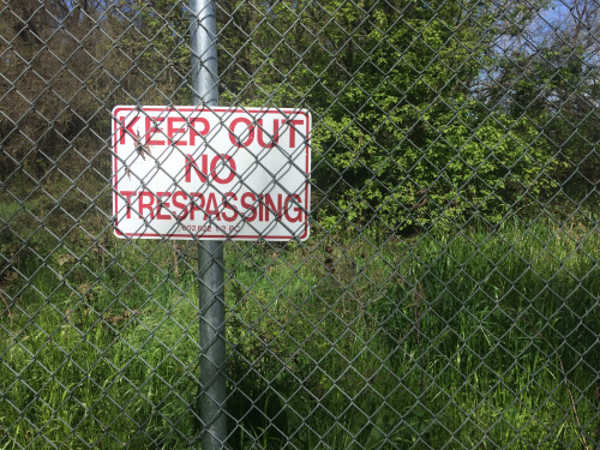
How do I catch a trespasser on my property?
Question: I own property in a rural part of Monterey County although I don't live there all the time. I am there most weekends and many weeklong stretches throughout the year.
Twice in the last month, I found a gate open on my property that should always be closed. I know for sure I left it latched and there were no other people authorized to be there.
Last November I found a single empty .30-06 casing on the road that was still shiny and looked fresh.
I have some pigs on my property and I think the people there may have been trespassers. I'm fine with hunting (with permission), but not with trespassing.
What is the best course of action to help figure out what is going on and stop trespassers? (Anonymous)
Answer: There are several things you can do. Hopefully you have neighboring property owners who could lend their eyes and ears to help identify anyone coming or going from your property.
Advise them of the problem and ask if they have experienced the same. In order to catch trespassers, wildlife officers will need vehicle descriptions, especially license plate information, and descriptions of persons as well.
The primary law that applies to your situation is Fish and Game Code (FGC), section 2016, commonly referred to as the "Hunter Trespass" law. It states, "It is unlawful to enter land for the purpose of discharging a firearm or taking or destroying a mammal or bird, including waterfowl, on that land, without having first obtained written permission from the owner, the owner's agent, or the person in lawful possession of that land, if either of the following is true:
(a) The land belongs to or is occupied by another person and is either under cultivation or enclosed by a fence.
(b) There are signs of any size and wording forbidding trespass or hunting or both displayed along all exterior boundaries of the land, at intervals not less than three to the mile, and at all roads and trails entering the land, including land temporarily inundated by water flowing outside the established banks of a river, stream, slough, or other waterway, which fairly advise a person about to enter the land that the use of the land is so restricted.
Make sure you place "No Trespassing" signs around the boundaries and entry and exit points of your property to comply with FGC, section 2016. The more obvious your signs are, the more obvious the trespasser is knowingly in violation of section 2016(b), assuming your property is not already fenced or under cultivation.
You should talk your neighbors into doing the same. Chances are, if you have trespassing problems, they do too.
FGC, section 2004(a) could also be helpful, particularly if you graze livestock on the property. It states, "It is unlawful for any person, while taking any bird, mammal, fish, reptile, or amphibian, to cause damage, or assist in causing damage, to real or personal property, or to leave gates or bars open, or to break down, destroy, or damage fences, or to tear down or scatter piles of rails, posts, stone, or wood, or, through carelessness or negligence, to injure livestock of any kind."
If a trespasser leaves your gate open or damages your fence, it could be another violation.
Try using trail cameras. Trail cameras are becoming more and more affordable and more commonly used by private property owners. They are helpful tools, not only to potentially catch trespassers, but often to identify wildlife you may not even realize is calling your property home.
You may want to set up a camera near the gate where you are having a problem. Orient the camera where it cannot be seen, and make sure it's set up to capture a vehicle license plate.
Know the CalTIP 24/7 number, 888-334-2258, and be ready to notify us of a crime in progress. We suggest adding it to the contacts in your phone, and make sure your neighbors are familiar with the number as well.
Lastly, contact your local wildlife officer and introduce yourself. Consider inviting him or her to your property to walk through layout, pointing out entry and exit points.
Many landowners develop excellent working relationships with their local wildlife officers, which can facilitate stopping trespassers, if that is in fact what you have going on.
Wildlife officers can quickly take a look at your situation and advise you how best to address your potential hunter trespassing problem.
If you have a question for the California Department of Fish and Wildlife, please email