 How to resolve AdBlock issue?
Recreation
- Details
- Written by: BoatUS Foundation
But sometimes, it’s not easy to borrow a right-sized life jacket when an infant or young teen comes aboard.
Marinas, boat and fishing clubs, waterfront businesses, organizations or other groups that serve boaters can help by becoming a BoatUS Foundation Life Jacket Loaner site.
Becoming a loaner site is easy by applying at www.BoatUS.org/Life-Jacket-Loaner. There is no cost to set up a loaner site, and there is never a charge to borrow a life jacket.
Approved locations will receive a kit containing 12 child-sized life jackets with sizes from infant to youth, as well as signage and a local publicity kit.
The nonprofit BoatUS Foundation, funded by donations from the more than half-million members of BoatUS, replenishes the supply of jackets as wear and tear takes its toll.
The only task loaner sites have is to track life jacket usage with an easy clipboard sign-out system and provide the foundation with periodic feedback to help keep the life jacket supply in good condition.
The program currently has more than 550 life jacket loaner sites across the US that collectively loan out children’s life jackets more than 140,000 times each year. Since 1997, three children’s lives have been saved by a BoatUS Foundation loaner life jacket.
To learn more, go to www.BoatUS.org/Life-Jacket-Loaner. A short video on how to select a right-sized kid’s life jacket at www.BoatUS.org/Life-Jacket-Loaner/Fit-Video.
- Details
- Written by: California Department of Fish and Wildlife
CDFW will take comments and recommendations and provide updates on habitat conditions, availability of water for wetlands and possible impacts to hunter access on these public lands.
The meeting will take place from 4 to 6 p.m. in the Yolo Bypass Wildlife Area’s conference room, which is located at 45211 County Road 32B in Davis.
State wildlife areas to be discussed are the Yolo Bypass Wildlife Area and the Grizzly Island Wildlife Area Complex.
CDFW’s Bay Delta Region includes 12 counties in Northern California and is one of seven CDFW regions in the state.
CDFW annually provides an opportunity for licensed hunters to comment and make recommendations on public hunting programs, including anticipated habitat conditions in the hunting areas on wildlife areas through public meetings and other outreach.
- Details
- Written by: BoatUS Foundation
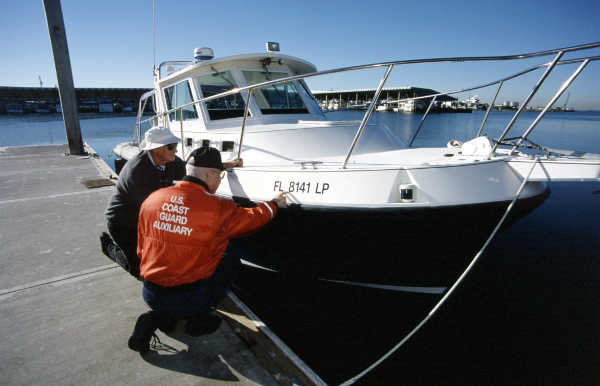
ALEXANDRIA, Va. – With the start of boating season and next week’s National Safe Boating Week, May 19–25, the BoatUS Foundation for Boating Safety and Clean Water has three tips to get boaters thinking about safety aboard any type of boat.
1. Open up your boat for a vessel safety check: You may think getting a vessel safety check from the U.S. Coast Guard Auxiliary or U.S. Power Squadrons can open yourself to problems. However, a no-risk, free vessel safety check does the opposite. It points out both the required and recommended items to have aboard, such as fire extinguishers, life jackets, distress signals, first-aid kits, and engine spark arrestors, and also helps provide a better understanding on the care and use of this critical equipment. Checks are done as a courtesy with no risk to the boater, so you won’t be in trouble if discrepancies are found. Go to https://bit.ly/1syhbDA to request a U.S. Coast Guard Auxiliary safety check or https://bit.ly/2I2uc8w for a U.S. Power Squadrons safety check.
2. Believe the numbers – take a safety course: Statistics from the U.S. Coast Guard Office of Boating Safety show that only 13 percent of all boating deaths in 2016 occurred on vessels where the operator had taken a nationally approved boating safety education course. So take this number to heart – taking a boating safety course improves safety. The BoatUS Foundation offers free online boating safety courses that meet the education requirements in 36 states and also may earn you a boat insurance discount. Go to www.BoatUS.org/Free.
3. Give a safety talk before you head out: Taking out guests is half the fun of boating, but before you head out give a little talk about how to stay safe aboard your boat. Some important things to include may be how to distribute weight in a small boat, how to hold on when crossing a wake, how a tuber or water skier should safely reboard after being towed, how the VHF radio works and the location of important safety equipment. Also, give everyone a life jacket to wear or keep in his or her immediate vicinity. If you don’t have a right-sized life jacket for a youngster, borrow one for free at more than 550 locations nationwide from the BoatUS Foundation Life Jacket Loaner Program at www.BoatUS.org/Life-Jacket-Loaner.
- Details
- Written by: Mendocino National Forest
The total route is approximately 300 miles, starting in Stonyford, traversing the forest on open public routes, stopping overnight in Fort Bragg, and returning to Stonyford.
It will run from 6 a.m. to 6 p.m. each day and may involve up to 500 dual sport bike riders.
People traveling on the forest should watch for riders and drive with caution.