How to resolve AdBlock issue?
Recreation
- Details
- Written by: California Department of Fish and Wildlife
According to California Department of Fish and Wildlife Marine Environmental Scientist Jenny Hofmeister, the most lobsters last season were caught off Catalina Island. “In the past, San Diego has usually been the most plentiful spot,” she said. “But recently many fishers are finding success out at the islands.”
A lobster report card is required for all persons fishing for lobster and individuals 16 years or older must also possess a valid sport fishing license and ocean enhancement stamp to take lobster south of Point Arguello.
Any person using hoop nets from a public pier and children who are under 16 and fishing for lobster do not need a license but must possess a valid lobster report card.
A typical legal-size spiny lobster will average about one pound in weight. Occasionally divers and hoop netters will find lobsters over five pounds (considered trophy size) in California waters.
Spiny lobster taken must measure at least 3 1/4 inches in length and are measured in a straight line on the midline of the back from the rear edge of the eye socket to the rear edge of the body shell.
The daily bag limit for lobster is seven per person and an individual may not possess more than seven at any time except when a valid declaration for a multi-day trip has been obtained.
Lobster can be taken with hoop nets and by skin or SCUBA divers by hand only. No appliance (such as fish spears or poles) may be used to assist.
Additional regulations governing the sport take of lobster and general fishing information can be found in the California Spiny Lobster Fishing brochure.
Lobster fishers should also consult the Marine Protected Area maps for the California coastline to ensure they are not fishing in prohibited waters.
CDFW marine biologists suggest using an oily or aromatic bait to dispense a scent trail that nearby lobsters will follow back to the net. Squid, Pacific mackerel, bonito, anchovies, sardines and even cat food may serve as good bait.
A wire mesh bait container will help prevent the loss of bait to fish or other large predators such as seals and sea lions.
Because lobsters are strong and have hair-trigger responses when they sense predators, the best strategy for divers is usually to grab or pin the lobster to the bottom by their body, rather than grabbing it by a leg or antennae which will likely tear off.
Although lobsters can regenerate lost limbs, marine biologists have found that these lobsters ultimately produce fewer offspring because of the energy requirements for limb regeneration.
“They definitely can sense your hesitation,” Hofmeister said. “Most of their daily life is spent trying not to get eaten, so they are pretty good at getting away if you aren’t quick enough.”
Lobster report cards must be returned or submitted online to CDFW at the end of each season by April 30, regardless of whether the card was used or any lobster were caught. Fishers who fill up a report card can turn in their card and purchase another.
Failure to report catch from all cards by the deadline will result in a nonreporting fee that is charged when you purchase a report card next season.
“Reporting your catch is so important for managing the recreational lobster fishery,” Hofmeister said. “Our goal is to ensure that we can all be catching lobster decades from now, and to do that we need to know how many are being caught, where you are catching them, and what it took to get them. That is why we want to know about all of your trips – including the ones where you get skunked.”
The complete spiny lobster regulations are contained in the 2018-2019 Ocean Sport Fishing regulations booklet, found on CDFW’s Web site and wherever fishing licenses are sold. A lobster fishing FAQ and other biological information specific to California’s spiny lobster can also be found on the CDFW Web site.
- Details
- Written by: California Department of Fish and Wildlife
Spring-run Chinook salmon are protected by both the state and federal Endangered Species Acts.
The largest population occurs in the Feather River where the Feather River Hatchery has a tagging program for this protected run.
Spring-run Chinook salmon are tagged and released in the low-flow channel of the Feather River to allow them the opportunity to spawn in an area of the river that is closed to fishing.
However, they sometimes stray from the closed section of the river and are subsequently caught and kept by anglers.
CDFW asks anglers to return any tagged spring-run Chinook Salmon to the river.
The bag limit for fall-run Chinook salmon on the Mokelumne River is two fish, and the possession limit is four fish, as per the 2018-2019 Freshwater Sport Fishing Regulations.
The bag limit for fall-run Chinook salmon on the American, Feather and Sacramento rivers is one fish, and the possession limit is two fish, as per the 2018-2019 Supplement Sport Fishing Regulations.
- Details
- Written by: Cal Fire
Campground closure: The seasonal closure of JDSF Camp One, Dunlap and Horse campgrounds are scheduled for Monday, Oct. 1. Big River campground will remain open until which time it is deemed necessary to close.
Trail closure: Beginning Oct. 15, the “Trestle Trail” between Camp 8 and JDSF Road 1070 will be closed to mushroom gathering and other recreational activities. This trail is closed (October to May) as a precautionary measure in an attempt to slow the spread of Phytophthora
ramorum, the invasive pathogen that causes sudden oak death.
Firewood area closure: The designated areas for firewood cutting will also close on Monday, Oct. 1, or prior to the first significant rain, whichever occurs first. After the closure, all firewood cutting on the Forest is prohibited until otherwise noticed.
Information regarding camping and other recreational activities such as mushroom gathering on JDSF is available at the Cal Fire Fort Bragg office located at 802 North Main Street, Fort Bragg, or by calling 707-964-5674 during the following hours: Monday through Friday from 8 a.m. to noon and 1 to 5 p.m.
Visit the Web site at http://calfire.ca.gov/resource_mgt/resource_mgt_stateforests_jackson.php.
Multiple uses of JDSF for a wide variety of activities that benefit the public, the economy and natural resources are what our demonstration forests are all about.
- Details
- Written by: Tahoe Resource Conservation District
LAKE TAHOE, Calif. and Nev. – This year marks the tenth anniversary of Lake Tahoe’s Watercraft Inspection Program.
Under the program, every motorized watercraft is inspected to ensure it is clean, drained, and dry and not carrying aquatic invasive species before launching at Tahoe.
Thanks to diligent boaters and watercraft inspectors, no new aquatic invasive species have been detected in Lake Tahoe since the program began 10 years ago.
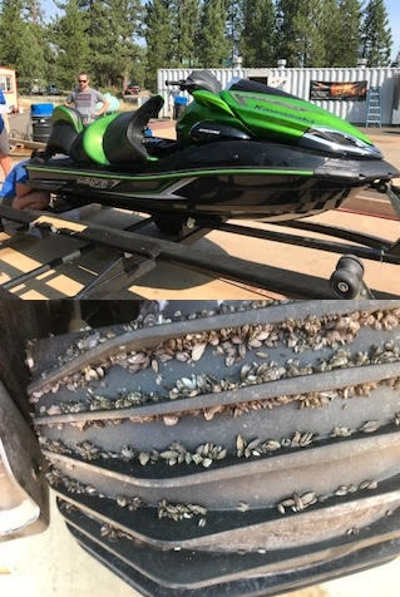
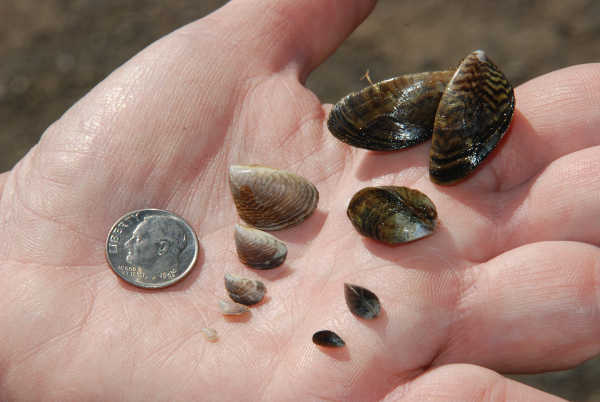
Of the nearly 8,000 vessels watercraft inspectors examined this boating season, 44 percent of them arrived clean, drained, and dry. Eleven watercraft were found carrying invasive mussels and 40 were harboring other species.
This exemplifies the excellent work by the inspectors, but also that watercraft continue to be a vector of aquatic invasive species. Each fouled vessel was decontaminated prior to launching in Lake Tahoe.
The largest number of decontaminations occur on vessels containing standing water, which may contain unwanted seeds, plant fragments or microscopic larvae.
Boaters are encouraged to continue to be a part of the solution by cleaning, draining, and drying their vessel before launching in any waterbody. This includes both motorized and non-motorized watercraft.
This July, Tahoe Resource Conservation District watercraft inspectors intercepted a pontoon boat harboring multiple aquatic invasive species of concern. An inconspicuous crack in the pontoon allowed water and vegetation to enter, and several invasive species then grew within.
The boat came from Eastern United States and was inspected at the Alpine Meadows watercraft inspection station on Highway 89 in California. Staff discovered standing water, adult quagga and zebra mussels, aquatic vegetation, New Zealand mudsnails, and multiple other species inside the pontoon system.
After discovery of the invasive species, inspectors coordinated with California Department of Fish and Wildlife and performed a full decontamination of the vessel to kill and remove all invasive species.
“This incident is the perfect example of how boats are the number one transport mechanism for aquatic invasive species,” said Christopher Kilian, program manager at the Tahoe RCD. “This is a good reminder that you could unknowingly transport invasive species and highlights the importance of being diligent when practicing Clean, Drain, and Dry techniques before travelling to a new location.”
“They may hide on the hull, in your bilge, on your anchor, in your ballast system, or in this case: inside a pontoon. We’d like everyone to keep this in mind as they travel to other waterbodies or prepare for inspections.” All watercraft are required to be inspected prior to launching in Lake Tahoe.
A new invasive species introduction in Lake Tahoe could have devastating impacts. Without natural predators, invasive species multiply quickly and can colonize the lake, as well as docks, water pipes, filtration systems, piers, ramps, and boats.
They destroy fish habitat, impair boat engines, and negatively impact water quality and recreation, thus posing serious threats to the ecology, recreation, infrastructure and economy of the Lake Tahoe Basin.
To learn how to clean, drain, and dry your vessel and prepare for a watercraft inspection, please visit www.TahoeBoatInspections.com.