 How to resolve AdBlock issue?
Recreation
- Details
- Written by: California Department of Food and Wildlife
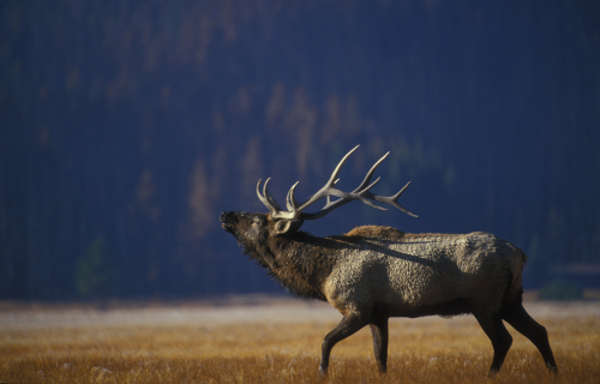
Hunting deer and elk out of state
Question: Two hunting buddies and I were drawn to hunt elk for the first time in Colorado. We are planning a trip the second week in October. This will be our first out-of-state trip. What should I know, and how do I go about keeping all of my paperwork in order to make sure everything is legal when I come back? (Ross)
Answer: Planning and going on one's first major big game hunting expedition is an exciting step in a hunter's life, especially if it is out of state.
Dividing the responsibilities of the trip between your hunting partners is part of the enjoyment of the trip.
Those responsibilities include map acquisition, learning the local regulations, food planning and preparation, learning what you can about the terrain and many other things. One often overlooked aspect of the trip for new hunters is how to legally bring those game animals back from the hunt - so we appreciate you thinking ahead!
There are two primary things you should keep in mind when hunting elk or deer out of state. These are Chronic Wasting Disease (CWD) precautions and having your Declaration for Entry upon your return.
CWD is a contagious neurological disease that affects deer, elk and moose. The disease has never been detected in California's deer or elk populations and it is incumbent upon every hunter to do his or her part to prevent inadvertently transporting the agent that causes CWD into California.
You can find background information, additional links and updates on California's efforts to fight CWD at www.wildlife.ca.gov/CWD.
To prevent the accidental importation of CWD-infected tissues into the state, California Code of Regulations Title 14, section 712 prohibits hunters from importing or possessing carcasses with a skull or backbone still attached.
If you are hunting out of state, please make sure to review the regulations related to CWD for that state. Also, if hunting in a state where CWD is present, make sure to check with that state's wildlife agency for information about hunter check stations and how to get your animal tested in the state where it is harvested.
An animal that is taken in a CWD endemic zone should be processed in that area or state. Bringing back packaged meat is the best and safest approach. If a harvested animal tests positive for CWD, CDFW supports the recommendation of the Centers for Disease Control and the World Health Organization to not consume the meat. The hunter should contact a CDFW office or the Wildlife Investigations Laboratory to have all remaining tissues incinerated.
Failure to comply with section 712 is a misdemeanor offense that will result in a citation by a California wildlife officer. Compliance is easier than you may think. CDFW created a video to show you how.You can also find background information, additional links and updates on California's efforts to fight CWD at www.wildlife.ca.gov/CWD.
Declaration for Entry is another item that needs to be on your checklist. California Fish and Game Code, section 2353 requires all hunters to declare any elk brought into California. Specifically, the law states that birds, mammals, fish, reptiles or amphibians shall not be imported or possessed in this state unless all of the following requirements are met: (1) The animals were legally taken and legally possessed outside of California, (2) No laws or regulations expressly prohibit their possession in this state (mountain lions are an example), and (3) A declaration is submitted to CDFW or a designated state or federal agency at or immediately before the time of entry, in the form and manner prescribed by CDFW.
We suggest you print out the form ahead of time so you can fill it out before you arrive to save time. You can find the Declaration for Entry form on the CDFW website.
You may photocopy the form. The original should remain with the person importing the fish or game into the state. One copy should be mailed to CDFW (1416 Ninth St., Sacramento, CA 95814) within 24 hours after entering the state. One copy should be deposited at the point of entry with any state or federal agency or officer, and one copy should remain with the fish or game if transported by a person other than owner or common carrier.
These hunting trips frequently create memories of a lifetime. We wish you and your hunting buddies luck on your elk hunting expedition!
Catching a great white?
Question: What do I do if I catch a great white shark on accident? (Anonymous)
Answer: What the public refers to as a great white shark is known in the scientific community and in statute as simply a "white shark," or even more specifically by its genus and species, Carcharodon carcharias.
California Fish and Game Code, section 5517 states that it is unlawful to take any white shark except under a permit issued by CDFW for scientific or educational purposes.
If you catch a white shark by accident, the law requires you to immediately release it.
If you have a question for the California Department of Fish and Wildlife, please email
- Details
- Written by: Mendocino National Forest
A permit will be issued to provide high-quality public service in the operation and maintenance of government-owned recreation facilities at the Red Bluff Recreation Area.
The Red Bluff Recreation Area is a 488-acre parcel managed by the Mendocino National Forest located on the southern border of the city of Red Bluff along the Interstate 5 corridor.
Approximately 169 acres will be included in the permit boundary. Of the 169 acres, there are 98 acres of land that are not actively managed or maintained and 71 acres that encompass the developed recreation area and trail system.
If you have questions, please contact Forest Recreation Officer Katheryn Rich at 530-934-1199.
- Details
- Written by: Elizabeth Larson
Specifically, SB 1145 authorizes Enhanced Infrastructure Financing Districts, or EIFDs, to perform maintenance on the facilities that they build. EIFDs are an important economic development finance tool for local jurisdictions to move community economic development projects forward.
Cities and counties can create these types of financing districts to build facilities that benefit the local community, including libraries, water systems, child care facilities, parks, and affordable housing.
Currently, over 25 EIFDs across California are either already approved or are in the study phase. Unfortunately, EIFDs cannot pay for maintenance or routine repairs to ensure public investments are protected throughout many years of use.
SB 1145 does not include new funds, taxes or fees, but rather expands flexibility for ongoing funding of maintenance costs.
“SB 1145 will help communities build bridges, provide clean water, and encourage community development by supporting the maintenance of the important public projects that they build,” Senator Leyva said. “Having earned bipartisan support, this legislation allows local governments to collaborate and proactively budget maintenance costs from EIFD revenues instead of having to rely on unpredictable general funds. The governor’s signature will help protect local taxpayer investments long term and make sure that these public projects continue to benefit residents for many years and decades to come.”
Sponsored by the California Association for Local Economic Development and supported by the American Planning Association, California Business Properties Association and League of California Cities, SB 1145 will take effect on Jan. 1, 2019.
- Details
- Written by: California Department of Fish and Wildlife
While deer are by far the most frequently hunted big game species in California, many hunters also enjoy fair chase of bear, elk and bighorn.
Some of the seasons for these species are already under way, but the majority will open over the next month.
The upcoming general season opening and closing dates vary by zone and can be found by following the links below:
– 2018 bear hunting information;
– 2018 elk seasons;
– 2018 bighorn sheep hunts.
Hunting for wild pigs is growing in popularity and can be done year-round. Most seasons for pronghorn, another California big game species, concluded in August.
Californians enjoy some of the widest ranges of habitat and hunting conditions in the nation. While California has its fair share of privately owned land, there are vast swaths of national forest, timber lands, state wildlife areas and other lands accessible to the public that provide excellent hunting opportunities.
CDFW administers public hunts on private lands through its SHARE Program. Other opportunities for access to private lands are available through the Private Lands Management Program.
A valid California hunting license and appropriate tag(s) for each zone and/or species pursued must be obtained before entering the field. There are still many deer tags available for purchase. Hunting license and tags can be purchased online or through a CDFW office or license sales agent.
California hunters are required to complete a hunter education training course, pass a comprehensive equivalency test, or provide a valid hunter’s safety certificate before purchasing a hunting license for the first time in California. Each year approximately 30,000 students complete the state’s hunter education course.
Hunters always have the responsibility to be familiar with state game laws before entering the field. All regulations can be found online.
Given the exceptionally dry conditions this year, it is even more important that everyone does their part to prevent wildfires. One less spark means one less wildfire. Learn more here.