 How to resolve AdBlock issue?
Recreation
- Details
- Written by: California Department of Fish and Wildlife
With this recognition, the Elkhorn Slough joins 38 other wetland sites in the United States - including the San Francisco Bay estuary – and more than 2,330 sites worldwide, in a network of globally important wetlands designated under the world's oldest international environmental treaty.
The convention was signed in Ramsar, Iran in 1971, and almost 90 percent of U.N. member states have since adopted the treaty.
"I am proud that Elkhorn Slough is being recognized internationally for what we on the central coast of California have long known, that this wetland is an environmental crown jewel. This designation is a reminder of the importance of protecting the diverse wildlife and conserving these waters for future generations to enjoy," said Congressman Panetta.
The Elkhorn Slough, which enters Monterey Bay at Moss Landing and is partially located in NOAA's Monterey Bay National Marine Sanctuary, has long been recognized by local, state, and federal organizations as exceptional for its biologically rich diversity and unique scientific research studies, as well as the estuary's recreation, tourism, and education opportunities.
"Elkhorn Slough is a spectacular wetland on the central California coast, hosting a rich diversity of plants and animals and beloved by the local community," said Mark Silberstein, executive director of the Elkhorn Slough Foundation. "Every day, hundreds of people from kayakers to birdwatchers and other visitors enjoy the sea otters, seals, fish, shorebirds, eelgrass beds, and marshes of the Elkhorn Slough. We're pleased these wetlands have now earned international recognition."
To be designated as part of the Ramsar Convention on Wetlands of International Importance, a wetland site must fulfill at least one of nine criteria, including hosting more than 20,000 shorebirds at a time, serving as fish nursery habitat, and supporting threatened species. Elkhorn Slough met all nine criteria.
The designation was approved by the U.S. Department of State and the U.S. Fish and Wildlife Service this year.
The Elkhorn Slough is a seasonal estuary rich with intertidal marshes, mudflats, eelgrass beds and oyster communities that nourish wildlife.
More than 340 species of birds, 100 species of fish, including bat rays and leopard sharks, and more than 500 species of invertebrates have been documented in the watershed. Its distinctive estuarine communities are among the rarest and most threatened habitats in California, and are home to more than 140 Southern sea otters that feed, rest, and raise their pups in these wetlands.
"Healthy wetlands help support healthy economies," said Paul Souza, regional director of the U.S. Fish and Wildlife Service's Pacific Southwest Region. "The rich and diverse ecosystems of Elkhorn Slough help both our wildlife and our local communities thrive. Visitors from across the globe come to the slough to immerse themselves in its serene beauty and observe the wildlife that call the area home, including the southern sea otter, a species that once thrived but faced near extinction in the last century."
Wetlands like Elkhorn Slough serve key functions in pollution control and food provision, offering green, sustainable, low cost and efficient ways to clean wastewater of impurities and recycle nutrients, and also serve as cradles of biodiversity by hosting young fish and other marine species as well as rice paddies - all of which are critical to the food chain for humans and wildlife worldwide.
The Elkhorn Slough National Estuarine Research Reserve and Elkhorn Slough Foundation hosted the designation ceremony at the Hester Marsh Restoration site, a $6.5 million, 61-acre wetland restoration project nearing completion.
Like many of the marshes of the Elkhorn Slough, Hester Marsh was diked and drained for farming during the last century, resulting in a marsh plain elevation too low to support salt marsh.
The restoration project provides the elevation needed to support tidal marsh habitat that will withstand changes in sea level over the next century and continue to provide important habitat for fish, plants and wildlife.
"This project is an example of the intensive investment required to restore estuarine functions once lost, while incorporating a design that enhances resilience for future challenges," said Dave Feliz, manager of Elkhorn Slough National Estuarine Research Reserve for CDFW, which owns the property.
More than 90 percent of California's wetlands have been lost over the past century. Though today the Elkhorn Slough features the most extensive salt marshes in California south of San Francisco Bay, without restoration its remaining marshes are projected to drown within 50 years due to sea level rise. The current project at Hester Marsh is reviving one of these drowning marshes.
The Hester Marsh restoration project illustrates why the Elkhorn Slough is receiving this prestigious designation as a Wetland of International Importance.
Once complete, the project will double salt marsh habitat in a part of the slough frequented by Southern sea otters and their pups – underscoring the Ramsar Convention's mission for the conservation and sustainable use of wetland ecosystems.
"Few places embody NOAA's mission of 'science, service and stewardship' more fully than Elkhorn Slough," said Nicole LeBoeuf, acting director of NOAA's National Ocean Service. "As part of our system of 29 National Estuarine Research Reserves, it offers opportunities for scientific research, community recreation and tourism, and provides habitat for many species. Today's Ramsar designation shows how we have all joined forces to protect this extraordinary place. Along with our many partners here today, we will continue to protect it and the communities that depend on it."
- Details
- Written by: Lake County Milers
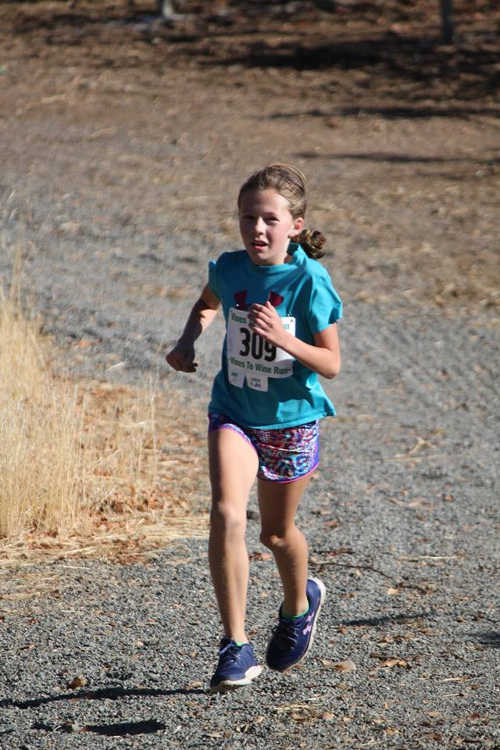
LAKE COUNTY, Calif. – The Lake County Milers Walking and Running Club is hosting its unique and breathtaking Vine to Wine Run at Cache Creek Vineyards for the third year in a row, on Sunday, Oct. 21, at 10:30 a.m.
Registration available at www.runsignup.com/vinetowinerun.
This upscale 5K and 10K event will include chip timing, a beautiful long sleeve tech shirt with event logo, a logo Wineglass and 5 oz pour of wine if you are 21 or older, and a flavorful wine country lunch complete with dessert created by Rosey Cooks Catering.
The current price for adults is $65, ages 8 through 13, $25 (no shirt) but kids lunch included, ages 14-20 $40 includes, shirt and adult lunch.
There is also an adult team option for four or more registrants that offers a $5 discount per person. Questions can be directed to
Longer distance runners are encouraged to register for the 10k distance to vie for the top prize.
The first-place male and female winner of the 10k will be awarded a free entry into the 2019 Napa Valley Marathon Half Marathon distance happening on March 3.
The Napa Valley Marathon is in its 41th year and is recognized as a top small marathon in the United States.
Walkers, joggers and shorter distance runners are encouraged to register for the 5K distance.
The male and female winners of the 5K will win a free entry into the Napa Valley Resolution Run, a Lake County Milers favorite that happens on New Year’s Day in Yountville.
The Milers will support Lower Lake, Upper Lake, Lakeport High School Cross Country/Track track and cross country programs with net proceeds from this event.
The Milers have teamed up with the Middletown High School girls’ basketball coach, Anthony Bazzano and his players to man the technical 5k/10k course. Coach Bazzano and his team has helped at many of the Miler events over the years. For their help they will also receive a donation benefitting this year’s team. To register go to www.runsignup.com/vinetowinerun. Register by Oct. 10 for best price and shirt options.
The 5K walk/run (3.1 mile) and 10K run (6.2 mile) will offer participants a beautiful vineyard road experience among the vines and the surrounding countryside.
Because Cache Creek Vineyards is in a mountainous area, participants in both distances will traverse varying terrain including some hills and witness pristine views of the winery property on hard pack vineyard roads and some trail.
This event will be chip timed by NorCal timing and Medals will be awarded three-deep (male and female) in each age divisions.
The Lake County Milers Walking and Running Club is a 501(c)(3) nonprofit running club that is dedicated to promoting physical fitness in Lake County through running and walking.
- Details
- Written by: California Department of Fish and Wildlife
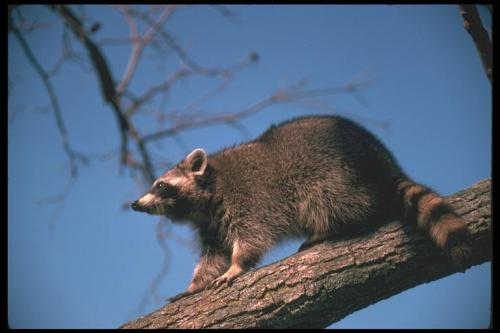
Question: My neighbor has been feeding the stray cats in the neighborhood, and now the raccoons have been coming to eat the cat food.
Recently the raccoons have been coming out during the day. There are many children in the area and I fear someone will get hurt. Many people also walk their dogs in the area.
Do you have advice? (Carmen)
Answer: Unfortunately, you are in a tough situation. Your neighbor may not understand the importance of managing food sources that are attracting wildlife to your neighborhood.
Depending on the relationship you have with your neighbor, you might try to explain that feeding stray cats is creating a secondary problem. Perhaps you can negotiate a feeding schedule for the cats in which the uneaten food is picked up immediately.
Although raccoons are chiefly nocturnal, their behavior is dependent on foraging opportunities, so it is not uncommon to see them out in the daylight hours if pet food and other food sources are readily available.
Raccoons usually pose little danger to people and pets – unless they are harassed, cornered or with young. But raccoons can carry diseases, some of which – like rabies or raccoon roundworm (Baylisascaris procyonis) – can be transmitted to humans and pets.
While such infections are not common, there have been verified cases in California. Anywhere raccoons live and defecate, the potential for disease transmission exists.
The most important step is to remove all food and garbage attractants, but you can also deter raccoons around your home by spraying them with a garden hose (referred to as hazing).
Raccoons are very good climbers and have been known to take up residence in chimneys and attics, so keep trees trimmed and block off access points to your home.
Secure garbage cans with bungee cords and only put garbage out on pickup day. Lock your pet doors at night and keep an eye on small pets.
Typically, nuisance raccoon situations are the responsibility of the landowner but may be handled by your local animal control office or county agriculture commissioner's office, depending on what county you live in. If animal control cannot respond directly, they might be able to refer you to a private wildlife removal service. It is highly recommended that people do not attempt to remove or trap unwanted wildlife without professional assistance.
Relocating wildlife is both prohibited and pointless – it only moves the problem to another neighborhood. CDFW staff typically cannot respond to nuisance raccoon calls. However, you may contact the local CDFW office for your county if you need additional information.
For more information and links to other resources about living with wildlife, please visit www.wildlife.ca.gov/living-with-wildlife.
For public health information, please visit CDC's Web site at www.cdc.gov/dpdx/baylisascariasis/index.html.
Followup on bean clams
Question: I saw your Jan. 25 column regarding the bean clam population explosion on Newport Beach shores, and have a follow up question.
My husband and I have been witnessing the masses of bean clams on the beach for over a year now, and today, as were walking upon the low-tide shoreline, we noticed that all of a sudden, many of them were opened up. This happened overnight.
What made them die so suddenly? (Jeannine)
Answer: It's impossible to be sure from a photo alone, but it's likely that either the bean clams (Donax gouldii) recently spawned or an infectious agent was to blame.
Microscopic examination of the tissues could perhaps further detect whether the gonad shows signs of recent release of gametes for spawning or whether there are active infections from bacteria, viruses or parasites, such as trematodes that use this species of clam as an intermediate host.
Unfortunately, this kind of testing (known as histology) can't be performed on necrotic (dead) tissue, so samples would have had to have been collected and tested immediately after the event.
Mass mortalities are natural occurrences among this species, and are known to occur in similar species found worldwide.
Our native bean clam populations have been observed to decline following a spawning event during the warmer summer months (June through September).
Bean clams become reproductively viable around 1-1.5 years old and have been observed to die shortly after spawning. Their spawning season occurs June through November, although some clams can continue to spawn up to their third summer.
Almost 70 years ago, biologists determined that an infectious organism was the cause of a mass mortality of bean clams they were monitoring on the shores of La Jolla, when that population that had numbered in the millions fell to less than a dozen individuals several months later.
These naturally occurring phenomena shed light on how these species seem to disappear from our shore until the next large recruitment event.
If you have a question for the California Department of Fish and Wildlife, please email
- Details
- Written by: California Department of Fish and Wildlife
The reserve includes former commercial salt ponds now managed by CDFW as low-salinity water bird habitat and areas restored to full tidal action. Access to ELER for waterfowl hunting will be open for 100 hunters on a first-come, first-served basis for each hunt only on the dates listed below.
Eden Landing waterfowl hunts are unique in that there are no fees charged and hunting is offered on some Tuesday and Thursday dates when many other public waterfowl hunting areas are closed.
2018 Hunt Dates (Check-in at 5 a.m. on each of the following dates)
Saturday, Nov. 17
Tuesday, Nov. 20
Saturday, Dec. 1
Thursday, Dec. 6
Saturday, Dec. 15
Thursday, Dec. 20
2019 Hunt Dates (Check-in at 5:30 a.m. on each of the following dates)
Saturday, Jan. 5
Thursday, Jan. 10
Saturday, Jan.19
Thursday, Jan. 24
All adult hunters must possess a valid California Hunting License, federal duck stamp, state duck and HIP validations. Hunters younger than 18 must have a junior hunting license and, if 16 or older, must also possess a federal duck stamp. Junior hunting license holders must be accompanied by an adult 18 years or older (hunter or non-hunter).
Vehicles may only drive on designated levees, must use approved parking areas and are allowed only on the hunt dates specified above. To participate, hunters must check in with CDFW staff and provide the above licenses, stamps and validations. Hunters will also be required to check out upon leaving and allow inspection of game to evaluate hunter success and collect harvest data.
Improvements have been made to ELER, including a boat launch on Mount Eden Creek allowing access to tidal areas on specified hunt days.
Boaters are advised to consult local tide charts before launching and should be aware that extensive mud flats may be exposed and even shallow draft vessels can be subject to hidden underwater hazards during low tides, including riprap at the launch.
There is a 25-shell limit in the field. Nonlead ammunition is required for hunting waterfowl and when hunting on all state wildlife areas and ecological reserves.
A small boat, canoe or other floatation device is highly recommended to access ponds and blinds, navigable sloughs, and for game retrieval. A hunting dog is also recommended for retrieving birds. Be aware that water depths can be shallow and pond bottoms are soft.
Hunters may request additional information, including area rules, regulations and maps at the time of check-in. Hunters are responsible for avoiding closed areas.
To get to ELER from Interstate 880, exit at Alvarado Boulevard, continue west on Alvarado Boulevard, turn right onto Union City Boulevard, left onto Bettencourt Road (sign for Union Sanitary District), left on Whipple Road, right on Horner Street, then right on Veasy Street. Enter at the yellow gate to the check station.
Formal plans for public access opportunities at the reserve in addition to hunting are being developed as part of the South Bay Salt Ponds Restoration Project. More information is available at www.southbayrestoration.org.