 How to resolve AdBlock issue?
News
The commission will meet via webinar beginning at 5:30 p.m. Wednesday, June 10.
To speak on an agenda item, access the meeting remotely here or join by phone by calling 951-384-3421 or toll-free, 866-901-6475. The access code is 204-399-705; the audio pin will be shown after joining the webinar. Those phoning in without using the web link will be in “listen mode” only and will not be able to participate or comment.
Comments can be submitted by email to
Please indicate in the email subject line "for public comment" and list the item number of the agenda item that is the topic of the comment. Comments that read to the council will be subject to the three minute time limitation (approximately 350 words). Written comments that are only to be provided to the council and not read at the meeting will be distributed to the council prior to the meeting.
The commission’s main item of business is discussion and recommendation to the Lakeport City Council that it adopt the draft sixth cycle housing element.
The document includes an assessment of housing needs, an inventory of resources and constraints relevant to meeting those needs, and an inventory of available lands suitable for residential development and specific goals, policies and implementation measures aimed at improving housing in Lakeport through the year 2027, according to city documents.
Commissioners also will review the city’s pending projects list.
Email Elizabeth Larson at
The following cats at the shelter have been cleared for adoption.
Because the shelter in place order remains in effect, call Lake County Animal Care and Control at 707-263-0278 or visit the shelter online at http://www.co.lake.ca.us/Government/Directory/Animal_Care_And_Control.htm for information on visiting or adopting.
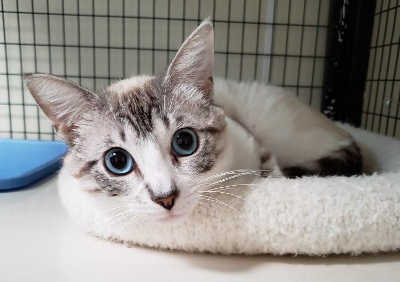
Male domestic short hair
This adult male domestic short hair cat has lynx point coloring and blue eyes.
He has been neutered.
He is in cat room kennel No. 74, ID No. 13719.
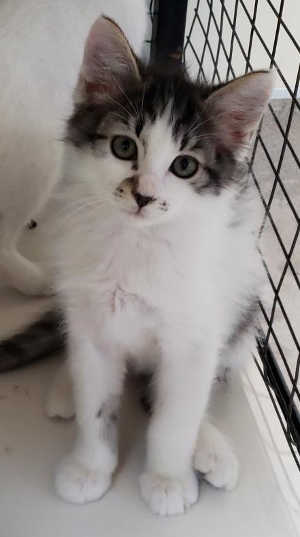
Domestic medium hair kitten
This male domestic medium hair kitten has a white coat and blue eyes.
He has been neutered.
He is in cat room kennel No. 129a, ID No. 13688.
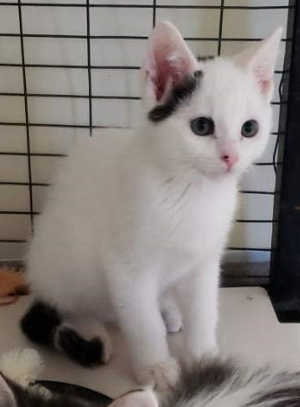
Male domestic short hair kitten
This male domestic short hair kitten has a white coat with black markings and blue eyes.
He has been neutered.
He is in cat room kennel No. 129c, ID No. 13690.
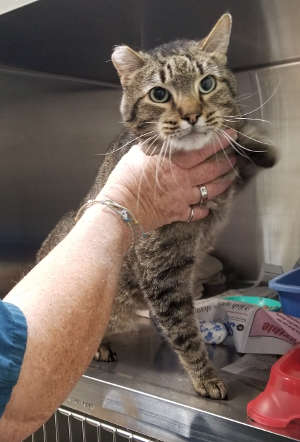
Domestic short hair cat
This male domestic short hair cat has a brown tabby coat.
He has been neutered.
He is in kennel No. 138, ID No. 13701.
Email Elizabeth Larson at
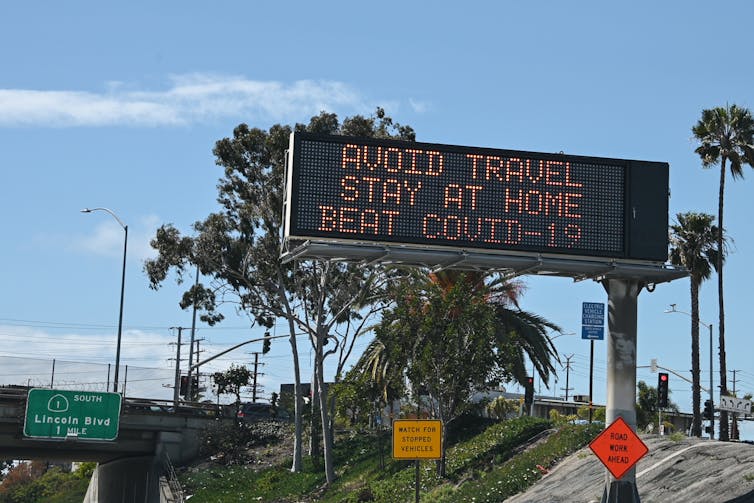
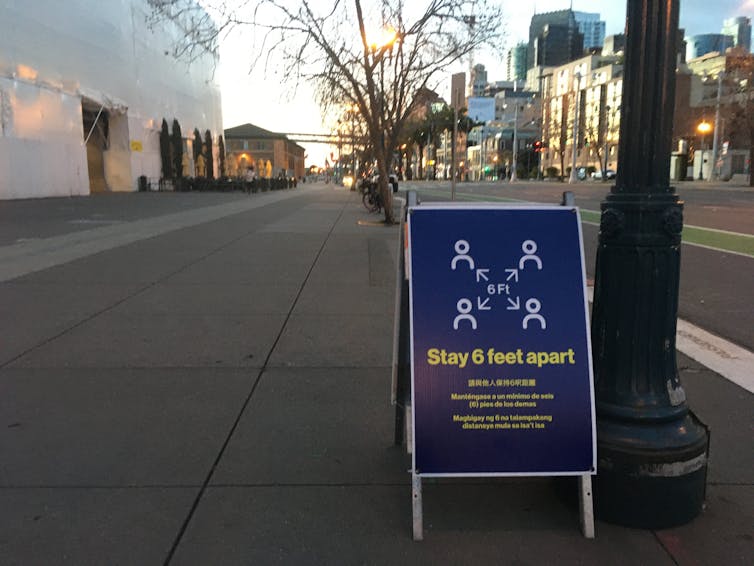
The primary strategy to slow the spread of the coronavirus has been social distancing, which reduces contact between individuals.
While the federal government can recommend social distancing, the decision to issue formal measures ultimately resides with state and local governments. Though almost every state in the nation eventually implemented some policy to combat COVID-19, there was a lot of variation in what was done and how quickly each state acted.
In recent research with the Center for Health Economics and Policy Studies, we examined the strongest of such measures, the shelter-in-place order. We focused on the order in California, which was the first to be implemented.
Why California?
California provides an important case study for several reasons. This is a state which not only implemented its social distancing measures early in terms of the date, but also early relative to the growth rate of the statewide outbreak.
The average daily growth in confirmed coronavirus cases in the four days before enactment in California was 19.1%. As a comparison, New York, which was the hardest-hit state, had an average daily coronavirus case growth rate of 39.5% in the four days before enacting the New York state shelter-in-place order.
While both states acted quickly in terms of the calendar, California was faster relative to the progression of its outbreak.
Second, California has several dense population centers, meaning that, like New York, it was a location where the disease had the potential to spread in an incredibly rapid fashion.
Additional research has shown that social distancing measures tend to be more effective in more urbanized locations. California continues to serve as a bellwether case allowing other states and researchers to obtain valuable early data.
Do state orders matter?
The difficulty with looking at a single state is that it is difficult to tell what would have happened in the absence of the shelter-in-place order.
This is where California moving early helps from a research perspective. At the same time California put its policy in place, many states which share attributes with California, such as Massachusetts and Colorado, did not.
We constructed a counterfactual California using a method called synthetic control. To create a “fake California,” we averaged other states together to match California’s characteristics as closely as possible. We did this based on California’s rate of COVID-19 spread, as well as based on more general characteristics such as population density.
The first question that we sought to answer was whether California’s shelter-in-place order actually got individuals to stay at home since some – but not all – people were already avoiding social contact when it went into effect. We wanted to see if California’s new rules increased social distancing, keeping in mind that violation of the new order counts as a misdemeanor offense and can carry jail time.
To do this, we used anonymous cellphone data from SafeGraph, which has made its resources available to researchers for free to study the pandemic. These data track what percent of cellphones leave their owner’s home in given day. From this, we gathered that due to the order, individuals stayed home for the entire day about 2% to 3% more than they would have otherwise.
Next, we looked at daily case and death rates using data from the Centers for Disease Control and Prevention and the New York Times. We estimated that California’s shelter-in-place order reduced the number of confirmed cases by roughly 50,000 in the month following the policy.
We found smaller – but still substantial – reductions in COVID-19 fatalities, approximately 1,600 COVID-19 avoided fatalities in the same month.
Potential downsides
At the same time, nothing is free. During the month after California’s shelter-in-place order was enacted, California saw an increase in its unemployment insurance claims of 2.83 million.
If we conservatively attribute all of these lost jobs to the new policies, then our estimates imply a trade-off of around 400 jobs lost per COVID-19 death averted. Reality is likely more nuanced. Some of these jobs would have been lost anyway due to individuals social distancing on their own and spending less, practices that reduced the the need for workers.
This leads to two important types of questions.
First, is the trade-off worth it? This question is going to be debated for some time to come. We hope our numbers can help individuals understand the trade-off when forming their opinions.
The second type of questions are even more difficult. For example: How much of the COVID-19 spread was prevented, and how much was simply pushed off until later in the pandemic? In a similar vein, how many jobs were lost permanently, and how many will be recovered quickly once the pandemic is under control?
These are the big questions that will shape the trajectory of the pandemic, the economic recovery to follow and policy surrounding the two. It is what we and other economists will be watching carefully in the months to come.
[Insight, in your inbox each day. You can get it with The Conversation’s email newsletter.]
Andrew Friedson, Assistant Professor of Economics, University of Colorado Denver; Dhaval Dave, Stanton Research Professor in Economics, Bentley University; Drew McNichols, Postdoctoral research fellow, University of California San Diego, and Joseph J. Sabia, Professor and Director of Center for Health Economics & Policy Studies, San Diego State University
This article is republished from The Conversation under a Creative Commons license. Read the original article.
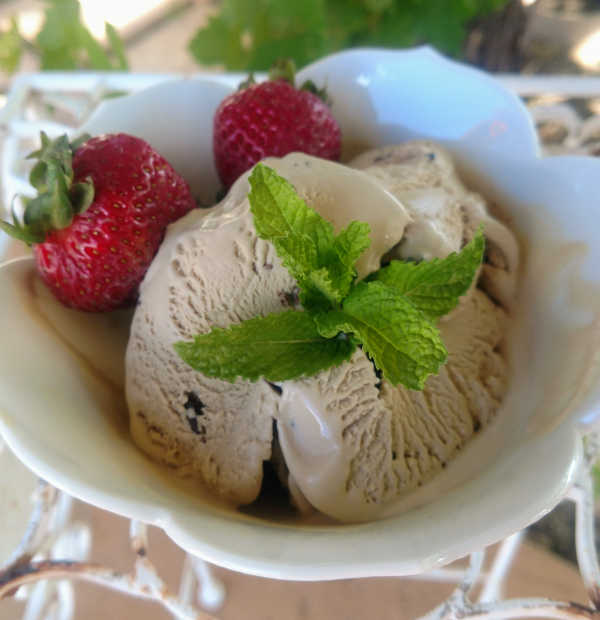
Not only can we scream for Ice cream, we can shout for sherbet, gelato, sorbet, shave ice, soft serve, ice pops, frozen yogurt, snow cones and frozen plant-based treats!
All these tasty concoctions are a welcome treat any time of year, but when temperatures rise, they become an absolute necessity.
In the heat of a summer day, my inner child comes out and I long to hear the musical tones of “Mr. Softee,” the ice cream truck that roamed the streets of my grandmother’s neighborhood decades ago.
Of all the blissful options, the one I crave most is ice cream, and it’s no wonder. Ice cream stimulates the release of serotonin and dopamine, two brain chemicals that boost one’s mood.
While I adore the rich lusciousness of a bowl of ice cream (and the resulting elation), I’m thankful for the lighter and more nutritious options available to us, like sorbets made simply with fruit, sugar and water or the many varieties of chilly treats made with dairy alternatives, such as coconut milk.
It’s hard to pin down the exact origins of what we now know as ice cream. According to historical records, an affinity for frozen drinks and desserts spans history and the globe.
As early as 4,000 B. C. nobles in Mesopotamia built ice houses along the Euphrates River so they could remain cool in the summer heat. Snow was sold in the streets of Athens in the fifth century B. C., most likely for mixing with wine to cool it.
Alexander the Great liked to indulge in snow and ice flavored with honey or nectar. Centuries later, Emperor Nero of Rome sent runners up mountainsides to bring him snow for fruit beverages.
During the Tang dynasty in China, flour, camphor and buffalo milk was mixed with ice to create a slushy beverage.
in the ancient Islamic world, sweetened drinks were cooled with snow from storehouses (in fact, the English word sherbet comes from a Turkish word for these drinks), and kulfi, a quasi-ice cream made from condensed milk frozen in molds, was served to Mughal emperors in India.
The first verified records of frozen ice creams and sherbets in Europe coincide with the earliest evidence for kulfi in India.
Both were possible due to the discovery that ice mixed with salt creates a lower freezing point than typical water. When liquid is immersed in a salt and ice slurry, an exothermic chemical reaction occurs which pulls heat away and causes quicker freezing. If stirred regularly, the formation of large ice crystals is prevented, resulting in a cold, scoop-able, foamy treat.
Some of us may have had the strenuous pleasure of cranking an old-fashioned ice cream machine. If so, the result of this chemical reaction was experienced.
Europe’s likely ice cream birthplace was Italy in the 1600s. Descriptions of water ices (also known as sherbet or sorbet) date to the 1620s, and by the middle of that century, they were featured in banquets across Europe.
Ice cream was brought to our side of the Atlantic by European colonists, with George Washington and Thomas Jefferson among its early aficionados.
Jefferson served ice cream in the executive mansion and among the small handful of recipes he wrote out, one was for French-style vanilla ice cream.
In the summer of 1790, a time when only the wealthy could afford ice cream, Washington spent roughly $200 on the frozen treat, the equivalent of over $5,500 today. In addition, he bought a mechanical ice cream maker for his estate at Mount Vernon and developed ice cream recipes.
Between the late 1800s and the mid-1900s, a plethora of ice cream innovations were made in the United States, including its mass production at factories, being sold at grocery stores, ice cream cones and soda fountains, from which came ice cream sodas, sundaes and milkshakes.
The dessert was further popularized during World War II when copious quantities were served in the military to boost morale. At that time, the U. S. military was the biggest producer of ice cream.
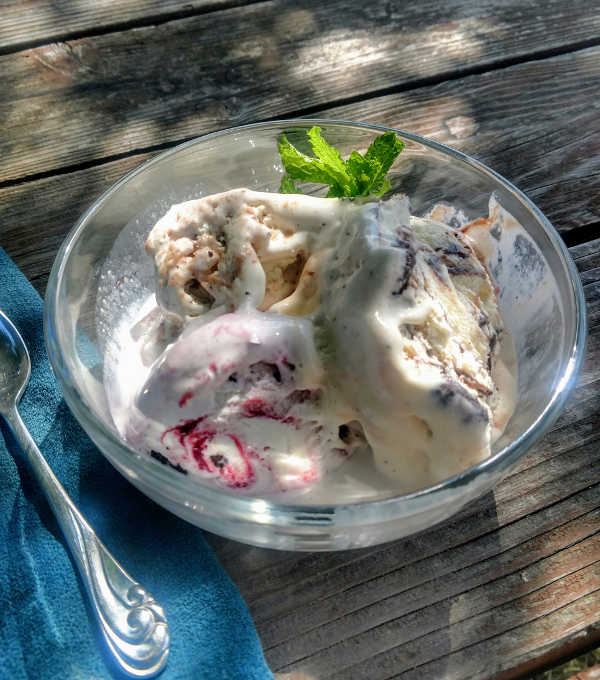
The Italian version of ice cream is known as gelato, which contains less air, making it denser. It’s lower in fat and is kept at a higher temperature than ice cream.
Sorbet is made with fruit or fruit juice, sometimes with alcohol, and has no dairy. Similarly, sherbet’s base is fruit juice, but it sometimes contains milk.
Shave ice, a frozen treat made with ice shaved from a large block and flavored with fruit syrup, is associated with Hawaii, though its early origins are in seventh century East Asia.
A snow cone is similar to shave ice; however, the ice is crushed, not shaved, which makes a difference in how the syrup is absorbed. Syrup will not drain to the bottom in a properly made shave ice.
These days there are dozens of versions of plant-based frozen desserts, made with soy, almond, or coconut milk in place of dairy products. Like traditional ice cream, they come in all forms: tubs, sandwiches and treats on a stick.
Speaking of treats on a stick, the invention of ice pops (now known as the brand name Popsicle) is a sweet story.
In 1905, an 11-year-old San Francisco boy named Frank Epperson left his powdered soda water drink on his porch after playing outside. The temperature doesn’t typically fall below freezing there, but it did that night, and when he found his drink in the morning, it was frozen solid, complete with its stir stick.
Years later, in 1922, Frank served his frozen “drink” to guests at a party, where it was a hit. He applied for and received a patent for it, initially calling it Ice on a Stick.
These days, over 1.6 billion gallons of ice cream and related frozen products are sold annually in the United States, with an average of four gallons per person being consumed each year! With those stats, it’s a good thing that our bodies burn more calories when eating something cold.
Today’s recipe is a basic template for sorbet. Using its techniques, any fruit can be turned into sorbet, whether a celebration of one or a favorite combination (like strawberry-nectarine).
A little liquor or wine can be stirred into its base for a grown-up sorbet (peach-bourbon or raspberry-rose’, for example), and herbs or spices can be infused into the simple syrup for unique flavor (think blackberry-thyme or watermelon-mint).
Sorbet can be turned into sherbet with a splash of coconut milk or cream.
Template for fruit sorbet
Use two pounds of fruit for a quart of sorbet. (This ends up being about five cups when cut up.) A little more or less is fine; this is a basic formula, not an exact recipe.
Puree the fruit with some sugar to create a sorbet base. The easiest way to add sugar is to create a simple syrup by simmering equal parts water and sugar until the sugar is dissolved and let it cool.
Start with 1 cup sugar dissolved in 1 cup water and add in stages until desired sweetness is reached. If infusing with herbs or spices, add them to the simple syrup while it’s heating and strain it after it cools.
When adding sugar, remember that most fruit is sweet on its own and may not need much. Balance this with the knowledge that freezing dulls sweetness, so the mixture should taste slightly sweeter than desired.
After pureeing with sugar, strain the sorbet base.
In addition to sweetening it, sugar plays a role in the sorbet’s texture. Too little makes the sorbet icy, and too much will make it slushy.
Here’s a tip: an egg can be floated in the sorbet base to determine if the level is right. Wash and dry a large egg and place in the strained sorbet base. If a nickel-sized round of egg is showing above the base, it’s perfect. If the circle is smaller or if the egg sinks, more sugar is needed. If the circle is larger, water or fruit juice will need to be added to balance the sugar.
At this point a couple tablespoons of alcohol may be stirred in, if using.
Pour mixture into a 9 x 13 pan and freeze until firm (2 to 3 hours), stirring with a fork every half hour.
Transfer to a covered container to store in the freezer.
Esther Oertel is a writer and passionate home cook from a family of chefs. She grew up in a restaurant, where she began creating recipes from a young age. She’s taught culinary classes in a variety of venues in Lake County and previously wrote “The Veggie Girl” column for Lake County News. Most recently she’s taught culinary classes at Sur La Table in Santa Rosa, Calif. She lives in Middletown, Calif.

LAKEPORT, Calif. – In an effort to add to the services provided to Lake County's homeless and those without shelter, Hope Harbor has teamed up with Orphan Dog and Elle Vet Services to provide two days of free veterinary clinics.
The clinics will also be available to low- or no-income seniors in the area.
Pets owned by these two vulnerable populations sometimes have no access to veterinary care.
Participants can expect wellness check-ups, parasite protection (for fleas and ticks), worming, microchipping and pain relief.
The services will be available Monday, June 8, and Tuesday, June 9, from 8:30 a.m. to 1:30 p.m.
Anyone who is experiencing homelessness and has a pet or is a low- or no-income senior with a pet is encouraged to call Karen at 707-349-2624 to set up an appointment.
Orphan Dog has been in operation in Lake County since 2004 and has rescued, spayed and neutered thousands of dogs since their founding.
Elle Vet Services is providing medication, vaccines and veterinary staff for the event.
Hope Harbor is Lake County's emergency homeless shelter and is run by the Lake Ministerial Association.
Dogs available for adoption this week include mixes of cattle dog Chihuahua, German Shepherd, husky, Lhasa Apso and pit bull.
Dogs that are adopted from Lake County Animal Care and Control are either neutered or spayed, microchipped and, if old enough, given a rabies shot and county license before being released to their new owner. License fees do not apply to residents of the cities of Lakeport or Clearlake.
The following dogs at the Lake County Animal Care and Control shelter have been cleared for adoption (additional dogs on the animal control Web site not listed are still “on hold”).
Because the shelter in place order remains in effect, call Lake County Animal Care and Control at 707-263-0278 or visit the shelter online at http://www.co.lake.ca.us/Government/Directory/Animal_Care_And_Control.htm for information on visiting or adopting.

Female Chihuahua
This female Chihuahua has a short tan coat.
She has been spayed.
She’s in kennel No. Q1, ID No. 13659.
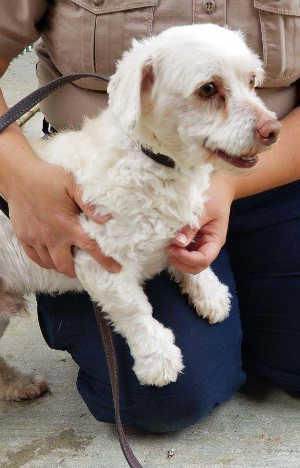
Male Lhasa Apso
This male Lhasa Apso has a shaved white coat with black markings.
He is in kennel No. 20, ID No. 13696.

‘Lady’
“Lady” is a female pit bull mix with a short tan coat.
She has been spayed.
She is in kennel No. 22, ID No. 13703.

Cattle dog
This male cattle dog has a short blue and brown coat.
He has been neutered.
He is in kennel No. 24, ID No. 13705.

Female Chihuahua
This female Chihuahua has a short black coat with white markings.
She is in kennel No. 25, ID No. 13686.

Female husky
This young female husky has a medium-length black and cream coat and blue eyes.
She is in kennel No. 27, ID No. 13707.

Male German Shepherd
This young male German Shepherd has a fully brown and black coat.
He is in kennel No. 31, ID No. 13706.
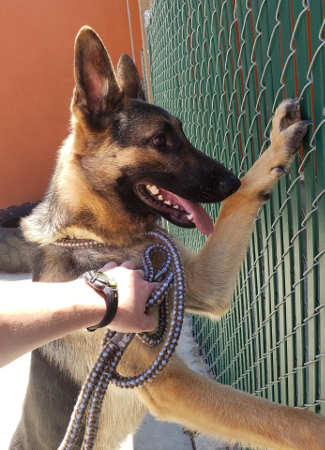
‘Leo’
“Leo” is a young male German Shepherd with a medium-length black and tan coat.
Shelter staff said the ideal home for him will have no cats or livestock.
He is a high energy, sweet boy, staff reported.
He is in kennel No. 33, ID No. 13708.
Email Elizabeth Larson at