 How to resolve AdBlock issue?
News
A recent survey of low-income Californians and communities of color reveals widespread concern about the health and economic impacts of COVID-19.
The polling was commissioned by the California Endowment – a private, statewide health foundation – and conducted at the end of April with over 800 respondents. The poll has a margin +/- 3.5 margin of error.
The results show that while many have lost jobs, had their hours cut back or their wages reduced – the dominant worry remains fear of infection.
Those concerns are well-founded. The California Department of Public Health confirmed that COVID-19 is having more severe impacts on people of color.
The agency said those impacts are most stark when tracking COVID-19 deaths, with Latinos, African Americans and Native Hawaiians and Pacific Islanders dying at disproportionately higher levels.
Poll respondents indicated that they are already taking advantage of a wide range of public benefits designed to offer support during the pandemic; and yet, about half lack confidence that they would know where to turn if they found themselves in need of further help.
“These findings illuminate that we need to do better to promote and target resources to meet the needs of the most vulnerable Californians, particularly our communities of color,” said Anthony Iton, MD, Senior Vice President, The California Endowment. “Of particular concern is the lack of mental health resources available to families.”
Nearly three-quarters of respondents say COVID-19 is a an “extremely” or “very serious” problem. However, 75 percent say the same about homelessness, 71 percent say the same about the cost of housing and 70 percent about the cost of living.
And while there are regional differences about the degree of concern due to COVID-19, with rural Northern California residents reporting lower levels of concern than residents of Los Angeles, there is a broad sentiment that the worst of the crisis is yet to come, and that it is impacting the health and finances of lower-income Californians and people of color more harshly than others.
Though many of the respondents – with one-third designated as essential workers – have seen their work hours cut or their wages reduced, their dominant fear is getting infected with COVID-19. Latino respondents were more likely than other groups to have had their hours cut, wages reduced, been laid off or have had to go to work despite health concerns.
Respondents offer broad support for the public benefits that have been introduced in response to the pandemic, and 71 percent say they would be likely to apply for benefits like Medi-Cal or unemployment if they lost their main source of income.
Despite this, about half of respondents indicate they lack the necessary information on how to access help. The relatively small share (22%) who are unlikely to apply think they either do not need benefits or that they are unlikely to qualify.
Furthermore, half of parents say it has been difficult to address childcare needs; and while many say they have received academic support from their school, less than half say they have been given information on mental health resources for their children (45%), information on accessing public benefits (44%), and mental health resources for patients (37%).
These survey findings confirm income, ethnic and gender disparities in how the crisis has impacted California’s most vulnerable residents, and that there is a clear need to better connect this segment of the population with available benefits and supports.
The polling was commissioned by the California Endowment – a private, statewide health foundation – and conducted at the end of April with over 800 respondents. The poll has a margin +/- 3.5 margin of error.
The results show that while many have lost jobs, had their hours cut back or their wages reduced – the dominant worry remains fear of infection.
Those concerns are well-founded. The California Department of Public Health confirmed that COVID-19 is having more severe impacts on people of color.
The agency said those impacts are most stark when tracking COVID-19 deaths, with Latinos, African Americans and Native Hawaiians and Pacific Islanders dying at disproportionately higher levels.
Poll respondents indicated that they are already taking advantage of a wide range of public benefits designed to offer support during the pandemic; and yet, about half lack confidence that they would know where to turn if they found themselves in need of further help.
“These findings illuminate that we need to do better to promote and target resources to meet the needs of the most vulnerable Californians, particularly our communities of color,” said Anthony Iton, MD, Senior Vice President, The California Endowment. “Of particular concern is the lack of mental health resources available to families.”
Nearly three-quarters of respondents say COVID-19 is a an “extremely” or “very serious” problem. However, 75 percent say the same about homelessness, 71 percent say the same about the cost of housing and 70 percent about the cost of living.
And while there are regional differences about the degree of concern due to COVID-19, with rural Northern California residents reporting lower levels of concern than residents of Los Angeles, there is a broad sentiment that the worst of the crisis is yet to come, and that it is impacting the health and finances of lower-income Californians and people of color more harshly than others.
Though many of the respondents – with one-third designated as essential workers – have seen their work hours cut or their wages reduced, their dominant fear is getting infected with COVID-19. Latino respondents were more likely than other groups to have had their hours cut, wages reduced, been laid off or have had to go to work despite health concerns.
Respondents offer broad support for the public benefits that have been introduced in response to the pandemic, and 71 percent say they would be likely to apply for benefits like Medi-Cal or unemployment if they lost their main source of income.
Despite this, about half of respondents indicate they lack the necessary information on how to access help. The relatively small share (22%) who are unlikely to apply think they either do not need benefits or that they are unlikely to qualify.
Furthermore, half of parents say it has been difficult to address childcare needs; and while many say they have received academic support from their school, less than half say they have been given information on mental health resources for their children (45%), information on accessing public benefits (44%), and mental health resources for patients (37%).
These survey findings confirm income, ethnic and gender disparities in how the crisis has impacted California’s most vulnerable residents, and that there is a clear need to better connect this segment of the population with available benefits and supports.

LAKE COUNTY, Calif. – For the first time since World War II, the Lake County Fair has been canceled, another local impact of the COVID-19 pandemic.
The Lake County Fair Board of Directors, also known as the board of the 49th District Agricultural Association, took the unanimous vote to cancel this year’s event at its Monday meeting, according to Fair Chief Executive Officer Sheli Wright.
The fair was set to take place Sept. 3 to 6. It is held annually over the Labor Day weekend.
Drawing an average of 40,000 visitors each year, Wright estimated the fair to be Lake County’s largest event.
Lake County’s fair now joins more than 40 fair events of about 70 across the state that have announced their cancellation or postponement so far this year.
Fair Board President Tom Turner called the cancellation of the fair “a difficult decision.”
“While we were hopeful that we would be able to move forward with the 2020 Lake County Fair, based on the information we have received from the Department of Public Health, California Department of Food and Agriculture and our local Public Health officer, our fair board was compelled to make the decision to cancel the fair,” Turner said.
Wright said some people posting in response to the Lake County Fair’s cancelation decision on Facebook were upset, but she explained that local and state officials said no mass gatherings would be allowed by September.
There had been concerns since the end of April that the fair would not be able to go forward due to restrictions on large events.
At the Board of Supervisors’ April 28 meeting, Lake County Public Health Officer Dr. Gary Pace said that no large gatherings were likely to be allowed through the end of the year, and at that time he recommended the cancellation of the fair.
Steve Lyle, the California Department of Food and Agriculture’s director of Public Affairs, told Lake County News that “fairs are asked to work with local officials when making a determination about whether to hold their fair this year.”
Working on alternatives
Wright, who grew up showing animals at the fair, started as the Lake County Fair’s CEO in mid-March, as the pandemic’s shelter in place was getting underway.
At around the time Wright came on board, county and state officials had been in talks about locating a quarantine and recovery site for COVID-19 patients at the Lake County Fairgrounds, a process which was supported by the governor’s state of emergency declaration, as Lake County News has reported. However, county officials later scrapped that plan.
Following Pace’s April announcement, Wright and the fair board continued to try to find alternatives while waiting for more guidance from the state, as the 49th District Agricultural Association is a state agency.
Wright said she was in consultation with Pace about the fair and began working early on with the Junior Livestock Committee to find an alternative for 4-H and Future Farmers of America members who have raised animals for sale at this year’s event.
Because the Lake County Fair falls later in the year, Wright said it gave the fair board an opportunity to see what the state would do and to follow the plans of other fairs.
However, with fairs and events like the California State Fair and the Grand Nationals at the Cow Palace being called off for the year, the odds for the Lake County Fair’s annual appearance appeared increasingly diminished.
Wright said she was concerned not just for the impacts on the local economy but for the companies built around fairs, like those that provide amusements and carnival services.
“Fairs are big business,” she said.
Fair officials said they considered ongoing guidance and information from state and county public health and government officials on the status of the coronavirus pandemic and the improbability that mass gatherings, like the Lake County Fair, could safely and responsibly take place.
Ultimately, as governor-appointed representatives, the fair board said in a statement that it has a responsibility to provide a safe experience to the community-at-large, the people who depend on county fairs for their livelihood, fairgoers and Lake County Fair staff.
“The fair is truly a labor of love that our board of directors, staff, vendors, sponsors, exhibitors, community members and volunteers spend many months of planning to make the fair a success,” the board statement said.
Other events at the fairgrounds – such as the Lake County Rodeo, which had been set for early July – also have been canceled.
So far, the Lakeport Speedway hasn’t been able to resume races, although Pace allowed the Northern California Racing Association to do “test and tune” practice sessions – without spectators – at the Lakeport Speedway on May 23 and 24.
Concerned about long-term impacts
Officials like Wright and Richard Persons, a former Lake County Fair CEO who now manages the Santa Maria Fairpark, have raised concerns about the pandemic’s long-term impact on the fair and outdoor event industries, with many experienced fair executives retiring and leaving doubt as to who will lead those sectors as they return and reopen.
Santa Maria announced June 2 that it also is canceling its fair this year, which like Lake County’s hasn’t had an interruption since World War II.
While the Lake County Fair is holding its own financially, Wright told Lake County News that with many fairs across the state now in the red, the impacts of the pandemic and its shutdown could spell “the end of an era.”
A number of fairs across the state are reporting on their websites that they are facing insolvency and bankruptcy, and are asking for the help of their communities in appealing to the California Legislature for emergency funding.
Meanwhile, Wright is continuing to work with the Junior Livestock Committee on an online auction format and said she feels fortunate to have such a dedicated group of livestock people to help plan this year’s out-of-the-ordinary auction event.
She said to watch for updates in coming weeks on how the community can help support youth in their market livestock projects.
Email Elizabeth Larson at
LAKE COUNTY, Calif. – The county of Lake will move forward with reopening or expansion of 13 business sectors beginning on Friday, June 12, based on guidance issued by the state last week.
Dr. Gary Pace told the Board of Supervisors on Tuesday that the sectors would reopen on Friday, the first day of eligibility, based on guidance from the state given on June 5.
The reopening or expanding sectors are:
– Childcare services (updated, expanded).
– Schools (interim guidance).
– Day camps.
– Casinos operated by sovereign tribal nations.
– Music, film and television production.
– Professional sports without live audiences.
– Campgrounds, RV parks and outdoor recreation.
– Hotels and vacation rentals (e.g. VRBO, Airbnb).
– Cardrooms, satellite wagering facilities and racetracks.
– Family entertainment centers.
– Restaurants, bars and wineries.
– Fitness facilities.
– Museums, galleries, zoos and aquariums.
The California Department of Public Health’s guidelines can be found here.
“Opening or expanding 13 sectors at once represents a considerable, non-incremental, step forward, and will increase the probability of spread, including community transmission, of COVID-19 in Lake County,” said Lake County Public Health Officer Dr. Gary Pace.
However, Pace added, “It is the right decision at this time,” noting that Tuesday was the 83rd day Lake County residents have been subject to shelter-in-place and statewide stay at home orders.
“Effects of the actions of the past three months on our communities and businesses have been widespread and severe, and most of those consequences have been economic, as opposed to directly health-related. We have had 30 total cases, and spread has not, to date, occurred at such a rate that it has stressed our local healthcare system,” Pace said.
He said viral activity has remained stable in Lake County’s communities, even as the county has reopened Clear Lake and some industries that support tourism, such as restaurants.
Pace said in recent weeks he’s “continually undertaken substantial review of the status of COVID-19 in our communities,” and has had discussions with stakeholders including the Lake County COVID-19 Recovery Workgroup, a collective that includes two members of the Board of Supervisors and executive leadership from the county and cities of Clearlake and Lakeport.
He said there’s agreement that “now is the time for a big step forward.”
The July 4 holiday typically sees a major influx of visitors to Lake County to use Clear Lake. “Businesses in all sectors continue to adjust to social distancing and other precautions, and offering a reasonable period of time for businesses in the newly-eligible industries to open and adapt prior to that holiday weekend makes sense,” Pace said.
There are industries that remain closed statewide, including e nail salons, massage therapists, estheticians and tattoo parlors. “Provided COVID-19 activity remains stable, we hope to facilitate those businesses safely reopening as soon as possible, as well. While no timeline has been provided by the State, things seem to be accelerating,” Pace said.
“Precautions only become more important as more activities are permitted. Handwashing will help keep businesses open. Social distancing and face coverings will allow us to move about more freely. For preventive measures to be effective, people must practice them, and encourage others to do so,” Pace said.
He said all reopening businesses in Lake County must take precautions, and complete and post social distancing protocol and business certification forms. COVID-19 reopening plans must also be made available to customers or public officials, on request.
Forms and resources for Lake County businesses are available here.
Sector-specific reopening guidance can be found here.
If you review this information and still have questions, reach out to the Lake County Health Services staff atThis email address is being protected from spambots. You need JavaScript enabled to view it. or 707-263-8174.
Dr. Gary Pace told the Board of Supervisors on Tuesday that the sectors would reopen on Friday, the first day of eligibility, based on guidance from the state given on June 5.
The reopening or expanding sectors are:
– Childcare services (updated, expanded).
– Schools (interim guidance).
– Day camps.
– Casinos operated by sovereign tribal nations.
– Music, film and television production.
– Professional sports without live audiences.
– Campgrounds, RV parks and outdoor recreation.
– Hotels and vacation rentals (e.g. VRBO, Airbnb).
– Cardrooms, satellite wagering facilities and racetracks.
– Family entertainment centers.
– Restaurants, bars and wineries.
– Fitness facilities.
– Museums, galleries, zoos and aquariums.
The California Department of Public Health’s guidelines can be found here.
“Opening or expanding 13 sectors at once represents a considerable, non-incremental, step forward, and will increase the probability of spread, including community transmission, of COVID-19 in Lake County,” said Lake County Public Health Officer Dr. Gary Pace.
However, Pace added, “It is the right decision at this time,” noting that Tuesday was the 83rd day Lake County residents have been subject to shelter-in-place and statewide stay at home orders.
“Effects of the actions of the past three months on our communities and businesses have been widespread and severe, and most of those consequences have been economic, as opposed to directly health-related. We have had 30 total cases, and spread has not, to date, occurred at such a rate that it has stressed our local healthcare system,” Pace said.
He said viral activity has remained stable in Lake County’s communities, even as the county has reopened Clear Lake and some industries that support tourism, such as restaurants.
Pace said in recent weeks he’s “continually undertaken substantial review of the status of COVID-19 in our communities,” and has had discussions with stakeholders including the Lake County COVID-19 Recovery Workgroup, a collective that includes two members of the Board of Supervisors and executive leadership from the county and cities of Clearlake and Lakeport.
He said there’s agreement that “now is the time for a big step forward.”
The July 4 holiday typically sees a major influx of visitors to Lake County to use Clear Lake. “Businesses in all sectors continue to adjust to social distancing and other precautions, and offering a reasonable period of time for businesses in the newly-eligible industries to open and adapt prior to that holiday weekend makes sense,” Pace said.
There are industries that remain closed statewide, including e nail salons, massage therapists, estheticians and tattoo parlors. “Provided COVID-19 activity remains stable, we hope to facilitate those businesses safely reopening as soon as possible, as well. While no timeline has been provided by the State, things seem to be accelerating,” Pace said.
“Precautions only become more important as more activities are permitted. Handwashing will help keep businesses open. Social distancing and face coverings will allow us to move about more freely. For preventive measures to be effective, people must practice them, and encourage others to do so,” Pace said.
He said all reopening businesses in Lake County must take precautions, and complete and post social distancing protocol and business certification forms. COVID-19 reopening plans must also be made available to customers or public officials, on request.
Forms and resources for Lake County businesses are available here.
Sector-specific reopening guidance can be found here.
If you review this information and still have questions, reach out to the Lake County Health Services staff at
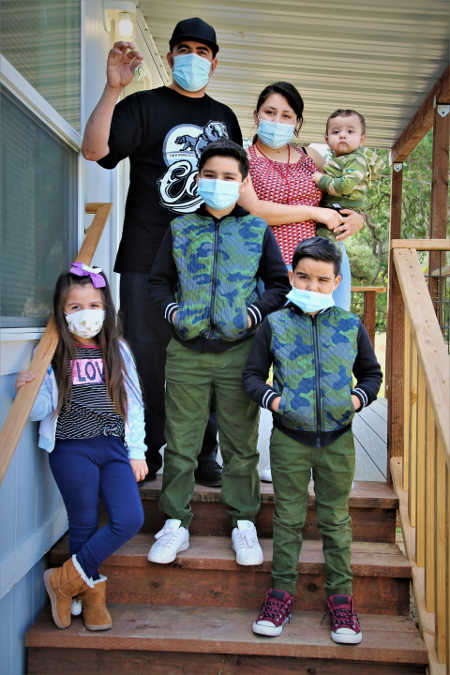
LAKE COUNTY, Calif. – When the Valley Fire ripped through portions of Middletown in 2015, it destroyed one of the largest apartment complexes in Lake County.
The Rodriguez-Barajas family, attending a family baptism that day, received the news about the fire. They attempted to return home but when the police would not allow them through, the family was forced to return to their in-laws home to anxiously await the outcome of the fire.
Then the news came. Everything they had was lost. Maria Rodriguez-Barajas was so upset it affected her third pregnancy and she was admitted to the hospital.
After a 2-week stay with the in-laws, the family found temporary refuge at Konocti Harbor until they were able to relocate to a small, two-bedroom apartment and start their lives again.
But their living quarters were tight, with three children forced to share a single bedroom in an apartment woefully too small for their needs.
Facing a fourth pregnancy and eviction threats because of their overcrowded housing situation, Hector and Maria Rodriguez-Barajas turned to Habitat for Humanity Lake County for help.
Then came the Clayton fire and the family’s application was destroyed with the loss of Habitat’s Lower Lake office.
Unaware of that loss, the family waited to hear if they were approved for the Homeownership program, only to learn, at last, that they would need to begin the application process all over again.
They persevered, resubmitting their application documentation, and working hard to meet the necessary program requirements.
Through other fires, construction issues, complications with their fourth pregnancy, difficult weather and the recent pandemic situation, the family stayed true to their vision of owning their own home.
On June 1, their efforts were finally rewarded with the keys to their new Lower Lake home, where the children no longer have to share a bedroom and the family has room to grow and thrive.
“We have never been happier,” said Maria Rodriguez-Barajas, her gratitude evident in her eyes. “And the kids have never been happier. They now go outside to play every day and I do not have to be scared of being kicked out of my home. We won’t have to worry again. We are so grateful.”
If you or someone you know is interested in the possibility of homeownership, please contact the Habitat for Humanity office at 707-994-1100 for more information or to receive a preapplication.
LAKE COUNTY, Calif. – On Thursday, June 11, Rep. Mike Thompson (CA-05) will hold a virtual town hall from 4:30 to 5:30 p.m. to discuss the economy.
Thompson will be joined by special guest, Mark Zandi, chief economist for Moody’s Analytics for a discussion about the economy and what we need to help working families and get back on track in light of the coronavirus pandemic.
This is the eighth in a series of virtual town halls. All constituents of California’s Fifth Congressional District and members of the press are invited to join.
This event will be held over Zoom and interested participants must email Thompson’s office atThis email address is being protected from spambots. You need JavaScript enabled to view it. in order to join, as the platform has a capacity of 500 people. Interested participants will be notified via email with instructions on how to join.
The event will also be streamed on Facebook Live via Thompson’s page, https://www.facebook.com/RepMikeThompson/ .
Thompson represents California’s Fifth Congressional District, which includes all or part of Contra Costa, Lake, Napa, Solano and Sonoma counties.
Thompson will be joined by special guest, Mark Zandi, chief economist for Moody’s Analytics for a discussion about the economy and what we need to help working families and get back on track in light of the coronavirus pandemic.
This is the eighth in a series of virtual town halls. All constituents of California’s Fifth Congressional District and members of the press are invited to join.
This event will be held over Zoom and interested participants must email Thompson’s office at
The event will also be streamed on Facebook Live via Thompson’s page, https://www.facebook.com/RepMikeThompson/ .
Thompson represents California’s Fifth Congressional District, which includes all or part of Contra Costa, Lake, Napa, Solano and Sonoma counties.
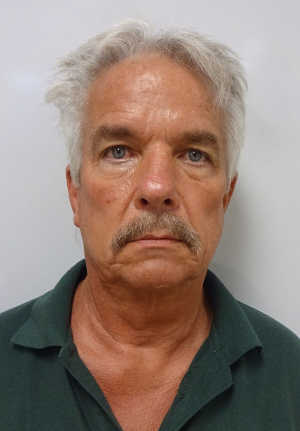
LAKE COUNTY, Calif. – A Lucerne man has been sentenced to state prison for possession of child pornography in a case that authorities said involved children who were identified as living in the Philippines.
On Monday, Richard Allen Berry, 63, received the prison sentence in Lake County Superior Court, according to the Lake County Sheriff’s Office.
Lt. Corey Paulich said Berry also may be facing federal charges for the production of child pornography involving the children in the Philippines who were exploited in the case.
In November 2018, the Lake County Sheriff’s Office Major Crimes Unit received information that Berry, who is a convicted sex offender, was possibly in possession of child pornography, Paulich said.
Paulich said sheriff’s detectives obtained search warrants for Berry’s residence as well as records related to his internet activity.
During the next several months, detectives reviewed evidence obtained from the search warrants. Paulich said several images of child pornography were located on Berry’s electronic devices.
Evidence also was discovered that showed Berry had been live video chatting with subjects in the Philippines who were commercially sexually exploiting children, Paulich reported.
Paulich said Berry was exchanging money for photographs and videos containing child pornography with the subjects in the Philippines.
On May 2, 2019, Berry was arrested pursuant to an arrest warrant that had been issued by the Lake County Superior Court related to this investigation. Paulich said Berry was booked at the Lake County Jail on charges of possession of child pornography with a prior conviction for a registrable sex offense.
Paulich said detectives believed they were able to identify a residence in the Philippines related to one of the children who were being sexually exploited.
Sheriff’s detectives requested assistance from agents with the Homeland Security in coordinating with officials from the Philippines National Police. Paulich said detectives requested attempts be made to contact, identify and check the welfare of the child who was possibly being sexually exploited.
On March 12, 2020, the Major Crimes Unit received information that an operation had been conducted in the Philippines on March 9 and 10 that resulted in the rescue of six victims related to online sexual exploitation, Paulich said.
Two of the victims rescued were a 12-year-old girl and 6-year-old boy who were related to the investigation of Berry in Lake County, according to Paulich’s report.
The investigation found other images of child pornography but detectives don’t know where those children are from, Paulich told Lake County News.
Then, on Monday, Berry was sentenced in Lake County Superior Court, Paulich said.
Paulich said late last year the Lake County Sheriff’s Office entered into a memorandum of understanding with several local, county and city organizations recognizing the need for a collaborative approach to identifying, intervening, and bringing children to safety that are being commercially sexually exploited in Lake County.
“The Lake County Sheriff’s Office will continue to work with local, state, federal and international agencies to stop these horrific crimes,” Paulich said.