How to resolve AdBlock issue?
News

CLEARLAKE, Calif. – The Clearlake Police Department is asking for the community’s help in locating an at-risk teenager last seen on Friday evening.
Police are trying to locate Yessinia Michelle Rodriguez, 16.
Rodriguez was last seen at her residence in the 3600 block of Vista Street in Clearlake at 6 p.m. Friday, the department said.
She is described as a Hispanic female, 5 feet 6 inches tall, and 140 pounds.
If you have information that can assist in helping safely locate Rodriguez, please call 911 or contact Clearlake Police Department at 707-994-8251.
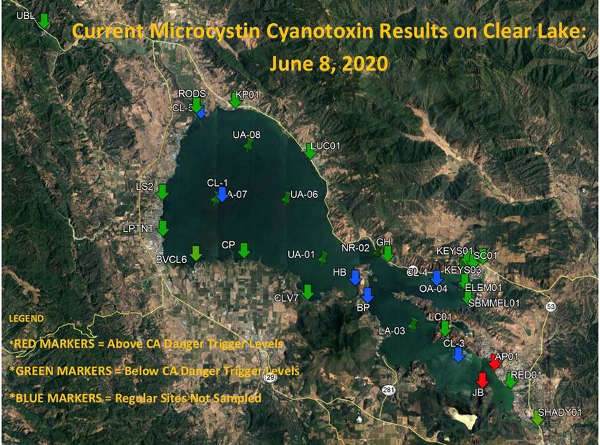
LAKE COUNTY, Calif. – Additional testing for cyanobacteria at sites around Clear Lake has found levels in the “danger threshold” at two locations.
Earlier this week, officials reported that testing conducted by the Big Valley Band of Pomo Indians and Elem Indian Colony had found microcystin cyanotoxin at the “elevated” level at Austin Park Beach in Clearlake, as Lake County News has reported.
On Friday, Lake County Public Health Officer Dr. Gary Pace said lab testing has now confirmed that Austin Park in Clearlake and Jago Bay near Lower Lake, have demonstrated significantly elevated levels, both sites testing above the “danger” threshold level.
Public Health urges boaters and recreational users to avoid direct contact with or use of waters containing cyanobacteria. Wading, swimming and other contact with the water, scum, foam or algae at these locations may present serious health risks.
At the level of toxicity currently evident in Jago Bay and Austin Park, the Centers for Disease Control and Prevention recommends people and animals should stay out of the water until further notice.
Officials asked that people also avoid contact with the scum in the water or near the shore.
If you or a family member becomes ill after exposure to potentially-affected water, seek medical attention. Adverse health effects can include upset stomach, vomiting and diarrhea. In severe cases, liver and kidney damage may result.
Pet owners should not allow their animals to drink the water or go near the scum, and they are encouraged to contact a veterinarian if your animal shows signs of illness.
Fish and shellfish that have been in contact with “danger” level algal blooms are not safe to eat, and affected water should not be used for drinking or cooking.
Large, biologically rich natural bodies of water, like Clear Lake, are dynamic in water quality. Understanding what signs to look for when recreating can help ensure residents and visitors safely enjoy Lake County’s defining feature.
For more information, visit the county’s online resources on cyanobacteria and health effects and precautions.
For current cyanotoxin lab results, please visit the Big Valley Band of Pomo Indians cyanotoxin monitoring website and Clear Lake Water Quality Facebook page.

California’s Medi-Cal program requires beneficiaries to pay a monthly share of cost towards meeting their healthcare expenses.
Share of Cost is computed based on the beneficiary’s monthly income less deductions, such as for the personal allowance and for any monthly maintenance needs allowance (to keep the beneficiary’s well spouse from impoverishment).
Share of Cost, however, may be used to pay for necessary medical or remedial drugs or services that Medi-Cal otherwise does not pay-for itself. The foregoing applies both in the skilled nursing home and at home settings.
In a skilled nursing home, the share of cost can be used to pay for “necessary medical or remedial care, supplies and/or equipment” provided these items are “included as part of the physician’s plan of care, and have the physician’s prescription or order in his or her medical records at the facility” (All County Wide Director’s Letter (“ACWD”) No. 89-54 (July 24, 1989)).
Federal law requires skilled nursing facilities to have a written “Plan of Care” for each resident (42 USC 1396r(b)(2)).
The plan discusses the kind of services the patient needs; what type of health care professional should provide the services; how often the patient needs the services; what kind of equipment or supplies the patient needs; if the patient needs a special diet; the patient’s goals; and how the care plan will help the patient to reach such goal.
The resident’s family and advocates can give their input as to treatment.
Input into the written care plan is an opportunity for families to use the Medi-Cal beneficiary’s share of cost that would otherwise go to the skilled nursing facility to pay for necessary medical or remedial care, supplies and/or equipment. Medi-Cal makes up the difference to the nursing home.
If a resident at a nursing home has unpaid prior medical bills, including any unpaid nursing home bills incurred prior to beginning Medi-Cal, the resident may seek to use his or her monthly Share of Cost to gradually pay off these unpaid medical bills (Department of Health Care’s “Medi-Cal Procedures Manual”, Article 10, Subsection 10R).
Next, a Medi-Cal beneficiary who receives In-Home Health Care Services, or IHSS, may also use their Medi-Cal Share of Cost to pay out of pocket expenses paid for personal care.
“Out-of-pocket personal care services must, however, be prescribed by a physician, nurse case manager, assessed as part of the IHSS Assessment of Need (but not provided under the IHSS program), or included in the beneficiary’s plan of care as necessary to prevent him/her from being moved to a long term care facility for essential treatment”. “Personal care services are services which are required to accomplish the activities of daily living and are defined in Title 22, CCR, Section 51183(a).” (ACWDL No. 15-02, page 2 (January 12, 2015).
There are specific rules detailing how to use the share of cost to pay for expenses. Documentation of all expenses are required to be provided. The rules as to what is allowed to be claimed and what documentation is needed is provided for beneficiaries in a long term skilled nursing home is in ACWDL 89-54, and for beneficiaries receiving IHSS in ACWDL 15-02.
Families wishing to amend a beneficiary’s care plan to include additional medicine or services may consider hiring a “geriatric care manager” or “ageing life care specialist” as an advocate to discuss the patient’s medical and remedial care needs with the physician.
Anyone wishing to read ACWDL 89-54 or ACWDL 15-02 can read them online at www.dhcs.ca.gov/services/medi-cal/eligibility/Pages/ACWDLbyyear.aspx .
Dennis A. Fordham, attorney, is a State Bar-Certified Specialist in estate planning, probate and trust law. His office is at 870 S. Main St., Lakeport, Calif. He can be reached at

Just as our own moon floats away from Earth a tiny bit more each year, other moons are doing the same with their host planets.
As a moon orbits, its gravity pulls on the planet, causing a temporary bulge in the planet as it passes.
Over time, the energy created by the bulging and subsiding transfers from the planet to the moon, nudging it farther and farther out. Our Moon drifts 1.5 inches (3.8 centimeters) from Earth each year.
Scientists thought they knew the rate at which the giant moon Titan is moving away from Saturn, but they recently made a surprising discovery: Using data from NASA's Cassini spacecraft, they found Titan drifting a hundred times faster than previously understood — about 4 inches (11 centimeters) per year.
The findings may help address an age-old question. While scientists know that Saturn formed 4.6 billion years ago in the early days of the solar system, there's more uncertainty about when the planet's rings and its system of more than 80 moons formed.
Titan is currently 759,000 miles (1.2 million kilometers) from Saturn. The revised rate of its drift suggests that the moon started out much closer to Saturn, which would mean the whole system expanded more quickly than previously believed.
"This result brings an important new piece of the puzzle for the highly debated question of the age of the Saturn system and how its moons formed," said Valery Lainey, lead author of the work published June 8 in Nature Astronomy. He conducted the research as a scientist at NASA's Jet Propulsion Laboratory in Southern California before joining the Paris Observatory at PSL University.
Making sense of moon migration
The findings on Titan's rate of drift also provide important confirmation of a new theory that explains and predicts how planets affect their moons' orbits.
For the last 50 years, scientists have applied the same formulas to estimate how fast a moon drifts from its planet, a rate that can also be used to determine a moon's age.
Those formulas and the classical theories on which they're based were applied to moons large and small all over the solar system.
The theories assumed that in systems such as Saturn's, with dozens of moons, the outer moons like Titan migrated outward more slowly than moons closer in because they are farther from their host planet's gravity.
Four years ago, theoretical astrophysicist Jim Fuller, now of Caltech, published research that upended those theories.
Fuller's theory predicted that outer moons can migrate outward at a similar rate to inner moons because they become locked in a different kind of orbit pattern that links to the particular wobble of a planet and slings them outward.
"The new measurements imply that these kind of planet-moon interactions can be more prominent than prior expectations and that they can apply to many systems, such as other planetary moon systems, exoplanets — those outside our solar system — and even binary star systems, where stars orbit each other," said Fuller, a coauthor of the new paper.
To reach their results, the authors mapped stars in the background of Cassini images and tracked Titan's position.
To confirm their findings, they compared them with an independent dataset: radio science data collected by Cassini.
During 10 close flybys between 2006 and 2016, the spacecraft sent radio waves to Earth. Scientists studied how the signal's frequency was changed by their interactions with their surroundings to estimate how Titan's orbit evolved.
"By using two completely different datasets, we obtained results that are in full agreement, and also in agreement with Jim Fuller's theory, which predicted a much faster migration of Titan," said coauthor Paolo Tortora, of Italy's University of Bologna. Tortora is a member of the Cassini Radio Science team and worked on the research with the support of the Italian Space Agency.
Managed by JPL, Cassini was an orbiter that observed Saturn for more than 13 years before exhausting its fuel supply. The mission plunged it into the planet's atmosphere in September 2017, in part to protect its moon Enceladus, which Cassini discovered might hold conditions suitable for life.
The Cassini-Huygens mission is a cooperative project of NASA, the European Space Agency and the Italian Space Agency. JPL, a division of Caltech in Pasadena, manages the mission for NASA's Science Mission Directorate in Washington. JPL designed, developed and assembled the Cassini orbiter.
More information about Cassini can be found here.
LAKE COUNTY, Calif. – Two members of the same household have become the latest confirmed cases of COVID-19 in Lake County.
Public Health Officer Dr. Gary Pace said the 31st case was identified on Thursday and on Friday an individual living in the same household also tested positive, bringing Lake County’s case total to 32.
Pace said both individuals were exposed to a person visiting from out of the county who subsequently tested positive for COVID-19.
“Early contact tracing has not revealed any concerns for additional Lake County cases, but investigations are ongoing,” Pace said.
As of Friday, there are four active confirmed cases in Lake County, and all are stable and on home isolation. The other 28 patients have recovered, Pace said.
So far, approximately 3,302 people have been tested for COVID-19, with the results of 214 tests still pending, according to the Lake County Public Health COVID-19 dashboard.
Information on local testing is available here.
Pace said there remains no evidence of widespread community transmission in Lake County.
“We are now outside of the 14-day period following the Memorial Day holiday, and it is very encouraging that we did not see a surge in cases as a result of increased activity that weekend,” said Pace.
He added, “That is very probably a testimony to people taking individual precautions, including practicing good hygiene and wearing face coverings.”
Email Elizabeth Larson atThis email address is being protected from spambots. You need JavaScript enabled to view it. . Follow her on Twitter, @ERLarson, or Lake County News, @LakeCoNews.
Public Health Officer Dr. Gary Pace said the 31st case was identified on Thursday and on Friday an individual living in the same household also tested positive, bringing Lake County’s case total to 32.
Pace said both individuals were exposed to a person visiting from out of the county who subsequently tested positive for COVID-19.
“Early contact tracing has not revealed any concerns for additional Lake County cases, but investigations are ongoing,” Pace said.
As of Friday, there are four active confirmed cases in Lake County, and all are stable and on home isolation. The other 28 patients have recovered, Pace said.
So far, approximately 3,302 people have been tested for COVID-19, with the results of 214 tests still pending, according to the Lake County Public Health COVID-19 dashboard.
Information on local testing is available here.
Pace said there remains no evidence of widespread community transmission in Lake County.
“We are now outside of the 14-day period following the Memorial Day holiday, and it is very encouraging that we did not see a surge in cases as a result of increased activity that weekend,” said Pace.
He added, “That is very probably a testimony to people taking individual precautions, including practicing good hygiene and wearing face coverings.”
Email Elizabeth Larson at
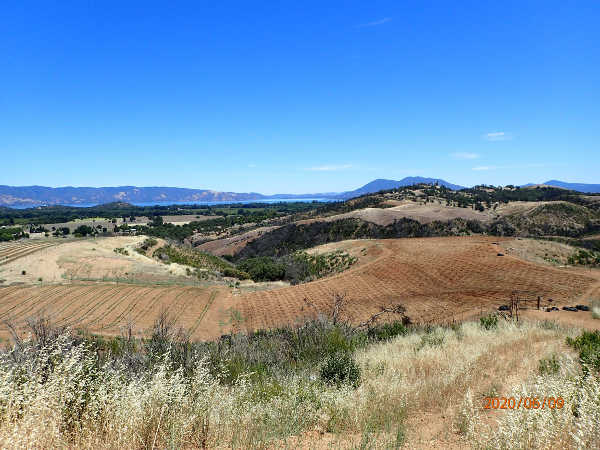
LAKE COUNTY, Calif. – Authorities have eradicated a large and unpermitted marijuana grow near Lakeport.
Lake County Sheriff’s Lt. Corey Paulich said that on June 5, Lake County Sheriff’s Narcotics detectives received information regarding an unpermitted marijuana growing operation located on Dessie Drive in Lakeport from the Lake County Community Development Department.
Detectives were told there were approximately 20,000 marijuana plants currently being cultivated as well as illegal grading that had been performed on the property, Paulich said.
Community Development explained that the property owner had obtained an early activation permit which allowed for planting of the plants while completing the permit process. Paulich said the early activation permit had expired in January 2020.
Paulich said Community Development further explained that no permits would be issued for the operation due to the environmental damage caused by the illegal grading.
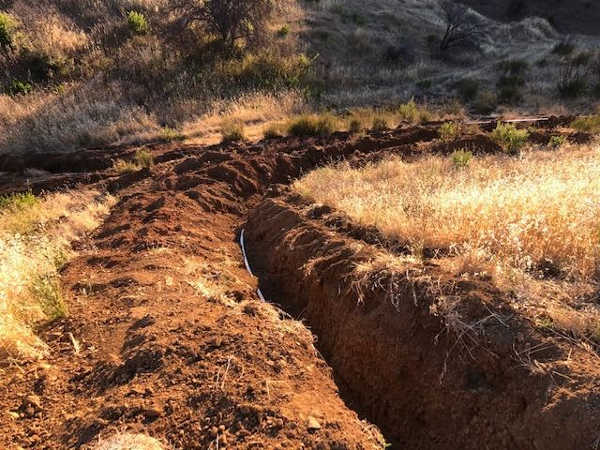
Detectives conducted surveillance of the growing operation and observed several hoop-style greenhouses on the property. Paulich said they also observed a recently installed irrigation well with a large trench leading to the grow site. The trench spanned approximately 500 yards and crossed two drainages.
On Tuesday, detectives served a search warrant at the Dessie Drive location. Paulich said detectives contacted seven adults and one minor at the grow site.
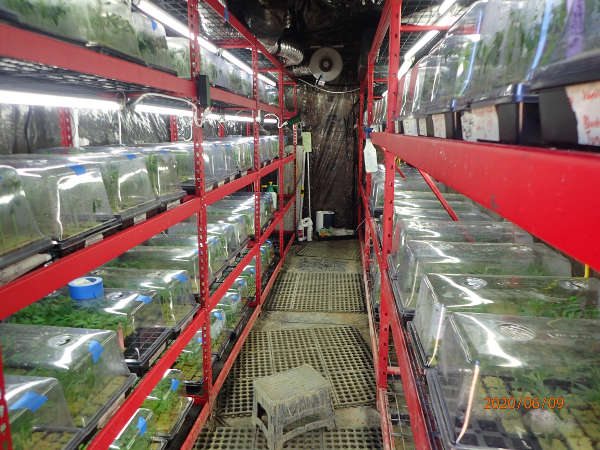
Paulich said they observed seven hoop-style greenhouses and two conex storage containers that were being used for cultivation. There was a large graded area that was also being used to cultivate marijuana.
The graded area crossed two natural drainages. There was loose soil and trash in the drainages. These drainages met at the bottom of the grow site and ultimately drain into Scotts Creek, Paulich said.
Detectives interviewed Kieron Julian Riley, 32, of Lakeport who told detectives he was the lead grower for the operation. Paulich said Riley admitted that he did not have a permit from the county to work on the grow site. Riley believed there were 20,000 to 25,000 marijuana plants on the property.

Paulich said detectives searched Riley finding he was in possession of suspected Ketamine, LSD and Ecstasy pills. Riley also had text messages on his cell phone related to mailing marijuana out of state, which he confirmed he was doing.
All of the other subjects were interviewed including the minor. They all admitted to working on the property helping cultivate the marijuana. None of the subjects had permits from the county allowing them to work at the grow site, Paulich said.
Detectives eradicated approximately 48,000 marijuana plants. Paulich said they also located two 9-millimeter handguns on the property and 1,000 rounds for the handguns.
Paulich said all subjects were released from the property. Detectives will be forwarding the case to the District Attorney’s Office for review of charges for cultivation of marijuana with environmental crimes, possession of marijuana for sale, maintaining a location for the purpose of storing and distributing a controlled substance for sale, and possession of a controlled substance.
“The sheriff’s office recognizes that there are numerous growers who follow and abide by the state and local permitting regulations related to marijuana growing in Lake County,” Paulich said. “The sheriff’s office will continue to investigate and take action on growers who fail to comply with these regulations and operate illegal growing operations that damage our county and the environment.”