 How to resolve AdBlock issue?
News
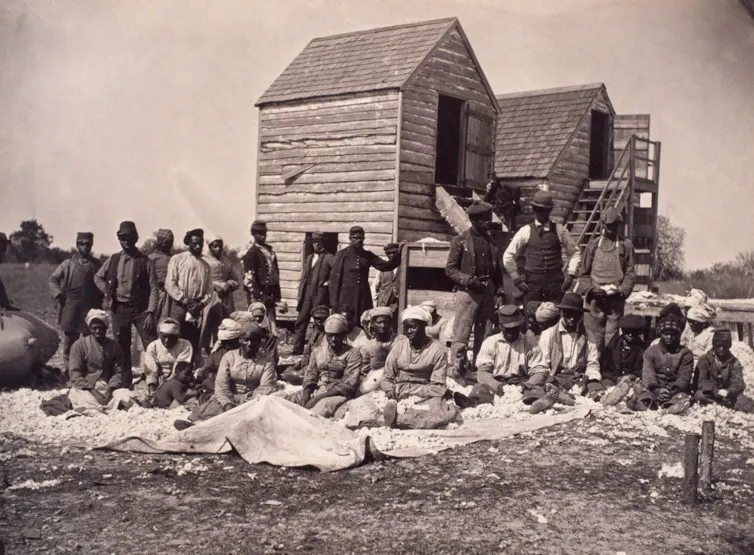
Underlying the recent unrest sweeping U.S. cities over police brutality is a fundamental inequity in wealth, land and power that has circumscribed black lives since the end of slavery in the U.S.
The “40 acres and a mule” promised to formerly enslaved Africans never came to pass. There was no redistribution of land, no reparations for the wealth extracted from stolen land by stolen labor.
June 19 is celebrated by black Americans as Juneteenth, marking the date in 1865 that former slaves were informed of their freedom, albeit two years after the Emancipation Proclamation. Coming this year at a time of protest over the continued police killing of black people, it provides an opportunity to look back at how black Americans were deprived of land ownership and the economic power that it brings. An expanded concept of the “black commons” – based on shared economic, cultural and digital resources as well as land – could act as one means of redress. As professors in urban planning and landscape architecture, our research suggests that such a concept could be a part of undoing the racist legacy of chattel slavery by encouraging economic development and creating communal wealth.
Land grab
The proportion of the United States under black ownership has actually shrunk over the last 100 years or so.
At their peak in 1910, African American farmers made up around 14% of all U.S. farmers, owning 16 to 19 million acres of land. By 2012, black Americans represented just 1.6% of the farming community, owning 3.6 million acres of land. Another study shows a 98% decline in black farmers between 1920, and 1997. This contrasts sharply with an increase in acres owned by white farmers over the same period.
In a 1998 report, the U.S. Department of Agriculture ascribed this decline to a long and “well-documented” history of discrimination against black farmers, ranging from New Deal and USDA discriminatory practices dating from the 1930s to 1950s-era exclusion from legal, title and loan resources.
Discriminatory practices have also affected who owns property as well as land. In 2017, the racial homeownership gap was at its highest level for 50 years, with 79.1% of white Americans owning a home compared to 41.8% of black Americans. This gap is even larger than it was when racist housing practices such as redlining, which denied black residents mortgages to buy, or loans to renovate, property were legal.
The lack of ownership is crucial to understanding the crippling economic disparity that has hollowed out the black middle class and continues to plague black America – making it harder to accrue wealth and pass it on to future generations.
A 2017 report found that the median net worth for non-immigrant black American households in the greater Boston region was just US$8, but for whites it was $247,500. This was due to “general housing and lending discrimination through restrictive covenants, redlining and other lending practices.”
Nationally, between 1983 and 2013, median black household wealth decreased by 75% to $1,700 while median white household wealth increased 14% to $116,800.
Freedom farms
Land ownership today could look very different. The idea of collective ownership has a long history in the United States. Even during slavery, a piece of ground was granted by slave masters for enslaved African subsistence farming. The Jamaican social theorist Sylvia Wynter called this land “the plot.”
Wynter has explained how that these parcels of land were transformed into communal areas where slaves could establish their own social order, sustain traditional African folklore and foodways – growing yams, cassava and sweet potatoes. Plots were often called “yam grounds,” so important was this staple food.
The connection between food, land, power and cultural survival was subversive in its nature. By appropriating physical space to support collective growing practices within the brutal constraints of slavery, black people also demonstrated the need for common, shared mental space to enable their survival and resistance. Herbalism, medicine and midwifery, and other African American healing practices were seen as acts of resistance that were “intimately tied to religion and community,” according to historian Sharla M. Fett.
With the end of slavery, these plots disappeared.
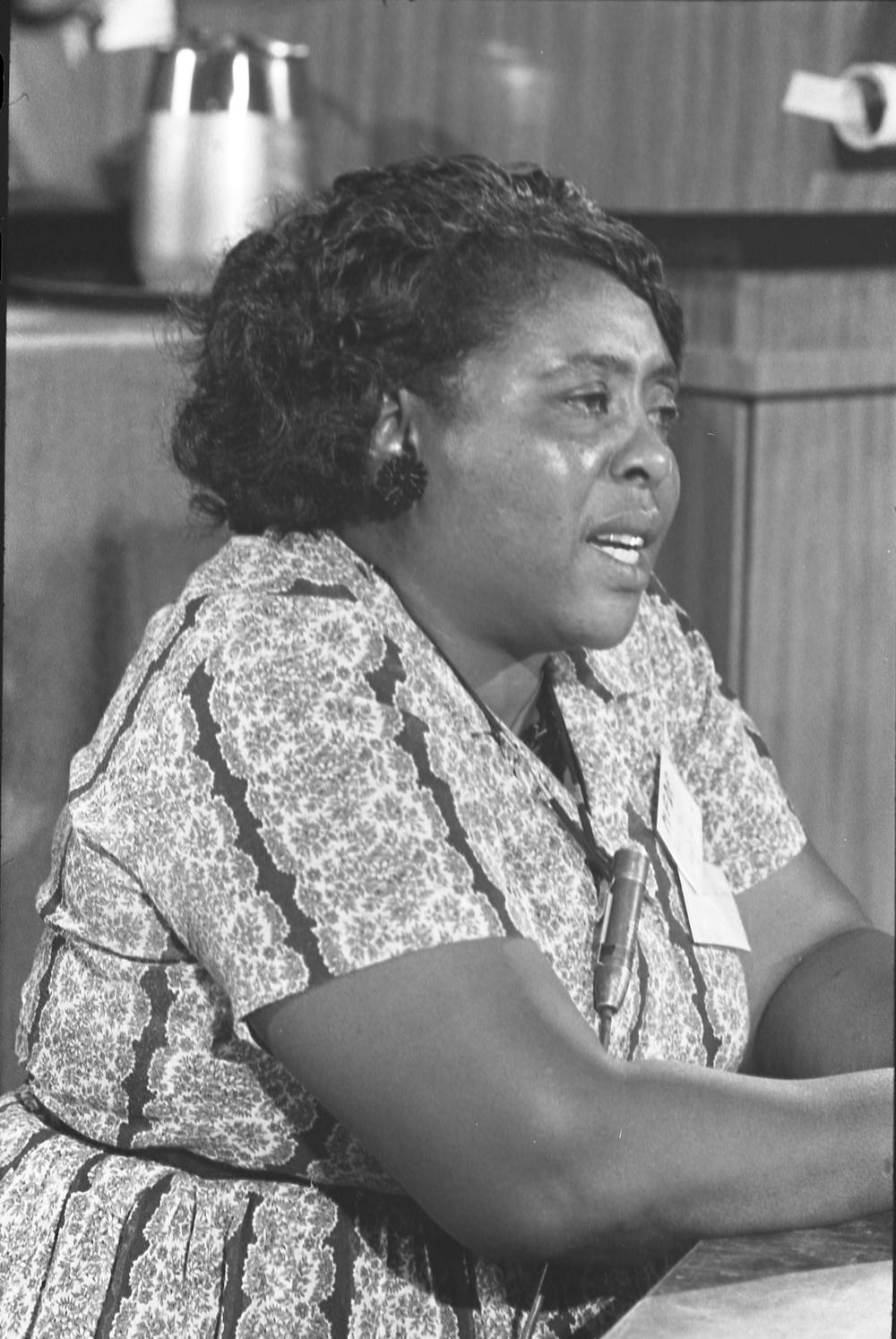
The principles of collective land ownership evolved in post-slavery black America. It was central to civil rights organizer Fannie Lou Hamer’s Freedom Farms, a cooperative model designed to deliver economic justice to the poorest black farmers in the American South.
In Hamer’s view, the fight for justice in the face of oppression required a measure of independence that could be achieved through owning land and providing resources for the community.
This idea of a black commons as a means of economic empowerment formed a focus of W.E.B. DuBois’ 1907 “Economic Co-operation Among Negro Americans.” DuBois believed that the extreme segregation of the Jim Crow era made it necessary to ground economic empowerment in the cultural bonds between black people and that this could be achieved through cooperative ownership.
Credit unions and co-ops
The accumulation of wealth was not the only desired consequence of a black commons.
In 1967, social critic Harold Cruse argued for a “new institutionalism” that would create a “new dynamic synthesis of politics, economics, and culture.” In his view, economic ventures needed to be grounded in the greater aspirations of black communities – politically, culturally and economically. This could be achieved through a black commons.
As the political economist Jessica Gordon Nembhard has noted in reference to black credit unions and mutual aid funds, “African Americans, as well as other people of color and low-income people, have benefited greatly from cooperative ownership and democratic economic participation throughout the nation’s history.”
The nonprofit Schumacher Center for a New Economics is working to rejuvenate the idea of black commons. In a 2018 statement, the center proposed to adopt a community land trust structure “to serve as a national vehicle to amass purchased and gifted lands in a black commons with the specific purpose of facilitating low-cost access for black Americans hitherto without such access.”
Meanwhile, shared equity housing schemes and community land trusts continue to grow, helping black families own property, advance racial and economic justice and mitigate displacement resulting from gentrification.
Digital commons
The disproportionate effects of the coronavirus pandemic and unrest over police brutality have highlighted deeply embedded structural racism. Organizations such as Black Lives Matter and the Movement for Black Lives are demonstrating a renewed vigor around collective action and a blueprint for how this can be achieved in a digital age. At the same time, black Americans are also forging a cultural commons through events such as DJ D-Nice’s Club Quarantine – a hugely popular online dance party. Club Quarantine’s success indicates the potential for using online platforms to facilitate community building, pointing toward future economic cooperation.
That’s what organizations like Urban Patch are trying to do. The nonprofit group uses crowdsourced funding to build community spaces in inner city areas of Indianapolis and encourage collective economic development that echoes the black commons of years past.
The long history of racism in the United States has held back black Americans for generations. But the current soul searching over this legacy is also an unrivaled opportunity to look again at the idea of collective black action and ownership, using it to create a community and economy that goes beyond just ownership of land for wealth’s sake.
[Deep knowledge, daily. Sign up for The Conversation’s newsletter.]
Julian Agyeman, Professor of Urban and Environmental Policy and Planning, Tufts University and Kofi Boone, Professor of Landscape Architecture, College of Design, North Carolina State University
This article is republished from The Conversation under a Creative Commons license. Read the original article.
While the agency issued an excessive heat watch for much of the neighboring Sacramento Valley – where temperatures will be well over the century mark – conditions will be slightly cooler in Lake County.
The detailed Lake County forecast calls for daytime temperatures in the 90s over the weekend, with the south county’s forecast being closer to the century mark. Nighttime temperatures will rise into the lost 60s for the weekend.
Winds of up to 10 miles per hour also are in the weekend forecast, with calm winds expected on Monday.
On Monday and Tuesday, the forecast calls for temperatures at or close to the 100-degree mark. The Middletown area is expected to have a daytime high of about 101 degrees.
From Wednesday through Friday, daytime temperatures will hover in the high 90s while nighttime temperatures will continue to be in the low 60s, based on the forecast.
Email Elizabeth Larson at
On June 15, 2020, a citizen scientist spotted a never-before-seen comet in data from the Solar and Heliospheric Observatory, or SOHO — the 4,000th comet discovery in the spacecraft’s 25-year history.
The comet is nicknamed SOHO-4000, pending its official designation from the Minor Planet Center.
Like most other SOHO-discovered comets, SOHO-4000 is part of the Kreutz family of sungrazers.
The Kreutz family of comets all follow the same general trajectory, one that carries them skimming through the outer atmosphere of the sun. SOHO-4000 is on the small side, with a diameter in the range of 15-30 feet, and it was extremely faint and close to the sun when discovered — meaning SOHO is the only observatory that has spotted the comet, as it’s impossible to see from Earth with or without a telescope.
“I feel very fortunate to have found SOHO’s 4,000th comet. Although I knew that SOHO was nearing its 4,000th comet discovery, I did not initially think that this sungrazer would be it,” said Trygve Prestgard, who first spotted the comet in SOHO’s data. “It was only after discussing with other SOHO comet hunters, and counting through the most recent sungrazer discoveries, that the idea sunk in. I am honored to be part of such an amazing collaborative effort.”
SOHO is a joint mission of the European Space Agency, or ESA, and NASA.
Launched in 1995, SOHO studies the sun from its interior to its outer atmosphere, with an uninterrupted view from its vantage point between the sun and Earth, about a million miles from our planet. But over the past two and half decades, SOHO has also become the greatest comet finder in human history.
SOHO’s comet-hunting prowess comes from a combination of its long lifespan, its sensitive instruments focused on the solar corona, and the tireless work of citizen scientists who scour SOHO’s data for previously-undiscovered comets, which are clumps of frozen gases, rock and dust that orbit the sun.
“Not only has SOHO rewritten the history books in terms of solar physics, but, unexpectedly, it’s rewritten the books in terms of comets as well,” said Karl Battams, a space scientist at the U.S. Naval Research Lab in Washington, D.C., who works on SOHO and manages its comet-finding program.
The vast majority of comets found in SOHO’s data are from its coronagraph instrument, called LASCO, short for Large Angle and Spectrometric Coronagraph.
Like other coronagraphs, LASCO uses a solid object — in this case, a metal disk — to block out the sun’s bright face, allowing its cameras to focus on the relatively faint outer atmosphere, the corona.
The corona is critical to understanding how the sun’s changes propagate out into the solar system, making LASCO a key part of SOHO’s scientific quest to understand the sun and its influence.
But focusing on this faint region also means LASCO can do something other telescopes can’t — it can see comets flying extremely close to the sun, called sungrazers, which are otherwise blotted out by the sun’s intense light and impossible to see. This is why nearly all of SOHO’s 4,000 comet discoveries have come from LASCO’s data.
Like most who have discovered comets in SOHO’s data, Prestgard is a citizen scientist, searching for comets in his free time with the Sungrazer Project. The Sungrazer Project is a NASA-funded citizen science project, managed by Battams, which grew out of comet discoveries by citizen scientists early into SOHO’s mission.
“I have been actively involved in the Sungrazer Project for about eight years. My work with sungrazers is what solidified my long-term interest in planetary science,” said Prestgard, who recently completed a master’s degree in geophysics from Université Grenoble Alpes in France. “I enjoy the feeling of discovering something previously unknown, whether this is a nice “real time” comet or a “long-gone” overlooked one in the archives.”
In total, Prestgard has discovered around 120 previously-unknown comets using data from SOHO and NASA’s STEREO mission.
Copious comets
This 4,000th comet discovery came earlier than scientists initially expected — a byproduct of SOHO’s teamwork with the Parker Solar Probe mission.
In coordination with Parker Solar Probe’s fifth flyby of the sun, the SOHO team ran a special observation campaign in early June, increasing the frequency with which the LASCO instrument takes images of the sun’s corona, as well as doubling the exposure time for each image.
These changes in LASCO’s imaging were designed to help the instrument pick up faint structures that would later pass over Parker Solar Probe.
“Since Parker Solar Probe was crossing the plane of the sky as seen from Earth, the structures that we see from SOHO’s coronagraphs will be in the path of Parker Solar Probe,” said Angelos Vourlidas, an astrophysicist at the Johns Hopkins University Applied Physics Lab, in Laurel, Maryland, who works on the Parker Solar Probe and SOHO missions. “It’s the optimal configuration to do this type of imaging.”
These more-sensitive images also revealed a number of comets that, based on their brightness, would have been too faint to see in SOHO’s regular, shorter-exposure images.
SOHO typically sees an uptick in comet discoveries each June, because Earth’s position in space places SOHO at a good angle to see sunlight reflecting off of comets following the Kreutz path, a family of comets that accounts for about 85 percent of the comets discovered by SOHO.
But this June saw 17 comets discovered in the first nine days of the month, around double the normal rate of discoveries.
“Our exposure time is twice as long, so we’re gathering way more light, and seeing comets that are otherwise too faint for us to see — it’s just like any long-exposure photography,” said Battams. “It’s possible that if we doubled exposure time again, we’d see even more comets.”
SOHO is a cooperative effort between ESA and NASA. Mission control is based at NASA’s Goddard Space Flight Center in Greenbelt, Maryland. SOHO’s Large Angle and Spectrometric Coronagraph Experiment, or LASCO, which is the instrument that provides most of the comet imagery, was built by an international consortium, led by the U.S. Naval Research Lab.
This year’s document is presented online in the OpenGov format, which allows users to look at various graphics and explanations of the different budget units.
The document shows that revenue for all city funds totals $18,274,194 in the 2020-21 budget, down from the total $23,446,230 for the 2019-20 budget.
City Manager Alan Flora noted in his introduction to the budget that 2020 was supposed to be “that year” – the one in which Clearlake’s history was put behind it and the city “walked into the better future this community deserves.”
What the city got instead – like so many other cities, businesses, organizations and individuals nationwide and worldwide – is a year filled with unexpected challenges which have shuttered businesses, led to major job losses, stretched financial resources and caused many other hardships.
At Thursday night’s meeting, Flora told the council, “It’s definitely a unique situation that we’re living in.”
In his budget explanation, Flora pointed out some of the positives, such as how the community found ways to support each other while many city projects continued. “We found ways not to let our progress stop, but to look beyond this pandemic to a new day,” he wrote.
Even so, Flora told the council that they can expect hardships, including that the city will see some of its revenue sources down by 10 percent or more.
The picture is not entirely bleak, however. Flora said all of staff’s budget projections indicate that Clearlake will not be as impacted as some other communities which more heavily rely on tourism and, as a result, “are seeing staggering reductions in workforce and revenues.”
Actions Flora said the city has taken include departments keeping spending at “status quo” levels, with only scheduled salary increases; eliminating or reducing one-time expenses and contract services; no new projects or initiatives; and freezing most unfilled positions.
There “are a lot of conflicting opinions out there about where we’re headed,” Flora said.
He said that Beacon Economics, an independent economic research and consulting firm based in Los Angeles, is forecasting that the 2020 coronavirus recession will be one of the sharpest but shortest on record. Just how quickly the state’s economy returns to full speed rests largely on the willingness of the public and consumers to return to their regular routines.
Flora pointed out that the state of California will have to make considerable budget cuts this year, but that he doesn’t believe that the situation ultimately will be as extreme as projected.
He said the California Department of Finance’s revenue forecast, which calls for no growth in the United States’ gross domestic product, is likely overly pessimistic, and noted that most California job losses so far have occurred in lower-paying sectors of the economy, which have a lower impact on state revenues.
He said forecasts are for a V-shaped recovery, with pre-COVID-19 levels of production expected in the United States by year’s end, at which point national unemployment – most recently reported to be at 13.3 percent – is expected to be back in the 5-percent range.
Flora said there are drops in revenue sources such as sales tax, with the city also facing the possibility of deferred sales tax payments until later in the new fiscal year, a measure the governor is allowing to help businesses.
During the discussion, both Vice Mayor Dirk Slooten and Mayor Russ Cremer said they believed fiscal quarters coming up – not the current one – will actually be the most telling in understanding the financial picture.
Flora noted during the meeting that the city currently doesn’t have a finance director, and he credited Police Chief Andrew White and City Clerk/Administrative Services Director Melissa Swanson with stepping up to help craft the new budget.
Making adjustments
Flora said that in the 2019-20 fiscal year the city’s personnel costs were undercalculated. In the new budget, the city has adjusted its allocation of several positions, and has unfunded unfilled positions such as associate planner and facilities maintenance worker jobs.
They also are budgeting salary savings by not filling some jobs temporarily, like keeping a community service officer job open for six months, and keeping two police officer jobs vacant for two and six months, respectively.
There will be adjustments for the city council’s health insurance costs, reduced projects and equipment to balance reduced revenue from the Measure V road tax, and the use of additional fund balance from gas tax and SB 1 funding for projects, Flora said.
Areas that Flora said will see little or no adjustments include the budgets for the city attorney, city manager, finance, parks/city engineer/community center, administrative services, building maintenance, Community Development Block Grant and low- and moderate-income housing programs.
Several capital projects will move forward. Flora said they include road work on Pearl, Emory and Mullen, chip sealing and a local partnership project on Modoc and Second.
Facilities and infrastructure work that Flora said will continue, funded through Series A bonds and grants, are Austin Park, the new animal shelter, the Public Works corporation yard, improvements to the senior/community center and Airport Road.
There was no public comment on the budget before Councilman Phil Harris moved to approve it, Councilman Russ Perdock seconded and the council approved it 5-0.
Email Elizabeth Larson at
During the webinar, Matt Pender, director PG&E's Community Wildfire Safety Program, said the season for PSPS events remains Sept. 1 and beyond, when weather patterns tend to move toward dry winds from the east.
The goal is to make such PSPS events shorter in duration. However, while Pender said they think that longer events of three to five days are relatively unlikely – last year, Lake County was without power for six days – he said longer events are possible depending on the weather.
One of the main speakers for the Wednesday webinar was Carl Schoenhofer, senior manager of PG&E’s Humboldt and North Valley divisions.
He acknowledged that PG&E was in Butte County Superior Court this week for its role in the November 2018 Camp fire that destroyed the town of Paradise and killed 84 people.
On Monday, PG&E pleaded guilty to 84 counts of involuntary manslaughter and one count of unlawfully starting a fire, the result of a March agreement reached with the Butte County District Attorney’s Office.
Following the Monday court appearance, Butte County District Attorney Mike Ramsay called the plea “unprecedented in nature” and “a historic moment.”
“The lessons we've learned from the fire are being taken to heart and driving comprehensive changes currently underway at PG&E,” Schoenhofer said. “These changes are being done to make sure the tragedy that occurred in that community never occurs again. We cannot replace everything that was lost, but we hope by pleading guilty and accepting accountability compensating the victims and rebuilding paradise to honor those that were lost will help this community move forward.”
Measures to reduce size, scope of PSPS events
Schoenhofer then turned to the measures the company is now taking, explaining that the number of high fire threat areas in the PG&E service area have increased by more than 50 percent in the last eight years.
As a result, the company has implemented the PSPS when severe weather – including high winds and dry conditions – threatens a portion of the electric system. He said the most likely electric lines to be shut off will be those that pass through the high fire threat areas, although power to homes and businesses miles away could experience outages if the transmission lines that serve those areas are in the threat area.
While no single factor will drive a public safety power shutoff event, Schoenhofer said the deciding factors generally include a red flag warning issued by the National Weather Service. Factors contributing to those red flag warnings are low humidity levels and high winds.
He said PG&E has looked at weather model data collected over the last 30 years and developed a conservative estimate of the number of potential PSPS events that can be expected to occur.
In 2019, Lake and Mendocino counties had four PSPS events while the historical weather analysis would have anticipated maybe one event per year, he said.
Schoenhofer said PG&E is making PSPS events smaller in size and shorter in length. The company’s goal this year is to reduce the number of customers affected by a PSPS by nearly one-third compared to last year. When the shutoffs do occur, the company plans to shorten the duration and restore customers twice as fast after the severe weather event has passed.
The company is installing more than 600 devices systemwide that are capable of redirecting power and limiting the size of the outages so fewer communities are without power. Schoenhofer said they also are installing microgrids that use generators to serve portions of communities that include community resource centers, hospitals, police and fire stations, and gas stations and markets.
The restoration process will be sped up by using more helicopters to inspect potential damage to power equipment. He said PG&E has increased the contracted helicopters from 35 to 65 and is commissioning new airplanes for patrols that will utilize infrared equipment capable of nighttime inspections.
Weather stations and cameras part of preparedness plan
Dave Hotchkiss, PG&E’s public safety specialist, said the company is adding approximately 400 new weather stations this year for a total of 1,300 stations by the end or by 2022. This will equate to roughly one weather station per 20 circuit miles in the high fire threat areas.
In Lake County, Hotchkiss said PG&E currently has 20 weather stations installed with four additional remote automated weather stations that are either operated by the United States Forest Service or Cal Fire. In Mendocino County, PG&E has 30 weather stations, with another seven that are Forest Service or Cal Fire stations.
He said the data collected by these stations is streamed in real-time and available to municipalities, fire agencies, county and state Office of Emergency Services officials, and the public online. The company’s website also offers real-time weather information.
Earlier this week, the California Public Utilities Commission approved a proposal by PG&E to create microgrids to reduce the number of customers affected by public safety power shutoff, or PSPS, events, as Lake County News has reported.
Hotchkiss said PG&E is installing hundreds of new sectional devices in its service territory which separate the grid into smaller parts and keep the lights on for customers during PSPS events. For 2020, 11 such devices are planned to be installed in Lake County and 19 are planned in Mendocino County.
Last year, neither Lake nor Mendocino County had any microgrids established. Hotchkiss said that PG&E is setting up six possible sites this year in Lake County and 10 in Mendocino County.
Enhanced vegetation management is another aspect of PG&E’s effort to minimize fire starts, Hotchkis said.
For 2020 the company is focusing on vegetation work along 34 line miles in Lake County, which he said is an area stretching from Cobb to Middletown and toward Lower Lake and the city of Clearlake. In Mendocino County PG&E has 48 line miles targeted, including portions north of Laytonville toward Leggett and south to Willits and Potter Valley.
Schoenhofer said that since 2019 PG&E has been working with counties and tribes to improve community resource center locations to better serve our customers and communities.
They’re working to secure locations with permanent structures and have received more than 300 site recommendations that they are currently reviewing. Schoenhofer said PG&E has a team exploring options to provide key resources depending on what COVID-19 social distancing precautions may be in place during the fire season. Those options could include a mobile van, a pop-up tent or possibly reconfigured community resource centers.
Pender explained that there are two kinds of microgrids they can use to deploy generation and power up the customers who are safe to energize during PSPS events. They have five substation locations identified for that equipment in Lake County this year.
During the meeting, officials were asked about older equipment, some of which could be more than 100 years old. Older equipment was faulted for the Camp fire.
Pender said that the company, based on its inspections of equipment in 2019, is working on a new inspection cycle where every year equipment in the extreme fire threat area, also known as Tier 3, is inspected, with assets in Tier 2 to be inspected every third year.
The full webinar presentation will be posted in the PG&E website in the near future, the company reported.
Email Elizabeth Larson at
While the shelter has moved most of its dogs into foster, potential adopters can make appointments to meet and adopt available dogs.
The following dogs are ready for adoption or foster.

‘Bella’
“Bella” is a female American Bully mix with a short beige and tan coat.
She is dog No. 3537.

‘Lady’
“Lady” is a female German Shepherd mix.
She has been spayed.
She is dog No. 3683.
‘Spud’
“Spud” is a male American Staffordshire Terrier with a short brindle and white coat.
He has been neutered.
He is dog No. 3733.
Clearlake Animal Control’s shelter is located at 6820 Old Highway 53, off Airport Road.
Hours of operation are noon to 4 p.m. Tuesday through Saturday. The shelter is closed Sundays, Mondays and major holidays; the shelter offers appointments on the days it’s closed to accommodate people.
Call the Clearlake Animal Control shelter at 707-273-9440, or email
Visit Clearlake Animal Control on Facebook or at the city’s website.
Email Elizabeth Larson at