 How to resolve AdBlock issue?
News
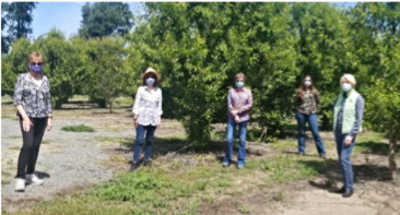
LAKE COUNTY, Calif – The AgVenture Steering Committee has announced the cancellation of AgVenture 2020 due to COVID-19.
The support over the years from speakers, donors, venues, caterers and transportation has been integral to the success of this ag education program, the committee said.
Since 2010, AgVenture has graduated nearly 120 professionals, elected officials and community leaders. Class members have used the knowledge gained in AgVenture to make informed decisions on ag-related policies.
The Steering Committee sincerely thanks all participants in this decade-long program.
Farming and food production are essential to our daily lives. The COVID crisis has illustrated the importance of our domestic food supply. Farmers, ranchers, farmworkers, haulers, processors, suppliers and all others associated with the Ag industry are essential workers. Our grocery stores rely on them.
Lake County’s agricultural community continues its efforts for a successful harvest and needs all the local support it can get during this critical time.
Over the past 10 years, AgVenture has educated non-farming community leaders about the vital role that agriculture plays in Lake County’s economy.
AgVenture sessions cover topics such as labor, history, marketing, water and land use, regulations, pest management and sustainability.
Community support grows from education and understanding. The AgVenture program has worked hard to this end and plans to continue that effort in years to come.
Rest assured that the AgVenture Steering Committee is already working to make 2021 their best year yet.
The AgVenture Steering Committee are all members of the Lake County Chapter of the California Women for Agriculture. These members are Diane Henderson, Annette Hopkins, Terry Dereniuk, Toni Scully and Brenna Sullivan.
LAKE COUNTY, Calif. – Woodland Community College continues to work closely with state, county health officers, and district leaders to move forward with efforts to serve students with in-person services on all three WCC campuses.
“As an open access institution, it is critical for the college to be equitable and accessible to the students we serve, especially our low-income and students of color who may struggle to gain access to technology and necessary navigational capital to succeed,” said College President Dr. Art Pimentel.
Part of this ongoing assessment and collaboration with our county health officers included the decision to transition all courses during the summer semester to a distance education modality at the Woodland and Lake campuses.
There are three courses at the Colusa County Campus that will be offered face-to-face.
College administration is working with all instructors to make necessary adjustments to the course format to offer the best educational experience to students based on the transition to distance education.
Last week, the college surveyed students from all three campuses in Yolo, Lake and Colusa counties regarding student services. The result showed an overwhelming amount of students preferred in-person student services.
The college is now offering on-site, essential enrollment services with minimal staffing,
Monday through Thursday from 9 a.m. to 4 p.m. Services include Admissions and Records, Financial Aid, Counseling, Department of Supportive Programs and Services, Library, Food Pantry and Veteran’s Services.
Additional student programs like CalWORKs, EOPS and TRIO are also available to
assist students on-site.
The Lake County and Colusa County campuses are also open during the same hours of operation.
Face coverings are required on all campuses and floor markings along with social distancing guidelines must be followed per county and district health guidelines. Staff will continue to serve students online and via phone should they prefer to stay home.
For more details regarding the services and health protocols, visit the college website.
This plan will require ongoing assessment from college and district leadership as the college works to implement safety mitigation measures to protect the college community and reduce the transmission of COVID-19 at all three WCC campuses.
“As an open access institution, it is critical for the college to be equitable and accessible to the students we serve, especially our low-income and students of color who may struggle to gain access to technology and necessary navigational capital to succeed,” said College President Dr. Art Pimentel.
Part of this ongoing assessment and collaboration with our county health officers included the decision to transition all courses during the summer semester to a distance education modality at the Woodland and Lake campuses.
There are three courses at the Colusa County Campus that will be offered face-to-face.
College administration is working with all instructors to make necessary adjustments to the course format to offer the best educational experience to students based on the transition to distance education.
Last week, the college surveyed students from all three campuses in Yolo, Lake and Colusa counties regarding student services. The result showed an overwhelming amount of students preferred in-person student services.
The college is now offering on-site, essential enrollment services with minimal staffing,
Monday through Thursday from 9 a.m. to 4 p.m. Services include Admissions and Records, Financial Aid, Counseling, Department of Supportive Programs and Services, Library, Food Pantry and Veteran’s Services.
Additional student programs like CalWORKs, EOPS and TRIO are also available to
assist students on-site.
The Lake County and Colusa County campuses are also open during the same hours of operation.
Face coverings are required on all campuses and floor markings along with social distancing guidelines must be followed per county and district health guidelines. Staff will continue to serve students online and via phone should they prefer to stay home.
For more details regarding the services and health protocols, visit the college website.
This plan will require ongoing assessment from college and district leadership as the college works to implement safety mitigation measures to protect the college community and reduce the transmission of COVID-19 at all three WCC campuses.

The Commission on Judicial Performance reported Tuesday that it has issued a decision and order removing Justice Jeffrey W. Johnson of the California Court of Appeal, Second Appellate District, Division One, from office.
The commission’s determination becomes final in 30 days, subject to discretionary review by the California Supreme Court.
The commission ordered Justice Johnson removed from office for 18 acts of prejudicial misconduct, comprised of more than 40 proven allegations.
The commission found that Justice Johnson engaged in the unwanted touching of four women, engaged in conduct that would reasonably be perceived as sexual harassment of seven women
at his court, and misused the prestige of his position and demeaned his judicial office by attempting to develop personal relationships with three other women.
He also is alleged to have further demeaned his office by his offensive conduct toward a fourth woman, as well as by multiple incidents of undignified conduct – including conduct at the courthouse for the Court of Appeal – while intoxicated, and displayed poor demeanor to coworkers and made a disparaging remark about judicial colleagues.
Justice Johnson’s misconduct was aggravated by his lack of candor throughout the commission proceedings, according to the commission’s report on its action.
The commission found that Justice Johnson “testified untruthfully in many instances.”
As a result of his misconduct and his lack of candor during the course of the proceedings, the commission concluded that Justice Johnson “cannot meet the fundamental expectations of his position as a judge.”
The decision and order are available on the commission’s website.
Johnson has served as an associate justice of the Court of Appeal since Aug. 3, 2009.
He is represented by Paul S. Meyer of Costa Mesa and Reginald A. Vitek of San Diego.
The commission is composed of six public members, three judges and two lawyers. The chairperson is Hon. Michael B. Harper.
Commission members Sarah Kruer Jager and Hon. Lisa B. Lench are recused in this matter.
LAKE COUNTY, Calif. – Lake County’s number of confirmed COVID-19 cases has risen again, Lake County’s Public Health officer confirmed on Tuesday afternoon.
Dr. Gary Pace said that the test results for the four new cases came in late Monday.
Pace said the latest testing results bring Lake County’s total caseload to 30. Two additional cases previously included in Lake County's total have since been transferred to their home counties.
Of Lake County’s 30 current cases, 11 are active, one is hospitalized and one is housed in the Lake County Jail and in stable condition. The remaining nine are stable and under home isolation, Pace said.
The Lake County Public Health COVID-19 dashboard shows that approximately 2,151 individuals in Lake County have been tested, with the results of 133 of those tests still pending.
“Even with these latest identified cases, we are seeing some clusters of infections, but no widespread community transmission,” Pace said. “Because of the robust contact tracing that occurs with each new positive test, it is common that secondary infections are identified.”
Pace said COVID-19 is highly contagious and therefore easily spread, particularly in the period before the individual knows they are infected.
“We have a significant number of active COVID-19 infections in Lake County right now, and investigations remain ongoing. It is possible further positive cases will be identified as that process progresses,” Pace said.
In his report on the latest cases, Pace said “increased social movement generally brings increased risk of COVID-19 infection, as the virus is pervasive in our region.”
He added, “While we have yet to have documented cases tightly related to reopening of a particular category of business activity, reasonable precautions should be exercised, and only increasingly so as sectors reopen.”
Pace urged community members who think they may have been exposed to get testing right away. “It may make a significant difference for people close to you.”
Information on testing is available here.
Email Elizabeth Larson atThis email address is being protected from spambots. You need JavaScript enabled to view it. . Follow her on Twitter, @ERLarson, or Lake County News, @LakeCoNews.
Dr. Gary Pace said that the test results for the four new cases came in late Monday.
Pace said the latest testing results bring Lake County’s total caseload to 30. Two additional cases previously included in Lake County's total have since been transferred to their home counties.
Of Lake County’s 30 current cases, 11 are active, one is hospitalized and one is housed in the Lake County Jail and in stable condition. The remaining nine are stable and under home isolation, Pace said.
The Lake County Public Health COVID-19 dashboard shows that approximately 2,151 individuals in Lake County have been tested, with the results of 133 of those tests still pending.
“Even with these latest identified cases, we are seeing some clusters of infections, but no widespread community transmission,” Pace said. “Because of the robust contact tracing that occurs with each new positive test, it is common that secondary infections are identified.”
Pace said COVID-19 is highly contagious and therefore easily spread, particularly in the period before the individual knows they are infected.
“We have a significant number of active COVID-19 infections in Lake County right now, and investigations remain ongoing. It is possible further positive cases will be identified as that process progresses,” Pace said.
In his report on the latest cases, Pace said “increased social movement generally brings increased risk of COVID-19 infection, as the virus is pervasive in our region.”
He added, “While we have yet to have documented cases tightly related to reopening of a particular category of business activity, reasonable precautions should be exercised, and only increasingly so as sectors reopen.”
Pace urged community members who think they may have been exposed to get testing right away. “It may make a significant difference for people close to you.”
Information on testing is available here.
Email Elizabeth Larson at
CLEARLAKE, Calif. – During a special meeting last week, the Clearlake City Council voted to sell the former Austin Resort property to a developer.
Meeting for about a half-hour on Wednesday morning, the council offered unanimous approval for the plan, which Vice Mayor Dirk Slooten estimated will be a $40 million project.
This spring, Bailey Building and Loans LLC approached the city with a proposal to purchase the property, consisting of two parcels, in order to build a destination resort at the site that would include a marina, hotel, restaurant and retail.
The council approved an initial letter of intent with the developer in March, and it has since received approval from the Clearlake Planning Commission, as Lake County News has reported
The property is made up of two parcels. The first is the 4.74-acre parcel located at 14061 Lakeshore Drive and owned by the city’s redevelopment successor agency since 1997. The second property, located at 14071 Lakeshore Drive, is 2.94 acres and owned by the city since 2001, when it purchased it from the Redevelopment agency.
City Manager Alan Flora said the purchase price for both properties will be $915,350.
The larger parcel at 14061 Lakeshore Drive, held by the redevelopment successor agency, will sell for $564,943, and 15.73 percent of the proceeds, or $88,815, will go to the city. Other taxing entities will split up the remaining funds. Flora’s report said the largest amount, or $252,534, will go to Konocti Unified School District.
The parcel at 14071 Lakeshore Drive, is priced at $350,407, all of which will go to the city, Flora said.
Among the items Bailey Building and Loans LLC is requesting of the city, it’s asking for the city to coordinate with tribal governments as necessary; build a roundabout at the intersection of Olympic and Lakeshore drives, in partnership with developer for property frontage improvements; that the police department would identify the property as a priority for law enforcement visibility and enforcement; that the city would take all reasonable efforts to ensure expedited entitlement approval process; and that the city would consider a lease or license agreement for adjoining property that would facilitate infrastructure improvements to reflect and unified project image, while maintaining public access.
The developer’s responsibilities including developing a waterfront resort including a hotel, restaurant, marina and other services; maintaining public access to the waterfront of Clear Lake in perpetuity; perform desired due diligence of property including any requests to city for data; and work collaboratively with the police department in identifying processes and equipment that continue the decrease in crime within the city.
Flora noted that when the council had discussed the letter of intent earlier this year, it had given direction to make sure that if the project stole the city would have the opportunity to get ownership of the property back.
As such, the developer has agreed to a three-year timeline; if they haven't started construction within three years of closing the sale the city would have the opportunity to purchase the property back for the sale price.
Flora said the project will be a fairly complicated one, particularly because of the developers’ interest in doing a large marina which will require both permits through the California Department of Fish and Game and the U.S. Army Corps of Engineers. He said permits through the Army Corps can take up to two years.
Flora said the Redevelopment Agency Oversight Board is due to meet on June 8 to consider approving sale of the property owned by the successor agency.
Once the oversight board and council had given approval, Flora said city staff would finalize the sale agreement with the developer and begin working on the terms of a development agreement any other issues needed in order to close escrow within 120 days.
Slooten said he thought it was an exciting time, explaining that based on the estimated size of the project you could cost $40 million to build. He said he also thought it was reasonable to include the three-year time frame to start construction considering environmental review and other requirements that they will face.
Mayor Russ Cremer said he, Slooten and Flora had been in an initial meeting with the developers. He said the project will transform the city landscape along with a newly redeveloped Austin Park.
Cremer asked about a lease agreement the developer is requesting for Austin Beach. Flora explained that the developer had wanted to buy the beach but instead has agreed to a staff proposed lease agreement for the beach.
Flora said the developer is interested in making the beach appear to be part of the resort development and would like to make improvements to it including to the short wall along the sidewalk.
Councilman Phil Harris said at resorts he’s visited he’s seen them utilize and work to maintain public beach space, and he said it would be a huge benefit to the city to have the developer helping with Austin Beach.
He said he also wanted to see the project include a celebration of local Native American culture, such as a stature.
Flora said he thought it was a great idea, and he noted that the developers seem sensitive and interested in the local Native American history and have asked the city to help them work with the local Native American tribes on this project.
“I think that's a great suggestion and I think it's pretty likely to be part of the project,” Flora said.
Cremer asked Police Chief Andrew White if he foresaw any difficulties responding to the developers’ request that the police department make the property – located across from City Hall – a priority for law enforcement visibility and enforcement.
White said no, that he didn’t foresee any issue.
Cremer asked to see periodic progress reports on the project as well as a concept drawing.
Slooten moved to approve both parcel sales separately, with each receiving 5-0 votes.
Email Elizabeth Larson at
Clearlake City Council agen... by LakeCoNews on Scribd
LAKE COUNTY, Calif. – With the summer fire season arriving, the effort to find fire lookout volunteers is underway.
Chris Rivera is director of the Forest Fire Lookout Association, California-Pacific Region, which includes the Mendocino National Forest and some of the Los Padres National Forest.
The Forest Fire Lookout Association has been getting more calls to see it can assist with staffing lookouts, he said.
Rivera said the US Forest Service has asked him to assume the responsibility of recruiting and training experienced and new lookout fire watchers.
He said Lake County currently has no available fire lookouts, as the one on Mount Konocti can’t be used due to structural issues and the High Glade Lookout above Upper Lake burned during the 2018 Ranch fire.
“We’re going to do old-school, mountaintop types of lookouts,” Rivera said.
They are planning to have several locations. One will be Anthony Peak in Mendocino County, which is 16 miles above Covelo. Anthony Peak will need experienced lookouts which Rivera said will probably turn out to be a paid, part-time job during fire season.
Another area where they plan to have a lookout is in Upper Lake at a location yet to be determined, Rivera said. The Pinnacle Rock area is a possibility.
They also plan to have people up on top of Mount Konocti, though not in the tower, Rivera said.
He said they want to put fire lookouts on a mountain top in the “old school” style. They’ll have binoculars, a compass and a radio, and will report fires and smoke.
Rivera said that the group feels it’s important to protect the county.
The need that led to towers being built in the first place is coming back, said Rivera.
Even though there is the use of infrared or cameras with satellites, “The human element cannot be replaced,” Rivera said, adding that all of the elements need to come together.
Rivera said they want to continue the early detection methods, preserve the towers and refurbish them, and train people to locate fires.
Fire lookouts have been deemed essential because they are part of the fire workforce at this time, Rivera said.
For more information, call Rivera at 707-239-6824 or email him atThis email address is being protected from spambots. You need JavaScript enabled to view it. .
To learn more about the Forest Fire Lookout Association, visit www.FFLA.org . To donate to the Mount Konocti fire lookout tower renovations, visit https://ffla-ccwr.org/ .
Email Elizabeth Larson atThis email address is being protected from spambots. You need JavaScript enabled to view it. . Follow her on Twitter, @ERLarson, or Lake County News, @LakeCoNews.
Chris Rivera is director of the Forest Fire Lookout Association, California-Pacific Region, which includes the Mendocino National Forest and some of the Los Padres National Forest.
The Forest Fire Lookout Association has been getting more calls to see it can assist with staffing lookouts, he said.
Rivera said the US Forest Service has asked him to assume the responsibility of recruiting and training experienced and new lookout fire watchers.
He said Lake County currently has no available fire lookouts, as the one on Mount Konocti can’t be used due to structural issues and the High Glade Lookout above Upper Lake burned during the 2018 Ranch fire.
“We’re going to do old-school, mountaintop types of lookouts,” Rivera said.
They are planning to have several locations. One will be Anthony Peak in Mendocino County, which is 16 miles above Covelo. Anthony Peak will need experienced lookouts which Rivera said will probably turn out to be a paid, part-time job during fire season.
Another area where they plan to have a lookout is in Upper Lake at a location yet to be determined, Rivera said. The Pinnacle Rock area is a possibility.
They also plan to have people up on top of Mount Konocti, though not in the tower, Rivera said.
He said they want to put fire lookouts on a mountain top in the “old school” style. They’ll have binoculars, a compass and a radio, and will report fires and smoke.
Rivera said that the group feels it’s important to protect the county.
The need that led to towers being built in the first place is coming back, said Rivera.
Even though there is the use of infrared or cameras with satellites, “The human element cannot be replaced,” Rivera said, adding that all of the elements need to come together.
Rivera said they want to continue the early detection methods, preserve the towers and refurbish them, and train people to locate fires.
Fire lookouts have been deemed essential because they are part of the fire workforce at this time, Rivera said.
For more information, call Rivera at 707-239-6824 or email him at
To learn more about the Forest Fire Lookout Association, visit www.FFLA.org . To donate to the Mount Konocti fire lookout tower renovations, visit https://ffla-ccwr.org/ .
Email Elizabeth Larson at