 How to resolve AdBlock issue?
News
The meeting will take place via webinar beginning at 6 p.m. Tuesday, June 2.
To speak on an agenda item, access the meeting remotely here or join by phone by calling 213-929-4221 or toll-free, 866-952-8437. The access code is 706-076-643; the audio pin will be shown after joining the webinar. Those phoning in without using the web link will be in “listen mode” only and will not be able to participate or comment.
Comments can be submitted by email to
Please indicate in the email subject line "for public comment" and list the item number of the agenda item that is the topic of the comment. Comments that read to the council will be subject to the three minute time limitation (approximately 350 words). Written comments that are only to be provided to the council and not read at the meeting will be distributed to the council prior to the meeting.
The main item on Tuesday’s agenda is the consideration of the recommended 2020-21 budget, which will be presented by Finance Director Nick Walker.
The document, which can be seen here, shows revenue projections of $5.2 million for 2020-21, down by $1 million from the revenue actuals for 2019-20.
It also shows projected expenditures in the coming fiscal year of just over $6 million, up from the $5.5 million reported for the current fiscal year.
The city has had several years of fiscal surpluses. The current fiscal year also has a projected surplus of $718,000, while a $851,630 deficit is anticipated in the 2020-21 fiscal year.
On the consent agenda – items considered noncontroversial and usually accepted as a slate on one vote – are ordinances; minutes of the special meetings on May 18, 19, 26 and 27, and the regular meeting of May 19; confirmation of the continuing existence of a local emergency for the Mendocino Complex fire; confirmation of the continuing existence of a local emergency for the February 2019 storms; confirmation of the continuing existence of a local emergency for the October 2019 public safety power shutoff; confirmation of the continuing existence of a local emergency for the COVID-19 public health emergency; approve application 2020-013 for the Tuesday Farmer’s Market in Library Park, contingent on Health Department approval and staff recommendations; authorize the city manager to sign purchase order with Arrow Fence for the purchase and installation of the chain link security fence at the new police department, and to authorize the purchase and installation of the electrical work, IPROX reader and Honeysuckle vines; approve and authorize the city manager to execute a professional services agreement with Miskis Services for installation of a sewer liner as proposed; approve the side letter agreement with Unrepresented Employees Compensation and Benefits Program adopted March 6, 2018; receive and file the Illegal Fireworks Police Operation Plan; approve and authorize the city manager to execute a service agreement with the Local Government Commission for CivicSpark Fellow for project year 2020-21; approve Amendment No. 4 to the agreement for services between the city of Lakeport and Margaret Silveira, dated Oct. 18, 2016; adopt a resolution accepting acquisition of the property located at 800 N. Main St. in Lakeport and authorizing the city manager to execute documents related thereto.
Email Elizabeth Larson at
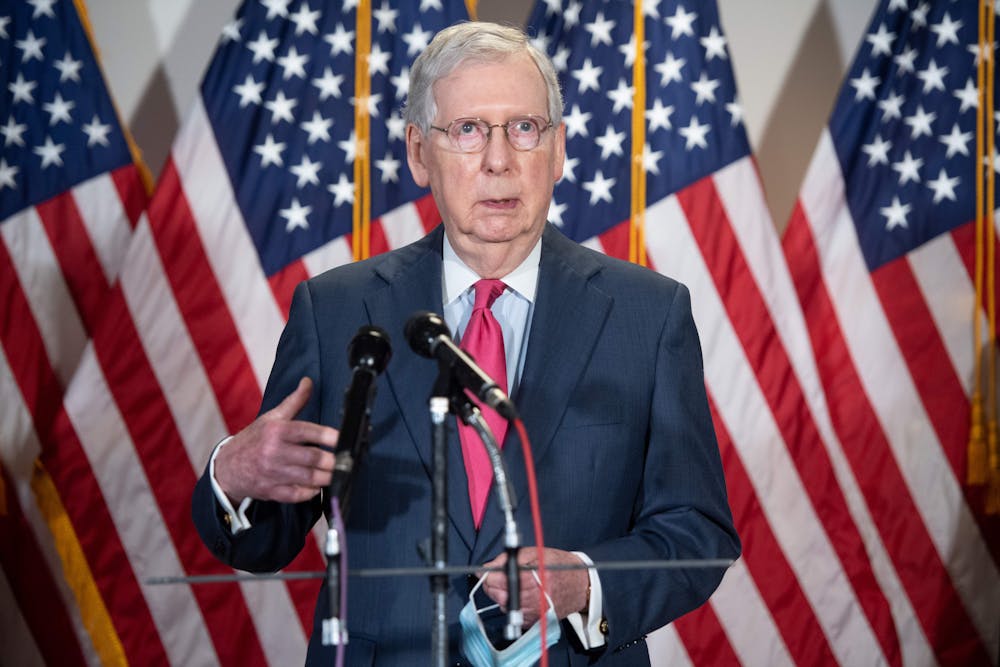
Republican Senate Majority Leader Mitch McConnell has issued a demand: Any further coronavirus aid legislation must protect businesses from coronavirus-related lawsuits.
Democrats have balked, with House Speaker Nancy Pelosi saying they “have no interest in diminishing protections for employees and customers.”
Superficially, this standoff seems like another example of Washington’s toxic politics, where hope for any legislation rests on crass political trades among bickering partisan factions.
Our research, though, indicates there’s more to this struggle than just partisan politics. American ambivalence about government has left litigation to play an outsized role in responding to crises like this one. Including protections for businesses against lawsuits alongside a new aid package might make sense.

Disasters lead to court
Health disasters in the United States – the opioid epidemic, the diseases caused by tobacco use, lead paint, asbestos, Agent Orange and many others – often generate a surge of court cases.
But research shows that litigation is an expensive, haphazard way to handle injury claims. Legal action can drive some businesses into bankruptcy while leaving many victims without the money and damages they sought. Studies of the personal injury system suggest that for every dollar the injured recover, another dollar is spent on lawyers and lawyering.
Although only a small number of cases have been filed so far, the coronavirus pandemic seems likely to replicate this pattern.
At this early stage, class action lawsuits are pending against cruise ships on the grounds that they negligently exposed passengers to the virus and, in some cases, prevented them from seeking treatment. Prisons and nursing homes, where many have died as a result of COVID-19, face similar suits.
And personal injury lawsuits are only one type of litigation related to COVID-19. Employers are concerned about potential liability for bringing workers back too soon, while others are already facing suits over wages, worker safety protections, pensions, privacy, and disability accommodations and discrimination claims.
Consumers are suing airlines, colleges and universities, ticketing agencies and others for refunds. Bankruptcies – another kind of litigation – are reportedly on the rise, and many more will surely follow, as businesses collapse under the weight of stay-at-home orders and people with no or limited insurance face crushing medical bills.
While conservatives like McConnell and his fellow party members have legitimate concerns about the potential costs of litigation, they’re wrong about why litigation happens in the first place. They tend to attribute surges of litigation to a kind of character defect: Americans, they contend, have become whiny victims who, urged on by greedy lawyers, sue at every opportunity.
Scholars, however, question whether Americans are more innately litigious than citizens of other affluent countries. They point instead to a fundamental tension in American politics that gives courts an unusually prominent role in public policy.
On one hand, Americans want protections against pervasive social problems, such as environmental harms, unsafe products and sudden economic downturns.
On the other hand, many Americans are skeptical of the typical response of most nations to such problems: a larger welfare and regulatory state.
And even when a majority of Americans favor expanding government, our fragmented lawmaking process, in which bills must pass through multiple committees and two chambers of Congress and be signed by the president, provide repeated opportunities for special interest groups to block sweeping reforms.
This leaves those in distress to pursue help where they can find it, in the legal system.
Asbestos cases: 730,000 claims in US, only 10 in Netherlands
Consider the asbestos crisis. Asbestos is a “magic mineral,” which is flexible enough to be woven into cloth yet stronger than steel. After World War II, manufacturers used it in everything from hair driers to automobile brakes to ship boilers.
The problem is that exposure to asbestos can be deadly, causing fatal diseases such as asbestosis, a progressive scarring of the lungs that slowly strangulates its victims, and mesothelioma, a fast-acting cancer of the linings of the lungs.
Contrary to the myth of litigiousness, American workers exposed to asbestos did not immediately sue when they starting falling ill in growing numbers in the late 1960s.
Instead, they filed claims with state workers’ compensation programs for lost wages and help with their medical bills. When these programs provided very limited relief, they turned to lawyers, who found new ways to hold companies liable for the failure to warn their workers about the dangers of their products.
Over the next few decades, asbestos litigation skyrocketed. By the early 2000s, Americans had filed an estimated 730,000 claims for damages associated with their illnesses and to punish companies for their reckless conduct. Those claims have bankrupted scores of businesses while providing victims slow and erratic payments. The final price tag could reach an estimated US$325 billion in today’s dollars.
The Netherlands offers an instructive contrast. Dutch workers suffered from asbestos-related diseases at five to 10 times the rate of American workers.
Yet Dutch workers had filed a total of 10 – 10! – lawsuits against businesses by the early 1990s.
Dutch workers had little incentive to sue, because they were guaranteed relatively generous health and unemployment benefits from the government that would be deducted from any recovery in the courts.
Less government; more litigation
The asbestos example underscores an implicit trade in the American approach to social problems that leaves both Republicans and Democrats unsatisfied: less “government” but more litigation.
It is the same trade that leaves Republicans railing against medical malpractice lawsuits while Democrats decry the lack of universal health insurance.
The coronavirus pandemic, like other health disasters, has revealed the downsides of this trade for both businesses and households. Businesses, already under financial strain from the pandemic, worry that the trickle of lawsuits that has already begun will turn into a torrent. Displaced workers lack adequate health care insurance and have no guarantee they will be protected from poverty when their unemployment benefits run out.
This brings us back to the congressional standoff. Congress could clarify the responsibilities of businesses, creating a safe harbor from lawsuits: If businesses adopt model sanitation and social distancing measures and provide workers with protective equipment, they could not be sued on the grounds that these procedures were inadequate. In exchange, the aid package should ensure that workers’ lost wages and medical costs associated with the pandemic are fully covered.
This would not be a cynical partisan deal. It would be an exchange of remedies, replacing some forms of litigation, which have often proved expensive and unreliable mechanisms for protecting workers and consumers, with direct support for those whose health and livelihoods have been devastated.
If properly structured, such a deal would offer more aid for victims of the coronavirus and more legal certainty for businesses seeking to reopen. That would be a win for both sides – and a step away from depending so much on courts to respond to disasters like this pandemic.
[Insight, in your inbox each day. You can get it with The Conversation’s email newsletter.]
Jeb Barnes, Professor of Political Science, University of Southern California – Dornsife College of Letters, Arts and Sciences and Thomas F. Burke, Ralph Emerson and Alice Freeman Palmer Professor of Political Science, Wellesley College
This article is republished from The Conversation under a Creative Commons license. Read the original article.
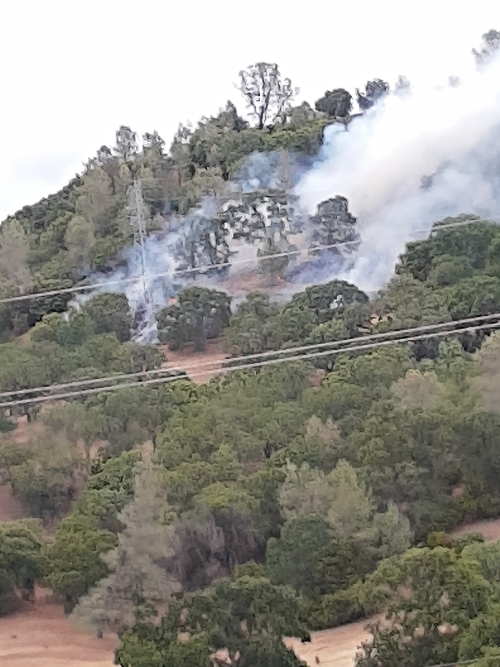
LAKE COUNTY, Calif. – Firefighters contained a small wildland fire that burned in the hills near Clearlake Oaks on Saturday.
The fire originally was dispatched at about 2 p.m. Saturday near Catholic Church Road and Highway 20 in Clearlake Oaks.
However, firefighters from Cal Fire, Northshore Fire and other local agencies responding to the area said it actually was located in the hills behind the Moose Lodge.
Firefighters responding to the scene also were urged to be on the lookout for fallen power lines due to a brief power outage on the Northshore before the fire was dispatched.
A Cal Fire helicopter arriving at the scene at around 2:15 p.m. said the fire was between two to four acres, with a slow rate of spread and approaching the crest of the hill. More resources were requested, including airplanes and dozers.
Responding ground units were challenged in accessing the fire, finally finding a road that led to it. They also reported that all power lines in the area were still up, based on radio traffic.
Firefighters and equipment remained on scene into Saturday night.
Incident command reported that shortly before 8 p.m. that the fire’s final size was approximately 4.3 acres.
A cause for the fire has so far not been reported.
Email Elizabeth Larson at
Given the uncertainty of holding large social events due to the coronavirus pandemic, the board made the decision to cancel.
Grillin’ on the Green is the sole fundraising activity for the Westside Community Park Committee, said Committee Chair Dennis Rollins, making the decision especially difficult.
In addition to developing the park, the committee is also responsible for the maintenance and operation of the portion of the park known as the Jane Barnes Field.
Rollins reports that in spite of the current challenges, two projects are scheduled to begin in June with donations received from the Rotary Club of Lakeport and the Russell McIntire Trust.
Rotary is funding the purchase and installation of an ADA-compliant portable toilet that will be anchored on a concrete foundation located between the concession stand and the storage building on the east side of the Jane Barnes Field.
The Russell McIntire Trust’s generous donation will fund the installation of curb, gutter and sidewalk along the east side of the parking lot at the Jane Barnes Field.
This work will start at the entrance to the parking lot from Westside Park Road and extend south the length of the playing field, increasing pedestrian safety and helping to ensure that vehicles cannot accidentally enter the field.
The Westshore Little League softball program and Early Lake Lions Club Horseshoe League did not take place this year due to the Shelter-In-Place orders.
However, the Konocti Youth Soccer League is planning to start practice sessions in August and play its season with modifications. The park is also home to the Ukiah Men’s Soccer League.
Westside Community Park at 1401 Westside Park Road is currently open for walking and use of the outdoor exercise equipment. Users are reminded to maintain social distancing.
The Westside Community Park Committee is a nonprofit organization which is developing the park in conjunction with the city of Lakeport, volunteers and contributions from individuals, organizations and businesses dedicated to creating a recreational facility for use by youth and adults from throughout Lake County.
For more information about supporting the development of the park, contact Rollins at 707-349-0969.
Dogs available for adoption this week include mixes of Chihuahua, German Shepherd, husky and pit bull.
Dogs that are adopted from Lake County Animal Care and Control are either neutered or spayed, microchipped and, if old enough, given a rabies shot and county license before being released to their new owner. License fees do not apply to residents of the cities of Lakeport or Clearlake.
The following dogs at the Lake County Animal Care and Control shelter have been cleared for adoption (additional dogs on the animal control Web site not listed are still “on hold”).
Because the shelter in place order remains in effect, call Lake County Animal Care and Control at 707-263-0278 or visit the shelter online at http://www.co.lake.ca.us/Government/Directory/Animal_Care_And_Control.htm for information on visiting or adopting.

Female Chihuahua
This female Chihuahua has a short tan coat.
She has been spayed.
She’s in kennel No. Q1, ID No. 13659.

‘Lady’
“Lady” is a female pit bull mix with a short tan coat.
She has been spayed.
She is in kennel No. 22, ID No. 13703.

Female Chihuahua
This female Chihuahua has a short black coat with white markings.
She is in kennel No. 25, ID No. 13686.

Female husky
This young female husky has a medium-length black and cream coat and blue eyes.
She is in kennel No. 27, ID No. 13707.

‘Luna’
“Luna” is a young female husky with a medium-length gray and white coat.
She has been spayed.
She is in kennel No. 29, ID No. 13540.

Male German Shepherd
This young male German Shepherd has a fully brown and black coat.
He is in kennel No. 31, ID No. 13706.
Email Elizabeth Larson at
The results suggest that hospitals in the U.S. may be harder hit by the coronavirus pandemic than initially thought, as many forecasts of disease burden — particularly the number of hospital beds and ICU units needed at the peak of infection — are based on data out of China.
“The hospital resources needed to meet the needs of severely ill patients are substantial,” said Joseph Lewnard, an assistant professor of epidemiology at UC Berkeley and lead author of the paper. “We found that observations from China may not provide a sufficient basis for anticipating the U.S. health care demand.”
The team analyzed the anonymized medical records of the nearly 9.6 million Kaiser Permanente members in Southern California, Northern California and Washington state.
The study focused on 1,277 Kaiser Permanente members who were hospitalized with clinically- or laboratory-confirmed cases of COVID-19 between the start of the year and early April.
“Because Kaiser Permanente members receive comprehensive health care from a single provider network, we overcome many of the difficulties that arise in studies of diseases within the fragmented U.S. health care delivery system,” said Lewnard.
Despite the grim forecast for hospitals, the report does offer a glimmer of hope: Estimates of transmission intensity, based on extrapolations of infection rates from hospitalization data, indicate that the social distancing measures in the region are succeeding at “flattening the curve” of contagion.
“When people engaged in protecting themselves and their communities through social distancing, their efforts translated into a substantial reduction in the transmissibility of the disease,” said Vincent Liu, a research scientist at the Kaiser Permanente Division of Research in Northern California and co-author of the paper. “Those efforts are going to be critical for this next phase, in which social distancing measures are gradually relaxed. We need our communities to stay really engaged, because these data show that even the actions of individuals and small groups can really impact the spread of the virus.”
The results appeared online May 22 in the The BMJ.
Longer hospital stays, lower transmission rates
Of the 1,277 Kaiser Permanente members who were hospitalized with COVID-19, 42 percent required care in the ICU, and 18 percent died from the disease. Modeling estimates based on observations in China usually assume that only about 30 percent of hospitalized patients will require ICU care.
Similarly, the data showed that hospital stays lasted an average of 10.7 days for survivors and 13.7 days for non-survivors, compared to an average of 7.5 days among non-survivors in China.
Troublingly, 25 percent of patients were hospitalized for 16 days or more. In comparison, a widely-used modeling study from Imperial College London projecting health care needs assumes an average stay of eight days.
While the underlying reasons for these discrepancies remain unclear, the authors stress the need to collect data in different regions and under different health care settings and caution against heavy reliance on models based on data from other countries.
“The spread of COVID-19 and its impact on local health care systems show differences across the world,” Liu said. “Health care systems differ, and their capabilities and structure have an effect on the local response and the impact of the surge. So, it's really important to understand how our own data agree with, or in some cases differ, from the experience we've seen in other countries.”
Not surprisingly, the analysis also revealed that the virus tends to hit older people the hardest. Approximately 50 percent of hospitalizations were among adults aged 60 and older, and 25 percent were among adults aged 73 and older.
Similarly, hospitalized men seemed to be hit harder than women: Hospitalized males over the age of 80 faced a 58 percent risk of death, and hospitalized females of the same age faced only a 32 percent risk of death.
Estimates of transmission intensity over time yielded promising results. The team found that the transmission rate of the virus has decreased significantly, and the drop began slightly before statewide shelter-in-place orders went into effect in late March.
This effect is likely due to the implementation of smaller-scale social distancing measures, such as local restrictions on gatherings and individuals’ compliance with safety recommendations, in the weeks prior to the statewide orders, the authors said.
However, while the data indicate that social distancing is succeeding, the authors warn that we shouldn’t expect to return to normal anytime soon.
“These data suggest that if we were to release all of our mitigation measures at one time, the disease would start rapidly spreading again,” Liu said. “We have to be really strategic and vigilant about how and when we roll back our social distancing measures. It’s going to require coordination between health care systems, community partners, government and public health agencies, academic institutions and industry.”
“We also need to be mindful of just how severe the disease is,” Lewnard added. “We see an 18 percent overall fatality rate among all people who are getting hospitalized, and 42 percent end up in the ICU, so the impact of transmission in terms of severe disease and hospital burden is quite high.”
Co-authors of the paper include Michael L. Jackson, Mark A. Schmidt, Jean P. Flores, Chris Jentz, Scott Young and Jim Bellows of Kaiser Permanente; Britta L. Jewell of Imperial College London; and Graham R. Northrup, Ayesha Mahmud, Arthur L. Reingold, Maya Petersen and Nicholas P. Jewell of UC Berkeley.
The study was funded by Kaiser Permanente.
Kara Manke writes for the UC Berkeley News Center.