NORTH COAST, Calif. – Mendocino County Health Officer Dr. Noemi Doohan reported that 19 new COVID-19 cases have been confirmed in that county over the weekend, with the first outbreak at a skilled nursing facility also under investigation.
Doohan said Mendocino County Public Health staffers worked all weekend, conducting case investigation and contact tracing.
By Sunday, the number of Mendocino County COVID-19 cases had risen to 132. That includes 91 who are recovered, one hospitalized and 40 on home isolation, Doohan reported.
Of the 40 who are in home isolation, Doohan said 24 are in the Ukiah Valley, eight are in the north county, six are on the North Coast and two are in the south county.
Of the 19 new cases, Doohan said three are residents at Sherwood Oaks Skilled Nursing Facility in Fort Bragg.
On July 7 an employee of the facility tested positive for COVID-19 and was promptly placed into isolation. Following the positive case, Doohan said an immediate plan was made in collaboration with Public Health to test all the employees and residents.
The results of the tests included three positive tests for COVID-19, all of whom were residents of the facility and all of them currently asymptomatic. Doohan said those results were reported to Public Health on July 11.
Once the COVID-19 status of the employee was reported to the skilled nursing facility on July 7, the facility went immediately into outbreak response with full personal protective equipment for all staff and isolation of residents in their rooms, said Doohan.
In addition, Doohan said the facility was following her medical masking order, which provides additional protections to skilled nursing facilities.
Case investigation and contract tracing were immediately initiated. The recent death at the facility tested negative for COVID-19 and the cause of death at this time is presumed to be unrelated to COVID-19. Public Health is doing further investigation and awaiting the death certificate, Doohan said.
In addition, Doohan said Mendocino County Public Health has reported this outbreak to the state as required and will be working with the state in support and review of the actions to contain the outbreak.
Additional testing will be conducted Monday in an effort to monitor and continue timely response to this outbreak, Doohan said.
Doohan said the COVID-19 incubation period is up to 14 days and Public Health is concerned that Mendocino County may experience an additional spike in cases resulting from increased activity county-wide over the July 4 weekend.
She continued to urge people to wear facial coverings to stop the spread of the virus, practice social distancing, and avoid gatherings, confined spaces and close contact with others.
Human trafficking victims in California can now qualify for up to $20,000 in income loss paid through the California Victim Compensation Board.
Signed by Gov. Gavin Newsom, Assembly Bill 629 (Smith and Gonzalez) went into effect on Jan. 1, 2020, making human trafficking victims eligible for up to $10,000 of income loss per year, for up to two years.
The bill required the board, on or before July 1, 2020, to adopt regulations that allow it to rely on evidence other than official employment documentation in considering and approving applications for compensation.
The board adopted the regulations in May. The Office of Administrative Law approved the final regulations, ahead of the July 1 deadline.
“It’s clear the trauma of human trafficking extends far beyond the time having been trafficked — survivors often have faced homelessness, addiction and mental health issues stemming from their exploitation,” Assemblywoman Christy Smith said. “My bill with Assemblywoman Gonzalez removes a loophole in the victim compensation system that required survivors to obtain a note from their employer — often times this was their trafficker. The regulations adopted remove these barriers to justice and provide critical support for victims rebuilding their lives.”
“Survivors of human trafficking face unimaginable obstacles when they work to put their lives back on track. They are typically on their own and have to figure out how they will pay for housing and food, apply for work, and get treatment for medical and mental health,” Assemblywoman Lorena Gonzalez said. “Most human trafficking survivors don’t have the formal documentation CalVCB had previously required to collect lost income, such as a W-2 form. CalVCB’s new rules, now in effect thanks to our legislation AB 629, are a just and fair way to help survivors get back on their feet and get the help they need.”
“CalVCB recognizes the challenges human trafficking victims face as they work to rebuild their lives,” said Executive Officer Lynda Gledhill. “By providing financial support, along with options for medical and mental health treatment and other compensation, CalVCB is able to play a small part in victims’ recovery.”
As with all claims, victims will need to provide CalVCB with evidence of a crime, including, but not limited to, a statement under penalty of perjury from the applicant, a caseworker, a licensed attorney or a witness, or a law enforcement report. Victims brought from other countries and trafficked in California may also qualify.
Before AB 629 became law, victims could only prove income loss with formal employment documentation or voluntary cooperation from their traffickers, meaning most could not qualify.
AB 629 became law on Jan. 1, 2020, allowing victims to submit income loss applications, even as CalVCB drafted the required regulations. In the months that followed, CalVCB has approved five income loss claims and compensated those survivors more than $70,000.
Victims, advocates, representatives, and attorneys can apply for compensation in several ways:
· Create an application using CalVCB Online — a secure and private portal that can be easily accessed from a smartphone, tablet or computer. · Contact a local county Victim Witness Assistance Center. · Call the CalVCB Help Line at 800-777-9229. · Download an application from CalVCB's How to Apply page. · E-mail CalVCB at This email address is being protected from spambots. You need JavaScript enabled to view it. .
Victims must apply within seven years of the date of the crime. Minor victims must apply by their 28th birthday. CalVCB will release funds for minor victims after their 18th birthday.
If you are a victim of human trafficking, or you suspect someone you know is being trafficked, there are a number of local, national and international organizations that offer and provide help and services, including temporary shelter, legal assistance and medical and mental health treatment.
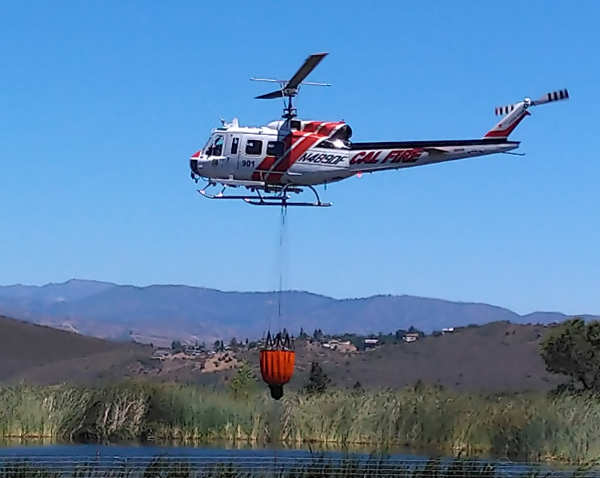
Cal Fire Copter 901 dipped into a pond at Beckstoffer Vineyards near Kit's Corner in Kelseyville, California, as it was working on a fire on nearby Bottle Rock Road on Saturday, July 11, 2020. Photo by Daniel Suenram. LAKE COUNTY, Calif. – Firefighters on Saturday contained a fire that started on a county supervisor’s property.
The fire in the area of 9100 Bottle Rock Road at Cole Creek Road in Kelseyville was first dispatched just before 11:50 a.m. Saturday, according to radio traffic.
Supervisor Rob Brown confirmed to Lake County News that the fire occurred on land he owns, which he’s been leasing for some time to Pacific Gas and Electric Co. for the processing of trees and vegetation that the company is continuing to remove from the Valley fire area.
A Cal Fire engine that arrived just before noon found a log pile that was estimated to be 100 feet long and 12 feet high fully involved and a threat to the wildland. There were multiple spot fires.
Among the air and land resources responding was Copter 901, which dipped its water bucket into a pond at nearby Beckstoffer Vineyard so that it could conduct drops on the fire.
The copter’s pilot estimated the fire was about half an acre upon arriving at the scene.
Firefighters were able to make quick progress on the fire, getting line around it and containing it, based on radio reports.
Shortly before 4:30 p.m., incident command reported the fire’s final size at 1.3 acres.
Brown said that PG&E has taken every precaution to avoid wildland fire at the site.
He said the company has completed clearing 1,000 feet of defensible space and the contractor working for PG&E has a water truck on scene at all times.
Officials have so far not reported on the fire’s cause.
In April 2014, Brown had a contractor conducting a control burn on his property when the wind shifted and drove it onto a neighbor’s property. That fire burned close to 10 acres and destroyed a structure.
Email Elizabeth Larson at This email address is being protected from spambots. You need JavaScript enabled to view it. . Follow her on Twitter, @ERLarson, or Lake County News, @LakeCoNews.
A crawdad in Cache Creek in Lake County, California. Photo by Kathleen Scavone. LAKE COUNTY, Calif. – Crawdads, crayfish, craydids: whatever you choose to call those crustaceans that bear a resemblance to mini-lobsters, they are probably not native to our creeks and waters.
Did you know that the one remaining native species of crawdad to California is the Shasta crawdad?
The signal crayfish is a prolific crustacean found in Lake County. Many of the crawdads that you find in our lakes and streams today are descendants of those brought in around 1912 from Oregon and Washington.
Some species may have made their way west from southern states during the Gold Rush era when miners had a hankering for some vittles from home.
According to researchers, there are around 400 species of crawdads in the U.S.A. with almost half on the endangered or threatened list.
The good, the bad and the ugly of crawdads is that some species are important food for river otters, herons, egrets and raccoons – and many humans love to eat crawdads and use them for bait, as well.
However, invasive crawdads have been known to consume important species like California newts, and they devour frogs and fish of all manner by utilizing their imposing and complex claws and jaws.
As they ascend from burrowing under gravel, mud and rocks they can stir up detritus and cause nuisance amounts of sediment in the water which can disturb fish life. In irrigated agricultural areas the crawdads often clog up irrigation pipes.
These freshwater animals possess two large claws, like a Maine lobster. Here in California, the fully mature crawdad can be 3 to 6 inches in length. Colors of crawdads vary from brick red to grey to green hues.
According to the California Department of Fish and Wildlife, there are regulations regarding the catching of crawdads. They can only be caught using the following methods with a valid fishing license: by hand, hook and line, or through the use of a net if its dimensions reach no larger than 3 feet.
The regulations state that, "Crayfish can be caught year-round, and there is no bag limit on them (CCR Title 14, section 5.35)."
The California Department of Fish and Wildlife goes on to explain that there are protections in place for the Shasta crayfish since it is the only native crayfish and also holds an endangered species status.
One more item of importance from the Department of Fish and Wildlife: "There are also special laws and rules in place throughout the state to prevent the spread of Quagga and Zebra mussel infestations. The use of crayfish caught in contaminated water for bait may not be prohibited, but it is illegal to move adult or larval Quagga and zebra mussels from infested waters."
Crawdads are consumed worldwide in tasty bisques, boils or in soups, but in the Czech Republic, they are fitted with sensors to monitor water used in brewing their beer. If the crawdads display changes in their pulse, the waters are screened for pollutants.
In Australia, there are fossil records of crawdads that reach past the 30 million year mark, along with evidence displayed in the strata of some fossils found in the early Mesozoic era.
Those crawling crustaceans have definitely made themselves at home in the world.
Kathleen Scavone, M.A., is a retired educator, potter, freelance writer and author of “Anderson Marsh State Historic Park: A Walking History, Prehistory, Flora, and Fauna Tour of a California State Park” and “Native Americans of Lake County.”
A crawdad in Cache Creek in Lake County, California. Photo by Kathleen Scavone.
LAKE COUNTY, Calif. – Lake County Animal Care and Control has several new dogs available to new homes.
Dogs available for adoption this week include mixes of border collie, Chihuahua, husky, Labrador Retriever, pit bull, shepherd and terrier.
Dogs that are adopted from Lake County Animal Care and Control are either neutered or spayed, microchipped and, if old enough, given a rabies shot and county license before being released to their new owner. License fees do not apply to residents of the cities of Lakeport or Clearlake.
The following dogs at the Lake County Animal Care and Control shelter have been cleared for adoption (additional dogs on the animal control Web site not listed are still “on hold”).
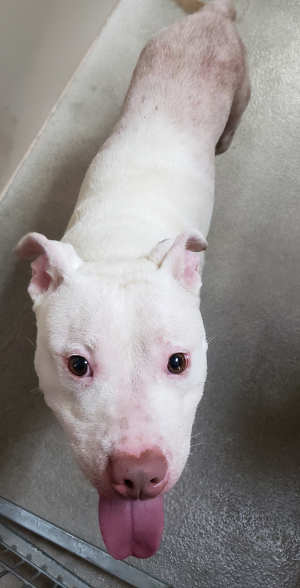
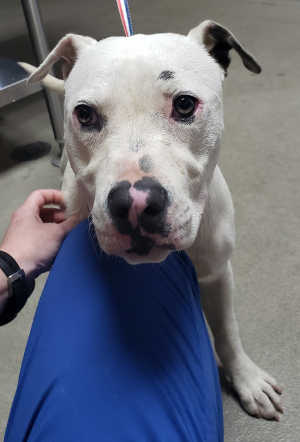
This male pit bull terrier is in kennel No. 15, ID No. 13790. Photo courtesy of Lake County Animal Care and Control. Male pit bull
This male pit bull terrier has a short white coat.
He is in kennel No. 15, ID No. 13790.
This male pit bull terrier is in kennel No. 18, ID No. 13772. Photo courtesy of Lake County Animal Care and Control. Male pit bull terrier
This male pit bull terrier has a black coat.
He is in kennel No. 18, ID No. 13772.
This male husky is in kennel No. 20, ID No. 13774. Photo courtesy of Lake County Animal Care and Control. Male husky
This male husky has a medium-length red and white coat.
He is in kennel No. 20, ID No. 13774.
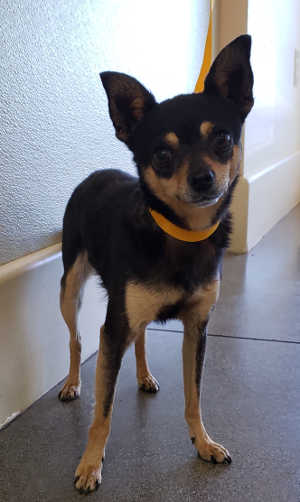
This female Chihuahua is in kennel No. 21, ID No. 13792. Photo courtesy of Lake County Animal Care and Control. Female Chihuahua
This female Chihuahua has a short black and brown coat.
She is in kennel No. 21, ID No. 13792.
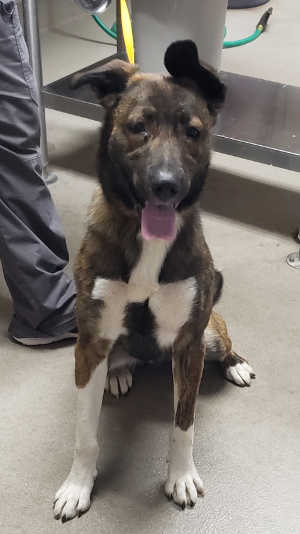
This female shepherd mix is in kennel No. 22, ID No. 13776. Photo courtesy of Lake County Animal Care and Control. Shepherd mix
This female shepherd mix has a brindle and white coat.
She is in kennel No. 22, ID No. 13776.
This female terrier is in kennel No. 23, ID No. 13784. Photo courtesy of Lake County Animal Care and Control. Female terrier
This female terrier has a coarse tan coat.
She is in kennel No. 23, ID No. 13784.
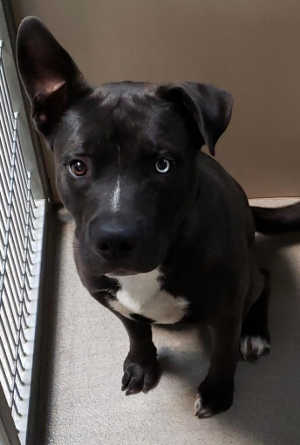
This female pit bull is in kennel No. 24, ID No. 13777. Photo courtesy of Lake County Animal Care and Control. Female pit bull
This female pit bull has a short black and white coat.
She is in kennel No. 24, ID No. 13777.
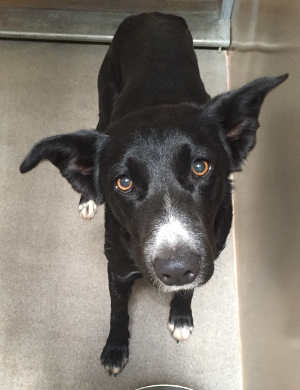
“Socci” is a female Labrador Retriever-border collie mix in kennel No. 25, ID No. 4924. Photo courtesy of Lake County Animal Care and Control. ‘Socci’
“Socci” is a female Labrador Retriever-border collie mix with a black and white coat.
She has been spayed.
She is in kennel No. 25, ID No. 4924.
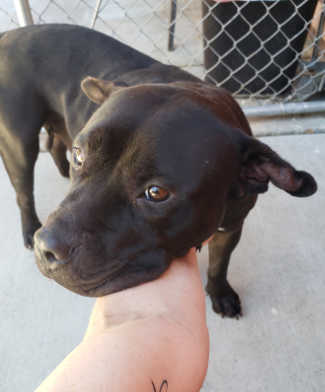
This female pit bull is in kennel No. 27, ID No. 13783. Photo courtesy of Lake County Animal Care and Control. Female pit bull
This female pit bull has a short black coat.
She has been spayed.
She’s in kennel No. 27, ID No. 13783.
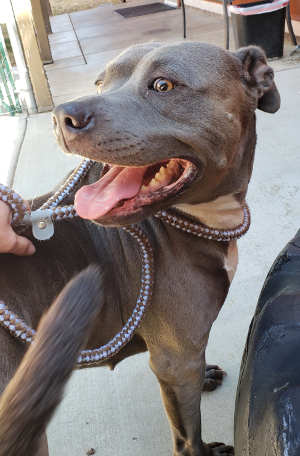
This female pit bull is in kennel No. 28, ID No. 13778. Photo courtesy of Lake County Animal Care and Control. Female pit bull
This female pit bull has a short blue coat.
She is in kennel No. 28, ID No. 13778.
Email Elizabeth Larson at This email address is being protected from spambots. You need JavaScript enabled to view it. . Follow her on Twitter, @ERLarson, or Lake County News, @LakeCoNews.
Best Friends Animal Society has released its 2020 pet lifesaving findings, which gives a national overview of the number of dogs and cats that enter shelters each year in the United States, and the number of dogs and cats that are leaving those shelters alive.
The year-over-year data shows that the number of dogs and cats killed annually nationally has dropped from about 733,000 in 2018 to 625,000 during 2019 (or about 1,700 killed per day). Across the U.S., about 5.4 million dogs and cats entered shelters in 2019, and 4.2 million were saved making the national save rate 79.02 percent (2018 was 76.6 percent).
“We are seeing continued momentum and progress towards the goal of ending the killing of dogs and cats in U.S. shelters by the year 2025, with the overall number of pets being killed in the U.S. continuing to go down and the number of shelters that are no kill going up,” said Julie Castle, chief executive officer, Best Friends Animal Society.
In addition, this year, Best Friends is releasing an inaugural state-by-state ranking that shows where the most dogs and cats need to be saved, and where the most dogs and cats are being killed.
Currently, the state in the country with the most shelter deaths is California, with 100,239 dogs and cats killed in 2019. Cats are getting killed in California at the rate of nearly four to every one dog, reflecting outdated laws, ordinances and road blocks in some communities that prevent the implementation of effective trap-neuter-return programs that are proven to save lives and reduce the free-roaming cat population.
Overall, California has a 76 percent save rate, with 90 percent considered to be the benchmark for no-kill.
However, there are strong signs of progress and commitment across California, with the number of dogs and cats dying in shelters declining from 110,239 in 2018 to 100,239 in 2019, an approximate 10 percent decrease. Additionally, California saved 540,248 dogs and cats in 2019, the most of any state in the country. And recently, California Governor Gavin Newsom and the state legislature agreed to provide $5 million to fund lifesaving work in California by the pioneering experts at the UC Davis Koret Shelter Medicine Program.
The top five states where the most dogs and cats need to be saved are California, Texas, North Carolina, Florida and Louisiana, who together make up more than 50 percent of the nation’s shelter killing of dogs and cats.
Over the past three years, Best Friends has spearheaded a first-of-its-kind extensive data collection process that involved coordinated outreach to every shelter in America followed by additional research, data analysis, and technology development.
To create the most comprehensive data set on animal welfare ever published, Best Friends collected data directly from shelters, state and local coalitions, government websites, and even FOIA requests.
The Best Friends 2020 dataset – consisting of statistics collected during 2019 – of U.S. shelters has a total net intake of 5,360,060 animals representing 4,850 known shelters.
Of this intake total, 92 percent of the data is based on collected information from 3,608 brick and mortar shelters. The remaining 8 percent is estimated to cover the uncollected shelters and their respective counties.
The solution to getting to no-kill lies within individual communities and its residents, as Castle illustrated.
“Best Friends has always believed that anyone can help homeless pets. You don’t need a rescue label, special credentials or permission to help save animals. Individual community members are the no-kill movement’s greatest resource,” she said. “Putting this data directly into the hands of the public allows individual community members and advocates like the members of our 2025 Action Team to gain a better understanding of exactly which shelters and types of pets are most in need of help and helps to connect them to those shelters.”
To view the 2020 lifesaving findings and find out about adopting, fostering, volunteering, donating, or spaying/neutering in your community, visit http://bestfriends.org .
 How to resolve AdBlock issue?