How to resolve AdBlock issue?
News

NASA's Curiosity Mars rover has started a road trip that will continue through the summer across roughly a mile of terrain.
By trip's end, the rover will be able to ascend to the next section of the 3-mile-tall Martian mountain it's been exploring since 2014, searching for conditions that may have supported ancient microbial life.
Located on the floor of Gale Crater, Mount Sharp is composed of sedimentary layers that built up over time. Each layer helps tell the story about how Mars changed from being more Earth-like – with lakes, streams and a thicker atmosphere – to the nearly-airless, freezing desert it is today.
The rover's next stop is a part of the mountain called the "sulfate-bearing unit." Sulfates, like gypsum and Epsom salts, usually form around water as it evaporates, and they are yet another clue to how the climate and prospects for life changed nearly 3 billion years ago.
But between the rover and those sulfates lies a vast patch of sand that Curiosity must drive around to avoid getting stuck.
Hence the mile-long road trip: Rover planners, who are commanding Curiosity from home rather than their offices at NASA's Jet Propulsion Laboratory in Southern California, expect to reach the area in early fall, although the science team could decide to stop along the way to drill a sample or study any surprises they come across.
Depending on the landscape, Curiosity's top speeds range between 82 and 328 feet per hour. Some of this summer road trip will be completed using the rover's automated driving abilities, which enable Curiosity to find the safest paths forward on its own. Rover planners allow for this when they lack terrain imagery. (Planners hope for more autonomy in the future; in fact, you can help train an algorithm that identifies Martian drive paths.)
"Curiosity can't drive entirely without humans in the loop," said Matt Gildner, lead rover driver at JPL. "But it does have the ability to make simple decisions along the way to avoid large rocks or risky terrain. It stops if it doesn't have enough information to complete a drive on its own."
In journeying to the "sulfate-bearing unit," Curiosity leaves behind Mount Sharp's "clay-bearing unit," which the robotic scientist had been investigating on the lower side of the mountain since early 2019. Scientists are interested in the watery environment that formed this clay and whether it could have supported ancient microbes.
Extending across both the clay unit and the sulfate unit is a separate feature: the "Greenheugh Pediment," a slope with a sandstone cap. It likely represents a major transition in the climate of Gale Crater.

At some point, the lakes that filled the 96-mile-wide crater disappeared, leaving behind sediments that eroded into the mountain we see today. The pediment formed later (though whether from wind or water erosion remains unknown); then windblown sand blanketed its surface, building into the sandstone cap.
The northern end of the pediment spans the clay region, and though the slope is steep, the rover's team decided to ascend Greenheugh back in March for a preview of terrain they'll see later in the mission. As Curiosity peeked over the top, scientists were surprised to find small bumps along the sandstone surface.
"Nodules like these require water in order to form," said Alexander Bryk, a doctoral student at University of California, Berkeley who led the pediment detour. "We found some in the windblown sandstone on top of the pediment and some just below the pediment. At some point after the pediment formed, water seems to have returned, altering the rock as it flowed through it."
These bumps may look familiar to Mars rover fans: One of Curiosity's predecessors, the Opportunity rover, found similar geologic textures dubbed "blueberries" back in 2004.
Nodules have become a familiar sight throughout Mount Sharp, though these newly discovered ones are different in composition from what Opportunity found.
They suggest water was present in Gale long after the lakes disappeared and the mountain took its present shape. The discovery extends the period when the crater hosted conditions capable of supporting life, if it ever was present.
"Curiosity was designed to go beyond Opportunity's search for the history of water," said Abigail Fraeman of JPL, who has served as deputy project scientist for both missions. "We're uncovering an ancient world that offered life a foothold for longer than we realized."
For more about Curiosity visit https://mars.nasa.gov/msl/home/ or https://nasa.gov/msl/ .

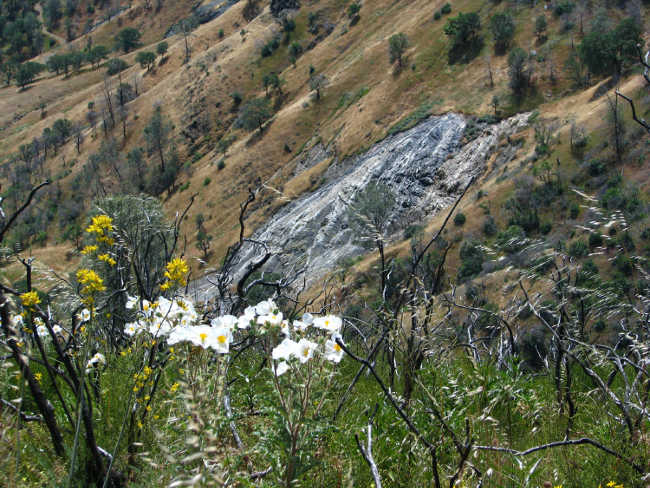
Biodiversity hotspots are regions where species numbers are unusually high. Most but not all are in the tropics. One that isn’t is the California region.
In a 2000 Nature Conservancy inventory of state biodiversity, California stood out dramatically. Its 5,653 species of animals and plants – non-vascular plants and most invertebrate animals were not included because of insufficient state information – was the most of any state.
Its 1,480 endemics, species that only occur in one state and nowhere else, were also more than in any other state.
California was No. 1 by far in vascular plant species (4,389) as well as in endemic plants (1,416). The state’s 804 vertebrate animal species were only fifth among states, but it led all states in endemic animals with 62.
California led all states in mammal species with 185 as well as with its 18 endemic mammals. Its 418 bird species were only fourth among states, but its two endemic birds brought it to second among states despite being far behind Hawaii’s 52.
The state’s 83 reptiles tie it for sixth, but the five endemics among these are only slightly exceeded by two states with six.
California’s 50 amphibians tie it for twelfth, but it still leads by far in endemic amphibians with 17.
California is only 30th in freshwater fish species with 68 but is back to No. 1 with 20 endemic fish.
What accounts for our great biodiversity? One factor leading to high endemism is mountains and deserts isolating us from states to the east.
Another that sets us apart from eastern states is a Mediterranean climate. It may not be accidental that several other nontropical hotspots on other continents also have such climates in which most rain falls when it’s coldest.
Since most plants grow fastest when it’s warmest, the gap between when water arrives and when it’s used makes these ecosystems very sensitive to where it’s stored below ground.
That’s evident in California, where vegetation can shift within meters from deeply rooted chaparral shrubs on steep rocky slopes in full sun to shallowly rooted wildflower prairies in flatter areas where clay accumulates and holds water near surfaces.
Shadier slopes intermediate between these extremes may support oak woodland with an herb understory not far away. Species diversity thrives in such diverse conditions.
California is also a place of climate extremes with annual rainfall from 64 inches at Crescent City along the northwest coast to 2.3 inches at Death Valley.
California temperatures are also very diverse with a July mean of 58 degrees Fahrenheit at Crescent City and 101 at Death Valley, one of the world’s hottest places.
Most of our wet places are cool in summer but not Shasta Dam, where a 81.4 degree July mean and precipitation of 60.4 inches provides habitat for the endemic rare plant Shasta snow-wreath (Neviusia cliftonii).
Cool summer fogs extending down the coast to Santa Barbara County and reappearing in the Channel Islands provide a corridor for species from much farther north to enter California and add to its diversity. So do the forests of the Cascade and Sierra Nevada Mountains. Some northern species or their near relatives reappear in isolated forest islands on high peaks in southern California.
These Southern California peaks are among our ecological islands, places very different from surrounding landscapes. They can result from climate as at Shasta Dam or relatively wetter isolated desert ranges like the Providence and White mountains.
Redwood forests in the Santa Cruz and Santa Lucia mountains, which are oriented to intercept the full force of winter storms arriving from the southwest, are ecological islands in the otherwise relatively dry southern Coast Range, where some interior valleys are so shadowed from rain that they’re drier than much of the Mojave Desert and provide a corridor for some of its species to move northwest to the Bay Area.
Many of California’s ecological islands are caused by the state’s very active geology. Outcrops of serpentine, a mantle rock only exposed at sites of violent tectonic plate collisions, and limestone provide isolated areas with unique soils. Geomorphic basins where water accumulates to form vernal pools are another important kind of California ecological island.
Ever since Charles Darwin described how the Galapagos archipelago promoted evolution, it’s been known that isolation increases biodiversity, which is definitely true of California’s many ecological islands.
But it has real islands as well. The Channel Islands off southern California have many endemic species of their own like island scrub jay (Aphelocoma insularis), island fox (Urocyon littoralis), and island ironwood trees (Lyonothamnus floribundus), but California’s turbulent geologic history produced many former islands that promoted evolution in what’s now its southern Coast Range.
The most recent of these former islands forms the Palos Verdes Peninsula, which became connected to the mainland by sediments washed down from local mountains. It is still the only mainland location of Crossosoma californicum, a shrub otherwise confined to the Channel Islands.
The great UC Davis botanists Ledyard Stebbins and Jack Major once categorized California’s endemic plants as neo-endemics and paleo-endemics.
Neo-endemics like lupines (Lupinus) exploded into many closely related species through recent evolution, while paleo-endemics lack close relatives and hang on in special habitats like ecological islands.
Shasta snow-wreath confined to the hot and wet area around Shasta Dam with nearest relatives in faraway but similarly hot and wet Alabama is an example.
On evolutionary trees neo-endemics are like the many leaves on a single branch while paleo-endemics are like single leaves on an entirely separate branch.
A mammalian example of neo-endemics are chipmunks (Tamias) with 13 California species so similar they’re sometimes difficult to tell apart, while a classic paleo-endemic is mountain beaver (Aplodontia rufa), so distinctive that it’s the only member of its family and definitely not a beaver (although not a California endemic since its range extends north to British Columbia).
Since California is the most populous as well as the most biodiverse state, its conservation challenges are immense.
Dr. Glen Holstein is a retired senior scientist from Zentner and Zentner, a Northern California biological consulting company and the Chapter Botanist for the Sacramento Valley Chapter of the California Native Plant Society. He is also on the board of Tuleyome, a Woodland-based nonprofit conservation organization.
LAKE COUNTY, Calif. – Lake County Public Health reported on Friday that several more county residents have tested positive for COVID-19.
The figures posted on Friday showed Lake County’s cases totaled 108.
That’s an increase of 22 cases over the previous week.
By Friday night, county Public Health departments were reporting a total of more than 310,000 cases and 6,945 deaths statewide.
Case totals for neighboring counties are Colusa, 113; Glenn, 164; Mendocino, 113; Napa, 477; Sonoma, 1,650; and Yolo, 839.
Public Health Officer Dr. Gary Pace confirmed on Thursday that three state prison inmates who tested positive for COVID-19 were released to Lake County earlier this month on a special early release program. They are not counted on the local COVID-19 dashboard but in the county where they were incarcerated.
Of Lake County’s 108 cases, 25 are active and 82 are recovered. Public Health reported one death last week.
Public Health said there are three COVID-19 positive patients currently hospitalized, an increase of one since Thursday. To date, 10 local patients have been treated for the virus in the hospital.
Tests in Lake County to date total 5,309, with the results of 565 of those tests pending.
The California Department of Public Health said Friday that 5,175,737 tests have been conducted in California, an increase of 97,303 over the previous 24 hours.
The state said that local health departments have reported 17,120 confirmed positive cases in health care workers and 98 deaths statewide.
Email Elizabeth Larson atThis email address is being protected from spambots. You need JavaScript enabled to view it. . Follow her on Twitter, @ERLarson, or Lake County News, @LakeCoNews.
The figures posted on Friday showed Lake County’s cases totaled 108.
That’s an increase of 22 cases over the previous week.
By Friday night, county Public Health departments were reporting a total of more than 310,000 cases and 6,945 deaths statewide.
Case totals for neighboring counties are Colusa, 113; Glenn, 164; Mendocino, 113; Napa, 477; Sonoma, 1,650; and Yolo, 839.
Public Health Officer Dr. Gary Pace confirmed on Thursday that three state prison inmates who tested positive for COVID-19 were released to Lake County earlier this month on a special early release program. They are not counted on the local COVID-19 dashboard but in the county where they were incarcerated.
Of Lake County’s 108 cases, 25 are active and 82 are recovered. Public Health reported one death last week.
Public Health said there are three COVID-19 positive patients currently hospitalized, an increase of one since Thursday. To date, 10 local patients have been treated for the virus in the hospital.
Tests in Lake County to date total 5,309, with the results of 565 of those tests pending.
The California Department of Public Health said Friday that 5,175,737 tests have been conducted in California, an increase of 97,303 over the previous 24 hours.
The state said that local health departments have reported 17,120 confirmed positive cases in health care workers and 98 deaths statewide.
Email Elizabeth Larson at
LAKE COUNTY, Calif. – Dozens of seats on local school and special district boards will be up for election in November, and the filing period begins next week.
Lake County Registrar of Voters Maria Valadez said the school and special districts listed below have consolidated with the Nov. 3, 2020, General Election.
She said eligible voters have the opportunity to file for candidacy for the following offices:
– Mendocino-Lake Community College District: Trustee Area No. 7 (Lake County), one vacancy, four-year term.
– Yuba Community College District: Trustee Area No. 7 (Lake County), one vacancy, four-year term.
– Lake County Board of Education: Trustee Area No. 1, one vacancy, four-year term; Trustee Area No. 2, one vacancy, four-year term.
– Kelseyville Unified School District: Three vacancies, four-year terms.
– Konocti Unified School District: Two vacancies, four-year terms.
– Lakeport Unified School District: Three vacancies, four-year terms.
– Lucerne Elementary School District: One vacancy, four-year term.
– Middletown Unified School District: Two vacancies, four-year terms.
– Upper Lake Unified School District: Two vacancies, four-year terms.
– Kelseyville Fire Protection District: Two full terms, one two-year unexpired term.
– Lake County Fire Protection District: Three full terms, one two-year unexpired term.
– Lake Pillsbury Fire Protection District: Two full terms, two two-year unexpired terms.
– Northshore Fire Protection District: Clearlake Oaks Zone, one full term; Upper Lake Zone, one full term.
– South Lake County Fire Protection District: Three full terms, one two-year unexpired term.
– Anderson Springs Community Services District: Two full terms, two two-year unexpired terms.
– Butler-Keys Community Services District: Three full terms.
– Hidden Valley Lake Community Services District: Three full terms, two two-year unexpired terms.
– Redbud Health Care District: Zone 1, one full term; Zone 3, one full term; Zone 5, one full term.
– Buckingham Park Water District: Two full terms.
– Callayomi County Water District: Two full terms, one two-year unexpired term.
– Clearlake Oaks County Water District: Three full terms.
– Cobb Area County Water District: Two full terms, one two-year unexpired term.
– Konocti County Water District: Two full terms.
– Upper Lake County Water District: Three full terms.
– Villa Blue Estates Water District: Three two-year unexpired terms.
Official declaration of candidacy forms for eligible candidates desiring to file for the elective offices enumerated above may be obtained from the Lake County Registrar of Voters office, located in Room 209 of the Lake County Courthouse, 255 N Forbes St., Lakeport, during regular business hours, 8 a.m. to 5 p.m., Monday through Thursday.
The first day a candidate may file for office is Monday, July 13; the last day for filing is Friday, Aug. 7, at 5 p.m.
The Registrar of Voters Office will be open from 8 a.m. to 5 p.m. Friday, Aug. 7, to facilitate filings.
For more information call the Registrar of Voters Office at 707-263-2372.
Lake County Registrar of Voters Maria Valadez said the school and special districts listed below have consolidated with the Nov. 3, 2020, General Election.
She said eligible voters have the opportunity to file for candidacy for the following offices:
– Mendocino-Lake Community College District: Trustee Area No. 7 (Lake County), one vacancy, four-year term.
– Yuba Community College District: Trustee Area No. 7 (Lake County), one vacancy, four-year term.
– Lake County Board of Education: Trustee Area No. 1, one vacancy, four-year term; Trustee Area No. 2, one vacancy, four-year term.
– Kelseyville Unified School District: Three vacancies, four-year terms.
– Konocti Unified School District: Two vacancies, four-year terms.
– Lakeport Unified School District: Three vacancies, four-year terms.
– Lucerne Elementary School District: One vacancy, four-year term.
– Middletown Unified School District: Two vacancies, four-year terms.
– Upper Lake Unified School District: Two vacancies, four-year terms.
– Kelseyville Fire Protection District: Two full terms, one two-year unexpired term.
– Lake County Fire Protection District: Three full terms, one two-year unexpired term.
– Lake Pillsbury Fire Protection District: Two full terms, two two-year unexpired terms.
– Northshore Fire Protection District: Clearlake Oaks Zone, one full term; Upper Lake Zone, one full term.
– South Lake County Fire Protection District: Three full terms, one two-year unexpired term.
– Anderson Springs Community Services District: Two full terms, two two-year unexpired terms.
– Butler-Keys Community Services District: Three full terms.
– Hidden Valley Lake Community Services District: Three full terms, two two-year unexpired terms.
– Redbud Health Care District: Zone 1, one full term; Zone 3, one full term; Zone 5, one full term.
– Buckingham Park Water District: Two full terms.
– Callayomi County Water District: Two full terms, one two-year unexpired term.
– Clearlake Oaks County Water District: Three full terms.
– Cobb Area County Water District: Two full terms, one two-year unexpired term.
– Konocti County Water District: Two full terms.
– Upper Lake County Water District: Three full terms.
– Villa Blue Estates Water District: Three two-year unexpired terms.
Official declaration of candidacy forms for eligible candidates desiring to file for the elective offices enumerated above may be obtained from the Lake County Registrar of Voters office, located in Room 209 of the Lake County Courthouse, 255 N Forbes St., Lakeport, during regular business hours, 8 a.m. to 5 p.m., Monday through Thursday.
The first day a candidate may file for office is Monday, July 13; the last day for filing is Friday, Aug. 7, at 5 p.m.
The Registrar of Voters Office will be open from 8 a.m. to 5 p.m. Friday, Aug. 7, to facilitate filings.
For more information call the Registrar of Voters Office at 707-263-2372.
SOUTH LAKE COUNTY, Calif. – On Monday, July 13, the Lake County Sheriff’s Office of Emergency Services will conduct a test of the emergency warning sirens in the Loch Lomond, Cobb Mountain, Anderson Springs and Middletown areas.
The test will begin at 11 a.m.
Officials said the test is being conducted to assure the functionality of the warning sirens.
During the test, additional messaging will be sent out as a reminder.
Should there be an active response to local fires in progress, the test will be canceled, and resume the following month.
The Sheriff’s Office encourages you to make sure that your e-mail address is entered into the LakeCoAlerts system.
Visit the website and sign into your account or establish a new account to receive notifications.
The test will begin at 11 a.m.
Officials said the test is being conducted to assure the functionality of the warning sirens.
During the test, additional messaging will be sent out as a reminder.
Should there be an active response to local fires in progress, the test will be canceled, and resume the following month.
The Sheriff’s Office encourages you to make sure that your e-mail address is entered into the LakeCoAlerts system.
Visit the website and sign into your account or establish a new account to receive notifications.

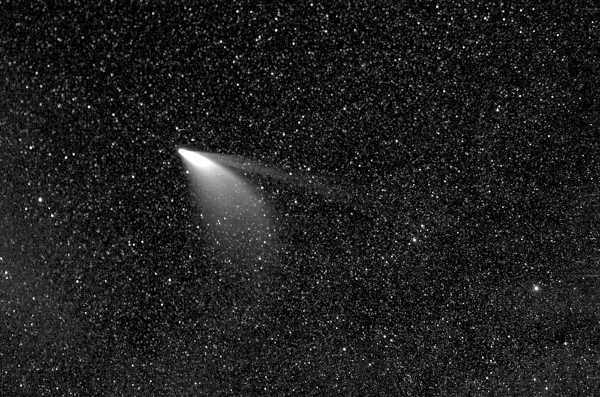
NASA’s Parker Solar Probe was at the right place at the right time to capture a unique view of comet NEOWISE on Saturday, July 5.
Parker Solar Probe’s position in space gave the spacecraft an unmatched view of the comet’s twin tails when it was particularly active just after its closest approach to the Sun, called perihelion.
The comet was discovered by NASA’s Near-Earth Object Wide-field Infrared Survey Explorer, or NEOWISE, on March 27.
Since then, the comet — called comet C/2020 F3 NEOWISE and nicknamed comet NEOWISE — has been spotted by several NASA spacecraft, including Parker Solar Probe, NASA’s Solar and Terrestrial Relations Observatory, the ESA/NASA Solar and Heliospheric Observatory, and astronauts aboard the International Space Station.
The image above is unprocessed data from Parker Solar Probe’s WISPR instrument, which takes images of the Sun’s outer atmosphere and solar wind in visible light. WISPR’s sensitivity also makes it well-suited to see fine detail in structures like comet tails.
Parker Solar Probe collected science data through June 28 for its fifth solar flyby, but the availability of additional downlink time allowed the team to take extra images, including this image of comet NEOWISE.
The twin tails of comet NEOWISE are seen more clearly in this image from the WISPR instrument, which has been processed to increase contrast and remove excess brightness from scattered sunlight, revealing more detail in the comet tails.
The lower tail, which appears broad and fuzzy, is the dust tail of comet NEOWISE — created when dust lifts off the surface of the comet’s nucleus and trails behind the comet in its orbit. Scientists hope to use WISPR’s images to study the size of dust grains within the dust tail, as well as the rate at which the comet sheds dust.
The upper tail is the ion tail, which is made up of gases that have been ionized by losing electrons in the Sun’s intense light.
These ionized gases are buffeted by the solar wind — the Sun’s constant outflow of magnetized material — creating the ion tail that extends directly away from the Sun.
Parker Solar Probe’s images appear to show a divide in the ion tail. This could mean that comet NEOWISE has two ion tails, in addition to its dust tail, though scientists would need more data and analysis to confirm this possibility.
Sarah Frazier works for NASA's Goddard Space Flight Center in Greenbelt, Maryland.