 How to resolve AdBlock issue?
News
Gov. Gavin Newsom on Friday announced his plan for learning and safe schools ahead of the 2020–2021 school year, as the California Department of Public Health issued a framework for when and how schools should reopen for in-person instruction.
“Learning is non-negotiable,” said Gov. Newsom. “The virus will be with us for a year or more, and school districts must provide meaningful instruction in the midst of this pandemic. In California, health data will determine when a school can be physically open – and when it must close – but learning should never stop. Students, staff, and parents all prefer in-classroom instruction, but only if it can be done safely.”
The governor’s plan centers on the following five key areas.
1. Safe in-person school based on local health data
The California Department of Public Health today issued updated schools guidance that includes using existing epidemiological metrics to determine if school districts can start in-person instruction.
CDPH currently uses six indicators to track the level of COVID-19 infection in each California county as well as the preparedness of the county health care system – data that includes the number of new infections per 100,000 residents, the test positivity rate, and the change in hospitalization rate, among others.
Any county that does not meet the state’s benchmarks is put on the County Monitoring List.
Schools located in counties that are on the Monitoring List must not physically open for in-person instruction until their county has come off the Monitoring List for 14 consecutive days.
Schools in counties that have not been on the Monitoring List for the prior 14 days may begin in-person instruction, following public health guidelines.
School community members – including parents, teachers, staff and students – can track daily data on whether and why their county is on the Monitoring List here.
There is a single exception. Local health officers may grant a waiver to allow elementary schools to reopen in-person instruction if the waiver is requested by the district superintendent, in consultation with labor, parents and community-based organizations.
When considering a waiver request, the local health officer must consider local data and consult with the California Department of Public Health.
The department also issued updated guidance for when schools must physically close and revert to distance learning because of COVID-19 infections.
Following a confirmed case of a student who was at school during his or her infectious period, other exposed students and staff should be quarantined for 14 days. The school should revert to distance learning when multiple cohorts have cases or 5 percent of students and staff test positive within a 14-day period. The district should revert to distance learning when 25 percent or more of its schools have been physically closed due to COVID-19 within 14 days.
Closure decisions should be made in consultation with local health officers. After 14 days, school districts may return to in-person instruction with the approval of the local public health officer.
2. Strong mask requirements for anyone in the school
In the updated guidance, all staff and students in third grade and above will be required to wear a mask or face covering. Students in second grade and below are strongly encouraged to wear a face covering. Students should be provided a face covering if they do not have one. The state has delivered over 18 million face coverings to schools to support them to reopen and ensure all students can participate in learning.
3. Physical distancing requirements & other adaptations
In the updated guidance, CDPH requires that all adults stay 6 feet from one another and 6 feet away from children, while students should maintain 6 feet of distance from one another as practicable. Anyone entering the school must do a health screen, and any student or staff exhibiting a fever or other symptoms will be immediately sent home. The guidance also provides that if anyone in a student or staff member’s household is sick, they too should stay home.
4. Regular testing and dedicated contact tracing for outbreaks at schools
The public health guidance recommends staff in every California school be tested for COVID-19 periodically based on local disease trends and as testing capacity allows. The governor also announced today that the state will provide resources and technical assistance for COVID-19 investigations in school settings.
5. Rigorous distance learning
Over the course of the pandemic, most schools will likely face physical closure at some point due to COVID-19. The Legislature and Gov. Newsom enacted a budget that provided $5.3 billion in additional funding to support learning, and set requirements to ensure schools provide rigorous and grade-appropriate instruction.
Under newly enacted state law, school districts are required to provide:
– Devices and connectivity so that every child can participate in distance learning.
– Daily live interaction for every child with teachers and other students.
– Class assignments that are challenging and equivalent to in-person instruction.
– Targeted supports and interventions for English learners and special education students.
The full guidance from the California Department of Public Health can be found here.
“Learning is non-negotiable,” said Gov. Newsom. “The virus will be with us for a year or more, and school districts must provide meaningful instruction in the midst of this pandemic. In California, health data will determine when a school can be physically open – and when it must close – but learning should never stop. Students, staff, and parents all prefer in-classroom instruction, but only if it can be done safely.”
The governor’s plan centers on the following five key areas.
1. Safe in-person school based on local health data
The California Department of Public Health today issued updated schools guidance that includes using existing epidemiological metrics to determine if school districts can start in-person instruction.
CDPH currently uses six indicators to track the level of COVID-19 infection in each California county as well as the preparedness of the county health care system – data that includes the number of new infections per 100,000 residents, the test positivity rate, and the change in hospitalization rate, among others.
Any county that does not meet the state’s benchmarks is put on the County Monitoring List.
Schools located in counties that are on the Monitoring List must not physically open for in-person instruction until their county has come off the Monitoring List for 14 consecutive days.
Schools in counties that have not been on the Monitoring List for the prior 14 days may begin in-person instruction, following public health guidelines.
School community members – including parents, teachers, staff and students – can track daily data on whether and why their county is on the Monitoring List here.
There is a single exception. Local health officers may grant a waiver to allow elementary schools to reopen in-person instruction if the waiver is requested by the district superintendent, in consultation with labor, parents and community-based organizations.
When considering a waiver request, the local health officer must consider local data and consult with the California Department of Public Health.
The department also issued updated guidance for when schools must physically close and revert to distance learning because of COVID-19 infections.
Following a confirmed case of a student who was at school during his or her infectious period, other exposed students and staff should be quarantined for 14 days. The school should revert to distance learning when multiple cohorts have cases or 5 percent of students and staff test positive within a 14-day period. The district should revert to distance learning when 25 percent or more of its schools have been physically closed due to COVID-19 within 14 days.
Closure decisions should be made in consultation with local health officers. After 14 days, school districts may return to in-person instruction with the approval of the local public health officer.
2. Strong mask requirements for anyone in the school
In the updated guidance, all staff and students in third grade and above will be required to wear a mask or face covering. Students in second grade and below are strongly encouraged to wear a face covering. Students should be provided a face covering if they do not have one. The state has delivered over 18 million face coverings to schools to support them to reopen and ensure all students can participate in learning.
3. Physical distancing requirements & other adaptations
In the updated guidance, CDPH requires that all adults stay 6 feet from one another and 6 feet away from children, while students should maintain 6 feet of distance from one another as practicable. Anyone entering the school must do a health screen, and any student or staff exhibiting a fever or other symptoms will be immediately sent home. The guidance also provides that if anyone in a student or staff member’s household is sick, they too should stay home.
4. Regular testing and dedicated contact tracing for outbreaks at schools
The public health guidance recommends staff in every California school be tested for COVID-19 periodically based on local disease trends and as testing capacity allows. The governor also announced today that the state will provide resources and technical assistance for COVID-19 investigations in school settings.
5. Rigorous distance learning
Over the course of the pandemic, most schools will likely face physical closure at some point due to COVID-19. The Legislature and Gov. Newsom enacted a budget that provided $5.3 billion in additional funding to support learning, and set requirements to ensure schools provide rigorous and grade-appropriate instruction.
Under newly enacted state law, school districts are required to provide:
– Devices and connectivity so that every child can participate in distance learning.
– Daily live interaction for every child with teachers and other students.
– Class assignments that are challenging and equivalent to in-person instruction.
– Targeted supports and interventions for English learners and special education students.
The full guidance from the California Department of Public Health can be found here.
New arrest data released by the California Department of Justice shows that 2019 saw the lowest number of marijuana arrests since 1954, while at the same time racial disparities among those arrested showed an increase.
The data showed there were 1,181 felony marijuana arrests in California in 2019, down 27 percent from 2018 (1,617 arrests) and the lowest number since 1954.
Hispanics accounted for 493 or 41.7 percent of arrests; Blacks for 263 (22.3%) and Whites for 252 (21.3%).
Males were 87.9 percent of those arrested for felonies, and juvenile felony arrests numbered 91.
Misdemeanor marijuana arrests were down slightly in 2019. They numbered 3,769, versus 3,835 in 2018.
Hispanics were even more disproportionately arrested for misdemeanors, coming in at 1,869 or 49.6 percent of arrests, with Blacks accounting for 509 arrests (13.5%) and Whites 837 (22.2%).
Again males were most often arrested for marijuana misdemeanors (78.1%) with females arrested 21.9 percent of the time.
Juvenile misdemeanor arrests totaled 1,209 or 32 percent of the total.
In an analysis of the findings, California NORML said that, weighting the arrest data by population – using 2018 California Census data: 36.6 percent, non-Hispanic white, 5.8 percent Black and 39.3 percent Hispanic) – means that arrest disparities went up slightly for each race versus whites compared to the previous year.
Blacks were 4.47 times more likely than whites to be arrested for a marijuana crime in California in 2019, versus 4.05 times as often in 2018; for Latinx people the arrest disparity versus whites rose to 2.02 times in 2019 versus 1.66 times in 2018, NORML said.
A recent report by the ACLU found persistent racial disparities in marijuana possession arrests in all US states, including California, from the years 2010 to 2018.
In addition, NORML said two recent reports drilled down on arrest rates in cities and neighborhoods in California, finding arrest disparities between blacks and whites as high as 30 times, and large increases in police budgets in some cities due to local taxes collected from the sales of cannabis following the passage of Proposition 64, which legalized recreational marijuana for adults in 2016.
The data showed there were 1,181 felony marijuana arrests in California in 2019, down 27 percent from 2018 (1,617 arrests) and the lowest number since 1954.
Hispanics accounted for 493 or 41.7 percent of arrests; Blacks for 263 (22.3%) and Whites for 252 (21.3%).
Males were 87.9 percent of those arrested for felonies, and juvenile felony arrests numbered 91.
Misdemeanor marijuana arrests were down slightly in 2019. They numbered 3,769, versus 3,835 in 2018.
Hispanics were even more disproportionately arrested for misdemeanors, coming in at 1,869 or 49.6 percent of arrests, with Blacks accounting for 509 arrests (13.5%) and Whites 837 (22.2%).
Again males were most often arrested for marijuana misdemeanors (78.1%) with females arrested 21.9 percent of the time.
Juvenile misdemeanor arrests totaled 1,209 or 32 percent of the total.
In an analysis of the findings, California NORML said that, weighting the arrest data by population – using 2018 California Census data: 36.6 percent, non-Hispanic white, 5.8 percent Black and 39.3 percent Hispanic) – means that arrest disparities went up slightly for each race versus whites compared to the previous year.
Blacks were 4.47 times more likely than whites to be arrested for a marijuana crime in California in 2019, versus 4.05 times as often in 2018; for Latinx people the arrest disparity versus whites rose to 2.02 times in 2019 versus 1.66 times in 2018, NORML said.
A recent report by the ACLU found persistent racial disparities in marijuana possession arrests in all US states, including California, from the years 2010 to 2018.
In addition, NORML said two recent reports drilled down on arrest rates in cities and neighborhoods in California, finding arrest disparities between blacks and whites as high as 30 times, and large increases in police budgets in some cities due to local taxes collected from the sales of cannabis following the passage of Proposition 64, which legalized recreational marijuana for adults in 2016.
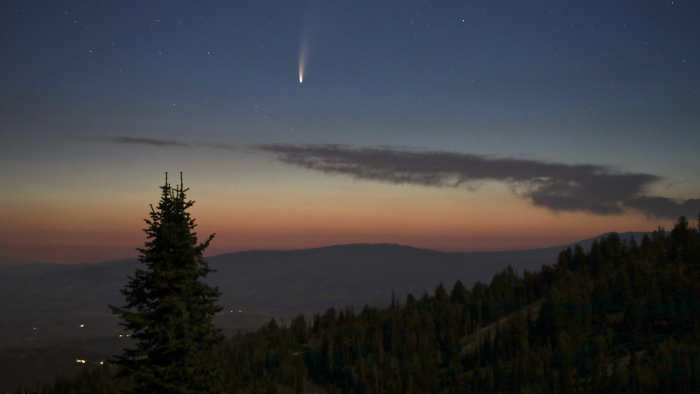
Observers in the Northern Hemisphere are hoping to catch a glimpse of Comet NEOWISE as it zips through the inner solar system before it speeds away into the depths of space.
Discovered on March 27, 2020, by NASA’s Near-Earth Object Wide-field Infrared Survey Explorer, or NEOWISE, mission, Comet NEOWISE is putting on a dazzling display for skywatchers before it disappears, not to be seen again for another 6,800 years.
For those hoping to catch a glimpse of Comet NEOWISE before it’s gone, there are several observing opportunities over the coming days when it will become increasingly visible shortly after sunset in the northwest sky.
If you’re looking at the sky without the help of observation tools, Comet NEOWISE will likely look like a fuzzy star with a bit of a tail, so using binoculars or a small telescope is recommended to get the best views of this object.
For those hoping to see Comet Neowise for themselves, here’s what to do:
– Find a spot away from city lights with an unobstructed view of the sky;
– Just after sunset, look below the Big Dipper in the northwest sky;
– If you have them, bring binoculars or a small telescope to get the best views of this dazzling display.
Each night, the comet will continue rising increasingly higher above the northwestern horizon as illustrated in the below graphic.

Want to learn more about Comet NEOWISE? Take a look at some of these resources:
Read these skywatching Tips from NASA: https://solarsystem.nasa.gov/whats-up-skywatching-tips-from-nasa/ ;
Learn these tips and trick on how to photograph comets and meteor showers: https://solarsystem.nasa.gov/news/510/how-to-photograph-a-meteor-shower/ .
Take a look at these images of Comet NEOWISE captured by NASA missions:
Parker Solar Probe: http://feature/goddard/2020/nasa-s-parker-solar-probe-spies-newly-discovered-comet-neowise ;
ESA and NASA’s Solar and Heliospheric Observatory: https://svs.gsfc.nasa.gov/13661 ;
Learn more about NASA’s (NEOWISE) mission that discovered Comet NEOWISE: https://www.nasa.gov/feature/jpl/comet-neowise-sizzles-as-it-slides-by-the-sun-providing-a-treat-for-observers ;
Brush up on comet science and learn how NASA studies these celestial objects: https://solarsystem.nasa.gov/asteroids-comets-and-meteors/comets/overview ;
View images of comet NEOWISE on the Astronomy Picture of the Day website: https://apod.nasa.gov/apod/archivepix.html ;
Learn more about comet science, how Comet NEOWISE was discovered, and how you can spot it in the sky in the episode of NASA Science Live below.
LAKE COUNTY, Calif. – Lake County’s Public Health officer has issued an update on COVID-19 cases and the effort to investigate their sources as the county moves into the fourth month of dealing with the pandemic.
On Thursday evening, Dr. Gary Pace said Lake County’s total COVID-19 cases had risen to 137 – a change of four over the previous day – with 36 cases active.
Pace said the case numbers continue to rise locally and throughout the state.
On Thursday night, there were more than 362,500 active cases and 7,480 deaths statewide, according to a tally of case totals published online by the state’s 58 county public health departments
Thursday night case totals for Lake’s neighboring counties were Colusa, 147; Glenn, 200; Mendocino, 177; Napa, 578; Sonoma, 2027; and Yolo, 1062.
“COVID-19 activity in Lake County, specifically, continues to be concerning, but the spread has been manageable, thus far,” Pace said.
Pace said that in Public Health’s contact investigations, key elements have emerged as significant sources of infections.
He said they have seen several cases where multiple people contracted COVID-19 at a social gathering with family and friends. During those events, people from multiple households interacted on a sustained basis.
“These types of events are very risky now that the virus is fairly widespread in the community,” Pace said.
If an individual who tests positive had close contact with another person – defined as within 6 feet for 15 minutes or more – Public Health is finding the second person's risk of becoming positive is much less when both people are wearing masks, Pace said.
Pace also reported that Public Health has observed that individuals who work in high public contact or social interaction environments are testing positive more frequently than other groups.
“We have not been able to confirm that they contracted the infection at work in all cases, but frequent social interaction and employment in front-line service industries appear to be strong risk factors,” Pace said.
Pace said when thinking about the risk associated with activities, “it is important to remember the strongest dividing line, from a public health and safety standpoint, is engaging in activities with people within your own household versus activities with people outside of your household.”
While people are tired of coping with the pandemic after four months, Pace said that cases are now increasing “and we are starting to enter a phase we have been worried about the whole time.”
He continued, “How destructive it will become really depends on our activity now as a community. We can find ways to continue to live our lives and enjoy the amazing natural beauty of Lake County, but do it in a safe way, where we limit risk to our neighbors, families and those vulnerable to severe complications.”
With cases rising, Public Health is particularly concerned about social gatherings where the COVID virus can spread quickly.
“Each time we document a positive case where the individual had recently been to a social gathering, there is risk we could be facing an outbreak,” he said.
Pace credited Public Health nurses, contact tracers, staff and clinical partners for doing “a truly outstanding job” of identifying potential pockets of spread early, and intervening with education and testing.
He said their insightful work has kept the exponential spread seen in other areas in the region and around the world at bay, but he added the community cannot grow complacent.
“Each spark of infection has the potential to grow, and the most severe outbreaks are fueled by simple things, like getting together in a home environment to mark achievements and family milestones without wearing face coverings,” Pace said.
Email Elizabeth Larson atThis email address is being protected from spambots. You need JavaScript enabled to view it. . Follow her on Twitter, @ERLarson, or Lake County News, @LakeCoNews.
On Thursday evening, Dr. Gary Pace said Lake County’s total COVID-19 cases had risen to 137 – a change of four over the previous day – with 36 cases active.
Pace said the case numbers continue to rise locally and throughout the state.
On Thursday night, there were more than 362,500 active cases and 7,480 deaths statewide, according to a tally of case totals published online by the state’s 58 county public health departments
Thursday night case totals for Lake’s neighboring counties were Colusa, 147; Glenn, 200; Mendocino, 177; Napa, 578; Sonoma, 2027; and Yolo, 1062.
“COVID-19 activity in Lake County, specifically, continues to be concerning, but the spread has been manageable, thus far,” Pace said.
Pace said that in Public Health’s contact investigations, key elements have emerged as significant sources of infections.
He said they have seen several cases where multiple people contracted COVID-19 at a social gathering with family and friends. During those events, people from multiple households interacted on a sustained basis.
“These types of events are very risky now that the virus is fairly widespread in the community,” Pace said.
If an individual who tests positive had close contact with another person – defined as within 6 feet for 15 minutes or more – Public Health is finding the second person's risk of becoming positive is much less when both people are wearing masks, Pace said.
Pace also reported that Public Health has observed that individuals who work in high public contact or social interaction environments are testing positive more frequently than other groups.
“We have not been able to confirm that they contracted the infection at work in all cases, but frequent social interaction and employment in front-line service industries appear to be strong risk factors,” Pace said.
Pace said when thinking about the risk associated with activities, “it is important to remember the strongest dividing line, from a public health and safety standpoint, is engaging in activities with people within your own household versus activities with people outside of your household.”
While people are tired of coping with the pandemic after four months, Pace said that cases are now increasing “and we are starting to enter a phase we have been worried about the whole time.”
He continued, “How destructive it will become really depends on our activity now as a community. We can find ways to continue to live our lives and enjoy the amazing natural beauty of Lake County, but do it in a safe way, where we limit risk to our neighbors, families and those vulnerable to severe complications.”
With cases rising, Public Health is particularly concerned about social gatherings where the COVID virus can spread quickly.
“Each time we document a positive case where the individual had recently been to a social gathering, there is risk we could be facing an outbreak,” he said.
Pace credited Public Health nurses, contact tracers, staff and clinical partners for doing “a truly outstanding job” of identifying potential pockets of spread early, and intervening with education and testing.
He said their insightful work has kept the exponential spread seen in other areas in the region and around the world at bay, but he added the community cannot grow complacent.
“Each spark of infection has the potential to grow, and the most severe outbreaks are fueled by simple things, like getting together in a home environment to mark achievements and family milestones without wearing face coverings,” Pace said.
Email Elizabeth Larson at
LAKE COUNTY, Calif. – Cal Fire said Thursday that its investigation into the cause of the Kincade fire, which raged across Sonoma County and into southern Lake County in October, traced the origin to Pacific Gas and Electric Co. equipment.
The Kincade fire started on Oct. 23, 2019, several hours after a public safety power shutoff was implemented across portions of the North Bay – including Lake and Sonoma counties – in response to a red flag warning for heavy winds.
It burned a total of 77,758 acres, destroyed 374 structures and caused four non-life-threatening injuries for first responders, Cal Fire reported. There were no deaths attributed to the fire.
In a statement issued on Thursday afternoon, PG&E said it was aware of Cal Fire’s statement on its determination into the fire’s cause.
“At this time, we do not have access to Cal Fire’s investigative report or the evidence it has collected. We look forward to reviewing both at the appropriate time,” the company said.
North Coast Sen. Mike McGuire, whose district includes Lake and Sonoma counties, said Thursday, “PG&E has become too big and has failed us too many times,” referring to the San Bruno explosion, the massive wildfires of 2017 and 2018, the fall public safety power shutoffs and now the Kincade fire.
McGuire maintained that the company should be broken up.
The Kincade fire burned for two weeks, finally being fully contained on Nov. 6.
During the weeks it burned, it triggered massive evacuations across a wide swath of Sonoma County and also burned into the southwest portion of Lake County near Middletown, which resulted in an evacuation warning for the Cobb and Middletown areas.
Cal Fire said its investigators were immediately dispatched to the Kincade fire after it started and began working to determine the fire’s origin and cause of the fire.
Within days of the fire’s start, PG&E acknowledged making a report to the California Public Utilities Commission about a failed transmission line in The Geysers Geothermal Steamfield in the fire’s area of origin in Sonoma County the day after the fire started.
PG&E said that as part of the Oct. 23 public safety power shutoff, it had turned off the power to 27,837 customers in Sonoma County, including Geyserville and the surrounding area.
The company said it deenergized power distribution lines in those areas but that transmission lines in the same areas remained energized because the forecasted weather conditions weren’t expected to meet the sustained 55 miles per hour wind speeds required for shutoff under company protocol.
The transmission tower where the fallen line was found was 43 years old at the time and had been inspected four times over the previous two years, including an inspection earlier that year as part of PG&E’s Wildfire Safety Inspection Program, company officials said.
The company’s early reports also acknowledged that Cal Fire personnel reported to PG&E a broken jumper on the tower.
Following a “very meticulous and thorough investigation” that took place over the course of nine months, Cal Fire said it determined the fire was caused by electrical transmission lines located northeast of Geyserville and owned and operated by PG&E.
The brief Thursday statement from Cal Fire was general in nature and did not, specifically, mention the failed equipment PG&E had reported on in the fall, although it referred to the same area of origin.
Cal Fire said tinder-dry vegetation and strong winds combined with low humidity and warm temperatures contributed to extreme rates of fire spread. The fire burned 10,000 acres on its first night, according to an original Cal Fire report.
The Kincade fire investigative report has been forwarded to the Sonoma County District Attorney’s Office, Cal Fire said.
PG&E said Thursday, “We want our customers and communities to know that safety is our most important responsibility and that we are working hard every day to reduce wildfire risk throughout our service area.”
The company pointed to its ongoing work to reduce wildfire risk through its Community Wildfire Safety Program, which is designed to address the growing threat of extreme weather and wildfires across PG&E’s service area.
Measures include ongoing and expanded efforts related to new grid technology, hardening of the electric system, enhanced vegetation management, and real-time monitoring and situational awareness tools such as high-definition cameras and hundreds of weather stations to better understand how severe weather can impact the system.
The news comes weeks after PG&E announced it had emerged from Chapter 11 bankruptcy and one month after the company pleaded guilty in Butte County Superior Court to 84 counts of involuntary manslaughter and one count of unlawfully starting a fire for the 2018 Camp fire in Paradise.
Cal Fire also previously found PG&E responsible for the 2015 Butte fire and the October 2017 North Bay fires, which included the Sulphur fire in Lake County. The North Bay fires reportedly remain the costliest series of wildland fires on record.
McGuire said that it’s time for Senate Bill 1312, to expedite desperately needed modernizations and safety measures to curb massive power shutoffs, to become law.
SB 1312 will expedite grid hardening and force PG&E to modernize and fix its system in four years rather than the 12 to 14 years it has proposed to state regulators, McGuire said.
Email Elizabeth Larson atThis email address is being protected from spambots. You need JavaScript enabled to view it. . Follow her on Twitter, @ERLarson, or Lake County News, @LakeCoNews.
The Kincade fire started on Oct. 23, 2019, several hours after a public safety power shutoff was implemented across portions of the North Bay – including Lake and Sonoma counties – in response to a red flag warning for heavy winds.
It burned a total of 77,758 acres, destroyed 374 structures and caused four non-life-threatening injuries for first responders, Cal Fire reported. There were no deaths attributed to the fire.
In a statement issued on Thursday afternoon, PG&E said it was aware of Cal Fire’s statement on its determination into the fire’s cause.
“At this time, we do not have access to Cal Fire’s investigative report or the evidence it has collected. We look forward to reviewing both at the appropriate time,” the company said.
North Coast Sen. Mike McGuire, whose district includes Lake and Sonoma counties, said Thursday, “PG&E has become too big and has failed us too many times,” referring to the San Bruno explosion, the massive wildfires of 2017 and 2018, the fall public safety power shutoffs and now the Kincade fire.
McGuire maintained that the company should be broken up.
The Kincade fire burned for two weeks, finally being fully contained on Nov. 6.
During the weeks it burned, it triggered massive evacuations across a wide swath of Sonoma County and also burned into the southwest portion of Lake County near Middletown, which resulted in an evacuation warning for the Cobb and Middletown areas.
Cal Fire said its investigators were immediately dispatched to the Kincade fire after it started and began working to determine the fire’s origin and cause of the fire.
Within days of the fire’s start, PG&E acknowledged making a report to the California Public Utilities Commission about a failed transmission line in The Geysers Geothermal Steamfield in the fire’s area of origin in Sonoma County the day after the fire started.
PG&E said that as part of the Oct. 23 public safety power shutoff, it had turned off the power to 27,837 customers in Sonoma County, including Geyserville and the surrounding area.
The company said it deenergized power distribution lines in those areas but that transmission lines in the same areas remained energized because the forecasted weather conditions weren’t expected to meet the sustained 55 miles per hour wind speeds required for shutoff under company protocol.
The transmission tower where the fallen line was found was 43 years old at the time and had been inspected four times over the previous two years, including an inspection earlier that year as part of PG&E’s Wildfire Safety Inspection Program, company officials said.
The company’s early reports also acknowledged that Cal Fire personnel reported to PG&E a broken jumper on the tower.
Following a “very meticulous and thorough investigation” that took place over the course of nine months, Cal Fire said it determined the fire was caused by electrical transmission lines located northeast of Geyserville and owned and operated by PG&E.
The brief Thursday statement from Cal Fire was general in nature and did not, specifically, mention the failed equipment PG&E had reported on in the fall, although it referred to the same area of origin.
Cal Fire said tinder-dry vegetation and strong winds combined with low humidity and warm temperatures contributed to extreme rates of fire spread. The fire burned 10,000 acres on its first night, according to an original Cal Fire report.
The Kincade fire investigative report has been forwarded to the Sonoma County District Attorney’s Office, Cal Fire said.
PG&E said Thursday, “We want our customers and communities to know that safety is our most important responsibility and that we are working hard every day to reduce wildfire risk throughout our service area.”
The company pointed to its ongoing work to reduce wildfire risk through its Community Wildfire Safety Program, which is designed to address the growing threat of extreme weather and wildfires across PG&E’s service area.
Measures include ongoing and expanded efforts related to new grid technology, hardening of the electric system, enhanced vegetation management, and real-time monitoring and situational awareness tools such as high-definition cameras and hundreds of weather stations to better understand how severe weather can impact the system.
The news comes weeks after PG&E announced it had emerged from Chapter 11 bankruptcy and one month after the company pleaded guilty in Butte County Superior Court to 84 counts of involuntary manslaughter and one count of unlawfully starting a fire for the 2018 Camp fire in Paradise.
Cal Fire also previously found PG&E responsible for the 2015 Butte fire and the October 2017 North Bay fires, which included the Sulphur fire in Lake County. The North Bay fires reportedly remain the costliest series of wildland fires on record.
McGuire said that it’s time for Senate Bill 1312, to expedite desperately needed modernizations and safety measures to curb massive power shutoffs, to become law.
SB 1312 will expedite grid hardening and force PG&E to modernize and fix its system in four years rather than the 12 to 14 years it has proposed to state regulators, McGuire said.
Email Elizabeth Larson at
This article about the coronavirus red zone was originally published by the Center for Public Integrity, a nonprofit newsroom based in Washington, DC.” Reprinted by permission of The Center for Public Integrity.
A document prepared for the White House Coronavirus Task Force but not publicized suggests more than a dozen states should revert to more stringent protective measures, limiting social gatherings to 10 people or fewer, closing bars and gyms and asking residents to wear masks at all times.
The document, dated July 14 and obtained by the Center for Public Integrity, says 18 states are in the “red zone” for COVID-19 cases, meaning they had more than 100 new cases per 100,000 population last week.
Eleven states are in the “red zone” for test positivity, meaning more than 10 percent of diagnostic test results came back positive.
It includes county-level data and reflects the insistence of the Trump administration that states and counties should take the lead in responding to the coronavirus. The document has been shared within the federal government but does not appear to be posted publicly.
Dr. Ashish Jha, director of the Harvard Global Health Institute, said he thought the information and recommendations were mostly good.
“The fact that it’s not public makes no sense to me,” Jha said Thursday. “Why are we hiding this information from the American people? This should be published and updated every day.”
Dr. Deborah Birx, a leader of the task force, referenced an earlier version of what appears to be the same report — which she said was updated weekly and sent to governors — in a press conference July 8 in which Vice President Mike Pence urged local leaders to open schools in the fall.
She said Arizona, California, Florida and Texas were among the states the task force was monitoring carefully and that “a series of other states” were also in the red zone and should consider limiting gatherings.
It’s clear some states are not following the task force’s advice. For instance, the document recommends that Georgia, in the red zone for both cases and test positivity, “mandate statewide wearing of cloth face coverings outside the home.” But Gov. Brian Kemp signed an order Wednesday banning localities from requiring masks.
The 18 states that are included in the red zone for cases in the document are Alabama, Arkansas, Arizona, California, Florida, Georgia, Idaho, Iowa, Kansas, Louisiana, Mississippi, North Carolina, Nevada, Oklahoma, South Carolina, Tennessee, Texas and Utah.
The 11 states that are in the red zone for test positivity are Alabama, Arizona, Florida, Georgia, Idaho, Louisiana, Mississippi, Nevada, South Carolina, Texas and Washington.
In May, the World Health Organization recommended that governments make sure test positivity rates were at 5 percent or lower for 14 days before reopening. A COVID-19 tracker from Johns Hopkins University shows that 33 states were above that recommended positivity as of July 16.
“If the test positivity rate is above 10 percent, that means we’re not doing a good job mitigating the outbreak,” said Jessica Malaty Rivera, science communication lead at the COVID Tracking Project, a volunteer organization launched by journalists from The Atlantic.
“Ideally we want the test positivity rate to be below 3 percent, because that shows that we’re suppressing COVID-19.”
The White House and Kemp did not respond to requests for comment Thursday.
A document prepared for the White House Coronavirus Task Force but not publicized suggests more than a dozen states should revert to more stringent protective measures, limiting social gatherings to 10 people or fewer, closing bars and gyms and asking residents to wear masks at all times.
The document, dated July 14 and obtained by the Center for Public Integrity, says 18 states are in the “red zone” for COVID-19 cases, meaning they had more than 100 new cases per 100,000 population last week.
Eleven states are in the “red zone” for test positivity, meaning more than 10 percent of diagnostic test results came back positive.
It includes county-level data and reflects the insistence of the Trump administration that states and counties should take the lead in responding to the coronavirus. The document has been shared within the federal government but does not appear to be posted publicly.
Dr. Ashish Jha, director of the Harvard Global Health Institute, said he thought the information and recommendations were mostly good.
“The fact that it’s not public makes no sense to me,” Jha said Thursday. “Why are we hiding this information from the American people? This should be published and updated every day.”
Dr. Deborah Birx, a leader of the task force, referenced an earlier version of what appears to be the same report — which she said was updated weekly and sent to governors — in a press conference July 8 in which Vice President Mike Pence urged local leaders to open schools in the fall.
She said Arizona, California, Florida and Texas were among the states the task force was monitoring carefully and that “a series of other states” were also in the red zone and should consider limiting gatherings.
It’s clear some states are not following the task force’s advice. For instance, the document recommends that Georgia, in the red zone for both cases and test positivity, “mandate statewide wearing of cloth face coverings outside the home.” But Gov. Brian Kemp signed an order Wednesday banning localities from requiring masks.
The 18 states that are included in the red zone for cases in the document are Alabama, Arkansas, Arizona, California, Florida, Georgia, Idaho, Iowa, Kansas, Louisiana, Mississippi, North Carolina, Nevada, Oklahoma, South Carolina, Tennessee, Texas and Utah.
The 11 states that are in the red zone for test positivity are Alabama, Arizona, Florida, Georgia, Idaho, Louisiana, Mississippi, Nevada, South Carolina, Texas and Washington.
In May, the World Health Organization recommended that governments make sure test positivity rates were at 5 percent or lower for 14 days before reopening. A COVID-19 tracker from Johns Hopkins University shows that 33 states were above that recommended positivity as of July 16.
“If the test positivity rate is above 10 percent, that means we’re not doing a good job mitigating the outbreak,” said Jessica Malaty Rivera, science communication lead at the COVID Tracking Project, a volunteer organization launched by journalists from The Atlantic.
“Ideally we want the test positivity rate to be below 3 percent, because that shows that we’re suppressing COVID-19.”
The White House and Kemp did not respond to requests for comment Thursday.