 How to resolve AdBlock issue?
News
The California Independent System Operator has issued a statewide Flex Alert, a call for voluntary electricity conservation, from 3 p.m. to 10 p.m. Thursday.
With high temperatures in the forecast, the power grid operator is predicting an increase in electricity demand, primarily from air conditioning use. Reduced capacity, along with fire activity and heat, has led to a potential shortage of energy supply on Thursday evening.
On Wednesday afternoon, a grid alert was issued for a possible electricity shortage in the day-ahead market, for one hour beginning at 6 p.m. Thursday, and a Restricted Maintenance Operations (RMO) notice was issued for the period 6 a.m. to 10 p.m. Thursday.
The Grid Alert will allow operators to call up demand response supply, while the RMO allows operators to call all available generation onto the system and bring back transmission that may be offline for planned maintenance.
Consumers are urged to conserve electricity, especially during the late afternoon and early evening, when the grid is most stressed due to higher demand and solar energy production falling. Consumers are also asked to turn off unnecessary lights, delay using major appliances until after 10 p.m., and set air conditioner thermostats to 78 degrees or higher.
The conservation measures can help the power grid during a time of tight demand and supply, and avoid power interruptions. Energy reduction during a Flex Alert can prevent further emergency measures, including rotating power outages.
Between 3 p.m. and 10 p.m., the ISO is urging consumers to:
– Set air conditioning thermostats to 78 degrees, if health permits.
– Defer use of major appliances.
– Turn off unnecessary lights.
– Unplug unused electrical devices.
– Close blinds and drapes.
– Use fans when possible.
– Limit time the refrigerator door is open.
Consumers can also take steps to prepare for the Flex Alert by doing the following
before 3 p.m.:
– “Pre-cool” their homes, or lower air conditioning thermostats.
– Charge electric vehicles.
– Charge mobile devices and laptops.
– Run dishwashers, washing machines and other major appliances.
– Set pool pumps to run in the early morning or late at night.
With high temperatures in the forecast, the power grid operator is predicting an increase in electricity demand, primarily from air conditioning use. Reduced capacity, along with fire activity and heat, has led to a potential shortage of energy supply on Thursday evening.
On Wednesday afternoon, a grid alert was issued for a possible electricity shortage in the day-ahead market, for one hour beginning at 6 p.m. Thursday, and a Restricted Maintenance Operations (RMO) notice was issued for the period 6 a.m. to 10 p.m. Thursday.
The Grid Alert will allow operators to call up demand response supply, while the RMO allows operators to call all available generation onto the system and bring back transmission that may be offline for planned maintenance.
Consumers are urged to conserve electricity, especially during the late afternoon and early evening, when the grid is most stressed due to higher demand and solar energy production falling. Consumers are also asked to turn off unnecessary lights, delay using major appliances until after 10 p.m., and set air conditioner thermostats to 78 degrees or higher.
The conservation measures can help the power grid during a time of tight demand and supply, and avoid power interruptions. Energy reduction during a Flex Alert can prevent further emergency measures, including rotating power outages.
Between 3 p.m. and 10 p.m., the ISO is urging consumers to:
– Set air conditioning thermostats to 78 degrees, if health permits.
– Defer use of major appliances.
– Turn off unnecessary lights.
– Unplug unused electrical devices.
– Close blinds and drapes.
– Use fans when possible.
– Limit time the refrigerator door is open.
Consumers can also take steps to prepare for the Flex Alert by doing the following
before 3 p.m.:
– “Pre-cool” their homes, or lower air conditioning thermostats.
– Charge electric vehicles.
– Charge mobile devices and laptops.
– Run dishwashers, washing machines and other major appliances.
– Set pool pumps to run in the early morning or late at night.
In the wake of nationwide demonstrations against structural racism and systemic injustice, Gov. Gavin Newsom on Wednesday signed a series of bills into law initiating critical criminal justice, juvenile justice and policing reforms in California.
Delivering on his promise this summer to sign a bill ending the use of the carotid restraint, Gov. Newsom signed AB 1196 by Assemblymember Mike Gipson (D-Carson) which bans the practice statewide, and signed AB 1506 by Assemblymember Kevin McCarty (D-Sacramento) requiring the California Attorney General to conduct investigations into officer-involved shootings of unarmed individuals that result in death.
He also took action on legislation that reforms the juvenile justice system to put more emphasis on rehabilitation and education, as well as creating a more just probation system.
“Americans across the country took to the streets this summer rightfully demanding more and better of our criminal justice system – and of ourselves,” said Gov. Newsom. “We heard those calls for action loud and clear and today are advancing reforms to improve policing practices by ending the carotid hold and requiring independent investigations in officer-involved shootings. We are also taking important steps to break the school-to-prison pipeline. Still, we can and must do more. Working with our youth, faith and community leaders, law enforcement, the Legislature and countless others demanding change, my Administration remains committed to the important work ahead to make our criminal and juvenile justice systems fairer and safer for all Californians.”
Newsom has enacted major change on criminal justice reform during his first years in office – from enacting one of the nation’s strongest police use-of-force standards, to putting a moratorium on the death penalty and shutting down California’s execution chamber, to closing prisons.
Newsom’s office said the administration will continue to work with the Legislature on additional reforms, including efforts to increase transparency in peace officer records and broader decertification measures to create accountability for officers with a history of misconduct.
Gov. Newsom also took action on Wednesday on important juvenile justice reforms.
He signed several bills to support young people coming out of the criminal justice system and to disrupt the school-to-prison pipeline.
SB 823 by the Committee on Budget and Fiscal Review takes the first, formal step of closing the Division of Juvenile Justice, which will help to provide youth rehabilitative services closer to home.
Other bills the governor signed Wednesday that support youth include AB 901 by Assemblymember Mike Gipson (D-Carson), which will end the practice of referring youth who are having problems at school to probation programs.
Additionally, SB 203 by Senator Steven Bradford (D-Gardena) requires that children under age 17 have an opportunity to consult with legal counsel before interrogation, and SB 1290 by Senator Maria Elena Durazo (D-Los Angeles) will cancel certain fees assessed on juvenile offenders and their families.
Finally, Gov. Newsom signed AB 1950 by Assemblymember Sydney Kamlager (D-Los Angeles), which caps probation terms to a maximum of one year for misdemeanor offenses and two years for felonies.
Governor Newsom also signed:
AB 646 by Assemblymember Kevin McCarty (D-Sacramento) – Elections: voter eligibility.
AB 732 by Assemblymember Rob Bonta (D-Alameda) – County jails: prisons: incarcerated pregnant persons.
AB 846 by Assemblymember Autumn Burke (D-Inglewood) and Assemblymember Jacqui Irwin (D-Thousand Oaks) – Public employment: public officers or employees declared by law to be peace officers.
AB 1304 by Assemblymember Marie Waldron (R-Escondido) – California MAT Re-Entry Incentive Program. A signing message can be found here.
AB 1775 by Assemblymember Reginald Byron Jones-Sawyer, Sr. (D-Los Angeles) – False reports and harassment.
AB 2321 by Assemblymember Reginald Byron Jones-Sawyer, Sr. (D-Los Angeles) – Juvenile court records: access.
AB 2425 by Assemblymember Mark Stone (D-Scotts Valley) – Juvenile police records.
AB 2512 by Assemblymember Mark Stone (D-Scotts Valley) – Death penalty: person with an intellectual disability.
AB 2606 by Assemblymember Sabrina Cervantes (D-Riverside) – Criminal justice: supervised release file.
AB 3043 by Assemblymember Reginald Byron Jones-Sawyer, Sr. (D-Los Angeles) – Corrections: confidential calls.
AB 3234 by Assemblymember Philip Ting (D-San Francisco) – Public Safety. A signing message can be found here.
SB 480 by Senator Bob Archuleta (D-Pico Rivera) – Law enforcement uniforms.
SB 1126 by Senator Brian W. Jones (R-Santee) – Juvenile court records.
SB 1196 by Senator Thomas Umberg (D-Santa Ana) – Price gouging.
Delivering on his promise this summer to sign a bill ending the use of the carotid restraint, Gov. Newsom signed AB 1196 by Assemblymember Mike Gipson (D-Carson) which bans the practice statewide, and signed AB 1506 by Assemblymember Kevin McCarty (D-Sacramento) requiring the California Attorney General to conduct investigations into officer-involved shootings of unarmed individuals that result in death.
He also took action on legislation that reforms the juvenile justice system to put more emphasis on rehabilitation and education, as well as creating a more just probation system.
“Americans across the country took to the streets this summer rightfully demanding more and better of our criminal justice system – and of ourselves,” said Gov. Newsom. “We heard those calls for action loud and clear and today are advancing reforms to improve policing practices by ending the carotid hold and requiring independent investigations in officer-involved shootings. We are also taking important steps to break the school-to-prison pipeline. Still, we can and must do more. Working with our youth, faith and community leaders, law enforcement, the Legislature and countless others demanding change, my Administration remains committed to the important work ahead to make our criminal and juvenile justice systems fairer and safer for all Californians.”
Newsom has enacted major change on criminal justice reform during his first years in office – from enacting one of the nation’s strongest police use-of-force standards, to putting a moratorium on the death penalty and shutting down California’s execution chamber, to closing prisons.
Newsom’s office said the administration will continue to work with the Legislature on additional reforms, including efforts to increase transparency in peace officer records and broader decertification measures to create accountability for officers with a history of misconduct.
Gov. Newsom also took action on Wednesday on important juvenile justice reforms.
He signed several bills to support young people coming out of the criminal justice system and to disrupt the school-to-prison pipeline.
SB 823 by the Committee on Budget and Fiscal Review takes the first, formal step of closing the Division of Juvenile Justice, which will help to provide youth rehabilitative services closer to home.
Other bills the governor signed Wednesday that support youth include AB 901 by Assemblymember Mike Gipson (D-Carson), which will end the practice of referring youth who are having problems at school to probation programs.
Additionally, SB 203 by Senator Steven Bradford (D-Gardena) requires that children under age 17 have an opportunity to consult with legal counsel before interrogation, and SB 1290 by Senator Maria Elena Durazo (D-Los Angeles) will cancel certain fees assessed on juvenile offenders and their families.
Finally, Gov. Newsom signed AB 1950 by Assemblymember Sydney Kamlager (D-Los Angeles), which caps probation terms to a maximum of one year for misdemeanor offenses and two years for felonies.
Governor Newsom also signed:
AB 646 by Assemblymember Kevin McCarty (D-Sacramento) – Elections: voter eligibility.
AB 732 by Assemblymember Rob Bonta (D-Alameda) – County jails: prisons: incarcerated pregnant persons.
AB 846 by Assemblymember Autumn Burke (D-Inglewood) and Assemblymember Jacqui Irwin (D-Thousand Oaks) – Public employment: public officers or employees declared by law to be peace officers.
AB 1304 by Assemblymember Marie Waldron (R-Escondido) – California MAT Re-Entry Incentive Program. A signing message can be found here.
AB 1775 by Assemblymember Reginald Byron Jones-Sawyer, Sr. (D-Los Angeles) – False reports and harassment.
AB 2321 by Assemblymember Reginald Byron Jones-Sawyer, Sr. (D-Los Angeles) – Juvenile court records: access.
AB 2425 by Assemblymember Mark Stone (D-Scotts Valley) – Juvenile police records.
AB 2512 by Assemblymember Mark Stone (D-Scotts Valley) – Death penalty: person with an intellectual disability.
AB 2606 by Assemblymember Sabrina Cervantes (D-Riverside) – Criminal justice: supervised release file.
AB 3043 by Assemblymember Reginald Byron Jones-Sawyer, Sr. (D-Los Angeles) – Corrections: confidential calls.
AB 3234 by Assemblymember Philip Ting (D-San Francisco) – Public Safety. A signing message can be found here.
SB 480 by Senator Bob Archuleta (D-Pico Rivera) – Law enforcement uniforms.
SB 1126 by Senator Brian W. Jones (R-Santee) – Juvenile court records.
SB 1196 by Senator Thomas Umberg (D-Santa Ana) – Price gouging.
LAKE COUNTY, Calif. – On Monday Gov. Gavin Newsom announced that Lake County has been granted $3.3 million in the first round of awards for Homekey, California’s innovative $600 million program to provide long-term housing for people experiencing or at risk of experiencing homelessness.
Lake County Department of Social Services, in partnership with Adventist Health Clear Lake, has contracted with Hope Rising Lake County to operate Hope Center at 3400 Emerson Drive in Clearlake.
Hope Rising Lake County is a 501(c)(3) nonprofit community benefit organization composed of health systems and services, county leaders, nonprofits, and other relevant organizations that serve Lake County.
The organization leads a joint effort to leverage resources and to improve the overall health and wellbeing of the community.
Hope Center in Clearlake is a 20-bed interim housing facility as well as a housing navigation hub that will provide additional housing navigation services and resources for those not sheltered at Hope Center.
Hope Center interim housing is not just a “homeless shelter.” This project is focused on housing navigation, empowering Lake County residents currently experiencing homelessness to find sustainable paths to housing.
In January of this year, 572 people were identified as experiencing homelessness or living in a place not meant for human habitation in Lake County. Hope Center will allow Lake County to begin to address this housing crisis even in the midst of COVID-19.
Participants will be able to access a variety of services, including housing case management, medical services and health screenings, mental health and substance use disorder treatment, 12-step meetings, health and nutrition education, job training and work experience (such as catering and landscaping), benefit enrollment, legal assistance and transportation, among others.
Lake County residents who meet eligibility requirements may self-refer or be referred by partner agencies, law enforcement, EMS, or the emergency department of local hospitals.
Acceptance of applicants during the COVID-19 pandemic will prioritize clients identified by Health Services as being particularly vulnerable to COVID-19 in our community.
Access to programs is not contingent on sobriety, minimum income requirements, lack of a criminal record, completion of treatment, participation in services, or other unnecessary conditions not related to safety during the COVID-19 pandemic.
In April, the Clearlake City Council approved a memorandum of understanding with Adventist Health Clear Lake and Hope Rising Lake County in which the city agreed to contribute $500,000 in bond funds for the Hope Center, as Lake County News has reported.
Officials have so far not reported a date for when the Hope Center is set to open.
Lake County Department of Social Services, in partnership with Adventist Health Clear Lake, has contracted with Hope Rising Lake County to operate Hope Center at 3400 Emerson Drive in Clearlake.
Hope Rising Lake County is a 501(c)(3) nonprofit community benefit organization composed of health systems and services, county leaders, nonprofits, and other relevant organizations that serve Lake County.
The organization leads a joint effort to leverage resources and to improve the overall health and wellbeing of the community.
Hope Center in Clearlake is a 20-bed interim housing facility as well as a housing navigation hub that will provide additional housing navigation services and resources for those not sheltered at Hope Center.
Hope Center interim housing is not just a “homeless shelter.” This project is focused on housing navigation, empowering Lake County residents currently experiencing homelessness to find sustainable paths to housing.
In January of this year, 572 people were identified as experiencing homelessness or living in a place not meant for human habitation in Lake County. Hope Center will allow Lake County to begin to address this housing crisis even in the midst of COVID-19.
Participants will be able to access a variety of services, including housing case management, medical services and health screenings, mental health and substance use disorder treatment, 12-step meetings, health and nutrition education, job training and work experience (such as catering and landscaping), benefit enrollment, legal assistance and transportation, among others.
Lake County residents who meet eligibility requirements may self-refer or be referred by partner agencies, law enforcement, EMS, or the emergency department of local hospitals.
Acceptance of applicants during the COVID-19 pandemic will prioritize clients identified by Health Services as being particularly vulnerable to COVID-19 in our community.
Access to programs is not contingent on sobriety, minimum income requirements, lack of a criminal record, completion of treatment, participation in services, or other unnecessary conditions not related to safety during the COVID-19 pandemic.
In April, the Clearlake City Council approved a memorandum of understanding with Adventist Health Clear Lake and Hope Rising Lake County in which the city agreed to contribute $500,000 in bond funds for the Hope Center, as Lake County News has reported.
Officials have so far not reported a date for when the Hope Center is set to open.
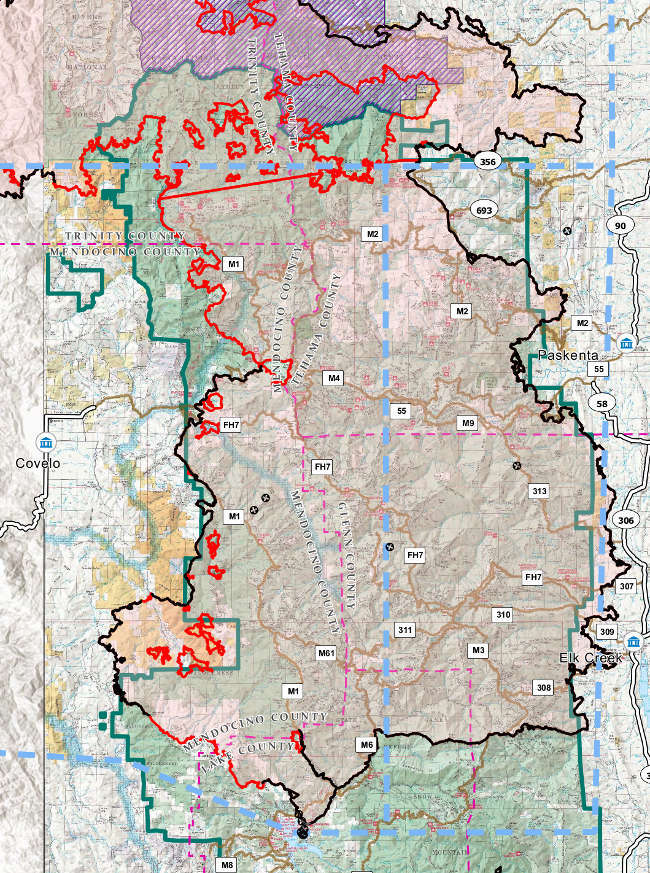
NORTHERN CALIFORNIA – Officials reported that the August Complex has continued to show massive growth.
The August Complex’s size rose to 938,044 acres on Tuesday – nearly 60,000 acres more over the previous day – with containment remaining at 43 percent.
The lightning-caused complex, which began Aug. 17, is burning on the Mendocino, Shasta-Trinity and Six Rivers National Forests.
It is far and away the largest wildland fire incident in the state’s recorded history, and it is expected to burn for another month and a half until it’s fully contained.
Cal Fire’s unified team and the US Forest Service are engaged in a coordinated and collaborative response to the complex, which has been split into three zones – South, West and North – to effectively provide a response to the communities at risk.
Due to the resource drawdown throughout California, Cal Fire’s Incident Management Team requested the California National Guard to assist with fire suppression efforts. As a result, 138 National Guard personnel are assigned to the incident.
Resources from across the state as well as from Montana, Idaho, Texas, Washington and New Jersey have been assigned to assist on the August Complex’s West Zone.
Altogether, 1,612 personnel were assigned to the incident as of Tuesday night, the Forest Service reported.
The US Forest Service said crews spent Monday on the complex’s South Zone checking control lines in the Lake Pillsbury area and conducting mop up further into the burned area after the weekend red flag warning conditions ended and high winds exited the area.
Improving conditions on Monday led to the Lake County Sheriff’s Office lifting mandatory evacuation orders in the Lake Pillsbury area, as Lake County News has reported.
“The hard work our crews put in during the days before weather conditions worsened allowed the South Zone to hold and defend containment lines around the Lake Pillsbury area, ” said Mike Quesinberry, incident commander of the National Incident Management Organization. “All of this advance preparation, including line construction, structure protection, firing operations, and mop up led to a very successful outcome as critical fire weather came through.”
Strong winds have pushed the fire from the Yolla Bolly Middle Eel Wilderness west and southwest, and on Monday the fire, with the winds continuing to push it, prompted evacuation orders and warnings being expanded on the West and North zones in Humboldt, Mendocino and Trinity counties, Cal Fire reported.
In the South Zone on Tuesday, crews performed additional checks of control lines, mopped up additional areas and worked to identify and remove snags and trees that have fallen as a result of fire damage or wind in the Lake Pillsbury area, the Forest Service said.
Officials said other crews will begin dismantling and retrieving hose, pumps, and portable tanks that were installed for structure protection and to hold control lines as areas are checked and determined to be cold.
The PNW No. 2 Incident Management Team under Incident Commander Rob Allan will brief with Mike Quesinberry’s NIMO team Tuesday and assume command of the August Complex South Zone this week, officials said.
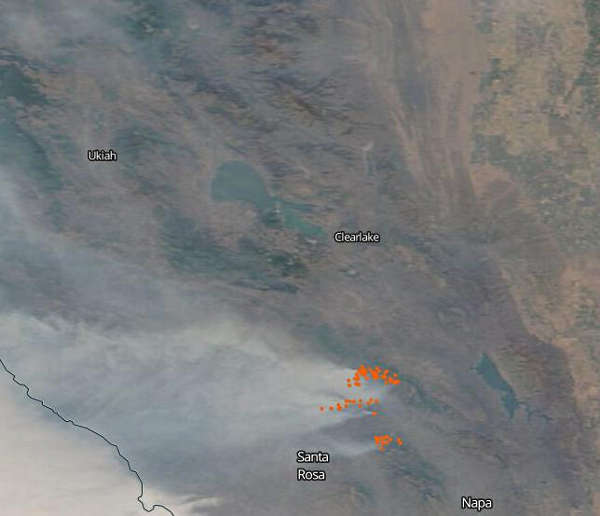
LAKE COUNTY, Calif. – The Lake County Air Quality Management District has issued an air quality alert for unhealthy conditions due to increased smoke from the Glass fire, August Complex and other fires around the region.
The air quality alert is in effect until 5 p.m. Wednesday.
Due to the significant fire activity this week, all areas of Lake County are forecast to have unhealthy for sensitive groups to unhealthy air quality as smoke settles into the area.
Early forecast information indicates a wind shift starting Thursday that should push the smoke out of the Lake County Basin.
Current air quality conditions for Lake County can be found at the PurpleAir website.
Smoke from wildfires and structure fires contain harmful chemicals that can affect your health. Smoke can cause eye and throat irritation, coughing and difficulty breathing.
People who are at greatest risk of experiencing symptoms due to smoke include those with respiratory disease such as asthma, those with heart disease, young children and older adults. These sensitive populations should stay indoors and avoid prolonged activity.
All others should limit prolonged or heavy activity and time spent outdoors. Even healthy
adults can be affected by smoke. Seek medical help if you have symptoms that worsen or become severe.
If you have lung disease, including asthma or heart disease, closely monitor your health and contact your doctor if you have symptoms that worsen. The air quality management suggests people consider leaving the area until smoke conditions improve if you have repeated coughing, shortness of breath, difficulty breathing, wheezing, chest tightness or pain, palpitations, nausea, unusual fatigue or light-headedness.
On Tuesday, Chairman of the House Ways and Means Subcommittee on Select Revenue Measures Mike Thompson (CA-05), along with Rep. Earl Blumenauer (OR-03) and Rep. Abby Finkenauer (IA-01) announced the introduction of the Disaster Tax Relief Act of 2020.
The bill would extend tax relief to survivors of natural disasters, other than the coronavirus pandemic, such as the recent LNU Lightning Complex fires that hit Thompson’s district.
“Our district is in the middle of a devastating fire, destroying homes and businesses, and leaving communities hit with another round of anxiety and grief about when and if they can go home. Disaster survivors deserve every piece of federal assistance we can deliver for them, including an extension of tax credits that will help them rebuild and recover,” said Thompson. “This bill will help people who lost their homes, individuals worried about losing income, and businesses that were forced to close or that burned down. We need this bill passed right away and I will continue working to bring back every Federal dollar and resource to help our district recover.”
“Oregonians have suffered unprecedented destruction from the wildfires, and this disaster is far from over,” said Blumenauer, a senior member of the House Ways and Means Committee. “With one million acres burned and more than 1,000 homes destroyed, Congress must enact comprehensive tax relief to ensure Oregon families and businesses get the necessary aid to overcome this crisis and achieve a strong recovery.”
“As Iowa’s First Congressional District continues recovering from August’s derecho, we need to do all we can to help,” Finkenauer said. “That’s why we introduced the Disaster RELIEF Act last week to help families whose lives were turned upside down and help employers take care of employees during this difficult time. I want to thank Chairman Thompson and Chairman Blumenauer for working with us to include our critical legislation in this important comprehensive disaster tax relief package.”
Natural disasters continue to be a sadly unavoidable part of daily life for so many Americans – since the expiration of the 2019 disaster tax relief package there have been 37 major natural disaster declarations.
This Disaster Tax Relief Act of 2020 extends tax relief provisions for disaster survivors, including the following provisions:
– Special disaster-related rules for use of retirement funds. This provision provides an exception to the 10 percent early retirement plan withdrawal penalty for certain qualified disaster relief distributions (not to exceed $100,000 in qualified distributions cumulatively). It allows for the re-contribution of retirement plan withdrawals for home purchases cancelled due to eligible disasters and provides flexibility for loans from retirement plans for certain qualified disaster relief.
– Employee retention credit for employers affected by qualified disasters. This provision provides a tax credit for 40 percent of wages (up to $6,000 per employee) paid by certain disaster-affected employers to employees from a core disaster area. The credit applies to wages paid without regard to whether services associated with those wages were performed.
– Special rules for qualified disaster-related personal casualty losses. This provision eliminates the current law requirements that personal casualty losses must exceed 10 percent of adjusted gross income to qualify for deduction with respect to uncompensated losses arising in certain disaster areas. The provision would also eliminate the current law requirement that taxpayers must itemize deductions to access this tax relief.
– Special Rule for Determining Earned Income for Taxpayers whose 2020 income was disaster-impacted. This provision allows taxpayers in disaster areas to refer to earned income from the immediately preceding year for purposes of determining the Earned Income Tax Credit (EITC) and Child Tax Credit (CTC) in tax year 2020.
– Temporary suspension of limitations on charitable contributions. This provision temporarily suspends limitations on the deduction for charitable contributions from corporations associated with certain qualified disaster relief. The CARES Act already provided this relief for individuals.
You can click here to read the full text of the bill.
Thompson represents California’s Fifth Congressional District, which includes all or part of Contra Costa, Lake, Napa, Solano and Sonoma counties.
The bill would extend tax relief to survivors of natural disasters, other than the coronavirus pandemic, such as the recent LNU Lightning Complex fires that hit Thompson’s district.
“Our district is in the middle of a devastating fire, destroying homes and businesses, and leaving communities hit with another round of anxiety and grief about when and if they can go home. Disaster survivors deserve every piece of federal assistance we can deliver for them, including an extension of tax credits that will help them rebuild and recover,” said Thompson. “This bill will help people who lost their homes, individuals worried about losing income, and businesses that were forced to close or that burned down. We need this bill passed right away and I will continue working to bring back every Federal dollar and resource to help our district recover.”
“Oregonians have suffered unprecedented destruction from the wildfires, and this disaster is far from over,” said Blumenauer, a senior member of the House Ways and Means Committee. “With one million acres burned and more than 1,000 homes destroyed, Congress must enact comprehensive tax relief to ensure Oregon families and businesses get the necessary aid to overcome this crisis and achieve a strong recovery.”
“As Iowa’s First Congressional District continues recovering from August’s derecho, we need to do all we can to help,” Finkenauer said. “That’s why we introduced the Disaster RELIEF Act last week to help families whose lives were turned upside down and help employers take care of employees during this difficult time. I want to thank Chairman Thompson and Chairman Blumenauer for working with us to include our critical legislation in this important comprehensive disaster tax relief package.”
Natural disasters continue to be a sadly unavoidable part of daily life for so many Americans – since the expiration of the 2019 disaster tax relief package there have been 37 major natural disaster declarations.
This Disaster Tax Relief Act of 2020 extends tax relief provisions for disaster survivors, including the following provisions:
– Special disaster-related rules for use of retirement funds. This provision provides an exception to the 10 percent early retirement plan withdrawal penalty for certain qualified disaster relief distributions (not to exceed $100,000 in qualified distributions cumulatively). It allows for the re-contribution of retirement plan withdrawals for home purchases cancelled due to eligible disasters and provides flexibility for loans from retirement plans for certain qualified disaster relief.
– Employee retention credit for employers affected by qualified disasters. This provision provides a tax credit for 40 percent of wages (up to $6,000 per employee) paid by certain disaster-affected employers to employees from a core disaster area. The credit applies to wages paid without regard to whether services associated with those wages were performed.
– Special rules for qualified disaster-related personal casualty losses. This provision eliminates the current law requirements that personal casualty losses must exceed 10 percent of adjusted gross income to qualify for deduction with respect to uncompensated losses arising in certain disaster areas. The provision would also eliminate the current law requirement that taxpayers must itemize deductions to access this tax relief.
– Special Rule for Determining Earned Income for Taxpayers whose 2020 income was disaster-impacted. This provision allows taxpayers in disaster areas to refer to earned income from the immediately preceding year for purposes of determining the Earned Income Tax Credit (EITC) and Child Tax Credit (CTC) in tax year 2020.
– Temporary suspension of limitations on charitable contributions. This provision temporarily suspends limitations on the deduction for charitable contributions from corporations associated with certain qualified disaster relief. The CARES Act already provided this relief for individuals.
You can click here to read the full text of the bill.
Thompson represents California’s Fifth Congressional District, which includes all or part of Contra Costa, Lake, Napa, Solano and Sonoma counties.