 How to resolve AdBlock issue?
News
The council will meet at 6 p.m. Tuesday, Nov. 17.
The meeting will be by teleconference only. The city council chambers will not be open to the public.
The agenda can be found here.
To speak on an agenda item, access the meeting remotely here or join by phone by calling toll-free 669-900-9128 or 346-248-7799. The webinar ID is 973 6820 1787, access code is 477973; the audio pin will be shown after joining the webinar. Those phoning in without using the web link will be in “listen mode” only and will not be able to participate or comment.
Comments can be submitted by email to
Indicate in the email subject line "for public comment" and list the item number of the agenda item that is the topic of the comment. Comments that read to the council will be subject to the three minute time limitation (approximately 350 words). Written comments that are only to be provided to the council and not read at the meeting will be distributed to the council prior to the meeting.
In a public hearing during the Tuesday meeting, the council will consider approving a resolution that would change the name of Westside Park Road to Charlie Jolin Way.
The proposal, which was brought to the council over the summer by the Westside Community Park Committee, received initial approval from the council before it went to the Lakeport Planning Commission. The commission followed up by approving the proposal in October.
Jolin died in June at age 96. He is credited with being the prime mover in the creation and promotion of the park.
Also on Tuesday, Public Health Officer Dr. Gary Pace will give the council an update on COVID-19 in Lake County.
In other business, the council will receive a presentation on the Redwood Empire Municipal Insurance Fund and the merger with Public Agency Risk Sharing Authority of California to create the California Intergovernmental Risk Authority, or CIRA, and direct staff to work with CIRA on steps necessary to complete the merger and place joint powers agreements and bylaws as a consent item on a future agenda.
On the consent agenda – items considered noncontroversial and usually accepted as a slate on one vote – are ordinances; minutes of the council’s regular Nov. 3 meeting; and the Oct. 29 warrant register.
Email Elizabeth Larson at
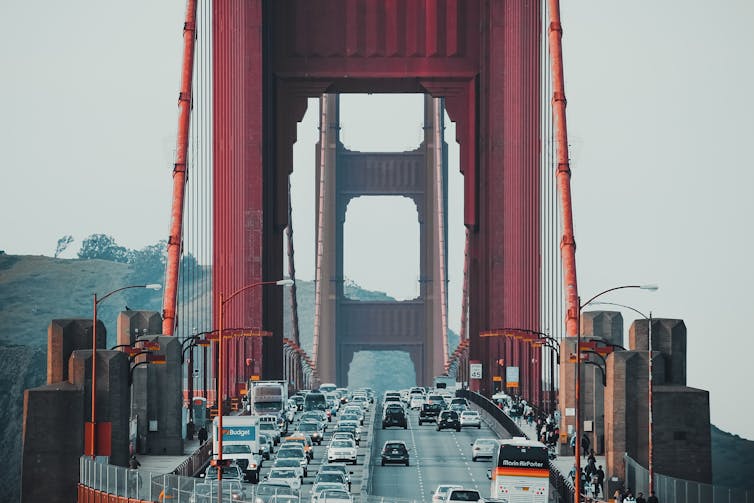
Every day, Americans travel on roads, bridges and highways without considering the safety or reliability of these structures. Yet much of the transportation infrastructure in the U.S. is outdated, deteriorating and badly in need of repair.
Of the 614,387 bridges in the U.S., for example, 39% are older than their designed lifetimes, while nearly 10% are structurally deficient, meaning they could begin to break down faster or, worse, be vulnerable to catastrophic failure.
The cost to repair and improve nationwide transportation infrastructure ranges from nearly US$190 billion to almost $1 trillion. Repairing U.S. infrastructure costs individual households, on average, about $3,400 every year. Traffic congestion alone is estimated to cost the average driver $1,400 in fuel and time spent commuting, a nationwide tally of more than $160 billion per year.
I am a professor in the Lyles School of Civil Engineering and the director of the Center for Intelligent Infrastructures at Purdue University. My co-author, Vishal Saravade, is part of my team at the Sustainable Materials and Renewable Technology (SMART) Lab. The SMART Lab researches and develops new technologies to make American infrastructure “intelligent,” safer and more cost-effective. These new systems self-monitor the condition of roads and bridges quickly and accurately and can, sometimes, even repair themselves.
Smart, self-healing concrete
Infrastructure – bridges, highways, pavement – deteriorates over time with continuous use. The life of structures could be extended, however, if damages were monitored in real time and fixed early on. In the northern U.S., for example, freeze-thaw cycles in winter cause water to seep into the pavement where it freezes, expands and enlarges cracks, which can cause significant damage. If left unrepaired, this damage may propagate and break down pavements and bridges.
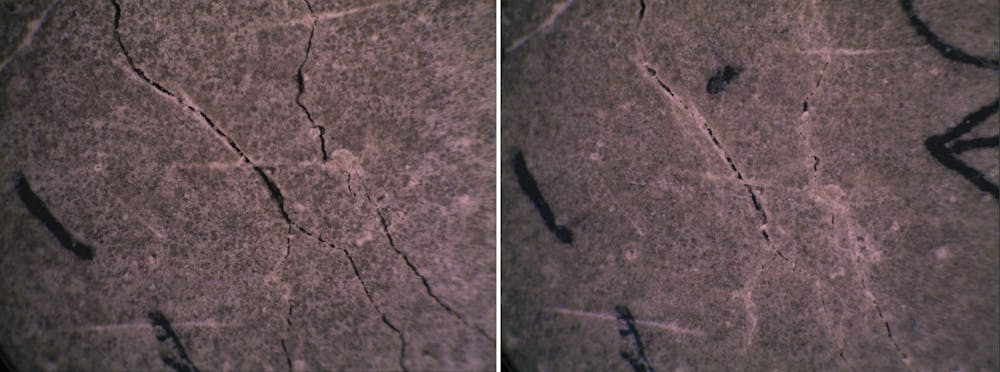
Such damage can be identified and repaired autonomously. At an early stage of a crack, for example, self-healing pavement would activate super absorbent polymers to absorb water and produce concrete-like material that fills in the crack. Cracks as small as a few microns could be healed to prevent significant damage by preventing or delaying the later stages of the freeze-thaw cycle.
Roadway technology
Many researchers in the world are working on improving construction infrastructure. Technologies recently being explored include solar and energy-harvesting roads, charging lanes for electric vehicles, smart streetlights and reducing carbon-related emissions from construction materials.
At the Purdue SMART Lab, our team is also testing novel sensors that monitor transportation infrastructure by embedding them in several Indiana interstate highways. We plan to expand to other state highway systems in the next few years with a goal to better accommodate increased traffic and provide accurate estimates of road conditions during construction and its life.
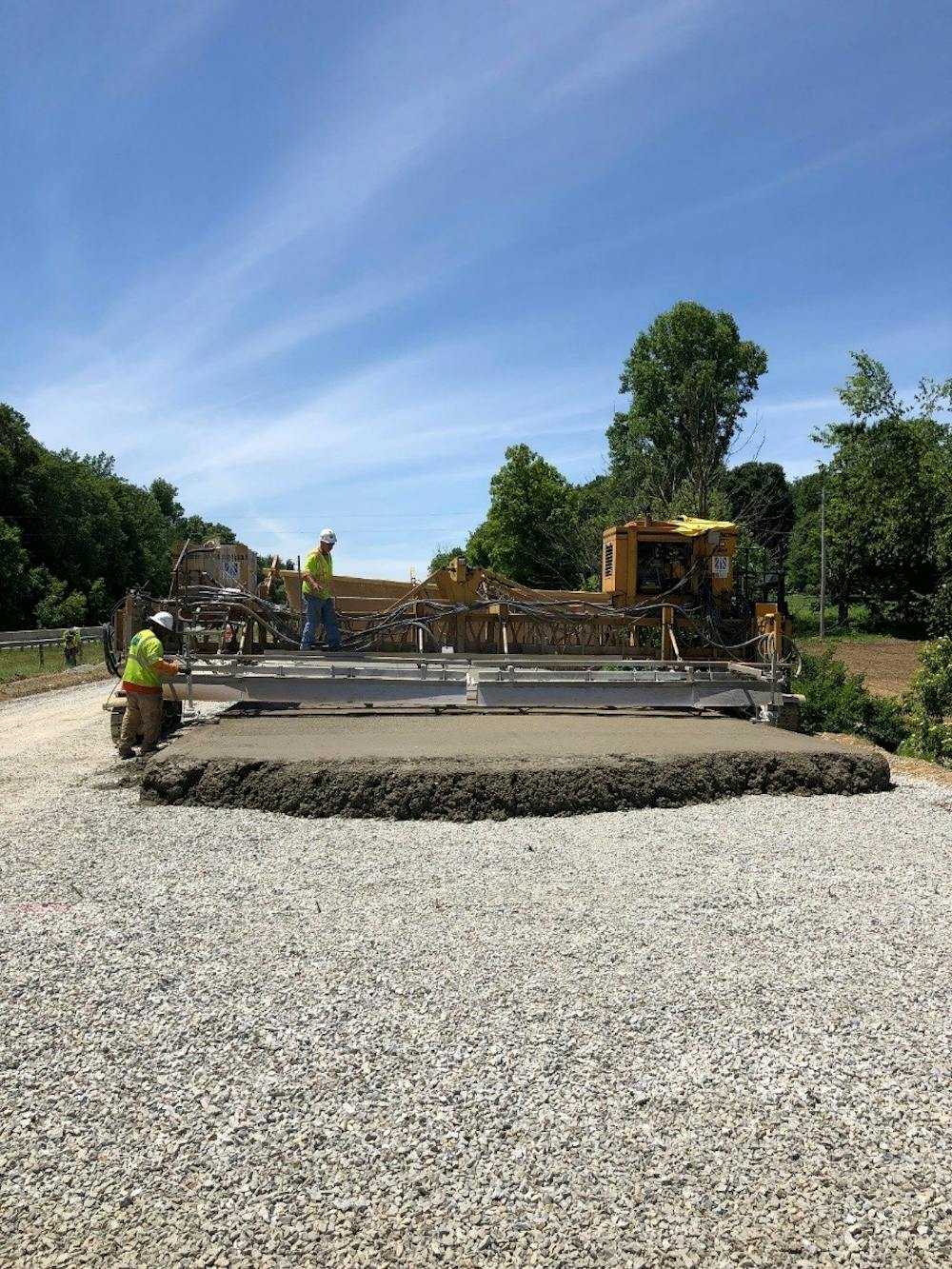
Sensors embedded in concrete pavement acquire information about the infrastructure’s health condition in real time and communicate the data to computers. Electrical signals are applied through the sensors. Concrete’s vibrations are converted into electrical signals that are read and analyzed by lab-built customized software. This enables transportation engineers to make effective and data-driven decisions from opening roads to traffic and to proactively identifying issues that cause damage or deterioration.
After concrete is poured for highway pavement, for example, it takes hours to cure and become strong enough to open for traffic. The timing of when to open a highway depends on when the concrete mix is cured. If a roadway opens too early and the concrete is undercured, it can reduce the life expectancy of the pavement and increase maintenance costs. Waiting too long to open a road can result in traffic delays, congestion and increased safety risks for construction workers and commuters. Curing concrete for massive highway projects requires close attention by engineers in conjunction with the weather specific to that region.
Smart sensors embedded in concrete enable engineers to monitor the infrastructure and make data-driven decisions about when a road can open while retaining maximum life expectancy. Sensors can also help monitor the quality of concrete and whether it is robust enough to withstand traffic flow and corrosion after a roadway is opened. Smart, efficient infrastructure can significantly reduce structural failures, both catastrophic and through normal wear, as well as lead to reduced costs and provide new ways for structural engineers to assess real-time information about the pavement.
[Get our best science, health and technology stories. Sign up for The Conversation’s science newsletter.]
Saving time and money
Congress recognizes the need to invest in American transportation systems. A $494 billion legislation package, the INVEST In America Act, was recently introduced to address America’s deteriorating highways and bridges while diminishing carbon pollution.
Smart sensors and intelligent infrastructure system can enable significant savings of time and money with improved construction safety. Sensors can provide engineers with real-time data of the quality of our infrastructure to make the best decisions for building and maintaining roads, bridges and pavements while improving safety for drivers and construction workers. The addition of self-repairing properties can help build sustainable and long-lasting infrastructure to reduce maintenance and costs.
Luna Lu, ACPA Scholar & Professor Of Civil Engineering, Purdue University and Vishal Saravade, Post-doctoral Scientist, Purdue University
This article is republished from The Conversation under a Creative Commons license. Read the original article.
LAKE COUNTY, Calif. – When the chill of autumn visits Lake County, my thoughts turn to the local olive harvest.
You may have seen orchards of gnarled olive trees with their characteristic grey-green leaves as you’ve driven around the county. At this time of year, the trees give up their treasure: a tiny fruit amazingly packed full of flavor and health benefits.
A number of local growers produce their own olive oil, and it’s delicious!
It’s quite possible that olives are the most symbolic fruits the world has ever known. They were not only beloved but considered sacred in many ancient Mediterranean cultures spanning the millennia.
Olive trees, leaves, and fruit have been a symbol of a variety of positive attributes through the ages, including peace, wisdom, glory, fertility, power, purity and abundance.
The olive is one of the plants most cited in literature, found in such places as Homer’s Odyssey, the words of the Roman poet Horace, Greek mythology, the Bible (where it’s mentioned more than 30 times), and the Koran, where there are seven references, including as a “precious fruit.”
Olive trees are known for their longevity, and there are dozens of them in southern Europe and the Middle East that are reputed to be between 2,000 and 4,000 years old. In some cases, scientific studies have confirmed this.
Interestingly, these trees still bear fruit.
Olives in our hemisphere are harvested in the fall and winter, typically beginning in November. Depending on their intended use, they may be harvested prior to ripening as green olives, fully ripe as black olives, or somewhere in between.
There are dozens of olive varieties – more than a hundred – and they vary wildly in terms of size. Color in their ripened state can vary from shades of brown to purple to black.
Olives are among the healthiest foods on the planet and are packed full of nutrients and health-supporting elements such as antioxidants, iron, vitamin E, dietary fiber, copper, and monosaturated fats.
The olive is native to the eastern Mediterranean coastal region, including southeastern Europe, northern Africa, and western Asia. They’re now grown in a variety of places in the world that have a similar climate.
This is true of California, where much of our climate is like that of the Mediterranean region, making it possible for our state to produce nearly 75 percent of the olive oil in the United States.
Lake County shares this olive-friendly climate, and I’m grateful that local olive growers and vintners produce their own oil.
Some years ago, I had the privilege of witnessing the crushing of an olive harvest at what was then the Kelseyville Olive Mill. (Chacewater Winery and Olive Mill now occupies the property.)
Bins full to the top with local olives were brought to the mill to be metamorphosized into rich, golden-green, extra virgin olive oil. The ones that were being processed that day were from the now-closed Ceago del Lago property in Nice.
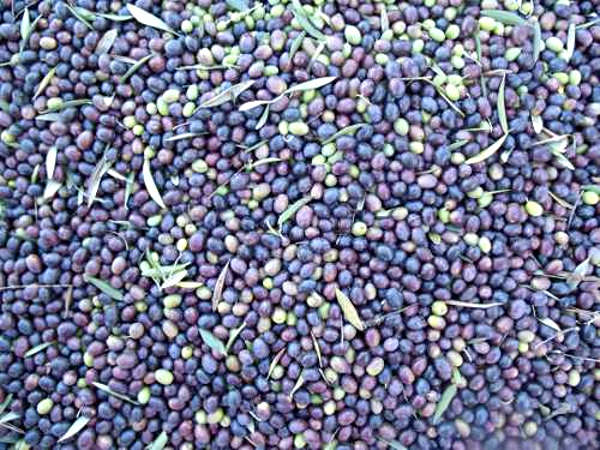
I was struck by the sheer beauty of those little fruits, arrayed like colorful jewels in their containers as they awaited processing through the sorting mechanisms to ready them for the press.
And then, finally, the reward: lush, succulent, glimmering drops of Lake County olive oil dribbled from the press, ready for bottling.
But why use olive oil?
First and foremost, there are positive health benefits.
Studies have shown that monounsaturated fats such as olive oil are linked with a reduction in the risk of coronary heart disease. Olive oil has been shown to be effective in lowering cholesterol and blood sugar levels, as well as having a positive effect on high blood pressure. It contains vitamin E and carotenoids, powerful antioxidants that protect our cells from damage.
Secondly, it tastes good!
A simple piece of bread is transformed when dipped into it, greens benefit from its drizzle, and its flavor delights our taste buds in pesto and Caprese salad. It’s quite versatile in the kitchen when used as a substitute for other fats.
And why should one seek out and buy local olive oil?
Aside from supporting our county’s industry and lowering the carbon footprint of the foods we eat, there are other benefits.
For one, the oil is fresher. Because local growers make smaller batches, it’s sure to be fresher than oil transported across miles of ocean or state highways.
Another reason is the taste. Local olive oils are lovingly handcrafted with this in mind. In some cases, such as at local farmers’ markets or winery tasting rooms, it’s possible to taste before you purchase.
Like wine, not all olive oils go with all dishes, and you may be partial to one oil’s taste over another. Flavors vary depending on the type of olive pressed, and some are stronger than others.
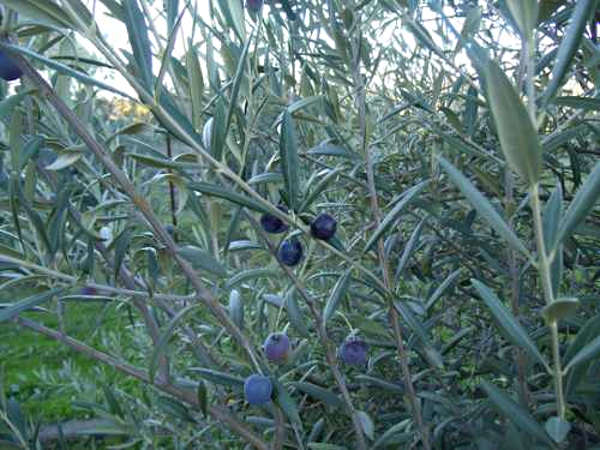
There are seemingly endless varieties of olives; some are as tiny as a fingernail, others are as large as a plum, and varying types are grown in Lake County.
The blend of olive varieties, as well as the ratio of ripe to green olives, contributes to each oil’s unique taste. It can be said that the complexity of producing a fine olive oil is akin to producing a fine wine, minus the aging process.
As with wine, there’s a special language to describe the properties of olive oil. Peppery, fruity, and grassy are just a few of the descriptive adjectives thrown around at a tasting.
A third reason to purchase local oils is that you can be assured of the quality.
While the European Union has stringent guidelines for what’s sold on that continent (and the California Olive Oil Council has a voluntary certification process for extra virgin olive oil), there is no such safeguard for olive oil marketed in the U. S. Hence, almost anything can be called “extra virgin” and sold here.
Unfortunately, there have been numerous documented cases where imported oils have been falsely labeled as extra virgin olive oil.
In contrast, local growers produce ONLY oil that comes from virgin oil production and can truly be called “extra virgin.”
Lake County olive oil producers include Chacewater Winery and Olive Mill of Kelseyville, home to one of the only olive presses in the area. In addition to pressing their own certified organic olives, they process olives for other local growers. Their oils, some of which have earned medals, are available via their website or at their tasting room.
Loasa Farms, also in Kelseyville, is the olive oil-producing arm of Dorn Vineyards. Their oil can be purchased at the Lake County Farmers Finest market, which is held year-round on Saturdays at the fairgrounds in Lakeport.
Rosa d’Oro Vineyards, makers of Italian varietal wines, produces a Tuscan blend olive oil available on their website or at their tasting room located at their Kelseyville vineyard. The folks at Rosa d’Oro Vineyards were instrumental in creating the Kelseyville Olive Festival, now a yearly tradition.
Olivopolis, an olive ranch in Jerusalem Valley north of Middletown, has a Tuscan blend oil available at a couple of venues in Lake County: the Laujor Estate Winery near Kelseyville and Hardester’s Markets in Middletown or Hidden Valley Lake. Their Tuscan blend and a new single varietal oil may also be purchased on their website.
Villa Barone Olive Orchard, also in Jerusalem Valley and with their own olive press, has produced a lot of Lake County olive oil; however, according to their website, they will soon stop selling due to retirement plans. For now, it can be purchased at Hardester’s Markets in Middletown and Hidden Valley Lake, as well as through Lake County Organics Plus, a local organic food delivery service.
They will continue to fill orders through their website while supplies last, and once management of their orchard has been worked out post-retirement, oils from their trees may be available again in the future.
I was happy to learn that another Lake County olive oil may be on the horizon. Stonehouse Cellars of Clearlake Oaks plans to bottle oil from their 2020 olive harvest, their first. Depending on availability, it should be sold at the Lake County Farmers Finest market in Lakeport.
For longest shelf life, olive oil should be in dark bottles as clear glass allows light to deteriorate the oil. Be sure not to use oil that has a rancid smell. Store your olive oil in a cool, dark place.
Once opened, I store mine in the refrigerator to guarantee freshness, though this is not necessary if you go through your opened bottle in a reasonable amount of time. If stored in the fridge, it will solidify, so I place the bottle in a bowl of warm water for a few minutes to liquefy the oil for use.
Today’s recipe is for a simple mixed olive tapenade, which is especially delightful when made with a flavorful local oil. Served as an appetizer or as an addition to a light meal, tapenade is typically paired with little bread toasts known as crostini in Italian or crouton in French. Directions for making these little toasts are also below. Enjoy!
Tapenade
1 cup high-quality black and green olives, any combination (have fun choosing them at an olive bar!)
1 tablespoon capers
2 cloves garlic
2 tablespoon extra-virgin olive oil
1 teaspoon lemon juice
Freshly ground black pepper, to taste
Coarsely chop all ingredients in a food processor fitted with a steel blade. (Be careful not to over-process, as tapenade should not be smooth.) If stored in a tightly covered container, tapenade should keep for up to a month in the fridge. Add some extra virgin olive oil to moisten it when needed before serving. Serve on crackers or little toasts (recipe below). If desired, spread toasts first with cream cheese or goat cheese before topping with tapenade.
To make the little toasts, slice a baguette and brush each piece with olive oil. Toast the slices on a baking sheet in a 400-degree oven for several minutes until the outside is brown and toasty and the inside is soft. (You can test this by pressing lightly with your finger.) For an added treat, rub a fresh garlic clove lightly over the pieces.
Recipes by Esther Oertel.
Esther Oertel is a writer and passionate home cook from a family of chefs. She grew up in a restaurant, where she began creating recipes from a young age. She’s taught culinary classes in a variety of venues in Lake County and previously wrote “The Veggie Girl” column for Lake County News. Most recently she’s taught culinary classes at Sur La Table in Santa Rosa. She lives in Middletown.
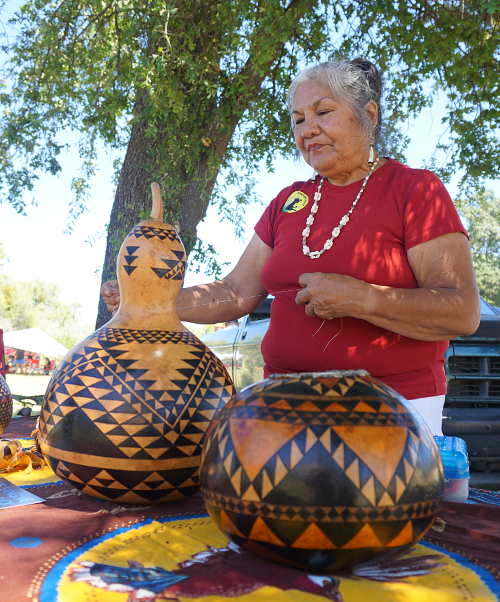
LAKE COUNTY, Calif. – This month the nation is celebrating the culture and heritage of its native peoples.
On Oct. 30, President Donald Trump issued a proclamation designating November 2020 as National Native American Heritage Month – which also is referred to as American Indian and Alaska Native Heritage Month – in the United States.
It’s a particularly important commemoration in Lake County, which is home to seven federally recognized tribes:
• Big Valley Band of Pomo Indians of the Big Valley Rancheria;
• Elem Indian Colony of Pomo Indians of the Sulphur Bank Rancheria;
• Habematolel Pomo of Upper Lake;
• Koi Nation of Northern California;
• Middletown Rancheria of Pomo Indians of California;
• Robinson Rancheria; and
• Scotts Valley Band of Pomo Indians of California.
Lake County is notable for having two Native American members of its Board of Supervisors – Chair Moke Simon and Supervisor EJ Crandell.
It’s also the place where a landmark lawsuit that opened the door for Native Americans to vote began.
In 1917, the California Supreme Court ruled that Ethan Anderson was eligible to vote. A full story about the case can be read here.
California as a whole is home to 109 federally recognized tribes, according to the US Department of the Interior.
Alaska has the most federally tribes, 229, the Bureau of Indian Affairs reported.
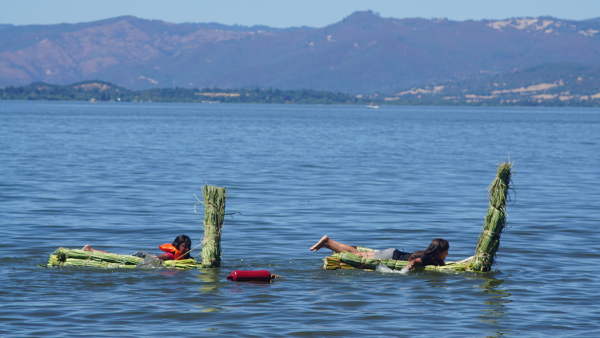
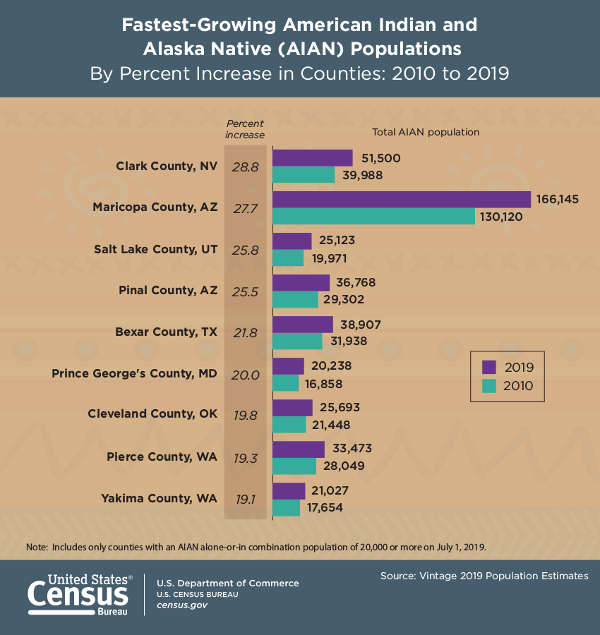
The U.S. Census Bureau’s American Community Survey for 2019 found that California has 321,112 residents who identify their ethnicity as American Indian and Alaska Native alone, with 2,540 of those individuals living in Lake County.
The US Census Bureau reported that the first American Indian Day was celebrated in May 1916 in New York.
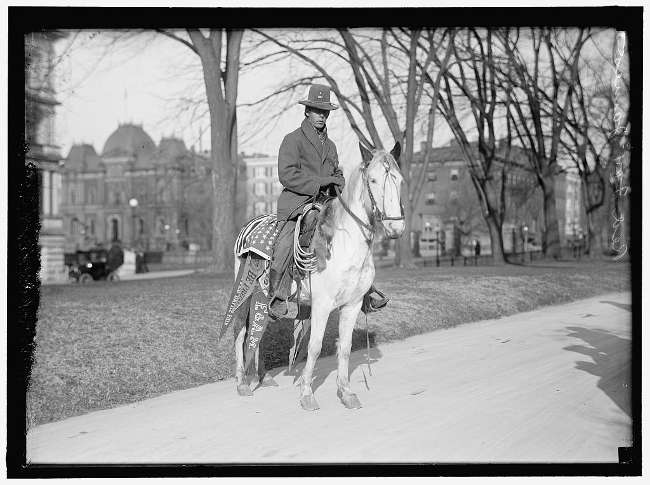
The event was the result of an effort by Rev. Red Fox James, also known as Red Fox Skiukusha, whose tribe has not been determined, rode 4,000 miles across the United States on horseback in order to seek approval from 24 state governments to have a day to honor American Indians, the Bureau of Indian Affairs, or BIA, reported.
The BIA said Rev. James presented the endorsements of 24 governors to the White House on Dec. 14, 1915.
Four years later, he would petition the state of Washington to designate the fourth Saturday in September as an “Indian holiday,” the BIA said.
The same year that Rev. James made his ride across the United States, the Congress of the American Indian Association directed its president, Rev. Sherman Coolidge, an Arapaho minister “to call upon the nation to observe a day for American Indians,” and on Sept. 18, 1915, he issued a proclamation declaring the second Saturday of each May as “American Indian Day,” the BIA reported.
Rev. Coolidge also at that time sought U.S. citizenship for American Indians, a call Congress heard in 1924 when the BIA said it enacted the Indian Citizenship Act.
That act gave citizenship to all U.S.-born American Indians not already covered by treaty or other federal agreements that granted such status. The BIA said Alaska Natives were included in a later amendment to the act.
New York is believed to have designated the first American Indian Day in 1916, when it was commemorated in May, the BIA said.
In California, in 1968 Gov. Ronald Reagan signed a resolution designating the fourth Friday in September as American Indian Day, the BIA said.
Native American Day would become an official state holiday in California 30 years after Reagan’s action thanks to legislation enacted by the California State Assembly, the BIA said.
On the national level, federal observances began to take place after Congress in 1976 authorized President Gerald Ford to proclaim “Native American Awareness Week” in October.
The observances would become more formalized after George H.W. Bush signed a joint congressional resolution designating the month of November “National American Indian Heritage Month,” in 1990, the BIA said.
The following facts are courtesy of the U.S. Census Bureau.
Did You Know?
6.9 million
The nation's American Indian and Alaska Native population alone or in combination with other race groups in 2019.
10.1 million
The projected American Indian and Alaska Native population alone or in combination with other race groups on July 1, 2060. They would constitute 2.5 percent of the total population.
324
The number of distinct federally recognized American Indian reservations in 2019, including federal reservations and off-reservation trust land.
574
The number of federally recognized Indian tribes in the United States in 2020.
142,972
The number of single-race American Indian and Alaska Native veterans of the U.S. Armed Forces in 2019.
Email Elizabeth Larson at
Infectious diseases do not respect borders.
An estimated 3 billion people in low-income countries across Africa, Asia and Latin America are likely to lack access to a COVID-19 vaccine for years after it becomes available. In poor nations, many communities lack the health care workers needed to administer vaccines, as well as the capacity to handle vaccines properly by keeping them extremely cold.
As a bioethicist studying global access to essential medicines, I’m closely monitoring what wealthy countries, foundations and international organizations are doing about this problem.
COVAX
The COVID-19 Vaccines Global Access Facility, or COVAX, is a joint effort by 184 countries working with international organizations to make it possible for people everywhere to get affordable access to COVID-19 vaccines as they become available.
So far, COVAX has raised about US$1.8 billion toward an initial target of $2 billion to cover the cost of manufacturing and distributing COVID-19 vaccines around the world.
The goal of this initiative is to produce 2 billion doses by the end of 2021. However, many of the rich countries taking part are striking their own deals apart from COVAX to assure that they will get early access to a vaccine.
These instances of “vaccine nationalism” threaten to undermine COVAX and other attempts to equitably distribute new COVID-19 vaccines and treatments.
Several large industrialized countries – including the U.S. and Russia – have opted to stay out of the agreement altogether. They are making their own arrangements with pharmaceutical companies instead.
UNICEF
Distributing COVID-19 vaccines could prove as hard as or harder than coming up with the money to pay for them.
That’s because the most promising vaccines require constant and extremely cold storage. Especially in areas where access to electricity is unreliable or missing altogether, there simply are not enough health facilities with the required refrigeration capacity.
Nearly 3 billion people around the world live in places lacking the temperature-controlled storage needed for a wide-scale immunization campaign. How bad this problem turns out to be will depend on which vaccines are ultimately approved, because not every vaccine undergoing clinical trials requires storage at the same cold temperatures.
What’s more, there are not enough health workers to administer the vaccines, and it’s extremely hard for many people in poor communities to travel to health clinics.
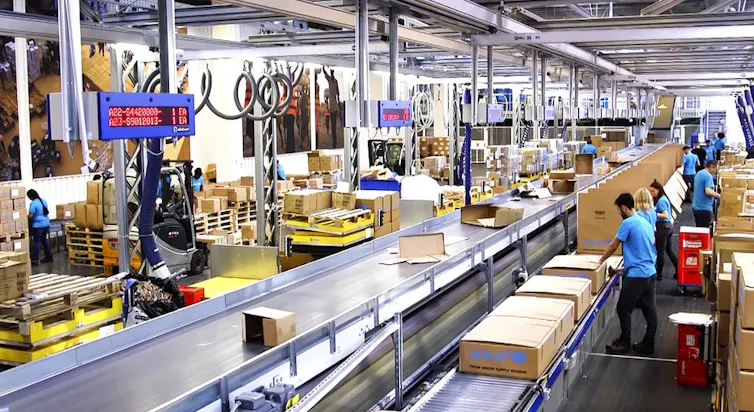
The United Nations Children’s Fund, a U.N. agency that provides aid to children worldwide, is leading the COVAX initiative’s vaccine distribution plans. UNICEF has worked with the public-private partnership called GAVI, formerly Global Alliance for Vaccines and Immunizations, in the past to supply developing countries with the specialized refrigeration technology needed to keep vaccines ice-cold.
In addition, UNICEF aims to stockpile 520 million syringes by the end of 2020, up to 1 billion syringes by 2021 and 5 million safety disposal boxes.
International organizations and foundations
Several other international organizations are also working to make sure that people in low-income countries will have access to a COVID-19 vaccine and to treatments as well.
As of October 2020, the World Bank planned to provide US$12 billion to finance vaccine acquisition and deployment in low- and middle-income countries like India and Nigeria.
Other regional development banks are also playing an important role, since COVAX will not provide enough vaccines for everyone in the world. For instance, in sub-Saharan Africa, only 28% of health care facilities have access to reliable electricity, so the African Export-Import Bank has $3 million in grant funding to help communities procure equipment and supplies. Moreover, the bank is talking with the Africa Centres for Disease Control and Prevention about allocating $5 billion to buy COVID-19 vaccines.
And the Global Fund has allocated $665 million of the estimated $20 billion needed to vaccinate everyone in the whole world. Their COVID-19 Response Mechanism will improve supply chains for vaccine distribution and health systems in general.
Other organizations with extensive experience in vaccination campaigns are also stepping up to help.
For example, the Global Polio Eradication Initiative is providing staff trained to do polio surveillance to test wastewater for COVID-19, distribute masks and hand sanitizer, and perform contact tracing. When a vaccine becomes available, this polio group will likely help out as well.
Foundations, especially the Bill & Melinda Gates Foundation, are also playing a role.
The Gates Foundation is teaming up with GAVI and the Serum Institute of India to speed up COVID-19 vaccine manufacturing.
The vaccines will be sold for no more than $3 a dose to 92 low- and middle-income countries including Brazil, Chile, Singapore and South Africa.
In 1999, the Gates Foundation pledged $750 million to launch GAVI, and it has given $4 billion to the organization to date. At the 2020 Global Vaccine Summit, a virtual meeting hosted by the U.K., the Gates Foundation promised to spend $1.6 billion to vaccinate 300 million children against several diseases, including COVID-19 once vaccines become available.
The Gates Foundation is also participating in a joint effort with the World Health Organization and several other international organizations to pay for 100 million antigen rapid diagnostic tests being made available in low- and middle-income countries – where they are priced at $5 or less.
Likewise, many other philanthropic efforts are underway in conjunction with companies and international agencies.
[Deep knowledge, daily. Sign up for The Conversation’s newsletter.]
The Wellcome Trust, for example, in partnership with the Gates Foundation and Mastercard, has funded the COVID-19 Therapeutic Accelerator a research alliance to develop new COVID-19 treatments and tests.
In my view, these efforts are just as important as efforts to develop, manufacture, and distribute new vaccines. After all, if no safe and effective vaccine emerges, testing, tracing, personal protective equipment and treatments will remain essential for combating the pandemic and saving millions of lives around the world.
Nicole Hassoun, Professor of Philosophy, Binghamton University, State University of New York
This article is republished from The Conversation under a Creative Commons license. Read the original article.
Dogs available for adoption this week include mixes of Akbash, border collie, Chihuahua, German Shepherd, husky, Labrador Retriever, pit bull, Rhodesian Ridgeback, Shar Pei and St. Bernard.
Dogs that are adopted from Lake County Animal Care and Control are either neutered or spayed, microchipped and, if old enough, given a rabies shot and county license before being released to their new owner. License fees do not apply to residents of the cities of Lakeport or Clearlake.
The following dogs at the Lake County Animal Care and Control shelter have been cleared for adoption (additional dogs on the animal control Web site not listed are still “on hold”).
Call Lake County Animal Care and Control at 707-263-0278 or visit the shelter online at http://www.co.lake.ca.us/Government/Directory/Animal_Care_And_Control.htm for information on visiting or adopting.
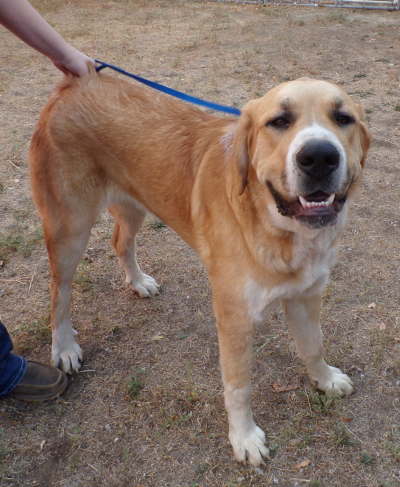
St. Bernard-Akbash mix
This male St. Bernard-Akbash mix has a multicolored coat.
He is in kennel No. 18, ID No. 14164.

Shar Pei-Rhodesian Ridgeback
This male Shar Pei-Rhodesian Ridgeback has a short brown and black coat.
He is in kennel No. 19, ID No. 14132.

Yellow Labrador Retriever
This male yellow Labrador Retriever has a short coat.
He is in kennel No. 20, ID No. 14156.

Male Chihuahua
This male Chihuahua has a short black and brown coat.
He has been neutered.
He’s in kennel No. 21, ID No. 13638.

Male border collie
This male border collie has a long black and white coat.
He has been neutered.
He’s in kennel No. 22, ID No. 14150.

Male German Shepherd-Siberian Husky
This Male German Shepherd-Siberian Husky has a medium-length black and tan coat.
He is in kennel No. 25, ID No. 14135.

Male pit bull terrier
This male pit bull terrier has a short gray and brindle coat.
He is in kennel No. 26, ID No. 14138.

‘Baby’
“Baby” is a young male Chihuahua with a medium-length cream-colored coat.
He has been neutered.
He’s in kennel No. 27, ID No. 13590.
Email Elizabeth Larson at