 How to resolve AdBlock issue?
News
The universe would be a pretty boring place without stars. Without them, the universe would remain a diffuse plasma of mostly hydrogen and helium from the big bang.
As the basic building blocks of the cosmos, stellar nuclear fusion furnaces forge new heavy elements, enriching their parent galaxy. The radiant energy from stars potentially nurtures the emergence of life on the most favorably located planets, as it did on Earth.
To better understand stars and stellar evolution, the Space Telescope Science Institute (STScI) in Baltimore, Maryland, has launched an ambitious new initiative with NASA's Hubble Space Telescope, called UV Legacy Library of Young Stars as Essential Standards, or ULLYSES.
ULLYSES is Hubble's largest observing program ever in terms of the amount of time Hubble will dedicate to it. More than 300 stars will be included. Ultraviolet (UV) light from the target stars is being used to produce a library of the spectral "templates" of young, low-mass stars from eight star-forming regions in the Milky Way, as well as fully mature high-mass stars in several nearby dwarf galaxies including the Magellanic Clouds.
"One of the key goals of ULLYSES is to form a complete reference sample that can be used to create spectral libraries capturing the diversity of stars, ensuring a legacy dataset for a wide range of astrophysical topics. ULLYSES is expected to have a lasting impact on future research by astronomers around the world," said program lead Julia Roman-Duval of STScI.
STScI is now releasing the first set of ULLYSES observations to the astronomical community. These early targets are hot, massive, blue stars in several nearby dwarf galaxies.
Hubble is located above Earth's atmosphere, which filters out most UV radiation from space before it reaches ground-based telescopes. Hubble's ultraviolet sensitivity makes it the only observatory up to the task because young stars radiate a lot of their energy in the UV as they grow chaotically in fits and starts while feeding on infalling gas and dust.
The program's goal is to give astronomers a much better understanding of the birth of stars and how this relates to everything from planets to the formation and evolution of galaxies.
Astronomers want to learn how young low-mass stars affect the evolution and composition of planets forming around them.
Intense UV radiation pulls apart molecules and penetrates circumstellar disks, where planets form, influencing their chemistry and affecting how long the disks survive. This has a direct bearing on planet habitability, atmospheric escape, and chemistry.
"This unique collection is enabling diverse and exciting astrophysical research across many fields," Roman-Duval said.
This is a ground-based telescopic photo of the Small Magellanic Cloud, or SMC, a satellite galaxy of our Milky Way.
In addition, the torrential outflows of hot gas from fully mature stars that are much more massive than our Sun shape their environments in dramatic ways. By targeting massive stars in nearby galaxies with low abundances in heavy elements, similar to the primitive composition of early galaxies, astronomers can gain insights into how their outflows may have influenced early galaxy evolution billions of years ago.
The design and targets of these observations were selected in partnership with the astronomical community, allowing researchers from around the world to help develop the final program as well as have the opportunity to organize coordinated observations by other space- and ground-based telescopes at different wavelengths of light.
STScI scientific and technical staff are designing software specifically related to the development of databases and web interfaces to ensure wide access to the library by the astronomical community. Tools for high-level science products and spectroscopic analysis are being developed. All of the data are stored in STScI's Mikulski Archive for Space Telescopes.
The ULLYSES program is building a legacy for the future, creating a comprehensive database that astronomers will use for research for decades to come. The archive also complements the portions of the star-formation story that will soon be obtained with infrared-light observations from NASA's upcoming James Webb Space Telescope. Working together, both Hubble and Webb will provide a holistic view of stars and the star-formation history of the universe.
To learn more about the ULLYSES program, visit https://hubblesite.org/mission-and-telescope/hubbles-ullyses-program.
While COVID-19 activity in Lake County has remained relatively stable, new cases around the state and the country are rapidly climbing, Pace said.
Cooler weather is pushing people indoors more now, and Pace said that increases the risk for transmission of the virus.
As of Friday, Lake County had 776 COVID-19 cases, with 709 of them recovered and three hospitalized. There have been 17 deaths related to the virus.
Statewide, county public health departments reported a total of 18,220 deaths due to the virus as of Friday night, with positive cases now numbering more than 1,015,600.
On Friday, state officials issued a travel advisory and updated guidance for private gatherings.
Pace said holiday travel can be especially risky, since it brings people together from different locations, indoors, to eat and drink with their masks off.
Since there are currently record levels of infection at many places around the country, the upcoming Thanksgiving and Christmas holidays carry greater than usual risk, Pace said.
“We encourage people to stay home this Thanksgiving,” said Pace. “Traveling out of the area, or having out-of-area family and friends come to visit you, is not a good idea this year. Many people travel to other parts of the state, or out of the country, to see family. Some people travel to other areas for work. We strongly encourage people to think twice before doing so.”
If you do end up traveling, Pace said the following precautions should be emphasized:
– Masking while indoors;
– Staying away from others when ill;
– Social distancing;
– Proper disinfection.
In addition to the state’s advisory, many regional health leaders, including the Association of Bay Area Health Officials, are recommending self-quarantine for 14 days after travel.
That means to stay home from work or other out-of-home activities for 14 days after traveling to other areas. Pace said testing during that time would also be a good idea.
“Remember, simple precautions and avoiding gatherings can slow the spread of COVID-19 and keep local businesses open,” Pace said.
Officials will be lowering the flag for the winter on Monday, Nov. 16, at 11 a.m. at Austin Park, 14077 Lakeshore Drive.
The flag, the largest in Lake County, is annually raised in May and typically flies for six months.
Monday’s flag-lowering event will include performances by members of the Lower Lake High School Show Choir, invocation by Navy veteran and Assistant Pastor Tim Miller of First Baptist Church, and the playing of “Retreat” by the Lake County Military Honors Team.
The flag will be lowered and folded according to the US flag code. The flag will be raised again in May 2021.
The Park Study Club sponsors the flag annually for the city. Masks are required and organizers ask that healthy distancing rules be followed.
The travel advisories urge against nonessential out-of-state travel, ask people to self-quarantine for 14 days after arriving from another state or country and encourage residents to stay local.
“California just surpassed a sobering threshold – one million COVID-19 cases – with no signs of the virus slowing down,” said Gov. Newsom. “Increased cases are adding pressure on our hospital systems and threatening the lives of seniors, essential workers and vulnerable Californians. Travel increases the risk of spreading COVID-19, and we must all collectively increase our efforts at this time to keep the virus at bay and save lives.”
In addition to urging individuals arriving from other states or countries to self-quarantine for 14 days after arrival, the states’ travel advisories recommend individuals limit their interactions to their immediate household.
The advisories define essential travel as travel for work and study, critical infrastructure support, economic services and supply chains, health, immediate medical care and safety and security.
“COVID-19 does not stop at state lines. As hospitals across the West are stretched to capacity, we must take steps to ensure travelers are not bringing this disease home with them,” said Gov. Brown. “If you do not need to travel, you shouldn’t. This will be hard, especially with Thanksgiving around the corner. But the best way to keep your family safe is to stay close to home.”
“COVID cases have doubled in Washington over the past two weeks. This puts our state in as dangerous a position today as we were in March,” said Gov. Inslee. “Limiting and reducing travel is one way to reduce the further spread of the disease. I am happy to partner with California and Oregon in this effort to help protect lives up and down the West Coast.”
To learn more about the risk that travel itself poses for COVID-19 exposure, please visit the CDC page on travel risks.
Through the support of a yearlong federal grant, Keeping Everyone Safe, or KEYS, XII, the CHP will continue its traffic safety program that places an emphasis on roadway safety and mobility for California’s seniors.
The overall goal of the grant-funded Age Well, Drive Smart program is to reduce the number of fatal and injury crashes caused by drivers aged 65 and older. The program focuses on safe driving practices and current California driving laws.
The curriculum also addresses the physical and mental changes associated with aging that can affect a person’s driving skills, while offering possible corrective options.
“As we get older, we gain valuable experience including driving skills. However, age can also introduce new challenges,” said CHP Commissioner Warren Stanley. “The Age Well, Drive Smart program is intended to assist California’s most experienced drivers in evaluating their own abilities and improving on them.”
To attend a free, two-hour Age Well, Drive Smart class, contact the nearest CHP Area office. Due to COVID-19 restrictions, online courses may be available.
The CHP’s Clear Lake Area office can be reached at 707-279-0103.
Funding for this program was provided by a grant from the California Office of Traffic Safety through the National Highway Traffic Safety Administration.
The mission of the CHP is to provide the highest level of safety, service and security.
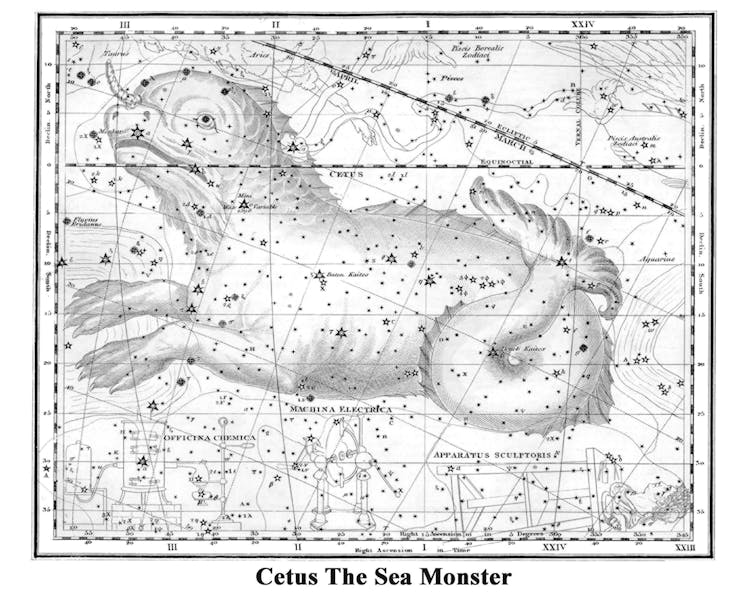
Only 12 light years from Earth, Tau Ceti is the closest single star similar to the Sun and an all-time favorite in sci-fi stories. Habitable worlds orbiting Tau Ceti were destinations of fictional starships like “The Expanse”‘s Nauvoo and “Barbarella”’s vessel. “Star Trek”’s Captain Picard also frequented an exotic bar in the system. Now, thanks to a new approach to analyzing nearby planetary systems, we have a deeper understanding of the actual worlds that orbit Tau Ceti and many other nearby stars.
Exoplanets – worlds around other stars – have long been staples of science fiction but remained mostly inaccessible to scientific investigations. This all changed over the past decade, when NASA’s Kepler and TESS exoplanet hunter space telescopes added thousands of new planets to the previously short tally of alien worlds.
We, astrophysicists and exoplanet researchers at the University of Arizona’s Steward Observatory and Lunar and Planetary Laboratory, and members of NASA’s NExSS exoplanet research coordination network, have long been fascinated by the secrets nearby unexplored planetary systems may hold.
We have now developed a novel way to figure out whether there are yet-undiscovered planets in these systems. We realized that by combining what is known about a given planetary system with simple statistical rules, we can predict where yet-undetected planets may reside and how large they may be – just like guessing what pieces are missing from a partially completed puzzle. The new analysis can guide discoveries of new planets, help complete maps of planetary systems in the solar neighborhood and inform future searches for life.

Building up systems with Dynamite
Our model, nicknamed Dynamite, combines four ingredients to predict hidden worlds. First, Dynamite considers the locations and sizes of all currently known planets in a given system. In general, the more planets that are known in the system, the easier it is to predict whether any are missing. The second consideration is knowing that planets are more likely to be closer to the star than farther out. Dynamite uses a mathematical description – built up through statistical studies of thousands of known exoplanets – of how far from their host star planets are likely to be.
Although planets are likely to be closer to their host stars, they cannot all be jammed together. Planets all attract each other via gravity, which is much stronger when the planets are closer. Thus, planets that are too close will distort each others orbits, often leading to chaotic interactions and even the ejection of one of the planets from their birth systems. This criterion for stability is the third important element that Dynamite uses to predict the architecture of the planetary system.
The fourth component is a mathematical pattern in the lengths of the orbits of adjacent planets (some configurations are more likely than others). Put together, Dynamite tries to build model planetary systems that are similar to actual planetary systems, with a compact and stable collection of planets orbiting their host stars.
We were not sure whether such a relatively simple recipe could be used to successfully predict missing planets. To test Dynamite, we gave it some known multi-planet systems with a twist: In each system we hid one or two of the known planets from the algorithm. In the cases tested, Dynamite successfully predicted whether one or two planets are missing and where those planets could be, and could even guess their sizes correctly.
Today, Dynamite can be tested only on systems with planetary orbits similar to that of Earth’s or smaller. That’s because we lack data on outer planetary systems, so we cannot yet detect far-flung planets – the equivalent of Neptune. More data will allow Dynamite’s four rules of building a planetary system to be refined and its predictions improved. Still, our predictions for over 50 partially explored planetary systems, discovered by NASA’s TESS space telescope, are already guiding the search for hidden worlds.
Searching for life in nearby systems
The most exciting planets to predict and hunt for will be the closest ones to us – the worlds we will likely target in future searches for signatures of extraterrestrial life.
In our newest study, we applied Dynamite to the partially explored Tau Ceti system, where four planets are already known. Weak signals indicating the potential presence of several other planet candidates have also been reported, but their presence hasn’t been verified.
[Deep knowledge, daily. Sign up for The Conversation’s newsletter.]
Based on our model, we predict that three of the planet candidates are real planets. What’s more, we predict that another, yet unseen world exists. This new planet, which we call Tau Ceti PxP-4, is particularly exciting as it is within the temperate zone of Tau Ceti – the region around the star where a planet similar to Earth would be habitable. Our analysis shows that PxP-4 may be a gaseous planet, akin to our Neptune, but smaller and warmer. We find, however, that PxP-4 is more likely to be a rocky planet, although larger than Earth.
Such a world may be detectable in the coming years with the newest planet-hunting instruments and, if confirmed, would be a prime target for future searches for life. And, perhaps – one day in the distant future – Tau Ceti’s PxP-4 may even be home to an exotic bar popular among Starfleet officers.
Daniel Apai, Associate Professor of Astronomy and Planetary Sciences, University of Arizona and Jeremy Dietrich, Graduate Student in Astronomy, University of Arizona
This article is republished from The Conversation under a Creative Commons license. Read the original article.