 How to resolve AdBlock issue?
News

The year 2020 will be remembered for many reasons, including its record-breaking wildfires that turned San Francisco’s skies an apocalyptic shade of red and blanketed large parts of the West in smoke for weeks on end.
California experienced five of its six largest fires on record in 2020, including the first modern “gigafire,” a wildfire that burned over 1 million acres. Colorado saw its three largest fires on record.
While the smoke can make for beautiful sunsets, it can also have dire consequences for human health.
I am an atmospheric chemist, and the atmosphere is my laboratory. When I look at the sky, I see a mixture of many thousands of different chemical compounds interacting with each other and with sunlight.
The reactions and transformations in the atmosphere cause wildfire smoke to change dramatically as it travels downwind, and studies have shown that it can grow more toxic as it ages. In order to accurately forecast the effects of wildfire emissions on downwind populations and issue more-targeted air quality warnings as wildfire seasons worsen, we have to understand which chemicals are being emitted and how smoke changes with time.
To figure that out, my colleagues and I flew airplanes into the smoke plumes of some of the West’s large wildfires.
How we study wildfires
Large wildfires and the way wind carries their smoke cannot be easily replicated in a laboratory. This makes them difficult to study. One of the best ways to learn about real wildfire smoke chemistry is to sample it directly in the atmosphere.
In 2018 and 2019, my colleagues and I crisscrossed the sky over active wildfires in specialized airplanes loaded with scientific instruments. Each instrument is designed to sample a different part of the smoke, often by literally sticking a tube out the window.
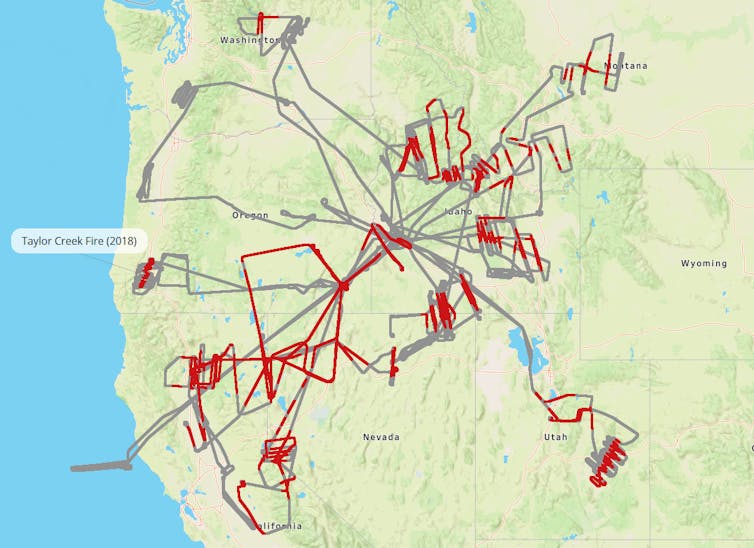
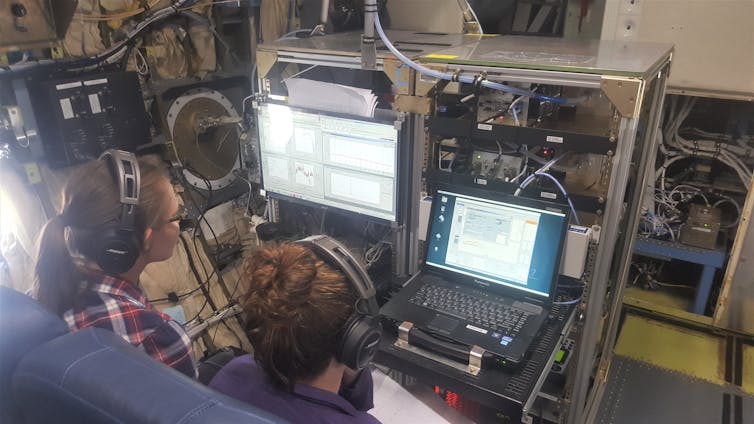
Wildfire smoke is far more complex and dynamic than meets the eye. It contains thousands of different compounds, most of which are molecules containing various amounts of carbon, hydrogen, nitrogen and oxygen atoms. There are gases (individual molecules) as well as particles (millions of molecules coagulated together).
No single instrument can measure all of these molecules at once. In fact, some specific compounds are a challenge to measure at all. Many scientists, including myself, dedicate their careers to designing and building new instruments to improve our measurements and continue to advance our understanding of the atmosphere and how it affects us.
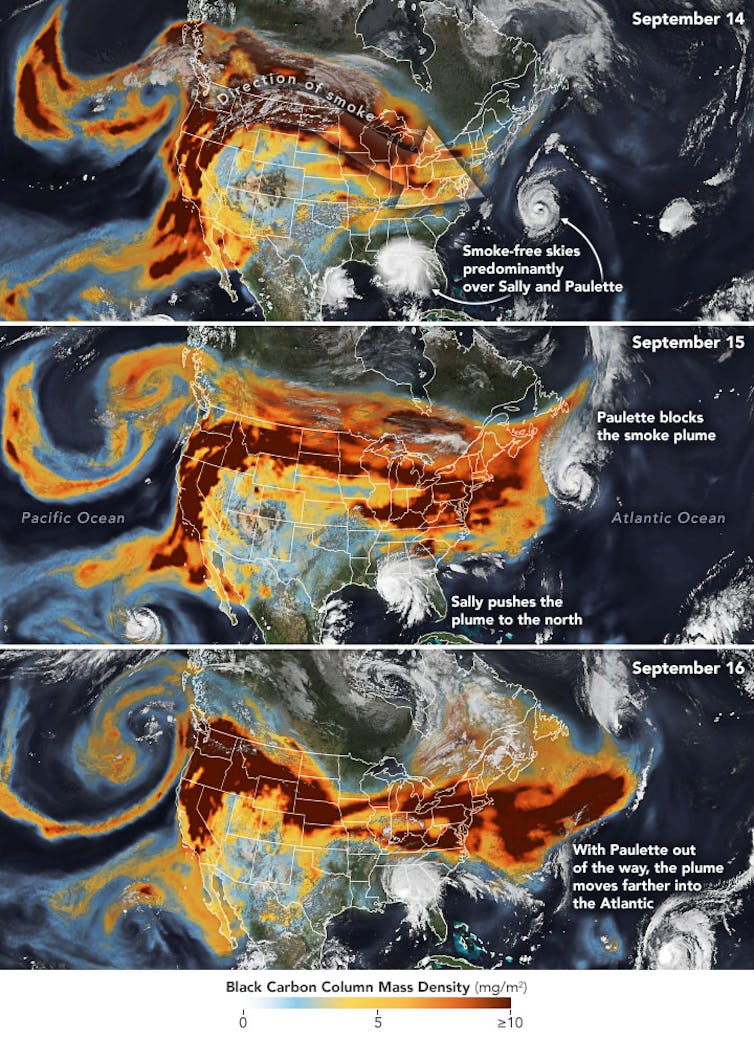
In newly published research from the 2018 wildfires, my colleagues and I showed how the smoke particles changed rapidly as they were carried downwind.
Some of the particles were evaporating into gases, similar to a rain puddle evaporating into water vapor when the Sun comes out. At the same time, some of the gases in smoke were going through reactions to form new particles, similar to water vapor condensing to form a cloud or dew droplets. Meanwhile, chemical reactions were occurring, changing the molecules themselves.
As these molecules reacted with sunlight and other gases in the atmosphere, the smoke was fundamentally transformed. This is what we mean when scientists talk about smoke “aging” or getting “stale” over time. Other recent research has started to show how wildfire smoke can become more toxic as it ages.
What do all these changes mean for health?
The health damage from smoke is largely a result of how much PM2.5 it contains. These are tiny particles, a fraction of the width of a human hair, that can be breathed deep into the lungs where they can irritate the respiratory tract. Even short-term exposure can aggravate heart and lung problems.
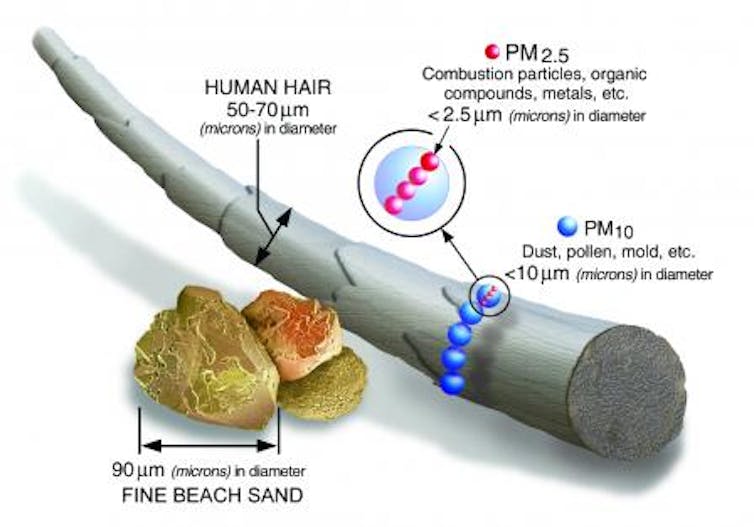
Chemical reactions control how much PM2.5 is in wildfire smoke as it is transported away from the fires and into population centers. Using our aircraft measurements to understand these processes, we chemists can better predict how much PM2.5 will be present in aged smoke.
Combined with meteorology forecasting that predicts where the smoke will go, this could lead to improved air quality models that can tell people downwind whether they will be exposed to unhealthy air.
Better air quality forecasting
With wildfires increasingly in the news, more people have become aware of their own air quality. Resources such as AirNow from the U.S. Environmental Protection Agency provide current and forecasted air quality data, along with explanations of the health hazards. Local information is often available from state or regional agencies as well.

Air quality measurements and forecasts can help people avoid unhealthy situations, especially sensitive groups such as people with asthma. During predicted periods of unhealthy air quality, local or state governments can use forecasts to reduce other pollution sources, such as discouraging residential wood burning or high-emitting industrial activities.
Looking to the future, wildfire smoke is likely to be widespread across the West each year for several reasons. Rising temperatures are leaving the landscape drier and more flammable. At the same time, more people are building homes in the wildland-urban interface, creating more opportunities for fires to start.
A large community of scientists including me are working to better understand wildfire emissions and how they change as they blow into downwind communities. That knowledge will improve forecasts for air quality and health impacts of wildfire smoke, so people can learn to adapt and avoid the worst health consequences.
Brett B. Palm, Postdoctoral Researcher in Atmospheric Chemistry, University of Washington
This article is republished from The Conversation under a Creative Commons license. Read the original article.

NORTHERN CALIFORNIA – Like all our neighbors throughout California and the Berryessa Snow Mountain National Monument region, Tuleyome has been impacted by the numerous, large fires that have swept through the state in the last couple of years.
Our properties throughout Lake, Yolo and Solano Counties have all burned in the past three years.
While Tuleyome did not lose any buildings, our hearts go out to those who have lost buildings, or worse.
Tuleyome’s properties are mostly remote and difficult to access, so the fires have presented the opportunity for us and citizen scientists to study how wildlife has been impacted by and responded to the fires.
In fall 2018, cameras were placed at our Silver Spur Ranch property in Lake County which burned in the summer of 2018. We have been excited by what the cameras have seen: bears, bobcats, mountain lions, and more.
Feral pigs, wild boars, are not native to our region – they are descendants of the European wild boar and domestic swine – and can have a big impact on the environment.
While rooting around for roots, fungus, and other food, they can make it look like a rototiller was used on an entire hillside. These large animals can be nearly five times as heavy as mountain lions!
Black bears are relatively common in the Northern Inner Coast Range and multiple cameras have captured individuals at our property. These animals have claws on front and hind which help them dig to find food and to climb trees to escape predators. These large animals, weighing between 300 and 500 pounds, can reach speeds up to 35 miles per hour.
Bobcats are named for their bobbed tail which is one of the best ways to identify them. Their smaller size, pointed ears, spots, and round face also help distinguish them from mountain lions. They prey on a wide variety of small animals, rabbits, rodents, raccoons, but are able to take down prey that is much larger than they are. Bobcats are the most abundant wildcat in the United States, being native to every state and seen in Canada and south of Mexico City.

Mountain lions are the apex predator of the Berryessa Snow Mountain National Monument region. These secretive animals are very rarely seen but evidence of their presence is commonly found on trails.
Scat, prints, and even scraps can be found. Male lions have territories up to 100 square mile while females have smaller (60 square miles) territories. Generally, wherever there is prey, mountain lions can be found.
Arguably the most commonly seen mammalian predator is the coyote. Although they can be found in and around cities – including Sacramento and San Francisco! – they are at home in the wild.
They have an important role in the ecosystem by keeping rodent populations under control. Although they usually feed on rodents, our cameras have captured these animals carrying a deer head and even a grey fox!
Deer. They are not just in our neighborhoods. They are common throughout California and returned shortly after the fire swept through our property. Through our study, we have seen that there are a couple small groups that have made the property home. We have seen at least one fawn every spring.
The Berryessa Snow Mountain National Monument Region has evolved with fire as part of the natural process for thousands of years. The plants and animals that make the region their home have devised strategies to survive.
Recent fires have been more intense and burned large areas. Will plants and animals need to adapt their survival strategies to withstand these fires? The game camera survey at Tuleyome’s Silver Spur Ranch can help provide answers.
For more information about the project, visit Tuleyome’s website at www.tuleyome.org or contact Nate Lillge at
Nate Lillge is Tuleyome’s adventures and engagement director, a Certified California Naturalist and lead instructor for Tuleyome’s Certified California Naturalist class. Tuleyome is a 501(c)(3) nonprofit conservation organization based in Woodland, California. For more information visit www.tuleyome.org.

In an effort to protect the health and safety of the public, the Board of Supervisors has decided to host at least its Tuesday, Jan. 12, meeting in a fully virtual environment.
The safety of inviting people into the physical board chambers will be revisited each week.
Despite complications brought by the pandemic, the board remains committed to involving as many people as possible in the conduct of local government business.
Multiple options to further enhance public access to the meetings are currently under consideration, should the need to close the board chambers extend for a longer period.
The agenda is now available at https://countyoflake.legistar.com/Calendar.aspx and written remarks on any item can be submitted via the “eComment” feature in the right-most column.
To listen to Tuesday’s meeting, the board asks that most people access one of the following:
· Lake County PEG TV (Mediacom Channel 8);
· http://www.facebook.com/lakecountycagov/; and
· https://countyoflake.legistar.com/Calendar.aspx; click “In Progress” in the second column from the right, typically available about two minutes prior to the meeting time – you may need to refresh your browser.
To participate in the Tuesday, January 12, Board Meeting, join via Zoom: https://lakecounty.zoom.us/j/95765333663?pwd=UFlBRXZwZHdsMmQ5dzVONXMzZ0cwUT09. The meeting ID is 957 6533 3663, passcode 876707.
One tap mobile is available at +16699006833,,95765333663#,,,,*876707# US (San Jose) .
All interested members of the public that do not have internet access or a Mediacom cable subscription are encouraged to call 669-900-6833, and enter the Zoom meeting ID and passcode information above.

The raging coronavirus pandemic, along with political turbulence and uncertainty, have overwhelmed many of us.
From almost the start of 2020, people have been faced with bleak prospects as illness, death, isolation and job losses became unwelcome parts of our reality. On Wednesday, many of us watched in horror and despair as insurgents stormed the U.S. Capitol.
Indeed, all through these times, both the dark and bright sides of human nature were evident as many people engaged in extraordinary compassion and courage when others were committing acts of violence, self-interest or greed.
As a research scientist whose work focuses on positive psychology among people facing challenges, I am deeply aware that if ever there were a time for a conversation about hope, it is now.
Hope vs. optimism
First, let’s understand what hope is. Many people confuse optimism with hope.
Charles R. Snyder, author of “The Psychology of Hope,” defined hope as the tendency to see desired goals as possible, and to approach those goals with “agency thinking,” a belief that you or others have the ability to achieve the goals. He also defined hope as “pathways thinking,” a focus on mapping routes and plans to achieve those goals.
Optimism is different. Psychologist Charles Carver defines optimism as a general expectation that good things will happen in the future. Optimists tend to seek out the positive and, at times, deny or avoid negative information. In sum, optimism is about expecting good things; hope is about how we plan and act to achieve what we want.
Here are five key strategies to cultivate hope in these trying times:
1. Do something – start with goals
Hopeful people do not wish – they imagine and act. They establish clear, achievable goals and make a clear plan. They believe in their agency – that is, their capacity to achieve the outcomes. They recognize that their path will be marked by stresses, roadblocks and failure. According to psychologists such as Snyder and others, people who are hopeful are able to “anticipate these barriers” and they “choose” the right “pathways.”

Further, hopeful people adapt. When their hopes are thwarted, they tend to become more focused on doing things to achieve their goals.
As psychologist Eddie Tong writes, “hopeful people tend to think that desired goals are attainable even if personal resources are exhausted.” In other words, people of hope persist even when prospects may not be so favorable.
Importantly, evidence suggests that the belief that one is capable of achieving one’s goals may be more important for hope than knowing how to achieve those goals.
2. Harness the power of uncertainty
Several researchers have argued that, for hope to arise, individuals need to be able to perceive the “possibility of success.”
Research shows that many of life’s uncertainties could help people cultivate hope in difficult times. For example, a 2017 study showed that parents of children diagnosed with multiple sclerosis used the fact that so little is known about the condition in childhood to fuel and sustain their sense of hope. Parents reasoned that since it is so hard to accurately diagnose childhood multiple sclerosis and prognosis is so varied, there was a chance that their children were misdiagnosed and they could recover and live normal lives.
In sum, a future that is uncertain holds lots of possibilities. As such, uncertainty is not reason for paralysis – it is a reason to hope.
3. Manage your attention
Hopeful and optimistic people show similarities and differences in the kinds of emotional stimuli they pay attention to in the world.
For example, psychologist Lucas Kelberer and his colleagues found that optimists tended to seek out positive images, such as that of happy people, and avoid images of people who seem depressed.
Hopeful people did not necessarily seek out emotionally positive information. However, people high on hope spent less time paying attention to emotionally sad or threatening information.
In a world in which we are overwhelmed with options for what we read, watch and listen to, maintaining hope may not require us to go after positive information, but it does require that we avoid negative images and messages.
4. Seek community. Don’t go it alone
Hope is hard to sustain in isolation. Research demonstrates that for people working to bring social change, particularly anti-poverty activists, relationships and community provided the reason for hope and ignited their conviction to keep fighting.
Connection to others allowed activists to feel a sense of accountability, to recognize that their work mattered and that they were part of something bigger than themselves.
Relationships are important, but health research also suggests that sustaining hope depends, in part, on the particular company we keep. For example, parents of chronically ill children often maintained hope by withdrawing from or avoiding interactions with negative people who challenged their efforts to seek positive ends. We can stay hopeful if we connect with others who hold us accountable and remind us of why our struggles matter.
5. Look at the evidence

Hope also requires trust. Hopeful people stake their trust in data, particularly in the evidence of history. Research demonstrates, for example, that anti-poverty activists drew hope from knowing that, historically, when people joined together in resistance they were able to create change.
Cultivating and sustaining hope, then, requires that we gather evidence from our own lives, history and the world at large and use that evidence to guide our plans, pathways and actions.
Hope also requires that we learn to use this data to effectively calibrate progress – no matter how small.
Jacqueline S. Mattis, Dean of Faculty, Rutgers University - Newark
This article is republished from The Conversation under a Creative Commons license. Read the original article.
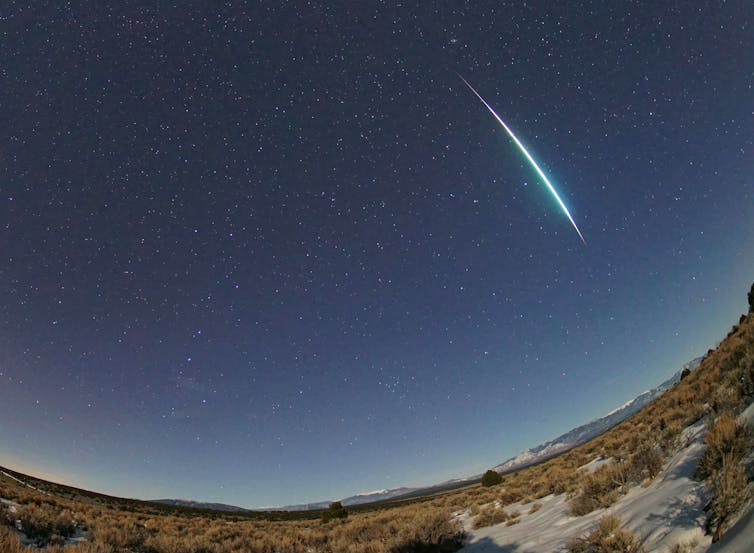
The best meteor showers are a spectacular sight but, unfortunately, 2021 starts with a whimper. Moonlight this January will wash out the first of the big three — the Quadrantids (seen above in 2020).
After that, the year just gets better and better, with the Perseids (another of the big three along with the Geminids) a particular highlight for northern hemisphere observers in August.
Read more: Explainer: why meteors light up the night sky
In addition to the year’s other reliable performers we’ve included one wild card: the Aurigids, in late August. Most years, the Aurigids are a very, very minor shower, but they just might put on a show this year.
So here is our pick of the meteoric highlights for 2021.
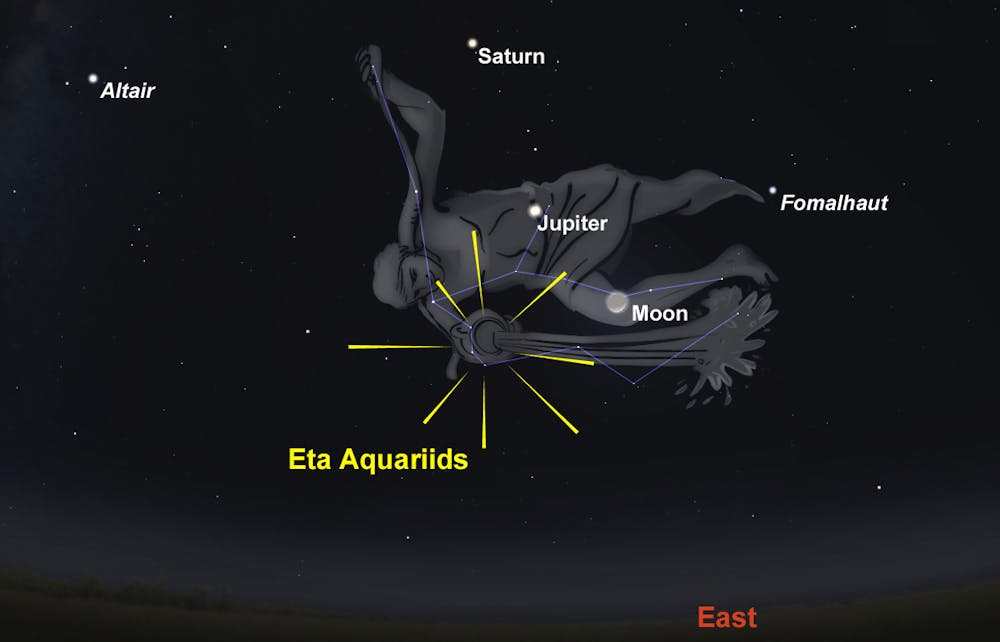
For each meteor shower, we give you a finder chart showing the radiant (where the meteors appear to come from in the sky) and where best to look in the sky, the full period of activity and the forecast peak. Most meteor showers typically only yield their best rates for about a day around maximum, so the peak night is definitely the best to observe.
The Zenithal Hourly Rate ZHR is the maximum number of meteors you would expect to see under perfect observing conditions. The actual number you will see will likely be lower.
Most meteor showers can only really be observed from either the northern [N] or southern [S] hemisphere, but a few are visible from both [N/S].
Lyrids [N/S; N favoured]
Active: April 14–30
Maximum: April 22, 1pm UTC = 11pm AEST (Qld) = 7am CST = 3am Hawaii time
ZHR: 18
Parent: Comet C/1861 G1 Thatcher
The Lyrids are one of the meteor showers with the longest and most storied histories, with recorded observations spanning millenia. In the past, they were one of the year’s most active showers, with a history of producing spectacular meteor storms.

Nowadays, the Lyrids are more sedate, putting on a reliable show without matching the year’s stronger showers. They still throw up occasional surprises such as an outburst in excess of 90 meteors per hour in 1982.
This year’s peak Lyrid rates coincide with the first quarter Moon, which will set around midnight, local time, for most locations. The best time to observe will come in the early hours of the morning, after moonset.
For observers in the northern hemisphere, the Lyrid radiant will already be at a useful altitude by the time the Moon is low in the sky, so some brighter meteors might be visible despite the moonlight in the late evening (after around 10:30pm, local time).
Once the Moon sets the sky will darken and make the shower much easier to observe, yielding markedly higher rates.

For observers in the southern hemisphere, the Lyrid radiant reaches a useful altitude in the early hours of the morning, when the Moon will have set. If you’re a keen meteor observer, it could be worth setting your alarm early to get out and watch the show for a few hours before dawn.
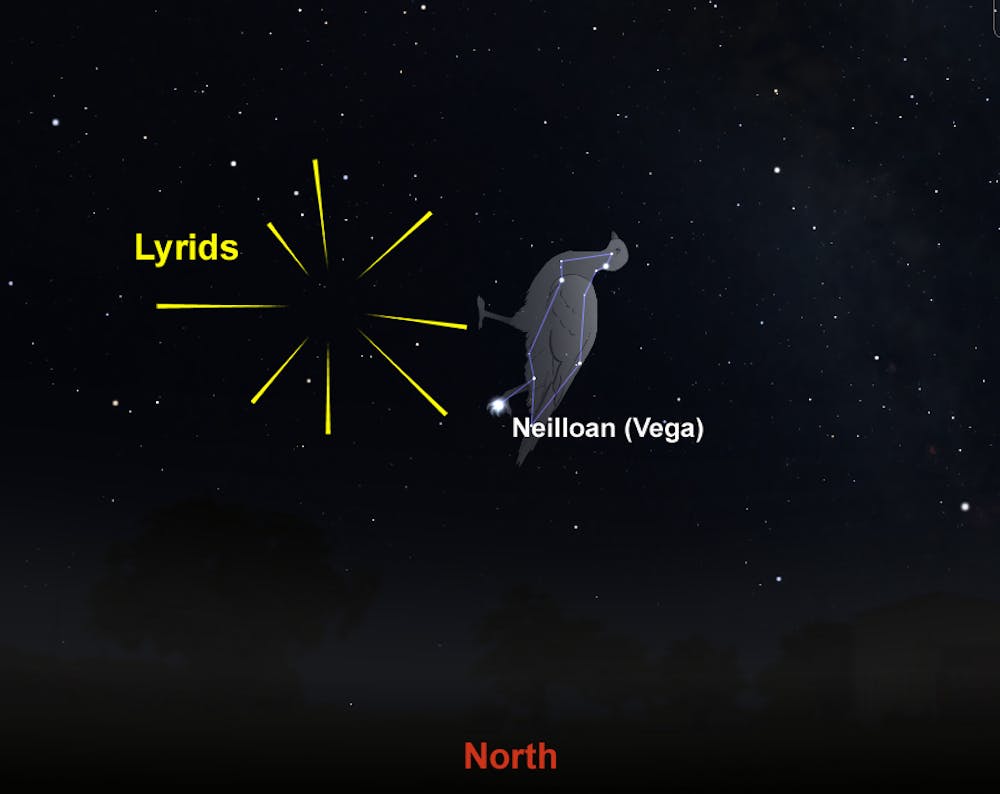
Lyrid meteors are fast and often quite bright so can be rewarding to observe, despite the relatively low rates (one every five or ten minutes, or so). Remember, this shower always has the potential to throw up an unexpected surprise.
Eta Aquariids [S]
Active: April 19–May 28
Maximum: May 6, 3am UTC = 1pm AEST (Qld/NSW/ACT/Vic/Tas) = 11am AWST (WA)
ZHR: 50+
Parent: Comet 1P/Halley
The Eta Aquariids are an autumn treat for southern hemisphere observers. While not one of the big three, they stand clear as the best of the rest of the annual showers, yielding a fine display in the two or three hours before dawn.
The Eta Aquariids are fast meteors and are often bright, with smoky trains. They are fragments of the most famous comet, 1P/Halley, which has been laying down debris around its current orbit of the Sun for tens of thousands of years.
Earth passes through that debris twice a year, with the Eta Aquariids the best of the two meteor showers that result. The other is the Orionids, in October.
Where most meteor showers have a relatively short, sharp peak, the Eta Aquariids remain close to their best for a whole week, centred on the maximum. Good rates (ZHR > 30 per hour) should be visible before sunrise on each morning between May 3–10.
The Moon will be a waning crescent when the Eta Aquariids are at their best. Its glare should not interfere badly with the shower, washing out only the faintest members.
Observers who brave the pre-dawn hours to observe the Eta Aquariids will have the chance to lie beneath a spectacular sky. The Milky Way will be high overhead, with Jupiter, Saturn and the Moon high to the east and bright, fast meteors streaking across the sky from an origin near the eastern horizon.
Perseids [N]
Active: July 17–August 24
Maximum: August 12, 7pm–10pm UTC = 8pm–11pm BST = August 13, 4am–7am JST
ZHR: 110
Parent: Comet 109P/Swift-Tuttle
The Perseids are the meteoric highlight of the northern summer and the most observed shower of the year. December’s Geminids offer better rates but the timing of the Perseid peak makes them an ideal holiday treat.
The Perseids are debris shed behind by comet 109P/Swift-Tuttle, which is the largest known object (diameter around 26km) whose orbit currently intersects that of Earth.
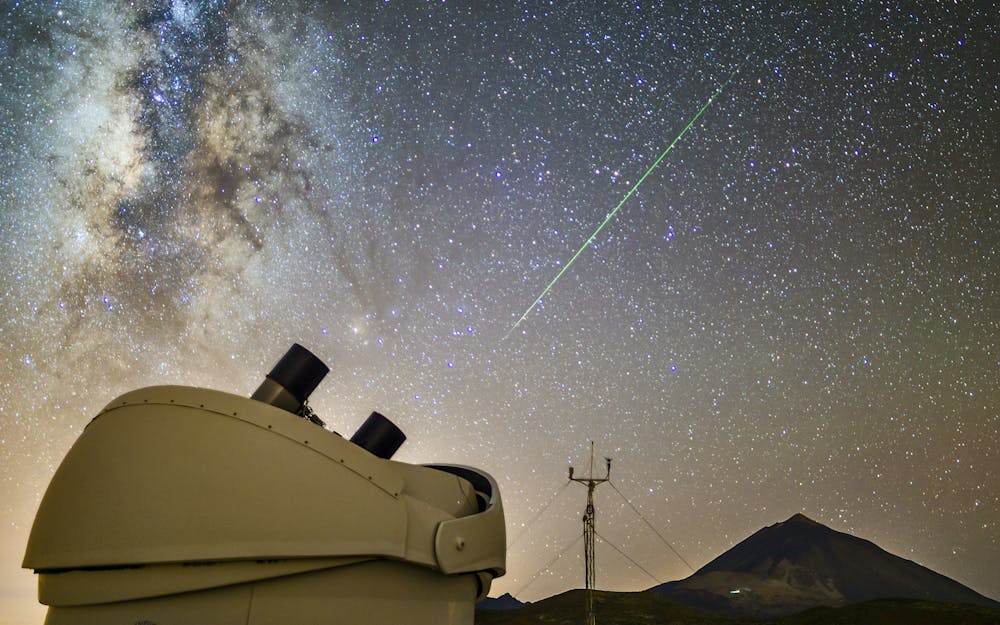
Perseid meteors are fast, crashing into Earth at a speed of about 216,000km/h, and often bright. While the shower is active, at low levels, for more than a month, the best rates are typically visible for at the three nights centred on the peak.
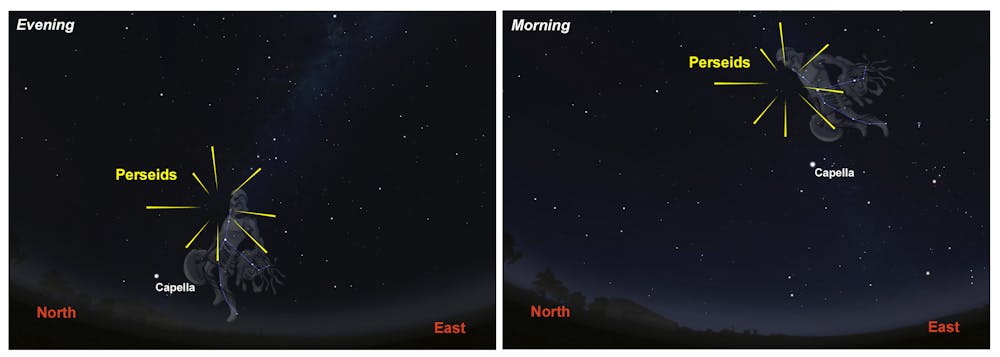
For observers at European latitudes, the Perseid radiant rises by mid-evening, so the shower can be easily observed from 10pm local time, and remains high all through the night. The later in the night you look, the higher the radiant will be and the more meteors you’re likely to see.
Aurigids [N favoured]
Active: August 28–September 5
Maximum: Potential Outburst on August 31, peaking between 9:15pm–9:40pm UTC = 10:15pm–10:40pm BST = 11:15pm–11:40pm CEST = September 1, 1:15am–1:40am Gulf Standard Time = September 1, 5:15am–5:40am AWST (WA)
ZHR: 50–100 (?)
Parent: Comet C/1911 N1 Kiess
Where the other showers are reliable and relatively predictable, offering good rates every year, the Aurigids are an entirely different beast.
In most years, the shower is barely visible. Even at its peak, rates rarely exceed just a couple of meteors seen per hour. But occasionally the Aurigids bring a surprise with short and unexpected outbursts of 30-50 meteors an hour seen in 1935, 1986, 1994 and 2019.
The parent comet of the Aurigids, C/1911 N1 Kiess, moves on an orbit with a period far longer than the parent of any other shower on our list.
It is thought the orbit takes between 1,800 and 2,000 years to complete, although our knowledge of it is very limited as it was only observed for a short period of time.
In late August every year, Earth passes through debris shed by the comet at a previous passage thousands of years into the past. In most years, the dust we encounter is very sparse.
But occasionally we intersect a denser, narrow stream of debris, material laid down at the comet’s previous passage. That dust has not yet had time to disperse so is more densely packed and hence gives enhanced rates: a meteor outburst.
Several independent research teams studying the past behaviour of the shower have all come to the same conclusion. On August 31, 2021, the Earth will once again intersect that narrow band of debris and an outburst may occur, with predictions it will peak around 21:17 UTC or 21:35 UTC.
Such an outburst would be short-lived. The dense core of the debris stream is so narrow it will take the Earth just ten or 20 minutes to traverse. So you’ll have to be lucky to see it.
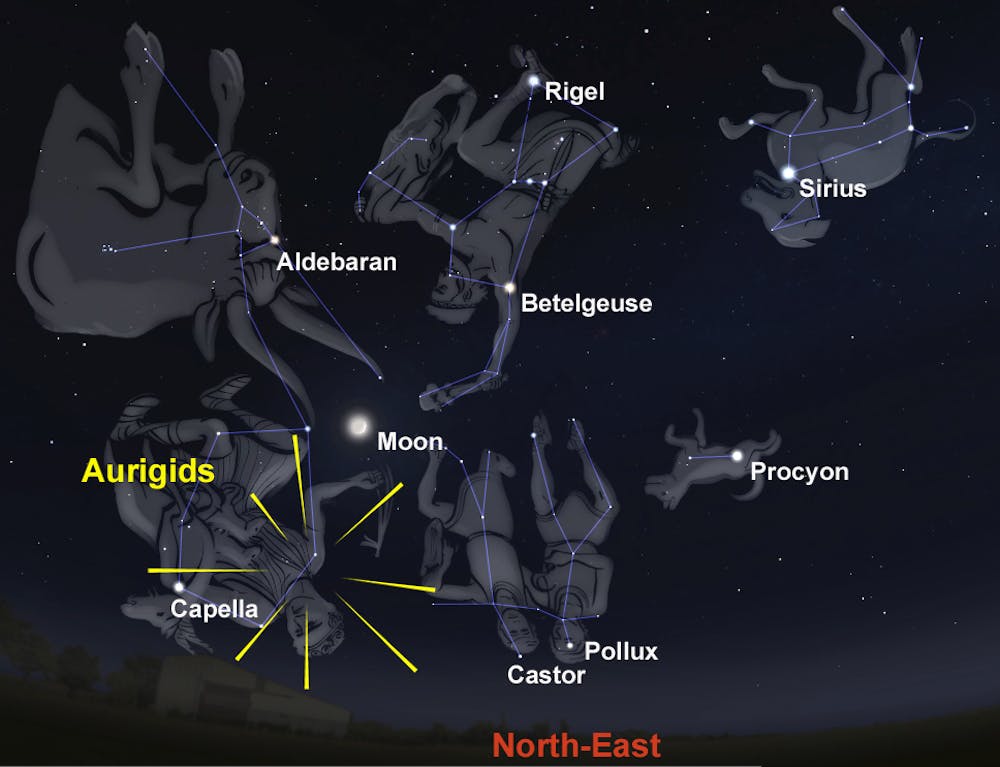
The forecast outburst this year is timed such that observers in Eastern Europe and Asia will be the fortunate ones, with the radiant above the horizon. The waning Moon will light the sky when the radiant is above the horizon, washing out the fainter meteors from the shower.

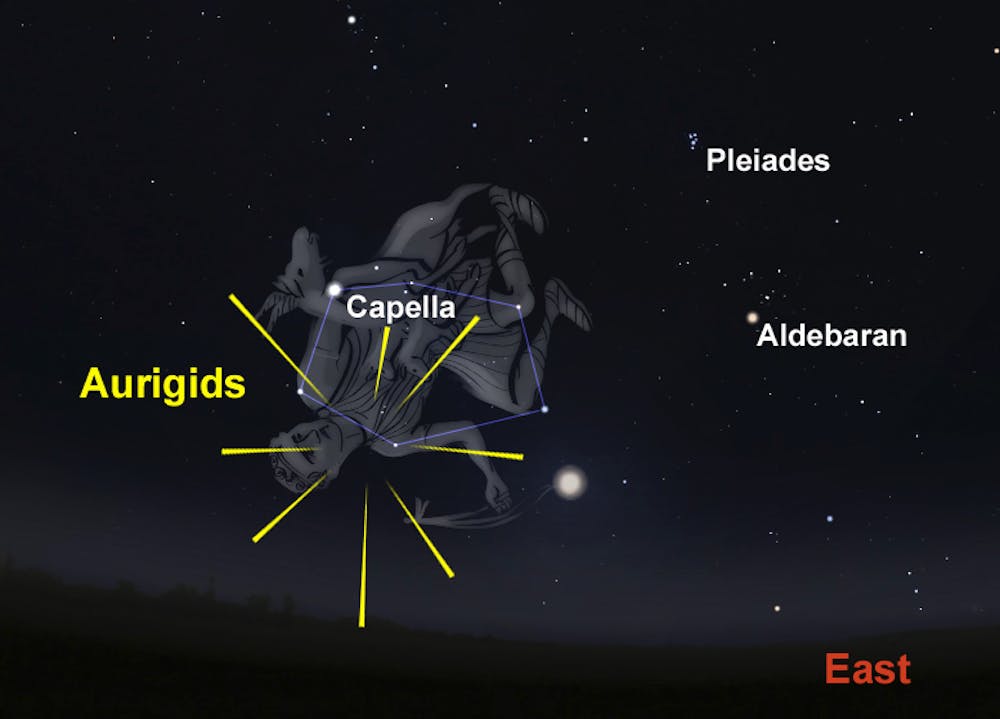
The Aurigids tend to be fast and are often quite bright. Previous outbursts of the shower have featured large numbers of bright meteors. It may just be worth getting up and heading outside at the time of the predicted outburst, just in case the Aurigids give us a show to remember.
Geminids [N/S]
Active: December 4–17
Maximum: December 14, 7am UTC = 6pm AEDT (NSW/ACT/Vic/Tas) = 3pm AWST (WA) = 2am EST
ZHR: 150
Parent: Asteroid 3200 Phaethon
The Geminid meteor shower is truly a case of saving the best until last. By far the best of the annual meteor showers, it graces our skies every December, yielding good numbers of spectacular, bright meteors.
The shower is so good it is always worth observing, even in 2021, when the Moon will be almost full.
Over the decades, the Geminids have gradually become stronger and stronger. They took the crown of the year’s best shower from the Perseids in the 1990s, and have continued to improve ever since.
For observers in the northern hemisphere, the Geminids are visible from relatively early in the evening, with their radiant rising shortly after sunset, and remaining above the horizon for all of the hours of darkness.
As the night progresses, the radiant gets very high in the sky and the shower can put on a truly spectacular show.
For those in the southern hemisphere, the situation is not quite as ideal. The further south you live, the later the radiant will rise, and so the later the show will begin.
When the radiant reaches its highest point in the sky (around 2am–3am local time), it sits closer to the horizon the further south you are, so the best meteor rates you observe will be reduced compared to those seen from more northerly locations.
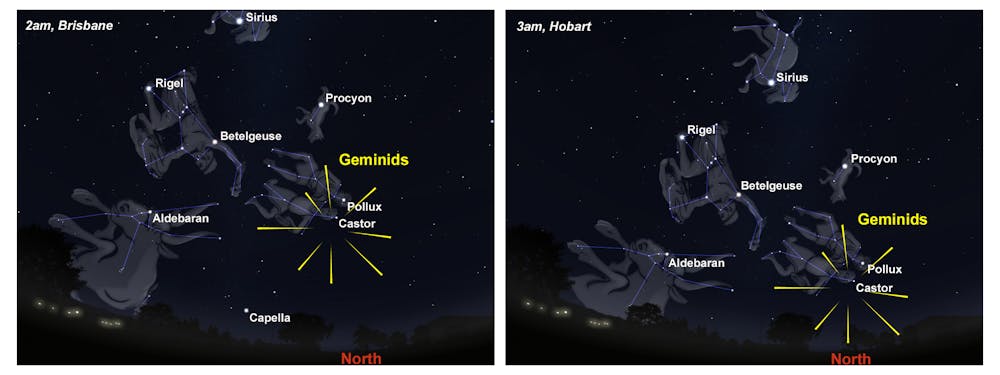
Despite these apparent drawbacks, the Geminids are still by far the best meteor shower of the year for observers in Australia, and are well worth a look, even on the moonlit nights of 2021.
Peak Geminid rates last for around 24 hours, centred on the official peak time, before falling away relatively rapidly thereafter. This means that observers around the globe can enjoy the display.
The best rates come when the radiant is highest in the sky (around 2–3am) but it is well worth looking up at any time after the radiant has risen above the horizon.
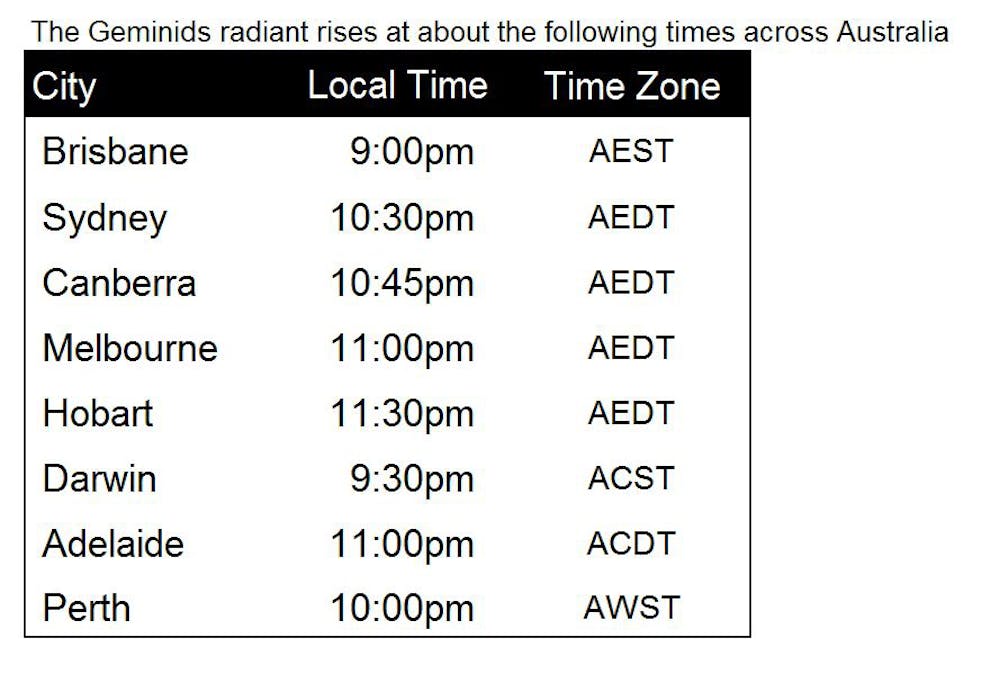
So wherever you are on the planet, if skies are clear for the peak of the Geminids, it is well worth going outside and looking up, to revel in the beauty of the greatest of the annual meteor showers.
Jonti Horner, Professor (Astrophysics), University of Southern Queensland and Tanya Hill, Honorary Fellow of the University of Melbourne and Senior Curator (Astronomy), Museums Victoria
This article is republished from The Conversation under a Creative Commons license. Read the original article.

LAKE COUNTY, Calif. – The Lake County Sheriff’s Office said it is investigating several reported overdoses on Thursday, one of which resulted in a confirmed death, raising concerns of drugs laced with opioids that are being circulated in the community and, in particular, at two local tribal rancherias.
Lt. Corey Paulich said Friday that the sheriff’s office had become aware of several social media posts with accompanying photos made the night before related to unknown types of pills that could have been related to recent overdoses.
Paulich said the sheriff’s office is not able to authenticate the photos because they do not know when or by whom they were taken.
However, he added, “This does not mean the pills in these photos are not dangerous.”
The sheriff’s office is conducting a death investigation where the pills depicted in a photo provided by the agency – which can be seen above – may have played a role in the death.
The actual cause of death will not be known for some time pending an autopsy and toxicology results, Paulich said.
He separately clarified to Lake County News that there is only one death that he is aware of in connection to the Thursday overdoses.
Later on Friday, Lake County Public Health Officer Dr. Gary Pace weighed in on the matter, putting out a statement in which he raised the concern that the overdoses “may have resulted from non-prescribed opiates or other drugs compromised, or ‘laced,’ with an opioid pain management drug.”
Pace said Lake County residents in possession of non-prescription drugs, and particularly MDMA, should not take them, as they may be laced.
He said opioids are highly addictive, and “it is a common and regrettable practice that producers and traffickers of illicit drugs, such as MDMA, methamphetamine and cocaine, ‘lace’ their product with an opioid, to enhance its addictive properties.”
Despite ongoing public education campaigns, Pace said opioid overdoses and deaths increased in many parts of the country in 2020.
Fire departments response to overdose calls
Lake County News spoke with Northshore Fire and Lakeport Fire, with both agencies confirming that they responded to overdose calls on Thursday.
Northshore Fire Battalion Chief Dave Emmel said their only call came in at about 7:45 p.m. on Quail Top Trail at Robinson Rancheria in Nice.
While they responded, Emmel said they had no patient contact. He said the overdose patient was up on the hill and refusing to be seen or treated by firefighters.
A review of radio traffic indicated the patient was with family and friends and, as Emmel reported, refusing treatment or transport by first responders. The sheriff’s office also was at the scene.
Lakeport Fire Chief Rick Bergem said his firefighters reported responding to three overdoses in the area of Big Valley Rancheria on Thursday, with all of them transported to the hospital.
One of those calls came in at 9:10 p.m., with a Lakeport medic unit dispatched to a call on Red Feather Lane on the report of an overdose and a patient with Narcan, also known as Naloxone, which is used to reverse the effects of opioid overdose. Radio traffic indicated that a patient was transported a short time later.
It is not clear which of the Lakeport cases may have ended in the death, and authorities have not reported that information.
Work underway to train tribal members to administer Naloxone
District 3 Supervisor EJ Crandell, a member of Robinson Rancheria and a longtime tribal leader, told Lake County News that he’s received information that whoever is distributing the pills that led to the overdoses is giving them away free and that they’re laced with fentanyl.
The National Institute on Drug Abuse reports that fentanyl is a powerful synthetic opioid that is similar to morphine but is 50 to 100 times more potent.
The agency said fentanyl and other synthetic opioids are the most common drugs involved in overdose deaths. Illegal fentanyl often is mixed with other drugs, such as cocaine, heroin, methamphetamine and MDMA. “This is especially dangerous because people are often unaware that fentanyl has been added,” the institute reported.
Work is underway on an initiative to get Narcan distributed to Robinson and Upper Lake tribes, Crandell said.
Crandell, who has worked on the effort with the Lake County Tribal Health Consortium, said they’re hoping to conduct training soon on distributing and administering the drug.
He said Big Valley Rancheria already has someone certified and qualified to distribute Narcan to their community and to train tribal members to administer it for prevention measures.
“I hope we can curb this situation to avoid more loss,” Crandell said.
Naloxone available for free to many people
Pace said Naloxone saves lives and is available to many local residents free of charge. Evzio, an autoinjectable form, and Narcan, a prepackaged nasal spray, are two common trade names.
He said many Lake County residents qualify for the Partnership Health Plan, Medicare, or a similar program, and these individuals, as well as clients of Lake County Tribal Health Consortium and many others can access Naloxone for free of charge.
Pace said it’s estimated that 90 percent of those prescribed opioids for pain management in Lake County have access to Naloxone from their medical providers.
The National Institute on Drug Abuse also reported, “major pharmacy chains CVS and Walgreens now make Naloxone available without a personal prescription in all stores in the U.S.”
Officials warn against use of any non-prescribed medications
Like Pace, the sheriff’s office advised members of the public that they should not take any medication or pills that have not been prescribed to them by a physician or provided to them by a pharmacist.
“We ask that if anyone in the public finds or comes into possession of these types of pills that they contact the sheriff’s office or their local law enforcement so the pills can be handled safely,” Paulich said.
If people are uncomfortable contacting law enforcement, they can dispose of the pills in a SafeRx Disposal Drop Box located in the sheriff’s office lobby at 1220 Martin St. in Lakeport. This dropbox is anonymous and requires no contact with a deputy, Paulich said.
For those who may be at risk of opioid overdose, Pace urges them to contact their medical provider proactively to understand their options when it comes to acquiring Naloxone.
Email Elizabeth Larson at