 How to resolve AdBlock issue?
News
The recommendations clarify the state’s vaccine prioritization process and that after appropriate efforts to reach highest priority groups, health departments and providers may offer doses to lower priority groups when high-priority demand subsides, or when doses are about to expire.
As of Jan. 7, a total of 586,379 vaccine doses have been administered statewide and a total of 2,052,025 vaccine doses, which includes the first and second dose, have been shipped to local health departments and health care systems that have facilities in multiple counties, the state reported.
“California’s health care providers have done incredible work thus far in vaccinating hundreds of thousands of Californians,” said Gov. Gavin Newsom. “On behalf of our state, I thank our hospitals, doctors, nurses, and others for joining us in this all-hands-on-deck commitment to safely and quickly Vaccinate All 58. When Californians join together, our spirit of resiliency and innovation always wins. By continuing to take the precautions we need to get through this surge, and by ramping up safe and equitable vaccinations, we can and we will get through this darkest part of the tunnel to the light.”
To maximize vaccine administration and reduce the potential for waste, local health departments and providers should immediately administer COVID-19 vaccines to individuals in all tiers of Phase 1a.
In addition to frontline health care workers, this includes a wide range of people in health care settings such as community health care workers, public health field staff, primary care clinics, specialty clinics, laboratory workers, dental clinics and pharmacy staff.
Local health departments and providers should make special efforts to administer vaccine to vaccinators and consider partnering with others to provide vaccinations for individuals in prioritized tiers.
They may also allocate doses on the assumption that immunization will be accepted by some but not all who are offered the vaccine, and then continue to offer vaccinations in progressive priority tiers.
For example, if a county has maximized use of the vaccine to administer individuals in Phase 1a, they should move to Tier 1 of Phase 1b while continuing to offer vaccines to those in higher priority groups.
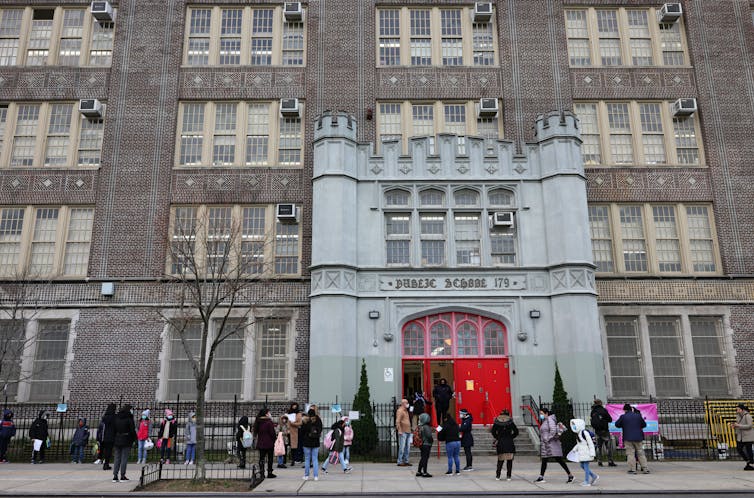
The year 2020 may prove to be pivotal in the history of U.S. public education. Many children have gone missing from school completely since March, and millions more are struggling with wholly inadequate online learning experiences. Lower-income and minority children are particularly hard-hit.
The pandemic has exposed and exacerbated deep inequities across our public schools. Merely restoring school budgets to their prepandemic levels will not be enough to address them after this long period of limited learning.
So far, most states have avoided deep education budget cuts this school year. However, they project revenue shortfalls for the 2021-22 school year.
Because education is labor-intensive, budget cuts would mean layoffs and pay freezes. This would harm in-class instruction and student progress and well-being at a time when it’s most needed.
As a former state education administrator and current university professor and researcher, I have seen how state investment in public schools can boost economies long-term and strengthen civic life.
Where the money comes from
U.S. public schools are decentralized – there are 50 state systems and the District of Columbia. This limits the role of the federal government. Still, Washington can help.
Superintendents of the nation’s three largest school districts – New York, Los Angeles and Chicago – have called on Congress to appropriate funds for school cleaning and protective equipment, testing and contact tracing, mental health supports and in-person summer school programs. Cost is estimated at US$125 billion nationally.
President-elect Biden has called for nearly $200 billion in new funding for schools and pledged to direct the Federal Emergency Management Agency to guarantee schools full access to disaster relief funds.
Given the federal government’s virtually unlimited borrowing capacity at very low interest and Washington’s current appetite for deficit spending, a K-12 investment at the level called for by the superintendents or the president-elect could be folded into a larger relief package aimed at state and local government by the new 2021 Congress.
Any lasting rescue of our K-12 schools, however, must come from the states, which provide, on average, 47% of school revenue. Local districts raise 45%, with the remaining 8% coming from the federal government. And unlike Congress, states must balance their budgets.
State revenues held up better than expected this past spring. Revenues for fiscal year 2020, which ended June 30 in most states, came in higher than expected. That’s largely because the recession primarily hit lower-income workers, who pay less in taxes than their higher-earning counterparts.
Federal aid from the CARES Act, including expanded unemployment benefits, also boosted incomes and spending back in the spring and summer. The act provided about $13.5 billion directly to schools to cover costs of COVID-19 safety measures and related costs.
The higher-than-expected tax revenues, along with the CARES Act funds, helped states cushion the blow to school districts’ current year budgets. For example, in my state of Michigan, K-12 funding for fiscal years 2020 and 2021 was spared from cuts. In fact, districts were given a small, one-time cushion of $160 million to cover COVID-19-related expenses.
Georgia, on the other hand, cut K-12 funding for fiscal year 2021 by nearly $1 billion.
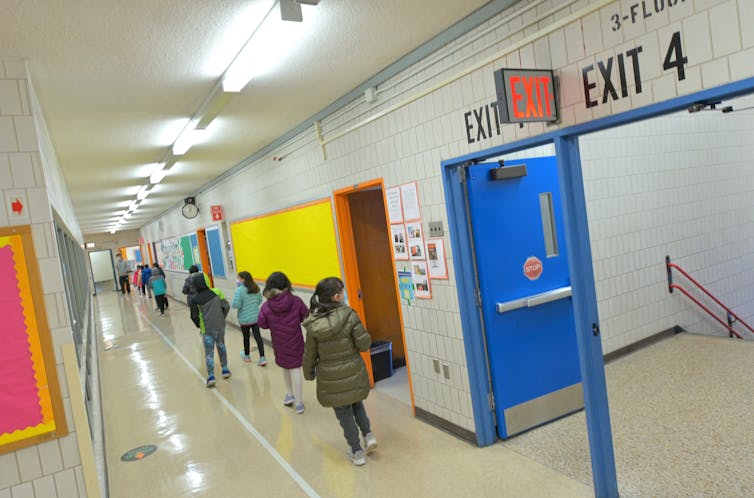
Trouble ahead
Concerns about education budget cuts for the coming school year are not misplaced. Much of the CARES Act federal aid expired at the end of 2020.
In late December, Congress agreed on a new $900 billion relief package that includes $54 billion for K-12 schools. Most of this aid will be delivered through Title I funding, which goes to schools with concentrations of low-income children. This one-time relief will help schools this year, but some states may reduce their own support for schools in response.
When the new federal aid runs out, will states fill the breach? The current economic outlook is extremely uncertain. As COVID-19 cases continue to surge, our weak but slowly recovering economy could slip back into recession, threatening states’ ability or willingness to adequately fund their schools.
Local districts rely on property taxes, and these revenues have been more stable during the pandemic than the sales and income taxes that fill state coffers. But, with few exceptions, local districts cannot rescue themselves.
States play an essential role in equalizing educational opportunities across rich and poor districts, with most aid distributed by formulas that favor poor districts. As a result, thousands of property-poor and low-income districts rely heavily on state aid.
Right now, researchers say the need for support among poorer districts is enormous and growing. As the pandemic surges into the winter months and schools continue to rely heavily on remote instruction, evidence of student learning loss is mounting.
Researchers from Stanford University analyzed reading and math scores in 18 states and the District of Columbia. They found that, by the end of the 2019-20 school year, the average elementary and secondary school student had lost between a third of a year and a full year in reading progress since March. In math, the loss was from about three-quarters of a year to more than a year. The losses were much more severe for students from economically disadvantaged families.
Another study by management consulting firm McKinsey & Company found similar evidence of learning loss, with greater losses in math than reading and particularly acute losses in schools predominately serving students of color.
Educators may question the precision of these findings, and the Stanford researchers note their estimates of learning loss are based on projected and not actual 2020 achievement scores. More study, including in-class assessments by skilled classroom teachers, will be needed to accurately gauge students’ learning losses.
But two basic conclusions are inescapable. First, remote learning has proven far inferior to in-class learning for the vast majority of students. And second, the consequences have been much more dire for low-income and minority children, who are more likely to be learning remotely while lacking the technology, school support and family resources needed to succeed in that environment.
Left unaddressed, these educational deprivations can have effects that last a lifetime, robbing students of their economic prospects and their potential for rewarding civic participation.
Local districts cannot address these growing inequities and learning gaps on their own. They will need to rely on states and the federal government to not only help restore local school budgets to prepandemic levels, but provide schools with additional resources – including more teachers, counselors, social workers, psychologists, technology and training – to remedy the educational and emotional deficits that have mounted since the pandemic struck in the spring.
[You need to understand the coronavirus pandemic, and we can help. Read The Conversation’s newsletter.]
Michael Addonizio, Professor of Educational Leadership and Policy Studies, Wayne State University
This article is republished from The Conversation under a Creative Commons license. Read the original article.
Congressman Mike Thompson (CA-05) and his staff – along with Congressman John Garamendi (CA-03), Lake County’s other member of Congress, and his staffers – were safe and sheltering in place for much of Wednesday afternoon and evening as authorities worked to clear the U.S. Capitol building.
Hours earlier, a mob of Trump supporters forced their way into the building, breaking windows, getting into the offices of members of Congress and invading the chambers.
In a Wednesday afternoon phone interview with Lake County News, Thompson said he was in his office, located in the nearby Cannon Office Building, when, very early in the afternoon, he and his staff were evacuated from the building after a pipe bomb was found and the area’s security had been breached.
Authorities later reported that they had found a total of two pipe bombs in the area.
A short time later, Thompson and his staff were allowed back into their offices and were there for about 20 minutes when they were again told to evacuate.
It was at around 2 p.m. that the mob went through barriers and rushed into the building.
Thompson said that when the mob’s attack began both houses of Congress were in the process of debating whether to accept the Electoral College votes from Arizona after an objection was raised. It was the first of several states in which a number of Republican legislators objected.
He and his staff moved to a secured, undisclosed location and remained there into Wednesday evening as the process of clearing the Capitol building continued. Thompson said they needed to sweep the building to look for bombs and he was hoping evidence was being collected to prosecute the rioters.
Early Wednesday evening, Thompson was waiting to be able to get back to work on the Electoral College vote certification.
“We’re planning to go back into session and to certify the vote,” Thompson said.
Thompson criticized Trump, who had called for a protest to take place in the nation’s capital during the Electoral College certification and even spoke to supporters on Wednesday morning, urging them to go to the Capitol building. That appearance has been blamed for inciting the riot that followed. Thompson compared Trump to a school ground bully.
“This is really tragic. This has never happened in the history of our country,” Thompson said. “It just sends a terrible picture to the rest of the world.”
He added, “We’ve been a beacon for hope and democracy around the globe, and now this.”
Thompson said it was an insurrection provoked by Trump and said the outgoing president should be held accountable for it.
He said he hopes Vice President Mike Pence and the cabinet have the courage to invoke the 25th Amendment and remove Trump from office, but added, “I don’t know if they do,” noting that Trump has replaced most of the cabinet with lackeys.
In this case, Thompson said the 25th Amendment should be invoked, Trump should be impeached again and removed from office.
“If I had my way, I'd bring it up tonight,” he said.
However, Thompson said the first order of business was to get the election results confirmed, clearing the way for Joe Biden to become the 46th president on Jan. 20.
In addition to the hours of debate expected to continue through the night, Thompson said, “Because of COVID, it takes us over an hour to cast a vote,” with members of Congress required to make their way through the chamber in small groups.
A short time after he spoke with Lake County News, Thompson tweeted, “After today’s events, I’m calling on the Vice President to initiate proceedings under the 25th Amendment to gather the Cabinet and remove the President from office.”
Congress remained in session until shortly before 12:45 a.m. Pacific Time – 3:45 a.m. Eastern Standard Time – completing the certification of the Electoral College vote with Vice President Mike Pence declaring Biden the winner of the presidency and Kamala Harris as vice president-elect.
In a statement released shortly afterward, Thompson said, “Congress has done its Constitutional duty and certified the results of the Electoral College from the 2020 Presidential Election. On January 20, Joe Biden will be the President and Kamala Harris will be the Vice President. We must ensure the peaceful transfer of power.”
Just before Pence declared the joint session of Congress dissolved, U.S. Senate Chaplain Barry C. Black, offered a closing prayer.
He prayed for healing and unity, offered thanks for what lawmakers were able to accomplish in spite of the threats to liberty and said we have been warned that eternal vigilance continues to be freedom’s price, and that we need to see in each other a common humanity that reflects the image of God.
Chaplain Black addressed the tragedies that he said have reminded us that words matter and that – quoting the book of Proverbs said – “The power of life and death is in the tongue.”
Email Elizabeth Larson at
The Tuesday vote to close the chambers was 3-2 – with Board Chair Bruno Sabatier and Supervisor Tina Scott dissenting.
Supervisor Moke Simon said he wanted to have the conversation about closing the chambers, which also had been done last year as the pandemic began.
The discussion comes as Lake County’s COVID-19 cases surpassed 2,000, with deaths now at 25.
Simon suggested the suspension of the public’s physical access to the chambers could be reevaluated on a weekly basis, and pointed to the Lake County Superior Court’s actions to curtail in-person proceedings.
Scott said she was pleased to come to the courthouse that day and see everyone masked, and asked about protocol to protect staff. She said she thought that people who came to the courthouse unmasked had to be allowed other access, such as through the Internet, but Sabatier said he was concerned that would take the county “over the line.”
“It’s either we close for all or open for all,” Sabatier said.
County Administrative Officer Carol Huchingson said that once people are in the courthouse building – and previous estimates have put the number on a weekly basis at well over 400 – there is no way to follow them around to make sure that they comply.
She said the security guards who work at the building’s front door, under the auspices of the Superior Court, have a supply of masks and require them on entry.
“Once somebody walks in, I don’t know what you can do to make sure they stay masked,” said Huchingson.
She added, “It’s a complicated issue. There’s no doubt about it.”
Huchingson said she has had questions from staff about whether county offices will stay open.
She also pointed out that the board’s meetings go on for hours, and while they’re sitting behind shields, those shields don’t stop air movement.
“It is a growing concern to everyone,” Huchingson said.
County Counsel Anita Grant said that, from a legal perspective, it doesn’t have to be an “all or nothing” situation, noting other jurisdictions are finding ways to modify their operations and she could provide information for the board on how other counties are handling it.
Newly sworn-in District 5 Supervisor Jessica Pyska, who along with Simon attended via Zoom, said she thought temporarily closing the chamber is a relatively easy way of lowering the impact on staff.
Supervisor EJ Crandell said he was fine with the idea of closing the chambers, pointing out they had done it early in the pandemic.
Sabatier said he feels comfortable coming to the courthouse and the board chambers; regarding the latter, he said there are usually about three people in the room other than supervisors.
“Anything we do comes with a risk,” he said.
Sabatier said some people have difficulty accessing the meetings online and suggested instead that they increase the distance between chairs in the audience from 6 to 12 feet and remove eight chairs.
Pyska suggested placing a monitor outside for the public, raising the concern that the longer they are in the room together, the greater the chance of exposure. She also pointed out that members of the public can call in via Zoom rather than using it online.
Simon said the board can be proud of the access it’s offered to the meeting, noting that it won a state award for its hybrid – online and in-person – meeting format it adopted last year.
He was referring to the California State Association of Counties’ Challenge Award given to the county in November.
Simon said public participation has been “unbelievable” since the pandemic started and closing the chambers is a small thing the board can do to support the fight against the pandemic.
“This hybrid meeting does work,” he said, noting there are opportunities for public participation.
Simon moved to close the chambers temporarily with review on a weekly basis, with Pyska seconding.
Huchingson asked that the weekly review be part of the weekly agenda review process. Grant said the continuation of the closure would need to be considered by the board in open session which Huchingson said they could do.
Pyska asked if they went forward with the closure if they could have the option to have a screen or monitor outside so the public could watch the meeting. Scott also suggested placing a monitor in a window.
Grant suggested giving direction to staff to look at other accommodations and Huchingson said she was leaning toward Pyska’s suggestion due to the issue of airflow in an old building.
The 3-2 vote followed, with the board noting that next week’s meeting will be offered to the public online only. In addition to Zoom, the board meetings are live-streamed on the county’s Facebook page.
In other COVID-19-related news on Tuesday, the board unanimously approved an updated county COVID-19 Worksite Protocol, which it initially accepted on May 19, at which time it directed that the protocol be reviewed every 30 days.
“The questions are continuing to mount,” Huchingson said of inquiries staffers have made about the virus.
Huchingson proposed minor changes including changing quarantine periods from 14 days to 10, the addition of an FAQ section for managers and supervisors that she said is intended to address the many questions coming from departments and a new investigative form to comply with CalOSHA requirements, we have added an investigative form. That form is to be used when an employee is confirmed to be positive. There also is an exposure notification form for co-workers who may have had close contact.
The board also agreed to Huchingson’s suggestion of creating an ad hoc committee of supervisors to work with her and department heads on workplace safety and protocol compliance.
Both Scott and Simon expressed interest in being on the ad hoc committee and the board approved their membership.
Email Elizabeth Larson at
The Master Plan’s development began with an executive order from the governor in June 2019, directing the secretary of the California Health and Human Services Agency to develop a strategy for promoting the health and well-being of older Californians.
After more than a year of deliberations with stakeholders and the public and in collaboration with the Governor’s Task Force on Alzheimer’s Prevention, Preparedness, and a Path Forward chaired by Maria Shriver, the final Master Plan for Aging includes a 10-year blueprint for promoting healthy aging – including five bold proposals for building housing for all ages, improving access to health services, providing inclusive opportunities for seniors to live and work without fear of abuse and neglect, bolstering the caregiving workforce, and increasing economic security for aging Californians.
The Master Plan also applies the hard lessons learned during COVID-19, which has highlighted the urgent need to embrace new ways of supporting older adults, people with disabilities, and communities of color.
The final plan includes more than 100 specific initiatives for addressing issues that have been exacerbated by the pandemic, from staffing shortages in skilled nursing facilities to a lack of broadband access in many communities.
“When I took office, I made it a priority to advance solutions for not just older Californians, but for all of us who love and care for them,” said Gov. Newsom. “This Master Plan on Aging advances bold, innovative, uniquely Californian solutions for issues that we will all confront within our own families and communities, if we have not already – and does so with a sustained focus on equity that we need to lift up everyone. The plan reflects more than a year of hard work, research and sustained engagement to drive the partnerships that will improve lives for the older Californians of today and tomorrow. I thank everyone who contributed to this tremendous blueprint for the work to come.”
At a time when California’s senior population is becoming more ethnically diverse – and more likely to be single or childless, live alone, work longer, and have lower incomes than in decades past – the Master Plan outlines five bold goals and 23 strategies for leaders in government, business, philanthropy, and community-based organizations to collaborate on creating age-friendly communities for all Californians.
The plan also sets a series of ambitious targets that will be used to track progress and provide accountability.
The Master Plan will be powered by more than 100 action-ready initiatives that have already been adopted by state agencies and are prepared for implementation, in partnership with stakeholders and the Legislature.
The Master Plan for Aging’s Five Bold Goals for 2030
1. Housing for All Ages and Stages. We will live where we choose as we age in communities that are age-, disability-, and dementia-friendly and climate- and disaster-ready. Target: Millions of New Housing Options to Age Well.
2. Health Reimagined. We will have access to the services we need to live at home in our communities and to optimize our health and quality of life. Target: Close the Equity Gap in and Increase Life Expectancy.
3. Inclusion and Equity, Not Isolation. We will have lifelong opportunities for work, volunteering, engagement, and leadership and will be protected from isolation, discrimination, abuse, neglect, and exploitation. Target: Keep Increasing Life Satisfaction as We Age.
4. Caregiving That Works. We will be prepared for and supported through the rewards and challenges of caring for aging loved ones. Target: One Million High-Quality Caregiving Jobs.
5. Affording Aging. We will have economic security for as long as we live. Target: Close the Equity Gap in and Increase Elder Economic Sufficiency.
"California has the nation’s largest aging population, the largest population of those living with Alzheimer’s and other dementias, and the largest population of those caregiving for these growing and disproportionately diverse communities," said Maria Shriver. "The governor knows that we must address the critical needs of these populations, or they will only get worse, especially for women who do the lion’s share of caregiving in our state The Alzheimer’s Task Force was proud to collaborate with the Master Plan on aging in identifying bold and ready-to-implement strategies that will lead the nation on a path forward in addressing our aging population, and it will take comprehensive, nonpartisan leadership to get the results we need today.”
The administration is committed to ensuring the Master Plan does not serve just as a report – but is put into action and continually revisited and improved upon to drive results over the next ten years.
The governor has directed a Cabinet Work Group to jumpstart implementation in 2021, with an emphasis on health, housing, and bolstering the workforce older adults rely on. The administration will also issue an annual report on the Master Plan’s progress, including recommended changes and new initiatives for future years.
“The Master Plan for Aging has been intentionally designed as a living document—a comprehensive blueprint we can update and revise over the long-term,” said Mark Ghaly, secretary of the California Health and Human Services Agency, who will lead the new Master Plan Cabinet Work Group. “Just as California pivoted during COVID-19 to ensure the safety and well-being of older adults in new and different ways, the Master Plan will also be nimble and responsive to shifting social and economic realities. The important thing is to have an eye to the future, and a strategy for getting there. We are committed to seeing this through to create a California for All.”
“As California gets older and the cost of living keeps going up, growing numbers of seniors will need safe, affordable housing options—for all ages and stages of life. The Master Plan for Aging outlines a clear strategy for achieving this goal focused on accelerating production of a new generation of accessible senior housing, from age-friendly multi-family developments to a wave of accessory dwelling units,” said Lourdes Castro Ramírez, secretary of the California Business, Consumer Services and Housing Agency. “For decades, our state’s senior housing policy has relied heavily on property tax breaks for homeowners—or, too often, left seniors to their own devices. We will change that and chart a new, more inclusive course toward giving all Californians choices in where and how they age.”
“Bold actions are needed now to ensure we care for our care workers. The Master Plan for Aging puts workers front and center—recognizing the essential role the caregiving workforce plays in ensuring an age-friendly California,” said Julie Su, secretary of the California Labor and Workforce Development Agency. “Care jobs are in-demand. Our ability to make sure they are good, high road jobs and that we have qualified workers to meet the needs of the growing older adult population are key to the state's health and well-being. The Master Plan also acknowledges the growing contribution that older adults make to our state’s economy. The Administration has produced a comprehensive blueprint for supporting workers of all ages, no matter who they are or who they are caring for, and it will help our communities become fairer, more just places for all Californians to thrive.”
The administration recognizes that California succeeds when all communities succeed—and the Master Plan emphasizes the importance of coordinating with the Legislature and local communities to shape its strategies, oversee their implementation, and ensure they are producing more equitable, inclusive, age-friendly communities. The final plan includes a Local Playbook to assist state and local government, communities, and private and philanthropic organizations in building environments that promote an age-friendly and disability-friendly California.
“We all dream of a California where people of any age and ability can thrive because of the systems and services we have in place. The Legislature plays a vital role ensuring older Californians are able to contribute to the health and strength of our communities—while also giving every community the right tools to promote healthy aging, support older adults and people with disabilities, and get all residents the services and supports they need,” said Assemblymember Adrin Nazarian, chair of the Assembly Committee on Aging and Long-Term Care. “The Master Plan for Aging process was indeed praiseworthy. A stakeholder-driven process that set forth recommendations identifying a comprehensive set of strategies—a laudable, exhaustive, and praiseworthy list. I look forward to working with the Administration to put this Master Plan into action, through legislation, oversight, and working alongside advocates to ensure our budget reflects these ideals.”
“The work that went into developing this plan was a beginning. It will take the ongoing collaboration of stakeholders across many sectors—including those who provide healthcare, housing, nutrition and caregiving—to see that the needs of our aging population are met and that all Californians can age with dignity.” said Sen. Melissa Hurtado, Chair of the Senate Human Services Committee. “The COVID-19 pandemic has highlighted the urgency of this issue and now it’s time to roll-up our sleeves and get to work to ensure that we build a California for all ages.”
“The Master Plan is a visionary, inclusive, equitable framework for transforming aging in this state and forging partnerships for change in every community,” said Kim McCoy Wade, director of the California Department of Aging. “The plan sets ambitious goals on issues from housing to in-home caregiving, while also providing a local playbook that has tools and resources communities can use to create their own tailor-made strategies on aging, disability, and dementia. Building an age-friendly state will take all of us, and the Master Plan gives us what we need to get to work.”
The full Master Plan for Aging is available here: http://mpa.aging.ca.gov .
Under the guidance of this state level coordination group, new safeguards have already been put in place to protect Californians as ongoing investigations continue to move forward in a collaborative fashion.
Established on Nov. 24, the state level coordination group on unemployment insurance fraud – which also includes participation from the Federal Bureau of investigation, the California Department of Corrections and Rehabilitation among others – has worked closely with the California Employment Development Department to employ new tools and bolster existing programs to strengthen its fraud detection methods.
Changes include amplified fraud detection criteria as advised by Thompson Reuters, and a new data sharing system with the state prison system to stop any payments to incarcerated individuals.
"California is committed to making steady progress to swiftly identify and stop fraud that has occurred during the Pandemic within the unemployment benefits system. We thank our local, state and federal partners for their collaborative efforts to date, and we will continue to work in unison with them to protect Californians and to aggressively investigate and bring to justice those responsible for unemployment fraud" said Mark Ghilarducci, director of the California Governor's Office of Emergency Services.
"A fraud scheme of this magnitude, involving potentially billions of taxpayer dollars and thousands of fraudsters requires a united law enforcement approach. We have built a team of federal, state and local partners, and We are pleased and proud to work with them to investigate and prosecute the fraud arising out of the pandemic," said U.S. Attorney McGregor W. Scott. "We have already indicted multiple defendants, and a large number of cases are in the pipeline. The U.S. Attorney's Office and our partners are committed to the mission of combatting fraud that abuses the provisions of the CARES Act."
"As elected district attorneys and representing district attorneys across California, we continue to be concerned about the staggering fraud that has been committed by incarcerated individuals. However, with the collaboration of Cal OES, EDD, CDCR and law enforcement, we've made significant progress in addressing this fraud. We remain committed to ensuring that hard working Californians impacted by the pandemic are prioritized in receiving their rightful benefits," said Anne Marie Schubert, Sacramento County district attorney and statewide Task Force Leader.
"As the President of the California District Attorney Association, I applaud the efforts of the EDD PUA fraud statewide task force. Significant progress has been made by this group, however; we recognize much more work is needed, at all levels of government,” said Vern Pierson, president, California District Attorneys Association and El Dorado County district attorney. “California's district attorneys are deeply concerned with the magnitude and pervasiveness of this fraud occurring both inside and outside of our correctional facilities at a time when California's families are suffering from the fallout of the pandemic.”
Pierson said CDAA remains committed to this statewide task force and will utilize every investigative tool to bring to justice those who have purposefully manipulated a system designed to help those who are struggling to survive.
“We appreciate the engagement and the unification of effort led by Mark Ghilarducci and Tom Osborne at the Office of Emergency Services in this effort as well as that of CDCR and EDD. CDAA is committed to the development of long term solutions to fraud through the elimination of barriers to effective collaboration and information sharing,” Pierson said.
Some of the collaborative efforts of the task force to date include:
– Establishing a joint executive level multi agency coordination group to facilitate a unity of effort, coordinate actions and streamline statewide investigative efforts.
– Expanding contract between EDD and Thomson Reuters toapply additional industry standard fraud detection criteria and take action on claims deemed highly suspect or fraudulent.
– Thomson Reuters/Pondera works with many states and is the vendor recommended by the California District Attorneys.
– Thomson Reuters' fraud screen identified 3.5 million existing claims as potentially fraudulent, approximately 1.9 million of these had already been disqualified by EDD. EDD took action on Dec. 26 to stop payment on the remaining 1.4 million accounts.
– Allocating $5 million in state funding to immediately support and enhance the joint investigative efforts of regional District Attorney Task Forces.
– Establishing a new data sharing agreement which allows the CDCR to more broadly share information with EDD investigators to accelerate cross-matching of inmate data to more rapidly identify fraudulent claims being made by or on behalf incarcerated individuals. It will also help to identify and eradicate any potential fraud within both the state prison system as well as local jail facilities.
– Working with ID.me to strengthen the EDD identity verification process. Since ID.me was launched in October and an estimated 30 percent of claims have been stopped by ID.me.
– Leveraging and sharing multi agency resources to streamline investigative efforts and de-conflict case data across the state to prevent duplication of effort, increase coordination and insure for continued collaboration.
– Utilizing the State cyber security threat intelligence, big data analysis and threat assessment capabilities to support investigative efforts.
– Supporting federal, state and local law enforcement in conducting search warrants, indictments and facilitating arrests of fraud perpetrators.
– Increasing collaboration by incorporating regional investigative task force efforts into state level coordination.
The state level coordination task force was created at the direction of Gov. Gavin Newsom, who directed Cal OES to facilitate the joint efforts, with district attorneys and the US Attorney's Office of multiple local, state and federal law enforcement entities to hold those responsible for PUA/UI accountable to fullest extent possible under the law.
The full list of organizations participating in this effort includes: California Governor's Office of Emergency Services, the California District Attorneys Association, United States Department of Labor-Office of the Inspector General, Federal Bureau of Investigation, United States Secret Service, US Attorney's Office, United States Marshals Service, Federal Bureau of Prisons, California Department of Corrections and Rehabilitation and the California Employee Development Department.