 How to resolve AdBlock issue?
News
McGuire, whose district includes Lake County, has held the post for the last two years.
“I am deeply honored to work with President Atkins and I’m grateful for the opportunity to help lead the Senate during what has been one of the most difficult times for our state and nation. Tackling this pandemic, expediting vaccine distribution and economic recovery will remain our top priorities here in 2021. And, we must be relentless in our continued pursuit to build more affordable housing, tackle our homelessness crisis and invest more in resources that will keep our communities safe from the growing threat of wildland fires,” Sen. McGuire said.
Sen. McGuire will continue to serve as chair of the Senate’s Governance and Finance Committee, which is responsible for hearing legislation related to tax and revenue, most housing and housing financing bills, all land use and development policy, proposed new local government laws and district revenue legislation.
He also will continue to serve as vice chair of the Democratic Caucus.
Additionally, Sen. McGuire sits on the following committees: Budget and Fiscal Review, Budget Subcommittee No. 2 on Resources, Environmental Protection and Energy, Special Committee on Pandemic Emergency Response, Joint Legislative Committee on Emergency Management, Energy, Utilities and Commerce, Transportation, Housing, Education, Joint Rules and he Chairs the Joint Committee on Fisheries and Aquaculture.

On Feb. 10, the Centers for Disease Control and Prevention released new mask guidelines based on a study of how mask fit affects the wearer’s exposure to airborne particles. With more transmissible COVID-19 strains emerging around the world, it is important to properly use the right kinds of face masks.
Some practices – such as taking your mask off to speak or wearing your mask below your nose – are clearly problematic. Other mistakes may be less obvious. Everyone still needs to be wearing masks as much as possible – even if you’ve been vaccinated or have previously been infected with COVID–19. So how do you get the most out of a mask?
Mask materials
Your mask material is the most important consideration. Certain manufacturing techniques can make masks more efficient at filtering out the tiny droplets and aerosols that can carry the coronavirus.
During the past year, my graduate students and I at Binghamton University teamed up with scientists from the surgical robot company Intuitive Surgical and the Intuitive Foundation to test the effectiveness of different fabrics at filtering out airborne particles. Our work has been used by the CDC to inform mask guidelines.
Researchers believe that an infected person who talks expels droplets that can spread COVID-19 – especially in the 2- to 5-micron range, about 10 times smaller than the width of a typical human hair. One reason to wear masks is to catch these relatively big particles before they dry out and shrink into smaller particles, called aerosols, which linger in the air longer because of their diminished size.
For example, a 3-micron saliva droplet could shrink down to about 1 micron. Researchers think that droplets in the 2- to 5-micron range are most transmissive of COVID-19. This range is the sweet spot for droplets to linger in the air due to their small size, while still having a high probability of containing the virus.
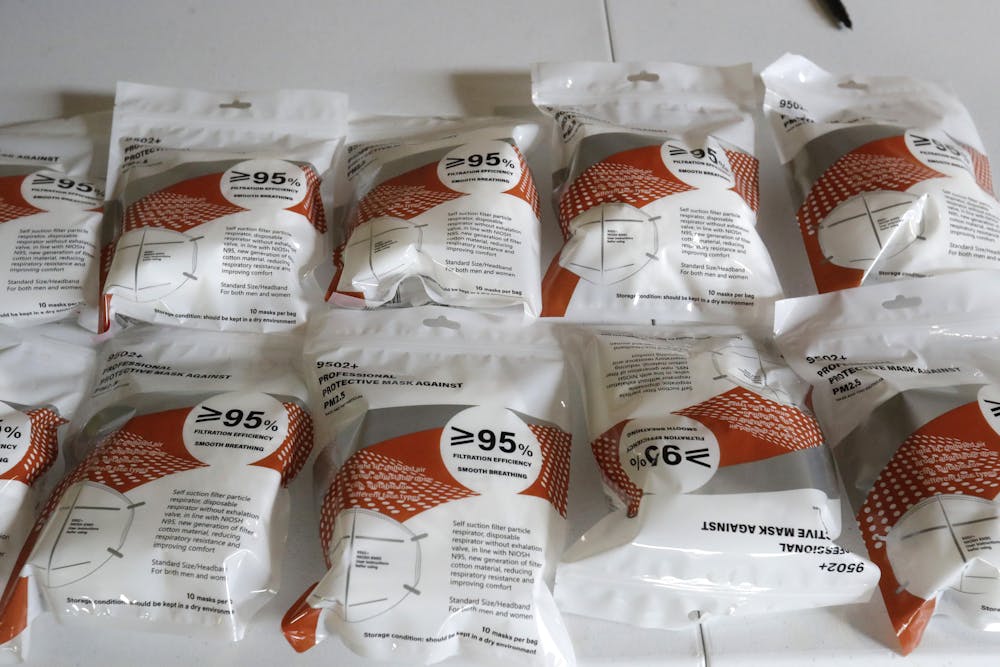
N95 masks are the gold standard among lightweight respirators and are at least 95% effective at filtering out particles at 0.3 microns, well below the average size thought to dominate COVID-19 transmission. They are typically greater than 99% effective for particles 2 to 5 microns across. When leakage around the mask seal is taken into account, the performance typically drops to 90% to 95%.

KN95 masks, which have become more prevalent in the U.S. over the past few months, are the Chinese equivalent of N95 masks and are often the next best mask option in terms of performance. While KN95 masks often meet the N95 specifications, some researchers found their performance to be inconsistent in a study that has not yet been peer reviewed. The CDC maintains a list of internationally produced masks and their filtration performance that you can use to confirm the performance of masks before purchase.
Medical-procedure masks – specifically ASTM F2100-19, Class 1 masks, the blue papery ones you see everywhere – are typically made of several layers of meltblown nonwoven fabrics. If one had a perfect seal to your face, the material could filter out 95% of particles as small as 0.1 microns across. But these masks don’t seal all that well, and when you take into account the air leakage, filtration in typical usage drops to about 80%.
Cotton masks are among the most commonly worn and can also provide decent filtration. The filtration varies according to the tightness of the weave, and one study found that two layers of various widely available cotton fabrics filtered out between 34% and 66% of particles in the 2- to 5-micron range. This is good for catching particles from a person talking, but it won’t block small aerosols in the environment.
In our research, we tested a wide range of fabrics to see which worked best. Some samples were washed as many as 10 times with a variety of detergents and then retested for effectiveness. In our study, which is currently under peer review, we found the best combination was soft flannel on the inside for comfort, thin-as-possible cotton on the outside and an efficient filter in the middle.
Two masks are good, but make sure they fit
No matter how good a mask’s material is, it won’t work well if it doesn’t fit well. A lot of filtration efficiency is lost from leakage around the face mask, such as around the bridge of the nose or at the gaps between any facial hair and the mask. A well-fitting mask is one that seals tightly onto your face, ensuring that almost all the air you breathe goes through the filtering material rather than through gaps in the sides.
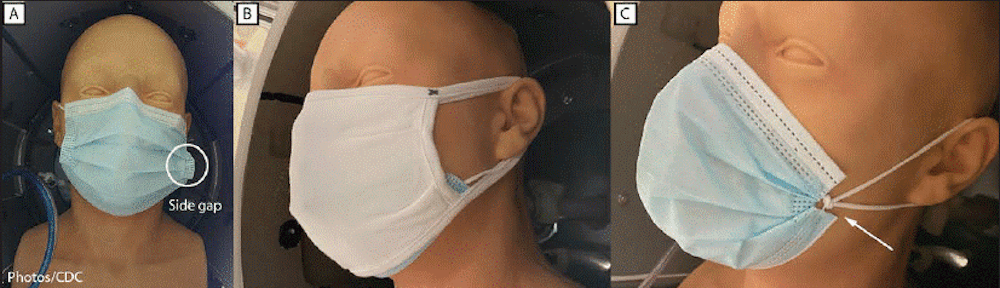
The CDC’s new guidelines are based on a study that tested ways to improve how masks fit – specifically double-masking and what they call “knotting and tucking.”
Double-masking is wearing a cotton mask over a medical-procedure mask. Knotting and tucking entails tying a knot in the elastic loops that go over your ears, close to where they attach to the mask. Then, you tuck the extra mask fabric into the gap that is often present where the ear loops attach to the mask, and flatten that part as much as possible. Both of these tricks to make a better fit decrease the mask-wearers’ exposure to potentially infectious aerosols by 95% as compared with wearing no mask at all. That’s a 15% improvement over the 80% efficiency found when using a single surgical mask.
DIY fit test
To get the best fit when using a mask, bend the metal nosepiece so that the mask tightly fits the curve of your nose. It is also important to make sure your mask fits beneath your chin and to remove any facial hair – air will take the path of least resistance through stubble rather than through the fine fibers of the mask.
Some places, such as hospitals and labs, do mask fit tests that are certified by the Occupational Safety and Health Administration. But these are impractical for home use. You can do your own qualitative fit test at home by lighting a citronella or other oil-scented candle and trying to smell it with and without a mask. The aerosols from a citronella candle are 0.01 to 0.02 microns across – much smaller than typical droplets from humans that would contain COVID-19. If you can’t smell the candle, or the smell is significantly reduced, you’re likely wearing your mask correctly.
Keep in mind, however, that this test is far from exact. For instance, cotton masks won’t filter out these tiny candle aerosols, but are still an important tool to block the majority of coronavirus droplets.
Making sure you are getting the most out of your masks is critical to slowing this pandemic. Double-masking or knotting and tucking, as well as using the right materials, can ensure that you and those around you are safer.
[Get our best science, health and technology stories. Sign up for The Conversation’s science newsletter.]
Scott N. Schiffres, Assistant Professor of Mechanical Engineering, Binghamton University, State University of New York
This article is republished from The Conversation under a Creative Commons license. Read the original article.
The incoming storms are expected to bring modest rainfall to Lake County, where precipitation for the season so far is well below normal, according to National Weather Service data,
Forecasters said the first of the storms will arrive on Thursday, the second on Saturday and the third on Monday.
The storms will bring rain, snow in high altitudes and gusty winds, the agency said.
The National Weather Service’s forecast anticipates Lake County could receive a little more than an inch of rain from Thursday through Monday.
The Lake County forecast predicts up to half an inch of rain during the day on Thursday and another quarter of an inch that night, accompanied by winds of just under 10 miles per hour.
On Friday, daytime conditions are expected to be partly sunny before rain and winds of up to 15 miles per hour arrive on Friday night, with gusts of more than 20 miles per hour in the south county. Less than a tenth of an inch of rain is expected.
Rain is forecast during the day on Saturday, with as much as a quarter of an inch of precipitation, again with lighter winds of about 7 miles per hour.
The forecast calls for chances of rain on Sunday night and during the day on Monday, with conditions to be mostly sunny on Tuesday and Wednesday.
Nighttime temperatures through early next week will range from the high 30s to low 40s. Daytime temperatures will be in the low to high 50s.
Email Elizabeth Larson at
The outreach is part of an ongoing effort by county and community leaders to help local businesses struggling to overcome challenges brought by the COVID-19 pandemic.
Late last year, the Lake County Small Business COVID-19 Recovery Team was established as a collaborative advocacy group, with the intent of ensuring Lake County businesses have a fair and equitable opportunity to access high demand COVID-19 relief funding programs, such as the state’s California Relief Grants and the Federal Paycheck Protection Program.
Rural communities, such as Lake County, frequently have fewer businesses, even in the best of times.
U.S. Census Bureau data from 2018 and 2019 show that there are just over 17 “employer establishments” for every 1,000 Lake County residents, significantly lower the ratios of neighboring Mendocino, Sonoma and Napa Counties, which range from 28.5 to 31.3 per 1,000.
The loss of one Lake County business has a significant community effect and the representatives of the county of Lake, cities of Clearlake and Lakeport, Lake County Chamber of Commerce, Lake County Economic Development Corp. and Middletown Area Merchants Association that comprise the Lake County Small Business COVID-19 Recovery Team want to see that fact recognized in the distribution of public COVID-19 relief funding.
On Tuesday, the group approved a letter to the California Office of the Small Business Advocate, or CalOSBA, urging the following changes to the California Small Business COVID-19 Relief Grant Program:
· An equitable share of grant funding for Lake County businesses;
· An equitable share of grant funding for California’s rural counties;
· Consideration of the “economic weight” a business carries within a county in the prioritization formula for distribution of funds.
The letter, which can be seen below, demonstrates the alignment of Lake County leaders across sectors.
Local business owners are likewise encouraged to add your voices, and share your stories, with Director Isabel Guzman and CalOSBA, at
The meeting will take place from noon to 1:30 p.m. Wednesday, Feb. 17.
Click this link to join: bit.ly/3qHRZQY.
For toll-free attendee dial-in, call 1-866-501-6088; the conference ID is 5650398.
During this town hall, customers will have a chance to ask questions and share feedback with the PG&E team.
Topics will include PG&E’s wildfire prevention activities, 2020 Public Safety Power Shutoff events and local vegetation management efforts.
To access the virtual safety town hall or view recordings of past wildfire safety webinars you can also visit www.pge.com/firesafetywebinars.
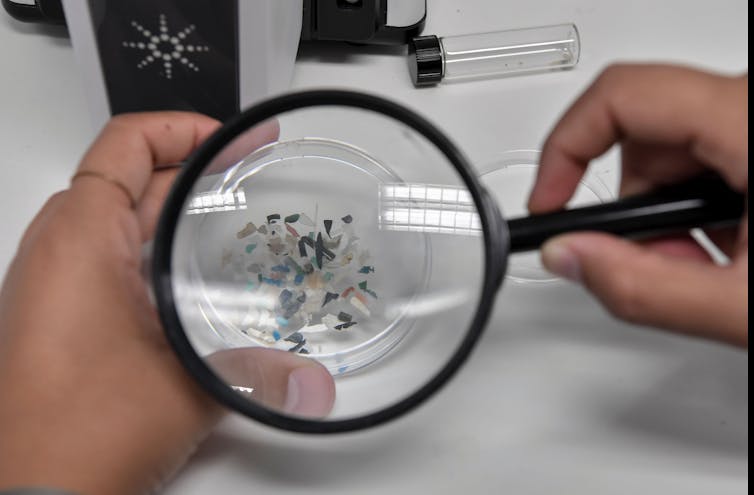
Trillions of barely visible pieces of plastic are floating in the world’s oceans, from surface waters to the deep seas. These particles, known as microplastics, typically form when larger plastic objects such as shopping bags and food containers break down.
Researchers are concerned about microplastics because they are minuscule, widely distributed and easy for wildlife to consume, accidentally or intentionally. We study marine science and animal behavior, and wanted to understand the scale of this problem. In a newly published study that we conducted with ecologist Elliott Hazen, we examined how marine fish – including species consumed by humans – are ingesting synthetic particles of all sizes.
In the broadest review on this topic that has been carried out to date, we found that, so far, 386 marine fish species are known to have ingested plastic debris, including 210 species that are commercially important. But findings of fish consuming plastic are on the rise. We speculate that this could be happening both because detection methods for microplastics are improving and because ocean plastic pollution continues to increase.
Solving the plastics puzzle
It’s not news that wild creatures ingest plastic. The first scientific observation of this problem came from the stomach of a seabird in 1969. Three years later, scientists reported that fish off the coast of southern New England were consuming tiny plastic particles.
Since then, well over 100 scientific papers have described plastic ingestion in numerous species of fish. But each study has only contributed a small piece of a very important puzzle. To see the problem more clearly, we had to put those pieces together.

This story is part of Oceans 21
Our series on the global ocean opened with five in depth profiles. Look out for new articles on the state of our oceans in the lead up to the UN’s next climate conference, COP26. The series is brought to you by The Conversation’s international network.
We did this by creating the largest existing database on plastic ingestion by marine fish, drawing on every scientific study of the problem published from 1972 to 2019. We collected a range of information from each study, including what fish species it examined, the number of fish that had eaten plastic and when those fish were caught. Because some regions of the ocean have more plastic pollution than others, we also examined where the fish were found.
For each species in our database, we identified its diet, habitat and feeding behaviors – for example, whether it preyed on other fish or grazed on algae. By analyzing this data as a whole, we wanted to understand not only how many fish were eating plastic, but also what factors might cause them to do so. The trends that we found were surprising and concerning.

A global problem
Our research revealed that marine fish are ingesting plastic around the globe. According to the 129 scientific papers in our database, researchers have studied this problem in 555 fish species worldwide. We were alarmed to find that more than two-thirds of those species had ingested plastic.
One important caveat is that not all of these studies looked for microplastics. This is likely because finding microplastics requires specialized equipment, like microscopes, or use of more complex techniques. But when researchers did look for microplastics, they found five times more plastic per individual fish than when they only looked for larger pieces. Studies that were able to detect this previously invisible threat revealed that plastic ingestion was higher than we had originally anticipated.
Our review of four decades of research indicates that fish consumption of plastic is increasing. Just since an international assessment conducted for the United Nations in 2016, the number of marine fish species found with plastic has quadrupled.
Similarly, in the last decade alone, the proportion of fish consuming plastic has doubled across all species. Studies published from 2010-2013 found that an average of 15% of the fish sampled contained plastic; in studies published from 2017-2019, that share rose to 33%.
We think there are two reasons for this trend. First, scientific techniques for detecting microplastics have improved substantially in the past five years. Many of the earlier studies we examined may not have found microplastics because researchers couldn’t see them.
Second, it is also likely that fish are actually consuming more plastic over time as ocean plastic pollution increases globally. If this is true, we expect the situation to worsen. Multiple studies that have sought to quantify plastic waste project that the amount of plastic pollution in the ocean will continue to increase over the next several decades.
Risk factors
While our findings may make it seem as though fish in the ocean are stuffed to the gills with plastic, the situation is more complex. In our review, almost one-third of the species studied were not found to have consumed plastic. And even in studies that did report plastic ingestion, researchers did not find plastic in every individual fish. Across studies and species, about one in four fish contained plastics – a fraction that seems to be growing with time. Fish that did consume plastic typically had only one or two pieces in their stomachs.
In our view, this indicates that plastic ingestion by fish may be widespread, but it does not seem to be universal. Nor does it appear random. On the contrary, we were able to predict which species were more likely to eat plastic based on their environment, habitat and feeding behavior.
For example, fishes such as sharks, grouper and tuna that hunt other fishes or marine organisms as food were more likely to ingest plastic. Consequently, species higher on the food chain were at greater risk.
We were not surprised that the amount of plastic that fish consumed also seemed to depend on how much plastic was in their environment. Species that live in ocean regions known to have a lot of plastic pollution, such as the Mediterranean Sea and the coasts of East Asia, were found with more plastic in their stomachs.
Effects of a plastic diet
This is not just a wildlife conservation issue. Researchers don’t know very much about the effects of ingesting plastic on fish or humans. However, there is evidence that that microplastics and even smaller particles called nanoplastics can move from a fish’s stomach to its muscle tissue, which is the part that humans typically eat. Our findings highlight the need for studies analyzing how frequently plastics transfer from fish to humans, and their potential effects on the human body.
[Deep knowledge, daily. Sign up for The Conversation’s newsletter.]
Our review is a step toward understanding the global problem of ocean plastic pollution. Of more than 20,000 marine fish species, only roughly 2% have been tested for plastic consumption. And many reaches of the ocean remain to be examined. Nonetheless, what’s now clear to us is that “out of sight, out of mind” is not an effective response to ocean pollution – especially when it may end up on our plates.
Alexandra McInturf, PhD Candidate in Animal Behavior, University of California, Davis and Matthew Savoca, Postdoctoral researcher, Stanford University
This article is republished from The Conversation under a Creative Commons license. Read the original article.