 How to resolve AdBlock issue?
News
LAKE COUNTY, Calif. – We all learned about the four taste categories in school – sweet, salty, bitter and sour. It turns out there’s a fifth category – umami, which denotes a delightfully rich and savory flavor, one that can’t be categorized within the other four.
When compared to how long the theory of the four basic tastes has been around (Democritus, a pre-Socratic Greek philosopher, added the fourth category, bitter), umami is a relative newcomer. It wasn’t until 2002, when researchers discovered receptors on the human tongue specific to it, that it became universally accepted. (Well, almost universally accepted; there are some detractors.)
It can be a bit difficult to pin down umami. Some describe it as full-bodied and meaty, similar to a richly flavored, well reduced broth.
It’s more than just a flavor, however; it’s also a sensation. Umami coats the tongue, gives a sense of mouth fullness, and has a long-lasting, complex and balanced taste.
It is said that umami has three distinct characteristics: the taste spreads across the tongue, it lasts longer than other tastes, and it provides a mouth-watering sensation.
Think seared meat, aged cheese, sun-dried tomatoes, mushrooms, seafood, green tea, walnuts, and fermented things like soy sauce and kimchi. It’s a diverse grouping, isn’t it?
But what is umami exactly?
To answer this question, we have to go back more than 100 years – to Japan in 1908, when a Tokyo University chemist, Kikunae Ikeda, proposed its existence.
It came about through his enjoyment of a bowl of dashi, a classic Japanese stock made from seaweed. As Ikeda sipped his soup, he recognized that what he was tasting was beyond category. He later wrote that he knew that what he was tasting was “common to tomatoes, cheese, and meat, but … not one of the four known tastes.”
He wanted to discover whether the flavor he was experiencing was a biologically determined taste for something he couldn’t quite pin down.
In his lab, Ikeda examined the molecular structure of a key component of the broth, a variety of seaweed known as kombu (or kelp to us). He determined that one substance, an amino acid known as glutamic acid, was responsible for the intense and pleasurable flavor he experienced.
He named the taste umami, derived from umai, the Japanese word for delicious. The Japanese characters for delicious and taste form the word in that language, and umami can best be translated to English as deliciousness or even yumminess.
The more recent taste research mentioned above has since confirmed that the molecular compounds in glutamic acid – glutamates – bind to specific tongue receptors to create some pretty amazing flavor magic.
Though “meaty” is one descriptor of umami, the flavor is found in food sourced from both animals and plants. Any food in which glutamic acid occurs naturally (or after cooking, aging, or fermentation) is considered umami.
When glutamate breaks down, such as when a piece of meat is cooked, cheese is aged, or a tomato is ripened in the sun, it becomes L-glutamate, which creates the taste sensation that is umami. The more concentrated the flavor (think slow-smoked meats, dried tomatoes, caramelization from roasting vegetables, or reduced stocks), the more intense the umami flavor.
While cooking typically brings out umami flavor, some foods, like corn and peas, are packed with umami when fresh.
Humans have long enjoyed the benefits of umami. More than 3,000 years ago, Greeks and Romans boosted the flavor of their food by using a fermented condiment made from anchovies (much like we use ketchup), and soy sauce has long been used to enhance food in Japan.
Auguste Escoffier, the famed French chef of the late 1800s who changed the course of cuisine, perfected the use of umami in the veal stock he created. He was known to say that a savory fifth taste was the secret to his success.
Many researchers now believe that humans developed a taste for umami because it signals the presence of protein, just as a sweet taste alerts us to needed calories and bitter or sour can warn us of possible toxins. Interestingly, human breast milk is high in umami.
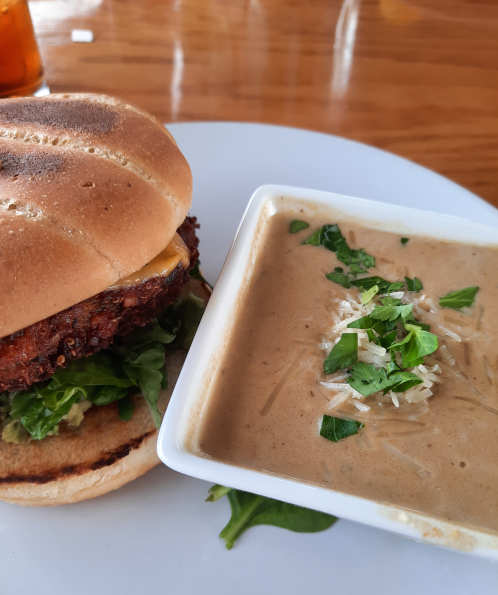
The reason we crave things like cheeseburgers with ketchup or pizza with cheese is because of the umami flavor bomb that the combined ingredients create. Layering on other umami-rich foods like caramelized onions, grilled mushrooms or smoked meats like bacon creates even more flavor intensity.
If you’re an advocate of plant-based cooking like me, utilizing umami-rich foods like tomatoes, eggplant, mushrooms, caramelized onions, roasted winter squashes or nuts adds a satisfying “meaty” quality to foods.
And yes, if you recognized a similarity in the name, monosodium glutamate (MSG) is the chemical basis for umami flavor. Once the flavor source was isolated, Professor Ikeda marketed it as a product named Ajinomoto, which means “essence of flavor” in Japanese.
Today’s recipe is an appetizer packed full of umami that comes from mushrooms and shaved parmesan cheese. The use of dried mushrooms is optional; however, I recommend using them to kick up the level of umami flavor.
Mushroom Medley on Garlic Toasts
If you have access to wild mushrooms, use them in this dish. Otherwise, purchase a variety of fresh mushrooms at your local market, such as button, shiitake, cremini and baby portabella.
3 pounds mixed fresh mushrooms, cleaned and stemmed
3 ounces dried mushrooms (optional)
¼ cup olive oil
3 tablespoons finely chopped shallots
¼ cup vegetable broth or white wine
2 tablespoons brandy
2 tablespoons sweet butter or olive oil
½ teaspoon freshly ground black pepper
2 sprigs fresh rosemary
3 sprigs fresh thyme
¼ cup chopped flat leaf parsley
Toasted baguette slices rubbed with fresh garlic
Shaved parmesan cheese, about 1 ¼ ounces
Heat oven to 450 degrees F.
Slice fresh mushrooms ¼ inch thick.
Soak dried mushrooms, if using, in a bowl of hot water until tender, about 10 minutes. Rinse and squeeze to dry.
Heat a 12-inch ovenproof skillet until very hot. Add olive oil and fresh mushrooms. Cook, stirring frequently, over high heat until mushrooms release their liquid, about 10 minutes.
Add the shallots, garlic, and rehydrated mushrooms, if using, and cook until liquid has evaporated.
Add broth or wine, brandy, butter or olive oil, salt, pepper, and the sprigs of fresh rosemary and thyme.
Transfer skillet to the oven and roast, stirring twice, for 30 minutes. Stir in chopped parsley.
Serve warm on the garlic toasts and garnish with shaved Parmesan cheese.
Recipe by Esther Oertel.
Esther Oertel is a writer and passionate home cook from a family of chefs. She grew up in a restaurant, where she began creating recipes from a young age. She’s taught culinary classes in a variety of venues in Lake County and previously wrote “The Veggie Girl” column for Lake County News. Most recently she’s taught culinary classes at Sur La Table in Santa Rosa. She lives in Middletown.

The rapid spread of COVID-19 in 2020 disrupted field research and environmental monitoring efforts worldwide. Travel restrictions and social distancing forced scientists to cancel studies or pause their work for months. These limits measurably reduced the accuracy of weather forecasts and created data gaps on issues ranging from bird migration to civil rights in U.S. public schools.
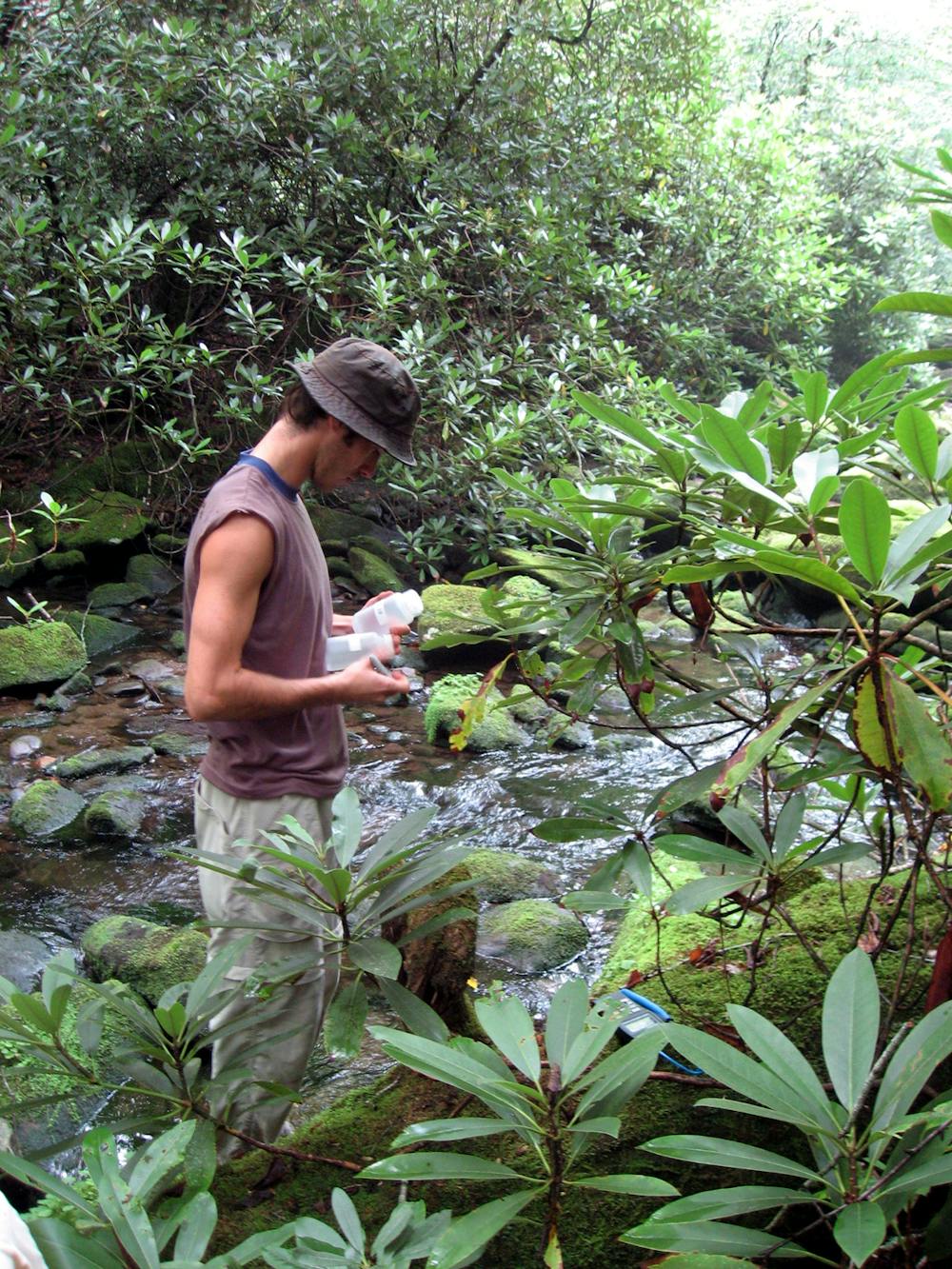
Our work relies on this kind of information to track seasonal events in nature and understand how climate change is affecting them. We also recruit and train citizens for community science – projects that involve amateur or volunteer scientists in scientific research, also known as citizen science. This often involves collecting observations of phenomena such as plants and animals, daily rainfall totals, water quality or asteroids.
Participation in many community science programs has skyrocketed during COVID-19 lockdowns, with some programs reporting record numbers of contributors. We believe these efforts can help to offset data losses from the shutdown of formal monitoring activities.
Why is uninterrupted monitoring important?
Regular, long-term tracking of phenomena such as plant and animal abundance, composition and activity is critical for understanding change. It enables researchers to see the impacts of natural disturbance events, such as wildfires, and human activities, such as construction and development. Long-term studies offer insights into patterns and processes that can’t be derived from shorter studies, and help experts make better predictions about the future.
Interruptions in monitoring make it harder to accurately assess changes. If those disruptions coincide with extreme events, such as a major hurricane, experts miss opportunities to understand the full impacts of those events.
The U.S. has several long-term ecological monitoring programs, including the National Ecological Observatory Network (NEON), the Long Term Ecological Research Network and federal inventory and monitoring programs. Many state and local government agencies carry out similar activities. The pandemic has significantly disrupted all of these programs.
Reasons to engage the public in science
Community science is a strong complement to formal research. By engaging willing volunteers, community programs yield much more data and cover larger areas than professional scientists can achieve on their own.
We help manage two popular biodiversity-themed community science programs in the U.S.: eButterfly, a program for tracking butterfly sightings, and Nature’s Notebook, a program for tracking seasonal activity in plants and animals. Scientists have used data contributed by participants in these programs to verify information collected by satellites, determine the conditions associated with flowering in different species of plants, and predict how climate change will shift plant species’ ranges in the future.
Observations contributed to other community science programs have helped to document new insect species, discover exoplanets and even find cures for rare diseases. Globally, millions of people participate in thousands of projects, resulting in data valued at more than US$1 billion annually.
Community science programs also benefit participants. Joining a community science program can make people more science-literate and help pull back the curtain on how scientific work is done. It also deepens their sense of place and increases their understanding and appreciation for the plants and animals they monitor. We have frequently heard from our participants that making observations has enabled them to see and experience much more in places they know well, and to enjoy those places all the more.
Community science to the rescue
As offices and schools closed in the spring of 2020, many Americans turned to community science programs in search of stimulating and meaningful activities for children and adults alike. And despite COVID-19 restrictions, volunteer data collectors have persisted through the pandemic.
In a recent analysis of activity in biodiversity-themed community science programs during COVID-19 lockdowns, we found that participation generally held steady or increased in the spring of 2020. Two popular programs, iNaturalist and eBird, both grew. Participation in Nature’s Notebook and eButterfly declined slightly, though volunteers still logged many critical observations. What’s more, community science volunteers in these programs and others have kept at it even as lockdowns have relaxed.
How good is community data?
One common question about community science projects is whether data collected by volunteers is reliable. This is a valid concern, since many program participants are not formally trained as scientists.
Organizations that run community science programs typically go to great lengths to ensure data quality. To avoid recording erroneous observations, project leaders provide extensive training and support materials. They also construct data entry apps so that volunteers can’t mistakenly input dates in the future, and flag inconsistent reports for review. Several biodiversity-themed programs, including iNaturalist, eBird and eButterfly, engage expert reviewers to evaluate and verify reports.
According to a 2018 review by the National Academies of Science, Engineering and Medicine, on average, volunteer contributors yield reliable data points about 75% of the time. For some programs, such as Nature’s Notebook and eBird, accuracy is over 90%.
How to get involved
Your observations can help fill critical gaps that COVID-19 closures have created. Contributions to iNaturalist, eBird, eButterfly or Nature’s Notebook are welcome any time of the year, but spring is an ideal time to contribute observations to biodiversity-themed programs to help document plant and animal response to changing seasonal conditions. For example, participants in Nature’s Notebook will help document whether springtime plant and animal activity is early amid the ongoing effects of climate change.
The 2021 City Nature Challenge, an effort using iNaturalist to document urban biodiversity in brief, focused events, will run in late April and early May in cities worldwide. Another event, Global Big Day – a single day focused on celebrating and recording birds worldwide – is scheduled for May 8. Even if you’ve never thought of yourself as a scientist, you can help scientists collect data that expand our understanding of the Earth and how it works.
[Deep knowledge, daily. Sign up for The Conversation’s newsletter.]
Theresa Crimmins, Director, USA National Phenology Network, University of Arizona; Erin Posthumus, Outreach Coordinator and Liaison to the U.S. Fish & Wildlife Service, University of Arizona, and Kathleen Prudic, Assistant Professor of Citizen and Data Science, University of Arizona
This article is republished from The Conversation under a Creative Commons license. Read the original article.
Dogs available for adoption this week include mixes of Belgian Malinois, Chihuahua, German Shepherd, heeler, pit bull and Rottweiler.
Dogs that are adopted from Lake County Animal Care and Control are either neutered or spayed, microchipped and, if old enough, given a rabies shot and county license before being released to their new owner. License fees do not apply to residents of the cities of Lakeport or Clearlake.
The following dogs at the Lake County Animal Care and Control shelter have been cleared for adoption (additional dogs on the animal control Web site not listed are still “on hold”).
Call Lake County Animal Care and Control at 707-263-0278 or visit the shelter online at http://www.co.lake.ca.us/Government/Directory/Animal_Care_And_Control.htm for information on visiting or adopting.

‘Bruce’
“Bruce” is a male pit bull terrier with a gray and white coat.
He has been neutered.
He’s in kennel No. 3, ID No. 14346.

‘Little Lady’
“Little Lady” is a young female heeler-German Shepherd mix with a medium-length black and white coat.
She is in kennel No. 6, ID No. 14341.

‘Little Rose’
“Little Rose” is a young female heeler-German Shepherd mix with a medium-length black and white coat.
She is in kennel No. 6b, ID No. 14342.

Male pit bull terrier
This male pit bull terrier has a short brindle and white coat.
He is in kennel No. 7, ID No. 14339.

Male border collie
This male border collie has a short black and white coat.
He is in kennel No. 9, ID No. 14331.

Female pit bull terrier
This female pit bull terrier has a short brown coat.
She’s in kennel No. 10, ID No. 14330.

Male pit bull terrier
This male pit bull terrier has a short black and white coat.
He is in kennel No. 13, ID No. 14338.

‘Sargent Chunk’
“Sargent Chunk” is a young male Rottweiler with a short red and black coat.
He is in kennel No. 15, ID No. 14303.

Female Chihuahua
This senior female Chihuahua has a short liver-colored coat.
She is in kennel No. 21, ID No. 14324.

‘Jack’
“Jack” is a young male Rottweiler with a short black and red coat.
He is in kennel No. 22, ID No. 14328.

Male Belgian Malinois
This young male Belgian Malinois has a medium-length red and black coat.
He is in kennel No. 29, ID No. 14269.
Email Elizabeth Larson at
Space News: NASA, international partners assess mission to map ice on Mars, guide science priorities
NASA and three international partners have signed a statement of intent to advance a possible robotic Mars ice mapping mission, which could help identify abundant, accessible ice for future candidate landing sites on the red planet.
The agencies have agreed to establish a joint concept team to assess mission potential, as well as partnership opportunities.
Under the statement, NASA, the Italian Space Agency, the Canadian Space Agency and the Japan Aerospace Exploration Agency announced their intention to develop a mission plan and define their potential roles and responsibilities. If the concept moves forward, the mission could be ready to launch as early as 2026.
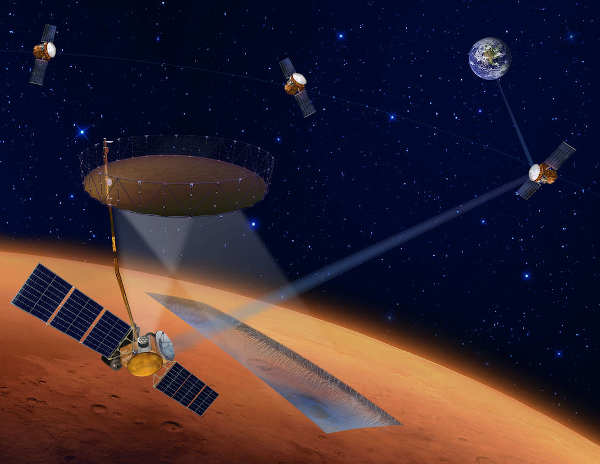
The international Mars Ice Mapper mission would detect the location, depth, spatial extent, and abundance of near-surface ice deposits, which would enable the science community to interpret a more detailed volatile history of Mars.
The radar-carrying orbiter would also help identify properties of the dust, loose rocky material – known as regolith – and rock layers that might impact the ability to access ice.
The ice-mapping mission could help the agency identify potential science objectives for initial human missions to Mars, which are expected to be designed for about 30 days of exploration on the surface.
For example, identifying and characterizing accessible water ice could lead to human-tended science, such as ice coring to support the search for life.
Mars Ice Mapper also could provide a map of water-ice resources for later human missions with longer surface expeditions, as well as help meet exploration engineering constraints, such as avoidance of rock and terrain hazards.
Mapping shallow water ice could also support supplemental high-value science objectives related to Martian climatology and geology.
“This innovative partnership model for Mars Ice Mapper combines our global experience and allows for cost sharing across the board to make this mission more feasible for all interested parties,” said Jim Watzin, NASA’s senior advisor for agency architectures and mission alignment. “Human and robotic exploration go hand in hand, with the latter helping pave the way for smarter, safer human missions farther into the solar system. Together, we can help prepare humanity for our next giant leap – the first human mission to Mars.”
As the mission concept evolves, there may be opportunities for other space agency and commercial partners to join the mission.
Beyond promoting scientific observations while the orbiter completes its reconnaissance work, the agency partners will explore mission-enabling rideshare opportunities as part of their next phase of study. All science data from the mission would be made available to the international science community for both planetary science and Mars reconnaissance.
This approach is similar to what NASA is doing at the Moon under the Artemis program – sending astronauts to the lunar South Pole, where ice is trapped in the permanently shadowed regions of the pole.
Access to water ice would also be central to scientific investigations on the surface of Mars that are led by future human explorers. Such explorers may one day core, sample, and analyze the ice to better understand the record of climatic and geologic change on Mars and its astrobiological potential, which could be revealed through signs of preserved ancient microbial life or even the possibility of living organisms, if Mars ever harbored life.
Ice is also a critical natural resource that could eventually supply hydrogen and oxygen for fuel. These elements could also provide resources for backup life support, civil engineering, mining, manufacturing, and, eventually, agriculture on Mars. Transporting water from Earth to deep space is extremely costly, so a local resource is essential to sustainable surface exploration.
“In addition to supporting plans for future human missions to Mars, learning more about subsurface ice will bring significant opportunities for scientific discovery,” said Eric Ianson, NASA Planetary Science Division deputy director and Mars Exploration Program Director. “Mapping near-surface water ice would reveal an as-yet hidden part of the Martian hydrosphere and the layering above it, which can help uncover the history of environmental change on Mars and lead to our ability to answer fundamental questions about whether Mars was ever home to microbial life or still might be today.”
The red planet is providing a great research return for robotic exploration and the search for ancient life in our solar system. This latest news comes ahead of the agency’s Perseverance rover landing on Mars, which is scheduled to take place on Feb. 18, following a seven-month journey in space. NASA and the European Space Agency (ESA) also recently announced they are moving forward with the Mars Sample Return mission.
Learn more about NASA’s Mars Exploration at https://www.nasa.gov/mission_pages/mars/main and https://www.nasa.gov/topics/moon-to-mars.
Emmy Award-winning documentarian Beverly Lindsay-Johnson is the director/producer of the new film on Soul/Rhythm & Blues legend Billy Stewart.
Stewart, to the uninitiated, was the ebullient, rotund, piano-playing crooner from Washington, D.C., whose highly original style of singing has not been replicated before or since. One writer described Stewart’s vocal stylings as the R&B equivalent of scat singing.
His take on two songs in particular; Gershwin’s “Summertime,” and “Secret Love,” made famous by Doris Day, altered the auditory receptors of American musical taste. William Larry Stewart rose to prominence through his association with Rock & Roll Daddy Bo Diddley. When Diddley rolled through D.C., the young Stewart’s piano playing amazed him so much, he hired him on the spot, spirited him away to Chicago, where Stewart signed a recording contract with Chess Records. It was 1956. Billy Stewart was still a teenager. Daddy Diddley played guitar on one of Billy’s first recordings, “Billy’s Blues.”
Six years would elapse before the hits began piling up. In 1962, the self-penned composition, “Reap What You Sow,” cracked the top 20 R&B chart. A second original piece, “Strange Feeling,” settled at No. 25 on the R&B chart. By 1965, Stewart was stretching into full flow with the two Top R&B 10 hits, “I Do Love You,” and “Sitting In The Park.” Those two songs both crossed over to the Top 40 Pop charts.
The biggest hit of his career was a retooling of the classic tune by George Gershwin, “Summertime.” It was released in 1966 on an album recorded in the wake of his 1965 hits and titled Unbelievable. “Summertime reached #10 on the Pop charts and No. 7 R&B.
His cover of “Secret Love” also fared well, landing at No. 11 on the R&B charts and No. 29 Pop. As a niche performer Billy Stewart is also a favored music component of Latinx Lowrider culture to this day.
Fat Boy screenings have been few in number and limited to the Washington, D.C. market, the hometown of Billy Stewart. It is slated for its (Bay Area) West Coast premiere on PBS affiliate KQED on Thursday, Feb. 18, at 11 p.m. It repeats on Friday, Feb. 19, at 5 a.m. and again on Wednesday, Feb. 24, at 3 p.m.
The filmmaker Beverly Lindsay-Johnson, in the wake of her success of Fat Boy, has been named director of the African American Music Association and took office on Jan. 4.
Hard work and dedication were the earmarks of her arduous climb. Lake County News asked about her dual proclivity for music and film.
“I’ve always been a music person as well as a TV and movie watcher,” she said. “I watched all the black and white stuff as a little girl. At 8, 9 and 10 years old, I was watching movies I knew I shouldn’t have been watching and asking myself, why is it this way?
“There were also books that I tried to read although I wasn’t supposed to be reading them. Then, when I found the movie that came from the book, I would try to see if the questions I had when I was reading the book, were answered. “
Lindsay-Johnson grew up in the Bronx, New York. Her father was an up-and-coming Doo-Wop singer, Bill Lindsay who sang with the popular Doo-Wop groups, the Cadillacs, and the Crickets. The young Beverly attended rehearsals and heard whispered conversations about Billie Holiday. She saw her dad cry when he learned of the death of Frankie Lymon of the group, The Teenagers.
Upon graduation from high school in New York, Lindsay-Johnson pursued a degree in legal secretary science and worked in that field until she decided that she didn’t like lawyers. She launched into television production classes at Hunter College in New York.
By a seeming stroke of divine appointment, the soon-to-be aspiring filmmaker landed a job at the Howard University Dental School which enabled her to start taking classes at the School of Communication.
She eventually secured a job at WHUT, Howard University Television, as a secretary. For six years she absorbed all she could about television production.
Though she told her employer her heart was in production and pitched him the same idea three times before he finally told her, “OK, you can do it.” The resulting documentary was entitled, “Swing, Bop, and Hand Dance.”
Lindsay-Johnson says the film “is a study of the phenomenon of urban partner dancing across the U.S. and its importance to African-American culture through its descendant, the Lindy Hop. People who do these urban partner dances don’t look at Lindy Hop, Jitterbug and Swing as descendants of their dance, but it is.”
“Swing, Bop, and Hand Dance” was made while Lindsay-Johnson worked as a secretary during the day. Consequently, all the shooting was done at night.
“When I produced that documentary, I was told that I needed to find something in it that would interest someone in say, Boise, Idaho. That was the whole connection with the Lindy Hop because though everybody might not know DC Hand Dancing, or Chicago Step or Philly Bop, or Norfolk Swing. But they know the Lindy Hop. The Lindy Hop dance craze gripped the whole nation from the 1930s to the 1950s,” she said.
“It was my first documentary, and nobody was saying no to me. Everyone was saying, ‘Yes, we’ll help you.’ When I finished it, my peers at the TV station didn’t believe I did it. They were like, You mean to tell me she did this? As it turned out, it was my first Emmy nomination.
“What challenged me to do my second documentary was the fact that I realized I had no ownership in the first documentary. I had the title of producer/director but no ownership at all. I vowed that it would never happen again,” she said.
Lindsay-Johnson’s next documentary was about the D.C. teen dance show known as “Teenarama.” It was the first African-American TV dance show, preceding Soul Train by a good eight years, running from 1963 to 1970, which was the year Soul Train started.
Unfortunately, no original footage of the show remained. Resourcefully, Lindsay-Johnson’s production team auditioned and trained teenaged dancers from today to execute the Boogaloo, Monkey, Twist, Jerk, Cha Cha, Bop and Hand Dance. The film’s effective historical reach garnered an Emmy for Lindsay-Johnson in 2006.
While researching “Teenarama,” Lindsay-Johnson was invited to work on a project that involved two popular Washington, D.C. entertainers: Billy Stewart and Van McCoy. A few years later the filmmaker sought out a grant program with assistance from the African-American Music Association.
Lindsay-Johnson’s resourcefulness again surfaced when she recognized that the known video archives for Billy Stewart were painfully thin.
“Through one of his cousins, I found out that his father had shot a lot of family footage on a 16 mm Kodak camera back in the 60s,” reflected Lindsay-Johnson. The family archive became the backbone of the documentary.
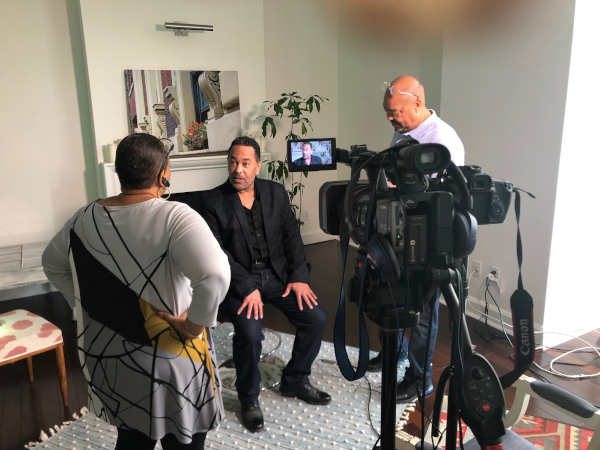
Skillfully woven in are interviews with many stars of R&B and Doo-Wop who witnessed the artistry of Stewart; Anthony Gourdine of Little Anthony and The Imperials, Herb Fame, of Peaches & Herb, Mitty Collier (“I Had A Talk With My Man Last Night”), The Bay Area’s Own – Queen of the West Coast Blues Sugar Pie DeSanto, (DeSanto wrote a song for Billy Stewart during her seven-year tenure with Chess), Grace Ruffin of the Jewells, Music Journalist Mike Boone, and Emanuel Raheim of the Disco/R&B group GQ.
The resulting marriage of the filmmaker’s vision of the preservation of yet another epoch of Black expression is richly deserving of the international acclaim PBS is affording this documentary.
Check it out. You should be home when it airs.
Editor’s note: In a previous version of this story, Beverly Lindsay-Johnson’s father’s name was incorrect. It is Bill Lindsay. We regret the error.
T. Watts is a music journalist who lives in Lake County, California.
The meeting will begin at 1 p.m.
To participate in Monday’s meeting, join Zoom at this link. The meeting ID is 989 0155 5727, the passcode is 450800. The meeting also can be joined by one tap mobile: +16699006833,,98901555727#,,,,*450800# US (San Jose).
Positioning Lake County businesses to take advantage of COVID-19 relief funding opportunities has been a matter of significant community priority, as well as taking proactive steps to advocate for further support for local businesses, when gaps or inequities are identified.
Monday’s agenda will include discussion of the federal stimulus package, and consideration/approval of a letter to the state to advocate for the unique needs of Lake County’s small businesses.
Feb. 8 at 6 p.m. is also the deadline to apply for the second round of the California Small Business COVID-19 Relief Grant Program, which offers grants of up to $25,000 for eligible businesses with annual revenues of $2.5 million or less.
Information and on-demand webinars are available at https://careliefgrant.com.
For more information and resources on federal and state relief opportunities available, visit https://www.sba.gov/page/coronavirus-covid-19-small-business-guidance-loan-resources and
https://business.ca.gov/coronavirus-2019/.
The Rural Relief Small Business Grant Program, a partnership between LISC and Lowes, is currently between funding rounds, but you can get information and sign up for updates on future opportunities here.