 How to resolve AdBlock issue?
News
The event will take place in downtown Kelseyville on Saturday, May 8, from noon to 4 p.m.
To add to the fun, the Club is sponsoring an online auction, with bidding opening at 9 a.m. on Friday, May 7, and closing at 9 p.m. Sunday, May 9.
Not sure how a poker run works? The club said it’s easy and loads of fun.
Check-in and draw your first card at Chacewater Winery to start your run. Visit six more stops along Main Street in Kelseyville including Fore Family Wine Room, Lyndall’s Sports Stop Grill, The Brick Tavern, Smiling Dogs Tasting Room, Kelsey Creek Brewing, and A & H General Store to draw your next card.
If you draw a queen, you win a prize donated by the stop location. Stop in at the many businesses along the way to double the fun and adventure. Masks and social distancing are advised to keep everyone safe.
Turn in your best hand of five cards at Saw Shop Public House and pick up your grab and go Mexican dinner. The top three hands will win a prize.
Tickets are $50 (plus convenience fee of $2.33) and can be purchased online.
Wonderful lots will be offered during the online auction including “The Bride,” a signed and numbered serigraph by well-known Chinese artist Ting Shao Kuang, a flight over Lake County followed by lunch for two at Red’s Sky Room and a delicious Farm to Fork Dinner in a century-old orchard and many more.
Auction lots will be available for preview here.
The club offers its thanks to the sponsors for the event: Bella Vista Farming Co. LLC, California Exterminators, C&S Waste Solutions, Stokes Ladders, The Travel Centers and Richard Knoll Consulting Rents, and UCC Rentals.
Additional sponsorships are available. For information, contact Terry Dereniuk at 707 337-2871 or email
Rotary Club of Kelseyville Sunrise supports many projects in the community each year with funds raised at the annual fundraiser event. In 2020, scholarships were awarded to eight deserving Kelseyville students. During the holidays, the club purchased and wrapped gifts for more than 30 children under the care of Child Protective Services and donated a decorated Christmas tree to the Hospice Festival of Trees.
This spring, dictionaries were given to third grade students at the two Kelseyville School District elementary schools. Current projects include planting a native plant garden at Ely Stage Stop Museum and funding scholarships for Kelseyville High School students to attend Rotary Youth Leadership Awards program.
The Rotary Club of Kelseyville Sunrise chapter is made up of local business, professional and civic leaders. Members meet regularly, get to know each other, form friendships, and through that, get things done in the community.
For membership and other information about the Rotary Club of Kelseyville Sunrise, email
Many of the nation’s health care workers are now on the front line of the battle with COVID-19. Who are these people putting their lives at risk daily to care for the millions who have contracted the coronavirus?
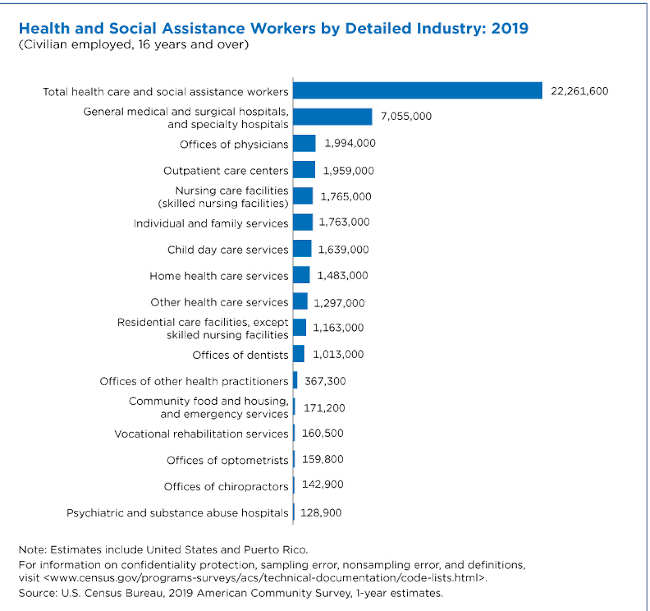
There were 22 million workers in the health care industry, one of the largest and fastest-growing sectors in the United States that accounts for 14% of all U.S. workers, according to the Census Bureau’s 2019 American Community Survey, or ACS.
The health care and social assistance industry sector includes establishments that provide medical care in hospitals, clinics and doctor’s offices, nursing and residential care, and social assistance such as family and childcare services.
In 2019, around seven million people worked at general medical, surgical or specialty hospitals; some two million at outpatient care centers and about 1.8 million worked at nursing care facilities.
Health care occupations
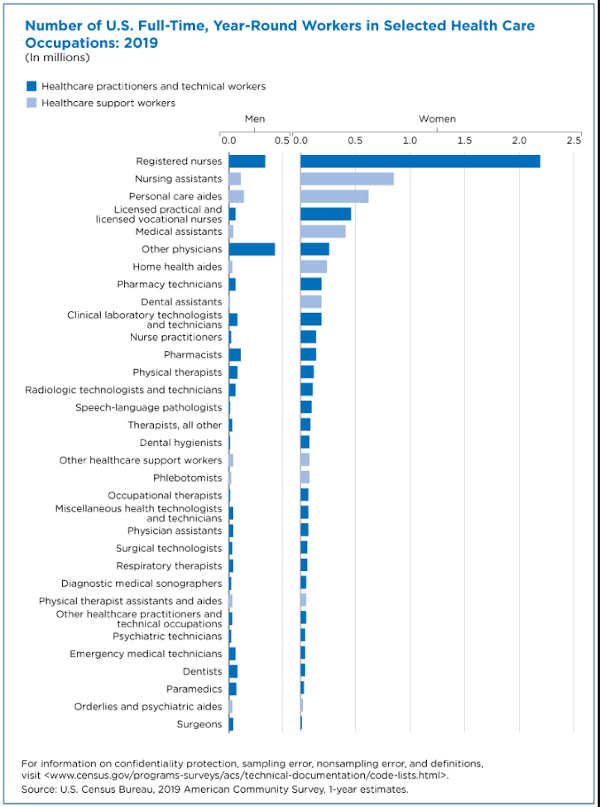
There were 9.8 million workers employed as health care technicians and practitioners, including physicians, surgeons, and registered nurses. About two-thirds were non-Hispanic White.
Another 5.3 million worked as nursing assistants, home health and personal care aides and in other health care support occupations. One-quarter of health care support workers were Black.
Women accounted for three-quarters of full-time, year-round health care workers.
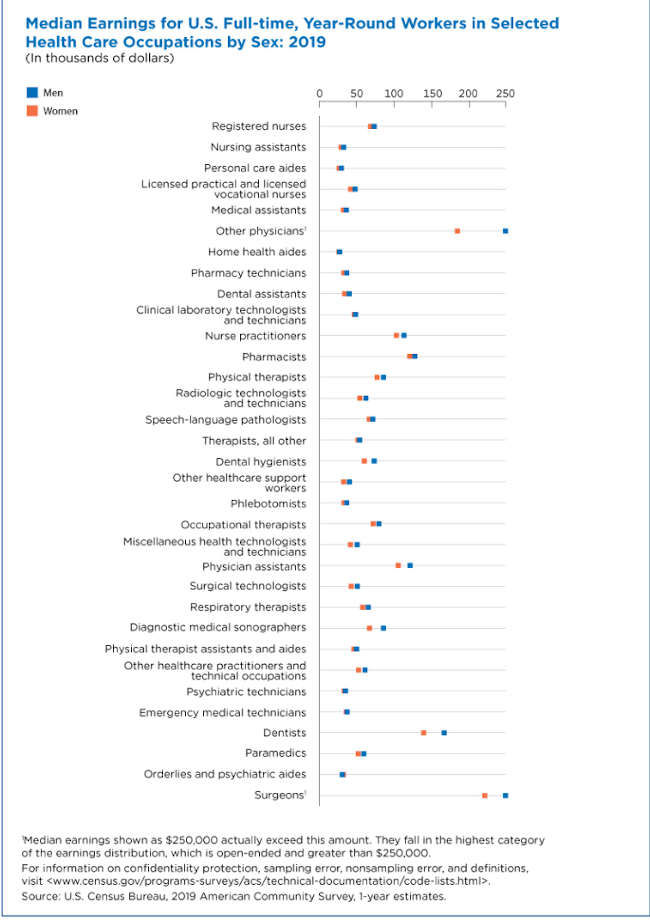
Women working as registered nurses, the most common health care occupation for women, had median annual earnings of $68,509.
In contrast, women working as nursing assistants, the most common health care support occupation, earned $28,686.
Among full-time, year-round health care workers, more than half of paramedics, surgeons, and other physicians were men. Median earnings for men in selected health care occupations ranged from under $30,000 for home health aides to over $250,000 for emergency medicine physicians.
Health care workers by state
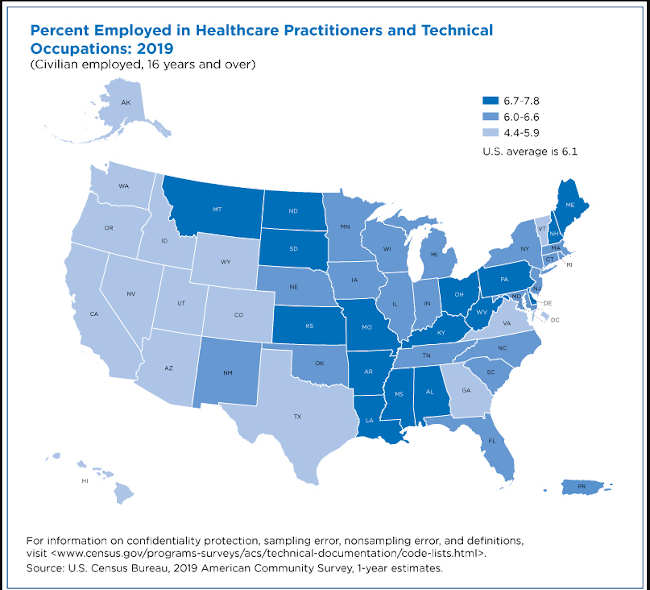
States with over 500,000 health care practitioners and technicians include California, Florida, New York, and Texas. However, the overall distribution of health care related workers varied by state.
For example, there were about six health care practitioners and technicians per 100 civilian-employed workers ages 16 and over in the United States.
While about 58,000 workers in West Virginia were health care practitioners and technicians, they accounted for nearly 8 out of 100 of the state’s workers ages 16 and over. In the District of Columbia, 4 out 100 workers, or just over 17,000, worked as health care practitioners.
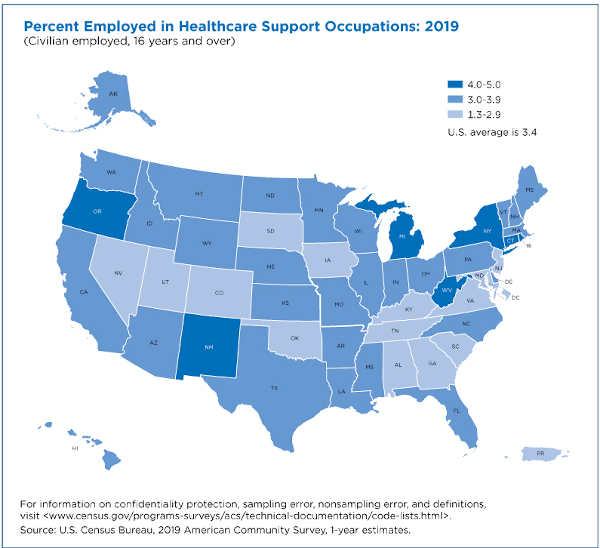
The number and distribution of health care support workers also varies across the United States.
California had 718,011 health care support workers — the largest number of any state — accounting for about 4 out of 100 workers in the state.
In contrast, nearly 5 out 100 workers (454,514) in New York had health care support jobs. Nearly 2 out 100 workers (just over 23,000) in Puerto Rico worked in a health care support occupation.
We used statistics from the 2019 American Community Survey to profile health care workers at the national and state level.
Data.census.gov provides selected labor force statistics. ACS estimates are based on data from a sample of housing units and people. Therefore, respondents may or may not live and work in the same geographic location as their employer.
Additional information on industry and occupational classifications is available from the Industry and Occupation Statistics Branch.
Lynda Laughlin, Augustus Anderson, Anthony Martinez, and Asiah Gayfield are survey statisticians in the Census Bureau’s Industry and Occupation Statistics Branch.
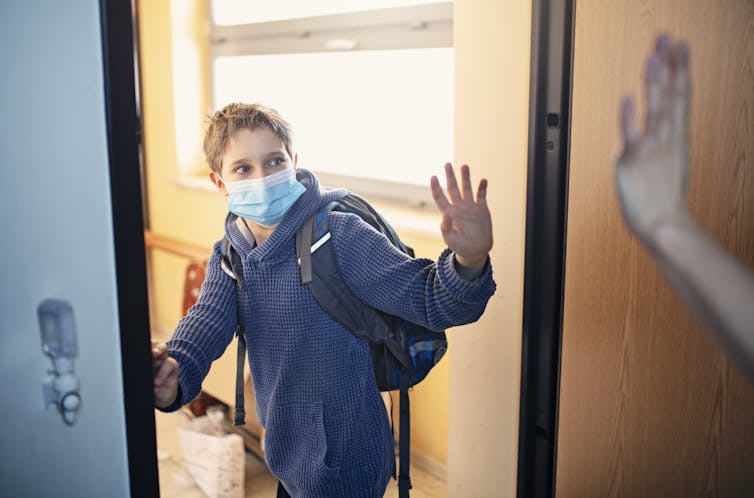
Pilar’s parents took all the recommended precautions to shield her from the dangers of COVID-19. They stayed at home, away from family, friends and group activities. Pilar had remained in virtual schooling throughout the pandemic as a first and then second grader.
As things began to open up again and her grandmother received the COVID-19 vaccine, Pilar’s parents began to hear a new signature phrase from her: “I don’t want to go.” Not to her gymnastics class, not to the grocery store, not even to the outdoor patio of her favorite restaurant.
After all the events of the past year, 7-year-old Pilar was apprehensive and worried about reengaging with the world outside her close-knit family. With the return to in-person school looming, Pilar’s parents were at a loss.
As researchers and clinicians who work directly with children and families experiencing anxiety, we have heard many versions of this story as the U.S. enters a new stage of the coronavirus pandemic. For some children, avoiding others has become understandably normal and the path back to pre-pandemic interaction may feel like a challenge to navigate.
Feeling stressed is normal these days
The pandemic led to abrupt and extended changes to families’ routines, including more isolation and removal from in-person schooling, that are associated with worsening mental health in young people.
Since March 2020, there’s been a significant increase in reported youth anxiety, particularly in relation to fears of the coronavirus, along with greater frustration, boredom, insomnia and inattention. Results of a survey from summer 2020 found that over 45% of adolescents reported symptoms of depression, anxiety and post-traumatic stress.
Parents are also struggling emotionally. Adults report increased symptoms of depression, especially those experiencing high levels of anxiety related to risk of coronavirus exposure or infection. Parents are at even greater risk for psychiatric illness, with many reporting less personal support since the arrival of COVID-19. Parents must juggle the demands of work, home management, virtual schooling and child behavior during this time of prolonged isolation. The majority of people are able to adapt to new and stressful situations, but some experience severe and extended psychological distress.
So, what can parents do to care for both themselves and their children as we gradually transition back to interacting in public?
Worried about catching COVID-19 out there
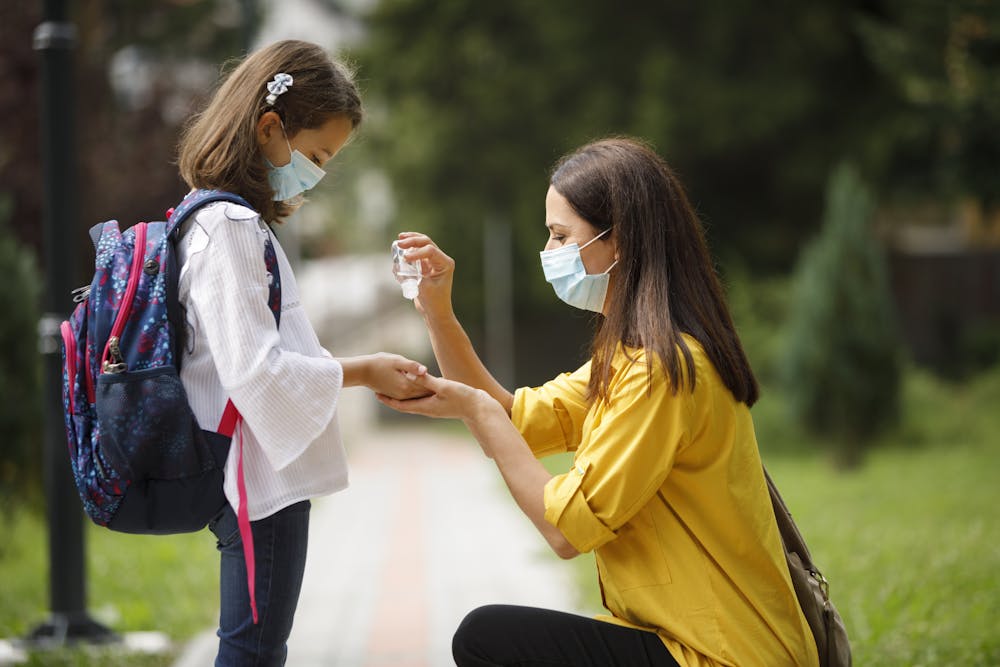
As children and adolescents begin to leave isolation and return to public spaces, they might worry more about becoming sick. Of course it’s entirely reasonable to have concerns about health and safety in the midst of an ongoing pandemic. Parents can listen to children’s worries and express understanding about them in a brief and age-appropriate way.
But parents should also pay attention to how intense these worries seem to be. Is your child getting caught up in excessive hand-washing and cleaning? Adamant about avoiding even public spaces that you deem safe? With kids who are struggling, parents can discuss the differences between appropriate and excessive safety precautions.
Remind your child that while it’s important to be safe, it is also important to adapt your safety strategies to new information and situations. Drawing distinctions between what you and your children can and cannot control when it comes to getting sick, limiting excessive reassurance about safety and having a plan to manage challenging situations as they occur can help your child feel ready to meet the world.
Not ready to socially reengage
Throughout the pandemic, some children have continued to attend school in person, while others have conducted most of their learning online. During the transition back into in-person environments, different people will adjust to engaging with others at different speeds.
For kids expressing worry about resuming face-to-face social interactions, parents can help ease the process by expressing empathy simply and clearly. This hasn’t been an easy time for anyone.
Assist your child in taking smaller, more manageable steps toward regular interactions. For example, your child may not feel ready to spend time with friends indoors, but they may feel comfortable meeting one pal at an outdoor park. This first step can get them started down a path to participating in additional activities with more friends or in more settings, where safe and appropriate. Setting incremental goals can help children feel more in control about facing uncomfortable situations where their initial response may be to avoid.
While it may feel easier in the moment to accommodate your child’s desire to avoid social situations that feel more awkward or overwhelming than before, it is important not to reinforce such behavior. Prolonged avoidance can lead to even more anxiety and less confidence in socializing.
Instead, acknowledge that engaging with others can feel hard when you’re out of practice. Help your child think about ways they’ve successfully coped with similar worries in the past. For example, you might ask how they handled adjusting to kindergarten when it felt new and different for them. What did they do then that felt particularly helpful for coping?
If they’re assuming the worst about upcoming contact with others, encourage flexibility and help them develop more realistic expectations. In so many cases, the anxious anticipation is much worse than the reality of a dreaded social interaction.

Resistant to a busier, more active schedule
For many families, the rise of the COVID-19 pandemic cleared calendars that were usually packed with obligations. Some kids might have welcomed a slower pace or gotten cozy with the more low-key bubble lifestyle. Now the shift back to a more active schedule might feel overwhelming.
If your child is having trouble handling the loss of downtime, work with them to strike their own version of “work-life balance.” Help your child create new routines that incorporate regular meals, good sleep hygiene, necessary breaks and organization around completing schoolwork. These steps can establish more structure where it may be lacking and help ease the burden.
[Get the best of The Conversation, every weekend. Sign up for our weekly newsletter.]
Remember to make new or renewed activities as fun as possible to promote buy-in from family members. While things will most certainly get busier, maintaining positive one-on-one or family time with your child will help them feel supported as they move into this next stage.
The good news is that many children like Pilar are highly resilient and recover well from difficult circumstances. The COVID-19 pandemic is something kids have been coping with, in some cases, for much of their young lives. It may take time and patience, but with positive support, even more anxious kids like Pilar can ease their way back to a comfortable, confident “new normal.”
Dominique A. Phillips, Ph.D. Student in Clinical Psychology, University of Miami and Jill Ehrenreich-May, Professor of Psychology and Director of the Child and Adolescent Mood and Anxiety Treatment Program, University of Miami
This article is republished from The Conversation under a Creative Commons license. Read the original article.
The commission will meet beginning at 6 p.m. in the council chambers at Clearlake City Hall, 14050 Olympic Drive.
The agenda can be viewed here.
Submit comments and questions in writing for commission consideration by sending them to
To give the planning commission adequate time to review your questions and comments, please submit written comments prior to 6 p.m. Tuesday, April 13.
The public may attend planning commission meetings in person. However, the council chambers will have limited capacity and attendees must adhere to masking and social distancing mandates.
Community members also can participate via Zoom and view the meeting live on the Youtube channels for the city of Clearlake or Lake County PEG TV.
A public hearing to discuss a use permit and development agreement to allow the establishment of a commercial cannabis microbusiness, Akwaaba LLC, at 3995 Alvita Drive, will be continued to the next regularly scheduled planning commission meeting no later than April 27.
On the consent agenda – items that are considered noncontroversial and accepted together on one vote – are the adoption of two resolutions finding conveyance of 14141 Lakeshore Drive and 16332 27th Ave. are consistent with the City's General Plan and exempt from the California Environmental Quality Act.
The commission’s members are Chair Kathryn Davis, Vice Chair Robert Coker and commissioners Lisa Wilson, Erin McCarrick and Fawn Williams.
mail Elizabeth Larson at
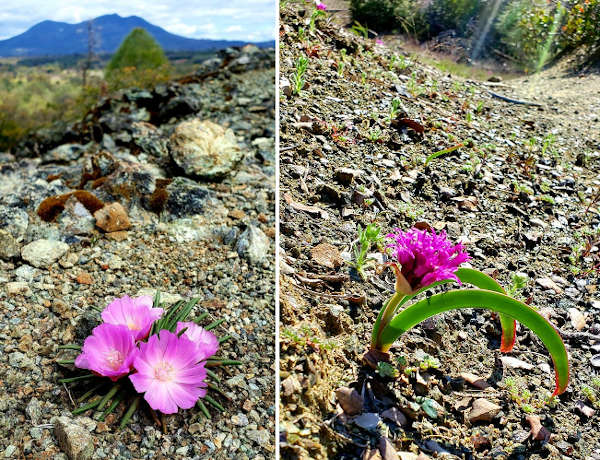
LAKE COUNTY, Calif. – With a background of slick green pebbles, the vibrant wildflowers on serpentine soils send a siren song of vibrant colors; many of them pink to fuschia, and all of them unique as the seemingly sprout from gravel.
Serpentine, the official California state rock is apple-green to black and is often speckled with light and dark colored areas as is found at Highland Springs Recreation outside of Lakeport, the McLaughlin Natural Reserve outside of Lower Lake, as well as many areas around Lake County and the state.
“Soil created from ultramafic rocks, serpentine soil, covers about 1% of California, but 13% of the state’s endemic plant species call it home,” according to the California Native Plant Society, and as serpentine rock is exposed to the elements of wind, sun, and rain – it decomposes to create a nutrient-deficient soil that not only stunts the growth of plants, but keeps other plants from successfully growing on these soils.
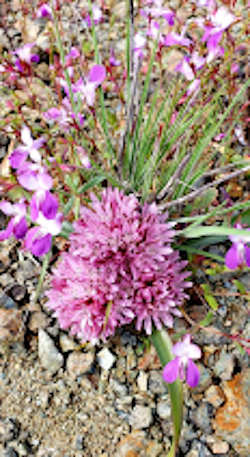
Composed of one or more of the three magnesium silicate minerals, "lizardite," "chrysotile" and "antigorite," the California Department of Conservation notes that, “Chrysotile in fibrous form is the most common type of asbestos. Asbestos is a term applied to a group of silicate minerals that readily separates into thin, strong, and flexible fibers that are heat resistant,” which made it popular to use in housing insulation and siding, as well as heat-resistant fabrics up to the late 20th century until it was phased out and banned due to the human health consequences of breathing in asbestos fibers; but serpentine soils are home for some stunning – but small – wildflowers.
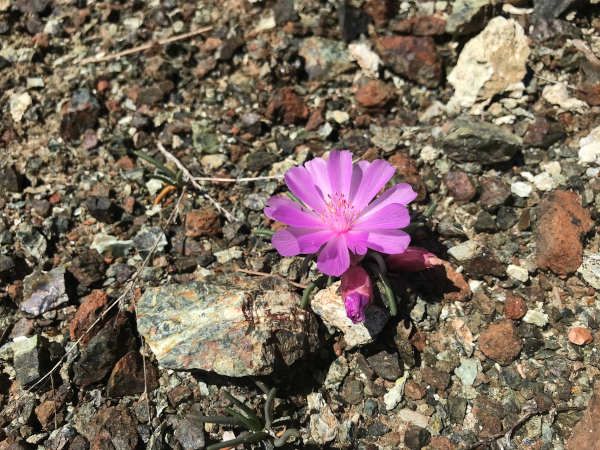
One of these serpentine-growing wildflowers is known as Bitterroot, which also is the state flower of Montana, with delicate pale to vibrant pink flowers growing on what appears to be a succulent-type plant. Only visible for a few months in early spring, the bitterroot plant withers away when the heat sets in above ground, but a long taproot lies in wait for the next spring to grow again.
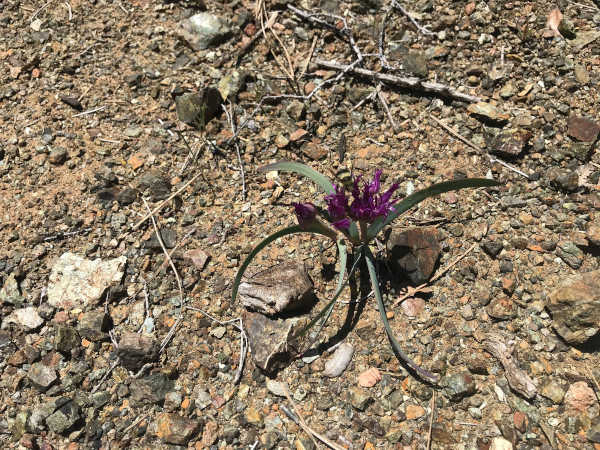
Wildflowers in the onion (allium) genus also are quite happy on serpentine soils and are related to the onions and garlic that we commonly eat, with California having over 45 different species of native onions, with 15 of those species growing in Lake County such as the scythe (or sickle) leaf onion, so named for the curve of the leaves similar to a scythe (a hand tool to cut grass or grains) and the Siskiyou onion (allium siskiyouense).
Highly developed in California, the allium genus often provides great drifts of color on dry slopes, ridges, and open fields with vivid shades of pink, rose, rose-purple, and wine.
Like bitterroot and other wildflowers growing on serpentine soils, the leaves die back after flowering as temperatures warm into mid-spring, with peak bloom time in late March through April – so #GetOutThere now and succumb to their siren song of spring!
Nurseries where you can purchase seeds/starts:
Bitterroot: https://calscape.org/nurseries.php?id=2168&showmap=1
Scythe leaf onion: https://calscape.org/nurseries.php?id=136&showmap=1
Siskiyou onion: Unknown at this time
Terre Logsdon is an environmentalist, certified master composter, and advocate for agroecology solutions to farming. An avid fan and protector of California wildflowers, plants, natural resources, and the environment, she seeks collaborative solutions to mitigate the effects of climate change. Kim Riley is retired, an avid hiker at Highland Springs, and has lived in Lake County since 1985. After 15 years of trail recovery and maintenance on the Highland Springs trails, she is now focused on native plants, including a native plant and pollinator garden on her property as well as promoting and preserving the beauty of the Highland Springs Recreation Area. Karen Sullivan has operated two nurseries to propagate and cultivate native plants and wildflowers, has lived in Kelseyville for the past 30 years, rides horses far and wide to see as many flowers as possible, and offers native plants and wildflowers for sale to the public. You can check her nursery stock here: https://calscape.org/nurseryplants/416/ord-popular/np-0/page-all?fbclid=IwAR1qIxpajtUTpRKm4yRl_GjZK4h4El3yJNU4vojBg_C9d3Hdp-5_qJ1UMYI. They are collaborating on a book, Highland Springs Recreation Area: A Field Guide, which will be published in the future. In the meanwhile, please visit https://www.facebook.com/HighlandSpringsNaturalists and https://www.facebook.com/HighlandSpringsRecreationArea.
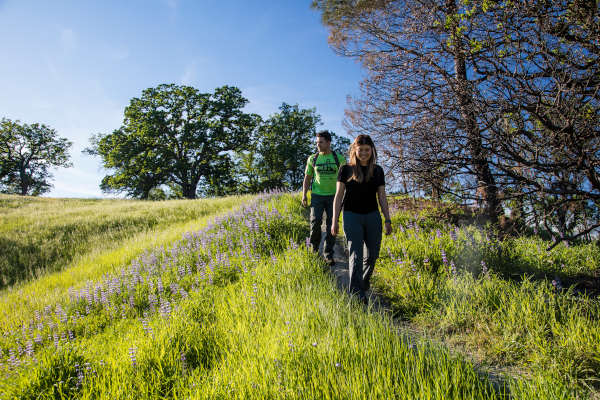
LAKE COUNTY, Calif. – The Bureau of Land Management Ukiah Field Office will host a second virtual Berryessa Snow Mountain National Monument Trails and Travel Management Planning Workshop on Wednesday, April 21, from 5:30 to 8 p.m.
Similar to the first workshop, the public will be able to use an online map and survey tools to help the BLM build a database of existing trails and routes within the monument, understand how each route is used and the amount of use.
During the workshop, the BLM will provide an overview of public input received to date, summarize the points of interest identified on the interactive map, explain the travel management planning process and timeline, as well as highlight the additional public input still needed.
Travel Management Planning can help the BLM provide better access to public lands, improve route connectivity to ensure a more enjoyable experience, increase efficiency and reduce impacts to the environment.
The BLM Trails and Travel Management Planning Workshop will focus on identifying existing routes and is designed to engage stakeholders and members of the public about the vision for travel management at the Berryessa Snow Mountain National Monument.
The plan will be important for designating a wide variety of roads and trails for motorized, non-motorized and non-mechanized recreational opportunities.
This summer, when scoping begins for an environmental assessment, the public will have an opportunity to propose new routes within the monument.
The BLM and Mendocino National Forest co-manage the Berryessa Snow Mountain National Monument and believe partnerships and inclusion are vital to managing sustainable, working public lands. This workshop and associated planning efforts are specific to travel management on public lands administered by the BLM within the monument.
To participate in the workshop, please register at least 30 minutes prior to the event at https://register.gotowebinar.com/register/5815845177969242640.
Please contact the BLM for reasonable accommodations to participate.
For specific questions, please contact Rebecca Carr Wong at 707-468-4023 or