 How to resolve AdBlock issue?
News
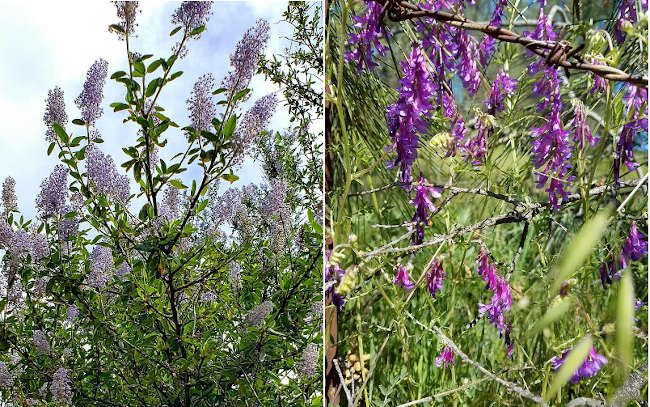
LAKE COUNTY, Calif. — There’s a purple haze on the hills and in the valleys; one is a native flowering shrub (usually on the hills), and one is anon-native invasive vine (usually in the valleys) and both are blooming right now giving a lilac tinge to spring.
Ceanothus is a California native with 26 different species in Lake County alone according to the California Native Plant Society, with 15 of those species with pale lilac to deep violet flowers; others are white, cream-colored, yellow or a mixture.
It is commonly called “wild lilac” that infuses the hillsides and chaparral areas with sweet aromas in the spring. So, if you want to attract the birds and the bees to your landscaping, any species of ceanothus are one of the most beautiful — and important — native plants to grow for them.
In addition to flowering shrubs that can reach heights over 10’ tall, there are also some that grow like prickly ground cover with holly-shaped evergreen leaves known as Mahala mats, which are well adapted to our clay-heavy soils.

In addition to attracting birds and bees, ceanothus also thrives by neglecting it (no need to irrigate once established) is deer resistant (and the less nutrients and moisture in the soil, the more deer avoid it), and according to the UC Sonoma County Master Gardeners, has historic uses as a fresh or dried flowers, with some varieties used for lathering into soap, providing relief from poison oak, eczema, and rash. If you want to learn more about Ceanothus, we recommend reading Ceanothus by Davis Fross and Dieter Wilken (Timber Press, 2006).
The other haze of purple (well, technically, “purple” isn’t a color because there is no beam of pure or wavelength that corresponds to purple. “Purple” is a name and color invented by the Binney & Smith Crayola Crayon Company to replace “violet” — which is an actual color), is hairy vetch.

Hairy vetch is a nitrogen fixer, which means they harbor a bacteria in their roots that convert nitrogen from the atmosphere into a form that plants can absorb and use, so farmers and gardeners have planted this nonnative vetch to use as a cover crop to increase the nitrogen in their soils for increased plant growth, so it has naturalized across Lake County and California. However, it has a downside for equestrians.
Historically used in roadside revegetation projects, hairy vetch has encroached on pasturelands and valleys throughout Lake County, which can be a problem for horses who graze on the plants and cause them to founder, so best to remove it and replant other native vegetation.

Enjoy the purple haze of hills and valleys — for spring is waning and the haze will soon disappear ...
Nurseries where you can purchase seeds/starts:
Ceanothus: See all of the species, then follow the link for nurseries https://calscape.org/loc-40.7449,-122.9759 (ceanothus)/?&poploc=1
Hairy Vetch: Invasive; remove it.

Terre Logsdon is an environmentalist, certified master composter, and advocate for agroecology solutions to farming. An avid fan and protector of California wildflowers, plants, natural resources, and the environment, she seeks collaborative solutions to mitigate the effects of climate change. Kim Riley is retired, an avid hiker at Highland Springs, and has lived in Lake County since 1985. After 15 years of trail recovery and maintenance on the Highland Springs trails, she is now focused on native plants, including a native plant and pollinator garden on her property as well as promoting and preserving the beauty of the Highland Springs Recreation Area. Karen Sullivan has operated two nurseries to propagate and cultivate native plants and wildflowers, has lived in Kelseyville for the past 30 years, rides horses far and wide to see as many flowers as possible, and offers native plants and wildflowers for sale to the public. You can check her nursery stock here. They are collaborating on a book, Highland Springs Recreation Area: A Field Guide, which will be published in the future. In the meanwhile, please visit https://www.facebook.com/HighlandSpringsNaturalists and https://www.facebook.com/HighlandSpringsRecreationArea.


The COVID-19 pandemic has revealed uncomfortable and distressing truths about American society: namely, the struggle many Americans face just getting by.
Yet, while the pervasive food insecurity that has always existed in the U.S. became more visible, how the problem disproportionately affects people with disabilities has received less attention.
As an ethnographer of food, poverty and welfare, I study how people respond to economic scarcity through caregiving networks. Although caregiving networks like neighborhood mutual aid groups and pop-up food banks quickly emerged to support vulnerable groups during the pandemic, people with disabilities have continued to face additional challenges.
High risk of food insecurity
An estimated 25% of U.S. adults have some form of physical or intellectual disability. Functional disabilities – such as the inability to walk more than a quarter of a mile, climb stairs or lift objects weighing over 10 pounds – are among the most common.
People with disabilities are more likely to experience other chronic health conditions such as anxiety and depression, arthritis and cardiovascular problems. They also have higher rates of unemployment and economic instability. In 2019, the poverty rate for Americans with disabilities was almost 27% – more than double the rate of those without disabilities.
Collectively, these factors put them at greater risk for food insecurity, which the USDA defines as limited or uncertain access to adequate food.
Yet people with disabilities are underrepresented in accounts of pandemic-related poverty and food insecurity. Given their reduced access to food shopping, they are less likely to be included in research on disruptions to the food system. This is prompting demands from health researchers and disability activists for greater attention and solutions.
Shopping with a disability
Even before the pandemic, limited physical access to food shopping and preparation for persons with disabilities led to greater reliance on precooked and heavily processed foods.
In the early stages of the pandemic, many Americans endured long lines and stocked up on groceries to avoid repeat trips to the stores. But these inconveniences – as well as going from store to store in search of scarce goods – can be physically and emotionally grueling for people with limited mobility or stability, or who are easily exhausted. And although many supermarkets created special shopping hours for elderly and disabled customers, getting there at specific times required people to either be able to drive or navigate the scheduling uncertainties of public transportation.
Once inside stores, disabled persons are further disenfranchised by the physical limitations of shopping. Shopping for one to two weeks – as public health officials had recommended – is especially difficult while using a wheelchair or motorized scooter that holds only a small basket of goods. The same is true for pushing a cart or carrying a basket while using a walker or cane.
Customers who are able to drive themselves to shop may also find themselves unable to get their items from the store into their vehicles. Stores that once offered assistance stopped these services in order to protect their employees.
Food donation and delivery programs attempted to meet some of these needs by providing meals and groceries for several days or even weeks at time. Despite these efforts, demand outstripped the availability of both food supplies and volunteers.
For some individuals with disabilities, going to a food bank or community service center was also an important social encounter – an opportunity to visit friends, access news and interact with social workers. Once those programs were shuttered or made contactless, many people were further isolated in their homes. Studies have shown that social isolation among people with disabilities reduces not only access to food but also the motivation to prepare and eat food.
While new digital technologies have allowed customers to outsource their food shopping to gig workers, they require basic infrastructure, equipment and knowledge that may be unaffordable to low-income people with disabilities. Moreover, reliance on others to choose one’s food can cause people to feel a loss of control and autonomy over their food choices.
In many ways, the stories that have been most visible around food insecurity have been those of the people who were in fact able to stand in lines, stock up on groceries and even barter with neighbors for supplies. During a pandemic that has made life much more difficult for billions of people around the world, I believe the experiences of disabled persons have become further marginalized and less visible.
[Insight, in your inbox each day. You can get it with The Conversation’s email newsletter.]
Melissa L. Caldwell, Professor of Anthropology, University of California, Santa Cruz
This article is republished from The Conversation under a Creative Commons license. Read the original article.
Dogs available for adoption this week include mixes of Belgian Malinois, German Shepherd, pit bull and Rottweiler.
Dogs that are adopted from Lake County Animal Care and Control are either neutered or spayed, microchipped and, if old enough, given a rabies shot and county license before being released to their new owner. License fees do not apply to residents of the cities of Lakeport or Clearlake.
The following dogs at the Lake County Animal Care and Control shelter have been cleared for adoption (additional dogs on the animal control Web site not listed are still “on hold”).
Call Lake County Animal Care and Control at 707-263-0278 or visit the shelter online at http://www.co.lake.ca.us/Government/Directory/Animal_Care_And_Control.htm for information on visiting or adopting.
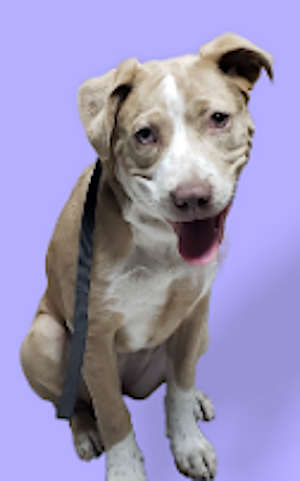
‘Abigail’
“Abigail” is a young female pit bull terrier with a short tan and white coat.
She is in kennel No. 19, ID No. 14552.
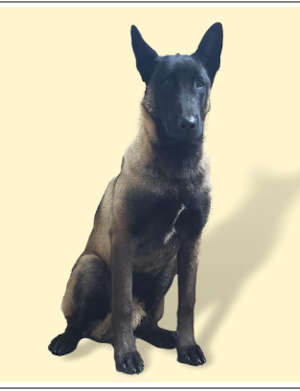
Male Belgian Malinois
This young male Belgian Malinois has a short black and tan coat.
He is in kennel No. 20, ID No. 14521.
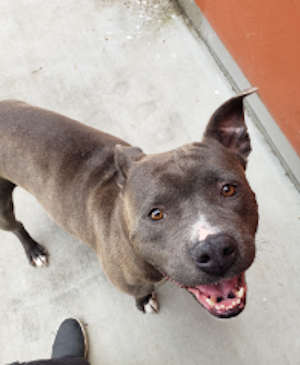
Female pit bull terrier
This female pit bull terrier has a short blue and white coat.
She is in kennel No. 22, ID No. 14486.
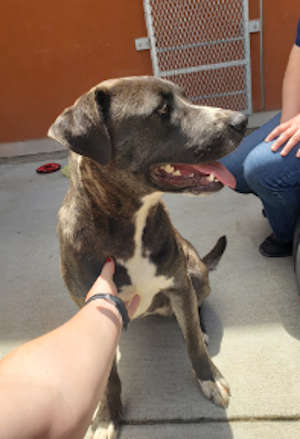
Female pit bull terrier
This female pit bull terrier has a short black and white coat.
She is in kennel No. 24, ID No. 14536.
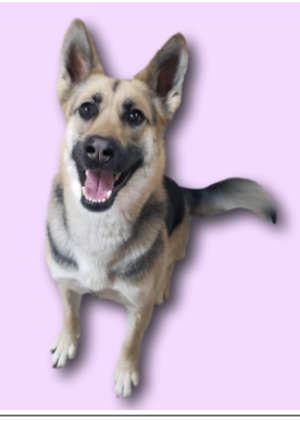
‘Ella’
“Ella” is a female German Shepherd with a medium-length tan coat.
She is in kennel No. 25, ID No. 14510.
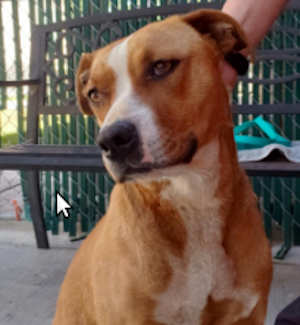
Female pit bull terrier
This female pit bull terrier has a short red and white coat.
She is in kennel No. 26, ID No. 14550.

Rottweiler-pit bull mix
This female Rottweiler-pit bull mix has a short black coat.
She has been spayed.
She is in kennel No. 27, ID No. 14551.
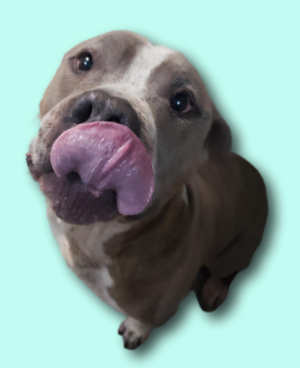
‘Brutus’
“Brutus” is a male pit bull terrier with a short gray and white coat.
He is in kennel No. 28, ID No. 14507.
Email Elizabeth Larson at

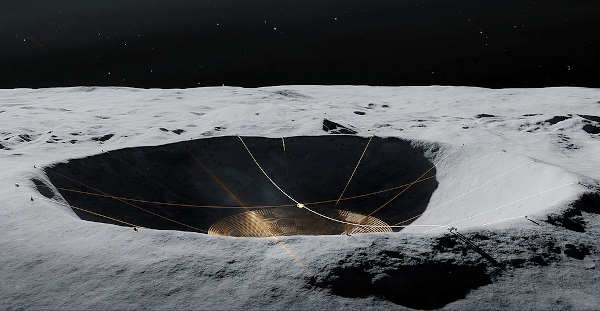
The early-stage NASA concept could see robots hang wire mesh in a crater on the Moon’s far side, creating a radio telescope to help probe the dawn of the universe.
After years of development, the Lunar Crater Radio Telescope, or LCRT, project has been awarded $500,000 to support additional work as it enters Phase II of NASA’s Innovative Advanced Concepts, or NIAC, program.
While not yet a NASA mission, the LCRT describes a mission concept that could transform humanity’s view of the cosmos.
The LCRT’s primary objective would be to measure the long-wavelength radio waves generated by the cosmic Dark Ages – a period that lasted for a few hundred million years after the Big Bang, but before the first stars blinked into existence.
Cosmologists know little about this period, but believe the answers to some of science’s biggest mysteries may be locked in the long-wavelength radio emissions generated by the gas that would have filled the universe during that time.
“While there were no stars, there was ample hydrogen during the universe’s Dark Ages – hydrogen that would eventually serve as the raw material for the first stars,” said Joseph Lazio, radio astronomer at NASA’s Jet Propulsion Laboratory in Southern California and a member of the LCRT team. “With a sufficiently large radio telescope off Earth, we could track the processes that would lead to the formation of the first stars, maybe even find clues to the nature of dark matter.”
Radio telescopes on Earth can’t probe this mysterious period because the long-wavelength radio waves from that time are reflected by a layer of ions and electrons at the top of our atmosphere, a region called the ionosphere.
Random radio emissions from our noisy civilization can interfere with radio astronomy as well, drowning out the faintest signals.
But on the Moon’s far side, there’s no atmosphere to reflect these signals, and the Moon itself would block Earth’s radio chatter. The lunar far side could be prime real estate to carry out unprecedented studies of the early universe.
“Radio telescopes on Earth cannot see cosmic radio waves at about 33 feet or longer because of our ionosphere, so there’s a whole region of the universe that we simply cannot see,” said Saptarshi Bandyopadhyay, a robotics technologist at JPL and the lead researcher on the LCRT project. “But previous ideas of building a radio antenna on the Moon have been very resource intensive and complicated, so we were compelled to come up with something different.”

Building telescopes with robots
To be sensitive to long radio wavelengths, the LCRT would need to be huge. The idea is to create an antenna over half-a-mile wide in a crater over 2 miles wide.
The biggest single-dish radio telescopes on Earth – like the 1,600-foot Spherical Telescope, or FAST, in China and the now-inoperative 1,000-foot-wide Arecibo Observatory in Puerto Rico – were built inside natural bowl-like depressions in the landscape to provide a support structure.
This class of radio telescope uses thousands of reflecting panels suspended inside the depression to make the entire dish’s surface reflective to radio waves.
The receiver then hangs via a system of cables at a focal point over the dish, anchored by towers at the dish’s perimeter, to measure the radio waves bouncing off the curved surface below.
But despite its size and complexity, even FAST is not sensitive to radio wavelengths longer than about 14 feet.
With his team of engineers, roboticists, and scientists at JPL, Bandyopadhyay condensed this class of radio telescope down to its most basic form.
Their concept eliminates the need to transport prohibitively heavy material to the Moon and utilizes robots to automate the construction process.
Instead of using thousands of reflective panels to focus incoming radio waves, the LCRT would be made of thin wire mesh in the center of the crater.
One spacecraft would deliver the mesh, and a separate lander would deposit DuAxel rovers to build the dish over several days or weeks.
DuAxel, a robotic concept being developed at JPL, is composed of two single-axle rovers (called Axel) that can undock from each other but stay connected via a tether. One half would act as an anchor at the rim of the crater as the other rappels down to do the building.
“DuAxel solves many of the problems associated with suspending such a large antenna inside a lunar crater,” said Patrick Mcgarey, also a robotics technologist at JPL and a team member of the LCRT and DuAxel projects. “Individual Axel rovers can drive into the crater while tethered, connect to the wires, apply tension, and lift the wires to suspend the antenna.”
Identifying challenges
For the team to take the project to the next level, they’ll use NIAC Phase II funding to refine the capabilities of the telescope and the various mission approaches while identifying the challenges along the way.
One of the team’s biggest challenges during this phase is the design of the wire mesh. To maintain its parabolic shape and precise spacing between the wires, the mesh must be both strong and flexible, yet lightweight enough to be transported.
The mesh must also be able to withstand the wild temperature changes on the Moon’s surface – from as low as minus 280 degrees Fahrenheit to as high as 260 degrees Fahrenheit – without warping or failing.
Another challenge is to identify whether the DuAxel rovers should be fully automated or involve a human operator in the decision-making process.
Might the construction DuAxels also be complemented by other construction techniques? Firing harpoons into the lunar surface, for example, may better anchor the LCRT’s mesh, requiring fewer robots.
Also, while the lunar far side is “radio quiet” for now, that may change in the future. China’s space agency currently has a mission exploring the lunar far side, after all, and further development of the lunar surface could impact possible radio astronomy projects.
For the next two years, the LCRT team will work to identify other challenges and questions as well. Should they be successful, they may be selected for further development, an iterative process that inspires Bandyopadhyay.
“The development of this concept could produce some significant breakthroughs along the way, particularly for deployment technologies and the use of robots to build gigantic structures off Earth,” he said. “I’m proud to be working with this diverse team of experts who inspire the world to think of big ideas that can make groundbreaking discoveries about the universe we live in.”
NIAC is funded by NASA’s Space Technology Mission Directorate, which is responsible for developing the new cross-cutting technologies and capabilities needed by the agency.
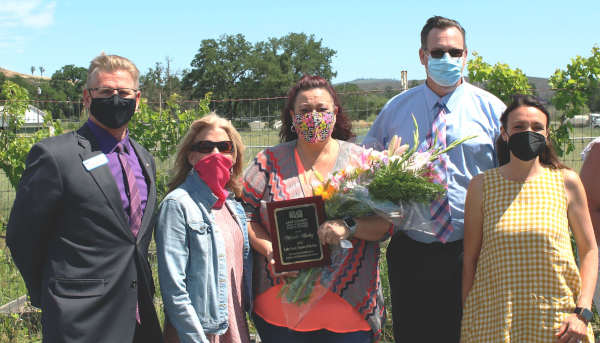
From left to right, Lake County Superintendent of Schools Brock Falkenberg, Minnie Cannon Elementary School Principal Brandy Fischer, Lake County Teacher of the Year 2021 Michelle Mackey, Middletown Unified School District Superintendent Michael Cox and Middletown Unified School District School Board President Misha Grothe. Photo courtesy of the Lake County Office of Education.
 LAKE COUNTY, Calif. – Michelle Mackey, sixth grade teacher at Minnie Cannon Elementary School in Middletown, has been named Lake County Teacher of the Year 2021.
“Michelle Mackey is a spectacular teacher that only gets better every year,” said Brandy Fischer, Minnie Cannon Elementary School principal.
Mackey received notification of the honor on Thursday, May 6, at an outdoor assembly at Minnie Cannon Elementary School.
Her students, administration, school board president and family members looked on as Lake County Superintendent of Schools Brock Falkenberg presented a surprised Mackey with a plaque and flowers.
Mackey was chosen as the Middletown Unified School District Teacher of the Year in March.
In April, Mackey participated in an application process and interview at the Lake County Office of Education. There she was chosen from a group of four other Lake County District Teachers of the Year to represent Lake County at the California Teacher of the Year competition this summer.
The other district teachers of the year for 2021 include Jim Wenckus, Kelseyville Unified School District; Andrea Pullman, Konocti Unified School District; Jodi Mansell, Lakeport Unified School District; Stella Winkler, Lucerne Elementary School District; and Angel Hayenga, Upper Lake Unified School District.
“Each year, I feel privileged to attend these interviews. I was impressed by each and every teacher represented,” said Falkenberg. “They are all winners.”
Mackey began her teaching career after volunteering in the classroom when her children were young. She was inspired by her children’s preschool teacher, Brandy Fischer, who is now principal at Minnie Cannon.
Mackey then went on to earn her bachelor’s degree, teaching credential in both multiple subject and special education, and a master’s degree in autism spectrum disorder.
Besides making advances in her own education, Mackey also believes in helping others achieve their education goals. She currently mentors four beginning teachers, and two student teachers joined her in the classroom this year.
But it is Mackey’s connection to her students that makes her stand out.
“She is iconic in Middletown. She is known as the teacher who can meet each student at their individual level and get them to where they need to be,” said Middletown Unified School District Superintendent Michael Cox.
Mackey will spend this summer preparing her application for the California Teacher of the Year Program, where she will be competing with teachers from some of the biggest school districts in the state.
The California Department of Education will announce five California Teachers of the Year in October 2021. Mackey hopes to be one of those five.
Lake County has had three California Teachers of the Year in the last 16 years.
Erica Boomer from Upper Lake Unified School District was named a California Teacher of the Year 2019.
Jennifer Kelly from the Middletown Unified School District received the honor in 2011 and Alan Siegel from Konocti Unified School District received the honor in 2005.
Falkenberg acknowledges the high success rate Lake County teachers have had in the California Teacher of the Year program.
“Our Lake County students are being served well by some of the best teachers in our state. That’s a very impressive thing,” he said.
The Lake County Teacher of the Year is a program administered through the Lake County Office of Education and the California Department of Education.
For more information about Michelle Mackey and the Lake County District Teachers of the Year, visit www.lakecoe.org/TOY.
Martin took the action in his capacity as director of Emergency Services, citing the drought this year and the fact that the state of California is in the second consecutive year of extremely dry conditions due to historically low rainfall totals.
Martin issued the emergency proclamation on Thursday night. It will be considered for ratification by the Board of Supervisors on Tuesday at 11 a.m.
In his two terms as sheriff, he’s issued numerous emergency declarations for fires, storms and floods, public safety power shut-offs and the pandemic. This is his first emergency declaration for drought.
The Board of Supervisors last approved a drought emergency declaration in March 2014.
“The water levels today are just slightly lower than they were in 2014,” although not as low as the 1970s, Martin said.
Lake County Water Resources reported Clear Lake was at 0.77 feet Rumsey — the special measure for Clear Lake — on Friday, compared to 4.43 feet Rumsey on May 7 of last year.
On March 4, 2014, when the board approved the last drought emergency, the lake was 1.60 feet Rumsey.
On April 21, Gov. Gavin Newsom proclaimed a regional drought emergency for the Russian River watershed in Sonoma and Mendocino counties, where reservoirs are at record lows.
Martin said his new proclamation doesn’t do anything but declare an emergency, and he’ll discuss what that means with the board on Tuesday.
“This is meant to start triggering some things,” Martin said.
He said he will ask the board to be able to close county-maintained boat ramps either at his discretion or that of Public Services Director Lars Ewing, with approval from Public Works Director Scott De Leon.
The ramps that could be closed due to the low-water conditions are at Lakeside County Park, Lucerne Harbor Park and Clearlake Oaks, among others, Martin said. The county also will ask the cities of Clearlake and Lakeport to monitor their ramps and water levels.
The conditions that could lead to closures at some point will be different for each of the ramps, Martin said, adding that he wants to keep recreation opportunities available for people as long as possible.
Martin said there are parts of the lake that are already exposed this early in the year and some boat ramps are no longer usable. He said they’ve had reports of boats running aground or hitting rocks and they don’t want people to damage their boats or trailers, or get stuck.
The sheriff’s Marine Patrol division is already having its own problems with storing boats, getting them into and out of the water, and even reaching some areas due to the low water levels, Martin said.
He said a boater recently ran aground in the Rodman Slough about 300 yards out. “We can’t get in there with our regular boat patrol vessels.”
On Tuesday, Martin said De Leon will give a presentation comparing the current lake level to levels in 2014 and the late 1970s drought. He’ll also give a projection of how the lake level will change in the months to come, when evaporation is expected to draw it lower.
Martin said another goal of the proclamation is to raise the public’s awareness and ask community members to take their own initiatives to conserve water and pay attention to conditions.
He said he hopes to minimize the actions that they could be forced to take to save water.
“I don't know what all the impacts are going to be but I know there’s going to be a bunch,” he said, noting potential impacts ranging from drinking water to water supply for farming and cannabis production.
The language of the proclamation follows.
WHEREAS, Chapter 6, Article 1 of the Lake County Code empowers the Director of Emergency Services to proclaim the existence or threatened existence of a local emergency when Lake County is affected by, or likely to be affected by a public calamity and the County Board of Supervisors is not in session, and;
WHEREAS, the Sheriff, as Director of Emergency Services of Lake County does hereby find that conditions of extreme peril to the safety of persons and property have arisen within the County of Lake, caused by extreme drought conditions since March 5, 2021; and
That these conditions are or are likely to be beyond the control of the services, personnel, equipment, and facilities of Lake County, and;
That the County Board of Supervisors of the County of Lake is not in session and cannot immediately be called into session;
NOW, THEREFORE, IT IS HEREBY PROCLAIMED that a local emergency now exists throughout Lake County, and;
IT IS FURTHER PROCLAIMED AND ORDERED that during the existence of said local emergency the powers, functions, and duties of the emergency organization of Lake County shall be those prescribed by state law, by ordinances, and resolutions of the County; and that these emergency proclamation shall expire seven days after issuance unless confirmed and ratified by the Lake County Board of Supervisors.
AND, IT IS FURTHER PROCLAIMED AND ORDERED that said local emergency shall be deemed to continue to exist until its termination is proclaimed by the Lake County Board of Supervisors.
Email Elizabeth Larson at