 How to resolve AdBlock issue?
News
The formation of this task force was made possible by the governor’s signing of AB 3121, written by then-Assemblymember Shirley Weber (D-San Diego), which established a nine-member task force to inform Californians about slavery and explore ways the state might provide reparations.
“California is leading the nation, in a bipartisan way, on the issue of reparations and racial justice, which is a discussion that is long overdue and deserves our utmost attention,” said Gov. Newsom.
Newsom pointed to his signing into law a number of key bills focused on leveling the playing field in society and ensuring that everyone has a fair shot at achieving the California dream.
He said Friday’s appointment “of individuals with an expansive breadth of knowledge, experiences and understanding of issues impacting the African American community is the next step in our commitment as a state to build a California for all.”
The five individuals selected by the governor to serve on this task force represent diverse backgrounds and meet the statutes required by law, which include choosing one candidate from the field of academia with expertise in civil rights and an additional two appointees selected from major civil society and reparations organizations that have historically championed the cause of reparatory justice.
Other key factors considered for committee candidates included a background in economics and community development, health and psychology, law and criminal justice, faith-based and community activism, and an expertise in the historic achievement of reparatory justice.
The Task Force to Study and Develop Reparation Proposals for African Americans will have a total of nine members, with two individuals appointed by the Senate and two members appointed by the Assembly.
The task force will select its own chair and vice chair and their work will be staffed by the Attorney General’s Office. Members will meet over the next year and conclude their work with a written report on their findings, along with recommendations which will be provided to the Legislature.
The positions do not require Senate confirmation and there is per diem compensation for not more than 10 meetings.
After months of interviews and careful consideration, the governor made the following appointments.
All of the appointees are Democrats.
Dr. Cheryl Grills
Cheryl N. Grills, Ph.D., 62, of Inglewood, was recently chosen to serve as president’s professor at Loyola Marymount University, a designation bestowed upon LMU’s most distinguished faculty who already hold the rank of tenured full professor and are acknowledged leaders in their respective fields, having achieved national and international recognition of their work.
In addition to her community-based research, her work focuses on racial stress and trauma, implicit bias and community healing focused on the needs of people of African ancestry.
Grills has been a professor of psychology and director of Psychology of the Applied Research Center at Loyola Marymount University since 1987.
She is commissioner and vice chair of the LA County Sybil Brand Commission, where she has served since 2011.
She was president of The Association of Black Psychologists from 2011 to 2013. She is the leader of the Global Emotional Emancipation Circles Training Team, where she has served since 2009.
She is the current lead on a national Impact of COVID-19 on Communities of Color Needs Assessment for several Congressional Caucuses and national civil rights organizations.
Grills was leader of the Emotional Emancipation Circle process under the Community Healing Network in 2009.
Grills earned a Doctor of Philosophy degree in clinical psychology from the University of California, Los Angeles and a bachelor’s degree from Yale University with a double major in Psychology and African American Studies.
Dr. Amos Brown
Amos C. Brown, Th.D., 80, of San Francisco, is a renowned civil rights leader who studied under Dr. Martin Luther King, Jr. and was later arrested with King at a lunch counter sit-in in 1961 and joined the Freedom Riders who protested segregation in the South.
Brown was awarded the Martin Luther King Jr. Ministerial Award for outstanding leadership and contributions to the Black church in America and was also inducted into the International Hall of Fame at the King International Chapel at Morehouse College.
Brown has been a pastor at the Third Baptist Church of San Francisco since 1976. He was a pastor at Pilgrim Baptist Church from 1970 to 1976 and at Saint Paul’s Baptist Church from 1966 to 1970.
Brown is president of the San Francisco Branch and a member of the board of directors of the NAACP.
He earned a Doctor of Theology degree from United Theological Seminary and a Master of Theology degree from Crozer Theological Seminary.
Lisa Holder
Lisa Holder, J.D., 49, of Los Angeles, has dedicated her career to racial and social justice and systems change.
Holder is a nationally recognized, award-winning trial attorney who has been identified as a “Super Lawyer” by Los Angeles Magazine for four consecutive years.
Holder has been counsel at Equal Justice Society since 2016 and principal attorney at the Law Office of Lisa Holder since 2010.
She was lecturer in law and adjunct professor at UCLA School of Law from 2017 to 2019. Holder was adjunct professor at Occidental College from 2012 to 2016 and associate attorney at Hadsell Stormer Keeny Richardson from 2005 to 2009.
Holder was deputy alternate public defender at the Office of the Los Angeles County Alternate Public Defender from 2001 to 2005.
She was awarded a Soros Justice Fellowship through the Open Society Foundation in 2001. She was an investigator and analyst at the Neighborhood Defender Service of Harlem from 1995 to 1997.
Holder is a steering committee member of the Equal Opportunity 4 All Coalition and Vice Chair of the Child Care Law Center.
She earned a Juris Doctor degree from the New York University School of Law and a bachelor’s degree from Wesleyan University.
Don Tamaki
Donald K. Tamaki, J.D., 69, of Piedmont, is known for his historic work serving on the pro bono legal team that reopened the landmark Supreme Court case of Korematsu v. United States, overturning Fred Korematsu’s conviction for refusing incarceration during the mass roundup and internment of Japanese Americans during World War II and providing a key legal foundation in the decades long Japanese American Redress Movement.
He is also co-founder of StopRepeatingHistory. Org, a campaign focused on drawing parallels between the incarceration of Japanese Americans during World War II and the targeting of minority groups based on race or religion.
The campaign’s current work is focused on the intersectionality of the Japanese American Redress Movement and that of African American Reparations, with an emphasis on creating solidarity and promoting public awareness on the importance of advancing reparations for African Americans.
Tamaki has been senior counsel at Minami Tamaki LLP since 2020, where he also served as managing partner from 2006 to 2020 and was Partner from 1987 to 2020. He was owner of the Law Offices of Donald K. Tamaki from 1984 to 1987.
Tamaki was executive director at the Asian Law Caucus — Advancing Justice from 1980 to 1984. He was a Reginald Heber Smith Staff Attorney at Community Legal Services of San Jose from 1976 to 1979 and Co-Founder of the Asian Law Alliance.
Tamaki is a member of the Bar Association of San Francisco and Asian American Bar Association of the Bay Area.
He received the State Bar of California Loren Miller Award in 1987 and the American Bar Association’s Spirit of Excellence Award in 2020.
He earned a Juris Doctor degree from the University of California, Berkeley School of Law.
Dr. Jovan Scott Lewis
Jovan S. Lewis, Ph.D., 38, of Berkeley, is an economic anthropologist and geographer who researches reparations, the political economy of inequality and race in the United States and the Caribbean.
His current work focuses on the history and contemporary circumstances of the historic Black community of Greenwood in Tulsa, Oklahoma, and the consequences of the 1921 Tulsa race massacre.
Lewis is an associate professor and the incoming chair of the Department of Geography at the University of California, Berkeley, where he has taught since 2015.
At Berkeley, he has also been co-chair of the economic disparities research cluster at the Othering and Belonging Institute and Faculty Affiliate in African American Studies since 2015.
He earned Doctor of Philosophy and Master of Science degrees in economic anthropology from the London School of Economics and a Master of Arts degree in administration from the University of Miami.

If one thing is clear about remote work, it’s this: Many people prefer it and don’t want their bosses to take it away.
When the pandemic forced office employees into lockdown and cut them off from spending in-person time with their colleagues, they almost immediately realized that they favor remote work over their traditional office routines and norms.
As remote workers of all ages contemplate their futures – and as some offices and schools start to reopen – many Americans are asking hard questions about whether they wish to return to their old lives, and what they’re willing to sacrifice or endure in the years to come.
Even before the pandemic, there were people asking whether office life jibed with their aspirations.
We spent years studying “digital nomads” – workers who had left behind their homes, cities and most of their possessions to embark on what they call “location independent” lives. Our research taught us several important lessons about the conditions that push workers away from offices and major metropolitan areas, pulling them toward new lifestyles.
Legions of people now have the chance to reinvent their relationship to their work in much the same way.
Big-city bait and switch
Most digital nomads started out excited to work in career-track jobs for prestigious employers. Moving to cities like New York and London, they wanted to spend their free time meeting new people, going to museums and trying out new restaurants.
But then came the burnout.
Although these cities certainly host institutions that can inspire creativity and cultivate new relationships, digital nomads rarely had time to take advantage of them. Instead, high cost of living, time constraints and work demands contributed to an oppressive culture of materialism and workaholism.
Pauline, 28, who worked in advertising helping large corporate clients to develop brand identities through music, likened city life for professionals in her peer group to a “hamster wheel.” (The names used in this article are pseudonyms, as required by research protocol.)
“The thing about New York is it’s kind of like the battle of the busiest,” she said. “It’s like, ‘Oh, you’re so busy? No, I’m so busy.’”
Most of the digital nomads we studied had been lured into what urbanist Richard Florida termed “creative class” jobs – positions in design, tech, marketing and entertainment. They assumed this work would prove fulfilling enough to offset what they sacrificed in terms of time spent on social and creative pursuits.
Yet these digital nomads told us that their jobs were far less interesting and creative than they had been led to expect. Worse, their employers continued to demand that they be “all in” for work – and accept the controlling aspects of office life without providing the development, mentorship or meaningful work they felt they had been promised. As they looked to the future, they saw only more of the same.
Ellie, 33, a former business journalist who is now a freelance writer and entrepreneur, told us: “A lot of people don’t have positive role models at work, so then it’s sort of like ‘Why am I climbing the ladder to try and get this job? This doesn’t seem like a good way to spend the next twenty years.’”
By their late 20s to early 30s, digital nomads were actively researching ways to leave their career-track jobs in top-tier global cities.
Looking for a fresh start
Although they left some of the world’s most glamorous cities, the digital nomads we studied were not homesteaders working from the wilderness; they needed access to the conveniences of contemporary life in order to be productive. Looking abroad, they quickly learned that places like Bali in Indonesia, and Chiang Mai in Thailand had the necessary infrastructure to support them at a fraction of the cost of their former lives.
With more and more companies now offering employees the choice to work remotely, there’s no reason to think digital nomads have to travel to southeast Asia – or even leave the United States – to transform their work lives.

During the pandemic, some people have already migrated away from the nation’s most expensive real estate markets to smaller cities and towns to be closer to nature or family. Many of these places still possess vibrant local cultures. As commutes to work disappear from daily life, such moves could leave remote workers with more available income and more free time.
[You’re smart and curious about the world. So are The Conversation’s authors and editors. You can get our highlights each weekend.]
The digital nomads we studied often used savings in time and money to try new things, like exploring side hustles. One recent study even found, somewhat paradoxically, that the sense of empowerment that came from embarking on a side hustle actually improved performance in workers’ primary jobs.
The future of work, while not entirely remote, will undoubtedly offer more remote options to many more workers. Although some business leaders are still reluctant to accept their employees’ desire to leave the office behind, local governments are embracing the trend, with several U.S. cities and states – along with countries around the world – developing plans to attract remote workers.
This migration, whether domestic or international, has the potential to enrich communities and cultivate more satisfying work lives.
Rachael A. Woldoff, Professor of Sociology, West Virginia University and Robert Litchfield, Associate Professor of Business, Washington & Jefferson College
This article is republished from The Conversation under a Creative Commons license. Read the original article.

NASA invites the public and the media to watch its first asteroid sample return mission begin a two-year cruise home at 1 p.m. Pacific Time Monday, May 10, on NASA Television, the NASA app, and the agency’s website.
The public can follow along on the NASA Solar System Instagram, Twitter, and Facebook accounts using #ToBennuAndBack, and ask questions about the mission by commenting on an Instagram story between 9 a.m. Pacific Time, May 10 and 9 a.m., May 11. Answers will post to NASA Solar System’s Instagram stories on May 11.
Origins, Spectral Interpretation, Resource Identification, Security, Regolith Explorer, or OSIRIS-REx, is the first NASA mission to visit a near-Earth asteroid, survey the surface, and collect a sample to deliver to Earth.
During the broadcast, scientists will reveal new imagery from the mission's final flyover of the asteroid Bennu and discuss the tense moments from the sample grab in October 2020.
The broadcast also will cover how the team engineered its way out of challenges that threatened its mission.
At approximately 4:16 p.m. EDT, the OSIRIS-REx control room located at Lockheed Martin, in Littleton, Colorado, will receive a confirmation that the spacecraft fired its main thrusters to push away from asteroid Bennu’s orbit, approximately 16 minutes after it happened.
After seven minutes of firing its thrusters, OSIRIS-REx will officially start its long journey home with more than 2.1 ounces (60 grams) of asteroid material.
The OSIRIS-REx departure sequence is the mission's most significant maneuver since it arrived at Bennu in 2018.
The spacecraft’s thrusters must change its velocity by 595 miles per hour (958 kilometers per hour) for OSIRIS-REx's path to intersect Earth and achieve a successful sample return at the Utah Test and Training Range on Sept. 24, 2023.
There is no straight path back to Earth. Like a quarterback throwing a long pass to where a receiver will be in the future, OSIRIS-REx is traveling to where the Earth will be. The spacecraft will circle the Sun twice, covering 1.4 billion miles (2.3 billion kilometers) over to catch up with Earth.
OSIRIS-REx made history many times during its two and half years of operations on the asteroid, including breaking its own record for the closest orbit of a planetary body by a spacecraft. Bennu is the smallest celestial object ever orbited by a human-built spacecraft.
OSIRIS-REx will bring back the largest sample collected by a NASA mission since the Apollo astronauts returned with Moon rocks. Scientists plan to analyze the sample to learn about the formation of our solar system and the development of Earth as a habitable planet.
Once recovered, the capsule will be transported to the curation facility at NASA’s Johnson Space Center in Houston, where the sample will be removed for distribution to laboratories worldwide. NASA will set aside 75% of the samples for future generations to study with technologies not yet created.
NASA's Goddard Space Flight Center in Greenbelt, Maryland, provides overall mission management, systems engineering, and the safety and mission assurance for OSIRIS-REx. Dante Lauretta of the University of Arizona, Tucson, is the principal investigator.
The University of Arizona leads the science team and the mission's science observation planning and data processing. Lockheed Martin Space in Littleton, Colorado, built the spacecraft and provides flight operations. Goddard and KinetX Aerospace are responsible for navigating the OSIRIS-REx spacecraft.
OSIRIS-REx is the third mission in NASA's New Frontiers Program, managed by NASA's Marshall Space Flight Center in Huntsville, Alabama, for the agency's Science Mission Directorate Washington.
For more information on OSIRIS-REx, visit https://www.nasa.gov/osiris-rex and https://www.asteroidmission.org.
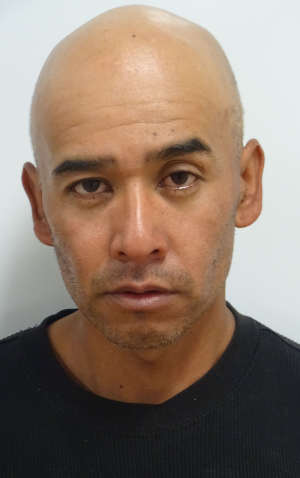
LAKE COUNTY, Calif. — A man who served prison time for the 2007 killing of a taxi driver was in a standoff with law enforcement early Friday after he threatened to kill his girlfriend.
Morgan Matthew Jack, 44, of Lakeport, was taken into custody hours after the standoff began, said Lt. Corey Paulich of the Lake County Sheriff’s Office.
At 3 a.m. Friday, the sheriff’s office received a report that Jack had threatened to kill his live-in girlfriend at their residence in the 2600 block of Mission Rancheria Road, Paulich said.
Paulich said the girlfriend had been able to leave the residence before Lake County Sheriff’s deputies arrived.
When deputies attempted to make contact with Jack and place him under arrest, he refused to exit the residence. Paulich said deputies entered the residence and attempted to contact Jack.
While inside, the deputies heard metallic noises they recognized as a firearm being manipulated and believed Jack was armed. Paulich said the deputies exited the residence and again attempted to get Jack to come out.
He said the deputies could see Jack in the doorway at the front of the residence. The deputies saw Jack raise a rifle-type firearm and fire one shot in their direction.
The deputies secured the area and requested additional units respond. Officers from Lakeport Police Department, Clearlake Police Department and California Highway Patrol responded to assist, Paulich said.
The Sheriff’s Office Crisis Response and SWAT Teams responded to the location, Paulich said. While trying to speak with Jack he challenged deputies, several times telling them he was not coming out and they would have to kill him.
After approximately two hours Jack exited his residence, challenging one of the negotiators to approach him, Paulich said.
Paulich said Jack was taken into custody with the assistance of a police K-9 unit from the Clearlake Police Department and SWAT team members. Some of the officers as well as Jack received minor injuries during the arrest.
The Sheriff's Major Crimes Unit served a search warrant at Jack’s residence, where Paulich said they located a pellet rifle that resembled an assault-type rifle.
Jack was transported to Sutter Lakeside Hospital for treatment and later booked at the Lake County Jail for charges of criminal threats, assault on a peace officer with an instrument not a firearm, and obstruction. Paulich said Jack’s bail is set at $50,000.
Paulich said the sheriff’s office had prior contact with Jack in 2008 when he was arrested related to the death of Paul Womachka, a “Hey Taxi” driver whose body was found in a submerged taxi at the Big Valley Rancheria in the summer of 2007.
Jack later pleaded no contest to voluntary manslaughter related to the killing and was sentenced to 12 years in prison. He received numerous credits that reduced his prison time by several years.

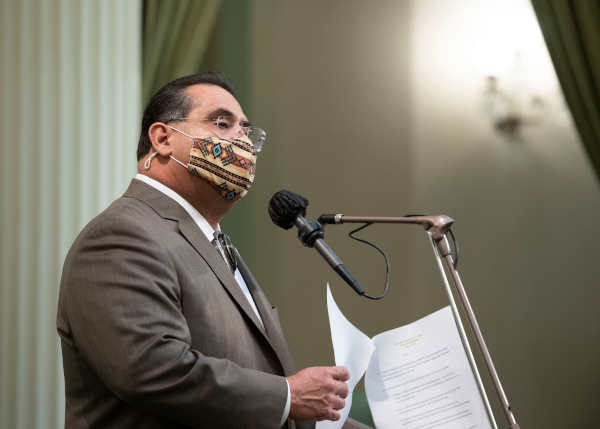
The California Assembly on Thursday unanimously approved a resolution designating May as California Missing and Murdered Indigenous Women and Girls Awareness Month.
Assemblymember James C. Ramos (D-Highland), the first California Native American elected to the Legislature, introduced the resolution, H.R. 40.
Ramos opened Thursday’s floor session with a Native American prayer in honor of the missing and murdered Indigenous women and girls.
“California has the sixth-highest death rate of Indigenous women in urban cities — and our state has the largest Native American population in the country,” Ramos said. “Native American women face a pandemic of violence against them, and we must be persistent and consistent in increasing awareness, increasing preventative measures and in resolving these cases so loved ones can have closure.”
Ramos cited a 2012 report by the federal Department of Justice which stated:
– Nearly half of all Native American women — 46 percent — have experienced rape, physical violence or stalking by an intimate partner.
– One in three Indian women will, at some point in her life, experience the violence and trauma of rape.
– On some reservations Native American women are murdered at a rate more than 10 times the national average.
– In 2016, more than 5,700 cases of murdered and missing Indigenous women and girls were reported to the National Crime Center.
“What makes these statistics even more horrifying and shameful is that we know these cases are underreported or misclassified,” said Ramos.
Last year, Ramo successfully introduced 3099. It authorized funding for the state Department of Justice to assist local and tribal law enforcement, improve collaboration among tribes and sponsor a study to increase protective and investigative resources for reporting and identifying missing Native Americans in California, particularly women and girls.
As chair of the Assembly Select Committee on Native American Affairs, he also conducted two informational hearings about this issue.
Ramos said he’s looking forward to building on this effort with California Attorney General Rob Bonta.
“An injustice against any of us is an injustice against all,” said Bonta. “When our Indigenous brothers and sisters are hurting, we must stand united in support. No Indigenous women or girls should have to live in fear of being victimized. We must not shy away from the reality that this is happening all too often and that too many go without getting justice. It will take all of us working together to better understand and, eventually, solve this problem. California is home to more Native Americans than any other state in the country. We have to lead the way forward. I’m proud to be part of that effort in working to recognize May 2021 as Missing and Murdered Indigenous Women and Girls Month in the State of California.”
Ramos said he was heartened that the Department of the Interior recently established the Missing and Murdered Unit within the Bureau of Indian Affairs Office of Justice Services. He said it will add weight and new energy to the investigation to resolve these cases.
Before the vote was taken on H.R. 40, 73 Republicans and Democrats joined in as co-authors.
Starbucks has officially broken ground and will be bringing the first standalone drive-thru location to Lake County just north of Carl’s Jr. and west of Walmart at 15881 Dam Road Extension, the city reported.
It’s not the company’s only presence in Lake County. A Starbucks kiosk is located on the other side of the lake, in the Lakeport Safeway.
Clearlake City Manager Alan Flora updated the Clearlake City Council about the project at its Thursday night meeting.
He said the new Starbucks is expected to be open for business on Sept. 3.
“Hurray for Starbucks,” said Councilman Russ Cremer.
Cremer said he’s been getting a lot of comments from community members this week in response to the work being done at the new store’s site.
The new Starbucks store is being developed by the Monterey-based Orosco Group, a boutique real estate development firm specializing in commercial, multifamily residential and mixed-use development projects.
“Despite the pandemic, tenant interest in Clearlake as a regional retail hub has been strong. Starbucks is the first of several national retailers who will be opening a new store within our project,” said Patrick Orosco, partner at The Orosco Group.
The company has developed more than three million square feet of new product with a total market value of over $1 billion during its 40-year history. It targets infill opportunities that benefit from its community-based redevelopment process.
Since the recession of 2008, The Orosco Group said it has applied its ground up development and underwriting experience to the acquisition and repositioning of distressed and excess retail, office and residential properties.
Officials reported that over the past 18 months the interest from both local and national retailers has continued to grow for the city of Clearlake.
New development opportunities for retailers ranging from 1,800 square feet all the way up to more than 60,000-square-foot anchor sites have helped bring new eyes and new investment into the market, the city said.
The city also has been in talks since last year with King Management LLC, which is interested in purchasing a portion of the city’s Pearce Field airport property at 6356 Armijo Ave. and 6393 James St. to develop a hotel, as well as developing a hotel project on a portion of Redbud Park, where the ballfields are located, as Lake County News has reported.
There are commitments from other retail, restaurant, hospitality and service providers planning to join in on the new construction in the Clearlake later this year as well.
“We are excited to continue welcoming new opportunities to our city and want other retailers to know that our pro-growth city leadership is here to help,” said Flora.