 How to resolve AdBlock issue?
News

When COVID-19 first began spreading, public health and medical experts began talking about the need for the U.S. to reach herd immunity to stop the coronavirus from spreading. Experts have estimated that between 60% and 90% of people in the U.S. would need to be vaccinated for that to happen. Only about 35% of the population has been fully vaccinated, and yet the CDC said on May 14, 2021 that fully vaccinated people can lose their masks in most indoor and outdoor settings.
An important question now arises: What happens if we don’t reach herd immunity? Dr. William Petri is a professor of infectious diseases at the University of Virginia who helps lead the global program to achieve herd immunity for polio as the chair of the World Health Organization’s Polio Research Committee. He answers questions here about herd immunity and COVID-19.
What is herd immunity?
Herd immunity occurs when there are enough immune people in a population that new infections stop. It means that enough people have achieved immunity to disrupt person-to-person transmission in the community, thereby protecting nonimmune people.
Immunity can result from either vaccination or prior infection. Herd immunity may exist globally, as it does with smallpox, or in a country or region. For example, the U.S. and many other countries have achieved herd immunity for polio and measles, even though global herd immunity does not yet exist.
Has herd immunity been achieved globally for other infections?
This has happened only once on a global scale, with the eradication of smallpox in 1980. This was after a decadelong worldwide intensive vaccination campaign.
We also are also approaching global herd immunity for polio. When the Global Polio Eradication Initiative was formed in 1988 there were 125 countries with endemic polio and over 300,000 children paralyzed annually. Today, after 33 years of immunization campaigns, Afghanistan and Pakistan are the only countries with wild polio virus, with only two cases of paralysis due to wild poliovirus this year. So herd immunity can be achieved worldwide, but only through extraordinary efforts with global collaboration.
It seems as though the goal posts for herd immunity keep changing. Why?
Experts estimate that between 60% and 90% of the U.S. population would need to be immune for there to be herd immunity. This wide range is because there are many moving parts that determine what is needed to achieve herd immunity.
Factors influencing whether the target is 60% or 90% include how well vaccination and prior infection prevent not only illness due to COVID-19, but also infection and transmission to others. Additional considerations include the heightened transmissibility of new variants of SARS-CoV-2 and the use of measures to interrupt transmission, including face masks and social distancing. Other important factors include the duration of immunity after vaccination or infection, and environmental factors such as seasonality, population sizes and density and heterogeneity within populations in immunity.
What is the biggest barrier to herd immunity in the U.S.?
Two factors could lead to failure to achieve high enough levels of immunity: not every adult receiving the vaccine because of “vaccine hesitancy” and the likely need to vaccinate adolescents and children. The FDA cleared the emergency use of the Pfizer-BioNTech COVID-19 vaccine for adolescents 12 to 15 years of age on May 10, 2021, so that could help. But an added barrier is the constant pressure of reintroduction of infection from other countries where vaccination is not as readily available as in the U.S.
Achieving herd immunity to the extent of totally blocking new infections is therefore, while a laudable goal, not easily achievable. I think that for COVID-19 at this time, it will be possible only with the concerted global effort over years, similar to what led to smallpox eradication.
Why are there ‘vaccine hesitant’ individuals?
People may be vaccine hesitant for several reasons, including lack of confidence in the vaccine, the inconvenience of receiving the vaccine, or complacency – that is, thinking that if they get COVID-19 it will not be severe.
Lack of confidence includes concerns for vaccine safety or skepticism about the health care providers and public health officials administering them. Complacency reflects a personal decision that vaccination is not a priority for that individual because she or he perceives that the infection is not serious or because of competing priorities for time. Convenience issues include the availability and complexity, such as having to get two doses.
[Understand new developments in science, health and technology, each week. Subscribe to The Conversation’s science newsletter.]
Since herd immunity will not be reached, what will our lives look like?
At least into 2022 and likely for much longer, I do not expect there will be herd immunity for COVID-19. What there will be, probably by the end of this summer in the U.S., is a new normalcy. There will be far fewer cases and deaths due to COVID-19, and there will be a removal of social distancing and year-round masking, as evidenced by the CDC’s new guidelines issued May 13, 2021, that vaccinated people do not have to wear masks in most places.
But there will be a seasonality to coronavirus infections. That means there will be less in the summer and more in the winter. We’ll also see outbreaks in regions and population subgroups that lack adequate immunity, short-lived lockdowns of cities or regions, new and more transmissible variants and a likely requirement for vaccine booster shots. We cannot let down on the research and development of treatments and new vaccines, as studies show that COVID-19 is here to stay.
William Petri, Professor of Medicine, University of Virginia
This article is republished from The Conversation under a Creative Commons license. Read the original article.
In California, administering a deceased person’s estate often requires a petition to the superior court in the proper county (venue).
Let us discuss how to determine the proper county and who has standing to file a petition.
We consider the petition for probate, the petition for succession to property in a small estate, the affidavit for real property in a small estate, and the petition regarding the administration of a decedent’s living trust.
In California, a petition to open probate of a deceased resident’s estate must be filed in the superior court of the county where a decedent was domiciled, regardless of where they died. A person is domiciled in the county where they usually reside, i.e., their permanent residence.
Thus, the place indicated on the decedent’s California death certificate as the decedent’s “usual residence” determines the proper venue (county).
If the decedent was not a California resident then the petition should be filed with the superior court in the county where the decedent’s property is situated.
A court order issued in a California probate does not apply to real property located outside California.
If a California resident dies owning real property outside of California, then the probate laws applicable in that state or country apply. Real estate located within the United States held in a living trust still avoids probate anywhere.
A petition for probate may be filed by any interested person at any time after the decedent’s death, including a creditor of the decedent’s estate.
A person who is named as executor in a decedent’s will has first priority (right) to be appointed as the personal representative of the decedent’s estate.
However, the right to be appointed personal representative may be held to be waived if the person does not file a petition for probate within 30 days of learning of the decedent’s death.
When a decedent dies with a small estate — i.e., the gross value of the decedent’s real and personal property in California is collectively under $166,250 — a small estate procedure can be utilized to transfer property.
If the gross value of all the decedent’s real property in California is under $55,425 then (six months after the death) the person, or persons, claiming to be the successor in interest to the decedent’s real property of small value can file an affidavit regarding real property in a small estate in the superior court of the county where the decedent was domiciled.
A certified copy of the court filed affidavit must then be filed with the County Recorder in the county where the decedent owned the real property (which may be a different county from the court).
If the decedent’s small estate includes real property in California exceeding $55,425 in total value then a petition to determine succession to real and personal property can be filed in the county where the decedent was domiciled at time of death.
Such a petition must be signed and filed by the person(s) claiming to succeed to the decedent’s interest(s) in real and personal property in California.
Unlike probate, a living trust is usually privately administered without court supervision. Sometimes, however, a court petition is still needed, such as, but not limited to the following situations: when a trustee needs to be appointed, the trustee needs instructions or the trustee needs to ascertain what assets belong to the trust.
A court petition concerning the administration of a trust can be filed either by the trustee or by a trust beneficiary. The proper county in which to file the trust petition is the county where the trustee resides or does business.
The foregoing discussion regarding proper venue and standing is not legal advice. Consult an attorney if confronting any of the foregoing issues.
Dennis A. Fordham, attorney, is a State Bar-Certified Specialist in estate planning, probate and trust law. His office is at 870 S. Main St., Lakeport, California. He can be reached at
It’s a maxim drilled into us at a young age: “Always eat your veggies!”
For astronauts on the International Space Station, heeding this well-known advice is both essential and challenging.
Health and nutrition are vital to mission objectives, but how do you ensure astronauts get fresh produce to eat when living off the planet?
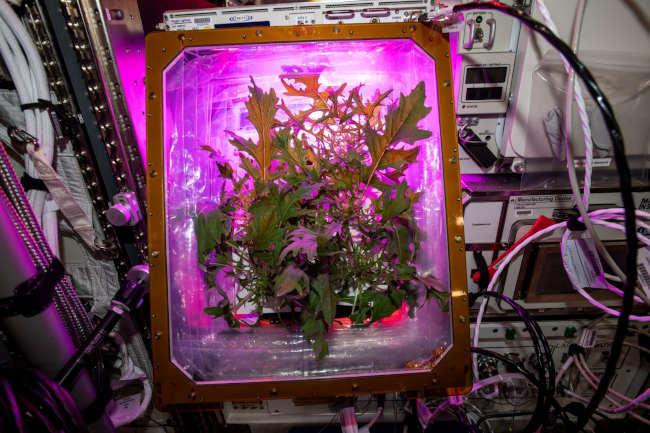
One solution involves astronauts growing vegetables for themselves. On the station, plants such as the mizuna mustard greens seen above are grown under LED lighting and watered in plant “pillows” — special bags that contain seed and fertilizer. These plants and their pillows are housed in a unique botany facility called the Vegetable Production System, or Veggie.
Growing fresh vegetables in space offers benefits beyond providing a source of nutrition to crew members, explained Dr. Gioia Massa, project scientist at NASA’s Kennedy Space Center in Florida.
Here on Earth, pandemic-induced isolation has led people to take up baking or gardening. Could developing a space-faring green thumb also help astronauts ease their sense of confinement and isolation?
NASA’s Human Research Program, or HRP, has given Massa and her team of researchers the task of finding out.
To learn more, Massa’s group is asking astronauts who currently cultivate vegetables on the station to each complete a survey about their space-gardening experiences. For example, crew members who grow mizuna mustards take the survey two to three times for the month-long growth cycle of the plant.
Questions on the survey help gauge how space-gardening affects astronauts’ moods.
For example: Was gardening engaging, demanding, or meaningful? Did it impact the passage of time, performance of mission tasks, or relationships with crew members? Did gardening enhance their connection to Earth, desire to harvest or consume the plants, or food consumption in general? How effective was gardening as a source of sensory stimulation for sight, touch, smell and taste?
When the vegetables are ready to eat, the astronauts also complete a sensory assessment. They rate the flavor, color, appearance, aroma, texture, and taste of the produce to see whether the labor over their veggies proved fruitful as a supplement to prepackaged space food.
Thus far, seven astronauts have completed the survey. Massa hopes to survey a total of 24 astronauts before the study is complete.
Initial results show that some participants loved working with the plants during their leisure time, spending many hours caring for them during their mission, while others preferred different activities. Despite the variability, no one viewed their work with the plants as meaningless, and all valued the utility of growing plants in space.
Astronauts’ feedback will help NASA better design food systems for future space missions. “We are learning what crops to grow to help supplement the diet, which activities should be automated or remotely operated, and which should have options for crew involvement,” explained Massa. “Different growth systems and different space missions will have different solutions to these questions.”
HRP, along with the Biological and Physical Sciences (BPS) Division of NASA’s Science Mission Directorate at NASA Headquarters in Washington, provides funding for Veggie and related investigations.
Forty-one elected district attorneys — including Lake County District Attorney Susan Krones — filed a petition with California Department of Corrections and Rehabilitation Secretary Kathleen Alliso to request the repeal of temporary emergency regulations awarding additional good conduct credits to more than 76,000 state prison inmates, or nearly 80 percent of the state’s prison population.
The district attorneys said in their announcement that the regulations were passed under a claim of an emergency and first made public on Friday April 30, at 3 p.m. The regulations went into effect on Saturday, May 1.
They said the regulations would result in the early release of some of California's most violent criminals including those that committed murder, rape, child molestation and arson.
In adopting the new rules, and claiming an emergency, Allison said the regulations were necessary to comply with “the direction outlined in the Governor's Budget Summary" presented a year ago on May 14, 2020, the district attorneys said.
“By invoking an emergency, the traditional regulatory scheme and transparent public comment period was bypassed,” the group noted in their announcement.
“Modifying these credit awards without any public input is disrespectful to the victims of these most serious crimes and to crime victims everywhere. It also creates a serious risk to public safety. The public should be able to weigh in on this important proposal that is going to impact our community and other communities throughout the state of California,” said Krones.
CDCR Press Secretary Dana Simas told Lake County News that the change was approved in the 2020-21 state budget. In the public safety portion of the budget, it notes that while the changes are estimated to save $2.7 million in the state general fund in the current fiscal year.
The district attorneys filed an administrative law petition on Thursday that they said is the first step in seeking a formal court order declaring the regulations unlawful.
If the emergency regulations are nullified by a court, CDCR would be forced to pass the regulations in the traditional manner, requiring the State's Office of Administrative Law to provide greater transparency and allow for public input.
Krones told Lake County News that she has not gotten a specific number of how many inmates from Lake County could be impacted by the changes.
“They only give us very short notice about who they are releasing early and under the current regulations we can’t even object,” she said.
Over the last several months, Krones said her office has seen an average of about five prison inmates who came from Lake County being released per month by CDCR, an increase from pre-pandemic levels.
Krones said the number of prison inmate releases have “definitely increased” in comparison to the time period of January to April 2020.
“With the new regulations it will increase even more,” she said.
An explanation of the good conduct credits plan
Previously, violent offenders would receive 20 percent credit, or one day of credit for every four days served. That will now go to 33.3 percent, or one day of credit for every two days served.
For nonviolent second- and third-strikers, credits would rise from 33.3 percent to 50 percent, or one day of credit for every day served.
In a written statement released to Lake County News, CDCR said the changes are not an early release program and do not result in the automatic release of any incarcerated individual.
“Under statute, incarcerated individuals are able to receive credits for good behavior and participation in rehabilitation programs. Proposition 57, which voters overwhelmingly approved in 2016 and upheld in November, gave the California Department of Corrections and Rehabilitation the authority to submit regulations to provide additional opportunities for incarcerated people to receive these good conduct credits,” the agency said.
CDCR said it submitted the regulations to increase the rate at which incarcerated people can receive good conduct credits. The changes were approved in the 2020-21 state budget.
The regulations are still subject to final approval, and CDCR said the regulatory process allows for public input.
“This effort incentivizes incarcerated individuals to have sustained good behavior and encourages them to participate in rehabilitative and educational programs, which can help reduce recidivism to make our communities safer. Our department’s focus is on a person’s rehabilitation and accountability in a manner that is consistent with public safety,” the agency said.
CDCR offered a breakdown of inmates who would be eligible, noting county-by-county numbers were not available.
The agency anticipates approximately 63,282 violent offenders would be impacted by the May 1 good conduct credit increase from 20 to 33.3 percent.
Of those prisoners, 27,430 are non-strike determinately sentenced offenders, 13,447 are second strikers, 2,814 are third strikers and 19,591 are sentenced to an indeterminate or life term with the possibility of parole, CDCR said.
CDCR said the good conduct credit increase from 33.3 to 50 percent would impact another 10,077 nonviolent second strikers and 2,871 nonviolent third strikers.
The CDCR’s Division of Correctional Policy Research and Internal Oversight said in its weekly report that there are 96,495 individuals in custody or under its supervision, down by 20,619 since last year.
That in-custody total excludes nearly 51,000 parolees, more than 13,000 in other jurisdictions or populations, and the 6,719 parolees at large.
Email Elizabeth Larson at
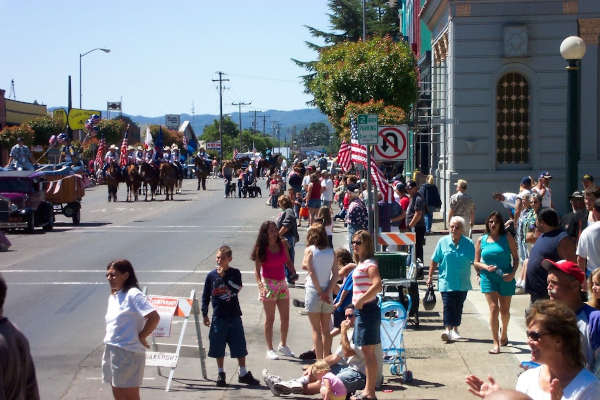
LAKEPORT, Calif. — The Lakeport Main Street Association announced that the Lakeport Memorial Day Parade will be held on Saturday, May 29.
This year’s parade theme is “Honoring, Reflecting, Remembering” and will start at 11 a.m.
Main Street will be closed to traffic from Martin to Clear Lake Avenue beginning at approximately 10:30 a.m. on the day of the parade.
The association reported that it has approximately 50 entries for this year’s parade.
Entries include antique cars, horses, trucks, tractors, floats and even a stagecoach representing individuals, organizations and businesses from all over Lake County.
The association will livestream the event on its Facebook page.
Organizers encourage anyone along the route to tune in to hear the announcer during the parade or to enjoy the parade from their home.
Everyone who comes to the parade will be asked to be COVID-19 safe by wearing a mask and practicing social distancing.
Gov. Newsom’s Plan expands the state’s COVID-19 Small Business Relief Grant program to a total of $4 billion, representing the largest such program in the entire country.
That’s in addition to Gov. Newsom’s $6.2 billion tax cut for those businesses hit hardest by the pandemic, the largest state tax cut of its kind in history.
“Our small businesses have faced unprecedented challenges over the past year, and we’re stepping up to meet the moment – making historic investments to provide businesses with the support they need and jumpstarting California’s economic recovery,” said Gov. Newsom. “That’s why we’re implementing the largest small business relief program in the entire country, expanding the small business grant program to $4 billion and providing $6.2 billion in small business tax relief. This is money in the pockets of business owners to make payroll and cover the bills as we prepare to fully reopen California’s economy on June 15.”
These grants are already supporting diverse small businesses throughout California, with 88.3 percent of grants in rounds one and two going to minority/people of color-owned businesses, women-owned businesses, veteran-owned businesses and businesses located in low to moderate income communities.
To date, approximately 198,000 small businesses and nonprofits either have been or will be awarded grants, which includes finalized awards for 43,874 small businesses and nonprofits representing all 58 California counties for a total of $475,001,244.
By expanding this successful program, we can ensure that even more small businesses can access this critical lifeline as we head toward full reopening on June 15.
In addition to these historic programs, Gov. Newsom has taken swift action to invest in those sectors of the economy that are crucial to California’s recovery, including:
— Estimated $895 million investment in the State Small Business Credit Initiative (SSBCI), which works to strengthen state programs that support financing of small businesses;
— Increasing the CalCompetes tax credit program to $360 million, and establishing a one-time $250 million grant program, to incentivize businesses to relocate to California;
— $250 million investment in California’s ports to address revenue loss and bolster future economic activity;
— $200 million to expand sales tax exclusions through the California Alternative Energy and Advanced Transportation Financing Authority to promote, grow and incentivize green manufacturing in California;
— $147 million for the Main Street Small Business Tax Credit to assist small businesses that have hired and retained workers since the second quarter of 2020;
— $95 million to jumpstart California’s tourism industry, one of the largest economic drivers in the state that was particularly impacted by the pandemic.
McGuire, Quirk-Silva highlight funds for tourism
In response to the news of the funds for the tourism industry, Lake County’s member of the State Senate, Mike McGuire, and Assemblymember Sharon Quirk-Silva came out with strong praise for the plan.
“California’s tourism economy, $145 billion strong in 2019, cratered during the pandemic. Hundreds of thousands of hospitality workers were unemployed and state and local governments took a $6.6 billion hit due to lost taxes. We’ve been working for over a year with CalTravel on a recovery plan to help get hard working Californians safely back to work and the tourism sector reopened in partnership with the California Department of Public Health,” McGuire said.
“The governor’s announcement this morning will be a massive shot in the arm to the Golden State’s economy and help thousands of tourism-based businesses in every corner of California open their doors, rehire tens of thousands of employees and put out the welcome mat to travelers. We look forward to getting this funding proposal across the budget finish line in the coming weeks,” McGuire added.
Sen. McGuire worked in partnership with Assemblymember Quirk-Silva and a broad-based coalition on SB 285 over the past year and a half making the $95 million tourism investigation a reality, with the partnership including CalTravel, representing California’s tourism and hospitality sectors; California Teamsters Public Affairs Council, representing thousands of hotel and hospitality workers; California News Publishers Association, representing California newspapers; and the California Broadcasters Association, representing California’s TV and radio stations.
“I have advocated to assist our tourism attractions, such as Disneyland, Universal Studios, and Knott’s Berry Farm to return back to business, as we have seen a significant impact these theme parks have for our surrounding local businesses,” said Quirk-Silva. “As the state continues to work towards reopening, many of our tourism attractions are facing significant deficits. With many of them working on plans for reopening to the public, this one-time stimulus funding, that would double the initial requested amount of $45 million will help accelerate our tourism industry return and help get Californians back to work.”
This campaign, in consultation with the California Department of Public Health, will emphasize when it is safe to travel and how to travel safely.
The boost will deliver more than $10.3 billion in revenue to California businesses and nearly $1 billion in additional state and local tax revenue, McGuire’s office said.
Before COVID-19, more than 1.2 million California workers earned their livelihoods in hospitality, and visitors spent $145 billion annually at California businesses, generating $12.3 billion in state and local tax revenues.
The coronavirus has had an especially devastating impact on California’s travel and tourism industry. Since last March, more than half of those 1.2 million hospitality workers lost their jobs, California lost $78.8 billion in visitor spending, and thousands of businesses have struggled to keep their doors open, even if only virtually.
SB 285, now included in this year’s proposed budget, provides funding to Visit California to launch a strategic media and jobs recovery campaign to promote California travel to support the businesses that have been hit so hard – the state’s renowned restaurants, hotels, and local destinations. Visit California will multiply the value of the appropriation through newspapers and broadcast media, which have agreed to match the funds from the state.