Unlike daily weather, global prevailing wind patterns are believed to be relatively stable over millennial timescales. A new study finds that these wind currents have helped shape genetic diversity in the world’s forests and could impact how well different tree populations are able to adapt to a changing climate. UC Berkeley image by Matthew Kling. BERKELEY — Forests’ ability to survive and adapt to the disruptions wrought by climate change may depend, in part, on the eddies and swirls of global wind currents, suggests a new study by researchers at the University of California, Berkeley.
Unlike animals, the trees that make up our planet’s forests can’t uproot and find new terrain if conditions get tough. Instead, many trees produce seeds and pollen that are designed to be carried away by the wind, an adaptation that helps them colonize new territories and maximize how far they can spread their genes.
The new study compared global wind patterns with previously published genetic data of nearly 100 tree and shrub species collected from forests around the world, finding significant correlations between wind speed and direction and genetic diversity throughout our planet’s forests.
The findings are the first to show that wind may not only influence the spread of an individual tree or species’ genes, but it can also help shape genetic diversity and direct the flow of gene variants across entire forests and landscapes.
Understanding how genetic variants move throughout a species range will become increasingly important as climate change alters the conditions of local habitats, the researchers say.
“How trees move and how plants move, in general, is a big area of uncertainty in plant ecology because it's hard to study plant movements directly — they happen as a result small, rare movements of seeds and pollen,” said study lead author Matthew Kling, a postdoctoral researcher in integrative biology at UC Berkeley. “However, to predict how species distributions, and plant ecology, in general, will respond to climate change, we need to understand how these species are going to be able to move long distances to track the movement of natural resources and climate conditions over time.”
While animals, birds and insects can also disperse pollen and seeds, wind’s strong directionality makes it particularly important for understanding how different tree species will respond to climate change, said study senior author David Ackerly, a professor and dean of UC Berkeley’s Rausser College of Natural Resources.
“As the world warms, many plants and animals will need to move to places with suitable habitat in the future to survive,” Ackerly said. “Wind dispersal has a particularly interesting connection to climate change because wind can either push the genes or organisms in the right direction, toward more suitable habitat, or in the opposite direction. It may be the only terrestrial dispersal vector that can be aligned with or against the direction of climate change.”
Any way the wind blows
Despite the fickle nature of daily weather conditions, large-scale global wind patterns are largely determined by Earth’s shape, rotation and the locations of the continents, and are believed to be relatively stable over millennial timescales. These wind patterns are not likely to be dramatically altered by climate change, Kling said.
To examine whether these global prevailing winds have shaped the genetic diversity of modern-day forests, Kling compared current planetary wind models — compiled from 30 years of global wind data — with genetic data from 72 publications covering 97 tree and shrub species and 1,940 plant populations worldwide.
Kling’s analysis revealed three key ways that global wind patterns are shaping forests’ genetic diversity.
First, tree populations that are connected by stronger wind currents tend to be more genetically similar than tree populations that are not as connected.
Second, tree populations that are more downwind, or farther in the direction that the wind blows, tend to have more genetic diversity in general.
Finally, genetic variants are more likely to disperse in the direction of the wind.
Though these patterns can only be statistically validated by looking at many populations of trees throughout the world, they can sometimes be evident when examining the genetic diversity of a single tree species across its habitat range, Kling said.
For example, the island scrub oak, or Quercus pacifica, is native to the Channel Islands in Southern California, where prevailing winds tend to blow to the southeast.
Kling’s analysis showed that scrub oak populations on islands that are connected by higher wind speeds are more genetically similar to each other.
Genetic variants also appear to have dispersed more frequently to the islands in the southward and eastward directions than the reverse, leading to greater genetic diversity to the south and east.
Kling hopes that recognizing these patterns will help conservationists and ecologists better understand how well tree and plant species in different regions of the globe will adapt to a warming world.
“Populations in different portions of a species range have evolved over time to be well-adapted to the climate in that specific part of the range, and as climate changes, they can become out of sync with those conditions,” Kling said. “Understanding how quickly genetic variants from elsewhere in the species range can get where they are needed is important for understanding how quickly the species will respond to climate change, and how vulnerable, versus resilient, a given population might be.”
This research was supported by a National Science Foundation Graduate Research Fellowship.
Kara Manke writes for the UC Berkeley News Center.
LAKE COUNTY, Calif. — Lake County Animal Care and Control has more dogs this week, including shepherds, terriers and huskies.
Dogs available for adoption this week include mixes of Belgian Malinois, chihuahua, corgi, dachshund, German Shepherd, husky, pit bull, Rottweiler and Scottish Terrier.
Dogs that are adopted from Lake County Animal Care and Control are either neutered or spayed, microchipped and, if old enough, given a rabies shot and county license before being released to their new owner. License fees do not apply to residents of the cities of Lakeport or Clearlake.
The following dogs at the Lake County Animal Care and Control shelter have been cleared for adoption (additional dogs on the animal control website not listed are still “on hold”).
“Abigail” is a young female pit bull terrier in kennel No. 19, ID No. 14552. Photo courtesy of Lake County Animal Care and Control. ‘Abigail’
“Abigail” is a young female pit bull terrier with a short tan and white coat.
She is in kennel No. 19, ID No. 14552.
This young male Belgian Malinois is in kennel No. 20, ID No. 14521. Photo courtesy of Lake County Animal Care and Control. Male Belgian Malinois
This young male Belgian Malinois has a short black and tan coat.
He is in kennel No. 20, ID No. 14521.
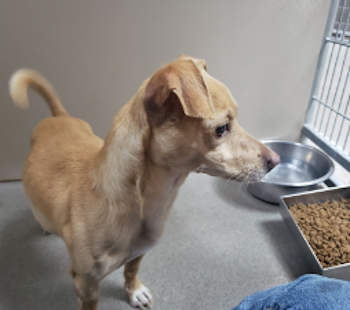
This male Chihuahua-Dachshund mix is in kennel No. 21, ID No. 14553. Photo courtesy of Lake County Animal Care and Control. Chihuahua-Dachshund mix
This male Chihuahua-Dachshund mix has a short tan and white coat.
He is in kennel No. 21, ID No. 14553.
This female pit bull terrier is in kennel No. 22, ID No. 14486. Photo courtesy of Lake County Animal Care and Control. Female pit bull terrier
This female pit bull terrier has a short blue and white coat.
She is in kennel No. 22, ID No. 14486.
This male corgi-shepherd mix is in kennel No. 23, ID No. 14561. Photo courtesy of Lake County Animal Care and Control. Corgi-shepherd mix
This male corgi-shepherd mix has a short brown and brindle coat.
He is in kennel No. 23, ID No. 14561.
This female pit bull terrier is in kennel No. 24, ID No. 14536. Photo courtesy of Lake County Animal Care and Control. Female pit bull terrier
This female pit bull terrier has a short black and white coat.
She is in kennel No. 24, ID No. 14536.
“Ella” is a female German Shepherd in kennel No. 25, ID No. 14510. Photo courtesy of Lake County Animal Care and Control. ‘Ella’
“Ella” is a female German Shepherd with a medium-length tan coat.
She is in kennel No. 25, ID No. 14510.
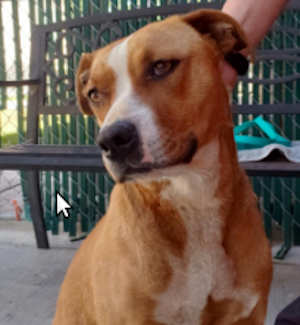
This female pit bull terrier is in kennel No. 26, ID No. 14550. Photo courtesy of Lake County Animal Care and Control. Female pit bull terrier
This female pit bull terrier has a short red and white coat.
She is in kennel No. 26, ID No. 14550.
This female Rottweiler-pit bull mix is in kennel No. 27, ID No. 14551. Photo courtesy of Lake County Animal Care and Control. Rottweiler-pit bull mix
This female Rottweiler-pit bull mix has a short black coat.
She has been spayed.
She is in kennel No. 27, ID No. 14551.
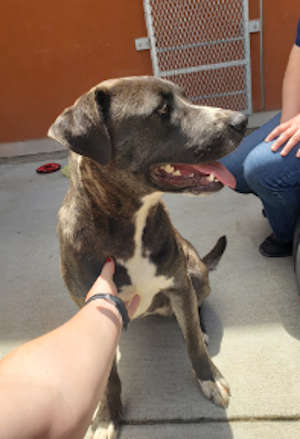
“Brutus” is a male pit bull terrier in kennel No. 28, ID No. 14507. Photo courtesy of Lake County Animal Care and Control. ‘Brutus’
“Brutus” is a male pit bull terrier with a short gray and white coat.
He is in kennel No. 28, ID No. 14507.
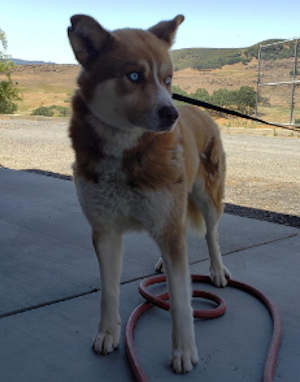
“Apollo” is a male husky mix in kennel No. 31, ID No. 14569. Photo courtesy of Lake County Animal Care and Control. ‘Apollo’
“Apollo” is a male husky mix with a medium-length red and white coat and blue eyes.
He is in kennel No. 31, ID No. 14569.
“Ghost” is as male husky mix in kennel No. 32, ID No. 14563. Photo courtesy of Lake County Animal Care and Control. ‘Ghost’
“Ghost” is as male husky mix with a white coat and blue eyes.
He has been neutered.
He’s in kennel No. 32, ID No. 14563.
“Bonnie Blue” is a female Scottish Terrier in kennel No. 34, ID No. 14560. Photo courtesy of Lake County Animal Care and Control. ‘Bonnie Blue’
“Bonnie Blue” is a female Scottish Terrier with a long tan coat.
She is in kennel No. 34, ID No. 14560.
Email Elizabeth Larson at This email address is being protected from spambots. You need JavaScript enabled to view it.. Follow her on Twitter, @ERLarson, or Lake County News, @LakeCoNews.
A new video gives viewers the sensation of standing on the Red Planet and seeing the action firsthand.
When NASA’s Ingenuity Mars Helicopter took to the Martian skies on its third flight on April 25, the agency’s Perseverance rover was there to capture the historic moment.
Now NASA engineers have rendered the flight in 3D, lending dramatic depth to the flight as the helicopter ascends, hovers, then zooms laterally off-screen before returning for a pinpoint landing.
Seeing the sequence is a bit like standing on the Martian surface next to Perseverance and watching the flight firsthand.
Located on the rover’s mast, or “head,” the zoomable dual-camera Mastcam-Z imager provided the view. Along with producing images that enable the public to follow the rover’s daily discoveries, the cameras provide key data to help engineers navigate and scientists choose interesting rocks to study.
Justin Maki, an imaging scientist at NASA’s Jet Propulsion Laboratory in Southern California, led the team that stitched the images into a video. The frames of the video were reprojected to optimize viewing in an anaglyph, or an image seen in 3D when viewed with color-filtered glasses (you can create your own 3D glasses in a few minutes).
Maki’s been creating 3D imaging of Mars since his days as a graduate student processing images from NASA’s Sojourner, the first Mars rover in 1997. But this is the first time he’s created actual 3D video of an aircraft flying on Mars.
“The Mastcam-Z video capability was inherited from the Mars Science Laboratory MARDI (MArs Descent Imager) camera,” Maki said. “To be reusing this capability on a new mission by acquiring 3D video of a helicopter flying above the surface of Mars is just spectacular.” The videos of the helicopter are the most extensive 3D video yet from the Mastcam-Z team.
The rover’s drivers and robotic-arm operators use a more sophisticated 3D system to understand exactly how things are positioned on Mars before planning the rover’s movements.
But, according to Maki, team members have also been viewing still 3D images for rover-drive planning.
“A helicopter flying on Mars opens a new era for Mars exploration. It’s a great demonstration of a new technology for exploration,” he added. “With each flight we open up more possibilities.”
The April 25 flight brought with it several other firsts, with Ingenuity rising 16 feet, then flying downrange 164 feet. That was a record until Ingenuity traveled 873 feet on its fourth flight, on April 30.
For its fifth flight, on May 7, Ingenuity completed its first one-way trip, traveling 423 feet, then reaching an altitude of 33 feet above its new landing field.
The flights began as a technology demonstration intended to prove that powered, controlled flight on Mars is possible. Now they will serve as an operations demonstration, exploring how aerial scouting and other functions could benefit future exploration of Mars.
More about Perseverance
Arizona State University in Tempe leads the operations of the Mastcam-Z instrument, working in collaboration with Malin Space Science Systems in San Diego.
A key objective for Perseverance’s mission on Mars is astrobiology, including the search for signs of ancient microbial life. The rover will characterize the planet’s geology and past climate, pave the way for human exploration of the Red Planet, and be the first mission to collect and cache Martian rock and regolith (broken rock and dust).
Subsequent NASA missions, in cooperation with ESA (European Space Agency), would send spacecraft to Mars to collect these sealed samples from the surface and return them to Earth for in-depth analysis.
The Mars 2020 Perseverance mission is part of NASA’s Moon to Mars exploration approach, which includes Artemis missions to the Moon that will help prepare for human exploration of the Red Planet.
JPL, which is managed for NASA by Caltech in Pasadena, California, built and manages operations of the Perseverance rover.
LAKE COUNTY, Calif. — Gov. Gavin Newsom’s May budget revision released on Friday includes continued funding and support for rehabilitating Clear Lake.
Assemblymember Cecilia Aguiar-Curry announced the governor’s renewed commitment to research on and revitalization of Clear Lake through the Blue Ribbon Committee established by her AB 707.
Newsom’s focus on climate change includes $371 million from the general fund to be used over two years “to facilitate groundwater recharge and capture of flood flows by repairing canals damaged by subsidence, support the state cost-share of critical federal urban flood risk reduction projects, and advance detailed, watershed-scale studies of likely climate effects to give local water managers better data for local decision-making, including rehabilitation strategies at Clear Lake,” the budget summary explained.
“Clear Lake is a beautiful and valuable natural resource in Northern California. The regional economy and the well-being of Lake County’s residents and wildlife depend on its health,” Aguiar-Curry said.
“Sec. Wade Crowfoot and the members of the committee have done amazing work during the past few years to propose several initiatives to rehabilitate the lake and lakeshore. The governor's commitment to the recommendations by our Blue Ribbon Committee and my request to the Assembly Budget Committee will usher in the next phase of research and projects,” Aguiar-Curry said.
In addition to continuing to generate data on lake quality and health, the funding will support projects to restore indigenous plant populations, provide fish passage, rehabilitate or remove dilapidated shoreline structures, and remove acres of invasive shoreline vegetation that prevent access to the lake, restrict water flows and provide breeding grounds for West Nile-carrying mosquitoes.
Members of the Blue Ribbon Committee were outlined in AB 707 and include significant participation from local officials, Lake County tribal nations, local experts and community members.
Aguiar-Curry represents the Fourth Assembly District, which includes all of Lake and Napa Counties, parts of Colusa, Solano and Sonoma counties, and all of Yolo County except West Sacramento.
CLEARLAKE, Calif. — The Culinary Arts/Baking & Pastry Program at Lake County Campus of Woodland Community College is hosting its open house enrollment event, Culinary Round-Up, for anyone interested in pursuing a career in the culinary industry.
The Culinary Round-Up at the college will be on Tuesday, May 25, from 3 to 6 p.m., and will offer in-person tours of the state-of-the-art teaching kitchen lab.
Chef instructors will be available for questions with food samplings in this open house enrollment ice breaker event.
This is a historical time for the hospitality, culinary and tourism industries, which are in need of staffing.
There has never been such a great demand for the services they offer and need to fill the long-vacated positions due to the pandemic.
Great opportunities are rapidly developing in these sectors granting anyone a variety of careers to pursue from hospitality to kitchen management.
Culinary students at the college can earn a Certificate of Achievement in Culinary Arts and Baking in addition to a Culinary Arts Associates in Arts Degree.
Bring a guest, grab a bite and have a culinary tour at the campus located at 15880 Dam Road Extension in Clearlake.
Anyone interested in this event is encouraged to come.
Please RSVP by contacting the Culinary Arts Department at 707-995-4175 or This email address is being protected from spambots. You need JavaScript enabled to view it..
California Gov. Gavin Newsom on Friday presented his $100 billion California Comeback Plan, the biggest economic recovery package in California history.
The governor’s plan outlines comprehensive strategies and major investments in key areas so that California can come roaring back from the pandemic.
The California Comeback Plan has one goal: hit fast forward on our state’s recovery by directly confronting California’s most stubborn challenges:
— Providing immediate relief for those hit hardest by the COVID-19 pandemic; — Confronting the homelessness and housing affordability crisis; — Transforming public schools into gateways for opportunity; — Building infrastructure for the next century; — Combating wildfires and tackling climate change.
“Every Californian has been impacted by this pandemic, and the sacrifices we’ve all made this past year have resulted in a historic surplus — I’m here to announce that we’re investing it in you,” said Gov. Newsom. “California’s economic recovery will leave nobody behind, that's why we’re implementing the nation’s largest state tax rebate and small business relief programs in history, on top of unprecedented investments we’re making to address California’s most persistent challenges. This is a jump-start for our local economies, and it’s how we’ll bring California roaring back.”
The California Comeback Plan outlines comprehensive strategies and major investments in the following five areas of focus.
Immediate relief for California’s families and small businesses
Two out of every three Californians to get Golden State Stimulus checks: The plan will create the biggest state tax rebate in American history, including an additional $8.1 billion in stimulus checks — for a total of nearly $12 billion — that will go directly to middle class Californians and families. Nearly two-thirds of Californians will now qualify for a stimulus check of $600. Qualified families with dependents, including families without resident status, will be eligible for an additional $500.
Largest small businesses relief program in the nation: The pan invests an additional $1.5 billion for a total of $4 billion in direct grants to California’s small businesses — on top of a massive $6.2 billion tax cut — putting more money directly into the pockets of hundreds of thousands of small business owners and helping them re-hire workers displaced by the pandemic.
Largest statewide renter assistance package in the country: Under Gov. Newsom’s Plan, California will offer the strongest renter assistance package of any state in America. The plan will provide a total of $5.2 billion to help low-income renters pay 100 percent of their back-rent, and all of their rent for several months into the future. The plan also includes $2 billion for past-due utility bills and more money than ever for tenant legal assistance.
Creating opportunity for Californians who lost their jobs: The plan provides $1 billion in new grants to workers who lost their jobs during the pandemic, giving California’s workforce critically-needed opportunities to earn and learn, go back to school, or start their own business. It also includes Universal Basic Income pilot programs.
Confronting homelessness and the housing affordability crisis
Confronting homelessness at historic levels: The governor’s plan will invest $12 billion to tackle the homelessness crisis, helping more than 65,000 people get off the streets or avoid homelessness altogether. The plan reaches the most vulnerable by rebuilding the behavioral health housing system that has been dismantled over decades. It also comes with new accountability measures to ensure local governments are spending the money effectively.
Ending family homelessness: Under the governor’s plan, California will seek to achieve functional zero on family homelessness within five years through a new $3.5 billion investment in homeless prevention, rental support through CalWORKs and new housing opportunities for people at risk of homelessness.
46,000 new homeless housing units — the biggest increase in California history: The California Comeback Plan includes massive expansions of Homekey — California’s groundbreaking national model for homeless housing. The package will unlock more than 46,000 new homeless housing units, including nearly 5,000 new affordable homes for people at risk of or exiting homelessness.
Encampment strategy: The California Comeback Plan includes targeted programs and grants to local governments to move people out of unsafe, unhealthy encampments and into safer, more stable housing.
Clean California’s streets: The governor’s plan calls for partnering with local governments to clean litter, commission public art and revitalize downtowns, freeways and neighborhoods across California.
More funding for new affordable housing than ever before: The California Comeback Plan tackles housing affordability head-on: it will put $3.5 billion into building more affordable housing for low-income families and create homeownership opportunities to help restore the California Dream.
Transforming public schools into gateways for opportunity
Transforming schools into gateways to opportunity: Under the governor’s plan, public schools in low-income neighborhoods can fundamentally transform into the kind of complete campus every parent would want for their child — with before- and after-school instruction, sports and arts, personalized tutoring, nurses and counselors and nutrition — paired with new preventative behavioral health services for every kid in California.
Finally achieve universal Pre-K: Under the governor’s plan, California will finally achieve universal pre-school, providing high-quality, free transitional kindergarten to all four-year-olds in California. The California Comeback Plan also adds 100,000 child care slots to support caregivers.
3.7 million kids get college savings accounts: The California Comeback Plan creates child savings accounts for 3.7 million low-income children in public school for higher education or to start their own business, making college more attainable than ever before.
Drive down costs of college attendance: The governor’s plan will make college more affordable and accessible than ever before by driving down the cost of attendance, including drastically cutting the cost of student housing and working to reduce the cost of textbooks.
Building the infrastructure of the next century
Broadband for all: Taking on the digital divide, Gov. Newsom’s plan advances the state’s work toward universal broadband with a $7 billion investment to expand broadband infrastructure and to increase access and achieve affordability. The plan will help build out a statewide middle mile network for improved access in underserved regions, including rural areas, and allows local governments and Tribes to access last mile funding, which connects broadband to the home.
Creating a modern transportation system: The California Comeback Plan includes a $11 billion investment to build a modernized and sustainable transportation system for the next century — roads, bridges, high-speed rail, ports and public transportation, including projects for the 2028 Olympics.
Combating wildfires and tackling climate change
Doing more than ever before to fight and combat wildfires: Governor Newsom’s Plan will make the single largest investment in wildfire preparedness in our state’s history — $2 billion in emergency preparedness investments. It includes purchasing new firefighting equipment like airplanes and helicopters, as well as investments in land and forest management projects that save lives.
Nation-leading climate action: California is leading the nation in tackling climate change head-on, including a $3.2 billion package to accelerate California’s zero-emission vehicle goals, leading to cleaner air for future generations. It also includes a $1.3 billion investment to prepare for extreme heat, sea level rise and environmental justice priorities like oil well capping, toxic site clean-up and pollution control.
Drought response: Climate change is making droughts more common and more severe. The California Comeback Plan invests $5.1 billion in drought support, water supply and natural landscape projects around the state as well as an additional $1 billion in direct aid for Californians who have past-due water bills.
Building a 22nd century electric grid: Amid record-breaking temperatures driven by climate change, California’s electricity grid will continue to be stressed more and more every year. The California Comeback Plan will help the state build a cleaner, resilient and reliable 22nd century electric grid.
The California Comeback Plan expands our recovery efforts to reach more people, with bigger benefits. It will extend the Golden State Stimulus to middle class families, creating the biggest state tax rebate in American history. It also creates the largest small business relief package in the nation, prioritizing the state’s recovery efforts and giving money directly back to California’s small businesses.
Fueled by a resurgent economy, a surge in state revenues and additional federal recovery funds, the $75.7 billion surplus reflected in the California Comeback Plan stands in stark contrast to the $54.3 billion budget shortfall estimated just 12 months ago.
Gov. Newsom’s California Comeback Plan seizes this once-in-a-lifetime moment to address long-standing challenges by taking on threats to our state’s future and ensuring every California family — regardless of their race or zip code — can thrive.
Additional details on the Governor’s Plan can be found at www.ebudget.ca.gov .
Lake County’s legislators respond to plan
Lake County’s members of the California Legislature both responded to the governor’s May revise budget plan on Friday.
“We are living in unprecedented times — coming out of a worldwide pandemic that has impacted our most vulnerable communities the hardest. And, California is coming back stronger than ever before. We’re bringing forward bold and innovative solutions to California’s biggest challenges,” said Sen. Mike McGuire.
“The Golden State has witnessed record devastation wrought by the worst wildfire seasons in history over the past decade. Today’s proposed budget reflects desperately needed funding on fire prevention and response, helping to keep millions of Californians safe. This budget includes a $1.24 billion investment, building on past years’ funding, in forest health, fire response and making our communities more fire safe,” he said.
“Our state is also taking action to combat the homelessness crisis with a $12 billion housing and services plan. Rural California has some of the highest rates of homelessness in the state. It’s unacceptable. So far this year, hundreds of additional permanent housing units were funded by the state and have been permanently secured in the North Bay and North Coast this year. Over 6,000 units were secured across the Golden State. And we will build an additional 46,000 permanent and supportive housing units for homeless residents starting in the second half of 2021 through 2022.
“And we all know that none of these investments matter if we don’t massively increase funding for our public schools, prioritizing our students and teachers which means we’re prioritizing our future. This proposed budget includes $20 billion to transform our public schools with new investments in after school programs, student mental and physical health, enrichment programs, universal meals and universal Transitional Kindergarten. This is how we change lives and build a more equitable California.
“And, we’re paying down debt. Making billions in payments to reduce our pension liability and lowering future expenses for California taxpayers.
“Now, I look forward to working to get this deal done and across the finish line in the coming few weeks,” McGuire said.
Assemblymember Cecilia Aguiar-Curry celebrated the governor’s historic commitment to internet connectivity with a $7 bill investment in broadband and Clear Lake.
Under the broadband proposal, existing Caltrans networks will be leveraged to build open-access broadband infrastructure as roads and underground utilities are constructed. This will maximize funds and ensure a quick and efficient deployment of modern, durable, high-speed internet infrastructure.
Funds will also be made available to assist local governments and tribes building their own broadband infrastructure, and to help increase access to high quality broadband service in rural areas.
Aguiar-Curry’s AB 14 Internet for All Act lays the policy framework for the governor’s proposal to connect all Californians and expand eligibility to local and tribal governments.
“This is truly an historic day for our State and a bold proposal to address the gap in access to reliable and affordable internet for all Californians,” said Assemblymember Cecilia Aguiar-Curry (D-Winters). “People across our state, especially in small towns and rural areas like those in my district, have struggled to take advantage of the digital economy. The pandemic has made painfully obvious that a lack of connectivity prevents access to equitable opportunities for our people — education and job training, telehealth, small businesses’ expanding to online consumers. I want to thank the Governor for his incredible commitment to connecting California, and so many of my colleagues who joined me in this yearslong mission, including Senator Mike McGuire (D-Healdsburg), to make the dream of Internet for All a reality.”
Aguiar-Curry also announced the governor’s renewed commitment to research on and revitalization of Clear Lake through the Blue Ribbon Committee established by her AB 707.
 How to resolve AdBlock issue?