 How to resolve AdBlock issue?
News

Editor’s note: Americans may think they know a lot about the Declaration of Independence, but many of those ideas are elitist and wrong, as historian Woody Holton explains.
His forthcoming book “Liberty is Sweet: The Hidden History of the American Revolution” shows how independence and the Revolutionary War were influenced by women, Indigenous and enslaved people, religious dissenters and other once-overlooked Americans.
In celebration of the United States’ 245th birthday, Holton offers six surprising facts about the nation’s founding document – including that it failed to achieve its most immediate goal and that its meaning has changed from the founding to today.
Ordinary Americans played a big role
The Declaration of Independence was written by wealthy white men, but the impetus for independence came from ordinary Americans. Historian Pauline Maier discovered that by July 2, 1776, when the Continental Congress voted to separate from Britain, 90 provincial and local bodies – conventions, town meetings and even grand juries – had already issued their own declarations or instructed Congress to.
In Maryland, county conventions demanded that the provincial convention tell Maryland’s congressmen to support independence. Pennsylvania assemblymen required their congressional delegates to oppose independence – until Philadelphians gathered outside the State House, later named Independence Hall, and threatened to overthrow the legislature, which then dropped this instruction.

American independence is due in part to African Americans
Like the U.S. Constitution, the final version of the Declaration never uses the word “slave.” But African Americans loomed large in the first draft, written by Thomas Jefferson.
In that early draft, Jefferson’s single biggest grievance was that the mother country had first foisted enslaved Africans on white Americans and then attempted to incite them against their patriot owners. In an objection to which he gave 168 words – three times as many as any other complaint – Jefferson said George III had encouraged enslaved Americans “to purchase that liberty of which he has deprived them, by murdering the people upon whom he also obtruded them.”
Numerous other white Southerners joined Jefferson in venting their rage at the mother country for, as one put it, “pointing a dagger to their Throats, thru the hands of their Slaves.”
Britain really had forged an informal alliance with African Americans – but it was the slaves who initiated it. In November 1774, James Madison became the first white American to report that slaves were plotting to take advantage of divisions between the colonies and the mother country to rebel and obtain their own freedom. Initially the British turned down African Americans’ offer to fight for their king, but the slaves kept coming, and on November 15, 1775, Lord Dunmore, the last British governor of Virginia, finally published an emancipation proclamation. It freed all rebel- (patriot-) owned slaves who could reach his lines and would fight to suppress the patriot rebellion.
The Second Continental Congress was talking about Dunmore and other British officials when it claimed, in the final draft of the Declaration, that George III had “excited domestic insurrection amongst us.” That brief euphemism was all that remained of Jefferson’s 168-word diatribe against the British for sending Africans to America and then inciting them to kill their owners. But no one missed its meaning.
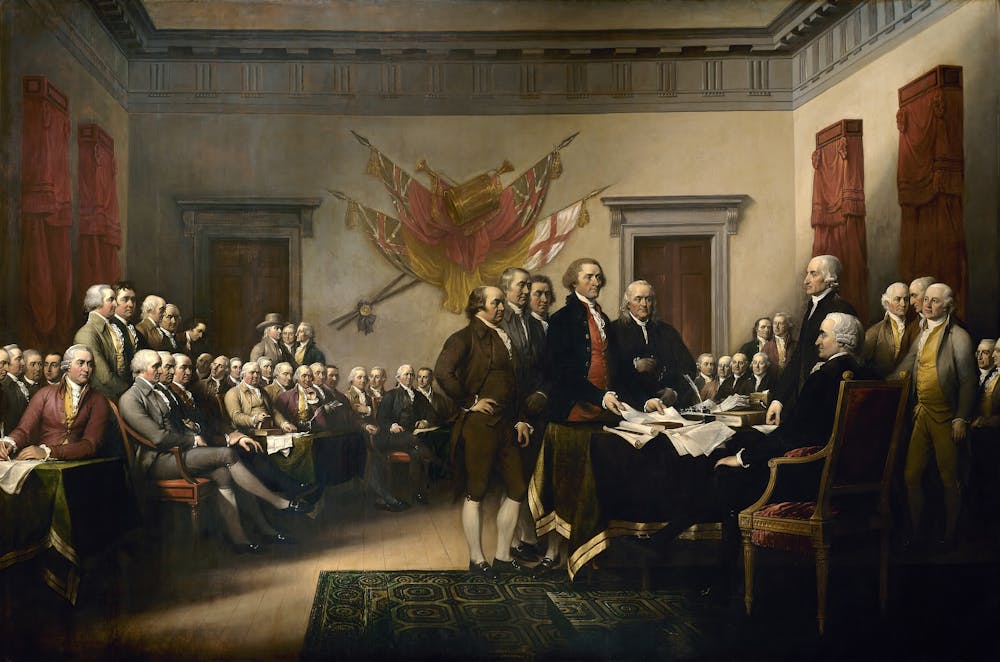
,_by_John_Trumbull.jpg)
The complaints weren’t actually about the king
Britain’s king is the subject of 33 verbs in a declaration that never once says “Parliament.” But nine of Congress’ most pressing grievances actually were about parliamentary statutes. And even British officials like those who cracked down on Colonial smuggling worked not for George III but for his Cabinet, which was in effect a creature of Parliament.
By targeting only the king – who played a purely symbolic role in the Declaration of Independence, akin to modern America’s Uncle Sam – Congress reinforced its novel argument that Americans did not need to cut ties to Parliament, since they had never had any.
The Declaration of Independence does not actually denounce monarchy
As Julian P. Boyd, the founding editor of “The Papers of Thomas Jefferson,” pointed out, the Declaration of Independence “bore no necessary antagonism to the idea of kingship in general.”
Indeed, several members of Congress, including John Dickinson of Pennsylvania, openly admired limited monarchy. Their beef was not with all kings and queens but with King George III – and him only as the front man for Parliament.
The Declaration of Independence fell short of its most pressing purpose
In June 1776, delegates who supported independence suggested that if Congress declared it soon, France might immediately accept its invitation to an alliance. Then the French Navy could start intercepting British supply ships bound for America that very summer.
But in reality it took French King Louis XVI a long 18 months to agree to a formal alliance, and the first French ships and soldiers did not enter the war until June 1778.
Abolitionists and feminists shifted the Declaration of Independence’s focus to human rights

In keeping with the Declaration of Independence’s largely diplomatic purpose, hardly any of its white contemporaries quoted its now-famous phrases about equality and rights. Instead, as the literary scholar Eric Slauter discovered, they spotlighted its clauses justifying one nation or state in breaking up with another.
But before the year 1776 was out, as Slauter also notes, Lemuel Haynes, a free African American soldier serving in the Continental Army, had drafted an essay called “Liberty Further Extended.” He opened by quoting Jefferson’s truisms “that all men are created equal” and “endowed by their Creator with certain unalienable Rights.”
By highlighting these claims, Haynes began the process of shifting the focus and meaning of the Declaration of Independence from Congress’ ordinance of secession to a universal declaration of human rights. That effort was later carried forward by other abolitionists, Black and white, by women’s rights activists and by other seekers of social justice, including Abraham Lincoln.
In time, abolitionists and feminists transformed Congress’ failed bid for an immediate French alliance into arguably the most consequential freedom document ever composed.
[The Conversation’s Politics + Society editors pick need-to-know stories. Sign up for Politics Weekly.]
Woody Holton, Professor of History, University of South Carolina
This article is republished from The Conversation under a Creative Commons license. Read the original article.
The heat wave hitting the northwestern U.S. and Canada has been shattering records, with temperatures 30 degrees Fahrenheit or more above normal. With drought already gripping the West, the intense heat has helped suck even more moisture from millions of acres of forests and grasslands, bringing dead vegetation in many regions to record-dry levels and elevating the fire danger to its highest categories.
With this combination of extreme drought, heat and dry vegetation, all it takes is a spark to ignite a wildfire.
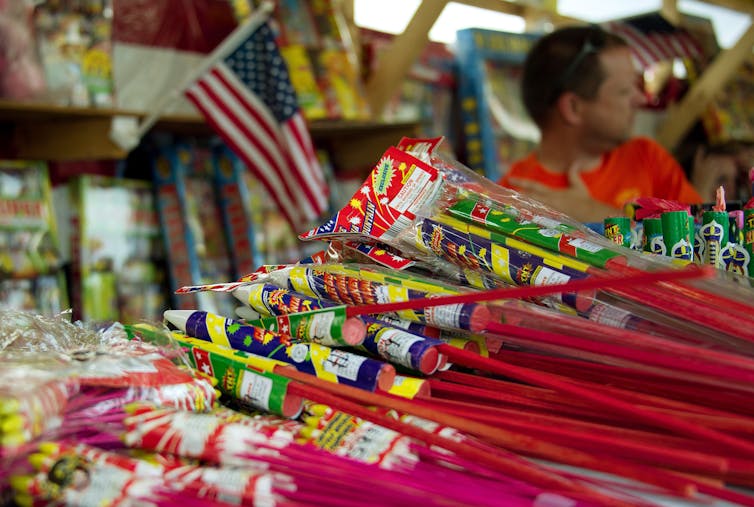
That’s why over 150 fire scientists, including us, along with fire officials across the West, are urging people to skip the fireworks this Fourth of July and to avoid other activities that could start a blaze.
Humans start the most wildfires on July Fourth
For decades, one of the most striking and predictable patterns of human behavior in the western U.S. has been people accidentally starting fires on the Fourth of July. From 1992 to 2015, more than 7,000 wildfires started in the U.S. on July 4 – the most wildfires ignited on any day during the year. And most of these are near homes.
With this year’s tinder-dry grasslands and parched forests, sparks from anything – a cigarette, a campfire, a power line, even a mower blade hitting a rock – could ignite a wildfire, with deadly consequences.
Year-round, humans extend the fire season by igniting fires when and where lightning is rare. And it is these very fires that pose the greatest threat to lives and homes: Over 95% of the wildfires that threatened homes in recent decades were started by people. Farther from human development – beyond the “wildland-urban interface” – the majority of area burned by wildfires in the West is still due to lightning.
Whether ignited by people or lightning, human-caused climate change is making fires easier to start and grow larger due to increasingly warm, dry conditions. The western U.S. saw these consequences during 2020’s record fire season – and the 2021 fire season has the ingredients to be just as devastating.
Here’s how to stay safe
We’ve spent years studying the causes and impacts of wildfires across North America and around the globe, and working with managers and citizens to envision how best to adapt to our increasingly flammable world. We’ve outlined strategies to manage flammable landscapes and thought carefully about how communities can become more resilient to wildfires.
When asked “What can we do?” many of our suggestions require long-term investments and political will. But there are things you can do right now to make a difference and potentially save lives.
Around your home, move flammable materials like dried leaves and needles, gas and propane containers and firewood away from all structures. Clean out your gutters. If you tow a trailer, make sure the chains don’t hang so low that they could hit the pavement and cause a spark. If you have to mow a lawn, do it in the cooler, wetter morning hours to prevent accidental sparks from igniting fires in dry grass. Don’t drop cigarette butts on the ground.
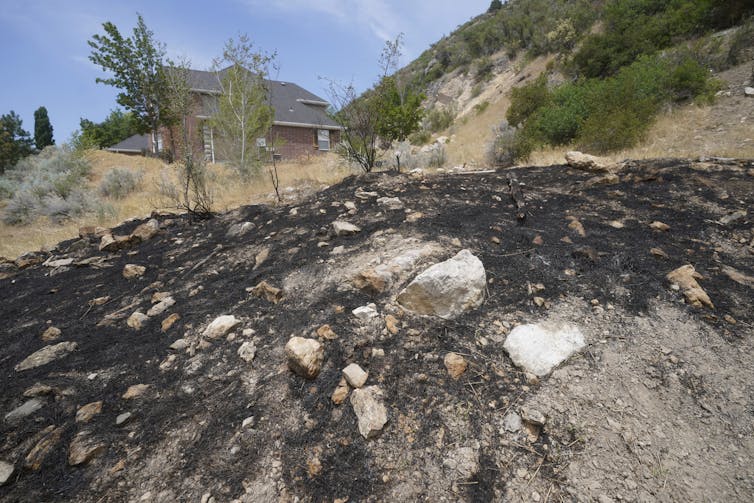
This Fourth of July, skip the fireworks and campfires – instead, catch a laser light show, make s’mores in the microwave and celebrate by keeping summer skies smoke-free for as long as possible.
Many communities are banning personal and public fireworks and voluntarily canceling fireworks displays because of wildfire concerns.
Adapting to increasingly uncharted territory
The fingerprints of human-caused climate change are all over the current drought, the recent heat waves, and what could become another record-setting fire season. Research highlights how human-caused climate change increases the frequency and magnitude of extreme events, including drought, wildfire activity and even individual extreme fire seasons.
Adapting to longer, more intense fire seasons will require reconsidering some traditions and activities. As you celebrate this Fourth of July, stay safe and help out the firefighters, your neighbors and yourself by preventing accidental wildfires.
This article was updated July 1, 2021, with more scientists joining.
[Understand new developments in science, health and technology, each week. Subscribe to The Conversation’s science newsletter.]
Philip Higuera, Professor of Fire Ecology and Paleoecology, The University of Montana; Alexander L. Metcalf, Associate Professor of Human Dimensions of Natural Resources, The University of Montana; Dave McWethy, Associate professor of Earth Sciences, Montana State University, and Jennifer Balch, Associate Professor of Geography and Director, Earth Lab, University of Colorado Boulder
This article is republished from The Conversation under a Creative Commons license. Read the original article.
Dogs available for adoption this week include mixes of boxer, Chihuahua, dachshund, husky, Labrador retriever, pit bull, Rottweiler and shepherd.
Dogs that are adopted from Lake County Animal Care and Control are either neutered or spayed, microchipped and, if old enough, given a rabies shot and county license before being released to their new owner. License fees do not apply to residents of the cities of Lakeport or Clearlake.
The following dogs at the Lake County Animal Care and Control shelter have been cleared for adoption (additional dogs on the animal control website not listed are still “on hold”).
Call Lake County Animal Care and Control at 707-263-0278 or visit the shelter online at http://www.co.lake.ca.us/Government/Directory/Animal_Care_And_Control.htm for information on visiting or adopting.
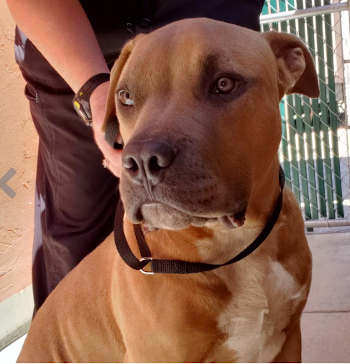
This young male American pit bull has a short brown coat.
He is in kennel No. 18, ID No. LCAC-A-1028.

“Boo” is a 10-year-old male Chihuahua-dachshund mix.
He is in kennel No. 19, ID No. LCAC-A-1039.
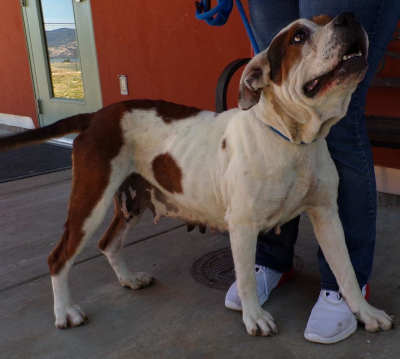
‘Hype’
“Hype” is a 5-year-old female boxer mix with a short red and white coat.
She is in kennel No. 20, ID No. LCAC-A-974.

Female dachshund
This 10-year-old female dachshund has a short black and tan coat.
She is in kennel No. 22, ID No. LCAC-A-1079.
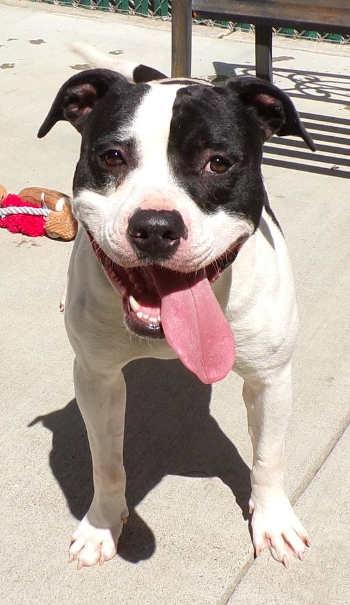
‘Jim’
“Jim” is a 2-year-old pit bull terrier mix with a short black and white coat.
He is in kennel No. 23, ID No. LCAC-A-810.

‘Koko’
“Koko” is a 10-year-old male Chihuahua mix with a short tan coat.
He is in kennel No. 24, ID No. LCAC-A-897.
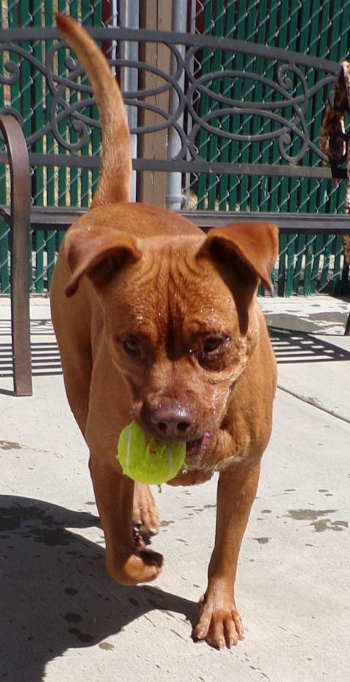
‘Luna’
“Luna” is a 3-year-old female pit bull terrier mix with a short red coat.
She is in kennel No. 25, ID No. LCAC-A-1078.

‘Tinker’
“Tinker” is a 4-year-old Chihuahua with a short tan coat.
She is in kennel No. 26a, ID No. 1074.

‘Peanut’
“Peanut” is a 1-year-old female Chihuahua with a short tan coat.
She is in kennel No. 26b, ID No. LCAC-A-1075.

Rottweiler-pit bull mix
This 1-year-old female Rottweiler-pit bull mix has a short black coat.
She has been spayed.
She is in kennel No. 27, ID No. LCAC-A-731.
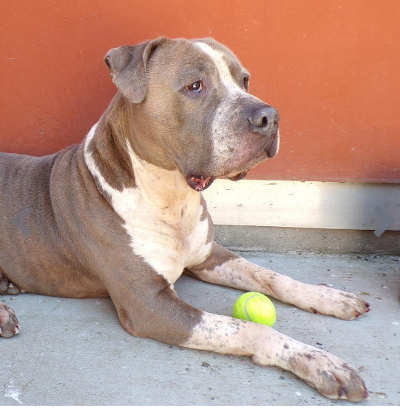
‘Brutus’
“Brutus” is a 5-year-old male pit bull terrier with a short gray and white coat.
He is in kennel No. 28, ID No. LCAC-A-670.
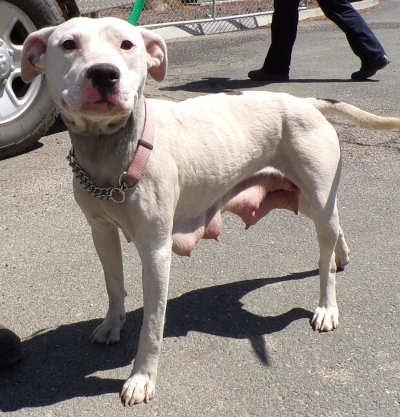
Female pit bull terrier
This 4-year-old female pit bull terrier mix has a short white coat.
She is in kennel No. 29, ID No. LCAC-A-812.

Female Rottweiler-shepherd
This 2-year-old female Rottweiler-shepherd mix has a medium-length black and red coat.
She is in kennel No. 30, ID No. LCAC-A-791.
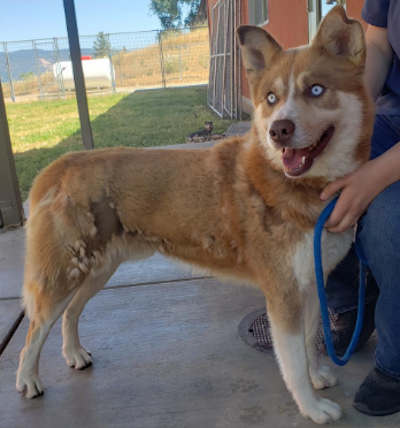
‘Apollo’
“Apollo” is a 2-year-old male husky mix with a medium-length red and white coat and blue eyes.
He is in kennel No. 31, ID No. LCAC-A-783.
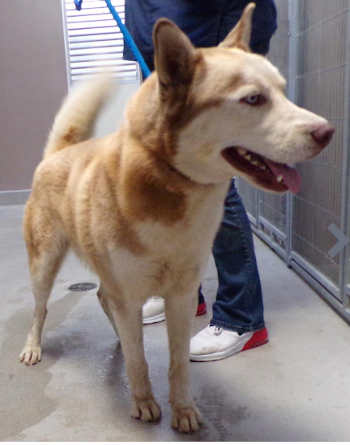
Male husky
This 2-year-old male husky has a medium-length red and white coat.
He is in kennel No. 32, ID No. LCAC-A-1024.

Female pit bull terrier puppy
This female pit bull terrier puppy has a short black coat with white markings.
She is in kennel No. 33b, ID No. LCAC-A-853.

Male pit bull terrier puppy
This male pit bull terrier puppy has a short black coat with white markings.
He is in kennel No. 33d, ID No. LCAC-A-855.
Email Elizabeth Larson at
NASA’s newest six-wheeled robot on Mars, the Perseverance rover, is beginning an epic journey across a crater floor seeking signs of ancient life.
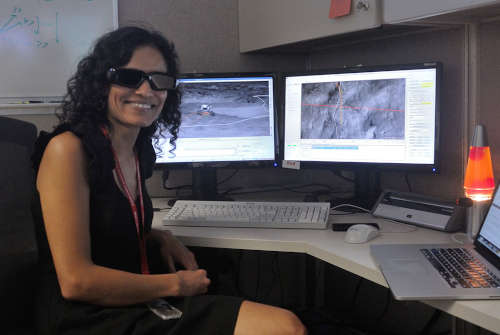
That means the rover team is deeply engaged with planning navigation routes, drafting instructions to be beamed up, even donning special 3D glasses to help map their course.
But increasingly, the rover will take charge of the drive by itself, using a powerful auto-navigation system. Called AutoNav, this enhanced system makes 3D maps of the terrain ahead, identifies hazards, and plans a route around any obstacles without additional direction from controllers back on Earth.
“We have a capability called ‘thinking while driving,’” said Vandi Verma, a senior engineer, rover planner, and driver at NASA’s Jet Propulsion Laboratory in Southern California. “The rover is thinking about the autonomous drive while its wheels are turning.”
That capability, combined with other improvements, might enable Perseverance to hit a top speed of 393 feet (120 meters) per hour; its predecessor, Curiosity, equipped with an earlier version of AutoNav, covers about 66 feet (20 meters) per hour as it climbs Mount Sharp to the southeast.
“We sped up AutoNav by four or five times,” said Michael McHenry, the mobility domain lead and part of JPL’s team of rover planners. “We’re driving a lot farther in a lot less time than Curiosity demonstrated.”
As Perseverance begins its first science campaign on the floor of Jezero Crater, AutoNav will be a key feature in helping get the job done.
This crater once was a lake, when, billions of years ago, Mars was wetter than today, and Perseverance’s destination is a dried-out river delta at the crater’s edge. If life ever took hold on early Mars, signs of it might be found there.
The rover will gather samples over some 9 miles, then prep the samples for collection by a future mission that would take them back to Earth for analysis.
“We’re going to be able to get to places the scientists want to go much more quickly,” said Jennifer Trosper, who has worked on every one of NASA’s Martian rovers and is the Mars 2020 Perseverance rover project manager. “Now we are able to drive through these more complex terrains instead of going around them: It’s not something we’ve been able to do before.”
The human element
Of course, Perseverance can’t get by on AutoNav alone. The involvement of the rover team remains critical in planning and driving Perseverance’s route.
An entire team of specialists develops a navigation route along with planning the rover’s activity, whether it’s examining a geologically interesting feature on the way to its destination or, soon, taking samples.
Because of the radio signal delay between Earth and Mars, they can’t simply move the rover forward with a joystick. Instead, they scrutinize satellite images, sometimes donning those 3D glasses to view the Martian surface in the rover’s vicinity. Once the team signs off, they beam the instructions to Mars, and the rover executes those instructions the following day.
Perseverance’s wheels were modified as well to help with just how swiftly those plans are executed: Along with being slightly greater in diameter and narrower than Curiosity’s wheels, they each feature 48 treads that look like slightly wavy lines, as opposed to Curiosity’s 24 chevron-pattern treads. The goals were to help with traction as well as durability.
“Curiosity couldn’t AutoNav because of the wheel-wear issue,” Trosper said. “Early in the mission, we experienced small, sharp, pointy rocks starting to put holes in the wheels, and our AutoNav didn’t avoid those.”
Higher clearance for Perseverance’s belly also enables the rover to roll safely over rougher ground — including good-size rocks. And Perseverance’s beefed-up auto-navigation capabilities include ENav, or enhanced navigation, an algorithm-and-software combination that allows more precise hazard detection.
Unlike its predecessors, Perseverance can employ one of its computers just for navigation on the surface; its main computer can devote itself to the many other tasks that keep the rover healthy and active.
This Vision Compute Element, or VCE, guided Perseverance to the Martian surface during its entry, descent, and landing in February. Now it’s being used full-time to map out the rover’s journey while helping it avoid trouble along the way.
The rover also keeps track of how far it’s moved from one spot to another using a system called “visual odometry.” Perseverance periodically captures images as it moves, comparing one position to the next to see if it moved the expected distance.
Team members say they look forward to letting AutoNav “take the wheel.” But they’ll also be ready to intervene when needed.
And just what is it like to drive on Mars? The planners and drivers say it never gets old.
“Jezero is incredible,” Verma said. “It’s a rover driver’s paradise. When you put on the 3D glasses, you see so much more undulation in the terrain. Some days I just stare at the images.”
Pat Brennan works for NASA.
The National Weather Service said hot and dry weather will persist across interior California through this weekend and into early next week.
The forecast expects Saturday to have temperatures in the low 90s.
In Clearlake, where the city’s Independence Day celebration will take place on Saturday, the forecast calls for a high of 94 degrees, with light winds of up to 8 miles per hour during daytime and nighttime hours.
At night, temperatures will drop into the low 60s, offering more comfortable conditions in Clearlake for watching the fireworks display over Clear Lake.
On Sunday, Lakeport’s daylong July 4 celebration will take place.
Independence Day’s weather forecast in Lakeport calls for a daytime high of 92 degrees, with a south southwest wind of up to 9 miles per hour in the afternoon.
By the time the nighttime fireworks begin, conditions will cool down, with lows in the high 50s and the wind becoming calm.
Temperatures into the middle of the week will hover in the mid 90s in the daytime and drop into the high 50s at night across Lake County, the National Weather Service said.
Email Elizabeth Larson at
Throughout May and June, Cal Fire-OSFM law enforcement personnel conducted targeted interdiction operations along the California border seizing nearly 80,000 pounds of illegal fireworks.
“There is no excuse for breaking the law and attempting to transport illegal fireworks into California,” said Chief Mike Richwine, California state fire marshal. “The illegal fireworks our peace officers have seized puts a dent into the potential devastating injuries, fires, and damage to property that these dangerous devices pose.”
Cal Fire’s illegal fireworks interdiction occurred along the border of California and Nevada and during the course of the operation, officers:
— Confiscated 79,411 pounds of dangerous fireworks;
— Conducted 932 traffic stops for various violations;
— Issued 215 citations for dangerous fireworks and additional violations;
— Arrested three individuals for various crimes.
In a press conference with the Los Angeles County Fire Department, the California Fire Chiefs Association, the US Attorney’s Office, and partnering agencies, Cal Fire – Office of the State Fire Marshal made their message clear: California has zero tolerance for illegal fireworks and will enforce the law.
The use of illegal fireworks continuously poses a major threat that results in firefighters responding to hundreds of fires and medical emergencies.
Each fiscal year, the state seizes over 220,000 pounds of fireworks requiring disposal, with over 280,000 pounds collected since July 1, 2020. In the past five years, firefighters have had to respond to over 5,000 emergencies caused by fireworks, with last year’s incidents skyrocketing over three times more the number of incidents than average.
These incidents caused serious injuries and millions of dollars in property damage.
Cal Fire wants everyone to enjoy the upcoming holiday and, along with fire service and its law enforcement partners, hopes to make this a safe and fire free July 4.
Cal Fire has a detailed fireworks safety resource guide at www.ReadyforWildfire.org. Remember, one less spark this July 4 means one less wildfire.