 How to resolve AdBlock issue?
News
LAKE COUNTY, Calif. — With triple-digit temperatures forecast through Monday, and many community members will be seeking opportunities to escape the heat.
For some, county library branches and peer support centers may be a great option.
While none of these are formal cooling centers, and capacity is limited at each site, they are invaluable community resources when temperatures climb.
Lake County’s four public library branches are open during their normal business hours.
While you cool off, check out the many new materials and digital services the Library has to offer — there is something for everyone.
If you are planning to visit, please be advised face coverings are required for people that are not vaccinated.
Library visitors self-attest they are fully vaccinated by entering the building with no mask on. Here is a list of Lake County Library locations, and their hours of operation:
Lakeport Library
1425 N. High St.
707-263-8817
Tuesday, 10 a.m. to 5 p.m.
Wednesday, 10 a.m. to 7 p.m.
Thursday through Saturday, 10 a.m. to 5 p.m.
Redbud Library (Clearlake)
14785 Burns Valley Road
707-994-5115
Tuesday, 10 a.m. to 5 p.m.
Wednesday, 10 a.m. to 7 p.m.
Thursday through Saturday, 10 a.m. to 5 p.m.
Middletown Library
21256 Washington St.
707-987-3674
Tuesday through Saturday, 10 a.m. to 5 p.m.
Upper Lake Library
310 Second St.
707-275-2049
Tuesday through Friday, noon to 5 p.m.
Saturday, 10 a.m. to 3 p.m.
With another summer heat wave upon us, Lake County Behavioral Health Services also reminds their peer support centers are open as a refuge from the heat.
Each provides an air-conditioned place to sit and rest. Water and light snacks are offered to guests, and restrooms are available. Referrals to social services can also be made. All are welcome.
The Big Oak Peer Support Center
13300 East Highway 20, Suite “O”
Clearlake Oaks
707-998-0310
Monday through Friday, 8:30 a.m. to 4:30 p.m.
Weekends, noon to 4 p.m.
Circle of Native Minds Cultural Center
845 Bevins St.
Lakeport
707-263-4880
Monday through Friday, 8:30 a.m. to 4:30 p.m.
The Harbor on Main
154 South Main St.
Lakeport
707-994-5486
Monday through Friday, 8:30 a.m. to 4:30 p.m.
La Voz de la Esperanza Centro Latino
14092 Lakeshore Drive
Clearlake
707-994-4261
Monday through Friday, 8:30 a.m. to 4:30 p.m.
Weekends, noon to 4 p.m.
Family Support Center
21389 Stewart St., Suite “E”
Middletown
707-987-9601
Monday through Friday, 8:30 a.m. to 4:30 p.m.
For some, county library branches and peer support centers may be a great option.
While none of these are formal cooling centers, and capacity is limited at each site, they are invaluable community resources when temperatures climb.
Lake County’s four public library branches are open during their normal business hours.
While you cool off, check out the many new materials and digital services the Library has to offer — there is something for everyone.
If you are planning to visit, please be advised face coverings are required for people that are not vaccinated.
Library visitors self-attest they are fully vaccinated by entering the building with no mask on. Here is a list of Lake County Library locations, and their hours of operation:
Lakeport Library
1425 N. High St.
707-263-8817
Tuesday, 10 a.m. to 5 p.m.
Wednesday, 10 a.m. to 7 p.m.
Thursday through Saturday, 10 a.m. to 5 p.m.
Redbud Library (Clearlake)
14785 Burns Valley Road
707-994-5115
Tuesday, 10 a.m. to 5 p.m.
Wednesday, 10 a.m. to 7 p.m.
Thursday through Saturday, 10 a.m. to 5 p.m.
Middletown Library
21256 Washington St.
707-987-3674
Tuesday through Saturday, 10 a.m. to 5 p.m.
Upper Lake Library
310 Second St.
707-275-2049
Tuesday through Friday, noon to 5 p.m.
Saturday, 10 a.m. to 3 p.m.
With another summer heat wave upon us, Lake County Behavioral Health Services also reminds their peer support centers are open as a refuge from the heat.
Each provides an air-conditioned place to sit and rest. Water and light snacks are offered to guests, and restrooms are available. Referrals to social services can also be made. All are welcome.
The Big Oak Peer Support Center
13300 East Highway 20, Suite “O”
Clearlake Oaks
707-998-0310
Monday through Friday, 8:30 a.m. to 4:30 p.m.
Weekends, noon to 4 p.m.
Circle of Native Minds Cultural Center
845 Bevins St.
Lakeport
707-263-4880
Monday through Friday, 8:30 a.m. to 4:30 p.m.
The Harbor on Main
154 South Main St.
Lakeport
707-994-5486
Monday through Friday, 8:30 a.m. to 4:30 p.m.
La Voz de la Esperanza Centro Latino
14092 Lakeshore Drive
Clearlake
707-994-4261
Monday through Friday, 8:30 a.m. to 4:30 p.m.
Weekends, noon to 4 p.m.
Family Support Center
21389 Stewart St., Suite “E”
Middletown
707-987-9601
Monday through Friday, 8:30 a.m. to 4:30 p.m.

Amid intensifying drought and record-breaking temperatures across the Western United States, Gov. Gavin Newsom on Thursday added nine counties to the regional drought state of emergency and called on Californians to voluntarily reduce their water use by 15% with simple measures to protect water reserves if drought conditions continue and to help maintain critical flows for fish and wildlife wherever possible.
“The realities of climate change are nowhere more apparent than in the increasingly frequent and severe drought challenges we face in the West and their devastating impacts on our communities, businesses and ecosystems,” said Gov. Newsom. “The entire state is in a drought today, and to meet this urgent challenge we must all pull together and do our part to reduce water use as California continues to build a more climate resilient water system to safeguard the future of our state. We’re proud of the tremendous strides made to use water more efficiently and reduce water waste, but we can all find opportunities this summer to keep more water in reserve as this drought could stretch into next year and beyond.”
The governor on Thursday signed an executive order calling on all Californians to voluntarily reduce their water use by 15% compared to 2020 levels through simple actions such as reducing landscape irrigation, running dishwashers and washing machines only when full, finding and fixing leaks, installing water-efficient showerheads and taking shorter showers.
These voluntary efforts complement specific local conservation mandates already in place in some communities experiencing acute water shortage conditions this summer.
State officials estimate an additional 15% voluntary reduction by urban water users from 2020 levels could save as much as 850,000 acre-feet of water over the next year for future use, or enough to supply more than 1.7 million households for a year.
The State Water Resources Control Board and the Department of Water Resources will monitor progress on voluntary conservation, reservoir storage, soil moisture and other metrics in the coming months to determine whether additional drought response actions are needed.
To help Californians take simple action to reduce water use by 15 percent, state agencies are partnering with local water suppliers to promote conservation tips through the Save Our Water campaign.
The campaign and website were critical resources for Californians during the 2012-2016 drought and remain a trusted information source on using water wisely.
During the 2012-2016 drought, Californians responded to the call to conserve, with many taking permanent actions that continue to yield benefits.
Statewide per capita residential water use declined 21% between the years 2013 and 2016 and today, the urban sector is using approximately 16% less on average statewide than in 2013.
Building California’s drought and climate resilience, local water suppliers and communities are also bolstering their drought planning and making forward-looking investments in water recycling, stormwater capture and reuse, groundwater storage and other strategies. Agricultural water users have made significant investments in irrigation efficiencies since the last drought.
Despite those efforts, many agricultural producers are experiencing severe reductions in water supplies this year and are fallowing land in response.
At Lopez Lake in San Luis Obispo County on Thursday, Gov. Newsom also signed a proclamation expanding the regional drought state of emergency to include nine additional counties where drought effects are increasingly severe or where state emergency response may be needed: Inyo, Marin, Mono, Monterey, San Luis Obispo, San Mateo, Santa Barbara, Santa Clara and Santa Cruz.
This action will enable state agencies to more quickly and effectively support drought response through actions such as expediting purchasing and contracting to complete projects that shore up water supplies.
While drought conditions exist across the state, the counties covered by the proclamations are experiencing severe impacts and are likely to benefit from these emergency actions.
Following the initial emergency proclamation issued in April for the hardest-hit counties, and its expansion in May, today’s executive action brings a total of 50 of the state’s 58 counties under the drought state of emergency.
The governor has also directed state agencies to take further actions to preserve critical water supplies, address drought impacts and protect people, natural resources and economic activity.
The governor in May proposed $5.1 billion in water resiliency investments over four years to bolster the state’s emergency drought response, build regional capacity to endure drought and safeguard water supplies for communities, the economy and the environment.
The administration is working with the Legislature to finalize budget investments that will address drinking water challenges in small and disadvantaged communities, support Sustainable Groundwater Management Act implementation and multi-benefit land repurposing and fund projects that improve ecosystem health for native fish and other wildlife, among other priorities.
Actions by the administration to address drought to date include:
— Since the 2019 enactment of legislation to help provide safe and affordable drinking water to communities that lack it, the Water Board so far has provided interim drinking water solutions to 496 communities, provided planning assistance to another 164 communities and provided long-term solutions to 110 small water systems to make them more climate resilient.
— State agencies in recent weeks have provided emergency support to several small communities and domestic well users with inadequate water supply problems.
— In close coordination with a wide range of stakeholders, state agencies assessed the drought vulnerability of water suppliers and ranked the most vulnerable systems in need of support. The effort also gathered recommendations from stakeholders on ways to improve drought contingency planning.
— Building on that assessment of drought vulnerability, the State Water Resources Control Board this year completed the state’s first drinking water needs assessment in which it identified small water systems and domestic wells that are failing or at risk of failing to meet the state’s drinking water standards.
— State review of voluntary water transfers between water right holders has been made more efficient to facilitate the movement of water to places where it is needed most.
— The Department of Water Resources, or DWR, updated its Household Water Supply Shortage Reporting website, which tracks voluntarily reported supply issues by counties.
— DWR installed a temporary emergency rock barrier across a channel in the Sacramento-San Joaquin Delta this summer to help slow the movement of saltwater and prevent contamination of water supplies for Delta agriculture and millions of Californians.
— State regulators have modified reservoir operations and water quality regulations to conserve water supplies in key reservoirs.
— With stakeholder input, the Administration in 2020 finalized a Water Resilience Portfolio, with more than 100 separate actions to be taken by state agencies to help California’s diverse regions endure drought, flood and changing precipitation patterns.
For more tips on saving water, visit www.saveourwater.com.
Learn more about current conditions, the state’s response and informational resources available to the public at the state’s new drought preparedness website.
Caltrans has awarded $34 million in state and federal funds to cities, counties, tribes and transit agencies throughout California to improve the state’s transportation network.
The grant money — including $25 million funded by Senate Bill 1 (SB 1), the Road Repair and Accountability Act of 2017 — will be used to plan sustainable transportation projects that reduce greenhouse gas emissions, improve the state highway system, enhance access to safe walkways and bikeways, and increase natural disaster preparedness.
“Investing in transportation planning is essential to our goal of providing a safe, sustainable system that advances equity and livability throughout the state,” said Caltrans Director Toks Omishakin. “These grants will help our communities create more connected routes for all residents, regardless of whether they travel by car, bike, foot or mass transit.”
Approximately $700,000 was awarded to tribes, agencies and local governments within Caltrans District 1 for transit and active transportation projects.
Sustainable Transportation Planning Grants were awarded to the following projects in Del Norte, Humboldt, Lake and Mendocino Counties:
— Humboldt Bay Trail Planning Study: Eureka to College of the Redwoods.
— Lake County Transit Development Plan Update.
— Feasibility study on mobility solutions for rural communities of inland Mendocino County.
— Tolowa Dee-ni' Nation Connected Communities Plan
Lake County will receive $103,580 for a project that involves updating the county’s 2015 Transit Development Plan, or TDP, for use by Lake Transit Authority and other local service providers, according to the grant award list.
First adopted in 2008, the TDP has helped guide the development of transit services providing improved mobility for area residents and visitors.
The region’s large populations of aging, disabled and economically disadvantaged residents relative to other regions of the State emphasizes the importance of the TDP, and past Lake Transit Authority audits have recommended frequent updates to address the most current ridership needs in a timely manner.
Such needs include those for less traditional options that provide flexibility and/or on-demand services, particularly for transit dependent users unable to access existing Lake Transit facilities due to physical or scheduling related barriers. A new update will include an examination of feasible alternatives.
Keeping the TDP current will also further transit planning goals of the Lake Regional Transportation Plan and the California Transportation Plan.
Mendocino County will receive $177,060 for a study to research mobility solutions/transit alternatives existent in the marketplace that have been implemented in similar locations, for applicability in our region.
The study will look at developing innovative solutions (including pilot projects) to meet mobility needs of these remote communities. Various public engagement tools will be utilized for community outreach.
Communities to be studied are Covelo, Laytonville, Brooktrails, Hopland and Potter Valley.
“These investments will positively impact our communities,” said District 1 Director Matt Brady. “Our local partners will use this opportunity to explore multimodal transportation solutions and ways to positively impact some of our District’s more disadvantaged communities."
In total, Caltrans allocated:
— $17.4 million — including $12.38 million from SB 1 — in Sustainable Communities Competitive and Technical Grants to 50 local, regional, tribal and transit agencies for climate change adaptation, complete streets, transportation and land use planning, and natural disaster preparedness. This includes more than $4 million to fund planning for 13 projects that improve safety and access for people who walk and bike.
— $12.5 million in Sustainable Communities Formula Grants, completely funded by SB 1, to metropolitan planning organizations to further regional transportation plans and sustainable communities strategies.
— $4 million in federally funded Strategic Partnership Grants to nine projects that will plan for next-generation freeways, improve transit options between communities, research alternative funding for road repairs, and advance the timely and efficient movement of goods throughout the state.
— Caltrans awards transportation planning grants each year through a competitive process to encourage local and regional projects. Applications are evaluated on how they further state transportation goals by identifying and addressing statewide, interregional or regional transportation deficiencies on the highway system.
View the FY 2021-22 Sustainable Transportation Planning Grant Program Award list for all of the planning grant project awardees.
The grant money — including $25 million funded by Senate Bill 1 (SB 1), the Road Repair and Accountability Act of 2017 — will be used to plan sustainable transportation projects that reduce greenhouse gas emissions, improve the state highway system, enhance access to safe walkways and bikeways, and increase natural disaster preparedness.
“Investing in transportation planning is essential to our goal of providing a safe, sustainable system that advances equity and livability throughout the state,” said Caltrans Director Toks Omishakin. “These grants will help our communities create more connected routes for all residents, regardless of whether they travel by car, bike, foot or mass transit.”
Approximately $700,000 was awarded to tribes, agencies and local governments within Caltrans District 1 for transit and active transportation projects.
Sustainable Transportation Planning Grants were awarded to the following projects in Del Norte, Humboldt, Lake and Mendocino Counties:
— Humboldt Bay Trail Planning Study: Eureka to College of the Redwoods.
— Lake County Transit Development Plan Update.
— Feasibility study on mobility solutions for rural communities of inland Mendocino County.
— Tolowa Dee-ni' Nation Connected Communities Plan
Lake County will receive $103,580 for a project that involves updating the county’s 2015 Transit Development Plan, or TDP, for use by Lake Transit Authority and other local service providers, according to the grant award list.
First adopted in 2008, the TDP has helped guide the development of transit services providing improved mobility for area residents and visitors.
The region’s large populations of aging, disabled and economically disadvantaged residents relative to other regions of the State emphasizes the importance of the TDP, and past Lake Transit Authority audits have recommended frequent updates to address the most current ridership needs in a timely manner.
Such needs include those for less traditional options that provide flexibility and/or on-demand services, particularly for transit dependent users unable to access existing Lake Transit facilities due to physical or scheduling related barriers. A new update will include an examination of feasible alternatives.
Keeping the TDP current will also further transit planning goals of the Lake Regional Transportation Plan and the California Transportation Plan.
Mendocino County will receive $177,060 for a study to research mobility solutions/transit alternatives existent in the marketplace that have been implemented in similar locations, for applicability in our region.
The study will look at developing innovative solutions (including pilot projects) to meet mobility needs of these remote communities. Various public engagement tools will be utilized for community outreach.
Communities to be studied are Covelo, Laytonville, Brooktrails, Hopland and Potter Valley.
“These investments will positively impact our communities,” said District 1 Director Matt Brady. “Our local partners will use this opportunity to explore multimodal transportation solutions and ways to positively impact some of our District’s more disadvantaged communities."
In total, Caltrans allocated:
— $17.4 million — including $12.38 million from SB 1 — in Sustainable Communities Competitive and Technical Grants to 50 local, regional, tribal and transit agencies for climate change adaptation, complete streets, transportation and land use planning, and natural disaster preparedness. This includes more than $4 million to fund planning for 13 projects that improve safety and access for people who walk and bike.
— $12.5 million in Sustainable Communities Formula Grants, completely funded by SB 1, to metropolitan planning organizations to further regional transportation plans and sustainable communities strategies.
— $4 million in federally funded Strategic Partnership Grants to nine projects that will plan for next-generation freeways, improve transit options between communities, research alternative funding for road repairs, and advance the timely and efficient movement of goods throughout the state.
— Caltrans awards transportation planning grants each year through a competitive process to encourage local and regional projects. Applications are evaluated on how they further state transportation goals by identifying and addressing statewide, interregional or regional transportation deficiencies on the highway system.
View the FY 2021-22 Sustainable Transportation Planning Grant Program Award list for all of the planning grant project awardees.
LAKE COUNTY, Calif. — The Lake County Sheriff’s Office is warning the community about a new phone scam.
On Thursday, the agency said it received reports that people had received a suspicious call by an individual identifying himself as Lt. Findley of the Lake County Sheriff’s Office.
This individual advised the people that they had warrants and fines for failing to appear for a court subpoena and the fines had to be paid immediately.
A phone number was provided, which authorities later learned led to a recording.
The individual who received the call disconnected with the individual and called the sheriff’s dispatch center.
If you or anyone you know is contacted with similar circumstances please hang up, do not give your information over the phone and contact The Lake County Sheriff’s Office central dispatch at 707-263-2690.
On Thursday, the agency said it received reports that people had received a suspicious call by an individual identifying himself as Lt. Findley of the Lake County Sheriff’s Office.
This individual advised the people that they had warrants and fines for failing to appear for a court subpoena and the fines had to be paid immediately.
A phone number was provided, which authorities later learned led to a recording.
The individual who received the call disconnected with the individual and called the sheriff’s dispatch center.
If you or anyone you know is contacted with similar circumstances please hang up, do not give your information over the phone and contact The Lake County Sheriff’s Office central dispatch at 707-263-2690.
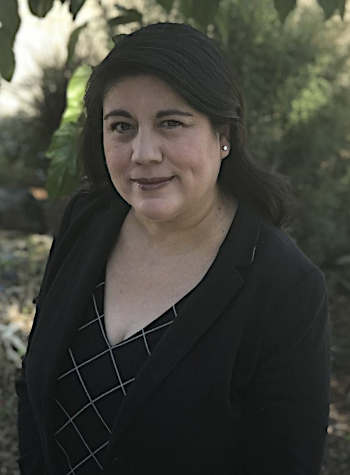
LAKE COUNTY, Calif. — Mendocino College’s Lake Center is welcoming its new director this month.
Mónica Flores’ first day at her new job was Thursday, July 1.
The Mendocino College Board of Trustees voted to approve her appointment at its June 9 meeting.
In her new role, she’ll oversee the Lake Center, a satellite campus in Lakeport located 30 miles from the main campus in Ukiah.
Flores told Lake County News the new position will give her the opportunity to implement positive, effective student success strategies at the center, which she said is an entry point to higher education for many Lake County students.
As she begins work at the center, she said it is going well, noting that while she had a lot to learn, “I have a great team at the Lake Center and amazing community support.”
She brings to her new role experience in secondary and higher education, which intersect at the community college level.
The Lake Center, in its location on Parallel Drive, opened for classes in January 2013. Later that year, then-Dean of Instruction Mark Rawitsch — the center’s longtime champion — retired, and a series of directors have followed him since.
Flores arrives at a time when there are hopes not just for long-term leadership for the center but for someone to guide the campus as it prepares to reopen fully for classes following the COVID-19 shutdown.
“The Lake County Friends of Mendocino College welcome Monica Flores as the new Lake Center director. We look forward to joining her efforts to advocate for programs and courses to benefit Lake County students attending Mendocino College,” said Friends member Wilda Shock.
Flores said she wants to continue building partnerships with K-12 school districts and improving dual enrollment pathways that allow high school students to work on their coursework and an associate degree at the same time so they can transfer to a university with sophomore or junior status, saving them time and money.
Her goals include increasing opportunities for community education and increasing services in Spanish. She said Mendocino College is a Hispanic-serving institution, which means that 25% of the overall enrollment is Hispanic. For the Lake Center, that percentage is 32%.
Shock said the Friends are supportive of Flores’ program goals for the campus.
Over the past seven years, Flores has worked as the program manager of the First Year Institute. Before that, she was with the College Assistance Migrant Program, leading teams that included counselors, faculty and classified staff in developing best practices for serving Latino and first generation college students in order to remove barriers, increase access to resources and front load students with tools for success.
She said that the team’s efforts led to improved retention and success rates for first year students and new institutional practices such as the New Student Welcome now available
to all first time students at Mendocino College.
Flores lives in Sonoma County, where she was raised, and has two children, a 10-year-old son and a 5-year-old daughter.
Experience in education
Born in Guadalajara, Mexico, Flores and her family moved to east Los Angeles when she was an infant.
Her father worked for actor Raymond Burr, known for his television portrayal of the attorney Perry Mason. When Burr decided to relocate to Sonoma County to build a vineyard and winery, he offered Flores’ father the opportunity to come with him.
So the Flores family moved to the Dry Creek/Alexander Valley area of Sonoma County when she was about 11 years old. Her father would work for Burr for 30 years; she remembers Burr as being a very nice and generous man.
Flores graduated from Geyserville High School, then went on to Stanford University, where she earned a Bachelor of Arts degree in American studies with an emphasis in race and ethnicity, and a Master of Arts in education.
She completed her teaching credential, with an emphasis in social society and bilingual education, simultaneously with her master’s degree.
Her educational career began in the classroom, with Flores doing her student teaching and then remaining on staff for a few years at Sequoia High School in Redwood City. There, she taught social studies and English as a second language for newcomer students.
Flores said she wanted to return to Sonoma County and she did, teaching summer school and then applying for, and getting, a job at Sonoma State University as assistant director of a Title VII grant aimed at increasing the number of bilingual teachers in the area.
“That was my entry into higher education,” she said.
She later moved into the student services coordinator for the Sonoma State School of Education.
Flores said she liked working in Sonoma State’s School of Education, where she was employed for nine years.
However, she said she missed working more with the community and K-12 students, so she moved to coordinating migrant education in Mendocino County, developing programs to help increase the academic and social well-being of migrant students.
She then went to work with Mendocino College’s College Assistance Migrant Program about seven years ago, and in the spring of 2018 moved to the First Year Institute. Both of those programs help first-year and first-generation students be successful in community college.
Through those programs, she worked with students from both Lake and Mendocino counties.
When the Lake Center director position became available earlier this year, Flores said she was excited to explore it. “I really saw an opportunity for myself to grow as a professional and to bring some of these practices into a different environment.”
She said the campus acts as a one-stop center for Lake County students, who can come and enroll for classes, apply for financial aid and get tutoring.
For many students in Lake County, the Lake Center is a door to enter higher education. Florist said there is a misconception that attending community college means students weren’t good enough to attend a four-year university, which isn’t true.
“We are an incredibly good option for them to start their college education,” she said.
“We’re seeing more students come to us lately who would be eligible to go to the university,” but can’t because of the financial constraints of COVID-19, Flores added.
They can get a strong educational foundation through community college and will be able to excel if they choose to transfer to a university setting. Flores said that in working in the university setting, she’s seen transfer students with a depth and maturity that she didn’t always see in high school students entering college.
As for what’s ahead, “For the Lake Center, we are going to be coming back with a lot of on-the-ground courses starting in the fall semester,” she said.
The reopening will take some adjustment, but Flores said she is confident they can make students, staff and faculty feel safe.
She’s also looking forward to opportunities to enhance the center, noting they have built good working relationships with K-12 educational partners and the community in general, and the Friends of Mendocino College Lake Center is a supportive and enthusiastic group.
“I think our challenges are more opportunities for us to continue to strengthen our center,” Flores said.
She wants to build a stable schedule of classes to create consistency for students, work with the college’s dean of centers to examine student needs, leverage online resources — being mindful of the challenges some Lake County students have with internet access — and successfully recruit more instructors, which has been a challenge.
“The pool is always open,” she said, referring to the recruiting pool.
As a first-generation college graduate herself, Flores is focused on that group of young people, many of whom lack access to resources, and have the challenge of English being their second language.
In her case, she recalled her parents’ support for education. “We always emphasize how important it is to build on the things you do have,” she said, explaining that first-generation college students can draw from the dreams and work ethic of their parents.
Flores said the college also needs to grow more professional teachers and trades people for the community, as there is a high need for employees in so many areas.
At the same time, Flores said the college needs to make sure its students are ready to take opportunities as they come their way, and people need to be ready to take on jobs and leadership.
“Education is always a strong cornerstone of that,” she said.
Email Elizabeth Larson at
LAKE COUNTY, Calif. — The Lake County Planning Commission will consider several more cannabis projects this week, including a large operation in High Valley.
The meeting will take place beginning at 9 a.m. Thursday, July 8, in the board chambers at the Lake County Courthouse, 255
The agenda is here.
To participate in real-time, join the Zoom meeting by clicking this link.
The webinar ID is 977 0073 1185, the pass code is 611583. Join by phone at 1-669-900-6833.
The meeting also can be viewed on the county’s Facebook page and on the county of Lake Youtube page.
At 9:05 a.m., the commission will hold a public hearing to consider planning’s staff’s recommendation to grant to applicants SourzHVR Inc., Elli Hagoel and Avi Pollack a major use permit and adopt a mitigated negative declaration based on the environmental analysis with the mitigation measure and conditions of approval to be incorporated.
The applicants are seeking the approvals for a major cannabis operation at High Valley Ranch, located at 11650 High Valley Road in Clearlake Oaks and formerly owned by PSI World, which sold the property to Aviona LLC. Online records show the ranch was sold in February for $8 million.
Aviona, formed to “own and manage real estate,” filed articles of organization with the California Secretary of State’s Office in January. Hagoel, who is involved with other cannabis businesses around the state, is listed as the manager, with Pollack also listed on the paperwork.
Pollack also has served as manager director of Pollack Trading, Avi Pollack Group and Pollack USA, and has been involved in commercial farming operations involving protea flowers and organic produce in other parts of California, including San Diego.
The staff report explains that the project property includes seven parcels totaling nearly 1,640 acres, with the cultivation and related activities to take place on a 649-acre parcel.
Altogether, the project, if approved, will include a total combined canopy area of 3,485,000 square feet and 11 buildings totaling 110,000 square feet for storage and drying of cannabis.
The ranch’s existing 13,000 square foot conference center will be used for packing, distribution (shipping and receiving), and other ancillary uses such as office space, with no internal or external improvements to this structure being proposed, the staff report said.
The water availability analysis states that only one of six wells on the property will be used for the operation, and that well was subjected to a step-drawdown test. An existing pond also won’t be used.
The project includes plans to add a new well near a proposed nursery and to have on-site water storage consisting of five 10,000-gallon water tanks to be pumped from the existing well.
Other timed items for Thursday’s meeting are as follows:
9:10 a.m.: Public hearing to consider approving Use Permit UP 19-41. Applicant/Owner: Voight Holdings LLC. Location: 425 and 500 Voight Road, Lakeport, CA on property consisting of 40+ acres. APNs: 008-043-02 and 008-032-65. The project proposes 124,800 square feet of cultivation area and 44,000 square feet. of canopy area to be completed in three phases. Greenhouse cultivation is proposed.
9:15 a.m.: Public Hearing to consider approving Use Permit UP 21-02. Applicant/Owner: Coastle LLC / Tyler Mitchell. Location: 6565 Wilkinson Road, 6620 State Route 29, 6213 Wilkinson Road, Kelseyville, CA on property consisting of 244+ acres. APNs: 007-015-13; 007-016-13 and 007-015-63. Approximately 487,922 square feet of outdoor cultivation is proposed.
9:20 a.m.: Continuation from Planning Commission hearing of June 24: Public Hearing to consider a Major Use Permit (UP 19-20). Applicant/Owner: LDM Operations Inc. Location: 7295 Adobe Creek Road, Kelseyville, CA; APN: 007-021-23. Due to a disagreement with the property owner, LDM Operations is no longer affiliated with the site and the application must be denied, according to the staff report.
Email Elizabeth Larson atThis email address is being protected from spambots. You need JavaScript enabled to view it. . Follow her on Twitter, @ERLarson, or Lake County News, @LakeCoNews.com.
The meeting will take place beginning at 9 a.m. Thursday, July 8, in the board chambers at the Lake County Courthouse, 255
The agenda is here.
To participate in real-time, join the Zoom meeting by clicking this link.
The webinar ID is 977 0073 1185, the pass code is 611583. Join by phone at 1-669-900-6833.
The meeting also can be viewed on the county’s Facebook page and on the county of Lake Youtube page.
At 9:05 a.m., the commission will hold a public hearing to consider planning’s staff’s recommendation to grant to applicants SourzHVR Inc., Elli Hagoel and Avi Pollack a major use permit and adopt a mitigated negative declaration based on the environmental analysis with the mitigation measure and conditions of approval to be incorporated.
The applicants are seeking the approvals for a major cannabis operation at High Valley Ranch, located at 11650 High Valley Road in Clearlake Oaks and formerly owned by PSI World, which sold the property to Aviona LLC. Online records show the ranch was sold in February for $8 million.
Aviona, formed to “own and manage real estate,” filed articles of organization with the California Secretary of State’s Office in January. Hagoel, who is involved with other cannabis businesses around the state, is listed as the manager, with Pollack also listed on the paperwork.
Pollack also has served as manager director of Pollack Trading, Avi Pollack Group and Pollack USA, and has been involved in commercial farming operations involving protea flowers and organic produce in other parts of California, including San Diego.
The staff report explains that the project property includes seven parcels totaling nearly 1,640 acres, with the cultivation and related activities to take place on a 649-acre parcel.
Altogether, the project, if approved, will include a total combined canopy area of 3,485,000 square feet and 11 buildings totaling 110,000 square feet for storage and drying of cannabis.
The ranch’s existing 13,000 square foot conference center will be used for packing, distribution (shipping and receiving), and other ancillary uses such as office space, with no internal or external improvements to this structure being proposed, the staff report said.
The water availability analysis states that only one of six wells on the property will be used for the operation, and that well was subjected to a step-drawdown test. An existing pond also won’t be used.
The project includes plans to add a new well near a proposed nursery and to have on-site water storage consisting of five 10,000-gallon water tanks to be pumped from the existing well.
Other timed items for Thursday’s meeting are as follows:
9:10 a.m.: Public hearing to consider approving Use Permit UP 19-41. Applicant/Owner: Voight Holdings LLC. Location: 425 and 500 Voight Road, Lakeport, CA on property consisting of 40+ acres. APNs: 008-043-02 and 008-032-65. The project proposes 124,800 square feet of cultivation area and 44,000 square feet. of canopy area to be completed in three phases. Greenhouse cultivation is proposed.
9:15 a.m.: Public Hearing to consider approving Use Permit UP 21-02. Applicant/Owner: Coastle LLC / Tyler Mitchell. Location: 6565 Wilkinson Road, 6620 State Route 29, 6213 Wilkinson Road, Kelseyville, CA on property consisting of 244+ acres. APNs: 007-015-13; 007-016-13 and 007-015-63. Approximately 487,922 square feet of outdoor cultivation is proposed.
9:20 a.m.: Continuation from Planning Commission hearing of June 24: Public Hearing to consider a Major Use Permit (UP 19-20). Applicant/Owner: LDM Operations Inc. Location: 7295 Adobe Creek Road, Kelseyville, CA; APN: 007-021-23. Due to a disagreement with the property owner, LDM Operations is no longer affiliated with the site and the application must be denied, according to the staff report.
Email Elizabeth Larson at