 How to resolve AdBlock issue?
News
The board will meet beginning at 9 a.m. Tuesday, July 27, in the board chambers on the first floor of the Lake County Courthouse, 255 N. Forbes St., Lakeport.
The meeting can be watched live on Channel 8, online at https://countyoflake.legistar.com/Calendar.aspx and on the county’s Facebook page. Accompanying board documents, the agenda and archived board meeting videos also are available at that link.
To participate in real-time, join the Zoom meeting by clicking this link.
The meeting ID is 930 3219 4127, pass code 555254. The meeting also can be accessed via one tap mobile at +16699006833,,93032194127#,,,,*555254#.
All interested members of the public that do not have internet access or a Mediacom cable subscription are encouraged to call 669-900-6833, and enter the Zoom meeting ID and pass code information above.
To submit a written comment on any agenda item visit https://countyoflake.legistar.com/Calendar.aspx and click on the eComment feature linked to the meeting date. If a comment is submitted after the meeting begins, it may not be read during the meeting but will become a part of the record.
At 10:30 a.m., representatives from the Lake County Water Resources Department, Office of Emergency Services, Environmental Health and the Lake County Drought Task Force, a workgroup organized by the California Department of Water Resources, will provide an update on the 2021 declared drought and its relationship with Clear Lake and its watershed.
On May 11, the board passed a resolution declaring a drought emergency that directed reports be made to the board so it can determine whether emergency conditions continue to exist.
That will be followed by a discussion timed for 11 a.m. in which the board will consider an urgency ordinance requiring land use applicants to provide enhanced water analysis during a declared drought emergency.
The Lake County Planning Commission has asked the board for additional guidance on projects with regard to water, as Lake County News has reported.
“The Planning Commission is given a difficult task to deal with many applications that have been working their way through a rigorous process to be considered eventually in their meetings,” said Board Chair Bruno Sabatier in his memo on the item. “During these meetings, water has become, rightfully so, a more sensitive subject matter due to our drought conditions. The Planning Commission has requested the board's assistance verbally multiple times on direction and guidance during these hard and difficult times where economic development and the urgent need to conserve water seem to be clashing.”
Sabatier notes that in the many Planning Commission meetings that he’s observed, including the appeals that the Board of Supervisors has heard, “often times only well reports are provided. Well reports do not provide any scientific review on the impacts that the project may have and offer little to no information to allow our staff to analyze the cumulative impact these projects may have on the surrounding area.”
He’s offering an urgency ordinance that provides guidance to Community Development staff that a hydrology report is required for all projects during the duration of our drought emergency declaration “and that the applicants draft a drought management plan on how to take part in our community in conserving water in comparison to pursue the full potential of their projects. This would impact all projects as water is part of all projects currently being reviewed.”
At 11:30 a.m., the board will consider a proposal from Supervisor Jessica Pyska and Supervisor Moke Simon for an interim urgency ordinance imposing a temporary prohibition — or moratorium — on the issuance of early activation permits for land use projects within the county’s unincorporated area.
Pyska and Simon’s memo to the board explains that the Community Development Department Ad-Hoc Committee has determined that the temporary moratorium is necessary in order to address a significant backlog of applications for early activation permits “and to ensure that such permits are not issued without a thorough consideration of the narrowly-prescribed circumstances pursuant to which such permits may be issued.”
The interim urgency ordinance also is needed to allow Community Development “sufficient time to study and assess various approaches to the land use permitting process to ensure that zoning regulations are developed whereby permittees are not delayed by an early activation process when a streamlined use permit process is more advantageous to effective land use planning, offers certainty to permittees, and fosters critical environmental review and public comment,” the memo explains.
If passed by a four-fifths vote, the urgency ordinance would be in effect for 45 days, Pyska and Simon’s memo said.
They said all early activation applications submitted before the effective date of the urgency ordinance and deemed acceptable by the Community Development Department will be allowed to proceed in the review process.
In other drought-related matters, in an untimed item Sabatier and Supervisor EJ Crandell will ask their colleagues to consider code enforcement priorities during the drought emergency as well as the creation of a code enforcement ad hoc committee.
During the drought emergency, Crandell and Sabatier suggest that code enforcement activities should align with drought-related priorities including illegal cannabis grows, illegal water trucks and hazardous vegetation.
“We feel that with the administrative penalties, an urgency water truck ordinance, and an action plan for attacking these new priorities that a Code Enforcement Ad Hoc Committee should be created to work efficiently and collaboratively to move these action items along,” Crandell and Sabatier wrote in their memo.
They suggest that the ad hoc committee should include themselves along with the interim Community Development director, county counsel, code enforcement manager, sheriff, water district director or their designees.
Also on Tuesday, the board is scheduled to get an update on COVID-19 at 9:06 a.m., present a proclamation recognizing Lake County AmeriCorps CivicSpark Fellows at 9:30 a.m. and hear a CivicSpark presentation on fire mapping at 9:35 a.m.
At noon, the board is set to get a presentation from the Lake Area Planning Council on the regional transportation plan and active transportation plan.
The full agenda follows.
CONSENT AGENDA
5.1: Allocation of cannabis taxes to the Middle Creek Restoration Project design cost.
5.2: Adopt Proclamation Recognizing Lake County AmeriCorps CivicSpark Fellows.
5.3: Approve addition of a special meeting date to the board’s annual meeting calendar for 2021.
5.4: Approve leave of absence request for Social Services employee Bonnie Ceja from Dec. 16, 2021, through June 1, 2022, and authorize the chair to sign.
5.5: Approve revision to the applicant interview travel expense reimbursement policy.
5.6: Approve minutes of the Board of Supervisors Meetings June 8, 2021, June 15, 2021, and June 22, 2021.
5.7: Approve second reading of an ordinance amending Section 21-3.7 of Chapter 21 of the Ordinance Code of the County of Lake by Adopting a Sectional District Zoning Map No. 3.7(b) 1.403.
5.8: Approve second reading of an ordinance amending Section 21-3.7 of Chapter 21 of the Ordinance Code of the County of Lake by Adopting a Sectional District Zoning Map No. 3.7(b) 1.404.
5.9: Adopt resolution to continue participation in the Abandoned Vehicle Abatement Service Authority and extend the vehicle registration fee/service fee for the Abandoned Vehicle Abatement Program and authorize the chair to sign.
5.10: Approve the creation of an extra help museum assistant and extra help museum technician.
5.11: Approve a purchase order for the purchase of a John Deere excavator for county road maintenance, and authorize the Public Works director/assistant purchasing agent to sign the purchase order.
5.12: Approve contract between county of Lake and The Regents of the University of California for training services in the amount of $225,292.50, from July 1, 2021 to June 30, 2022, and authorize the chair to sign.
TIMED ITEMS
6.2, 9:06 a.m.: Consideration of update on COVID-19.
6.3, 9:30 a.m.: Presentation of proclamation recognizing Lake County AmeriCorps CivicSpark Fellows.
6.4, 9:35 a.m.: CivicSpark presentation on fire mapping.
6.5, 10:30 a.m.: Presentation of 2021 drought, Clear Lake.
6.6, 11 a.m.: Consideration of an urgency ordinance requiring land use applicants to provide enhanced water analysis during a declared drought emergency.
6.7, 11:30 a.m.: Consideration of an interim urgency ordinance imposing a temporary prohibition (moratorium) on the issuance of early activation permits for land use projects within the unincorporated area of the county of Lake.
6.8, 12 p.m.: Consideration of presentation by the Lake Area Planning Council on the regional transportation plan and active transportation plan.
UNTIMED ITEMS
7.2: a) Discussion and consideration of code enforcement priorities during the drought emergency; and b) consideration of a code enforcement ad hoc committee.
7.3: CivicSpark Fellow presentation: Amendments to Chapter 23 — Clear Lake Shoreline Ordinance for the Lake County Water Resources Department.
7.4: (a) Consideration to waive the formal bidding process, pursuant to Lake County Code Section 38.2, as it is not in the public interest due to the unique nature of goods or services; and (b) consideration of tenth amendment to the agreement between the county of Lake and Cerner Corp. for Anasazi Software and Support Services for fiscal years 2020-21 and 2021-22 for a sum of $95,000.00 and authorize the board chair to sign the amendment.
CLOSED SESSION
8.1: Conference with legal counsel: Significant exposure to litigation pursuant to Government Code section 54956.9 (d)2)(e)1) — one potential case.
8.2: Sitting as the board of directors of the Lake County IHSS Public Authority: Conference with (a) Chief Negotiator M. Long and County Negotiator C. Markytan; and (b) Employee Organization: California United Homecare Workers Union Local 4034.
8.3: Conference with legal counsel: Existing litigation pursuant to Gov. Code section 54956.9(d)(1): Settling States v. McKesson, Cardinal Health and AmerisourceBergen (“Distributors”), and manufacturer Janssen Pharmaceuticals, Inc., Johnson & Johnson, et al.
Email Elizabeth Larson at
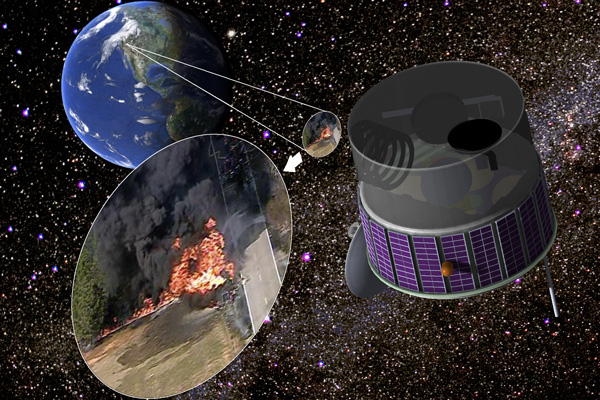
BERKELEY — California's fire season is in full swing and could well be worse than in 2020, but new tools are on the way to help responders more rapidly locate wildfires once they break out and, ideally, quickly extinguish them before they get out of control.
With the help of a $1.5 million grant from the Gordon and Betty Moore Foundation, a University of California, Berkeley, physicist and a firefighter-turned-scientist plan to outfit spotter planes with improved infrared detectors to learn more about how fires spread. And within four years, they hope to send similar systems into space for 24/7 fire discovery and monitoring.
Real-time airborne infrared data, combined with machine learning algorithms that can map hot spots in thermal images within milliseconds, will help them create “fire behavior” maps for firefighters within 20 minutes of an outbreak.
The detectors can also provide information on flame length and geometry that, combined with wind speed and humidity data, could be modeled to predict where and how fast a fire will spread.
The airborne detectors will provide a proof-of-concept toward achieving the team’s ultimate goal, which is to design an instrument package that would sit on geostationary satellites and continuously look for fire outbreaks over the Western U.S. or other fire-prone areas around the world.
“We plan to build a system that really delivers a better, more detailed spatial characterization of fires to firefighters in real time,” said Tim Ball, a former professor at the University of Nevada, Reno, and founder and president of Fireball Information Technologies LLC, a Reno-based fire assessment and mapping company with operations throughout the Western U.S. “This will also improve our predictive models to a degree that improves firefighter safety and the tactical and strategic decision making on the ground.”
“One study estimated that if you can just discover and get to a fire earlier, you would save $8 billion dollars over a decade,” said Carl Pennypacker, a physicist at UC Berkeley’s Space Sciences Laboratory, or SSL, and co-principal investigator with Ball on the grant. “If firefighters could be alerted to a fire within 10 minutes — if they knew where it was and could get to it, even without any heroic measures, like airborne tankers on constant alert — that saves a lot of money and lives.”
Pennypacker first proposed such a satellite-borne fire spotter more than seven years ago, to be called the Fire Urgency Estimator on Geosynchronous Orbit, or FUEGO.
Since then, he has lowered his sights a bit, he said, looking also at airborne surveillance and hooking up with the ALERTWildfire group at UC San Diego that maintains a network of near-infrared cameras around the state for early confirmation and potential suppression of incipient wildfires.
In the past few years, Pennypacker also connected with Ball, who started Fireball 20 years ago in an attempt to better predict how fires will spread and has connections with Cal Fire, California’s firefighting unit; the National Forest Service, which flies its own fire-spotting planes; and firefighting teams on several continents.
The two teamed up with engineers at SSL — a laboratory that has built more than 100 instrument packages for satellite missions over the past 60 years — to design and build the detector systems.
Pennypacker’s expertise is in analysis software: He was a co-founder of the 2011 Nobel Prize-winning team that in 1998 analyzed light from supernovas to discover dark energy. He and Ball now work with UC San Diego’s ALERTWildfire and High Performance Wireless Research and Education Network, or HPWREN, pioneers in early fire-camera technology and the Internet provider that connects the the so-called pan, tilt, zoom near-infrared cameras, to analyze the images to confirm fires between 1 and 5 minutes after ignition.
Pennypacker said that he and Ball's experience with firefighters leads them to believe “that the information is changing the culture of fire agencies. Because they can understand the challenge of particular fires faster and more thoroughly, they can respond in more effective ways.”
Changing fire regime
“It is not unusual for wildfires to burn for 20 minutes or more before being reported, by which time they can be beyond easy control,” Ball said. The 2018 Camp Fire that destroyed the community of Paradise in Northern California was beyond control before any fire crews could reach the point of ignition. It ultimately burned 340 square miles, took 85 lives and cost more than $24 billion in losses and fire suppression costs. In 2018 alone, California wildfires caused economic losses of nearly $150 billion, according to a UC Irvine study.
“The actual number of fires is down from the 20-year average, but the intensity is up, the size is way up,” Ball said. “Although we have fewer fires, they burn a lot more acres.”
Climate change caused by burning of fossil fuels, Pennypacker said, is one of the major culprits.
“There are many ways in which climate change is impacting fires now: The number of drought years has been high in the last three decades. Warmer temperatures and drought extend the fire season. Higher temperatures reduce the relative humidity, causing especially fine fuels to be drier and more easily ignited. This is especially pronounced at night — fires used to die at night, but now they keep roaring. There are more strong wind events, which both fan flames to higher intensity and carry the resulting embers farther. When the fire-thrown embers land in the drier fine fuels, spot fires erupt carrying fires forward at a much faster speed than just a normal flame front — sometimes up to tens of miles an hour,” he said.
While the tools for fighting fire have improved a great deal — bigger, better aircraft; more agile fire engines; better firefighter training — Ball said it is evident that we are falling behind the increase in fire destructiveness.
Areas that have lagged significantly are persistent, real-time intelligence and predictive understanding of fire spread. These would help firefighters stay a step ahead, rather trying to catch up with the way that fires are changing, he said.
While a handful of companies in the Western U.S., including Fireball, offer assistance — fire-spotting planes, helicopters and drones, as well as modeling software to predict a fire’s movement — Cal Fire, for the most, part relies on planes flown once daily by the U.S. Forest Service and flown only at night, because the standard detectors are unable to handle the enormous dynamic range of infrared radiation required to characterize active fires.
“That is what is different about what we are doing,” Ball said. “We can measure tiny spot fires and huge flame fronts, then deliver maps depicting flame size, intensity — energy release — and rates of spread to firefighters on the ground just minutes later. These fire characteristics are, at the same time, what firefighters need to know for tactical and strategic decision-making and what predictive models need to project future fire conditions.”
Similarly, the UC Berkeley Fuego Group’s geosynchronous satellite payload will fill an unmet need on the basis of solid, cross-disciplinary understanding. Pennypacker says:
“Our satellite design benefits not only from recent advances in infrared imaging, but also from careful study of signal background and considering how best to recognize small fire signals in that background, as well as optimizing the trade-off between spatial resolution and time to detect/report a fire,” Pennypacker said. “The result is that we can scan the entire fire-prone Western U.S. many times per minute and process the sequence to detect fires of about the same footprint as two semi-trailers. This is a breakthrough in fire detection capability.”
Pennypacker and Ball emphasized that the airborne system will play the important role of cross-checking the calculations of small signal detectability and other aspects of calibration for the geostationary instruments.
“The airplane system can measure signal strengths and backgrounds and test data flows and analysis software,” Pennypacker said. “Thus, when we launch the satellite in a few years, we will be flying a well-tested and proven system.”
Robert Sanders writes for the UC Berkeley News Center.
Forecasters said a surge on “monsoonal moisture” will bring shower chances and a few isolated thunderstorms to the region.
Exact details on shower and isolated thunderstorm coverage and timing remain highly uncertain, the agency said late Sunday.
The potential for lightning raises concerns about the potential for fire starts considering how dry vegetation is across Northern California.
Any isolated thunderstorms this week are expected to also carry some small amounts of rainfall, the National Weather Service reported.
The specific Lake County forecast anticipates chances of showers and thunderstorms late Monday night, with light winds.
Temperatures this week also are expected to climb into the high 90s during the day, with nighttime temperatures in the high 60s.
Visit www.weather.gov/eka for more specific forecast information.
Email Elizabeth Larson at
The following cats at the shelter have been cleared for adoption.
Call Lake County Animal Care and Control at 707-263-0278 or visit the shelter online at http://www.co.lake.ca.us/Government/Directory/Animal_Care_And_Control.htm for information on visiting or adopting.
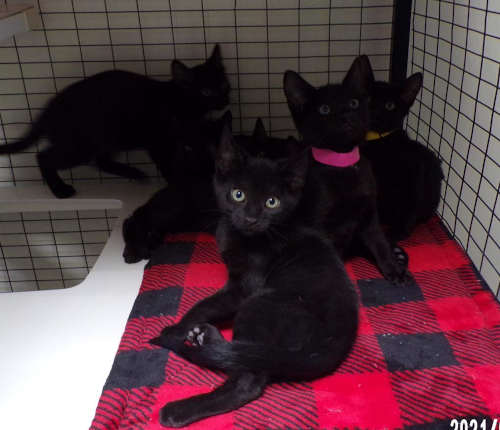
Domestic short hair kittens
This litter of domestic short hair kittens includes one male and five females.
They are in cat room kennel No. A1, ID Nos. LCAC-A-1172, 1173, 1174, 1175, 1176 and 1178.
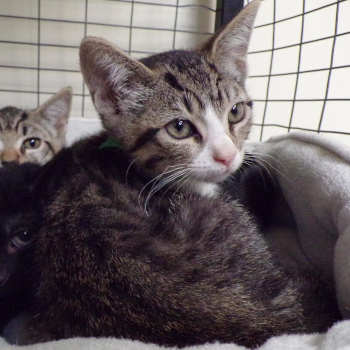
Male domestic shorthair kitten
This male domestic short hair kitten has a gray tabby coat.
He is in cat room kennel No. 11c, ID No. LCAC-A-1144.

Female domestic shorthair kitten
This female domestic short hair kitten has a black coat.
She is in cat room kennel No. 11d, ID No. LCAC-A-1145.
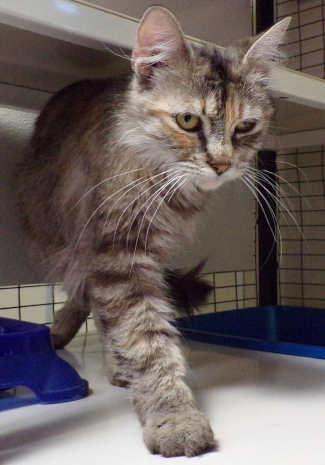
Domestic medium hair cat
This 3-year-old female domestic medium hair cat has a brown tabby coat.
She is in cat room kennel No. 58, ID No. LCAC-A-1029.
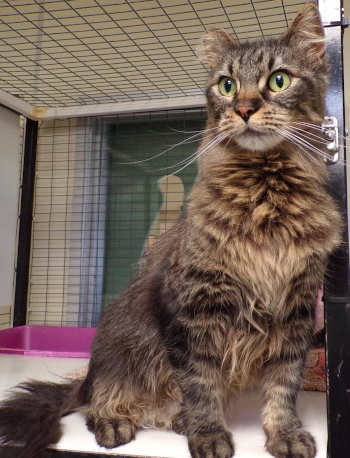
‘Furball’
“Furball” is a 6-year-old female domestic longhair cat with a brown tabby coat.
She is in cat room kennel No. 84, ID No. LCAC-A-969.
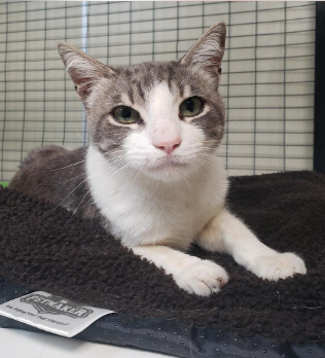
Male domestic shorthair
This male domestic shorthair has a gray and white coat.
He is 1-year-old and weighs nearly 6 pounds.
He is in cat room kennel No. 120, ID No. LCAC-A-874.

Female domestic shorthair
This 2-year-old female domestic shorthair cat has a white coat and blue eyes.
She is in cat room kennel No. C123, ID No. LCAC-A-1152.

Male domestic shorthair kitten
This male domestic shorthair kitten has a black coat.
He is in cat room kennel No. 150, ID No. LCAC-A-1165.

Male domestic shorthair kitten
This male domestic shorthair kitten has a gray tabby coat.
He is in cat room kennel No. 172, ID No. LCAC-A-1345.
Email Elizabeth Larson at
Dear Lady of the Lake,
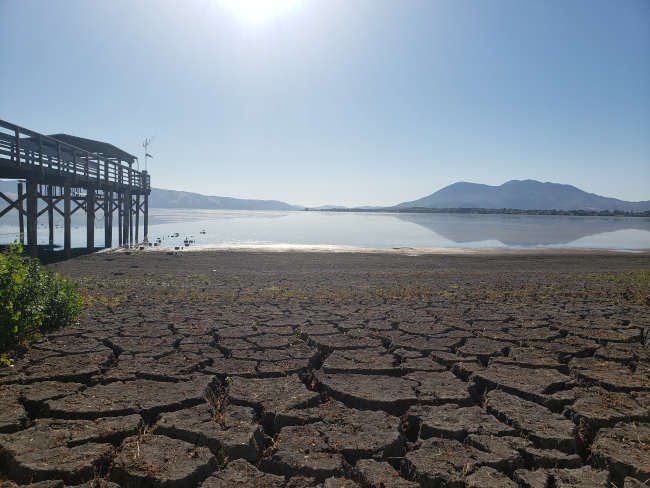
We are in a drought and I am worried about the impact of this drought on the Lake County economy and the ecosystems of Clear Lake. What should we expect with the current drought when it comes to boating, fishing, and drinking water from Clear Lake? Is there really anything we can do?
— Distressed about drought in Nice
Dear Distressed,
Well I am glad you are paying attention and acknowledging that things in the lake are interconnected. That really is step one. I also am guessing, because you are worried about the drought situation, that you are doing everything you can to conserve as much water as possible, especially living in Nice where residents are reliant on drinking water from Clear Lake. I am also very happy that you acknowledged some of the immediate problems we are facing.
Yes, we are in a drought that will extend into the fall of this year and we have to consider that it might extend into next year too. While we don’t know the future, we can prepare for it, both logistically and mentally.
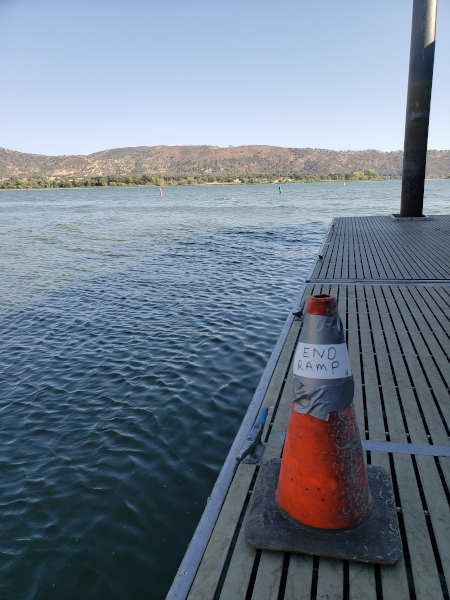
While other reservoirs around the state are already getting too low for boater access, Clear Lake has several accessible ramps that will probably stay open in some capacity for about another month into the summer.
This has been good news for our local economy because we have and are able to accommodate boaters, fishers and water enthusiasts that have not been able to get access to other lake locations around the northern part of that state.
Boating access
There are ideas about extending city or county ramps if the water gets too low to launch a boat. While that concept is simple in theory, the practicalities of executing projects like that are very complex, especially within the designated “lakebed” zone of the lake.
Ramp work that will include grading, concrete or gravel placement, is fairly large-scale construction that requires surveying, engineering designs, environmental plans, permitting, contracting and materials.
The environmental impact plans are most essential as these projects could negatively impact lake health. This is especially true for sensitive fish species like our endemic Clear Lake Hitch (Lavinia exilicauda chi) and other sensitive fish species.
For any lake grading and construction project to move forward, it has to satisfy requirements from both the County of Lake Water Resources Department (Shoreline Ordinance Ch. 23) and the California Department Fish and Wildlife.
Most of these rules outline the type of work allowed and the time of year when work within the lake would have minimal impact on aquatic wildlife.
For lake projects, the project planning and permitting process is lengthy and the review and approval process takes time to complete.
When you think about it, we wouldn’t want it any other way because these restrictions are really the only safeguards put in place to protect fish and wildlife habitat and shoreline properties on the lake. It’s also one of the controls in place for improving Clear Lake water quality — which I think we all agree is important and worthy of protection.
It’s unclear if drought ramp work would be allowed even if the lakebed at the end of the ramp is dry, but it’s safe to say that the ramps might go dry before work could actually begin, especially because no public ramp project permits have yet submitted to the county’s Lakebed Management (at the time of this article going to press).
It’s also important to consider the cost and effort to construct these projects when they might be underwater in a mere three to five months. It’s a hard decision and decision makers have to decide if it’s the best use of taxpayer money.
There are many pros and cons to consider. Meanwhile, people can access the lake with kayaks, canoes, hand launch with trolling motors, and folks can enjoy shore fishing or wading, which is easier of course in rocky areas like Nice then muddy areas like the southern shore in the Upper Arm.
Drinking water
Drinking water is a little more difficult to both describe and address when it comes to drought, mostly because the eventual severity of this current drought is very uncertain at this time.
One thing to realize is that recent declarations of emergency and a top-down focus both at the state and local level provide for resources and emergency measures should a drinking water emergency occur due to water shortages.
Basically, the state has allocated funds and resources to help prepare and plan for impacts from drought in preparation, much like is done for wildfires both in planning and response.
Public and private treatment operators can — and have — extended their intake lines to get better access to cooler water as the shoreline recedes.
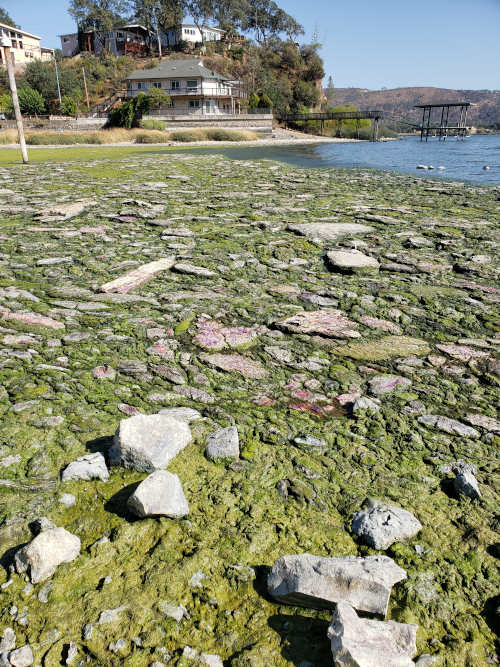
Clear Lake is a very large lake and while the quantity issue is important to consider, the more likely scenario is that accumulation of algae and cyanobacteria during low lake levels will have the most concerning impact on drinking water treatment consistency, capability and cost.
Think of Clear Lake like a very old aquarium that hasn’t had a water change or refill in 15 months and is now sitting in a sunny window all summer. The pumps get clogged with algae and the glass sides will get green. This is the same thing that is happening to our drinking water infrastructure like the pipes and screens that run along the bottom of the lake.
The best thing we can do, if we get our water from Clear Lake, is to fully utilize and preserve every single drop that comes out of our tap. We all need to maximize what we have and help to ease the burden on the treatment process. We might not run out of water, but the more water that is used, the more that needs to be treated and that will coincide with an increase in effort and cost.
The treatment process makes drinking water safe and clean, the majority of Clear Lake systems are in the top treatment tiers when it comes to the category or grade of systems available for treating drinking water.
Another thing to consider and be aware of, is that starting this year, the public and private drinking water purveyors on the lake are required, by state order, to monitor their finished water at the tap for microcystin cyanotoxins concentrations (I know that is a mouthful!).
Microcystins are the specific toxins produced by the most common cyanobacteria or blue green algae found in Clear Lake called microcystis. Any toxin triggers above an established threshold (0.3 ug/L) require continued monitoring and immediate response action.
Response actions can include switching to an intertie (alternate source or intake) if available, using reserve tanks or backup, or incorporating additional filtering and treatment methods.
In previous years, drinking water purveyors and companies could monitor the cyanotoxins at the finished tap water end on a volunteer basis and as far as I know from communications with Kennedy Environmental LLC (the locally-owned company that has done the testing at the taps for many years) there were never any finished tap water samples that resulted in an exceedance of the health hazard trigger for toxins in the drinking water.
This year, under state-mandated monitoring, there have also been no exceedances at the tap water end for the public and private purveyors on the lake who are monitoring.
To me, this indicates that the treatment systems are dependable and are working exactly the way they are supposed to, even during the extreme bloom conditions that have been occurring in the lake so far this year.
The end result is most important. We do have safe and clean drinking water, which is pretty miraculous when you look at the water in the lake right now and compare that to the finished, treated product that comes out of your tap.
It must be noted that some smells and colors are normal, as the physical and chemical process for treatment can sometimes leave residues. Water treatment operators and staff work very hard and most of them live in their own service area, and their family, just like yours, also relies on safe and clean water.
You can access your public or private system monitoring data, as well as other system information at the CA Drinking Water Watch website.
The cyanobacteria monitoring results are not yet available on this site, as that order is fairly new. However, this website also includes information like the system details, facilities, monitoring results and schedules, violations or enforcement actions, and copies of consumer confidence reports.
This resource is provided by the Drinking Water Division of California and provides information for all state-regulated systems, not just those with intakes on Clear Lake.
Since you live in Nice, you can go to the site and search for “Nice Mutual Water Co.” in Lake County. I can see that they serve a population of 2,731 and have about 1,000 service connections. I can also see from the “monitoring” menu that they monitor the water at their intake site, in the lake, and the finished water once treated.
The homepage also has a map feature, in case you don’t know what system you are a part of or you are interested in drinking water in another county or city.
This is a great resource to have access to if you wish to be more informed about your drinking water — wherever it comes from.
While so far things seem relatively stable right now, we should prepare for a point in the season when we will see an interaction of quantity (low lake levels) and quality (extremely severe blooms of algae and cyanobacteria) impacting drinking water systems. We as consumers and water users might have to significantly increase our water conservation efforts.
The dedicated staff operating these systems around the lake are learning more about their systems and how to improve their treatment and delivery every day. They are watching that Rumsey gauge, monitoring the lake level, planning and installing extended lines and double checking filters, sampling and analyzing pH and other indicators, calibrating fluorometers, and testing equipment. And they are sharing data and information with each other.
In a 2018 article in the Journal of Water Resources Planning and Management, J. Lund referred to one of the lessons learned from the previous 2012-2016 drought, in that it “... brought innovations and improvements in water management, some of which will better prepare California for future droughts.”
I believe that this lesson still applies, but unlike wildfires that occur every year, droughts appear on more variable and patchy time lines, allowing us to “forget” what it was like during the last drought and “forgive” what we need to do to cope and survive during the next one.
Unlike wildfires, we have more scientific “premonition” that a drought is coming, from reduced winter precipitation, low snowpack, low moisture snowpack, and increases in air temperatures.
For this year, while we can predict best and worst case scenarios for lake levels (Calculated predictions by County Water Resources Department can be found at their website and Facebook page @lakecountywater) which range from -1.98 to -4.0, respectively, by Nov 1, 2021, on the Rumsey stage, we just don’t know if enough rain will fall this coming winter.
And that uncertainty, and what we can do to plan and prepare should that scenario come to pass, is really, a completely different and new discussion — one I am hoping we don’t need to have come winter.
Sincerely,
Lady of the Lake
If you want more information about the impact of Drought on California Aquatic ecosystems, I suggest you follow the California Water Blog https://californiawaterblog.com/ and sign up for new posts to be sent directly to your email.
Please note that I referred to “public and private” drinking water systems on Clear Lake. This does not apply to small systems (private small systems with less than 14 connections). These types of small systems are not regulated by the State or the County. Safe operation, maintenance, and monitoring of these small systems is provided by the homeowner. An informational brochure for small systems is available here in English and Spanish. If you have questions about your small drinking water system or your single intake system you can reach out to Big Valley EPA and Cal-WATCH as they currently have some monitoring and guidance resources that might be helpful. Check out that project page here.
Angela De Palma-Dow is a limnologist (limnology = study of fresh inland waters) who lives and works in Lake County. She has a Masters of Science from Michigan State University. She is a Certified Lake Manager from the North American Lake Management Society, or NALMS, and she is the current president/chair of the California chapter of the Society for Freshwater Science. She can be reached at

How do you get to the Olympics? Practice, practice, practice … but also know what to concentrate on during the heat of competition.
How fast someone runs, swims or rows; how high or long they jump; how accurately they hit a target; how well they balance; or how much weight they can lift depends to a significant extent on where they focus their attention.
I’m a sport scientist who for decades has studied how people learn motor skills. In the late 1990s I began examining how a performer’s focus of attention influences learning.
Research suggests that what an athlete concentrates on can be the difference between winning the gold and not even making the team. What might be surprising is that shifting your focus from within yourself – what’s going on in your body – to what’s out there – what you’re trying to accomplish – is a winning strategy.
An athlete’s brain is busy
Consider what the brain needs to do to organize complex movements.
It must coordinate the contractions of the necessary muscles – ensuring that they happen at the right time, for the proper duration, and with the required intensity. It also must inhibit other muscles, basically telling those not involved in the movement to stay on the sidelines for the moment.
Temporary task-specific connections among relevant brain networks are a precondition for smooth, efficient and precise movements. The functional connectivity of certain brain areas and the suppression of other areas enable an athlete to produce elegant jump shots, tennis strokes, golf swings or tumbling routines.
Learning to produce effective brain activation patterns is a long-term process, of course. Achieving a skill level at which performance is consistently accurate, automatic, fluent and economical requires considerable practice. Athletes hone their skills over many years or even decades.
Nevertheless, at the moment they perform, their focus of attention plays a critical role. If athletes have the wrong focus, their performance will suffer.

Where to target your focus
Based on the findings of numerous studies, it’s clear athletes should never concentrate on their own movements – what movement scientists call an internal focus of attention.
This might seem contradictory to the way many people learn a new sport. After all, those who instruct others in the process of acquiring movement skills typically refer to body movements. Think of a coach telling a young basketball player to flick her wrist while shooting the ball, or a golf coach telling a player to focus on his hip rotation. Consequently, athletes think about how to move their body parts, particularly in the early stages of learning.
But surveys have found that even experienced athletes often focus internally. Especially when they’re under pressure – as they would be during competition – they tend to concentrate on their movements. Often, the result is that they “choke.”
Instead, for optimal performance, the focus should be on the movement goal. This is called an external focus of attention.
It can mean concentrating on a target to be hit, such as the corner of a goal, a golf hole, a bull’s-eye or a catcher’s mitt. It can also be the intended motion or trajectory of an implement such as a javelin, discus or barbell; the desired spin of a ball; the force exerted against an apparatus or piece of equipment, the floor or an opponent; the water being pushed back in swimming or rowing; or the finish line in a race.
What it is not is the hand releasing the object or pulling the water back, the muscles producing the force, or the speed of leg movements.
More efficient to focus on what than how
Focusing on the intended outcome of your actions, rather than your body movements, reveals the body’s remarkable capability to produce effective and efficient movements. Even movement form or technique often improves immediately when a person switches from an internal to an external focus of attention. The body does what it has to do to complete the action – unless you interfere via conscious attempts to control your movements.
Researchers have noted the effects of an external focus on many aspects of performance: improved movement accuracy, enhanced balance, greater maximum forces, higher speed and better endurance.
With an external focus, movements are more efficient. Because brain and muscle activity are optimized, the resulting movements are produced with less energy. This is seen, for example, in reduced oxygen uptake or lower heart rates for the same physical work when performers adopt an external focus.
Researchers have quantified just how much of an edge this focus shift can provide to athletes. With an external focus:
- The same swimmers swam 1.4% faster over the length of a 25-yard pool.
- Resistance-trained individuals produced 9% greater maximal forces, or were able to complete 11.4% more repetitions with the same weight.
- Boxers punched 4% faster and 5% more forcefully.
- Runners needed 9.5% less oxygen for the same running speed and distance.
- Kayakers completed a 100-meter wildwater sprint 4.3% (or 1.3 seconds) faster.
Considering that races are often won or lost by very small margins, sometimes in the range of hundredths of a second, an athlete’s focus of attention can determine whether or not they win a medal.

Plenty of benefits beyond Olympic stadium
While most people will never be Olympians, an external focus provides benefits regardless of the performer’s level of expertise, age or (dis)ability, or the type of skill.
[Over 100,000 readers rely on The Conversation’s newsletter to understand the world. Sign up today.]
Whether you are learning to play a musical instrument or are an experienced musician, an external focus will result in better performance. Whether you are an older adult with Parkinson’s disease or a young healthy adult, your balance will be enhanced by an external focus. Whether you are unimpaired or had a stroke, you will perform activities of daily living more effectively with an external focus.
It turns out your body can more masterfully execute the actions you desire if you’re able to move your conscious focus from what your body is doing and instead think about what you want to accomplish.
Gabriele Wulf, Distinguished Professor, Department of Kinesiology and Nutrition Sciences, University of Nevada, Las Vegas
This article is republished from The Conversation under a Creative Commons license. Read the original article.