 How to resolve AdBlock issue?
News
The following cats at the shelter have been cleared for adoption.
Call Lake County Animal Care and Control at 707-263-0278 or visit the shelter online at http://www.co.lake.ca.us/Government/Directory/Animal_Care_And_Control.htm for information on visiting or adopting.

Female domestic shorthair kitten
This female domestic short hair kitten has a black coat.
She is in cat room kennel No. 11d, ID No. LCAC-A-1145.
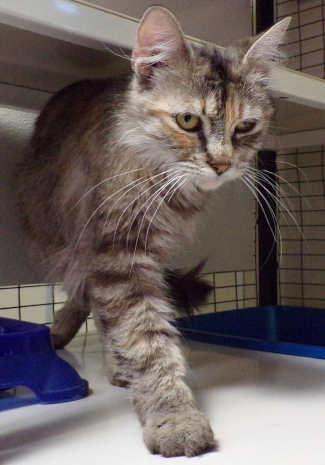
Domestic medium hair cat
This 3-year-old female domestic medium hair cat has a brown tabby coat.
She is in cat room kennel No. 58, ID No. LCAC-A-1029.

Male domestic shorthair
This male domestic shorthair has a gray and white coat.
He is 1-year-old and weighs nearly 6 pounds.
He is in cat room kennel No. 120, ID No. LCAC-A-874.

Female domestic shorthair
This 2-year-old female domestic shorthair cat has a white coat and blue eyes.
She is in cat room kennel No. C123, ID No. LCAC-A-1152.

Female domestic shorthair
This 1-year-old female domestic shorthair cat has a black coat.
She is in cat room kennel No. 135, ID No. LCAC-A-1133.
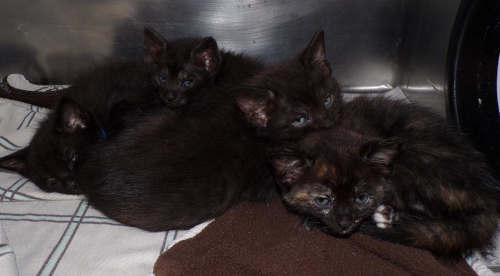
Domestic shorthair kittens
Two of the kittens in this litter remain available for adoption.
They are both males, No. 125B and ID No. LCAC-A-1139, and a No. 125C and ID No. LCAC-A-1140.
Email Elizabeth Larson at
Leer en espanol
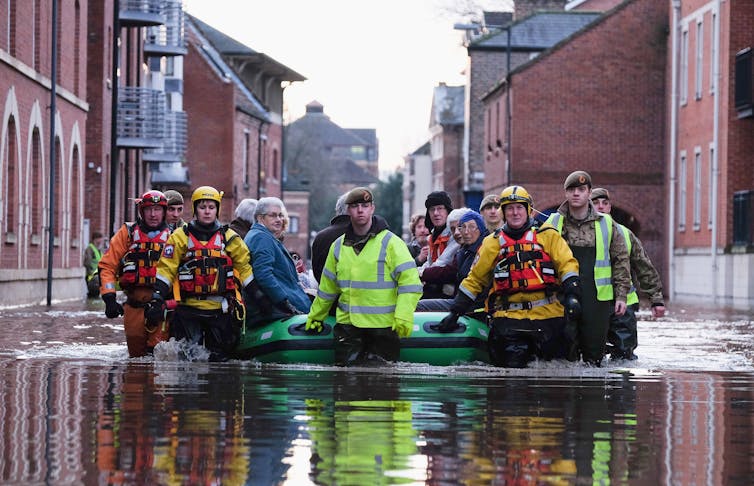
The world watched in July 2021 as extreme rainfall became floods that washed away centuries-old homes in Europe, triggered landslides in Asia and inundated subways in China. More than 900 people died in the destruction. In North America, the West was battling fires amid an intense drought that is affecting water and power supplies.
Water-related hazards can be exceptionally destructive, and the impact of climate change on extreme water-related events like these is increasingly evident.
In a new international climate assessment published Aug. 9, 2021, the Intergovernmental Panel on Climate Change warns that the water cycle has been intensifying and will continue to intensify as the planet warms.
The report, which I worked on as a lead author, documents an increase in both wet extremes, including more intense rainfall over most regions, and dry extremes, including drying in the Mediterranean, southwestern Australia, southwestern South America, South Africa and western North America. It also shows that both wet and dry extremes will continue to increase with future warming.
Why is the water cycle intensifying?
Water cycles through the environment, moving between the atmosphere, ocean, land and reservoirs of frozen water. It might fall as rain or snow, seep into the ground, run into a waterway, join the ocean, freeze or evaporate back into the atmosphere. Plants also take up water from the ground and release it through transpiration from their leaves. In recent decades, there has been an overall increase in the rates of precipitation and evaporation.
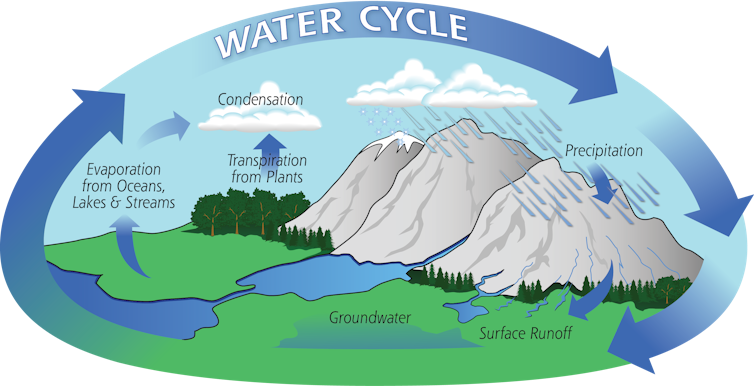
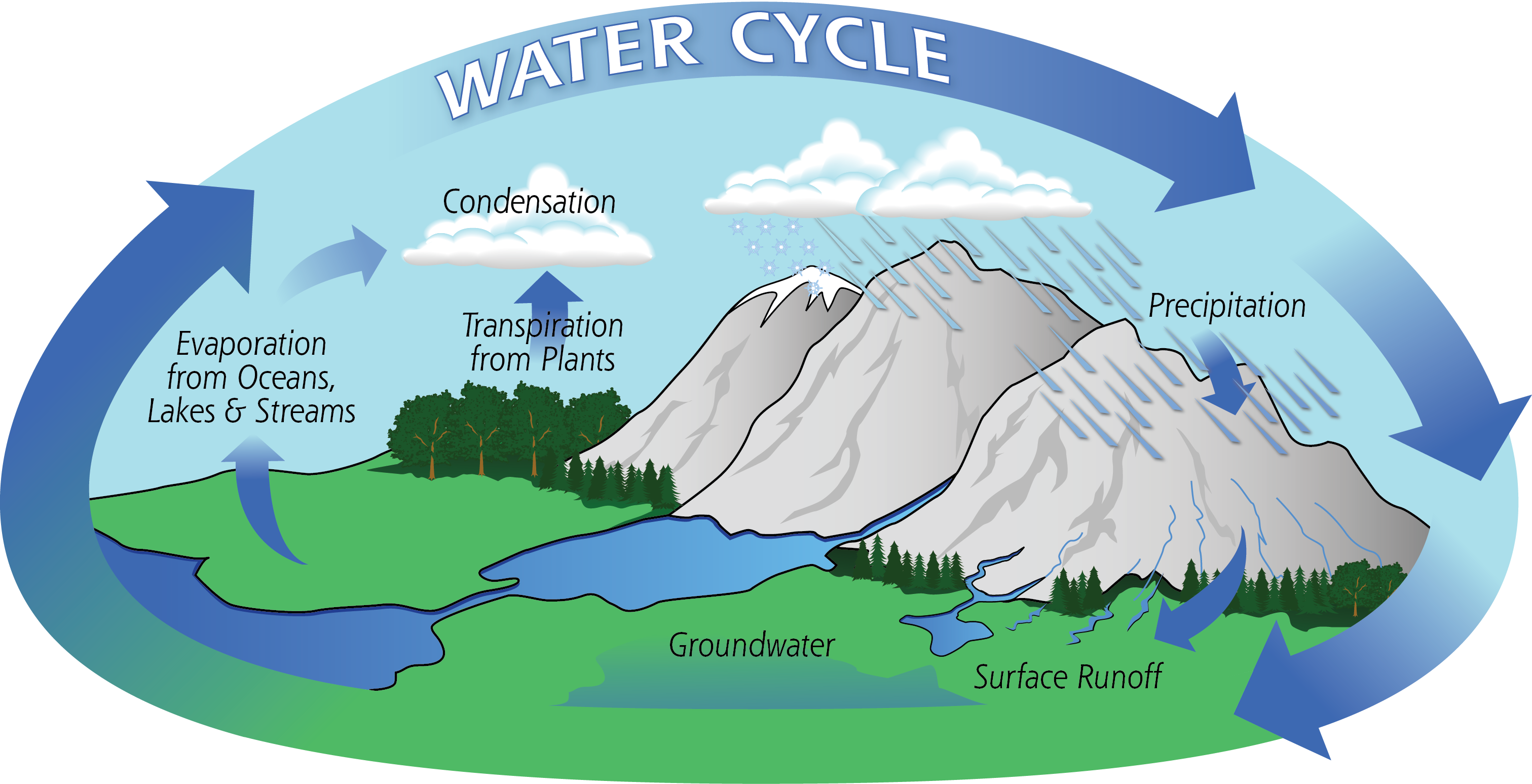
A number of factors are intensifying the water cycle, but one of the most important is that warming temperatures raise the upper limit on the amount of moisture in the air. That increases the potential for more rain.
This aspect of climate change is confirmed across all of our lines of evidence: It is expected from basic physics, projected by computer models, and it already shows up in the observational data as a general increase of rainfall intensity with warming temperatures.
Understanding this and other changes in the water cycle is important for more than preparing for disasters. Water is an essential resource for all ecosystems and human societies, and particularly agriculture.
What does this mean for the future?
An intensifying water cycle means that both wet and dry extremes and the general variability of the water cycle will increase, although not uniformly around the globe.
Rainfall intensity is expected to increase for most land areas, but the largest increases in dryness are expected in the Mediterranean, southwestern South America and western North America.
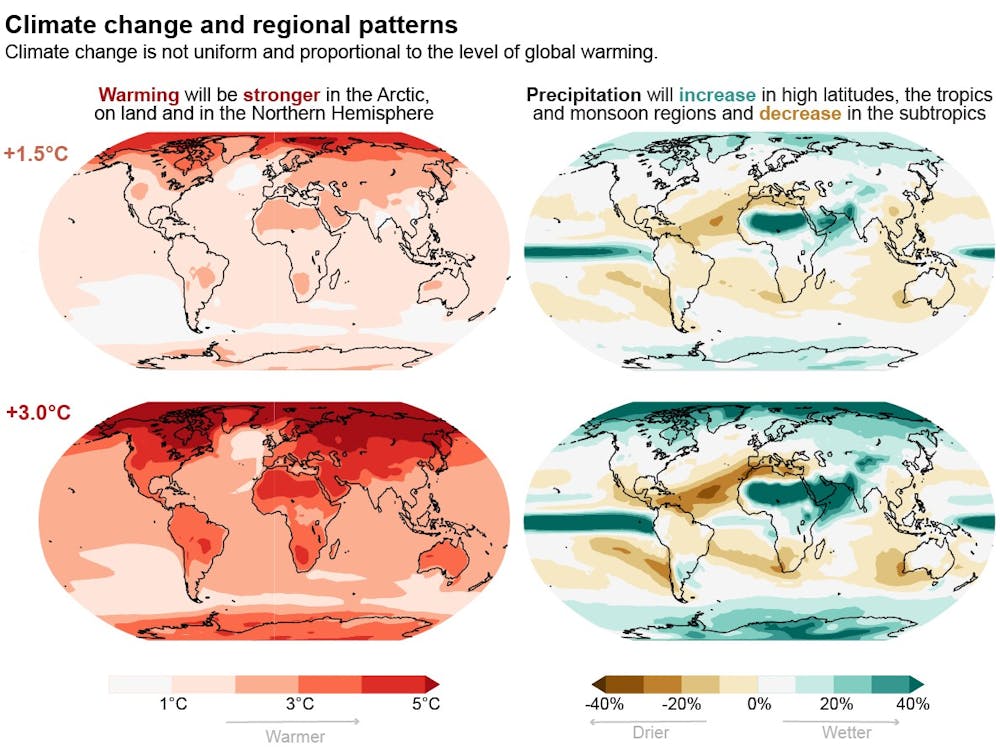
Globally, daily extreme precipitation events will likely intensify by about 7% for every 1 degree Celsius (1.8 degrees Fahrenheit) that global temperatures rise.
Many other important aspects of the water cycle will also change in addition to extremes as global temperatures increase, the report shows, including reductions in mountain glaciers, decreasing duration of seasonal snow cover, earlier snowmelt and contrasting changes in monsoon rains across different regions, which will impact the water resources of billions of people.
What can be done?
One common theme across these aspects of the water cycle is that higher greenhouse gas emissions lead to bigger impacts.
The IPCC does not make policy recommendations. Instead, it provides the scientific information needed to carefully evaluate policy choices. The results show what the implications of different choices are likely to be.
One thing the scientific evidence in the report clearly tells world leaders is that limiting global warming to the Paris Agreement target of 1.5 C (2.7 F) will require immediate, rapid and large-scale reductions in greenhouse gas emissions.
Regardless of any specific target, it is clear that the severity of climate change impacts are closely linked to greenhouse gas emissions: Reducing emissions will reduce impacts. Every fraction of a degree matters.
[Understand new developments in science, health and technology, each week. Subscribe to The Conversation’s science newsletter.]
Mathew Barlow, Professor of Climate Science, University of Massachusetts Lowell
This article is republished from The Conversation under a Creative Commons license. Read the original article.
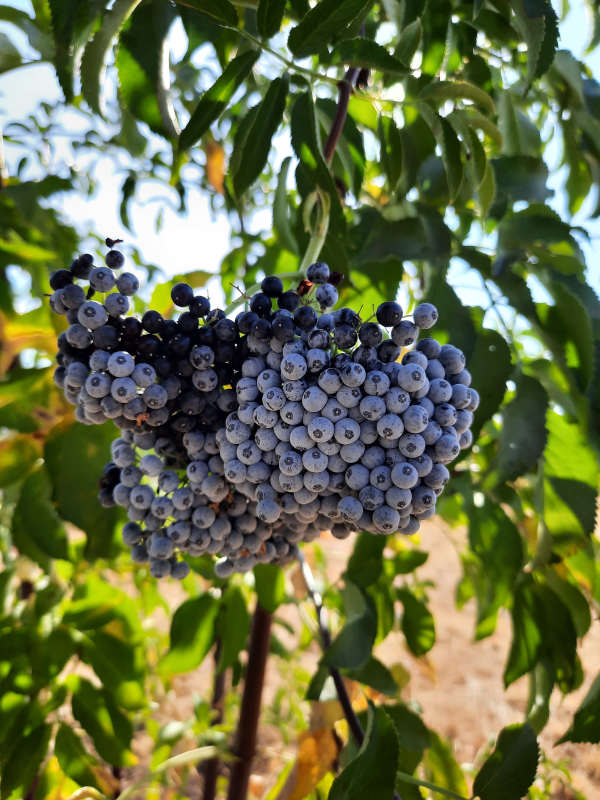
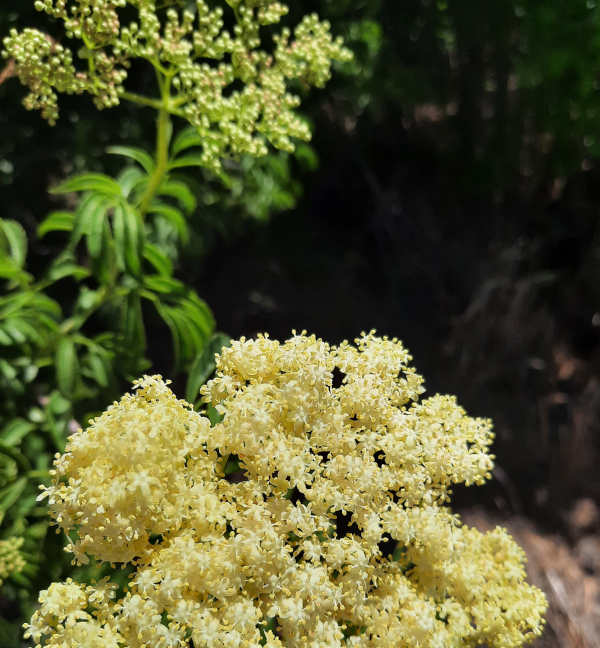
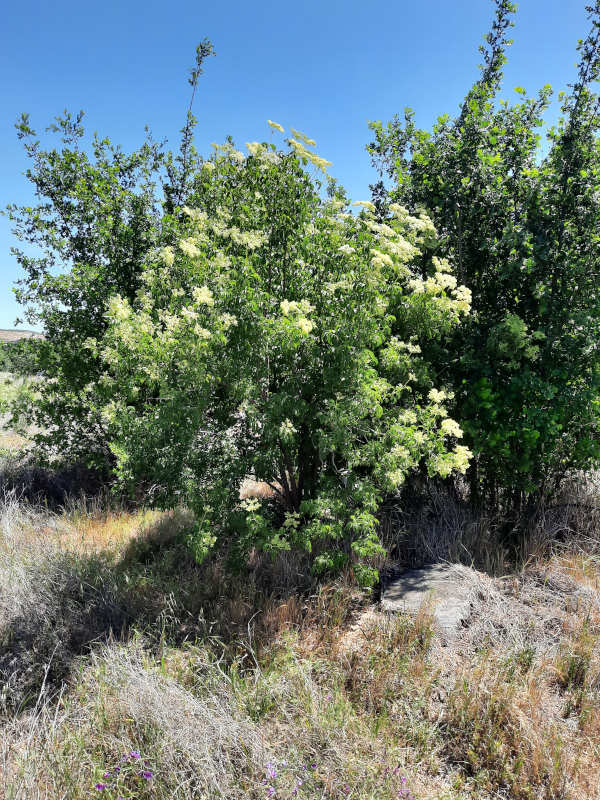
LAKE COUNTY, Calif. — Elderberries are hiding in plain sight almost everywhere this time of year. What begins as large, lacy, cream-colored flowers in late spring culminates in compact clusters of dark purply-blue berries ripe for the picking as summer winds down.
Elderberry shrubs are native to Lake County and bloom along roadways, hillsides and fields in May and June. Once I began looking for them, I realized just how ubiquitous they are. I noticed them along major roadways, in county parks, within residential areas, on mountainsides and in lower elevations.
What we see here is the blue elderberry, a deciduous shrub endemic to an area from Oregon to Baja California and as far east as western Texas. Also known as the Mexican Elderberry or Tapiro, it sometimes grows to a height of 30 feet, making it quite tree-like when it gets that tall. Most are of shorter stature.
These plants are tough and fast growing — they can get up to 15 feet high in just three years if conditions are right. Its berries are one of the most important food sources for birds in California.
Elderberries have long had a place in human history, with evidence of their use found in Stone Age sites. They’ve been used as folk medicine for thousands of years, and no wonder — they’re full of antioxidants, fiber, and vitamins A, B and C, as well as being immune-boosting, anti-inflammatory and antiviral.
They were an important resource for indigenous peoples throughout California, including Lake County tribes, who utilized all parts of the plant for a variety of things — food, medicines, baskets, dyes, game pieces, pipes and musical instruments.
According to Sage LaPena, a Nomtipom and Wintu ethnobotanist and certified medical herbalist, “Elderberry is one of our most important traditional medicines and we’ve never stopped using it. When we look at our traditional ecological knowledge, how we use elderberry — which includes all parts of the plant: roots, wood, berry, flower — they are all harvested at specific times of year.”
In fact, the elderberry lifecycle served as some tribes’ indicator of seasonal rhythms, guiding the timing of other food harvests. For example, Coastal Pomo tracked the shellfish harvesting window by the flowering and ripening of the elderberry.
The flowers were used medicinally — as a tea for treating fevers and other ailments, or in a hot bath to induce sweating. The berries were dried and stored for winter use, when they were cooked to create a rich, sweet sauce.
Millie Simon, Middletown Rancheria of Pomo Indians tribal elder, recalls gathering elderberries with her mother as a child. On occasion an aunt joined them in this traditional food gathering role. They ate fresh berries as they picked them, but most were saved to process into a jelly-like sauce for use throughout the year.
Elderberries can be used in a variety of ways in cuisine — tasty syrups, jams, wines and liqueurs can all be created from the berries, and a handful can be thrown into your favorite muffin or pancake recipe with delicious results.
Dried elderflowers (from those harvested locally or ordered online) can be added to batters and baked into cakes, and wine and syrup can also be made from the flowers.
Tea is made from dried flowers or berries, sometimes mixed with other herbs.
Supporters of elderberry say the fruit is one of nature’s most versatile solutions for what ails you. Hippocrates, often called the father of medicine, referred to the elder tree as his “medicine chest.”
Some experts recommend elderberries to help prevent and lessen cold and flu symptoms, and they’ve also been used as a treatment for a variety of ailments from constipation to fever to epilepsy to skin conditions.
Caution should be used when consuming elderberries in their raw state. The shrubs contain cyanogenic glucosides, substances that release cyanide; however, cooking the ripe berries render them harmless.
Dr. Kenneth Lampe, author of the AMA Handbook of Poisonous Injurious Plants, says, “the flowers are probably non-toxic and limited quantities of raw fruit are generally considered to have no adverse effect. The danger comes mainly from roots, stems and leaves.”
Even so, be careful. I can’t recommend consuming the berries in their raw state unless you’re a practiced forager of these goodies. Either way, be sure not to consume under ripe berries, as they can cause stomach upset.
If you’re interested in foraging for the berries, keep these things in mind:
— Know what you’re looking for. If you’re unsure what shrubs contain blue elderberries or what they look like when ripe, ask someone in the know to show you.
— Make sure to discard the leaves and stems after picking.
— Blue elderberries may look more powdery white than blue. This is from a naturally occurring yeast that coats the berries. It’s perfectly harmless.
— Don’t pick the berries individually; cut off the clusters whole. When you’re home and after they’re washed, freeze them. Once frozen, place the clusters over a bowl and run your fingers through them. The hard berries will fall off easily for use. Be sure to discard the stems.
— A good method for washing is to swirl them in a bowl of water and then rinse in a colander.
— Lastly, be sure to leave some for the birds to enjoy.
Today’s recipe is for elderberry syrup. While it can be made with dried berries, this recipe utilizes the fresh ones available now.
The syrup can be used medicinally or drizzled over pancakes, waffles, French toast and even ice cream.
Elderberry syrup
2 cups fresh elderberries
1 cinnamon stick (optional)
1 - 2 inch length of orange zest, any white pith removed (optional)
2 cups water
1 cup honey
Place the elderberries and water in a saucepan. Add the cinnamon stick and orange zest, if using, and bring to a boil over medium-high heat.
Reduce heat to medium-low and gently simmer the mixture until it has reduced by half, about 30 minutes or so.
Place a fine mesh sieve over a bowl and strain mixture, pressing on the solids to release all liquid. Discard the solids.
Let the liquid cool for 20 minutes, then stir the honey into the still warm mixture until fully combined.
Pour the syrup into a glass jar with a lid and store in the refrigerator.
This recipe makes about one pint of syrup and should last three months if stored in glass and refrigerated.
Note: Dried elderberries can be ordered online. If using those, reduce the amount of berries to ¾ cup.
Esther Oertel is a writer and passionate home cook from a family of chefs. She grew up in a restaurant, where she began creating recipes from a young age. She’s taught culinary classes in a variety of venues in Lake County and previously wrote “The Veggie Girl” column for Lake County News. Most recently she’s taught culinary classes at Sur La Table in Santa Rosa. She lives in Middletown, California.
On Saturday evening, Cal Fire said the Coyote fire was 127 acres and 95% contained.
The fire began shortly after 5 p.m. on Friday, the reported result of a vehicle fire on Highway 29 near the Coyote Grade, north of Hidden Valley Lake.
It resulted in an evacuation order for parts of Hidden Valley Lake that later was downgraded to an evacuation warning.
A few small outbuildings on a property near Hidden Valley Lake were reported to have been destroyed, but there have so far been no reports of damaged homes.
Email Elizabeth Larson at
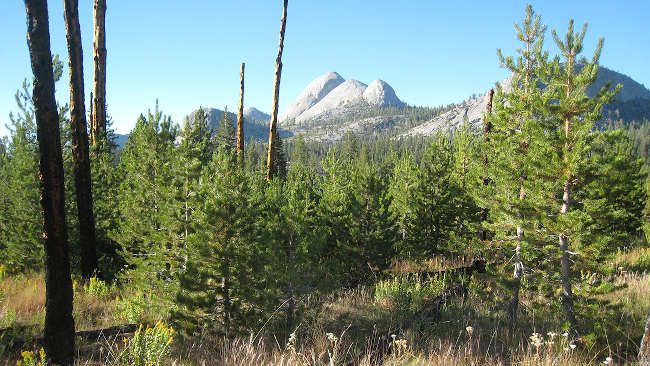
For nearly half a century, lightning-sparked blazes in Yosemite’s Illilouette Creek Basin have rippled across the landscape — closely monitored, but largely unchecked.
Their flames might explode into plumes of heat that burn whole hillsides at once, or sit smoldering in the underbrush for months.
The result is approximately 60 square miles of forest that look remarkably different from other parts of the Sierra Nevada: Instead of dense, wall-to-wall tree cover — the outcome of more than a century of fire suppression — the landscape is broken up by patches of grassland, shrubland and wet meadows filled with wildflowers more abundant than in other parts of the forest.
These gaps in the canopy are often punctuated by the blackened husks of burned trunks or the fresh green of young pines.
“It really is a glimpse into what the Sierra Nevada was like 200 years ago,” said Scott Stephens, a professor of environmental science, policy and management at the University of California, Berkeley, and co-director of Berkeley Forests.
Stephens is the senior author of a new study that gathers together decades of research documenting how the return of wildfire has shaped the ecology of Yosemite National Park’s Illilouette Creek Basin and Sequoia and Kings Canyon National Parks’ Sugarloaf Creek Basin since the parks adopted policies for the basins — at Illilouette Creek in 1972 and Sugarloaf Creek in 1968 — to allow lightning-ignited fires to burn.
While the prospect of smoke over iconic Half Dome has worried politicians and tourists alike, the work of Stephens and his colleagues demonstrates that allowing frequent fires to burn in these basins has brought undeniable ecological benefits, including boosting plant and pollinator biodiversity, limiting the severity of wildfires and increasing the amount of water available during periods of drought. All these benefits are also likely to make the forest more resilient to the warmer, drier conditions brought by climate change, the research suggests.
“In many ways, fire has successfully been restored to Illilouette, and it has made for a complex mosaic of vegetation with cascading effects on things like water,” said study co-author Brandon Collins, who holds a joint appointment as a research scientist with Berkeley Forests and with the U.S. Forest Service.“In Illilouette, you can have patches of young, regenerating trees from a fire 15 years ago, or areas where a classic understory burn has resulted in big, old, widely-spaced trees. You can even have areas where fire has missed because there’s more moisture, such as adjacent to a creek or on the edge of a meadow. All this complexity can happen in a really short amount of space.”
The study findings arrive in the middle of a critical fire season, when drought conditions throughout the western U.S. have already sparked numerous large wildfires, including the Dixie Fire, which, as of Aug. 8, was the second largest wildfire in California history. While climate change has played a role in increasing the severity of these fires, Stephens said, Illilouette Creek Basin serves as an example of how current forest conditions in the Sierra — largely shaped by decades of fire suppression — are also driving these massive blazes.
“I think climate change is no more than 20 to 25% responsible for our current fire problems in the state, and most of it is due to the way our forests are,” Stephens said. “Illilouette Basin is one of the few places in the state that actually provides that information, because there is no evidence of changes in fire size or in the severity of fires that burn in the area. So, even though the ecosystem is being impacted by climate change, its feedbacks are so profound that it's not changing the fire regime at all.”
Returning fire to Yosemite
For millennia, wildfires sparked by lightning, or lit by Native American tribes, regularly shaped the landscape of the western U.S., not only causing destruction, but also triggering necessary cycles of rebirth and regeneration.
However, the arrival of European colonists in the late 1800s, followed by formation of the U.S. Forest Service in 1905, ushered in an era in which fire was viewed as the enemy of humans and forests alike, and the vast majority of wildfires were quickly extinguished.
By the 1940s and 1950s, a number of forest managers and ecologists had begun to question the wisdom of fire suppression, noting that the practice was eliminating valuable wildlife habitat and increasing the severity of fires by allowing decades of fuel buildup.
These fire proponents included A. Starker Leopold, an acclaimed conservationist and professor of zoology and forestry at UC Berkeley, as well as Harold Biswell, a professor at UC Berkeley’s School of Forestry.
In response to a foundational 1963 report led by Leopold, the U.S. National Park Service changed its policy in 1968 to allow lightning fires to burn within special fire management zones — usually remote regions at high elevations — where danger to human settlements was low. Sequoia and Kings Canyon National Parks established the first fire management zone in 1968, followed by Yosemite National Park in 1972.
“I think it was finally recognized that fire is an integral piece of these ecosystems, and there were a few key people who were willing to take the risk of letting these fires happen,” Collins said.
‘It isn't always clean, and it's not always nice’
Between 1973 and 2016, Illilouette Creek Basin experienced 21 fires larger than 40 hectares — approximately equal to 75 football fields — while Sugarloaf experienced 10 fires of that size. In Illilouette, the result today is a forest that may look a bit messy to the untrained eye, but it holds a lot of resilience.
“When some people visit Illilouette, they say, ‘Look at all these dead trees!’” Stephens said. “I think we have this idea that forests need to be green all the time and made up with only big trees. But it turns out that no forest can do that. It has to be able to grow young trees and regenerate. Illilouette is doing that, but it isn't always clean, and it's not always nice.”
In Illilouette, wildfire has created a more diverse array of habitats for animals like bees and bats, while allowing a variety of plant life to flourish. The detailed history of wildfires in Illilouette has also provided foresters with valuable information on how the impact of one wildfire on landscape and vegetation can influence the trajectory of the next wildfire.
“Since fires are generally allowed to burn freely in Illilouette, we could look at what happens when two fires have burned close to each other: When does the second fire burn into the area that was burned by the first fire, and when does it stop at the previous perimeter?” Collins said. “We found that it really depended on the amount of time that had passed since the first fire. If it had been nine years or under, fires almost never burned into a previous fire perimeter.”
Collins said that Illilouette has also given forest managers a unique opportunity to study how wildfire behaves under a variety of conditions, rather than only at its most dire.
“One of the things that's kind of perverse about the fire suppression policy is that we actually constrain fires to only burn under the worst conditions. If the fire is mellow, that's a good time to put it out, and, as a result, they only burn when we can't put them out,” Collins said. “But by letting these fires burn [in Illilouette], they're able to experience the full range of weather conditions. On bad days, some of these fires have really put up a pretty good plume. But on the flip side, they also get to burn under more moderate conditions, too, and it makes for really varied effects.”
Returning fire to Illilouette has also had the somewhat counterintuitive impact of increasing the availability of water in the basin, a key finding as California weathers yet another year of extreme drought.
Study co-author Gabrielle Boisramé, an assistant research professor at the Desert Research Institute in Nevada, began studying water in Illilouette as a Ph.D. student in environmental engineering at UC Berkeley. Her simulations and measurements indicate that small gaps in the tree canopy created by wildfires have allowed more water from snow and rainfall to reach the ground, while also reducing the number of trees competing for water resources. As a result, soil moisture in some locations in Illilouette increased as much as 30% between 1969 and 2012, which likely contributed to very low tree mortality in the basin during the drought years of 2014 and 2015.
Measurements also indicate that streamflow out of Illilouette Creek Basin has increased slightly since the managed wildfire program began, while streamflow out of other similar watersheds in the Sierras have all decreased. Boosting the amount of water that flows downstream is likely to benefit both the humans and the aquatic ecosystems that depend on this precious resource.
“There's more and more work being done that examines the effects of fire on hydrology, but most of the other research is looking at the effects of catastrophic fires that burned up an entire forest,” Boisramé said. “As far as we know, we're the only ones in the western U.S. studying a restored fire regime, where we’re not just looking at one individual fire, but a number of fires of mixed severity that have occurred over natural intervals of time. There just aren’t that many places to study the long-term effects of these repeated wildfires because Sugarloaf and Illilouette were the first areas in California — really the first western mountain watersheds — where they started allowing fires to burn most of the time.”
Fighting for fire
Most U.S. national parks now practice some form of fire use, rather than full fire suppression, and in 1974, the National Forest Service also changed its policy to also allow some fires to burn on its lands, although areas of fire use are rare in this agency. However, these federal fire use policies have struggled to gain a foothold, largely because of the inherent risks involved in managing wildfire.
Even in Sugarloaf Creek Basin, where many fires have been allowed to burn, there has also been significantly more fire suppression than in Illilouette, the study found. As a result, the ecological benefits in Sugarloaf are not as pronounced as those in Illilouette.
“I think one of the key things to recognize is that the landscape in Illilouette was already somewhat unique, partly because it is at slightly higher elevation than a lot of the forests we manage,” Collins said. “As a result, it already had a mix of vegetation with patches of meadows and rock, and I think maybe that gave managers a little more ease in letting fire happen there. It doesn't have the potential to really push off a giant megafire because it lacks the continuity that some of these other areas have.”
While both naturally-sparked fires and prescribed burns could help large swathes of the Sierra forest become more resilient to both drought and high severity fire, opposition to national “let it burn” policies in California remains strong, with state and local fire agencies often favoring the safety of fire suppression.
Collins and Stephens both acknowledge that the current fuel density in much of the Sierra, mixed with the hotter, drier conditions already triggered by climate change, has made managing wildfire even riskier than it was when forest managers started allowing fires to burn in Yosemite in 1972. However, they argue, fire suppression will never succeed in the long term, because the longer that forest fuel sources are allowed to build up, the more likely it becomes that wildfires will turn catastrophic when they are finally sparked.
“In order to actually allow this to happen, political and public institutions need to be willing to accommodate risk, because there will be some unpredictability. There are going to be fires that get larger, and more severe burning in places that have had very little fire for a century or more,” Stephens said. “We can't guarantee that Illilouette is going to be the new outcome, because it started when climate change was not nearly as severe. So, political institutions will have to accommodate that, or the first fire that doesn't do exactly what we hope will shut down the whole program.”
Collins and Stephens also advocate for more aggressive prescribed burning and restoration thinning throughout the Sierra to help get the forests to a place where lightning-sparked fires can be allowed to burn more safely.
Stephens credits strong, early leadership at Yosemite — including that of study co-author Jan W. van Wagtendok, who received a Ph.D. from UC Berkeley in 1972 and went on to serve as a research scientist at Yosemite for most of his career — for taking the huge risk of launching the program and allowing early fires to burn in the park.
“It's been 50 years now, but I think what we've learned helps us understand what is possible,” Stephens said. “We have 10 to 20 years to actually change the trajectory of the forest ecosystems in our state, and if we don't change them in 10 or 20 years, the forest ecosystems are going to change right in front of our eyes, and we're just going to be passengers. That's why it's so important to continue this work.”
Previous funding from the U.S. Joint Fire Science Program, UC ANR Competitive Grants Program, and the National Science Foundation’s Critical Zone Collaborate Network (award number 2011346) supported the research in this paper.
Study co-authors also include Sally Thompson of the University of Western Australia; Lauren C. Ponisio of the University of Oregon, Eugene; Ekaterina Rakhmatulina, Jens Stevens and Zachary L. Steel of UC Berkeley; and Kate Wilkin of San Jose State University.
Kara Manke writes for the UC Berkeley News Center.
Dogs available for adoption this week include mixes of husky, Labrador retriever, pit bull, Rhodesian Ridgeback, Rottweiler and shepherd.
Dogs that are adopted from Lake County Animal Care and Control are either neutered or spayed, microchipped and, if old enough, given a rabies shot and county license before being released to their new owner. License fees do not apply to residents of the cities of Lakeport or Clearlake.
The following dogs at the Lake County Animal Care and Control shelter have been cleared for adoption (additional dogs on the animal control website not listed are still “on hold”).
Call Lake County Animal Care and Control at 707-263-0278 or visit the shelter online at http://www.co.lake.ca.us/Government/Directory/Animal_Care_And_Control.htm for information on visiting or adopting.

Female pit bull puppy
This female pit bull puppy has a tan and white coat.
She is in kennel No. 4a, ID No. LCAC-A-1324.

Female pit bull puppy
This female pit bull puppy has a white coat.
She is in kennel No. 4b, ID No. LCAC-A-1325.

Female pit bull puppy
This female pit bull puppy has a tan coat.
She is in kennel No. 4c, ID No. LCAC-A-1328.

Male pit bull puppy
This male pit bull puppy has a tan and white coat, and blue eyes.
He is in kennel No. 5a, ID No. LCAC-A-1323.

Male pit bull puppy
This male pit bull puppy has a tan coat and blue eyes.
He is in kennel No. 5b, ID No. LCAC-A-1326.

Male pit bull puppy
This male pit bull puppy has a brown and white coat, and blue eyes.
He is in kennel No. 5c, ID No. LCAC-A-1327.

Male Labrador retriever
This 2-year-old male Labrador retriever has a short black coat with white markings.
He is in kennel No. 19, ID No. LCAC-A-1349.

‘Dusty’
“Dusty” is a 2-year-old female pit bull terrier mix with a short gray coat.
She is in kennel No. 22, ID No. LCAC-A-611.

‘Jim’
“Jim” is a 2-year-old pit bull terrier mix with a short black and white coat.
He is in kennel No. 23, ID No. LCAC-A-810.

‘Rosco’
“Rosco” is 3-year-old a male Rhodesian Ridgeback-Shepherd mix with a short tan coat.
He is in kennel No. 25, ID No. LCAC-A-1205.

Rottweiler-pit bull mix
This 1-year-old female Rottweiler-pit bull mix has a short black coat.
She has been spayed.
She is in kennel No. 27, ID No. LCAC-A-731.
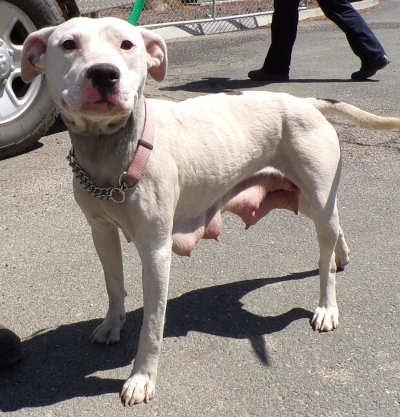
Female pit bull terrier
This 4-year-old female pit bull terrier mix has a short white coat.
She is in kennel No. 29, ID No. LCAC-A-812.
‘Bubba’
“Bubba” is a male pit bull terrier mix with a short black coat.
He is in kennel No. 30, ID No. LCAC-A-1306.
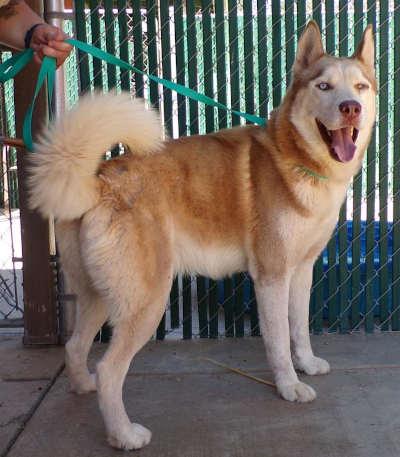
Male husky
This 2-year-old male husky has a red and cream coat.
He is in kennel No. 32, ID No. LCAC-A-1024.

‘Ghost’
“Ghost” is a 2-year-old female husky with an all-white coat and blue eyes.
She is in kennel No. 34, ID No. LCAC-A-1167.
Email Elizabeth Larson at