 How to resolve AdBlock issue?
News
LAKE COUNTY, Calif. — State and local firefighters and law enforcement are at the scene of a wildland fire near Hidden Valley Lake.
The Coyote fire is believed to have begun as the result of a vehicle crash, according to early reports from the California Highway Patrol.
The CHP said there was a vehicle rollover just after 5 p.m. Friday near the Coyote Grade on Highway 29 north of Hidden Valley Lake that resulted in a vehicle fire.
The fire was reported to have gotten into the brush and then jumped to the other side of the highway.
Shortly before 5:30 p.m., the fire was reported to be 10 acres, with additional firefighting resources dispatched, according to CHP and radio sources.
Caltrans was requested to help control traffic, with vehicles being turned around at Hofacker Lane.
Law enforcement was reported to be at the scene conducting some evacuations in the area.
Meantime, Cal Fire air attack was working with three helicopters and six tankers to stop the fire.
Air attack indicated over the radio that they are attempting to corral the fire to stop it from reaching homes in the area of Conestoga Road, at the north end of Hidden Valley Lake.
More engines also are being directed into the area for structure protection.
Firefighting task force engine groups from Colusa and Mendocino counties also are on the scene assisting.
Just before 6 p.m., incident command indicated that in addition to an evacuation order for Conestoga Road, an evacuation warning is being issued for Deer Hill Road north of Source Grove Road and its subsidiary roads.
At approximately 6:06 p.m., the Lake County Sheriff’s Office issued a Nixle alert for the evacuation order for residents of Conestoga Road, urging residents to leave immediately.
At 6:19 p.m., radio traffic indicated that evacuations were being expanded to all of Zone 194, which includes the area south of the northern boundary of the Hidden Valley Subdivision, east of Highway 29, north of Spruce Grove Road, west of the Spruce Grove Road and the Jerusalem Grade intersection.
Shortly before 6:30 p.m., the size of the fire was estimated to be up to 40 acres.
Minutes later, the fire was reported to be 60 acres, with several structures impacted on Conestoga Road, with active fire on right flank with short-range spotting.
Shortly before 6:30 p.m., the size of the fire was estimated to be up to 40 acres.
Minutes later, the fire was reported to be 60 acres, with several structures impacted on Conestoga Road, with active fire on right flank with short-range spotting.
The CHP reported just after 6:30 p.m. that a hard closure of Highway 29 between Hofacker Lane and Hidden Valley Lake Road is in effect.
That was followed at 6:42 p.m. by another Nixle from the Lake County Sheriff’s Office, saying that it has implemented a full evacuation warning for all of Zone 194, with an evacuation shelter being established at Twin Pine Casino.
The fire’s size was estimated to be 100 acres and 40% contained as of shortly after 7 p.m., according to radio traffic.
Several tankers were released just after 7:45 p.m., with air attack reporting the fire is looking good. Plans are to reenforce the fire’s south end fire line for the night.
Deputies also are reported to be patrolling the evacuation area.
Copter 104 reported to have mapped the fire at 137 acres shortly before being released just before 8:15 p.m. More mapping is expected to be completed to firm up the estimate.
Scanner traffic indicated that the fire is expected to continue burning through the night, with priority on the south end of the fire.
Shortly after 9 p.m., the CHP reported that Highway 29 had been reopened in both directions. However, motorists are asked to use caution while traveling through the area, as emergency personnel are continuing to work at the scene.
Just after 10 p.m., the evacuation order for Zone 194 was lifted but the evacuation warning was to remain in place for the time being.
A half-hour later, the sheriff’s office issued an updated Nixle on the reduction of the evacuation order to a warning, reporting that Conestoga Road will remain closed to vehicle traffic, as this road is blocked by fire personnel and vehicles.
The sheriff’s office said evacuation warnings for the nearby Zones HID-E185, HID-E195 and HID-E197 have been lifted.
Additional information will be posted as it becomes available.
Email Elizabeth Larson at
The Thursday meeting was the first time the commission has met since the Board of Supervisors approved a 45-day urgency ordinance at its July 27 meeting to require hydrology reports for all projects.
That action had been, in part, spurred by repeated requests from the planning commission for guidance on projects, particularly as the drought has worsened.
Due to the additional reporting requirements, Planner Victor Fernandez asked for — and received — commission approval to continue a hearing for a major use permit for RMI Venture/Jerusalem Grade Farms, located at 22644 Jerusalem Grade Road in Middletown.
The meeting also was the first for new commissioner, Maile Field. Field’s appointment by District 5 Supervisor Jessica Pyska was approved by the Board of Supervisors on Aug. 3. Field succeeds Lance Williams, who Pyska had appointed in January.
In her first vote as a commissioner, Field was the lone dissenter on the only other agenda item, Paul Bernacchio’s application for a retail cannabis shop in the former Driftwood Lounge at 6914 Frontage Road in Lucerne.
Bernacchio moved to Lake County from the Bay Area in 2015 and today is co-vice president of the Lake County Cannabis Alliance. He was lauded by other members of the local cannabis industry as professional, ethical and firm on standards.
He told Lake County News in a Thursday afternoon interview that his dispensary project is the second one that has gone through the county’s permit process; the first was one in Lower Lake that has not yet opened. There are others — including one on a local rancheria — that have not gone through the same process as he has.
Supervisor Bruno Sabatier said there are several more queued up to go through the county approval process.
Bernacchio’s new dispensary is the first on the Northshore to be approved under rules the county established for the facilities — allowed under C1 and C2 commercial zoning — in 2019.
That was a decade after the Board of Supervisors had begun taking action to regulate — and eventually to stop — dispensaries after numerous such establishments had begun opening around Lake County in the spring of 2009, at a time when the county’s zoning ordinance didn’t specifically allow for them.
Today, the city of Clearlake has three dispensaries while rules adopted in the city of Lakeport in early 2018 only allow for delivery, not storefronts.
Bernacchio said he also has licenses for two other cannabis projects, one for mixed light cultivation and one for a nursery. His goal is to supply the Lucerne dispensary and showcase Lake County-grown cannabis.
Assistant Planner Michael Taylor went over the details of the project, which includes the existing 1,783-square-foot building which will have 12 parking spaces, one Americans with Disabilities Act compliant parking space and down-casting lights that are dark skies compliant.
Taylor said staff reviewed the project for concurrence with the Lake County General Plan, Shoreline Communities Area Pla and the county’s Zoning Ordinance, determining it to be consistent with those plans.
He said retail sales of cannabis is a permitted use in “C1” — local commercial district — upon issuance of a use permit.
The project plan anticipates 10 customers daily with 35 deliveries weekly, according to the staff report.
Bernacchio said there will be three to five store employees, including one manager, plus two security guards who will keep a close eye on the parking lot. The building’s yard will be fenced.
In 2019, Bernacchio submitted the permit for the project, and the county told him at that point it would take about two years to get through the approval process.
“We really are looking forward to working with the neighbors and serving the county,” said Bernacchio, who has owned the building for five years.
However, it wasn’t entirely smooth sailing during the hearing to convert the former bar — which in its last years had been the scene of violence and other criminal activity — into a new business, as several neighbors would argue against it.
That would surprise Bernacchio. “They know what this place used to be and they can’t see what we’re trying to make it.”
Neighbors raise concerns; cannabis entrepreneurs offer support
No letters opposing the project were included in the commission packet and out of the five eComments submitted online, only one — containing a scanned letter from neighbor Leilani Schwartz — raised objections.
Schwartz was among six neighbors who came to the hearing to tell the commission that they opposed the project.
Bernacchio told Lake County News that both he and his wife were surprised by the neighbors’ objections, noting the people who showed up were not among those who they believed opposed the project. “I was caught off guard a little bit.”
Neighbors, including Kevin Waycik and Lani Urquiza, both members of the Lucerne Town Hall board, complained that it wasn’t the right project for the area.
Waycik said Bernacchio should have come to the neighbors and Urquiza said he should have come to the town hall. Bernacchio would state later in the meeting that he and Waycik were in regular communication — they speak and exchange texts often — and as for the town hall, he told Lake County News that he had been in regular contact with two other town hall members about the project.
Others, like Schwartz, spoke of potential traffic creating danger for children, bicyclists and walkers, and impacts on the nearby residential community. Additional concerns related to there being any businesses at all nearby, with some community members arguing the entire area should be converted to residential.
When the issue of location was brought up, District 1 Commissioner John Hess pointed out that the project is zoned appropriately for commercial use.
Several members of the county’s cannabis industry offered a counterbalance to those complaints, giving their perspective on the project’s merits and importance.
They included Natasha Sokoloski, co-founder of D&M Compassion Center in Clearlake, who has been a colleague of Bernacchio for a few years; Erin McCarrick, a cannabis business owner who also is a member of the Clearlake Planning Commission; Damien Ramirez of Lake County Grown; and farmer and Lake County Cannabis Alliance President Jennifer Smith.
McCarrick said Bernacchio has put together a good proposal, and in response to safety concerns, she said the city of Clearlake has seen a decrease in the number of cannabis-related issues because it has a commitment to security and allowing the legal cannabis industry to survive.
Ramirez said he’s worked closely with Bernacchio, who he called an honest and respectful business owner. The project is well planned and can bring in jobs, he said.
While he understands the concerns of citizens, Ramirez said they often see illegal market issues get conflated with the legal industry. “They don’t run parallel. These are completely different worlds.”
Ramirez added, “This project should be judged on its own merits and its own plans and what it abides by as far as the ordinance and the regulations go for this specific business.”
Smith said Bernacchio’s is involved in making sure industry members who are part of the cannabis alliance adhere to compliance rules, adding he is going to run a legitimate, first-class and tightly run operation.
New commissioner has compatibility concerns
During the commission’s discussion, Field — quoting from the general plan — said projects that are compatible with surrounding uses should be promoted. In this case, she saw conflicts. “How would you propose to address those and mitigate them?” she asked.
Bernacchio explained that he had spent a lot of time looking for the right location, and found it in the former bar. Many of the other properties he looked at had limitations due to distances from schools, rehabilitation or senior centers.
Noting that he wouldn’t have to go before the commission to reopen it as a bar, Bernacchio said he had spent a lot of money removing dumped cars — often after getting calls from Waycik — and that he wants to be a good member of the community.
“I want to be their neighbor. I may not live there but I own a building there, and I’m interested in the area,” said Bernacchio, who believes that in five years they will be happy he’s there.
The majority of the commissioners had no issues, believing the zoning was proper and that Bernacchio’s plans would actually address security concerns community members voiced.
Hess also referred to a University of California, Davis study released in January that found that counties with more cannabis dispensary storefronts show reduced opioid deaths as a result of providing alternative pain management methods.
Field, however, said that due to the community comments, she didn’t think the project was compatible and she wouldn’t support it.
District 2 Commissioner Everardo Chavez Perez offered two separate motions — to find the project exempt from the California Environmental Quality Act and to approve a major use permit — with Hess seconding both motions.
Both votes were 3-1, with Field voting no each time. District 3 Commissioner Batsulwin Brown, in whose district the new dispensary will be located, was absent.
Following the meeting, Bernacchio told Lake County News that he’s aiming to open in December or January, once renovation and construction is completed and his state license is completed. “Usually, the state makes you get your local authorization first.”
His license covers both retail and delivery, and deliveries will start first.
Bernacchio said he has agreed to be at the Lucerne Town Hall meeting on Aug. 20 to discuss the project further with community members who have questions.
Email Elizabeth Larson at
The Yuba Community College District Board oversees both Yuba and Woodland Colleges, with the Lake County Campus in Clearlake part of Woodland College.
The board did not take formal action as it wasn’t agendized, but board members reached consensus to ask interim Chancellor James Houpis and his staff to look at what some other districts in the state have done and to be ready to present it at a special meeting the board intends to have in the coming weeks.
Before the discussion, the board heard from three school employees about mandating vaccines.
In the case of two of them, they asked that a mandate be instituted. The third asked that it not be because of those who can’t take the vaccine.
Laura Schrettner, a member of the district’s allied health faculty, asked the board to require it for that faculty’s students, explaining that not requiring it is not doing such students any favors.
“Our students do have to have this to go to the clinical sites,” she said.
A financial aid technician who identified himself only as “Ryan” said he was concerned about the Delta variant, and he believed vaccinations should be mandatory. It’s not about rights or politics, he said. “It’s a safety issue.”
He also noted the low vaccination rates in Yuba and Sutter counties, which were 34% and 41% percent, respectively, at that point.
Another instructor, Dan Turner, asked that the district offer an exception for medical reasons, noting he takes medication that makes the vaccine unavailable to him. If it’s mandated, Turner feared that he won’t have a job and that many students won’t come back.
Turner said he’s happy to wear a mask and submit to regular testing, noting he’s been in session since the start of the pandemic and hasn’t had any problems since he follows safety protocols.
During a staff update to the board, Houpis explained that both the University of California and the California State University systems have mandated vaccines, but the California Community College system has relegated vaccine mandates to the individual districts.
Based on data district staff presented, as of Tuesday 22 community college districts out of 73 in California are mandating vaccines, with two other districts considering them.
The list of those districts either considering or implementing vaccine mandates did not include the Mendocino-Lake Community College District, the other district serving Lake County.
Additionally, as of Wednesday, 726 colleges and universities across the United States have instituted a vaccination mandate, according to the Chronicle of Higher Education.
During the informational update, staff indicated that if such a mandate were put in place, they would want to roll it out in time for new registration in October.
Houpis explained that such a mandate would prohibit individuals from in-person services and on-campus learning.
Staff also explained some of the anticipated work involved, including the need for human resources staff to review medical documentation and to implement new technology to monitor compliance.
Trustee Jesse Ortiz emphasized that health and safety for students and staff is important, and concern for it shows the board respects those individuals. He said most of the people who are hospitalized and dying of COVID-19 are unvaccinated.
“What else do we need to know? We need to make this mandatory,” Ortiz said, noting he didn’t want to fail at doing the right thing.
Trustee Dennise Burbank agreed. During the discussion, Burbank explained that she was vaccinated but later tested positive for COVID-19, and she supported mandating vaccinations.
Board President Susan Alves suggested putting an action item on the board’s September agenda, but Burbank wanted a special meeting before that. “This virus in this area is not getting better.”
Board members also supported requiring masking on campuses. Burbank noted that she had worn a mask for a year and a half and didn’t get the virus. After she was vaccinated, she stopped wearing the mask and later tested positive.
Trustee Bill Roderick, who represents Lake County, said that enough community college districts have done the legwork necessary that the Yuba district can readily borrow that work.
“I think we’re all on the same page,” said Houpis, adding they have already taken the first step and are requiring people to wear masks.
Houpis said masking and vaccination together are needed as the Delta variant is behaving much differently, and vaccinated people can carry it.
Administrative staff also noted they will have discussions with employee groups about the proposed mandate as part of their labor-related obligations.
Email Elizabeth Larson at
The board will consider the resolution of intention to form the proposed fire community facilities district during its regularly scheduled meeting at 9 a.m. Wednesday, Aug. 18.
The meeting will take place via GoToMeeting. Join here.
You can also dial in using your phone at 1-872-240-3311. The access code is 989-817-133.
The meeting will include the first public hearing for the intent to establish the new community facilities district and to authorize the levy of a special tax to finance the district.
Discussion items will include the boundary map, special tax rates and other related documents.
The board will set the date and time of the public hearing that will follow the intent meeting, which is expected to be held at 9 a.m. Wednesday, Sept. 15.
A map displaying parcels subject to the proposed district and corresponding annual special tax amount can be found here.
Additional information about Kelseyville Fire’s process is here, with FAQs here.
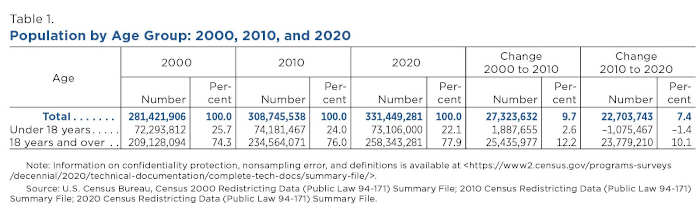
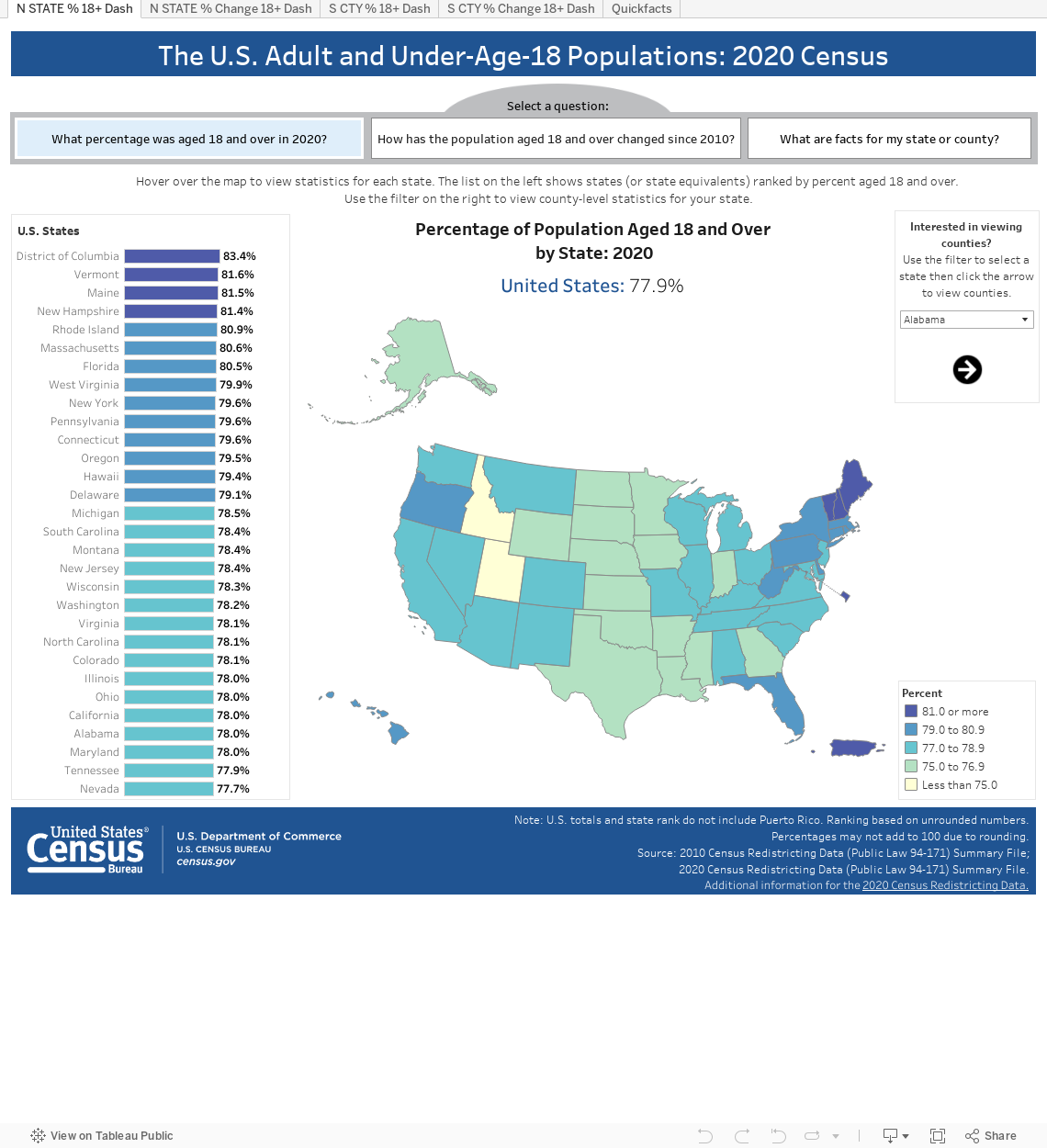
In 2020, the U.S. Census Bureau counted 331.4 million people living in the United States; more than three-quarters (77.9%) or 258.3 million were adults, 18 years or older — a 10.1% increase from 234.6 million in 2010.
The aging of baby boomers, those born between 1946 and 1964, who were ages 57 to 75 in 2021, is partly driving the growth in the adult population.
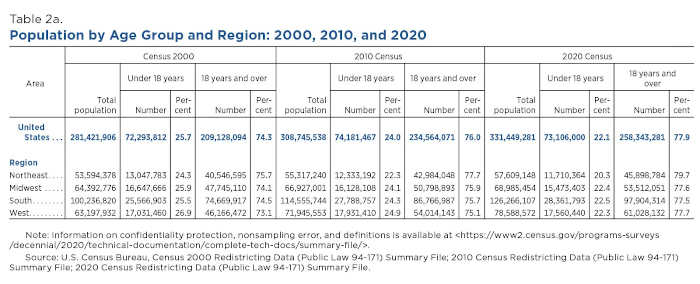
The 2020 Census shows that the Northeast had the largest proportion of adult population (79.7%) and the smallest proportion of people under age 18 (20.3%).
In contrast, the South had the lowest proportion of adult population (77.5%) and the highest proportion of young population (22.5%).
By comparison, the younger population under age 18 numbered 73.1 million, or 22.1% of the U.S. population in 2020, a 1.4% decrease from 74.2 million in 2010. The slow decline of the younger population is in part due to a general decrease in fertility, ongoing since 2007.
During the same period, the total U.S. population grew at a slower rate than the adult population: up 7.4% from 308.7 million in 2010 (Table 1).
Although the adult population grew from 2010 to 2020, the growth was lower than in the first decade of the 21st century when it grew 12.2%, to 234.6 million in 2010 from 209.1 million in 2000.
Adult population in the West shows fastest growth, south had largest increase
The 2020 Census shows that the Northeast had the largest proportion of adult population (79.7%) and the smallest proportion of people under age 18 (20.3%) (Table 2a).
In contrast, the South had the lowest proportion of adult population (77.5%) and the highest proportion of young population (22.5%).
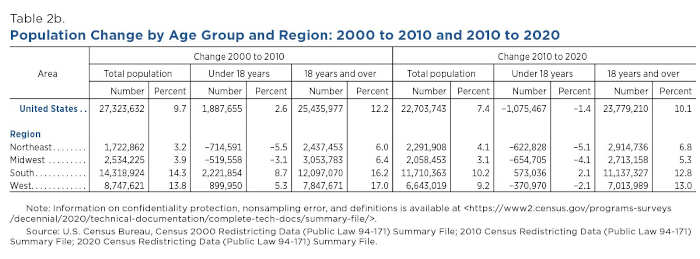
But only the South maintained growth in both age groups from 2000 to 2010 and 2010 to 2020: The young population in that region increased by 2.2 million (8.7%) and by 0.6 million (2.1%), respectively (Table 2b).
The adult population in the South also experienced the largest numeric increase of 11.1 million, or 12.8%, between 2010 and 2020.
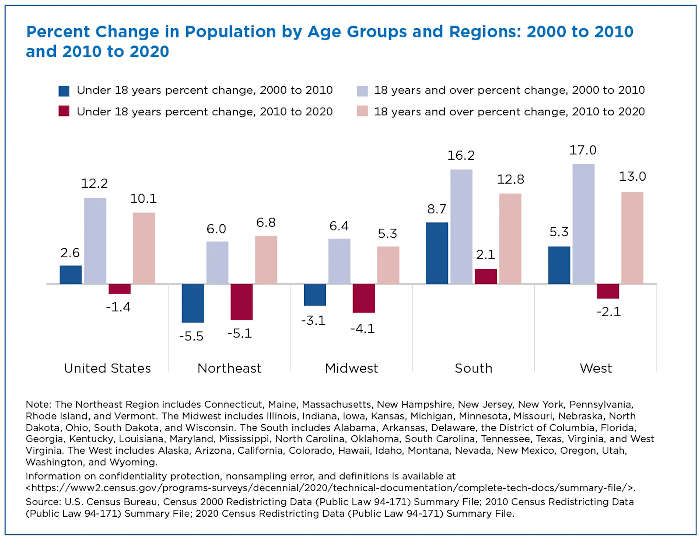
The figure below shows that the adult population grew in all regions during the 2000s and 2010s. The West experienced the fastest population change between 2010 and 2020, adding 7 million (13%) adults.
However, the Northeast was the only region where the adult population grew faster between 2010 and 2020 (6.8% or 2.9 million) than between 2000 and 2010 (6% or 2.4 million).
In the rest of the regions and across the country, the adult population grew at a slower pace over the last decade. The younger population also grew more slowly or declined.
Use this interactive data visualization to learn about the size, growth rate and distribution of the adult and under-age-18 populations in your state and county.
Stella Ogunwole, Megan Rabe and Zoe Caplan are demographic statisticians in the Sex and Age Statistics Branch in the Census Bureau’s Population Division. Andrew Roberts is chief of the Sex and Age Statistics Branch.
With the delta variant making up over 93% of COVID-19 cases in the U.S. at the end of July 2021, questions arise about how to stay protected against evolving forms of the SARS-CoV-2 virus. Here, pediatrician and infectious disease specialist Dr. Lilly Cheng Immergluck of Morehouse School of Medicine answers some common questions about variants and what you can do to best protect yourself.
1. What are variants and how do they emerge?
Viruses mutate over time to adapt to their environment and improve their survival. Over the course of the pandemic, SARS-CoV-2, the novel coronavirus that causes COVID-19, has mutated enough to change both its ability to spread through the population and its ability to infect people.
These new strains are called variants. The U.S. Centers for Disease Control and Prevention currently classifies variants into three categories, listed in order of least to most concerning:
-
Variant of Interest (VOI): Have features that may reduce your immune system’s ability to prevent infection. For example, you might have heard of VOI eta, iota or kappa.
-
Variant of Concern (VOC): Are less responsive to treatments or vaccines and more likely to evade diagnostic detection. They tend to be more transmissible, or contagious, and result in more severe infections. Alpha and delta are VOCs, for instance.
-
Variant of High Consequence (VOHC): Are significantly less responsive to existing diagnostic, prevention and treatment options. They also result in more severe infections and hospitalizations. There have not been any VOHCs identified so far.
The World Health Organization uses similar classifications, but their definitions may differ from the CDC’s U.S.-based ones, as variant features and effects may differ by geographic location.
2. Are variants always more harmful?
A variant may be more or less dangerous than other strains depending on the mutations in its genetic code. Mutations can affect attributes like how contagious a viral variant is, how it interacts with the immune system or the severity of the symptoms it triggers.
For example, the alpha variant is more transmissible than the original form of SARS-CoV-2. Studies show it’s somewhere between 43% to 90% more contagious than the virus that was most common at the start of the pandemic. Alpha also is more likely to cause severe disease, as indicated by increased rates of hospitalization and death after infection.
Even more extreme, the delta variant is reported to be nearly twice as contagious as previous strains and may cause even more severe disease among those who are unvaccinated. The viral load of those infected with delta – meaning the amount of virus detected from the nasal passages of an infected person – is also reported to be over 1,000 times higher than in those infected with the original form of SARS-CoV-2. Recent evidence also suggests that both unvaccinated and vaccinated people carry similar viral loads, further contributing to the especially contagious nature of this variant.
3. Which variants are most common in the US?
Over the course of a few months, the delta variant has become the predominant strain in the U.S., accounting for the vast majority of COVID-19 cases at the end of July 2021.
But there are regional variations across the country. As of July 31, the CDC estimated that the alpha variant represented over 3% of cases identified in a region of eight states that includes Georgia, Florida and Tennessee, compared with less than 1% in the region that includes Iowa, Kansas, Missouri and Nebraska. The CDC tracks variants in cooperation with state health departments and other public health agencies. COVID-19 infection samples from across the country are genetically sequenced each week to identify existing and new variants.
And new variants will likely continue to appear as the virus evolves. Delta plus, for instance, is a sub-lineage of delta. The effects of this subvariant are yet to be determined.
4. How are vaccines holding up against variants?
Researchers are working to figure out how effective the three COVID-19 vaccines currently authorized for emergency use in the U.S. are at preventing infection from variants in “real-world” conditions where variant distribution and frequency constantly change. Several preliminary studies that have not yet been peer-reviewed suggest that these vaccines are still effective in preventing COVID-19-related serious infections and death.
No vaccine is perfect, however, and breakthrough COVID-19 infections are possible in those who are vaccinated. Older adults and those with immunocompromising conditions may be at increased risk to have these breakthrough infections.
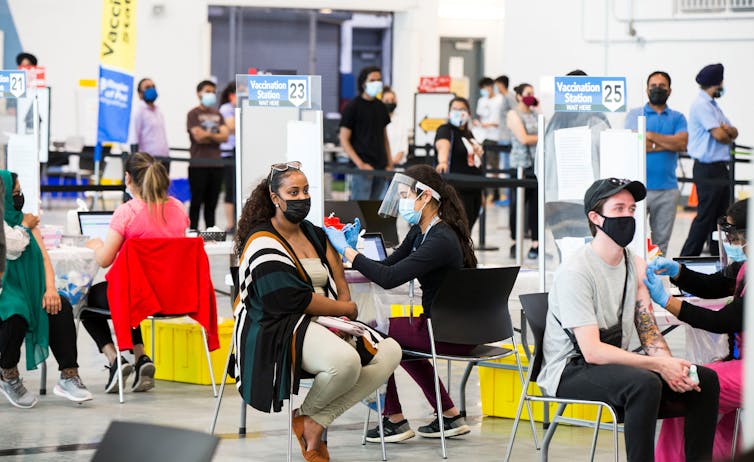
Thankfully, fully vaccinated individuals generally experience milder COVID-19 infections. For example, a study analyzing COVID-19 cases in England estimated that two doses of the Pfizer BioNTech vaccine are 93.7% effective in preventing symptomatic disease from the alpha variant and 88% effective from delta. A different study in Ontario, Canada, that is not yet peer-reviewed reported that the Moderna vaccine is 92% effective in preventing symptomatic disease from alpha.
5. How can I stay safe?
How cautious you should be depends on a number of individual and external factors.
One factor is whether you’re fully vaccinated. Nearly all - 99.5% - of COVID-19 deaths in the U.S. over the past few months were among unvaccinated people.
The most recent CDC guidelines recommend that everyone wear a mask in areas of substantial or high transmission, regardless of whether or not they’re vaccinated. More caution should especially be taken if you aren’t fully vaccinated or have a weakened immune system.
[Understand new developments in science, health and technology, each week. Subscribe to The Conversation’s science newsletter.]
Another factor to consider is the level of community transmission and the proportion of unvaccinated people in your local community. For example, someone who lives in an area that is below the national average for COVID-19 vaccinations may have a higher chance of encountering someone who is unvaccinated – and so more likely to spread the coronavirus – than someone in an area with higher vaccination rates.
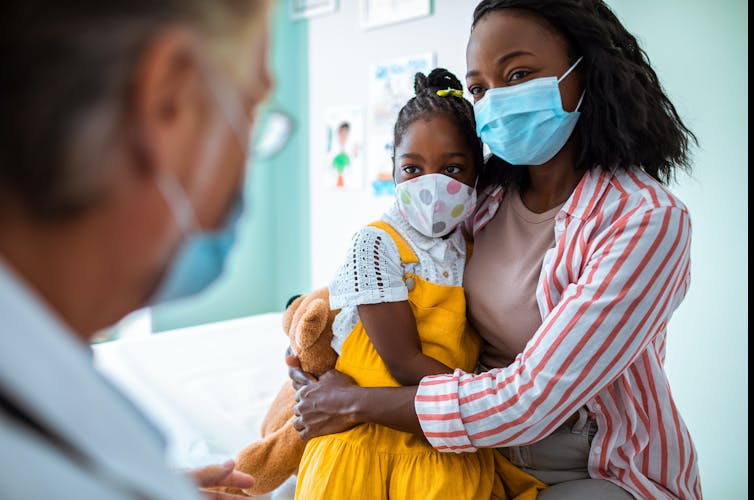
Finally, there are still a significant number of people who are at high risk of COVID-19, including children. As of Aug. 3, 2021, only 29.1% of children ages 12 to 15, and 40.4% of those ages 16 and 17, had been fully vaccinated. The American Academy of Pediatrics and the Children’s Hospital Association note that 4,292,120 total child COVID-19 cases had been reported as of Aug. 5. Children make up 14.3% of reported COVID-19 cases. If your child is unvaccinated, the best way you can protect them and other unvaccinated members of your household is to get yourself vaccinated and have everyone wear a mask in indoor public spaces.
Guidelines provided by public health agencies are simply that – general guidelines. They are not tailored to be prescriptive for each individual and their personal risk assessments.
Vaccines remain the best protection against every strain of the novel coronavirus. But masking, social distancing and avoiding crowds and poorly ventilated indoor spaces add extra layers of protection against breakthrough infections and lower your risk of inadvertently spreading the virus.
Lilly Cheng Immergluck, Professor of Microbiology, Biochemistry and Immunology, Morehouse School of Medicine
This article is republished from The Conversation under a Creative Commons license. Read the original article.