 How to resolve AdBlock issue?
News
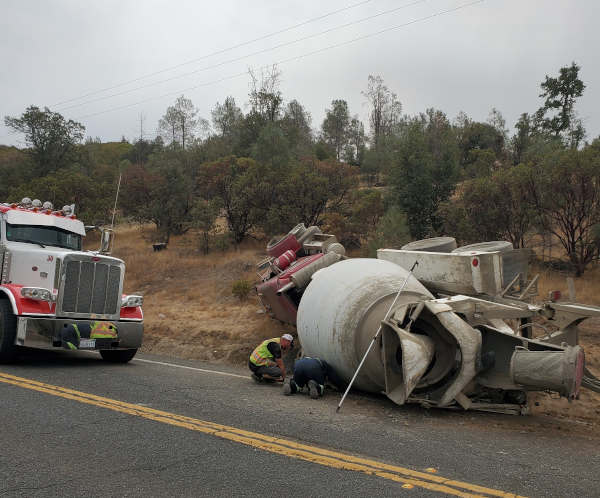
LAKE COUNTY, Calif. — A blown tire led to a cement truck crash and rollover on Thursday morning near Kelseyville, but the driver escaped serious injury.
Gerardo Martinez, 59, of Kelseyville, suffered minor injuries in the crash, the California Highway Patrol’s Clear Lake Area office reported.
At 9:35 a.m. Thursday, Martinez was driving a 2001 Peterbilt cement truck southbound on Highway just south of Bottle Rock Road at 40 to 45 miles per hour, the CHP said.
The CHP said Martinez told officers that the truck's right front tire blew out, causing him to lose control.
Martinez drove off the west roadway edge of Highway 29 and hit the west dirt embankment. The CHP said the truck ended up on its left side, partially blocking the southbound lane.
The CHP said the truck was fully loaded with cement at the time of the wreck, however, no cement spill was reported.
Kelseyville Fire transported Martinez to Sutter Lakeside Hospital for treatment of minor injuries, the CHP said.
The report said Martinez was using his safety equipment at the time the wreck occurred.
This CHP said the crash remains under investigation.
Email Elizabeth Larson at
LAKE COUNTY, Calif. — Lake County educational administrators are evaluating how to implement new state rules for vaccinating or regularly testing teachers and school staff for COVID-19.
The California Department of Public Health on Wednesday issued a public health order requiring all school staff to either show proof of full vaccination or be tested at least once per week.
The state said the new policy takes effect Thursday, Aug. 12, and schools must be in full compliance by Oct. 15.
“It is a surprise,” Lake County Superintendent of Schools Brock Falkenberg said of the new vaccination and testing mandate.
“We as educators are planners, and we like to just follow the plan,” he said.
In this case, there was little time to plan or prepare for the new rules the state handed down this week.
Falkenberg told Lake County News that, normally, when such orders or mandates are about to be released, he’ll get several days’ worth of warnings.
However, in this instance, he got the first notice about the impending public health order announcement at 11 p.m. Tuesday.
“We are still trying to look at the details of what was said and what is the California Department of Public Health order, because that’s really what counts,” Falkenberg said Wednesday evening.
“We’re still trying to really understand that language,” and understand how it will impact the Lake County Office of Education and all of the county’s districts and schools, he said.
Once they get a better understanding of the mandate, Falkenberg said the Office of Education will provide guidance and support to the county’s school districts.
The state’s new health order comes as Lake County schools are welcoming students back to class for the new academic year.
Lakeport Unified, Lucerne Elementary and Upper Lake Unified had their first day of school on Wednesday, with Konocti Unified and Middletown Unified set to return on Aug. 16 and Kelseyville Unified on Sept. 7.
Falkenberg said he visited every campus on Wednesday where classes had started and there was great school turnout.
In Lucerne and Upper Lake, schools had been open all of last year. “Their families have already been through this,” said Falkenberg, noting the schools have invested the time and energy to develop that trust. “Their turnout is very, very high for face-to-face instruction.”
Falkenberg said he’s interested to see what turnout is like in other districts that were only in session for a matter of months last year. “We don’t know what those numbers look like yet.”
While Lakeport schools looked very well attended on Wednesday, he said it was the first day of school, and enrollment numbers are not required to be submitted by districts until the first week of October. At that time, a clearer picture should emerge of school enrollments.
Making adjustments
“Every county, every community is different,” said Falkenberg, and small counties like Lake have decisions imposed on them by the state that are really meant to impact larger counties.
As the Office of Education works on understanding the new mandate, one of the questions already coming up is who will pay for it.
That was a question raised by the Lake County Board of Education, which had a regular meeting on Wednesday.
During his report to the board, Falkenberg updated trustees on the new guidance and they asked him about who will pay for testing.
He said the state will, in fact, cover those costs.
Falkenberg said Lake County’s schools and Public Health have built a strong working relationship around pandemic-related issues, discussing requirements and needs, and creating partnerships to meet them.
The districts have worked with Public Health to provide rapid tests and Public Health has supported the schools with free testing. Now, however, Falkenberg said to continue to get free testing, schools need to go through the California Department of Education. The only cost to schools is for the shipping.
The new vaccination guidance, however, doesn’t take into account the limited number of school nurses, said Falkenberg.
“School nurses are in short supply across the state,” and even the Office of Education doesn’t have its own nurse, he said.
“The cost of time, coordination and resources to do the testing is certainly something the districts will have to bear,” although Falkenberg said the state and federal governments have provided an ample amount of funding to work testing into school plans.
The vaccination effort
The effort to get vaccinations for those teachers and school staff who wanted them has been going on for many months.
“The county Office of Education coordinated with public health to fill all available slots in January and February with educators, school staff, including the community college staff, and eventually our preschool and child care staff,” said Falkenberg.
At one point, he said they had an idea of the number of staff members from each district that wanted to be vaccinated, but did not have a list of names. “We didn’t want a name as an agency, we just wanted numbers.”
Falkenberg said the Office of Education worked with district superintendents to develop an equitable plan of vaccine distribution around the county.
They wanted to meet the needs of those in front of students first, so they started with Lucerne and Upper Lake school staffs, as they were back to in-person classes before the other districts.
On Wednesday, Falkenberg said he didn’t know how many individuals actually followed through and got vaccinated or who got vaccinated since then and didn’t’ come through the schools’ sign-up process. “I don’t know that anyone has that number.”
In addition, following guidance from the California Department of Public Health and Cal/OSHA, Falkenberg said the Office of Education entered into a process to allow office staff to start removing masks by either showing proof of vaccination or other medical reasons for not masking.
Based on the new guidance, Falkenberg said the districts need to know who has been vaccinated. “That's the first step that needs to happen.”
He said county superintendents have regular Friday lunch Zoom meetings and he expects the new vaccination guidance will be a key topic of upcoming meetings.
In a letter to parents issued on July 30, interim Lake County Public Health Officer Dr. Charlie Evans said vaccination rates for children ages 12 to 19 was 19%. “When schools resume, all
students will be asked to mask while indoors, until we reach an immunity level through vaccination that is enough to sustain us at a very low infection rate.”
Evans asked parents to take their children who qualify for vaccination to their primary care doctor or a vaccination clinic for evaluation and treatment with the COVID-19 vaccine, which he said was the primary method of helping Lake County achieve the goal of keeping schools open for in-classroom teaching throughout the year.
He also asked people to follow the “Three Ws” — “Wear a mask. Wash your hands. Watch your distance.”
The Office of Education put together vaccination and testing teams several months ago. Falkenberg said the vaccination team focuses on 12- to 18-year-olds but will vaccinate anyone who shows up who wants the shot, he said.
Falkenberg said the testing team was formed as a partnership between the Office of Education, Lucerne Elementary, Upper Lake Unified and the Lake County International Charter School, and he said they’ve been providing testing as requested for many months.
One of Falkenberg’s immediate concerns is how the new mandate will impact those vaccination and testing teams.
Now that either vaccination or testing is required, Falkenberg said the question is whether they will be able to support that team, which is why they need to find out how many people have been vaccinated.
“I think a lot is going to become more evident over the next day or two,” Falkenberg said.
Email Elizabeth Larson atThis email address is being protected from spambots. You need JavaScript enabled to view it. . Follow her on Twitter, @ERLarson, or Lake County News, @LakeCoNews.
The California Department of Public Health on Wednesday issued a public health order requiring all school staff to either show proof of full vaccination or be tested at least once per week.
The state said the new policy takes effect Thursday, Aug. 12, and schools must be in full compliance by Oct. 15.
“It is a surprise,” Lake County Superintendent of Schools Brock Falkenberg said of the new vaccination and testing mandate.
“We as educators are planners, and we like to just follow the plan,” he said.
In this case, there was little time to plan or prepare for the new rules the state handed down this week.
Falkenberg told Lake County News that, normally, when such orders or mandates are about to be released, he’ll get several days’ worth of warnings.
However, in this instance, he got the first notice about the impending public health order announcement at 11 p.m. Tuesday.
“We are still trying to look at the details of what was said and what is the California Department of Public Health order, because that’s really what counts,” Falkenberg said Wednesday evening.
“We’re still trying to really understand that language,” and understand how it will impact the Lake County Office of Education and all of the county’s districts and schools, he said.
Once they get a better understanding of the mandate, Falkenberg said the Office of Education will provide guidance and support to the county’s school districts.
The state’s new health order comes as Lake County schools are welcoming students back to class for the new academic year.
Lakeport Unified, Lucerne Elementary and Upper Lake Unified had their first day of school on Wednesday, with Konocti Unified and Middletown Unified set to return on Aug. 16 and Kelseyville Unified on Sept. 7.
Falkenberg said he visited every campus on Wednesday where classes had started and there was great school turnout.
In Lucerne and Upper Lake, schools had been open all of last year. “Their families have already been through this,” said Falkenberg, noting the schools have invested the time and energy to develop that trust. “Their turnout is very, very high for face-to-face instruction.”
Falkenberg said he’s interested to see what turnout is like in other districts that were only in session for a matter of months last year. “We don’t know what those numbers look like yet.”
While Lakeport schools looked very well attended on Wednesday, he said it was the first day of school, and enrollment numbers are not required to be submitted by districts until the first week of October. At that time, a clearer picture should emerge of school enrollments.
Making adjustments
“Every county, every community is different,” said Falkenberg, and small counties like Lake have decisions imposed on them by the state that are really meant to impact larger counties.
As the Office of Education works on understanding the new mandate, one of the questions already coming up is who will pay for it.
That was a question raised by the Lake County Board of Education, which had a regular meeting on Wednesday.
During his report to the board, Falkenberg updated trustees on the new guidance and they asked him about who will pay for testing.
He said the state will, in fact, cover those costs.
Falkenberg said Lake County’s schools and Public Health have built a strong working relationship around pandemic-related issues, discussing requirements and needs, and creating partnerships to meet them.
The districts have worked with Public Health to provide rapid tests and Public Health has supported the schools with free testing. Now, however, Falkenberg said to continue to get free testing, schools need to go through the California Department of Education. The only cost to schools is for the shipping.
The new vaccination guidance, however, doesn’t take into account the limited number of school nurses, said Falkenberg.
“School nurses are in short supply across the state,” and even the Office of Education doesn’t have its own nurse, he said.
“The cost of time, coordination and resources to do the testing is certainly something the districts will have to bear,” although Falkenberg said the state and federal governments have provided an ample amount of funding to work testing into school plans.
The vaccination effort
The effort to get vaccinations for those teachers and school staff who wanted them has been going on for many months.
“The county Office of Education coordinated with public health to fill all available slots in January and February with educators, school staff, including the community college staff, and eventually our preschool and child care staff,” said Falkenberg.
At one point, he said they had an idea of the number of staff members from each district that wanted to be vaccinated, but did not have a list of names. “We didn’t want a name as an agency, we just wanted numbers.”
Falkenberg said the Office of Education worked with district superintendents to develop an equitable plan of vaccine distribution around the county.
They wanted to meet the needs of those in front of students first, so they started with Lucerne and Upper Lake school staffs, as they were back to in-person classes before the other districts.
On Wednesday, Falkenberg said he didn’t know how many individuals actually followed through and got vaccinated or who got vaccinated since then and didn’t’ come through the schools’ sign-up process. “I don’t know that anyone has that number.”
In addition, following guidance from the California Department of Public Health and Cal/OSHA, Falkenberg said the Office of Education entered into a process to allow office staff to start removing masks by either showing proof of vaccination or other medical reasons for not masking.
Based on the new guidance, Falkenberg said the districts need to know who has been vaccinated. “That's the first step that needs to happen.”
He said county superintendents have regular Friday lunch Zoom meetings and he expects the new vaccination guidance will be a key topic of upcoming meetings.
In a letter to parents issued on July 30, interim Lake County Public Health Officer Dr. Charlie Evans said vaccination rates for children ages 12 to 19 was 19%. “When schools resume, all
students will be asked to mask while indoors, until we reach an immunity level through vaccination that is enough to sustain us at a very low infection rate.”
Evans asked parents to take their children who qualify for vaccination to their primary care doctor or a vaccination clinic for evaluation and treatment with the COVID-19 vaccine, which he said was the primary method of helping Lake County achieve the goal of keeping schools open for in-classroom teaching throughout the year.
He also asked people to follow the “Three Ws” — “Wear a mask. Wash your hands. Watch your distance.”
The Office of Education put together vaccination and testing teams several months ago. Falkenberg said the vaccination team focuses on 12- to 18-year-olds but will vaccinate anyone who shows up who wants the shot, he said.
Falkenberg said the testing team was formed as a partnership between the Office of Education, Lucerne Elementary, Upper Lake Unified and the Lake County International Charter School, and he said they’ve been providing testing as requested for many months.
One of Falkenberg’s immediate concerns is how the new mandate will impact those vaccination and testing teams.
Now that either vaccination or testing is required, Falkenberg said the question is whether they will be able to support that team, which is why they need to find out how many people have been vaccinated.
“I think a lot is going to become more evident over the next day or two,” Falkenberg said.
Email Elizabeth Larson at
LAKE COUNTY, Calif. — This week, the Board of Supervisors took another step in the process of moving the Middle Creek Restoration Project forward with the approval of the purchase of a key property.
In a Tuesday morning vote, the board — sitting as the Lake County Watershed Protection District Board of Director — unanimously approved an administrative agreement to purchase two parcels totaling 124 acres at 2200 Point Land Farms Road in Nice for $1,495,600.
The property’s owner is Michael S. Mountanos, trustee of the Michael S. Mountanos Living Trust.
The property will be part of the Middle Creek Flood Damage Reduction and Ecosystem Restoration Project.
That project aims to remove failing levees and return 1,650 acres of farmland between the Nice-Lucerne Cutoff and Upper Lake to Clear Lake in order to improve the watershed and water quality by reducing sedimentation and phosphorus loading.
County documents said the project’s construction design by the U.S. Army Corps of Engineers has been estimated at around $3.2 million, of which the county must pay $800,000.
In her written report to the board, Deputy Water Resources Director Marina Deligiannis called the property purchase “a big step” toward the project’s development.
On Tuesday, Deligiannis said that the county’s consultant, Paragon Partners Ltd., had reached the sale agreement with Mountanos.
She said the county is using a grant from the California Department of Water Resources to purchase land for the project from willing sellers.
That grant, for $15 million, expires March 31, 2022, and Deligiannis said they still have more land to acquire. The county is seeking an extension of the grant from the state.
“This parcel is one of our priority parcels for a variety of reasons,” she said, and one of the biggest reasons is that the property borders the Rodman Slough.
In a May project update to the board, Deligiannis said there were eight priority parcels, with a total of nearly 50 properties still to purchase.
It also was explained at that May meeting that Paragon is tasked with working on the acquisition of the priority parcels, which are prioritized due to potential impact if the levees fail.
Since May, the board has approved one other property purchase for the project. In a consent item on the June 22 agenda, the supervisors voted to purchase a 10-acre parcel at 8100 Sailor Ave. in Upper Lake from Francisco and Angela Ortega for $170,000.
On July 27, the supervisors also approved committing $400,000 in cannabis tax funds toward the county’s share of the design cost in an effort to get the federal government to approve the appropriation that will allow the U.S. Army Corps of Engineers to start the project design.
During Tuesday’s discussion, Deligiannis said that in March the state approved an appraisal for $1,371,000 for the Mountanos property. Mountanos’ broker submitted a counter offer for $1,000 more per acre, bringing the total to $1,495,600.
When Paragon submitted that counter offer to the county, the county in turn sent it to the state for consideration, Deligiannis said.
The State Department of Water Resources did not approve paying the additional $124,600 for the property, but Deligiannis said the state offered the county several options.
The one with the quickest turnaround, which the state has approved, allows the county to be reimbursed by the grant for $1,371,000 and to use reserves to cover the additional $124,600. Deligiannis explained Lake County Water Resources would then look at other grant opportunities for getting reimbursement for the reserve funds.
Board Chair Bruno Sabatier said the property is a very large and important piece of land that will help the project move forward. The acquisition of this and another piece of land will allow the county to start looking at where to locate a new bridge to account for the new historical flow of the lake through the Rodman Slough.
“This is one of the key pieces we’ve been working hard on,” he said.
Sabatier said it was exciting to have the land purchase brought forward. “I’m happy the state is working with us and I’m glad we’re able to find ways to make this happen today.”
Supervisor EJ Crandell moved to approve the purchase, with Supervisor Jessica Pyska seconding and the board voting 5-0.
Email Elizabeth Larson atThis email address is being protected from spambots. You need JavaScript enabled to view it. . Follow her on Twitter, @ERLarson, or Lake County News, @LakeCoNews.
In a Tuesday morning vote, the board — sitting as the Lake County Watershed Protection District Board of Director — unanimously approved an administrative agreement to purchase two parcels totaling 124 acres at 2200 Point Land Farms Road in Nice for $1,495,600.
The property’s owner is Michael S. Mountanos, trustee of the Michael S. Mountanos Living Trust.
The property will be part of the Middle Creek Flood Damage Reduction and Ecosystem Restoration Project.
That project aims to remove failing levees and return 1,650 acres of farmland between the Nice-Lucerne Cutoff and Upper Lake to Clear Lake in order to improve the watershed and water quality by reducing sedimentation and phosphorus loading.
County documents said the project’s construction design by the U.S. Army Corps of Engineers has been estimated at around $3.2 million, of which the county must pay $800,000.
In her written report to the board, Deputy Water Resources Director Marina Deligiannis called the property purchase “a big step” toward the project’s development.
On Tuesday, Deligiannis said that the county’s consultant, Paragon Partners Ltd., had reached the sale agreement with Mountanos.
She said the county is using a grant from the California Department of Water Resources to purchase land for the project from willing sellers.
That grant, for $15 million, expires March 31, 2022, and Deligiannis said they still have more land to acquire. The county is seeking an extension of the grant from the state.
“This parcel is one of our priority parcels for a variety of reasons,” she said, and one of the biggest reasons is that the property borders the Rodman Slough.
In a May project update to the board, Deligiannis said there were eight priority parcels, with a total of nearly 50 properties still to purchase.
It also was explained at that May meeting that Paragon is tasked with working on the acquisition of the priority parcels, which are prioritized due to potential impact if the levees fail.
Since May, the board has approved one other property purchase for the project. In a consent item on the June 22 agenda, the supervisors voted to purchase a 10-acre parcel at 8100 Sailor Ave. in Upper Lake from Francisco and Angela Ortega for $170,000.
On July 27, the supervisors also approved committing $400,000 in cannabis tax funds toward the county’s share of the design cost in an effort to get the federal government to approve the appropriation that will allow the U.S. Army Corps of Engineers to start the project design.
During Tuesday’s discussion, Deligiannis said that in March the state approved an appraisal for $1,371,000 for the Mountanos property. Mountanos’ broker submitted a counter offer for $1,000 more per acre, bringing the total to $1,495,600.
When Paragon submitted that counter offer to the county, the county in turn sent it to the state for consideration, Deligiannis said.
The State Department of Water Resources did not approve paying the additional $124,600 for the property, but Deligiannis said the state offered the county several options.
The one with the quickest turnaround, which the state has approved, allows the county to be reimbursed by the grant for $1,371,000 and to use reserves to cover the additional $124,600. Deligiannis explained Lake County Water Resources would then look at other grant opportunities for getting reimbursement for the reserve funds.
Board Chair Bruno Sabatier said the property is a very large and important piece of land that will help the project move forward. The acquisition of this and another piece of land will allow the county to start looking at where to locate a new bridge to account for the new historical flow of the lake through the Rodman Slough.
“This is one of the key pieces we’ve been working hard on,” he said.
Sabatier said it was exciting to have the land purchase brought forward. “I’m happy the state is working with us and I’m glad we’re able to find ways to make this happen today.”
Supervisor EJ Crandell moved to approve the purchase, with Supervisor Jessica Pyska seconding and the board voting 5-0.
Email Elizabeth Larson at
LAKE COUNTY, Calif. — As of January 2020, an estimated 161,548 Californians were experiencing homelessness on any given day, as reported by Continuums of Care to the U.S. Department of Housing and Urban Development, or HUD.
Of that total, 8,030 were family households, 11,401 were veterans, 12,172 were unaccompanied young adults (aged 18-24), and 51,785 were individuals experiencing chronic homelessness.
According to a study by Chaplin Hall, one in 10 young adults ages 18-25, and at least one in 30 adolescents ages 13-17, experiences some form of unaccompanied homelessness over the course of a year in the United States. Community leaders across the nation are uniting to develop efficient and sustainable solutions to this heartbreaking epidemic.
On May 21, the Rapid Results Institute, or RRI, and HomeBase, with funding from HUD, announced the Lake County Continuum of Care had accepted the 100-Day Challenge to accelerate efforts in preventing and ending youth homelessness within our communities.
Lake County, the City of Long Beach and Monterey and Mendocino Counties comprised RRI’s third cohort of California jurisdictions.
The 100-Day Challenges are designed to empower and support front-line teams in pursuit of an ambitious goal, and are a central part of the movement to prevent and end youth homelessness. RRI pioneered this methodology, which has been used by communities and governments around the world to tackle complex social issues.
The compressed time frame of 100 days, high visibility, and support from coaches, peers, and federal leaders all work together to inspire teams to achieve rapid progress and sustainable system change.
Lake County’s 100-day goal not only included housing a significant number of unhoused people, but also setting sub-goals in order to achieve the initial 100-day goal.
These sub-goals vary according to the needs of each community, and include housing marginalized youth with a lens on LGBTQIA, racial equity, housing those community members that are unhoused over the age of fifty-five, securing job opportunities, and strengthening the infrastructure of existing systems to better deal with this rising epidemic.
The Lake County Continuum of Care is striving to “connect 55 people experiencing homelessness to safe and stable housing.”
Emphasis has been placed on ensuring historically underserved populations have the opportunity to benefit from this program.
Since this project commenced on May 24, the 100-Day Challenge team has helped house 22 Lake County community members.
“Twenty-two lives have been meaningfully transformed as a result of our team’s efforts, and that is truly remarkable,” said Todd Metcalf, director of Lake County Behavioral Health Services. “Redwood Community Services, Adventist Health, the Lake County Department of Health Services and so many people in Lake County’s communities have been tremendous partners to our agency throughout this effort, and we sincerely appreciate the dynamic presence each brings to our Continuum of Care.”
Metcalf added, “There is still work to be done, and we are working hard to realize our goal.”
Over 3,600 youth and young adults have been housed during the course of RRI 100-Day Challenges throughout California, and 100-Day Challenges are gaining momentum around the United States.
In U.S. Senate Report 115-268, the committee applauded HUD’s decision to provide funding for 100-Day Challenges. The 100-Day Challenge has provided an opportunity to create a team of community agencies to specifically address the housing crisis facing our nation.
Individuals, organizations and communities interested in following the progress of this groundbreaking initiative can sign up to receive news from RRI at https://www.rapidresults.org/.
If you have a rental and are willing to work with our team to provide affordable housing please contact Natalie Baker atThis email address is being protected from spambots. You need JavaScript enabled to view it. .
For more local information on housing assistance please visit the Lake County Continuum of Care website.
Of that total, 8,030 were family households, 11,401 were veterans, 12,172 were unaccompanied young adults (aged 18-24), and 51,785 were individuals experiencing chronic homelessness.
According to a study by Chaplin Hall, one in 10 young adults ages 18-25, and at least one in 30 adolescents ages 13-17, experiences some form of unaccompanied homelessness over the course of a year in the United States. Community leaders across the nation are uniting to develop efficient and sustainable solutions to this heartbreaking epidemic.
On May 21, the Rapid Results Institute, or RRI, and HomeBase, with funding from HUD, announced the Lake County Continuum of Care had accepted the 100-Day Challenge to accelerate efforts in preventing and ending youth homelessness within our communities.
Lake County, the City of Long Beach and Monterey and Mendocino Counties comprised RRI’s third cohort of California jurisdictions.
The 100-Day Challenges are designed to empower and support front-line teams in pursuit of an ambitious goal, and are a central part of the movement to prevent and end youth homelessness. RRI pioneered this methodology, which has been used by communities and governments around the world to tackle complex social issues.
The compressed time frame of 100 days, high visibility, and support from coaches, peers, and federal leaders all work together to inspire teams to achieve rapid progress and sustainable system change.
Lake County’s 100-day goal not only included housing a significant number of unhoused people, but also setting sub-goals in order to achieve the initial 100-day goal.
These sub-goals vary according to the needs of each community, and include housing marginalized youth with a lens on LGBTQIA, racial equity, housing those community members that are unhoused over the age of fifty-five, securing job opportunities, and strengthening the infrastructure of existing systems to better deal with this rising epidemic.
The Lake County Continuum of Care is striving to “connect 55 people experiencing homelessness to safe and stable housing.”
Emphasis has been placed on ensuring historically underserved populations have the opportunity to benefit from this program.
Since this project commenced on May 24, the 100-Day Challenge team has helped house 22 Lake County community members.
“Twenty-two lives have been meaningfully transformed as a result of our team’s efforts, and that is truly remarkable,” said Todd Metcalf, director of Lake County Behavioral Health Services. “Redwood Community Services, Adventist Health, the Lake County Department of Health Services and so many people in Lake County’s communities have been tremendous partners to our agency throughout this effort, and we sincerely appreciate the dynamic presence each brings to our Continuum of Care.”
Metcalf added, “There is still work to be done, and we are working hard to realize our goal.”
Over 3,600 youth and young adults have been housed during the course of RRI 100-Day Challenges throughout California, and 100-Day Challenges are gaining momentum around the United States.
In U.S. Senate Report 115-268, the committee applauded HUD’s decision to provide funding for 100-Day Challenges. The 100-Day Challenge has provided an opportunity to create a team of community agencies to specifically address the housing crisis facing our nation.
Individuals, organizations and communities interested in following the progress of this groundbreaking initiative can sign up to receive news from RRI at https://www.rapidresults.org/.
If you have a rental and are willing to work with our team to provide affordable housing please contact Natalie Baker at
For more local information on housing assistance please visit the Lake County Continuum of Care website.
In order to best protect students and staff as California starts the school year fully in-person, the California Department of Public Health on Wednesday issued a new public health order requiring all school staff to either show proof of full vaccination or be tested at least once per week.
“To give parents confidence that their children are safe as schools return to full, in-person learning, we are urging all school staff to get vaccinated. Vaccinations are how we will end this pandemic,” said Gov. Gavin Newsom. “As a father, I look forward to the start of the school year and seeing all California kids back in the classroom.”
The new policy for school staff takes effect Thursday, Aug. 12, and schools must be in full compliance by Oct. 15.
Robust and free testing resources are available to K-12 schools through the CA K-12 schools testing program.
“There’s no substitute for in-person instruction, and California will continue to lead the nation in keeping students and staff safe while ensuring fully open classrooms,” Dr. Tomás J. Aragón, CDPH director and State Public Health officer, said Wednesday. “Today’s order will help the state’s continued efforts to increase vaccinations, similar to the orders encouraging state and health care workers and businesses to get vaccinated.”
In recent weeks, California has led the nation in implementing measures to slow the spread of COVID-19, including:
— Vaccine verification for state workers. Requires all state workers to either show proof of full vaccination or be tested at least once per week, and encourages local governments and other employers to adopt a similar protocol. Following California’s announcement, some of the largest California businesses and local governments followed suit, as did the federal government.
Vaccinations for health care workers. Requires workers in health care settings to be fully vaccinated or receive their second dose by September 30, 2021.
— Universal masking in K-12 settings. Aligned with guidance from the CDC and American Academy of Pediatrics, California was the first state to implement universal masking in school settings to keep students and staff safe while optimizing fully in-person instruction.
— Medi-Cal vaccination incentives. $350 million in incentive payments to help close the vaccination gap between Medi-Cal beneficiaries and Californians as a whole, significantly stepping up outreach in underserved communities.
— Statewide mask recommendation. In response to the spike in COVID-19 hospitalizations and new CDC guidance calling for masking, the state recommended mask use for indoor public settings regardless of vaccination status.
As of last week, California administered 335,009 new first doses, a 24 percent increase compared to the previous two weeks. This is a 62 percent increase compared to the week of July 5- July 11.
State officials said the new policy will help keep staff and students safe while encouraging additional vaccinations.
“Educators want to be in classrooms with their students, and the best way to make sure that happens is for everyone who is medically eligible to be vaccinated, with robust testing and multi-tiered safety measures,” said California Teachers Association President E. Toby Boyd on Wednesday.
Boyd said the new order “is an appropriate next step to ensure the safety of our school communities and to protect our youngest learners under 12 who are not yet vaccine eligible from this highly contagious Delta variant.”
“Worker-led school safety protocols have created the model for safe school reopening, and many school workers have already created similar agreements,” said SEIU Local 99 Executive Director and SEIU California Executive Board Member Max Arias. “Workers and employers sitting down at the bargaining table is the most effective way to create and implement vaccine policies for the benefit of the entire school community.”
“We want to do everything possible to protect our most vulnerable children and ensure that all children can return to school as safely as possible,” said California State PTA President Carol Green. “We stand by our position that educators are essential workers and support the safe opening of schools to in person instruction.”
“Combining this policy with mitigation measures like masking, hand washing, and good ventilation will ensure we are doing everything possible to keep schools safe for in-person learning. We applaud the Governor’s efforts to provide a framework that works toward this goal,” said California Federation of Teachers President Jeff Freitas.
“While we hope that all employees will ultimately decide to be vaccinated, we look forward to working with the Governor’s administration on the necessary staffing and operations support required to conduct employee COVID testing in our schools,” said Association of California School Administrators President Charlie Hoffman.
“A vaccine requirement for education staff, as announced by Gov. Newsom, is a necessary step, one that aligns with the science, and public health recommendations to create the safest environment possible as we reopen our campuses,” said California County Superintendents Educational Services Association President and Alameda County Superintendent of Schools L.K. Monroe.
“CCSA supports the orders by the California Department of Public Health to mitigate transmission and ensure a safe return to in-person learning,” said California Charter Schools Association President and CEO Myrna Castrejón. “We urge all educators and school staff to get vaccinated to keep yourselves and students safe.”
Despite California leading the nation in vaccinations, with more than 46 million doses administered and over 77 percent of those eligible having received at least one dose, the state is seeing increasing numbers of people who refused to get the vaccine being admitted to the ICU and dying. This increase is heavily due to the Delta variant.
California remains committed to increasing vaccination rates and urges businesses and local communities to encourage vaccination.
COVID-19 vaccines are safe, effective and free. Unvaccinated Californians age 12 and up can go to http://myturn.ca.gov or call 833-422-4255 to schedule an appointment or go to http://myturn.ca.gov/clinic to find a walk-in clinic in their county.
“To give parents confidence that their children are safe as schools return to full, in-person learning, we are urging all school staff to get vaccinated. Vaccinations are how we will end this pandemic,” said Gov. Gavin Newsom. “As a father, I look forward to the start of the school year and seeing all California kids back in the classroom.”
The new policy for school staff takes effect Thursday, Aug. 12, and schools must be in full compliance by Oct. 15.
Robust and free testing resources are available to K-12 schools through the CA K-12 schools testing program.
“There’s no substitute for in-person instruction, and California will continue to lead the nation in keeping students and staff safe while ensuring fully open classrooms,” Dr. Tomás J. Aragón, CDPH director and State Public Health officer, said Wednesday. “Today’s order will help the state’s continued efforts to increase vaccinations, similar to the orders encouraging state and health care workers and businesses to get vaccinated.”
In recent weeks, California has led the nation in implementing measures to slow the spread of COVID-19, including:
— Vaccine verification for state workers. Requires all state workers to either show proof of full vaccination or be tested at least once per week, and encourages local governments and other employers to adopt a similar protocol. Following California’s announcement, some of the largest California businesses and local governments followed suit, as did the federal government.
Vaccinations for health care workers. Requires workers in health care settings to be fully vaccinated or receive their second dose by September 30, 2021.
— Universal masking in K-12 settings. Aligned with guidance from the CDC and American Academy of Pediatrics, California was the first state to implement universal masking in school settings to keep students and staff safe while optimizing fully in-person instruction.
— Medi-Cal vaccination incentives. $350 million in incentive payments to help close the vaccination gap between Medi-Cal beneficiaries and Californians as a whole, significantly stepping up outreach in underserved communities.
— Statewide mask recommendation. In response to the spike in COVID-19 hospitalizations and new CDC guidance calling for masking, the state recommended mask use for indoor public settings regardless of vaccination status.
As of last week, California administered 335,009 new first doses, a 24 percent increase compared to the previous two weeks. This is a 62 percent increase compared to the week of July 5- July 11.
State officials said the new policy will help keep staff and students safe while encouraging additional vaccinations.
“Educators want to be in classrooms with their students, and the best way to make sure that happens is for everyone who is medically eligible to be vaccinated, with robust testing and multi-tiered safety measures,” said California Teachers Association President E. Toby Boyd on Wednesday.
Boyd said the new order “is an appropriate next step to ensure the safety of our school communities and to protect our youngest learners under 12 who are not yet vaccine eligible from this highly contagious Delta variant.”
“Worker-led school safety protocols have created the model for safe school reopening, and many school workers have already created similar agreements,” said SEIU Local 99 Executive Director and SEIU California Executive Board Member Max Arias. “Workers and employers sitting down at the bargaining table is the most effective way to create and implement vaccine policies for the benefit of the entire school community.”
“We want to do everything possible to protect our most vulnerable children and ensure that all children can return to school as safely as possible,” said California State PTA President Carol Green. “We stand by our position that educators are essential workers and support the safe opening of schools to in person instruction.”
“Combining this policy with mitigation measures like masking, hand washing, and good ventilation will ensure we are doing everything possible to keep schools safe for in-person learning. We applaud the Governor’s efforts to provide a framework that works toward this goal,” said California Federation of Teachers President Jeff Freitas.
“While we hope that all employees will ultimately decide to be vaccinated, we look forward to working with the Governor’s administration on the necessary staffing and operations support required to conduct employee COVID testing in our schools,” said Association of California School Administrators President Charlie Hoffman.
“A vaccine requirement for education staff, as announced by Gov. Newsom, is a necessary step, one that aligns with the science, and public health recommendations to create the safest environment possible as we reopen our campuses,” said California County Superintendents Educational Services Association President and Alameda County Superintendent of Schools L.K. Monroe.
“CCSA supports the orders by the California Department of Public Health to mitigate transmission and ensure a safe return to in-person learning,” said California Charter Schools Association President and CEO Myrna Castrejón. “We urge all educators and school staff to get vaccinated to keep yourselves and students safe.”
Despite California leading the nation in vaccinations, with more than 46 million doses administered and over 77 percent of those eligible having received at least one dose, the state is seeing increasing numbers of people who refused to get the vaccine being admitted to the ICU and dying. This increase is heavily due to the Delta variant.
California remains committed to increasing vaccination rates and urges businesses and local communities to encourage vaccination.
COVID-19 vaccines are safe, effective and free. Unvaccinated Californians age 12 and up can go to http://myturn.ca.gov or call 833-422-4255 to schedule an appointment or go to http://myturn.ca.gov/clinic to find a walk-in clinic in their county.
LAKE COUNTY, Calif. — The Board of Supervisors on Tuesday heard from two physicians — both of whom have acted as the county’s Public Health officer at various times — on the ongoing impact of COVID-19 on the community.
Dr. Gary Pace, Lake County’s former Public Health officer, is filling in while the county continues its search for a permanent successor and again this week gave an update to the board.
Since Pace updated the board last week, Lake County has dropped out of first place for its case rate and was listed as No. 4 statewide on Tuesday, with a case rate of 53 per 100,000. Del Norte (79), Tuolumne (63) and Nevada (54) were the top three counties on Tuesday.
Lake County’s case rate topped out at 62 per 100,000 last week, according to state data.
Pace said Lake County’s vaccinations are increasing slowly, with about 100 vaccinations being given a day, up from about 50 a day about a month ago.
He said there are still about 20,000 people in Lake County who are eligible to be vaccinated but aren’t. On Tuesday, 53.2% of county residents were vaccinated, with about 38.7% age 12 and older still unvaccinated.
Pace said the testing rate continues to rise, and was at 17.6% on Tuesday. He said test positivity rises first, followed by the case rate and then hospitalizations.
He said cases can be anticipated to continue to rise in the coming weeks, and showed the county’s epicurve. That graphic illustrated that the most recent week of reported cases had the third-highest number of cases since the pandemic began, and the highest caseload since early January, when the pandemic surge peaked in Lake County.
The case rate breakdown Pace presented showed that 50% of cases are in people aged 20 to 44. As of Tuesday, there were 18 hospitalized COVID-19 patients, with six in intensive care, and Pace said those numbers are continuing to rise.
“We’re starting to get very concerned about the hospital situation,” Pace said.
He said the local hospitals are full and the regional hospitals are filling up as well. Sonoma County, where many seriously ill Lake County patients are transported, had 70 COVID-19 patients in hospitals on Tuesday, with 17 in the ICUs.
Pace said vaccines remain the most important intervention, explaining that those who are vaccinated can get infected, but they are less likely to get severe symptoms or die. Unvaccinated people are eight times more likely to get infected and 25 more times to get hospitalized.
“Very likely it’s going to get bad in the fall and winter again,” said Pace, who encouraged people to get vaccinated and wear masks, explaining that universal masking is considered the prudent thing to do.
With school now starting, Pace noted that before the Delta variant, children didn’t get sick as often and, if they did, they didn’t get very sick and didn’t spread it much. Now, he said children are more likely to get infected and to get sicker than they did previously. The state is requiring masking within the school.
“I think it’s going to get complicated this fall with Delta now in ways that we’re just now starting to get our heads wrapped around,” Pace said.
Pace encouraged people to be tested and to isolate themselves if they are exposed to someone who is ill. He said the state has taken away contact tracing resources, so Public Health is having trouble keeping up with it.
“The virus is changing, the guidance is evolving,” he said, explaining that the community probably will not reach herd immunity in the near future.
“I think that’s not the way to think about it anymore,” he said of herd immunity, adding that now it’s about trying to keep society open and minimizing the impact, while keeping the hospitals functional. Pace said the vaccine and masking are the big tools we have to do that.
Dr. Evan Bloom, an emergency room physician and chief medical officer at Adventist Health Clear Lake Hospital, also has served as acting Public Health officer for the county of Lake. He spoke to the board on Tuesday about what they’re seeing at the hospital.
He said that morning the hospital had seven COVID-19-positive patients. While that may not seem like a lot, Bloom said Lake County’s two hospitals, both critical access hospitals, have a total of 50 beds available and are normally running pretty close to capacity.
In the case of Adventist Health Clear Lake, those seven COVID-19 patients accounted for almost 33% of beds in the hospital taken up by a singular diagnosis, he said.
“That’s unheard of. That doesn’t happen. But it has been happening with COVID,” said Bloom, explaining that it puts enormous pressure on staff, hospitals and patients, who may have to wait longer in the emergency room.
Like Pace, Bloom emphasized that vaccination is the best strategy. “I’m asking for your partnership. We have to do this together as a county,” said Bloom, adding that we need to continue to care for each other.
Bloom said that, as an ER physician, he’s seen very few breakthrough cases, while the unvaccinated are getting very sick.
Supervisor Jessica Pyska thanked Bloom for his candor, and asked how hospital staffers are handling excess work.
He said he was amazed at the staff, and how they have been coming back for more than a year to care for patients.
Pyska followed up by asking Pace if people should go forward with being vaccinated even if they have had COVID-19.
Pace said the immunity from the vaccine is stronger and broader than the infection. “By using the vaccine we seem to have better protection,” he said, with fewer people getting reinfected after the vaccine compared to previous infections. He also noted that the virus keeps mutating.
Supervisor EJ Crandell asked about breakthrough vaccinations, which Bloom said he has seen.
“It’s not a particularly common phenomenon, but I’ve seen it more than once,” said Bloom, explaining that when these infections occur, post-COVID immunity goes away quicker and is not as strong as the vaccine, which he said has been shown in evidence-based and population studies.
Health Services Director Denise Pomeroy told the board that Public Health continues to have a lot of slots open for COVID-19 testing, that hours are expanding and that they are only filling up about half of their vaccination appointments. Information on local testing and vaccination services can be found here.
Board Chair Bruno Sabatier said he wanted the county to work on messaging across all potential platforms to reach people about the importance of vaccinations.
During public comment, Clearlake Mayor Dirk Slooten reiterated his plea made at Thursday’s council meeting for people to get vaccinated, noting he’s offering $100 to every city of Clearlake staff member who isn’t yet vaccinated if they get the shot by mid-September.
Both he and his wife, Karen, were vaccinated in February but his wife, who has a compromised immune system, got a breakthrough infection at the start of July.
Slooten said his wife’s doctor told her that she likely would have died had she not been vaccinated. And, last week, one of her cousins, who was unvaccinated, died of COVID-19.
Getting the vaccine, Slooten said, is the ultimate solution.
Pyska asked businesses to take actions to protect themselves and staff, stating that the only way forward in the short-term is to mask, and to get vaccinated for the medium- and long-term.
Pace said side effects and negative outcomes are being tracked very closely, noting nothing is risk-free. He said professional organizations are extremely concerned about side effects. “We’re weighting out risk versus benefit at any point in time.”
While no one in the Western Hemisphere is coming in contact with the polio virus, “You will come in contact with COVID,” said Pace.
During public comment, the board also heard the allegations from some community members that they are conspiring with the pharmaceutical and medical industries to push vaccinations.
Sabatier said that big ploy theory is weird. “We can’t just shrug our shoulders at 4.1 million deaths,” he said, referring to the worldwide COVID-19 death toll.
Bloom said he receives no money from any pharmaceutical company and that their recommendations are based on science, specifically, evidence-based research.
The primary study that they want to see is a randomized, placebo-controlled, double-blind study which Bloom said is the gold standard. Those studies, he added, are going on right now on a range of issues connected to COVID-19.
He also noted, “Correlation is not causation,” explaining that just because something happened to someone who got the shot, doesn't mean the shot is the cause of the outcome. Bloom said studies leap through many hoops to avoid the correlation issue.
Email Elizabeth Larson atThis email address is being protected from spambots. You need JavaScript enabled to view it. . Follow her on Twitter, @ERLarson, or Lake County News, @LakeCoNews.
Dr. Gary Pace, Lake County’s former Public Health officer, is filling in while the county continues its search for a permanent successor and again this week gave an update to the board.
Since Pace updated the board last week, Lake County has dropped out of first place for its case rate and was listed as No. 4 statewide on Tuesday, with a case rate of 53 per 100,000. Del Norte (79), Tuolumne (63) and Nevada (54) were the top three counties on Tuesday.
Lake County’s case rate topped out at 62 per 100,000 last week, according to state data.
Pace said Lake County’s vaccinations are increasing slowly, with about 100 vaccinations being given a day, up from about 50 a day about a month ago.
He said there are still about 20,000 people in Lake County who are eligible to be vaccinated but aren’t. On Tuesday, 53.2% of county residents were vaccinated, with about 38.7% age 12 and older still unvaccinated.
Pace said the testing rate continues to rise, and was at 17.6% on Tuesday. He said test positivity rises first, followed by the case rate and then hospitalizations.
He said cases can be anticipated to continue to rise in the coming weeks, and showed the county’s epicurve. That graphic illustrated that the most recent week of reported cases had the third-highest number of cases since the pandemic began, and the highest caseload since early January, when the pandemic surge peaked in Lake County.
The case rate breakdown Pace presented showed that 50% of cases are in people aged 20 to 44. As of Tuesday, there were 18 hospitalized COVID-19 patients, with six in intensive care, and Pace said those numbers are continuing to rise.
“We’re starting to get very concerned about the hospital situation,” Pace said.
He said the local hospitals are full and the regional hospitals are filling up as well. Sonoma County, where many seriously ill Lake County patients are transported, had 70 COVID-19 patients in hospitals on Tuesday, with 17 in the ICUs.
Pace said vaccines remain the most important intervention, explaining that those who are vaccinated can get infected, but they are less likely to get severe symptoms or die. Unvaccinated people are eight times more likely to get infected and 25 more times to get hospitalized.
“Very likely it’s going to get bad in the fall and winter again,” said Pace, who encouraged people to get vaccinated and wear masks, explaining that universal masking is considered the prudent thing to do.
With school now starting, Pace noted that before the Delta variant, children didn’t get sick as often and, if they did, they didn’t get very sick and didn’t spread it much. Now, he said children are more likely to get infected and to get sicker than they did previously. The state is requiring masking within the school.
“I think it’s going to get complicated this fall with Delta now in ways that we’re just now starting to get our heads wrapped around,” Pace said.
Pace encouraged people to be tested and to isolate themselves if they are exposed to someone who is ill. He said the state has taken away contact tracing resources, so Public Health is having trouble keeping up with it.
“The virus is changing, the guidance is evolving,” he said, explaining that the community probably will not reach herd immunity in the near future.
“I think that’s not the way to think about it anymore,” he said of herd immunity, adding that now it’s about trying to keep society open and minimizing the impact, while keeping the hospitals functional. Pace said the vaccine and masking are the big tools we have to do that.
Dr. Evan Bloom, an emergency room physician and chief medical officer at Adventist Health Clear Lake Hospital, also has served as acting Public Health officer for the county of Lake. He spoke to the board on Tuesday about what they’re seeing at the hospital.
He said that morning the hospital had seven COVID-19-positive patients. While that may not seem like a lot, Bloom said Lake County’s two hospitals, both critical access hospitals, have a total of 50 beds available and are normally running pretty close to capacity.
In the case of Adventist Health Clear Lake, those seven COVID-19 patients accounted for almost 33% of beds in the hospital taken up by a singular diagnosis, he said.
“That’s unheard of. That doesn’t happen. But it has been happening with COVID,” said Bloom, explaining that it puts enormous pressure on staff, hospitals and patients, who may have to wait longer in the emergency room.
Like Pace, Bloom emphasized that vaccination is the best strategy. “I’m asking for your partnership. We have to do this together as a county,” said Bloom, adding that we need to continue to care for each other.
Bloom said that, as an ER physician, he’s seen very few breakthrough cases, while the unvaccinated are getting very sick.
Supervisor Jessica Pyska thanked Bloom for his candor, and asked how hospital staffers are handling excess work.
He said he was amazed at the staff, and how they have been coming back for more than a year to care for patients.
Pyska followed up by asking Pace if people should go forward with being vaccinated even if they have had COVID-19.
Pace said the immunity from the vaccine is stronger and broader than the infection. “By using the vaccine we seem to have better protection,” he said, with fewer people getting reinfected after the vaccine compared to previous infections. He also noted that the virus keeps mutating.
Supervisor EJ Crandell asked about breakthrough vaccinations, which Bloom said he has seen.
“It’s not a particularly common phenomenon, but I’ve seen it more than once,” said Bloom, explaining that when these infections occur, post-COVID immunity goes away quicker and is not as strong as the vaccine, which he said has been shown in evidence-based and population studies.
Health Services Director Denise Pomeroy told the board that Public Health continues to have a lot of slots open for COVID-19 testing, that hours are expanding and that they are only filling up about half of their vaccination appointments. Information on local testing and vaccination services can be found here.
Board Chair Bruno Sabatier said he wanted the county to work on messaging across all potential platforms to reach people about the importance of vaccinations.
During public comment, Clearlake Mayor Dirk Slooten reiterated his plea made at Thursday’s council meeting for people to get vaccinated, noting he’s offering $100 to every city of Clearlake staff member who isn’t yet vaccinated if they get the shot by mid-September.
Both he and his wife, Karen, were vaccinated in February but his wife, who has a compromised immune system, got a breakthrough infection at the start of July.
Slooten said his wife’s doctor told her that she likely would have died had she not been vaccinated. And, last week, one of her cousins, who was unvaccinated, died of COVID-19.
Getting the vaccine, Slooten said, is the ultimate solution.
Pyska asked businesses to take actions to protect themselves and staff, stating that the only way forward in the short-term is to mask, and to get vaccinated for the medium- and long-term.
Pace said side effects and negative outcomes are being tracked very closely, noting nothing is risk-free. He said professional organizations are extremely concerned about side effects. “We’re weighting out risk versus benefit at any point in time.”
While no one in the Western Hemisphere is coming in contact with the polio virus, “You will come in contact with COVID,” said Pace.
During public comment, the board also heard the allegations from some community members that they are conspiring with the pharmaceutical and medical industries to push vaccinations.
Sabatier said that big ploy theory is weird. “We can’t just shrug our shoulders at 4.1 million deaths,” he said, referring to the worldwide COVID-19 death toll.
Bloom said he receives no money from any pharmaceutical company and that their recommendations are based on science, specifically, evidence-based research.
The primary study that they want to see is a randomized, placebo-controlled, double-blind study which Bloom said is the gold standard. Those studies, he added, are going on right now on a range of issues connected to COVID-19.
He also noted, “Correlation is not causation,” explaining that just because something happened to someone who got the shot, doesn't mean the shot is the cause of the outcome. Bloom said studies leap through many hoops to avoid the correlation issue.
Email Elizabeth Larson at