 How to resolve AdBlock issue?
News
LAKE COUNTY, Calif. — Public Health officials reported that Lake County’s COVID-19 case rate is continuing to climb and is nearly three times the state average, which is why they are urging people to get vaccinated, wear masks and practice social distancing.
For the period from June 12 to June 18, Lake County’s daily case rate was 0.7 per 100,000 and test positivity stood at 0.7%.
Universal masking in California ended June 15. Although unvaccinated individuals were still required to wear face coverings, many had a sense the pandemic was “over,” and relaxed their commitment to the precautions that had brought Lake County’s COVID-19 cases to low levels.
Then, in late June, Lake County documented its first cases of the Delta variant, a hyper-transmissible strain that has truly been game-changing.
Now, a month and a half post the June 12 to 18 low, the state is reporting Lake County’s Case Rate as 58 per 100,000, nearly three times the state average. Lake County’s test positivity is 17.4%, more than double the statewide rate.
Over the past month, Lake County has had the highest case rate statewide, however, on Friday, Del Norte topped Lake County with a case rate of 59 per 100,000, according to the California Department of Public Health.
Public Health said Friday that 15 Lake County residents are hospitalized due to COVID-19, with five of those individuals in the ICU. These numbers do not include those currently receiving hospital-based care outside of Lake County. No local ICU beds are available.
Public Health said the Delta variant is the type of strain they expected in winter, when vaccination efforts were in their infancy and people were questioning whether minor symptoms were COVID-19 or the common cold.
However, with 40% of those eligible (age 12+) and nearly half of all Lake County residents still unvaccinated, the virus has an opportunity to spread and mutate, Public Health reported.
As a result, Public Health said that during the month of July, unvaccinated individuals were six times more likely to become infected in Lake County.
Public Health said masking and maintaining physical distancing are key right now. If you visit high-foot-traffic areas where maintaining social distancing is difficult, or attend events with people from many households, the risk of COVID-19 is there.
With the Delta variant, aerosol spread is more common. Tiny, free-flowing virus particles that can linger in the air for minutes to hours are causing new infections.
The Centers for Disease Control and Prevention is recommending even fully vaccinated people wear masks, especially indoors.
UC Davis explains the Delta variant here.
The Lake County Board of Supervisors acted Tuesday to require universal masking in all county-operated facilities.
Public Health said California counties with case rates one-third as high as Lake County’s have imposed stronger mandates because face coverings work.
If you are concerned you may have been exposed, Public Health urges you to get tested.
Health officials also urge community members to get vaccinated, noting that COVID-19 vaccines have proved highly protective against severe illness and death.
Areas all around the country are reporting 90% of hospitalized patients are unvaccinated. Many people remain hesitant, some because of side effects that are less common than severe complications from COVID-19. If you have questions, please reach out to your treating doctor. If you want to get vaccinated, but are facing barriers, call 707-263-8174.
In its ongoing effort to understand COVID-19 transmission and improve outcomes in our communities, Lake County Public Health tracks demographic, geographic and clinical information about confirmed COVID-19 cases.
This data is presented at http://health.co.lake.ca.us/Coronavirus/COVID-19_Data.htm.
Public Health said substantial revisions to this page are now live, and offer more information and more frequent updates.
On June 9, 2020, the Lakeport Police Department and Clearlake Police Department were awarded a $24,975 grant from the California Alcoholic Beverage Control, or ABC, to enforce alcohol-related crime and educate their communities on alcohol-related laws.
On July 21, 2020, the Lakeport City Council approved a resolution to accept the grant funding and go into partnership with ABC.
During the course of the grant, because of the ongoing COVID-19 pandemic, grant funds awarded to the departments were cut in half to $12,478.
The grant funds remaining were used to conduct a total of four Informed Merchants Preventing Alcohol-Related Crime Tendencies, or IMPACT, operations as well as several other grant-related enforcement operations including alcohol-related crime and DUI saturation patrols.
In total, 34 IMPACT Inspections were completed over the course of the four operations. Of the 34 businesses inspected, 13 businesses were found to be out of compliance and were educated on how to come into compliance with California law.
During the other operations conducted with grant funds, a total of eight individuals were arrested or criminally cited for various crimes ranging from DUI, to purchasing alcohol for a minor to felony warrants.
During these operations, the agencies also found that theft of alcohol by both adults and minors is a major continuing problem leading to other criminal offenses.
In particular, one Lakeport location is a regular target of these thefts. Police said they will be following up on this problem with business locations in an effort to eliminate alcohol theft.
On June 26, during an alcohol-involved crime/DUI saturation operation, an officer assigned to the operation responded to and was first on the scene of a reported opioid overdose. Police said the officer was able to quickly provide the overdose victim with lifesaving Narcan. In that incident, the victim was resuscitated and recovered.
“The Lakeport Police Department and our partners at the Clearlake Police Department are committed to fighting alcohol-related criminal activity and working with our communities to prevent alcohol-related crimes from occurring,” the department said in a statement.
This project was part of the Department of Alcoholic Beverage Control’s Alcohol Policing Partnership Program.
A primary goal was community outreach and public education to reduce alcohol-related crime in our communities.
The Lakeport Police Department thanked the California Department of Alcoholic Beverage Control for awarding these grant funds, providing assistance in educating communities and enforcing alcohol-related laws.
.jpg#/media/File:Matterhorn_(4448885336).jpg)
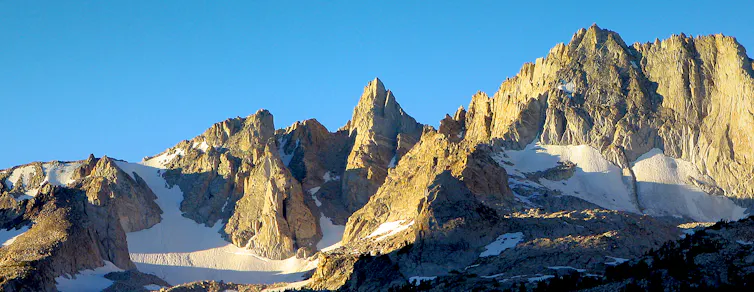
Creeks, rivers and lakes that are fed by melting snow across the U.S. West are already running low as of mid-July 2021, much to the worry of farmers, biologists and snow hydrologists like me. This is not surprising in California, where snow levels over the previous winter were well below normal. But it is also true across Colorado and the Rocky Mountains, which in general received a normal amount of snow. You’d think if there was normal amount of snow you’d have plenty of water downstream, right?
Over a century ago, snow scientist James Church at the University of Nevada, Reno, began examining how the amount of snow on mountains related to the amount of water in rivers fed by the melting snow. But as hydrologists have learned over the many decades since, the correlations between snows and river flows are not perfect. Surprisingly, there is a lot researchers don’t know about how the snowpack is connected to rivers.
Of course, a dry winter will result in meager flows in spring and summer. But there are other reasons snow from the mountains won’t reach a river below. One growing area of research is exploring how droughts can lead to chronically dry soil that sucks up more water than normal. This water also refills the groundwater below.
But another less studied way moisture can be lost is by evaporating straight into the atmosphere. Just as the amount of snow varies each year, so too does the loss of water to the air. Under the right conditions, more snow can disappear into the air than melts into rivers. But how snowfall and loss of moisture into the air itself relate to water levels in rivers and lakes is an important and not well understood part of the water cycle, particularly in drought years.
Losing moisture to the air
There are two ways moisture can be lost to the atmosphere before it reaches a creek or river.
The first is through evaporation. When water absorbs enough energy from the Sun, the water molecules will change into a gas called water vapor. This floating water vapor is then stored in the air. Most of this evaporation happens from the surface of lakes, from water in the soil or as snow melts and the water flows over rocks or other surfaces.
Another way moisture can be lost to the atmosphere is one you might be less familiar with: sublimation. Sublimation is when a solid turns directly into a gas – think of dry ice. The same can happen to water when snow or ice turns directly into water vapor. When the air is colder than freezing, sublimation happens when molecules of ice and snow absorb so much energy that they skip the liquid form and jump straight to a gas.
A number of atmospheric conditions can lead to increased evaporation and sublimation and eventually, less water making it to creeks and streams. Dry air can absorb more moisture than moist air and pull more moisture from the ground into the atmosphere. High winds can also blow moisture into the air and away from the area where it initially fell. And finally, the warmer air is and more Sun that shines, the more energy is available for snow or water to change to vapor. When you get combinations of these factors – like warm, dry winds in the Rockies called Chinook winds – evaporation and sublimation can happen quite fast. On a dry, windy day, up to around two inches of snow can sublimate into the atmosphere. That translates to about one swimming pool of water for each football field-sized area of snow.
.jpg#/media/File:Snow_Survey72_(27281994099).jpg)
Sublimation is mysterious
It is relatively easy to measure how much water is flowing through a river or in a lake. And using satellites and snow surveys, hydrologists can get decent estimates of how much snow is on a mountain range. Measuring evaporation, and especially sublimation, is much harder to do.
Today researchers usually estimate sublimation indirectly using physics equations and wind and weather models. But there are lots of uncertainties and unknowns in these calculations. Additionally, researchers know that the most moisture loss from sublimation occurs in alpine terrain above the treeline – but snow scientists rarely measure snow depths there. This further adds to the uncertainty around sublimation because if you don’t know how much moisture a system started out with, it is hard to know how much was lost.
Finally, weather and snowpack depths vary a lot from year to year. All of this makes measuring the amount of snow that falls and then is lost to the atmosphere incredibly difficult.
When scientists have been able to measure and estimate sublimation, they have measured moisture losses that range from a few percent to more than half of the total snowfall, depending on the climate and where you are. And even in one spot, sublimation can vary a lot year to year depending on snow and weather.
When moisture is lost into the atmosphere, it will fall to the surface as rain or snow eventually. But that could be on the other side of the Earth and is not helpful to drought-stricken areas.
Important knowledge
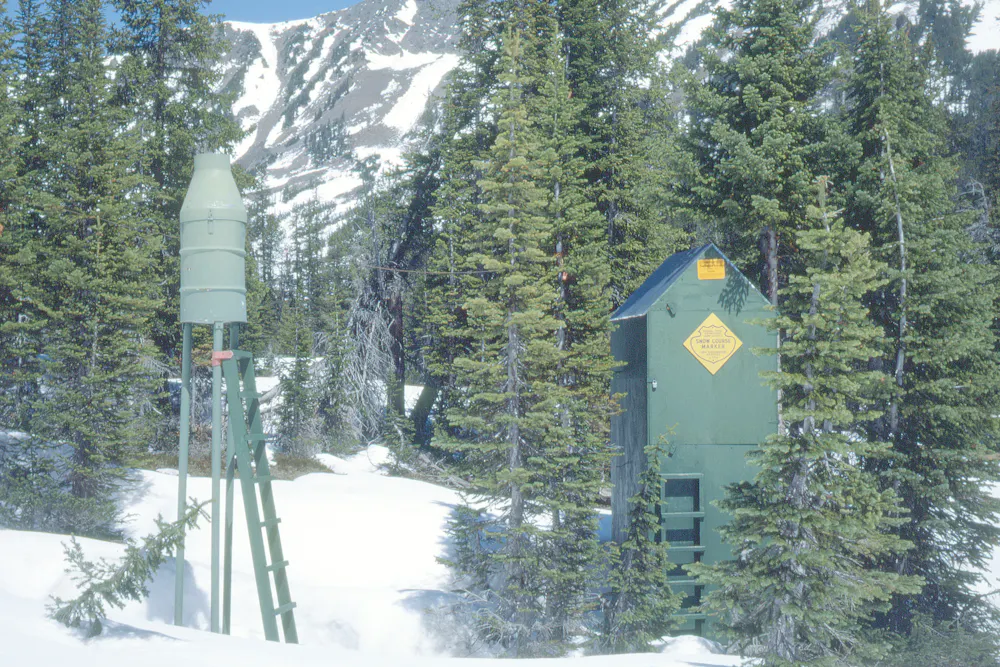
It is hard to say how important loss of moisture to the atmosphere is to the total water cycle in any given mountain range. Automated snow monitoring systems – especially at high elevations above the treeline – can help researchers better understand what is happening to the snow and the conditions that cause losses to the atmosphere.
The amount of water in rivers – and when that water appears – influences agriculture, ecosystems and how people live. When there is a water shortage, problems occur. With climate change leading to more droughts and variable weather, filling a knowledge gap of the water cycle like the one around sublimation is important.
Steven R. Fassnacht, Professor of Snow Hydrology, Colorado State University
This article is republished from The Conversation under a Creative Commons license. Read the original article.
What's up for August? Prime time for the Perseids, Jupiter and Saturn at “opposition,” and why the third moon of the season is kind of special.
August brings the best-known meteor shower of the year, the Perseids. This annual meeting shower happens each year as Earth crosses the debris trail of comet Swift-Tuttle. Most of these meteors are grains of dust up to the size of a pea and they create fabulous "shooting stars" as they burn up an Earth's atmosphere.
Although Perseids can be seen from mid-July through late August, the most likely time to see any meteors is a couple of days on either side of the peak.
This year the peak falls on the night of Aug. 11 and into the predawn hours of Aug. 12. (Think of that as "prime time" for the Perseids.)
Under really dark skies, you could see almost one per minute near the time of maximum activity. This year's peak night for the Perseids benefits from a moon that sets early in the evening, so it won't interfere with the faint meteors, but before it sets that evening, be sure to check out that gorgeous crescent moon in the west after sunset with brilliant planet Venus.
To enjoy the Perseid meteor shower, just find a safe, dark location away from bright city lights, lie down or recline with your feet facing roughly toward the north, and look up.
The meteors appear to radiate from around the constellation Perseus, but they can streak across the sky anywhere above you.
NASA also has a way for you to catch some Perseids online. NASA's Meteor Watch team plans a livestream overnight on Aug. 11. Visit http://go.nasa.gov/2021perseids for more details.
August is perhaps the best time this year to enjoy viewing Jupiter and Saturn, as both planets reach opposition this month.
“Opposition” is the term for when a planet is on the same side of the solar system as Earth and directly opposite from the Sun. It happens each year, as Earth loops around in its orbit, passing by the much slower-moving gas giant planets. Opposition is also near the time when Earth is closest to the planet, so this is when the planet tends to look its biggest and brightest.
Now, opposition does technically have a precise moment when the sun, Earth, and the planet line up, but in practice it's better to think of it as a period of time, usually about a month.
For Saturn, opposition takes place this year on Aug. 2 and for Jupiter, it's Aug. 19. For the latest close-up views and discoveries from Jupiter, follow NASA's Juno mission with NASA's solar system exploration website and social media.
As you're enjoying Jupiter and Saturn during August, watch as the increasingly full moon slides beneath the pair of planets over several days, from the 19th to the 22nd.
Plus, the full moon on Aug. 22 is what's known as a seasonal blue moon, as it's the third full moon out of four this season, where normally each season there are only three. This happens every two-and-a-half to three years or, as they say, “once in a blue moon.”
You can catch up on all of NASA's missions to explore the solar system and beyond at www.nasa.gov.
Preston Dyches works for NASA's Jet Propulsion Laboratory.
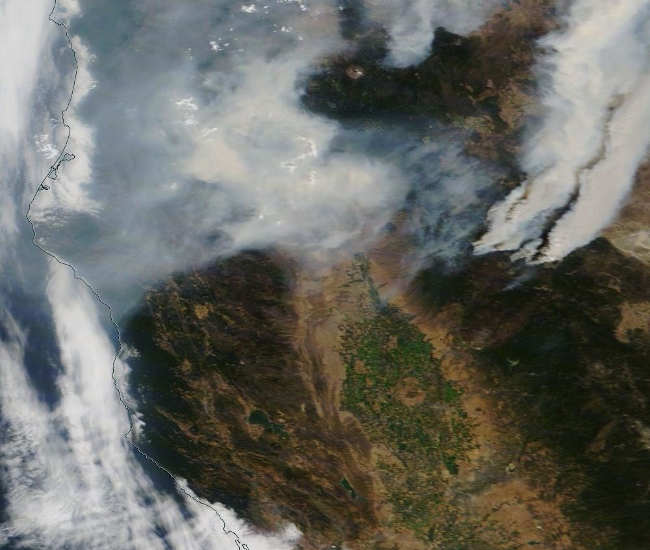
LAKE COUNTY, Calif. — The National Weather Service’s forecast says Lake County should expect more smoke and haze through part of the weekend.
Lake County’s blue summer skies began to turn a smoky hue on Thursday evening as smoke from fires to the north began making its way into the air basin.
The National Weather Service said northwest winds pushed smoke from the smoke from the
fires more to the southeast on Thursday, bringing smoke to eastern Mendocino and Lake counties.
Widespread haze is forecast on Friday, with patchy smoke from Friday night through Saturday night, according to the forecast.
The skies are forecast to be clear from Sunday into next week.
Temperatures will hover in the high 90s during the day and the high 50s to low 60s at night through the coming week, the forecast said.
Email Elizabeth Larson at
Clearlake Waste Solutions has been Clearlake’s franchise hauler since 2011 and now provides universal garbage and recycling collection.
City Manager Alan Flora said that a few weeks ago Bruce McCracken, Clearlake Waste Solutions’ vice president, and another company representative met with him to let them know they were in the process of selling the company to Waste Connections Inc.
Waste Connections is reported to have a presence in 40 states and six Canadian provinces. The staff report said it serves about 25 communities throughout California. It has headquarters in The Woodlands, Texas and Ontario, Canada.
On Wednesday, Waste Connections released its second quarter results, reporting revenue totaling $1.534 billion. Revenue for all of 2021 is estimated at approximately $5.975 billion.
The franchise agreement between Clearlake Waste Solutions and the city requires the council to approve a company sale under certain conditions, Flora said.
Flora said he has respect for McCracken and his team. “They do an excellent job and they’re always a very willing partner in anything the city requests of them.”
He said the fact that Waste Connections isn’t planning to change the company’s name or operations gives him reassurance, as has the fact that they have entered into an agreement with McCracken to have him continue to lead the company locally.
“This has been something that’s been evolving for a couple of years now,” McCracken told the council.
He said Clearlake Waste Solutions took the sale action based on a number of factors, including the rising cost of doing business and regulatory changes. As a result, they felt that a company with more resources than Clearlake Waste Solutions could benefit the employees and jurisdictions they serve.
McCracken said Waste Connections is a true fit and matches Clearlake Waste Solutions’ culture. “If it wasn’t Waste Connections, I would not have stayed,” he said.
He added, “For me it’s kind of exciting. It’s a different chapter in a book that I started reading 40 years ago.”
McCracken, who’s been working in the Clearlake area since 1988, said he’s looking forward to what’s ahead, including developments involving electric trucks and food waste.
Sue VanDelinder of Waste Connections also was on hand to speak to the council about the transfer of ownership.
“You shouldn’t see any change. If anything, the residents here in Clearlake will have maybe a different opportunity to bill pay online if they choose to or something like that,” she said, adding the company also is very philanthropic.
She said her job is to make sure McCracken has the tools he needs to do the job.
During the discussion, Councilwoman Joyce Overton said she wanted the company to make sure that all residences with accounts have the proper garbage cans and Russ Cremer, noting that the company sweeps Olympic and Lakeshore drives once a month, suggested sweeping it more often. McCracken said they were willing to do those things.
Councilman David Claffey asked about a planned facility expansion and if it would move forward.
McCracken said yes, that they broke ground in January to expand their services. The new processing facility will eventually allow for putting things that formerly went in the trash — like pizza boxes — into the green waste bin.
Claffey also asked them to put the rates on the company website.
Cremer moved to approve the sale, with the council voting 5-0.
Council welcomes new finance director, gets reports, approves grant applications
In other business on Thursday, the city’s new finance director, Kelcey Young, introduced herself during the meeting’s public comment portion and thanked the council for bringing her on board.
“I’m very excited to be here,” she said.
The council voted in June to hire Young, who returned to her native California from Texas, where she was working for the city of Dallas.
Before working in Dallas, Young said she worked in San Antonio. She also has worked in Seattle.
“I am a California girl at heart,” she said, explaining she went to high school in San Diego and attended college at Humboldt State.
She has a background in procurement, contract management, budgeting and process improvement.
Young has two children and two dogs. They’ve been here a week. “Clearlake has already stolen our heart.”
Over the past year, Clearlake Police Chief Andrew White filled the finance director role while recruitment took place.
Also on Thursday, Mayor Dirk Slooten presented a proclamation promoting tolerance, respect, equity and inclusion to county Supervisor Moke Simon and the council received a staff update on the progress of the city’s 2021 Chip Seal Project.
The council also approved joining the Joint Powers Authority of the Lake County Community Risk Reduction Authority and heard updates from Code Enforcement and the owner of properties at 14541 and 14525 Lakeshore Drive.
Council members also rejected four bids for the Sulphur Fire Roadway Disaster Repair Project, which staff asked that they do due to irregularities in the bids. The project will be put out for new bids on Friday, with a Sept. 2 deadline.
Chief White presented to the council a request to prepare and submit two program income only applications for $420,000 through the California Housing and Community Development CDBG Program. White said the city previously took input on the proposal on July 21.
He said $155,000 would be used for upgrades at the senior center, including resurfacing and improving the parking lot, landscaping, irrigation installation and outdoor activity areas.
White said $265,000 will be used for improvements at Redbud Park, including a complete rehabilitation of the bathrooms along with auto locking doors, possible repairs and painting for the wooden pier, and additional lighting and cameras. Fixes to the gazebo also are being considered.
Other business items approved by the council on Thursday included a resolution certifying the appointment of David Deakins as Building Inspector II and the first reading of Ordinance No. 256-2021, an amendment to Chapter 17 of the Clearlake Municipal Code repealing and replacing floodplain management regulations.
The council met in closed session before the regular meeting to discuss lawsuits against the county treasurer-tax collector and AmerisourceBergen Drug Corp., and to hold negotiations with Burbank Housing Corp. for property at 6885 Old Highway 53. There was no reportable action out of the closed session.
Email Elizabeth Larson at