 How to resolve AdBlock issue?
News

Dear Lady of the Lake,
The lake is really gross in some places right now. What happened to the “Blue Ribbon Committee” that was formed a few years ago? Wasn’t that supposed to “fix the lake?” This lake is the livelihood of Lake County and I am wondering what that committee has been doing to help solve some of the lake issues.
— Bemused and Confused about the Blue Ribbon Committee
Dear Bemused and Confused,
This is a great and timely question! In fact, the Blue Ribbon Committee for the Rehabilitation of Clear Lake, or BRC, has a meeting scheduled on Sept. 23 at 1 p.m.
That meeting will include a review of significant funding decisions that would have a large impact on Clear Lake quality, economy, and tributary health and habitat.
If you want to attend that meeting, all the BRC meetings and sub committee meetings are publicly accessible online and the meetings agendas and minutes are also always available and accessible at the Natural Resources Agency Blue Ribbon for the Rehabilitation of Clear Lake website.
But let’s back up and start from the beginning.
Where to find Blue Ribbon Committee formation and history information
While some of the history is complicated, there is quite a bit of BRC information. If you want more details then I provide in the column today, please visit the Natural Resources Agency Blue Ribbon for the Rehabilitation of Clear Lake website linked above.
Likewise, Lake County News has also covered milestones with the BRC over the years and you can find links to all those articles here.
The BRC is not just focused on the ecology of Clear Lake, but also on the rehabilitation of the lake-dependent socio-economy of the area around the lake. The idea is that if the economy around the lake can improve, this would create more tax-driven resources for lake quality improvements, and likewise, if the lake quality improved, this would result in more economic improvements and socio economic opportunities.
My column today won’t cover the details of the specific socioeconomic effort, but the UC Davis Center for Regional Change included their research, findings, and recommendations in the BRC “2020 Report to the Governor of California and the California State Legislature” and you can find out about that effort there.
The BRC committee also supports two subcommittees — the technical subcommittee and the socioeconomic committee.
Sub committees are charged with providing an avenue for stakeholders, experts, researchers, and managers to have in-depth conversations on the issues impacting Clear Lake and potential solutions.
These subcommittees provide the narrow focus that helps to address and answer specific questions and concerns that arise by the whole BRC. The members on the sub committees do include some BRC voting members, but are mostly local experts, agency staff, concerned citizens, researchers, business owners, and more.
For example, the technical subcommittee might view presentations on new technologies in lake management that might be of interest and value to pass along to the whole BRC for consideration. The socioeconomic subcommittee might review BRC proposals that could impact local communities and businesses — such as the development of an education center or water lab, for example.
There is a real need for the Blue Ribbon Committee
In general you should know that in 2017 the BRC was approved by the State Legislature in Assembly Bill 707 (Ch. 842, Statutes of 2017) thanks to Assemblymember Cecilia M. Aguiar-Curry (Fourth District).
When approved, the BRC (in parallel with CDFW) included $2 million for immediate research by UC Davis for both ecologic and economic investigations and allocated $5 million in Proposition 68 bond funds to be used for capital projects to improve lake water quality.
However, the Assembly member didn’t work alone on the idea and need for the BRC. Letters and pressure from county officials (like former District 3 Supervisor Jim Steele), local tribes, Lake County Water Resources Staff and Managers, conversations with the Water Board, and others within the community really pushed to get some help for the lake. The Natural Resources Agency is credited with continuing this effort having picked up the administration and financing of this committee in 2020.
The concept behind the BRC is that it will help direct some much needed resources into the county to address lake quality issues that are able to be addressed in any other way. This effort is very much appreciated by lake managers and stewards, especially after several attempts to impose a County tax and fee for water quality improvements between 2012 to 2014 all failed.
The BRC is really well-positioned to provide a lasting, positive impact for Clear Lake and Lake County. Figuring out how that money is spent, based on the most credible and recent science, and in a way that will truly result in a positive improvement, is the role of the 15-member BRC and subcommittees. And that role is taken very seriously.

BRC research accomplishments
The key to the success of the BRC is credible, recent, relevant, and comprehensive science and evidence. Without the most recent knowledge of what is going on in the system, any management “fixes” would be addressing the wrong thing, and expensive outcomes would not result in water quality improvements. How would we feel if $5 million was spent on some management technique that didn’t result in better water quality? Or conditions got worse? Science is necessary to guide us through what really needs to be addressed.
To date, through Assembly Bill 707 direct and indirect funds (initially administered by California Department of Fish and Wildlife, or CDFW, and now administered through the Natural Resources Agency), the BRC has dedicated and allocated significant research-specific funding for both lake and stream monitoring to produce comprehensive lake and watershed models.
The total cost contracted to be spent on these scientific endeavors is about $5.4 million with research expected to be completed by 2023.
This is not all the amount of money being funded through the BRC (see my next column), but because the success of large management projects depend heavily on sound scientific research, this massive scientific undertaking is very much needed.
The in-lake model (i.e. within the lake) is being produced by UC Davis Tahoe Environmental Research Center, or TERC, led by Dr. Geoff Schladow and his lab.
The watershed model (i.e. the landscape around the lake that all drains into it) is being produced by the United State Geological Survey, or USGS, and being led by Dr. Charlie Alpers and his team. TERC and USGS are working together to make sure their models fit together and complement each other.
The information these models can provide will be very important for identifying very specific, relevant and effective management actions. Funds allocated to UC Davis TERC to conduct the in-lake monitoring needed to create these sophisticated mathematical models, will revolutionize the way we understand the processes occurring in Clear Lake, from understanding and predicting daily temperature and dissolved oxygen patterns to demonstrating how different management strategies would impact these processes and impact the lake — for good or worse.
During 2020 during the start of COVID, funding for this research had an uncertain future, but thankfully in April in 2021, the Governor and California Department of Finance did agree to fully fund continuation of the in-lake and landscape / watershed monitoring and models, in addition to some other research and management to be conducted by local agencies and tribes.
This would not have been possible without the dedication and hard work of the BRC and the ability to get support for these projects to be funded.
Now, you are probably thinking that $5.4 million is an incredibly large amount of money and are surprised why some sampling costs so much. But there is some really sophisticated research going on in the lake and on the landscape that costs quite a bit, both in equipment, installation, maintenance, operations, staffing, software, training, and of course to support the team conducting this research — including skilled investigators, students, graduate students, post docs, and specialists.
If you want to learn more about the team doing the research and the current products, TERC has created a website specifically for the Clear Lake study. You can find it here at “TERC Clear Lake Research.”
To get an idea of the type of research being conducted, and the sophistication of some of the tools and techniques being used, I would suggest checking out the Blog post shared by one of TERC’s lead researchers, Dr. Alicia Cortes. The post called “What Controls Water Quality in Clear Lake” (July 2020) describes some of the monitoring and sampling the TERC team is conducting and some of their results, including stream turbidity monitoring, time-depth oxygen profiling in the lake, and how satellite can be used for predicting and observing cyanobacteria blooms in the Lake.

Why do we need new research?
Now you might be thinking, “Don’t we have enough research on Clear Lake? Isn’t this just a huge waste of money?”
In reality, there hasn’t been much research conducted on Clear Lake in the last 20 to 25 years.
The last big plethora of Clear Lake research was during the 1980s to 1990s, when there was a UC Davis Field station located at Carnegie Library at Library Park in Lakeport. That field station was shut down due to budget cutbacks in 2001, and research in and on Clear Lake basically halted.
Most of the research coming out at that time was focused on water quality trends and mercury impacts from the Sulphur Bank Mercury Mine Site (Don’t worry, I will talk about this Superfund Site in a future column, as I have received questions from many citizens!).
Since that time, there have been a lot of changes in Clear Lake and Lake County. We have had fires, two of our worst droughts, large and frequent floods, climate change has increased air and water temperatures, and we have increased the development footprint around the basin.
However, some good things have happened too; we have a stormwater management program (some control over external sources of nutrients), we installed grading ordinances, and we have implemented more protections for shoreline development and construction.
The way that land managers have improved environmental protections in Lake County is not insignificant and people are more aware of the issues impacting the lake. Yet lake quality is still an issue, caused by things we yet don’t know or don’t understand — hence a need for the BRC.
Sure, there have been some very important monitoring programs that have started, most notably the Clear Lake Cyanotoxin Monitoring Project led by the Big Valley EPA and Sarah Ryan (Follow them on Facebook @Clear Lake Water Quality).
In 2010 UC Davis completed a data compilations study, to identify major trends in the physical, chemical, and biological data collected over time in Clear Lake. Clear Lake drinking water purveyors are also some of the best in the world for monitoring and treating cyanobacteria in drinking water systems.
The California Department of Water Resources, and now the County Water Resources Department, have conducted monthly water and sediment samples. But most of this research and monitoring is isolated, and not combined together to determine large-scale trends and patterns about what is going on in the lake under local conditions and global climate and weather conditions.
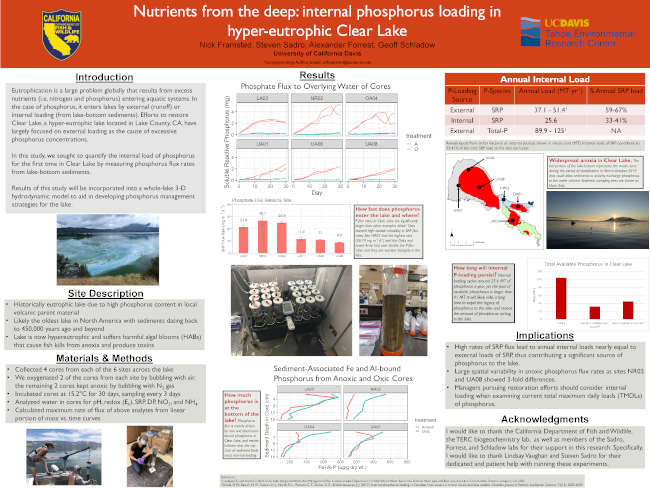
Part of BRC-funded research from UC Davis TERC team, includes a suite of work conducted on understanding the contribution of sediments in the lake to the nutrient dynamics in the water column. Remember from my column “Concerned about Cyanobacteria” (July 11, 2021) that nutrient phosphorus in the water column drives the horrible algae and cyanobacteria blooms that we see in the lake. So it’s very logical that to get to the bottom of the blooms, UC Davis is focusing on studying this particular nutrient.
If you ever followed historical work conducted on Clear Lake, you might recognize or remember a publication called “The Causes and Control of Algal Blooms in Clear Lake.” This publication was written way back in 1994 by Richerson, Suchanek, and Why and produced by UC Davis. This document demonstrated the relationship between phosphorus, blooms, and Clear Lake water quality.
Basically the study determined that most of the conditions in the lake were driven or resulted from poor land management that allowed external phosphorus to flow into the lake. While that is indeed true, the report also indicated that lake sediment is a source of nutrients driving the blooms observed in the lake during summer and fall, and that drought conditions cause these observations (or increases in phosphorus in the water column to increase blooms) to be more severe.
Basically, when less water comes into the lake in winter, we are seeing more phosphorus in the water column, but the source of that phosphorus is from the sediment. What remains unknown is what conditions in the lake cause what amount of phosphorus to escape from the sediments and be available in the water column for algae and cyanobacteria.
In case you are wondering, the tumultuous TMDL (Total Maximum Daily Load) requirements the Lake is under because of her 303(d) Impaired Water-Body Listed status by the US EPA, also concluded that little is known about the contribution of “internal” loading of phosphorus on the overall condition of the lake. In fact, the TMDL model and report did not even include considerations of internal sources, making real, effective management very difficult.
Thankfully, the BRC-funded TERC team is able to address these unknowns. UC Davis graduate student Nick Framsead, conducted his graduate work on answering the question: What is the contribution of “internal” loading of phosphorus to water quality conditions in Clear Lake?
He summarizes his work nicely in this blog post titled “Getting to the Bottom of what Fuels Algal Blooms in Clear Lake” (N. Farmstead 2020). Farmstead collected sediment core samples from Clear Lake and manipulated them in the laboratory to identify what exactly the contribution of Phosphorus is to the water column under different scenarios (i.e. like high / low oxygen and cool / warm temperature).
Farmstead discovered that 40% phosphorus is sourced from inside the lake’s sediments, while 60% comes from external sources. And this relationship was more pronounced under low oxygen and warmer temperatures -something that is becoming more and more common during our long, warm summer and fall seasons especially compared to 20-25 years ago!
This finding means that successful management has to consider in-lake strategies and methods, and not just reduce external phosphorus inputs — which really changes traditional management strategies used for water quality management in Clear Lake. This is the type of relevant and current information needed to help better manage the lake, and what the BRC is well-suited to providing.
Fixing the lake
Also, I hate to break it to you, but “fixing the lake” is not something that will happen, at least not in the way you expect. Clear Lake is very, very old (580,000 years!), much older than most if not all the other “natural” lakes in the entire United States.
Clear lake will never look or function like a reservoir, especially considering that most California reservoirs are 60 to 80 years old — mere babies in lake years! Additionally, Clear Lake never fully drains, and some of the water and sediment in this lake has been here for thousands of years.
Reservoirs are constantly drained and refilled with fresh rain water. Case in point, look at all the current water levels of reservoirs around the State, they are all really low. When the next storm season is upon us and water fills up the reservoirs, those reservoirs will have completely brand-new, fresh water. What will Clear Lake have? Some fresh water of course, but also a lot of the same water -and sediments, nutrients, algae — that is there now.
Clear Lake also has a very rich sediment bottom (see sediment core research from UC Davis mentioned above), from the half a million years of accumulation of inputs (from the nearby slopes and hills) and no full cycle of emptying and draining. No amount of management or activity will ever change the shape, size, and physics of this lake and how it fills and flows with water.
So, part of our “lake fixing” needs to include more informed and current research, more targeted and effective management, and a shift in our perceptions about what a healthy and “fixed” Clear Lake would really actually look like. The Blue Ribbon Committee is dedicated to achieving all these things, but they want to accomplish them in the right way — which does take time.
How can you be involved and learn more?
If you want to receive emails from the BRC, sign up for the BRC Listserv here.
I also highly encourage you to attend BRC meetings or subcommittee meetings. They always leave time for public comment. Likewise, it’s a great way to see how many people can come together, collaboratively, and discuss complex, yet important topics that will impact Clear Lake — and how to solve them!
Stay tuned for the next “Lady of the Lake” column for part two about the Blue Ribbon Committee.
In that column we will breakdown the currently funded BRC projects from the governor's 2021 approved budget, and the upcoming proposed projects being reviewed for funding at the next BRC meeting on Sept 23.
Sincerely,
Lady of the Lake
Angela De Palma-Dow is a limnologist (limnology = study of fresh inland waters) who lives and works in Lake County. Born in Northern California, she has a Master of Science from Michigan State University. She is a Certified Lake Manager from the North American Lake Management Society, or NALMS, and she is the current president/chair of the California chapter of the Society for Freshwater Science. She can be reached at
In a study led by UC San Francisco, researchers matched the visitors with 74 participants, ages 59 to 96, from the Tenderloin, a low-income neighborhood in downtown San Francisco.
The participants had “histories of isolation,” some had faced periods of homelessness, and all were consumers of the city’s public mental health services.
The eight peers, who were also older adults, had undergone two weeks of training with ongoing instruction, had had similar life experiences, and were paired according to shared interests and commonalities like native language and sexual orientation.
At the start of the study, 38% of the participants met criteria for depression and approximately two-thirds experienced a high degree of loneliness.
But by the end of the two-year intervention, fewer felt very lonely and just 13% were depressed, the researchers reported in their study, which was published recently in the Journal of the American Geriatrics Society.
Treatment for depression may not be enough
First author Ashwin Kotwal, MD, of the UCSF Division of Geriatrics, said that the results of the study suggest that interventions like this are a “promising non-pharmacologic approach to addressing depression,” especially when loneliness or isolation is identified.
And while social disconnection and depression often travel together, the two are not interchangeable, said senior author Carla Perissinotto, MD, also of the UCSF Division of Geriatrics.
“If we think about treating depression and there is co-existing loneliness, we may not be treating the whole picture,” she said.
Researchers recruited participants through the nonprofit Curry Senior Center, affiliated with the San Francisco Department of Public Health. Initially, they reached out with flyers that referenced “loneliness” and “social isolation,” but after recognizing these terms were stigmatizing, they alluded to “a friendly visitor program,” with peers who would check in with them in their own homes, and offer company on errands or to medical appointments.
The average age of the participants was 71, 58 percent were male, 15 percent identified as LGBT and 88 percent lived alone. Approximately one in three had difficulties with activities of daily living, like bathing and grooming, dressing, toileting and transferring from a chair to an upright position.
In the first year of the program, an average 43 contact visits were made between peers and participants. As rapport grew, participant and peer might share meals, go for walks, or participate in an art program or other group activity.
In the second year, COVID-19 resulted in shelter-in-place orders that meant visits were substituted with twice-weekly phone calls. While most participants were eager to continue the relationship with their peers, 19 percent dropped out of the program, due to “lack of phones, discomfort with phones or lack of interest,” the researchers noted.
Less loneliness, barriers to connection
Nonetheless, results after two years showed that not only did fewer participants meet criteria for depression, loneliness scores decreased by an average 0.8 points out of a maximum of six points, and social support increased from nine points to 12 points, out of a maximum of 20 points.
Additionally, there was a drop of 1.5 points in “barriers to socializing,” out of a maximum of 10 points. These barriers included language and culture, mood, safety concerns, physical restrictions and incontinence. Participants felt that their own more positive mood and the willingness of the peers to visit them in their homes eased these barriers.
The initiative coincides with a recommendation from the National Academy of Sciences that partnerships should be developed between health care systems and community-based programs that support “practical, real-world interventions leveraging local resources and expertise.”
The success of this initiative may be attributed to peers working independently of medical providers and offering the participants a social experience, rather than a treatment, the researchers stated.
“We should really look overall at what gets ‘covered’ by insurance and health care,” said Perissinotto. “It’s an interesting social commentary that we are willing to pay for an incredibly costly medication, but we aren’t willing to invest in lower-cost workarounds that may have significantly important benefits to patients’ mental health and social wellbeing.”
For Kotwal, medical treatments fail to address the social determinants of health. “Many of our participants have complex and intersecting social and medical needs, including multiple medical and psychiatric conditions, histories of homelessness, poverty, and many years when they lacked meaningful social connection,” he said. “We cannot expect a pill to address these complex needs, and certainly shouldn’t rely on medications alone.”
Coauthors are Shannon Fuller, Janet J. Myers, PhD, Soe Han Tha and Alexander K. Smith, MD, all of UCSF; and Daniel Hill of the Curry Senior Center, San Francisco.
Research was supported by grants from the National Institute on Aging (NIA), NIA Claude D. Pepper Older Americans Independence Center, National Palliative Care Research Center Kornfield Scholar’s Award, and the Hellman Foundation Award for Early-Career Faculty.
Suzanne Leigh writes for the University of California, San Francisco.
Dogs available for adoption this week include mixes of American bulldog, cattle dog, Chihuahua, German shepherd, husky, Jack Russell terrier, Labrador retriever, pit bull, pointer, Rhodesian Ridgeback, Rottweiler, shepherd and terrier.
Dogs that are adopted from Lake County Animal Care and Control are either neutered or spayed, microchipped and, if old enough, given a rabies shot and county license before being released to their new owner. License fees do not apply to residents of the cities of Lakeport or Clearlake.
The following dogs at the Lake County Animal Care and Control shelter have been cleared for adoption (additional dogs on the animal control website not listed are still “on hold”).
Call Lake County Animal Care and Control at 707-263-0278 or visit the shelter online at http://www.co.lake.ca.us/Government/Directory/Animal_Care_And_Control.htm for information on visiting or adopting.

Female German shepherd mix
This 2-year-old female German shepherd mix has a black and tan coat.
She’s in kennel No. 3, ID No. LCAC-A-1660.
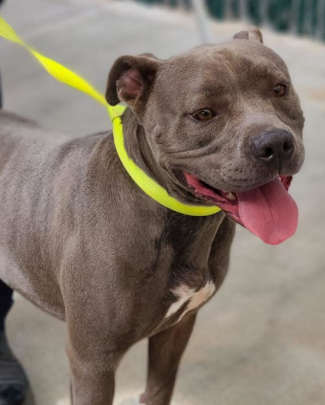
Male pit bull
This 1-year-old male pit bull has a short gray coat.
He is in kennel No. 4, ID No. LCAC-A-1617.
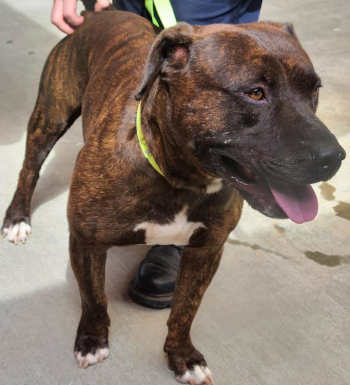
Male pit bull terrier
This 3-year-old male pit bull terrier has a short brindle coat.
He is in kennel No. 5, ID No. LCAC-A-1604.

‘George’
“George” is a 1-year-old male American bulldog mix with a short gray coat.
He’s in kennel No. 6, ID No. LCAC-A-1430.

Male pit bull
This 2-year-old male pit bull has a short black coat with white markings.
He is in kennel No. 7, ID No. LCAC-A-1625.

‘LuLu’
“LuLu” is a 1-year-old female Rottweiler with a short black and tan coat.
She is in kennel No. 8, ID No. LCAC-A-1658.
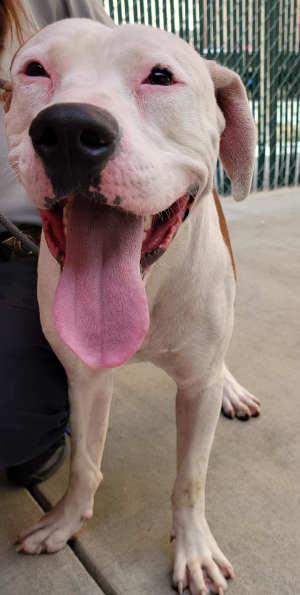
‘Milo’
“Milo” is a 3-year-old male American bulldog-pit bull mix with a short white coat.
He is in kennel No. 9, ID No. LCAC-A-1657.

Male Chihuahua mix
This 1-year-old male Chihuahua mix has a short tan coat.
He is in kennel No. 11, ID No. LCAC-A-1590.
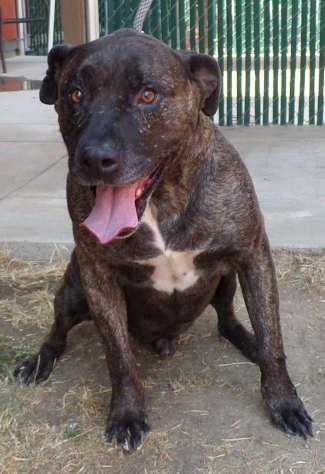
American pit bull terrier mix
This 5-year-old American pit bull terrier mix has a short brindle coat.
He is in kennel No. 12, ID No. LCAC-A-1483.

‘Groover’
“Groover” is a 1-year-old male German shepherd-cattle dog mix with a short black and tan coat.
He’s in kennel No. 15, ID No. LCAC-A-1659.
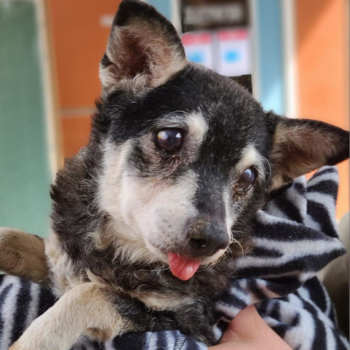
‘Topolina’
“Topolina” is a 10-year-old male Chihuahua mix with a short black coat with white markings.
He is in kennel No. 16, ID No. LCAC-A-1663.
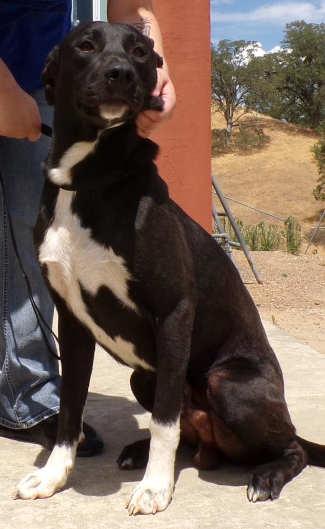
Male Labrador retriever
This 2-year-old male Labrador retriever has a short black coat with white markings.
He is in kennel No. 19, ID No. LCAC-A-1349.
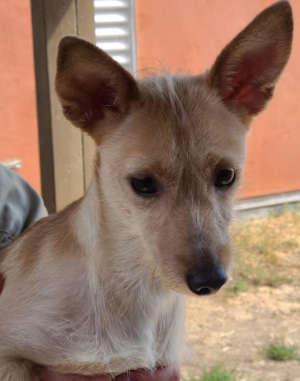
Male Chihuahua
This 1-year-old male Chihuahua mix has a short tan coat.
He is in kennel No. 21, ID No. LCAC-A-1599.

‘Luna’
“Luna” is a 6-year-old female German shepherd with a black and tan coat.
She is in kennel No. 22, ID No. LCAC-A-1662.

‘Rosco’
“Rosco” is 3-year-old a male Rhodesian Ridgeback-Shepherd mix with a short tan coat.
He is in kennel No. 25, ID No. LCAC-A-1205.
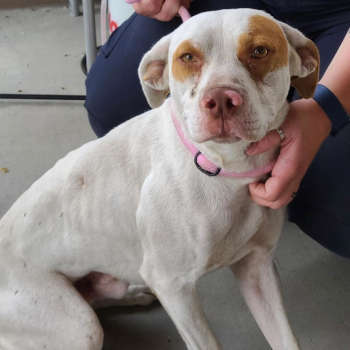
Male pointer mix
This 1-year-old male pointer mix has a short white coat with red markings.
He is in kennel No. 26, ID No. LCAC-A-1664.

‘Raina’
“Raina” is a 5-year-old female Rottweiler with a short black and tan coat.
She is in kennel No. 28, ID No. LCAC-A-1480.
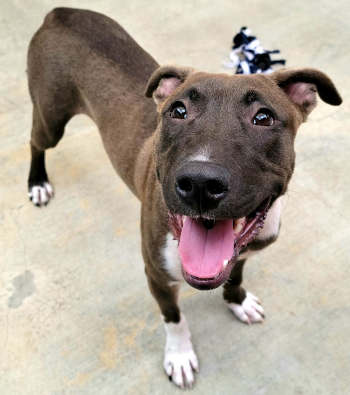
Male pit bull
This young male pit bull has a short brindle coat.
He is in kennel No. 30, ID No. LCAC-A-1591.

Jack Russell terrier
This 1-year-old male Jack Russell terrier has a medium-length short tricolor coat.
He is in kennel No. 31, ID No. LCAC-A-1627.
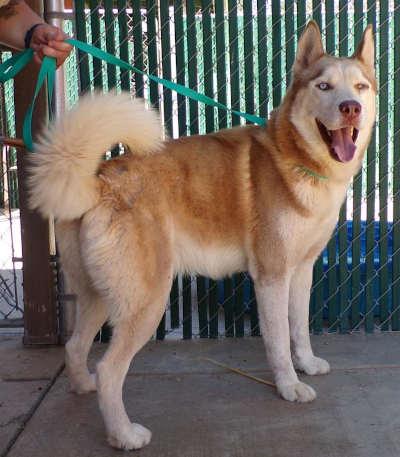
Male husky
This 2-year-old male husky has a red and cream coat.
He is in kennel No. 32, ID No. LCAC-A-1024.
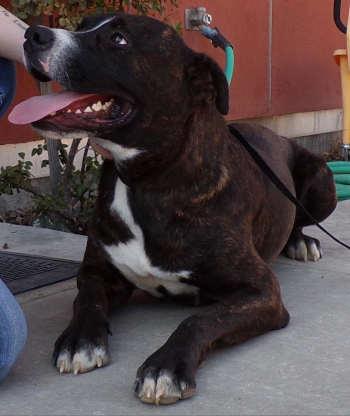
Male pit bull mix
This 2-year-old male pit bull terrier mix has a short brindle coat.
He is in kennel No. 33, ID No. LCAC-A-1528.
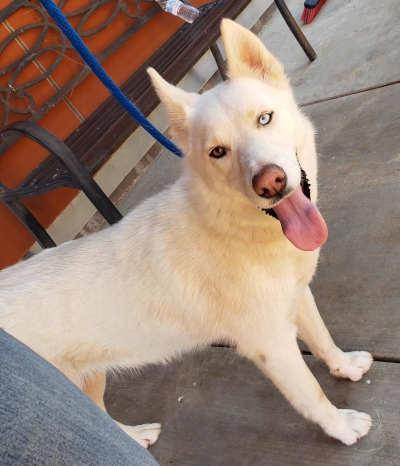
‘Ghost’
“Ghost” is a 2-year-old female husky with an all-white coat and blue eyes.
She is in kennel No. 34, ID No. LCAC-A-1167.
Email Elizabeth Larson at
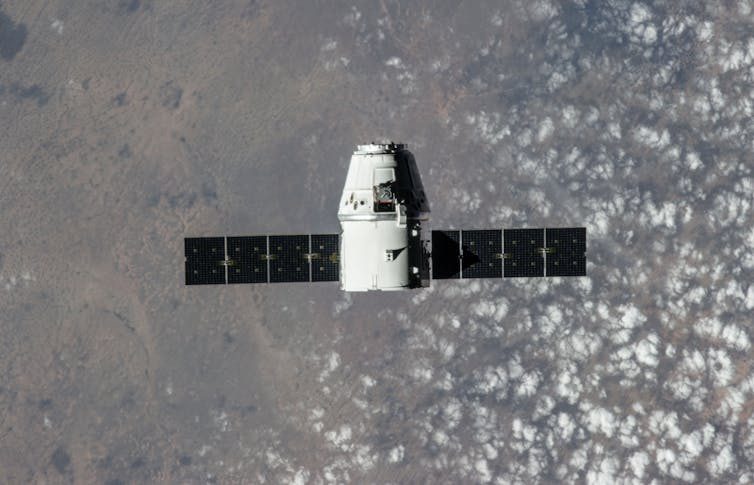
On Sept. 15, 2021, the next batch of space tourists are set to lift off aboard a SpaceX rocket. Organized and funded by entrepreneur Jared Isaacman, the Inspiration4 mission touts itself as “the first all-civilian mission to orbit” and represents a new type of space tourism.
The four crew members will not be the first space tourists this year. In the past few months, the world witnessed billionaires Richard Branson and Jeff Bezos launching themselves and a lucky few others into space on brief suborbital trips. While there are similarities between those launches and Inspiration4 — the mission is being paid for by one billionaire and is using a rocket built by another, Elon Musk — the differences are noteworthy. From my perspective as a space policy expert, the mission’s emphasis on public involvement and the fact that Inspiration4 will send regular people into orbit for three days make it a milestone in space tourism.
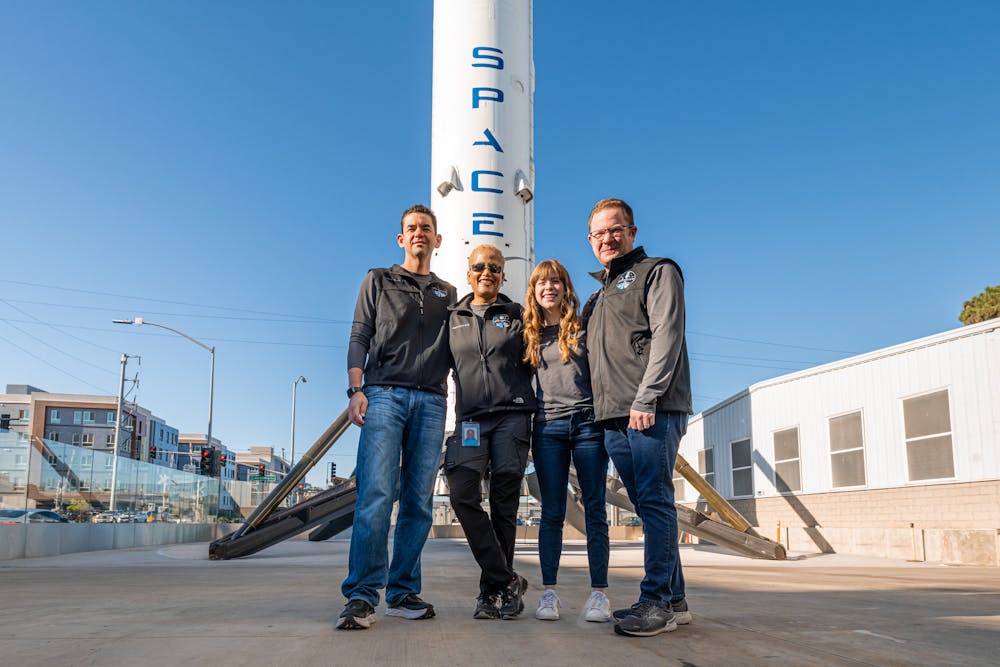
Why Inspiration4 is different
The biggest difference between Inspiration4 and the flights performed earlier this year is the destination.
Blue Origin and Virgin Galactic took – and in the future, will take – their passengers on suborbital launches. Their vehicles only go high enough to reach the beginning of space before returning to the ground a few minutes later. SpaceX’s Falcon 9 rocket and crew Dragon vehicle, however, are powerful enough to take the Inspiration4 crew all the way into orbit, where they will circle the Earth for three days.
The four-person crew is also quite different from the other launches. Led by Isaacman, the mission features a somewhat diverse group of people. One crew member, Sian Proctor, won a contest among people who use Isaacman’s online payment company. Another unique aspect of the mission is that one of its goals is to raise awareness of and funds for St. Jude Children’s Research Hospital. As such, Isaacman selected Hayley Arceneaux, a physician’s assistant at St. Jude and childhood cancer survivor, to participate in the launch. The final member, Christopher Sembroski, won his seat when his friend was chosen in a charity raffle for St. Jude and offered his seat to Sembroski.
Because none of the four participants has any prior formal astronaut training, the flight has been called the first “all civilian” space mission. While the rocket and crew capsule are both fully automated – no one on board will need to control any part of the launch or landing – the four members still needed to go through much more training than the people on the suborbital flights. In less than six months, the crew has undergone hours of simulator training, lessons in flying a jet aircraft and spent time in a centrifuge to prepare them for the G-forces of launch.
Social outreach has also been an important aspect of the mission. While Bezos’ and Branson’s flights brought on criticism of billionaire playboys in space, Inspiration4 has tried – with mixed results – to make space tourism more relatable. The crew recently appeared on the cover of Time magazine and is the subject of an ongoing Netflix documentary.
There have also been other fundraising events for St. Jude, including a 4-mile virtual run and the planned auction of beer hops that will be flown on the mission.

The future of space tourism?
Sending a crew of amateur astronauts into orbit is a significant step in the development of space tourism. However, despite the more inclusive feel of the mission, there are still serious barriers to overcome before average people can go to space.
For one, the cost remains quite high. Though three of the four are not rich, Isaacman is a billionaire and paid an estimated $200 million to fund the trip. The need to train for a mission like this also means that prospective passengers must be able to devote significant amounts of time to prepare – time that many ordinary people don’t have.
Finally, space remains a dangerous place, and there will never be a way to fully remove the danger of launching people – whether untrained civilians or seasoned professional astronauts – into space.
[Over 110,000 readers rely on The Conversation’s newsletter to understand the world. Sign up today.]
Despite these limitations, orbital space tourism is coming. For SpaceX, Inspiration4 is an important proof of concept that they hope will further demonstrate the safety and reliability of their autonomous rocket and capsule systems. Indeed, SpaceX has several tourist missions planned in the next few months, even though the company isn’t focused on space tourism. Some will even includes stops at the International Space Station.
Even as space remains out of reach for most on Earth, Inspiration4 is an example of how billionaire space barons’ efforts to include more people on their journeys can give an otherwise exclusive activity a wider public appeal.
Wendy Whitman Cobb, Professor of Strategy and Security Studies, US Air Force School of Advanced Air and Space Studies
This article is republished from The Conversation under a Creative Commons license. Read the original article.
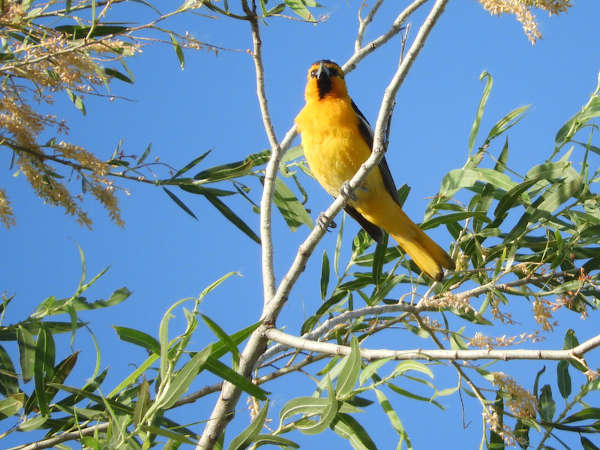
When Charles Darwin created modern biology with his theory of evolution he used the term “tree of life.”
For many years after, scientists speculated on how species were related and evolved by looking for similarities in looks and lifestyle.
Now, however, guessing is over since we can now read and follow changes in the DNA uniting living things. This supported some past speculation but there were big surprises.
Botany once included algae and mushrooms with higher plants, but we now know from DNA that mushrooms share a common ancestor with animals and are unrelated to plants while “algae” lumped plant related photosynthesizers with others unrelated including some bacteria. DNA even showed a surprising relation between hippos, dolphins, and whales.
Complete trees of life for large groups are now possible and we finally have one. A new book, “The Largest Avian Radiation” by Fjeldsa, Christidis, and Ericson provides just that for the 6,200 perching bird species, which are 60% of all birds.
Perching birds are tiny dinosaur descendants that survived the catastrophe that killed off their larger relatives, and their tree of life tells how that happened.
The big dinos were wiped out 66 million years ago when an asteroid hit what’s now Yucatan in the northern hemisphere.
Consequently, the southern hemisphere was where its devastation was least intense and where much more good habitat was present than exists there today because we know from fossils that large parts of Antarctica were forested then, rather than covered by ice.
No perching birds live there today but the most ancestral ones are in a suborder now confined to New Zealand, where the kind of southern hemisphere forests once present in Antarctica survive today.
Such forests are also present at the southern tip of South America, and that’s where evolution of the next most advanced perching bird suborder exploded into 1,350 species. Its two largest groups clearly evolved in South America, and while one of these extends only north to tropical Mexico, the other reaches Alaska and includes our flycatchers and kingbirds.
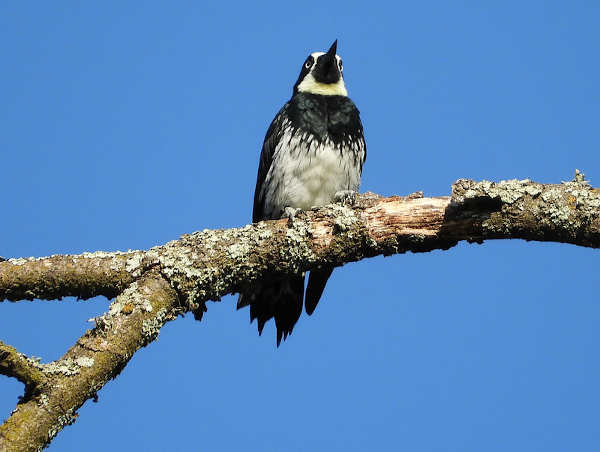
The suborder’s third and smaller group is most diverse in southeast Asia, but its most ancestral species is confined to South America’s wettest rainforest, and some intermediate species in Africa suggest this group may have reached Asia through there by crossing a then narrower south Atlantic.
That suborder is known as the suboscines because it lacks anatomy for producing complex songs. All other perching birds are in a more advanced suborder called oscines or songbirds, and its most ancestral members are 322 species found in and near Australia, which can proudly call itself the “continent where song began.” Families of these basal oscines likely most familiar to non-Australians are lyrebirds, bowerbirds, and honeyeaters.
New Guinea, a land mass north of Australia created when that continent collided with volcanic islands as it drifted north from Antarctica, gave rise to the first group of songbirds that invaded the rest of the world.
It consisted of around 800 species and even included three families that reached the Americas: shrikes, vireos, and the crow and jay family, which includes ravens, the biggest perching birds. One family in this group remained in New Guinea, however, the spectacular birds of paradise.
By far the largest group of perching birds are the 3,900 species of higher oscines that also spread from New Guinea to first the Old World and then the Americas. Older groups among them are less diverse and widely scattered around the world but some are familiar here: kinglets, waxwings, and phainopeplas.
More recent higher oscines are in several superfamilies, the smallest of which has just 2 families. The larger of these consists of tits and chickadees, and the smaller has only one American species, the verdin of our deserts.
A much larger superfamily, the Old World warblers, has few families that reach the Americas but exceptions are larks, swallows, bushtits, and wrentits.
A smaller superfamily better developed in the Americas includes nuthatches, tree creepers, gnatcatchers, and wrens, but another large one, Old World warblers, includes starlings and 3 families that naturally reach the Americas: dippers, mockingbirds/thrashers, and thrushes.
The last of these superfamilies is the largest, with 1,500 species. It began in the Old World but achieved some of its greatest diversity in the Americas.
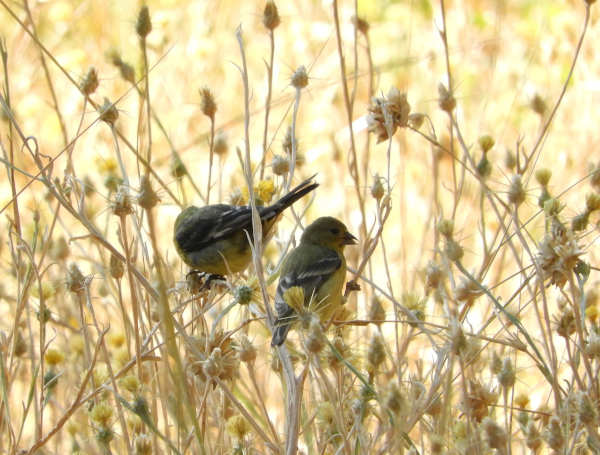
An innovation helping it reach this success was a conical bill enabling grass seeds to be cracked and eaten acquired 10 million years ago just when climate change caused grass to replace many forests. Its early members lacking this bill were all Old World except the olive warbler, a one species family living from Arizona to Nicaragua.
Early conical bill families began in the Old World and included our familiar introduced house sparrow, but two of them extended naturally to the Americas: pipits and finches.
Seven groups of the latter provide our finches, crossbills, and many of our grosbeaks and another that reached Hawaii provides its diverse honeycreepers.
That superfamily has an advanced group of 16 families that includes 5 families providing much of our perching bird diversity: 142 species are our American sparrows; 111 are our wood warblers, which switched back to insects from grass; 108 are our blackbirds, orioles, and meadowlarks; 52 are our cardinals; and, largest of all, 327 are our tanagers.
Reading DNA finally sorted out this complex pattern and provided some surprises: yellow-breasted chats are with orioles, not wood warblers, and our tanagers, like the western, are actually cardinals.
The huge tanager diversity is mostly in South America, and a surprise inclusion are the Galapagos finches made famous by Darwin. The only true tanager reaching the United States and just barely is the white-collared seedeater.
In addition to 10 chapters constructing the perching bird tree of life in detail, the book has range maps of their many families, beautiful accurately colored paintings of many, and ten other chapters and two appendices on subjects explaining these birds’ evolution and often useful for other species.
The first appendix, for example, summarizes ecological information quite relevant to California as well as the rest of the world.
This is by far the best and most useful one volume biology book I’ve ever come across.
Dr. Holstein is a retired consulting ecologist who worked in much of California, a long-time conservation activist with the California Native Plant Society, and a board member of Tuleyome, a Woodland, California-based nonprofit conservation organization.
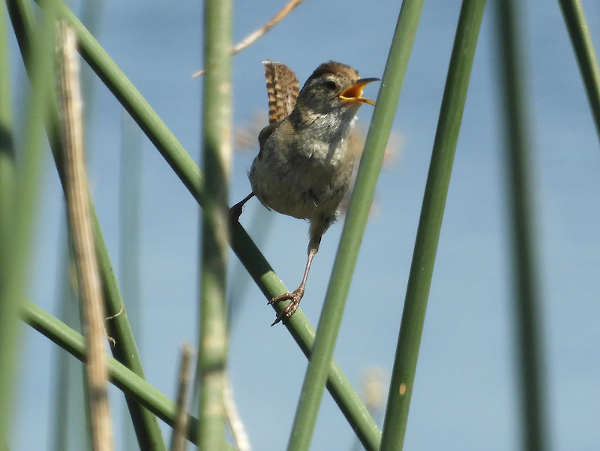
In a Friday statement, Dr. Gary Pace, MD, who continues to offer interim Public Health officer services to the county, and the Lake County Health Services Department said the slowing of the surge on the statewide and local levels is encouraging, but the virus remains widespread in Lake County.
“Settings that bring together people from numerous households carry risk. On-site learning resuming at local schools has certainly led to an increase in circulation of the virus. Last weekend’s County Fair may likewise lead to some uptick in cases in the coming weeks,” they said in the Friday report.
As of Friday, 5,638 COVID-19 cases have been confirmed in Lake County, according to state statistics.
Of those, 79 Lake County residents have now died due to COVID-related illness; 16 since July 1.
Health officials said everyone must take the virus seriously, and protect those that are medically vulnerable or ineligible for vaccination.
They continue to urge people to be vaccinated and take precautions, including masking around others, avoiding crowded indoor settings and being cautious in outdoor settings, as they anticipate another surge once cold and flu season sets in.
Vaccination is free and widely available in Lake County. Thanks to the support of the Board of Supervisors, an OPTUM mobile vaccination van will be available locally for the next two months. They can administer up to 100 doses per day. Walk-ins are welcome, and Spanish-speakers are available.
Vaccination through OPTUM is now available in Nice, Clearlake, Lakeport, Lower Lake and Middletown. The OPTUM Mobile Van schedule and other opportunities for vaccination are listed here.
Vaccinations also will be available at the Sunday “Dia de la Independencia” event in Kelseyville, from 2 to 7 p.m. No appointments are necessary.
If you are unable to get to any vaccination site, or experiencing other barriers, contact us at 707-263-8174.