 How to resolve AdBlock issue?
News
The committee, or LEDAC, will meet from 7:30 to 9 a.m. Wednesday, Sept. 8.
The meeting is open to the public.
The meeting will be held via Zoom: Meeting ID, 830 6034 4302; pass code, 232446. Dial by your location, 669-900-6833.
Agenda items include the Lakeport Economic Development Strategic Plan. The group is meeting monthly on the second Wednesday through December to work on elements of the plan.
They also will get updates on city projects and activities from City Manager Kevin Ingram and Community Development Director Jenni Byers, and member reports.
Next month’s meeting will take place at 7:30 a.m. on Wednesday, Oct. 13.
LEDAC advocates for a strong and positive Lakeport business community and acts as a conduit between the city and the community for communicating the goals, activities and progress of Lakeport’s economic and business programs.
Members are Chair Wilda Shock and Vice Chair Denise Combs, Bonnie Darling, Candy De Los Santos, Monica Flores, Pam Harpster, Andy Lucas, Alicia Russell, Laura Sammel and Marie Schrader, with Bill Eaton as an ex officio member. City staff who are members include City Manager Kevin Ingram and Community Development Director Jenni Byers.
Email Elizabeth Larson at

California will face a significant shortfall of registered nurses over the next five years due to long-term trends that have been exacerbated by the COVID-19 pandemic, according to a new report by the UCSF Health Workforce Research Center on Long-Term Care.
The authors estimate a current shortage of 40,567 full-time equivalent RNs, a 13.6 percent gap, that is projected to persist until 2026, according to an analysis of preliminary data from the 2020 Survey of California Registered Nurses and final data from the 2019-20 Annual RN Schools Survey.
At a time when hospitals nationwide are facing challenges in filling nursing positions, the study found that many older registered nurses in California have left the field and a large number plan on retiring or quitting within the next two years. Meanwhile unemployment among younger RNs in California has increased.
“The pandemic is accelerating a broad trend that has been building for some time,” said Joanne Spetz, PhD, co-author of the report and director of the UCSF Philip R. Lee Institute for Health Policy Studies (PRL-IHPS). “To address this, employers need to retain older RNs, while developing career paths for new graduates. They also need to rapidly develop and implement strategies to mitigate the potential harm of nurse shortages over the next five years.”
California currently has more than 350,000 registered nurses employed in its hospitals, clinics and other facilities, as well as more than 450,000 licensed nurses.
California nurses make up nearly 12% of all nurses employed nationwide. Among employed RNs in California, an estimated 30% are over age 55.
In 2020, 26% of registered nurses between the ages of 55 and 64 said they plan to leave the field in the next two years, up from 12% in 2018. The authors said this was most likely from burnout and the need to reduce COVID-19 exposure to at-risk family members.
At the same time, employers have been reluctant to hire less experienced RNs, possibly because of the difficulty in onboarding them during the pandemic. Demand for nurses was also reduced in some regions because of limits on elective surgeries and in-person ambulatory care.
The report, released on Sept. 6, 2021, estimates that 8,500 California RNs were seeking employment in late 2020, which would fill about 20% of the current shortfall.
California is also producing fewer nurses. Public registered nursing education programs, including city colleges and the California state system, had to decrease enrollments, skip cohorts and reduce class sizes during the pandemic, in part because of their inability to place students in clinical environments.
“These programs didn’t have the resources to pivot online or to distance within classrooms as a private school can,” Spetz said. “Policymakers need to support public nursing education programs to ensure an ongoing pipeline of nurses into the health care system.”
Fortunately, there is a record-breaking interest in the nursing profession, Spetz said. RN education enrollments are projected to surpass pre-pandemic levels during the 2022-23 academic year.
Spetz said much can also be done to retain older nurses, for example by offering them alternative roles as mentors.
“Employers need to be really thoughtful about long-term workforce development,” Spetz said. As nurses exit the workforce at a more rapid rate, employers will need to onboard new RNs. “Can you address older RNs’ burnout and keep them in the workplace part-time to help onboard the new grads?”
Co-authors of the report include Lela Chu and Lisel Blash, both of UCSF.
Rebecca Wolfson writes for the University of California, San Francisco.
Lakeport City Council to hear presentation on possible Carnegie Library tenant, discuss homelessness
The council will meet at 6 p.m. Tuesday, Sept. 7, in the council chambers at Lakeport City Hall, 225 Park St.
The agenda can be found here.
The council chambers will be open to the public for the meeting. In accordance with updated guidelines from the state of California and revised Cal OSHA Emergency Temporary Standards, persons who are not fully vaccinated for COVID-19 are required to wear a face covering at this meeting.
If you cannot attend in person, and would like to speak on an agenda item, you can access the Zoom meeting remotely at this link or join by phone by calling toll-free 669-900-9128 or 346-248-7799.
The webinar ID is 973 6820 1787, access code is 477973; the audio pin will be shown after joining the webinar. Those phoning in without using the web link will be in “listen mode” only and will not be able to participate or comment.
Comments can be submitted by email to
Indicate in the email subject line "for public comment" and list the item number of the agenda item that is the topic of the comment. Comments that are read to the council will be subject to the three minute time limitation (approximately 350 words). Written comments that are only to be provided to the council and not read at the meeting will be distributed to the council before the meeting.
Under council business, the council is to hear a presentation from the Clear Lake Environmental Research Center, or CLERC, and discuss the appropriateness of the reuse of the Carnegie Library building for CLERC offices, a laboratory and a public environmental resources center.
The staff report from City Manager Kevin Ingram includes no written report or proposal from CLERC.
Ingram said CLERC recently contacted city staff to discuss the possible location of offices and laboratory space within the city of Lakeport, a site meeting was held and “it became clear that the overall mission of CLERC was a potential match for the reuse of the Lakeport Carnegie Library building.”
Ingram’s report notes that the city has installed an elevator/lift, remodeled existing restrooms and performed some minor exterior alterations to make the site compliant with Americans with Disabilities Act accessibility standards, and replaced the central heating and air conditioning unit.
“Over time the second-floor ceiling has continued to deteriorate. The current fiscal year budget includes funding for the repair of the ceiling and replacement of lighting on the second floor. This remains the last major barrier to the reuse of the second story interior space,” Ingram wrote in his report.
In other business, there will be a special workshop during which staff will update the council on homelessness and mental health programs and discuss available opportunities in addressing the issue.
As part of that discussion, the council will consider its response to the grand jury report’s section entitled “Homeless — Not Hopeless.”
Also on Tuesday, the council will be introduced to new Public Works employees Todd Starkovich, and Connie Warthen; direct the city’s voting delegate to the 2021 League of California Cities Annual Conference on how to vote on two resolutions related to sales tax and funding for the California Public Utilities Commission to inspect railroad lines for illegal dumping, graffiti and homeless encampments along railroad rights of way.
The council also will adopt a proposed resolution to amend the original State Community Development Block Grant Coronavirus Aid, Relief, and Economic Security Act application to include Program Income to be used for commercial kitchen upgrades at the Silveira Community Center; consider adopting a resolution to submit an application to the California Department of Housing and Community Development for funding under the Competitive Permanent Local Housing Allocation Program; approve a resolution to submit an application to the Small Community Drought Relief Program for the replacement of a city well; and adoption of the Pension and Reserve Policy, amendments to the Investment Policy and the proposed resolution confirming the issuance of pension obligation bonds and related documents.
On the consent agenda — items usually accepted as a slate on one vote — are ordinances; minutes of the regular council meeting on Aug. 3 and the special meeting on Aug. 10; approval for event application 2021-004, amended to request reserved parking on Third Street, for the 2021 Home Amateur Winemakers WineFest on Sept. 18 (this event has been canceled); adoption of resolution accepting construction of the Community Center Kitchen Remodel Project by Bridges Construction and authorize the filing of the notice of completion; adoption of resolution accepting construction of the 2021 Sewer Main Rehabilitation Project by Ghilotti Construction Co. and authorize the filing of the notice of completion; and adoption of a resolution approving the Compensation and Benefits Program for the city of Lakeport Unrepresented Employees for the period of July 1, 2021 through June 30, 2024.
Email Elizabeth Larson at
The Home Wine and Beer Makers’ Festival, also known as the WineFest, a major fundraiser for the Lake County Symphony that was planned for Sept. 18 in Library Park, has been canceled.
The event also was canceled last year because of the pandemic.
WineFest organizers said it’s all about the COVID-19 threat and concerns about public safety due to the poor record of vaccinations and mask compliance in Lake County, which has been a hot spots in California.
Organizers said they made this difficult choice to protect fellow residents in Lake County, particularly the unvaccinated, which includes children under age 12.
They cited the rise of COVID-19 cases due to the more contagious Delta variant, and the Centers for Disease Control and Prevention’s recommendation that all people in high-risk areas like Lake County should continue to wear masks indoors in public places, regardless of vaccination status.
“After looking thoroughly at the statistics, we felt that even at an outdoor event like ours, the virus could be spread, since people who chose to wear a mask would have to take it off to do wine and beer tasting. I am not happy about it,” Carl Fredrickson, president of the Symphony Wine Club, explained. “A lot of hard work went into the organization of our WineFest. There was anger, disappointment and even some tears after most Wine Club members voted to cancel our WineFest for a second year.”
Fredrickson added, “Speaking only for myself, I just wish that everyone would get vaccinated and wear a mask to protect others. This pandemic could be over by now if more people had done that. Now we may be looking at requiring ‘vaccine passports’ everywhere so we can get back to normal life.”
The following cats at the shelter have been cleared for adoption.
Call Lake County Animal Care and Control at 707-263-0278 or visit the shelter online at http://www.co.lake.ca.us/Government/Directory/Animal_Care_And_Control.htm for information on visiting or adopting.

Domestic medium hair cat
This 3-year-old female domestic medium hair cat has a brown tabby coat.
She is in cat room kennel No. 58, ID No. LCAC-A-1029.

‘Marmalade’
“Marmalade” is a 5-year-old female domestic short hair cat with a calico and white coat.
She is in cat room kennel No. 68, ID No. LCAC-A-1444.

Female domestic short hair kitten
This female domestic short hair kitten has a black coat.
She is in cat room kennel No. 101, ID No. LCAC-A-1504.

Domestic short hair kitten
This male domestic short hair kitten has all-black coat.
He is in cat room kennel No. 101, ID No. LCAC-A-1502.

Domestic short hair kitten
A male kitten from this litter remains available for adoption.
He is in cat room kennel No. 125B, ID No. LCAC-A-1139.

Female domestic short hair
This 1-year-old female domestic short hair cat has a black coat.
She is in cat room kennel No. 135, ID No. LCAC-A-1133.

‘Goldie’
“Goldie” is a male domestic short hair kitten with a yellow tabby and white coat.
He is in cat room kennel No. 142, ID No. LCAC-A-1442.

‘Ophir’
“Ophir” is a male domestic short hair kitten with a red and white coat.
He is in cat room kennel No. 142, ID No. LCAC-A-1443.
Email Elizabeth Larson at

There’s a long history of U.S. courts being called upon to fix large-scale public health crises.
Lawyers and judges, for instance, were key in settling claims related to asbestos, lead paint, Agent Orange and tobacco. More recently, they have dealt with the fallout of the U.S. opioid epidemic, which is linked to the deaths of some 500,000 Americans over the past two decades.
This litigation can serve several important goals. It can identify wrongdoers and hold them accountable. It can repair damage by compensating the victims. And it can protect the public by producing evidence regarding dangerous products and practices.
When cases are settled, however, the litigation rarely accomplishes all three goals together. Settlements deny plaintiffs their day in court and can bypass admissions of guilt or allow companies to evade public scrutiny. They frustrate and disappoint almost by design.
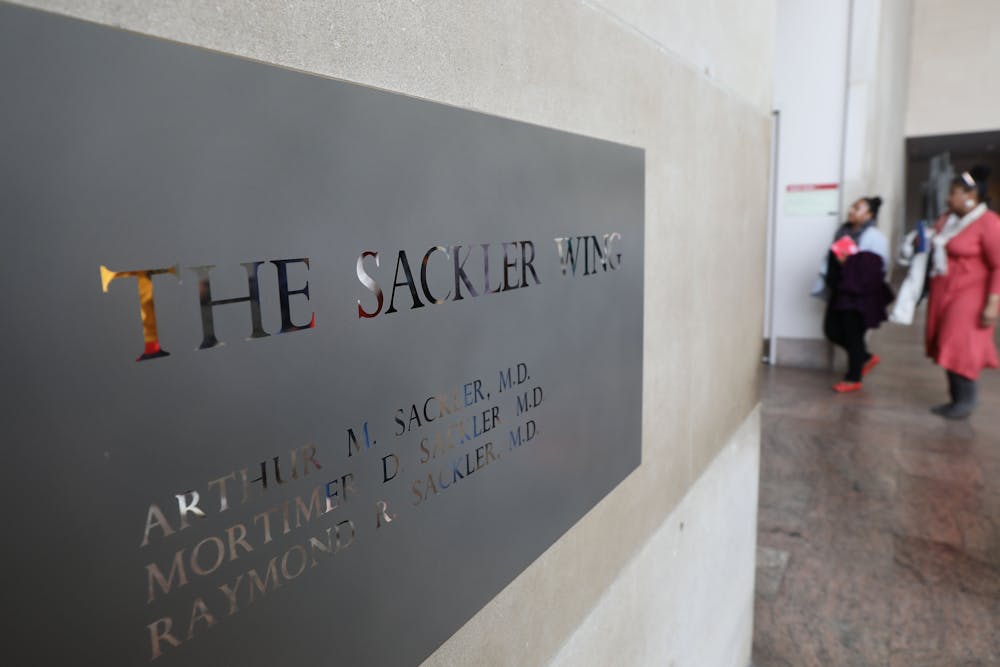
Frustration and disappointment have been evident in the settlement reached on Sept. 1, 2021, that ended thousands of the lawsuits filed by states, cities, counties and native tribes against Purdue Pharma. Even as Robert Drain, a federal bankruptcy judge in White Plains, New York, approved the deal he observed that it would fail to fully hold Purdue’s owners, the Sackler family, accountable for their role in the opioid crisis.
Still, the deal is about more than a single family’s fate. As a historian of drugs and the pharmaceutical industry, I see promise in it.
Settling with the Sacklers
If the deal holds up, it will cap 20 years of litigation against Purdue Pharma, a privately held drugmaker. The company pleaded guilty twice to federal criminal charges in connection with its marketing of OxyContin. No lawsuit against Purdue ever advanced to trial. Cases were settled out of court and records were sealed. The company continued to promote OxyContin to doctors through 2018.
By that time, the Sacklers had reaped an estimated US$10.7 billion from sales of Purdue’s signature product. But the family denies that it bears any responsibility for the devastation wrought by the opioid crisis and has sought protection from lawsuits.
Under the terms of the settlement, the Sacklers will hand over a total of $4.5 billion over nine years provided they can be released of any liability for their role in the opioid crisis. This immunity would extend to members of the family as well as to hundreds of foundations, trusts, business associates, attorneys, lobbyists, Purdue subsidiaries and other entities.
The prospect of extensive immunity has attracted fierce criticism. The settlement may still face legal challenges, such as an appeal to a higher court.
Barring a successful appeal, however, the Sacklers will still retain most of the fortune they amassed from the sales of OxyContin fully insulated against future lawsuits brought in connection with Purdue’s opioids.
Compensating the plaintiffs
The abuse of prescription opioids costs the U.S. economy $78.5 billion every year, according to a Centers for Disease Control and Prevention estimate. The funds pledged by the Sacklers fall far short of paying this tab. However, the deal offers a creative way to help resolve the crisis.
The centerpiece of the deal is a plan to dissolve Purdue and reestablish it as a public benefit corporation. The new entity will continue to sell some of Purdue’s signature products – including opioid painkillers, opioid substitution therapies like buprenorphine and anti-overdose medications like naloxone – and use the profits of these sales to fund addiction treatment and prevention programs.
Members of the Sackler family will have no stake in the new entity. Resuscitated as a public trust, the new Purdue will be bound to refrain from the kind of pill-pushing methods that made its fortune.
If successful, this new arrangement would show that a different way of producing and distributing drugs is possible.
Informing the public
Lawsuits against the industry have produced millions of internal company documents that shed light on the origins of the opioid catastrophe. Together with other historians, I drafted an amicus brief in 2019 that made the case for the full disclosure of all the evidence unearthed in the course of the litigation.
When 46 U.S. states reached another sweeping settlement with the tobacco industry in 1998, we explained, the companies were asked to turn over their internal documents and pay for their collection and preservation.
Posted to the internet, these documents exposed how the tobacco industry misled the public about the consequences of smoking and the nature of nicotine addiction for decades after these risks were discovered.
Overall, more than 1,000 books, research papers and articles about the impact of corporate behavior on public health were written based on this trove of evidence. The same approach, we argued, needs to be taken with the opioid industry documents.
We filed our brief just as Purdue made its opening settlement bid. The Sacklers fought long and hard to guard their secrets, concealing some of the most incriminating evidence behind claims of attorney-client privilege. They were forced to relent to get more states on board.
As a result, 30 million documents – business plans, memos, emails, meeting minutes, legal records and even deposition videos – will be turned over to archivists and made available in text-searchable form through a user-friendly portal. Purdue’s inner workings will be exposed like those of few U.S. corporations before. This will help researchers, journalists and the public better understand the causes of the opioid epidemic.

Looking ahead
By a striking quirk of timing, the court order compelling the release of the tobacco industry documents expired on Sept. 1, 2021. The yearslong effort to collect the documents obtained from the tobacco industry will wind down just as the work to bring Purdue’s documents to the public begins.
Public access to industry documents altered the course of the litigation against Big Tobacco. For decades, cigarette makers beat back lawsuits with claims that the science about the risks of smoking remained unsettled and that the companies were sincerely trying to mitigate known harms. They also held that smokers were making a choice and denied knowing anything about nicotine’s addictive potential. These defenses crumbled when the documents came to light and more plaintiffs prevailed in court.
Given the broad immunity granted to the Sacklers, the disclosure of Purdue’s opioid litigation documents may not lead to new lawsuits against them. But it might strengthen future litigation against other defendants in opioid cases.
Drug distributors, pharmacies, other drugmakers and even some doctors are embroiled in their own lawsuits and negotiating their own settlements.
Historians like me, public health experts, journalists, lawyers, survivors and the public need access to the evidence underpinning all of that litigation too. If only Purdue’s opioid-related documents are made public, the world would be left with a distorted picture of what caused this catastrophe.
The Sacklers, I fear, would continue to play their role as useful villains, diverting attention from the broader systemic failures that allowed one company to cause so much damage.
Editor’s note: The descendants of Arthur Sackler, the brother of Mortimer and Raymond Sackler, sold their stake in Purdue before the launch of OxyContin. They aren’t involved in opioid-related litigation against the company or Purdue’s related settlements.
[Over 110,000 readers rely on The Conversation’s newsletter to understand the world. Sign up today.]
Antoine Lentacker, Assistant Professor of History, University of California, Riverside
This article is republished from The Conversation under a Creative Commons license. Read the original article.