 How to resolve AdBlock issue?
News
“In partnership with the Legislature, we’ve advanced hundreds of new bills this year to make meaningful progress on an array of issues that matter deeply to Californians across the state,” said Gov. Newsom. “I thank Pro Tem Atkins and Speaker Rendon for their leadership in advancing historic measures to improve the lives of Californians, including new tools to boost our housing supply, improve workplace conditions and build a stronger state. As we head into the new year, I look forward to our continued work to expand opportunity for all Californians.”
Among the new laws taking effect Jan. 1 are protections for workers and measures to increase the state’s supply of affordable housing, create a more inclusive state, expand voter access and protect consumers and the environment from harmful chemicals.
AB 701 by Assemblymember Lorena Gonzalez (D-San Diego) establishes nation-leading transparency measures for companies to disclose warehouse production quota descriptions and prohibits the use of algorithms that disrupt basic worker rights.
SB 62 by Sen. María Elena Durazo (D-Los Angeles) ends the garment industry’s practice of piece-rate compensation and expands fashion brands’ liability for unpaid wages.
SB 8 by Sen. Nancy Skinner (D-Berkeley) extends the provisions of the Housing Crisis Act of 2019 through 2030 to accelerate the approval process for housing projects and curtail local governments’ ability to downzone, among other provisions.
SB 9 by State Senate President pro Tempore Toni G. Atkins (D-San Diego) facilitates the process for homeowners to build a duplex or split their current residential lot.
SB 10 by Sen. Scott Wiener (D-San Francisco) creates a voluntary process for local governments to implement streamlined zoning for new multiunit housing near transit or in urban infill areas.
SB 2 by Senate President pro Tempore Toni Atkins (D-San Diego) and Sen. Steven Bradford (D-Gardena) creates a system within the Commission on Peace Officer Standards and Training, or POST, to investigate and revoke or suspend peace officer certification for serious misconduct.
SB 16 by Sen. Nancy Skinner (D-Berkeley) expands public access to police misconduct records related to unreasonable or excessive use of force, discriminatory or prejudiced behavior and other misconduct.
AB 338 by Assemblymember James C. Ramos (D-Highland) allows the placement of a monument in Capitol Park honoring Sacramento-area tribes, replacing the sculpture of missionary Junipero Serra.
AB 855 by Assemblymember James C. Ramos (D-Highland) removes Columbus Day as a judicial holiday and replaces it with Native American Day in September.
AB 600 by Assemblymember Joaquin Arambula (D-Fresno) ensures that crimes targeting people due to their immigration status are considered a hate crime.
AB 37 by Assemblymember Marc Berman (D-Menlo Park) makes permanent the measure implemented last year to send a vote-by-mail ballot to every active registered voter.
SB 389 by Sen. Bill Dodd (D-Napa) allows restaurants, bars, breweries and wineries that sell food to continue offering to-go alcoholic beverages with food orders, building on state regulatory relief announced in June.
AB 1084 by Assemblymember Evan Low (D-Campbell) requires retail department stores to provide a gender-neutral section for toys and child care items.
AB 652 by Assemblymember Laura Friedman (D-Glendale) bans the use of toxic PFASs in products for children, such as car seats and cribs, and AB 1200 by Assemblymember Philip Ting (D-San Francisco) prohibits their use in disposable food packaging.
In October, Gov. Newsom acted on the final bills of 2021, which advanced his California Comeback Plan featuring the most robust small business relief package in the country, direct financial and rent relief for Californians, the largest increase in homeless housing in state history, universal Pre-K and a historic $15 billion climate package to advance California’s nation-leading climate agenda.
Gov. Newsom also signed historic measures that took effect immediately this year, such as SB 796 by Sen. Steven Bradford (D-Gardena), which authorized Los Angeles County to return Bruce’s Beach property to the Bruce family nearly a century after the land was wrongfully taken from them.
Since then, the California Department of Parks and Recreation has amended the property deed, removing restrictions, and the Los Angeles County Board of Supervisors voted to accept the amended property deed, officially allowing the transfer of the property to the Bruce Family.
SB 65, the California Momnibus Act by Sen. Nancy Skinner (D-Berkeley) will go into effect in August 2022, helping tackle racial and ethnic disparities in maternal health outcomes by improving research and data collection.
And AB 101 by Assemblymember Jose Medina (D-Riverside) which — upon appropriation of funds by the Legislature — requires high schools to provide ethnic studies starting in academic year 2025-26 and make completion of a one-semester course a high school graduation requirement beginning with students graduating in 2029-2030.
Gov. Newsom additionally signed the following notable bills which will take effect on Jan. 1:
AB 118 by Sen. Sydney Kamlager (D-Los Angeles) — Department of Social Services: C.R.I.S.E.S. Grant Pilot Program.
AB 215 by Assemblymember David Chiu (D-San Francisco) — Planning and Zoning Law: housing element: violations.
AB 245 by Assemblymember David Chiu (D-San Francisco) — Educational equity: student records: name and gender changes.
AB 286 by Assemblymember Lorena Gonzalez (D-San Diego) — Food delivery: purchase prices and tips.
AB 977 by Assemblymember Jesse Gabriel (D-Encino) — Homelessness program data reporting: Homeless Management Information System.
AB 1003 by Assemblymember Lorena Gonzalez (D-San Diego) — Wage theft: grand theft.
AB 1220 by Assemblymember Luz Rivas (D-Arleta) — Homelessness: California Interagency Council on Homelessness.
AB 1405 by Assemblymember Buffy Wicks (D-Oakland) — Debt settlement practices.
SB 1 by Sen. Toni G. Atkins (D-San Diego) — Coastal resources: sea level rise.
SB 41 by Sen. Thomas Umberg (D-Santa Ana) — Privacy: genetic testing companies.
SB 109 by Sen. Bill Dodd (D-Napa) — Department of Forestry and Fire Protection: Office of Wildfire Technology Research and Development.
SB 221 by Sen. Scott Wiener (D-San Francisco) — Health care coverage: timely access to care.
SB 224 by Sen. Anthony Portantino (D-La Cañada Flintridge) — Pupil instruction: mental health education.
SB 331 by Sen. Connie Leyva (D-Chino) — Settlement and nondisparagement agreements.
SB 343 by Sen. Ben Allen (D-Santa Monica) — Environmental advertising: recycling symbol: recyclability: products and packaging.
SB 352 by Sen. Susan Talamantes Eggman (D-Stockton) — The military: sexual harassment.
SB 395 by Sen. Anna Caballero (D-Salinas) — Excise tax: electronic cigarettes: Health Careers Opportunity Grant Program: Small and Rural Hospital Relief Program.
SB 510 by Sen. Richard Pan (D-Sacramento) — Health care coverage: COVID-19 cost sharing. A signing message can be found here.
SB 552 by Sen. Robert Hertzberg (D-Van Nuys) — Drought planning: small water suppliers: nontransient noncommunity water systems.
SB 639 by Sen. María Elena Durazo (D-Los Angeles) — Minimum wages: persons with disabilities.
For full text of the legislation, visit: http://leginfo.legislature.ca.gov.
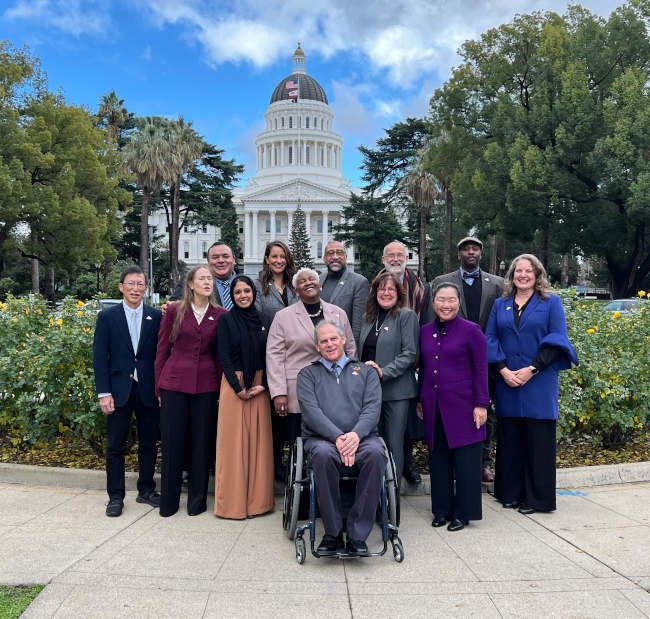
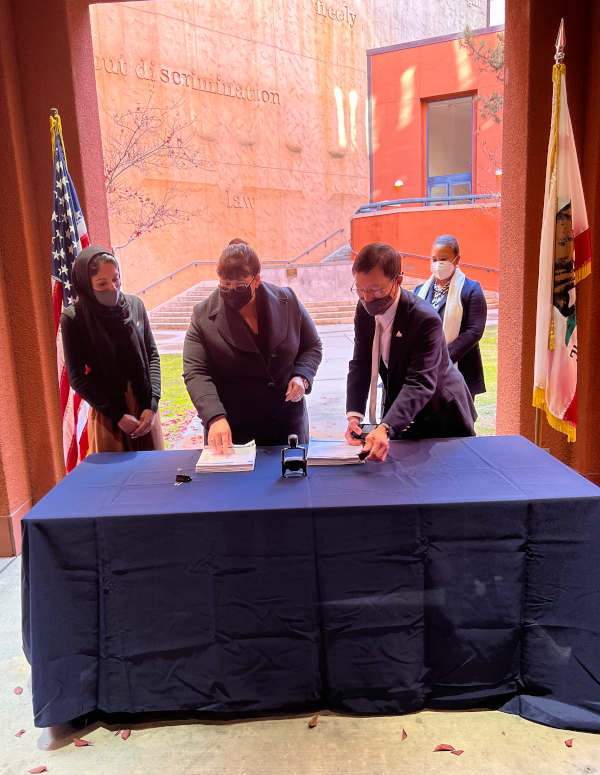
On Monday, the California Citizens Redistricting Commission delivered California’s final congressional, State Senate, Assembly and Board of Equalization district maps to the California Secretary of State, finalizing a process that was impacted by the pandemic and which sought to balance the interests of millions of state residents.
Monday was the deadline set by the California Supreme Court for the commission’s final maps.
“I want to thank the redistricting commissioners for their hard work under challenging circumstances. We will now send these maps to the Legislature and to all 58 counties for implementation,” said California Secretary of State Dr. Shirley N. Weber.
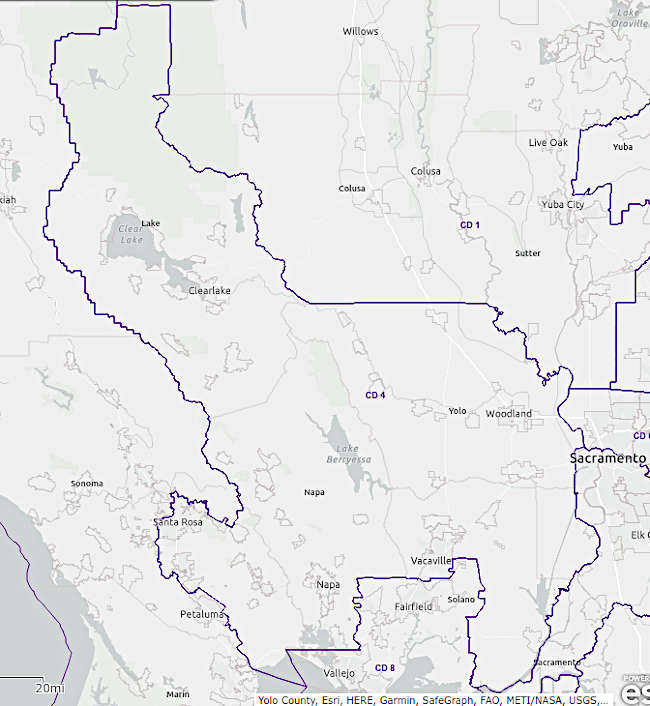
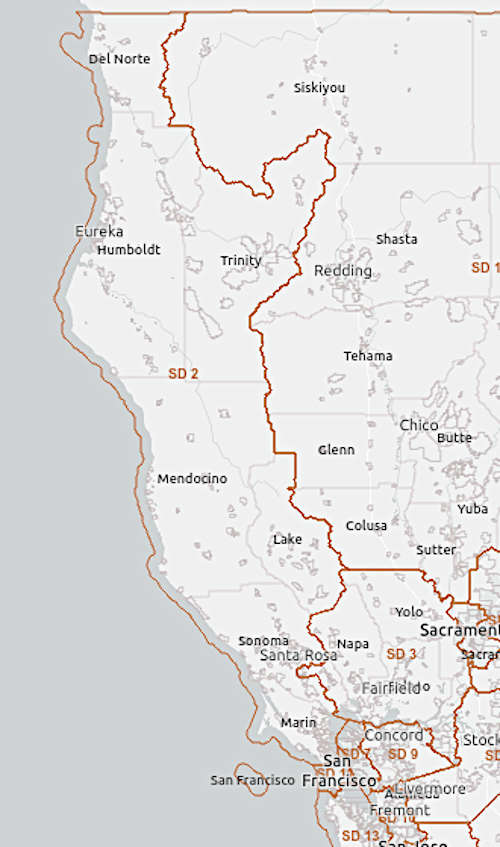
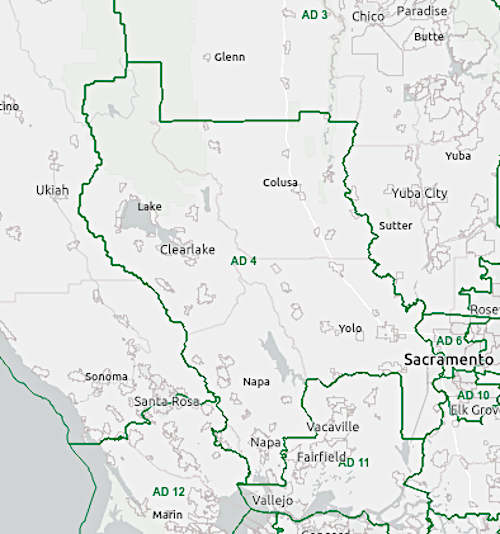
The final maps place Lake County in Congressional District 4, State Senate District 2, Assembly District 4 and Board of Equalization District 2.
Every 10 years, with the completion of a new census, California must redraw electoral district boundaries to ensure the state’s population is even distributed among the new districts.
The 14-member commission — including five Democrats, five Republicans and four members who are unaffiliated — drew four Board of Equalization districts, 52 congressional districts, 40 Senate districts and 80 Assembly districts, which determine how funding and other resources are allocated to communities.
Commission Chair Isra Ahmad said the group represented a variety of personal and professional backgrounds and different parts of the state.
“We drew district maps in an open and transparent manner that did more than merely allow public input — we actively sought and encouraged broad public participation in the process through a massive education and outreach program, afforded to us by the delay in receiving the census data,” said Ahmad, who lives in San Jose.
“Serving on the commission has allowed us to work to expand the circle of opportunity for more and more people across California. Our communities are changing faster than ever. We all worked to ensure that all communities had fair, just and equitable representation. And we did so in a transparent manner, while working hard to engage all communities, especially voices who have been historically excluded. Representation matters, and representation is only truly possible in all communities actively engaged,” said Commissioner Pedro Toledo, who lives in Petaluma.
The commissioners were seated in August 2020 and began months of preparation for their work with meetings, planning, organization, outreach and public education.
On Aug. 12, the U.S. Census Bureau delivered to the state the local level data, however, the Statewide Database needed until Sept. 20 to further prepare the information in order to allow for the state’s incarcerated population to be counted with the communities of their last known residence and reformat the data for use by the commission.
Due to the delays in the process, the state redistricting commission asked the California Supreme Court to push back its Dec. 15 deadline by a month, to Jan. 14. Instead, the state Supreme Court gave the commission until Dec. 27.
In addition to Ahmad and Toledo, the commission includes Linda Akutagawa of Huntington Beach, Jane Andersen of Berkeley, Alicia Fernández of Clarksburg, Neal Fornaciari of Tracy, J. Ray Kennedy of Morongo Valley, Antonio Le Mons of Studio City, Sara Sadhwani of La Cañada Flintridge, Patricia S. Sinay of Encinitas, Derric Taylor of Los Angeles, Trena Turner of Stockton, Angela Vázquez of Los Angeles and Russell Yee of Oakland.
In 2008, California voters passed the Voters First Act, authorizing the creation of the independent California Citizens Redistricting Commission to draw new State Senate, State Assembly and State Board of Equalization district lines.
In 2010, the Voters First Act for Congress gave the Commission the responsibility of drawing new Congressional districts following every census.
Email Elizabeth Larson at
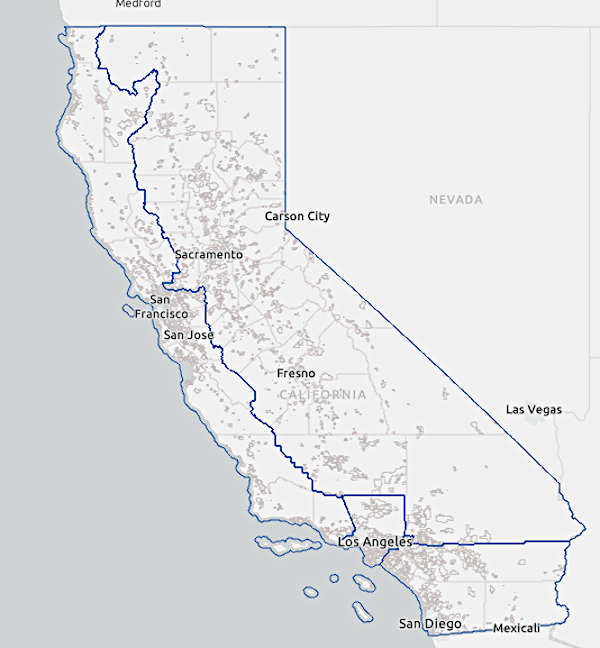
The Employment Development Department’s new report said Lake County recorded a 5.8% unemployment rate, the lowest since February 2020, when it also was 5.8%.
Lake County’s rate in October was 6.2% and 7.4% in November 2020.
California’s overall unemployment rate declined from 7.3% in October to 6.9% in November. The state’s November 2020 jobless rate was 8.7%.
Nationally, the Bureau of Labor Statistics said unemployment dropped to 4.2% in November, down from 4.6% in October and 6.7% in November 2020.
Lake County’s labor force in November totaled 28,340 individuals, of which 1,650 were unemployed.
Its 5.8% unemployment rate ranked it No. 43 statewide.
The lowest jobless rate was in Marin, at 2.9%, while the highest was in Imperial, with 15.5%.
Lake’s neighboring county jobless rates and ranks were: Colusa, 10.3%, No. 57; Glenn, 5.1%, No. 29; Mendocino, 4.7%, No. 25; Napa, 4.2%, No. 14; Sonoma, 3.7%, No. 7; and Yolo, 4.3%, No. 16.
The state’s dashboard of unemployment claims showed Lake County residents filed 474 unemployment claims in November, down from 718 in October; it should be noted that there were five weeks reported for October, compared to four in November.
Employment picture improves across California
The number of Californians employed in November was 17,719,400, an increase of 79,900 persons from October’s total of 17,639,500, and up 735,500 from the employment total in November of last year, the report said.
The Employment Development Department said the number of unemployed Californians was 1,321,300 in November, a decrease of 61,900 over the month and down 299,400 in comparison to November of last year.
The report said California’s employers added 45,700 nonfarm payroll jobs to the economy, accounting for 22% of the nation’s 210,000 overall jobs gain for the month of November.
The state has now regained 1,889,000, or nearly 70%, of the 2,714,800 jobs that were lost in March and April 2020 due to the COVID-19 pandemic.
California payroll jobs totaled 16,385,100 in November 2021, up 45,700 from October 2021 and up 821,800 from October of last year, the report said.
The report said that since February 2021, California has added 977,200 total nonfarm jobs, which averages out to be a gain of 97,720 jobs per month for that time period.
In November eight of California’s 11 industry sectors gained jobs with professional and business services (+18,800) leading the way due to large gains in professional, scientific, and technical services thanks, in part, to increases in scientific research and development services and computer systems design and related services.
Educational and health services (+9,500) also showed good month-over job gains thanks to strength in Ambulatory Health Care Services and Educational Services, the report said.
A notable improvement was reported in the agricultural sector.
The report said the number of jobs in the agriculture industry increased by 17,000 from October 2021 to 433,500 jobs in November. The agricultural industry has 19,800 more farm jobs in November 2021 than it did in November a year ago.
The Employment Development Department said construction’s sizable loss (-1,700) was largely due to reductions in Specialty Trade Contractors.
In related data that the Employment Development Department said figures into the state’s unemployment rate, there were 434,676 people certifying for Unemployment Insurance benefits during the November 2021 sample week. That compares to 463,257 people in October and 1,278,220 people in November 2020.
Concurrently, the agency said 52,716 initial claims were processed in the November 2021 sample week, which was a month-over decrease of 7,163 claims from October and a year-over decrease of 116,272 claims from November 2020.
Email Elizabeth Larson at
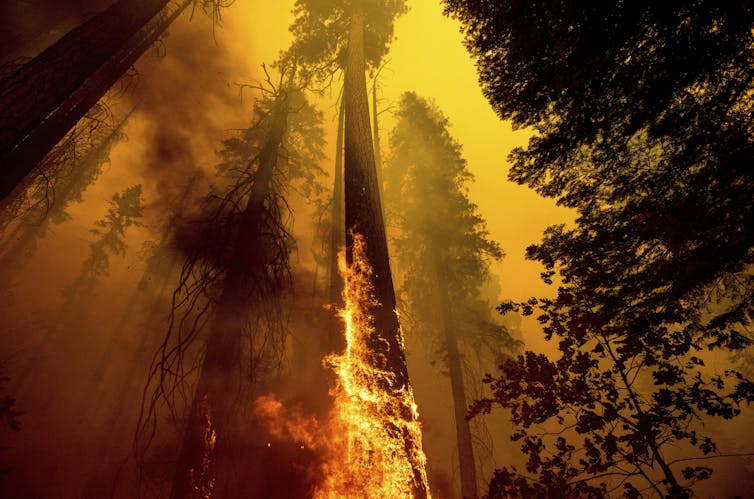
Alongside a lingering global pandemic, the year 2021 was filled with climate disasters, some so intense they surprised even the scientists who study them.
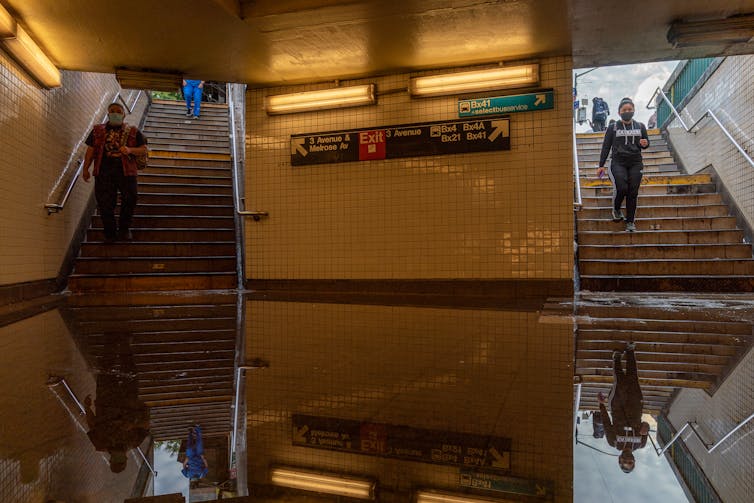
Extreme rainstorms turned to raging flash floods that swept through mountain towns in Europe, killing over 200 people. Across Asia, excessive rainfall inundated wide areas and flooded subway stations in China. Heat waves shattered records in the Pacific Northwest, Europe and the Arctic. Wildfires swept through towns in California, Canada, Greece and Australia. And those were only a few of the extremes.
In the U.S. alone, damage from the biggest climate and weather disasters is expected to total well over US$100 billion in 2021.
Many of these extreme weather events have been linked to human-caused climate change, and they offer a glimpse of what to expect in a rapidly warming world.
In the U.S., something in particular stood out: a sharp national precipitation divide, with one side of the country too wet, the other too dry.
As a climate scientist, I study the impact of global warming on precipitation and the water cycle. Here’s what happened with precipitation in the U.S. in 2021 and why we’re likely to see similar scenarios in the future.
The east-west weather divide
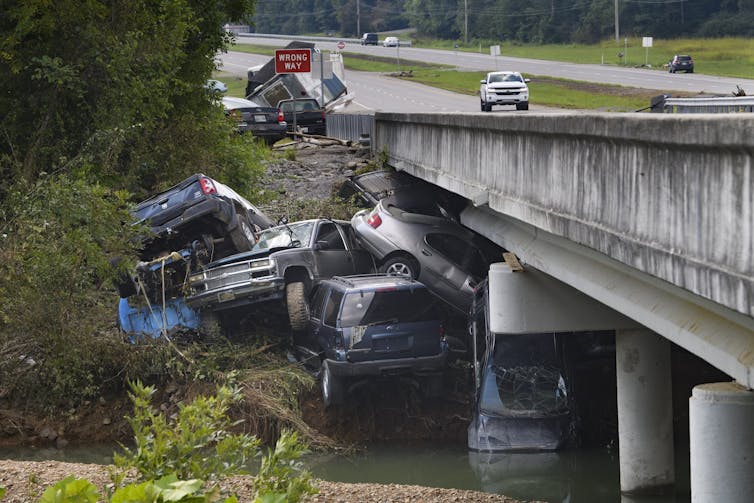
The eastern U.S. weathered storm after storm in 2021. Record rainfall in Tennessee triggered deadly flash flooding in August. The remnants of Hurricane Ida merged with another front days after the hurricane hit Louisiana and became so intense they set rainfall records and flooded subway stations and basement apartments in New York and Pennsylvania, with devastating consequences.
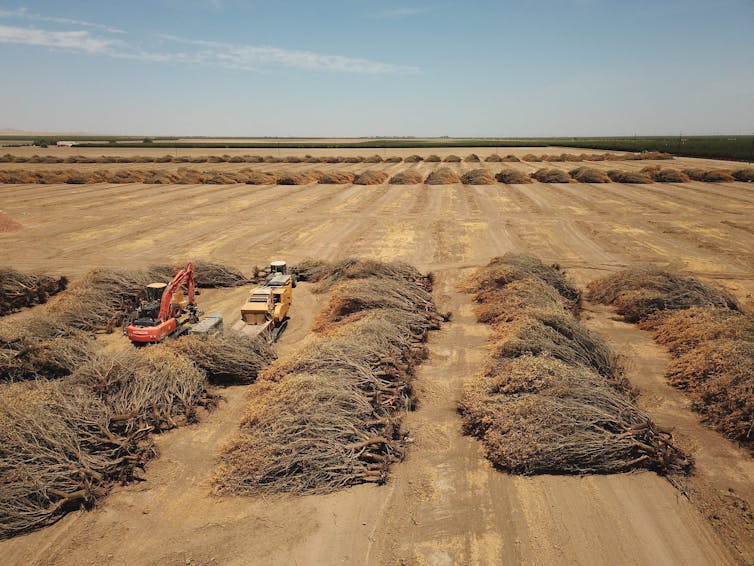
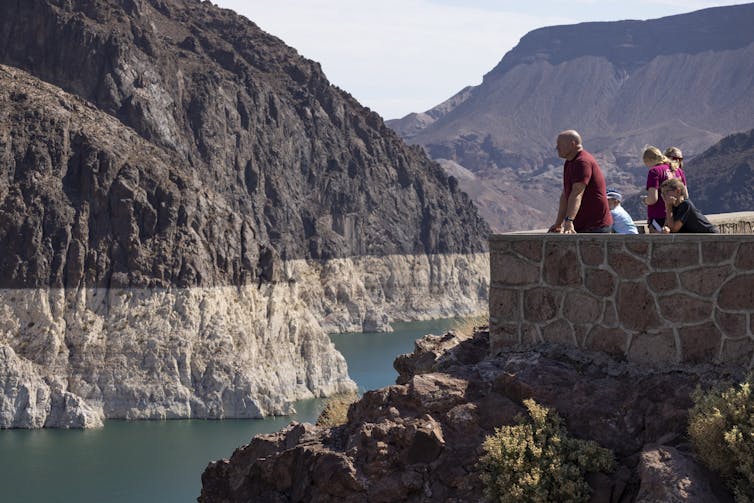
Almost the entire West, meanwhile, was in some stage of drought, helping to fuel wildfires that swept through forests and towns.
This kind of east-west weather divide can be enhanced by La Niña, a periodical phenomenon fueled by Pacific Ocean temperatures that tends to leave the Southwest drier than normal and the North and much of the eastern half of the U.S. wetter.
But something else is going on: Global warming fuels both dryness and extreme rainfall.
3 impacts of global warming on rainfall
Three things in particular happen to precipitation when the planet warms.
1) Global warming leads to more overall precipitation.
Higher temperature increases evaporation from Earth’s surface. It also increases the atmosphere’s capacity to hold moisture at a rate of about 7% per degree Celsius that the planet warms. With more moisture evaporating, global precipitation is expected to increase, but this increase is not uniform.
2) Global warming leads to more intense precipitation.
With higher temperature, more moisture is needed to reach the condensation level to form precipitation. As a result, light precipitation will be less common. But with more moisture in the atmosphere, when storm systems do develop, the increased humidity leads to heavier rainfall events.
In addition, storm systems are fueled by latent heat – the energy released into the atmosphere when water vapor condenses to liquid water. Increased moisture in the atmosphere also enhances latent heat in storm systems, increasing their intensity.
Research shows that both the frequency and intensity of heavy precipitation events has increased since the 1950s over most land areas.
3) Global warming tends to make wet places wetter and dry places drier.
Precipitation is not distributed evenly over the planet because of the global atmosphere circulation pattern. This global circulation brings moisture to places where winds come together, such as the tropical regions where we find most of the world’s rainforests, and away from places where winds diverge, such as the midlatitudes where most world’s deserts are located.
Assuming no significant changes in global wind patterns, increases in evaporation and moisture will mean more moisture is transported from dry areas to wet areas and into the storm tracks at higher latitudes. Global warming could also potentially change the global circulation pattern, causing a shift in the world’s wet and dry regions.
Mountains, moisture and the east-west divide
These dynamics are also affected by local conditions, such as the shape of the land, the types of plants on it and the presence of major water bodies.
The western U.S., with the exception of the West Coast, is dry in part because it lies in the rain shadow of mountains. The westerly wind from the Pacific Ocean is forced upward by the mountain ranges in the West. As it moves up, the air cools and precipitation forms on the windward side of the mountains. By the time the wind reaches the leeward side of the mountains, the moisture has already rained out. As the wind descends the mountains, the air warms up, further reducing the relative humidity.
Higher temperature in areas like these where the moisture supply is already limited means less humidity in the air, leading to less rain. Higher temperature and less precipitation would also reduce snow packs in the mountains and cause earlier melt in spring. All these changes are likely to increase aridity in the West.
The eastern U.S., on the other hand, receives abundant moisture from the North Atlantic and the Gulf of Mexico carried by the easterly trade wind. With abundant moisture supply, increasing temperature means more moisture in the atmosphere, leading to more precipitation and stronger storms.
This is what years of precipitation records show and what is projected for future precipitation based on climate models. Both show a decrease in annual precipitation in the West, likely meaning more long periods of drought, and an increase in the East with global warming.
[Over 140,000 readers rely on The Conversation’s newsletters to understand the world. Sign up today.]
Shuang-Ye Wu, Professor of Geology and Environmental Geosciences, University of Dayton
This article is republished from The Conversation under a Creative Commons license. Read the original article.
This week there is a mouse, a hamster and a horse waiting in the agency’s care.
Call Lake County Animal Care and Control at 707-263-0278 or visit the shelter online for information on visiting or adopting.

Young male mouse
This young male mouse has brown hair, pink ears and a pink nose.
He is in kennel No. A19, ID No. LCAC-A-1212.

Male hamster
This 1-year-old male hamster has a brown and white coat.,
He is in kennel No. A10, ID No. LCAC-A-1287.

Male quarter horse
This 18-year-old male quarter horse has a red coat and white blaze.
He is in upper pen No. 1, ID No. LCAC-A-2410.
Email Elizabeth Larson at
LAKE COUNTY, Calif. — The National Weather Service said rain and chances of more snow around Lake County are in the forecast through Wednesday.
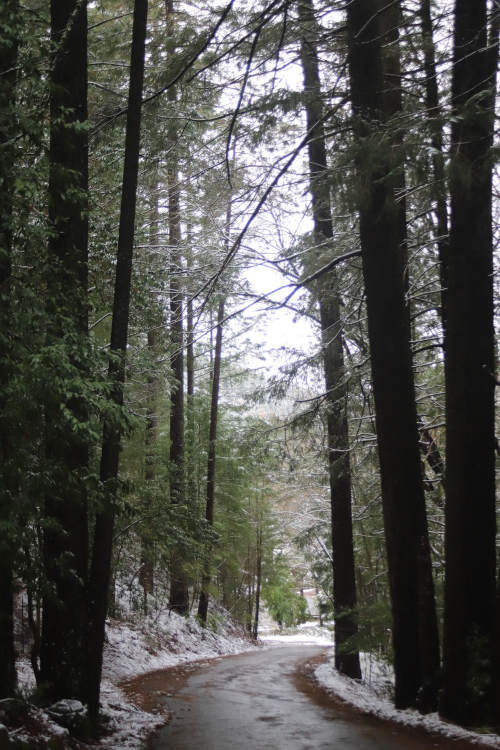
Snow fell in parts of Lake County early Sunday, primarily dusting hilltops and higher elevations such as the Cobb area, where the snow was reported to have mostly melted off by nighttime.
The National Weather Service issued a hazardous weather outlook for much of Lake County and a winter weather advisory for the county’s northern area through 10 a.m. Monday due to the expectation of snow, particularly in higher elevations where it’s forecast to fall in heavy amounts.
The forecast also noted that snow could fall at elevations below 500 feet on Monday.
As a result, the morning commute for many drivers could be slippery and hazardous, the agency said.
Beyond Monday, the forecast calls for chances of rain and snow through Wednesday, along with more rain.
The National Weather Service said conditions are expected to clear from Wednesday night through Saturday night.
On Sunday, chances of showers are once again in the forecast.
Daytime temperatures through Sunday will range from the low to mid-40s, and will mostly be in the low 30, with the exception of Wednesday, when temperatures are forecast to fall into the high 20s.
Winds topping 10 miles per hour are forecast on Monday and Tuesday, and lighter winds of about 5 miles per hour are expected on Wednesday.
Email Elizabeth Larson at