 How to resolve AdBlock issue?
News
LAKE COUNTY, Calif. — Pacific Gas and Electric said it is preparing to move thousands of Lake County customers into a new rate plan, but there remains the chance to opt out.
As part of a multiyear, statewide energy policy to create a cleaner energy future for California, PG&E said it will move approximately 7,140 eligible residential electric customers in Lake County currently on a tiered rate plan called E-1 to a time-of-use, or TOU, rate plan in April 2022.
On the time-of-use — peak pricing from 4 to 9 p.m. daily — rate plan when customers use energy is as important as how much they use.
The transition to this time-of-use rate plan will occur by geographical region and affect approximately 2.5 million customers in PG&E’s service area in stages through 2022.
PG&E spokeswoman Deanna Contreras told Lake County News that the 7,140 customers in Lake County who will be transitioned to the TOU rate plan are residential customers who are eligible.
To help manage use and cost, customers can see hour-by-hour use via their online account and can view an estimate of their bill, compared to the previous year’s use, Contreras said.
Customers in Lake County will receive a series of notifications by mail starting this month to allow them ample time to make a choice if they prefer another rate plan. Customers can choose another rate plan at any time.
All California investor-owned electric utilities are required to automatically transition customers to the time-of-use rate plan to support a cleaner, healthier, and more reliable energy grid. PG&E does not profit from this change.
Customers can choose an alternate time-of-use rate plan or another rate plan, including the tiered rate plan, at any time. Customers enrolled in the Medical Baseline program will not be part of the automatic transition.
“To ensure our customers are fully aware of the transition to the time-of-use rate and how the program works, we’re communicating this change more than 90 days ahead, and we’ll continue to share information before each regional transition takes place,” said Marlene Santos, PG&E’s chief customer officer. “And, customers can choose the rate plan that best fits their needs and lives at any time.”
Customers who automatically transition to this time-of-use rate plan will receive risk-free bill protection for the first 12 months on the delivery portion of the bill.
If a customer pays more on the TOU rate plan than they would have on their current rate plan, PG&E will also automatically credit the customer the difference for the first year on the generation side.
More about time-of-use rate plans
Customers on these rate plans can choose to shift and reduce some energy use to lower-cost time periods (19 hours) every day, including weekends and holidays. The hours of 4 to 9 p.m. are higher priced (peak times). All other times are lower priced (off-peak). Environmental advocacy groups such as the Natural Resources Defense Council support the transition to TOU rates as the plans help build healthier communities.
“TOU rates help Californians take advantage of less expensive, cleaner and more plentiful electricity during periods when a greater share of renewable energy is flowing through the grid. Combined with energy efficiency, electrification, and demand response programs, TOU helps customers reduce energy costs and their carbon footprints by using appliances when more emissions-free electricity is available,” said Alejandra Mejia Cunningham, NRDC building decarbonization advocate.
Starting in 2018, approximately 150,000 residential customers from across PG&E’s service area representing diversity in climate, household size and energy use were randomly selected as part of the first phase of transitions.
Eighty percent of those customers stayed on the new time-of-use rate plan for more than a year. PG&E incorporated feedback from this initial group into the plans for the full rollout.
For more information about the transition to time-of-use rates and bill protection eligibility, customers can visit www.pge.com/toutransition. To view a customized rate plan comparison, customers can visit their account online at www.pge.com/TOUchoice.
Dedicated rate plan specialists are available at 1-866-743-7945 to answer questions and help customers choose a rate plan.
As part of a multiyear, statewide energy policy to create a cleaner energy future for California, PG&E said it will move approximately 7,140 eligible residential electric customers in Lake County currently on a tiered rate plan called E-1 to a time-of-use, or TOU, rate plan in April 2022.
On the time-of-use — peak pricing from 4 to 9 p.m. daily — rate plan when customers use energy is as important as how much they use.
The transition to this time-of-use rate plan will occur by geographical region and affect approximately 2.5 million customers in PG&E’s service area in stages through 2022.
PG&E spokeswoman Deanna Contreras told Lake County News that the 7,140 customers in Lake County who will be transitioned to the TOU rate plan are residential customers who are eligible.
To help manage use and cost, customers can see hour-by-hour use via their online account and can view an estimate of their bill, compared to the previous year’s use, Contreras said.
Customers in Lake County will receive a series of notifications by mail starting this month to allow them ample time to make a choice if they prefer another rate plan. Customers can choose another rate plan at any time.
All California investor-owned electric utilities are required to automatically transition customers to the time-of-use rate plan to support a cleaner, healthier, and more reliable energy grid. PG&E does not profit from this change.
Customers can choose an alternate time-of-use rate plan or another rate plan, including the tiered rate plan, at any time. Customers enrolled in the Medical Baseline program will not be part of the automatic transition.
“To ensure our customers are fully aware of the transition to the time-of-use rate and how the program works, we’re communicating this change more than 90 days ahead, and we’ll continue to share information before each regional transition takes place,” said Marlene Santos, PG&E’s chief customer officer. “And, customers can choose the rate plan that best fits their needs and lives at any time.”
Customers who automatically transition to this time-of-use rate plan will receive risk-free bill protection for the first 12 months on the delivery portion of the bill.
If a customer pays more on the TOU rate plan than they would have on their current rate plan, PG&E will also automatically credit the customer the difference for the first year on the generation side.
More about time-of-use rate plans
Customers on these rate plans can choose to shift and reduce some energy use to lower-cost time periods (19 hours) every day, including weekends and holidays. The hours of 4 to 9 p.m. are higher priced (peak times). All other times are lower priced (off-peak). Environmental advocacy groups such as the Natural Resources Defense Council support the transition to TOU rates as the plans help build healthier communities.
“TOU rates help Californians take advantage of less expensive, cleaner and more plentiful electricity during periods when a greater share of renewable energy is flowing through the grid. Combined with energy efficiency, electrification, and demand response programs, TOU helps customers reduce energy costs and their carbon footprints by using appliances when more emissions-free electricity is available,” said Alejandra Mejia Cunningham, NRDC building decarbonization advocate.
Starting in 2018, approximately 150,000 residential customers from across PG&E’s service area representing diversity in climate, household size and energy use were randomly selected as part of the first phase of transitions.
Eighty percent of those customers stayed on the new time-of-use rate plan for more than a year. PG&E incorporated feedback from this initial group into the plans for the full rollout.
For more information about the transition to time-of-use rates and bill protection eligibility, customers can visit www.pge.com/toutransition. To view a customized rate plan comparison, customers can visit their account online at www.pge.com/TOUchoice.
Dedicated rate plan specialists are available at 1-866-743-7945 to answer questions and help customers choose a rate plan.
Gov. Gavin Newsom on Wednesday announced new booster requirements and testing measures to better protect all Californians as the Omicron variant becomes the dominant COVID-19 strain in the nation.
Newsom’s office said the COVID-19 booster requirement for health care workers will mitigate potential staffing shortages while helping to safeguard the state’s hospital capacity and protect the health and safety of Californians.
Combined with the new federal policies announced on Tuesday, the Governor’s Office said these actions will help ensure everyone in California has access to testing throughout the holiday season and that K-12 public school students can return to school safely.
“As the Omicron variant spreads rapidly across the country and circulates in all regions of the state, we’re taking immediate, proactive steps to protect Californians with boosters and expanded access to testing,” said Newsom. “The state is also redoubling our efforts to keep kids safe and keep schools open. We will help prevent the spread of COVID-19 in our communities by making at-home testing kits available to every K-12 public school student as they head back to the classroom from winter break.”
By February 1, 2022, health care workers and all employees in high-risk congregate settings, including nursing homes, will be required to get their booster. In the interim, all health care staff that have not received their booster must test for COVID-19 twice weekly until they are up to date on their vaccines.
To help mitigate the spread of COVID-19 in our schools, the state is also increasing the availability of at-home COVID-19 tests across California so K-12 public-school students can be tested as they return to school from winter break.
In early December, the California Department of Public Health, or CDPH, distributed approximately two million tests to schools for this purpose.
CDPH will expand those efforts by providing one to two rapid tests for every student. The agency also will work with local education and health partners to distribute those test kits as quickly and efficiently as possible.
“As we fight Omicron, there is nothing more important for our kids than keeping schools safely open — that means deploying rapid tests,” said State Superintendent of Public Instruction Tony Thurmond. “Over the holiday break, CDE will be working closely with the governor and California's public health and emergency management personnel to get testing supplies to families, districts and schools.”
To ensure every Californian has access to testing, the state will also be expanding antigen test availability and expanding hours of operation at state-sponsored OptumServe sites that are already at capacity.
Today, 90% of the population lives within a 30-minute driving distance of a site. Over the course of the pandemic, the state has established 6,288 testing sites statewide, comprising 31% of the nation’s testing sites.
In support of this effort, since August, the state has purchased over 12 million over-the-counter tests. CDPH is distributing an additional six million tests to community partners serving disproportionately impacted Californians and four million to local health jurisdictions.
California has implemented the most robust vaccination and testing programs in the country. To date, California has administered over 64 million vaccination doses and over 116 million tests, with an average turn around of just 48 hours.
In recent months, Gov. Newsom implemented a series of measures to slow the spread of COVID-19, including first-in-the-nation vaccine and masking measures requiring that workers in health care settings be fully vaccinated, announcing plans to add the COVID-19 vaccine to the list of vaccinations required to attend school in-person when fully approved, requiring masking in schools and implementing a standard that all school staff and all state workers either show proof of full vaccination or be tested.
As a result of these actions, California has been labeled the safest state to live in during COVID-19 and a national leader in preventing school closures.
"California’s determination to use every available tool to keep our children safe during this pandemic has allowed us to keep schools open and case rates low — a key to their physical and mental health as well as learning,” said Dr. Linda Darling-Hammond, State Board of Education president. “Ensuring boosters and testing in the new year will continue this commitment to keeping our children’s welfare front and center."
While we are still learning about the severity of illness caused by Omicron, it is clear that individuals who are up to date on their vaccines, including a booster, are most protected, the Governor’s Office reported.
To help slow the spread of COVID-19, Californians are encouraged to get vaccinated, get boosted, wear a mask indoors and get tested if sick.
Newsom’s office said the COVID-19 booster requirement for health care workers will mitigate potential staffing shortages while helping to safeguard the state’s hospital capacity and protect the health and safety of Californians.
Combined with the new federal policies announced on Tuesday, the Governor’s Office said these actions will help ensure everyone in California has access to testing throughout the holiday season and that K-12 public school students can return to school safely.
“As the Omicron variant spreads rapidly across the country and circulates in all regions of the state, we’re taking immediate, proactive steps to protect Californians with boosters and expanded access to testing,” said Newsom. “The state is also redoubling our efforts to keep kids safe and keep schools open. We will help prevent the spread of COVID-19 in our communities by making at-home testing kits available to every K-12 public school student as they head back to the classroom from winter break.”
By February 1, 2022, health care workers and all employees in high-risk congregate settings, including nursing homes, will be required to get their booster. In the interim, all health care staff that have not received their booster must test for COVID-19 twice weekly until they are up to date on their vaccines.
To help mitigate the spread of COVID-19 in our schools, the state is also increasing the availability of at-home COVID-19 tests across California so K-12 public-school students can be tested as they return to school from winter break.
In early December, the California Department of Public Health, or CDPH, distributed approximately two million tests to schools for this purpose.
CDPH will expand those efforts by providing one to two rapid tests for every student. The agency also will work with local education and health partners to distribute those test kits as quickly and efficiently as possible.
“As we fight Omicron, there is nothing more important for our kids than keeping schools safely open — that means deploying rapid tests,” said State Superintendent of Public Instruction Tony Thurmond. “Over the holiday break, CDE will be working closely with the governor and California's public health and emergency management personnel to get testing supplies to families, districts and schools.”
To ensure every Californian has access to testing, the state will also be expanding antigen test availability and expanding hours of operation at state-sponsored OptumServe sites that are already at capacity.
Today, 90% of the population lives within a 30-minute driving distance of a site. Over the course of the pandemic, the state has established 6,288 testing sites statewide, comprising 31% of the nation’s testing sites.
In support of this effort, since August, the state has purchased over 12 million over-the-counter tests. CDPH is distributing an additional six million tests to community partners serving disproportionately impacted Californians and four million to local health jurisdictions.
California has implemented the most robust vaccination and testing programs in the country. To date, California has administered over 64 million vaccination doses and over 116 million tests, with an average turn around of just 48 hours.
In recent months, Gov. Newsom implemented a series of measures to slow the spread of COVID-19, including first-in-the-nation vaccine and masking measures requiring that workers in health care settings be fully vaccinated, announcing plans to add the COVID-19 vaccine to the list of vaccinations required to attend school in-person when fully approved, requiring masking in schools and implementing a standard that all school staff and all state workers either show proof of full vaccination or be tested.
As a result of these actions, California has been labeled the safest state to live in during COVID-19 and a national leader in preventing school closures.
"California’s determination to use every available tool to keep our children safe during this pandemic has allowed us to keep schools open and case rates low — a key to their physical and mental health as well as learning,” said Dr. Linda Darling-Hammond, State Board of Education president. “Ensuring boosters and testing in the new year will continue this commitment to keeping our children’s welfare front and center."
While we are still learning about the severity of illness caused by Omicron, it is clear that individuals who are up to date on their vaccines, including a booster, are most protected, the Governor’s Office reported.
To help slow the spread of COVID-19, Californians are encouraged to get vaccinated, get boosted, wear a mask indoors and get tested if sick.
With the new year around the corner, the California Highway Patrol is educating the public on traffic safety laws that were passed during this year’s legislative season and signed by Gov. Gavin Newsom.
The laws take effect Jan. 1, 2022, unless otherwise noted.
Sideshow Definition and Penalties (Assembly Bill 3, Fong)
This new law strengthens penalties for those convicted of exhibition of speed if the violation occurred as part of a sideshow.
Beginning July 1, 2025, a court will be permitted to suspend a person’s driver’s license between 90 days and six months if the person is convicted of exhibition of speed and if the violation occurred as part of a “sideshow.” Section 23109(c) of the California Vehicle Code (exhibition of speed) will define sideshow as an event in which two or more persons block or impede traffic on a highway for the purpose of performing motor vehicle stunts, motor vehicle speed contests, motor vehicle exhibitions of speed, or reckless driving for spectators.
The courts will be required to consider a defendant’s medical, personal, or family hardship that requires a person to have a driver’s license before determining whether to suspend a person’s driver’s license.
Equestrian Safety Gear (AB 974, L. Rivas)
Requires a person under the age of 18 to wear a properly fitted and fastened helmet when riding an equestrian animal, such as a horse, mule, or donkey on a paved highway. This bill also requires all riders or their equines to wear reflective gear or a lamp when riding after sundown.
A person riding an equestrian animal in a parade or festival, or crossing a paved highway from an unpaved highway, is exempt from all helmet, lighting, or reflective gear requirements.
Tribal Emergency Vehicles (AB 798, Ramos)
This bill provides that any vehicle owned or operated by a federally recognized Indian tribe is considered an authorized emergency vehicle as defined by Section 165 CVC when responding to an emergency, fire, ambulance, or lifesaving calls.
Class C Drivers Allowed to Tow Trailer (Senate Bill 287, Grove)
Effective January 1, 2027, drivers with a class C driver’s license may operate a vehicle towing a trailer between 10,001 pounds and 15,000 pounds gross vehicle weight rating, or gross vehicle weight with a fifth-wheel and kingpin or bed mounted gooseneck connection, provided that the trailer is used exclusively for recreational purposes for the transportation of property, living space, or both.
The driver will be required to pass a specialized written examination demonstrating the knowledge of the CVC and other safety aspects relating to the towing of recreational vehicles on the highway and possess an endorsement on their class C driver’s license.
Currently, this exemption is in place for drivers towing a fifth-wheel travel trailer provided the driver passes a specialized written exam and obtains a recreational trailer endorsement.
As a reminder, the following law took effect on July 1, 2021:
License Points for Distracted Driving (AB 47, Daly; 2019)
Using a handheld cellphone while driving is currently punishable by a fine. As of July 1, 2021, violating the hands-free law for a second time within 36 months of a prior conviction for the same offense will result in a point being added to a driver’s record.
This applies to the violations of talking or texting while driving (except for hands-free use) and to any use of these devices while driving by a person under 18 years of age.
The laws take effect Jan. 1, 2022, unless otherwise noted.
Sideshow Definition and Penalties (Assembly Bill 3, Fong)
This new law strengthens penalties for those convicted of exhibition of speed if the violation occurred as part of a sideshow.
Beginning July 1, 2025, a court will be permitted to suspend a person’s driver’s license between 90 days and six months if the person is convicted of exhibition of speed and if the violation occurred as part of a “sideshow.” Section 23109(c) of the California Vehicle Code (exhibition of speed) will define sideshow as an event in which two or more persons block or impede traffic on a highway for the purpose of performing motor vehicle stunts, motor vehicle speed contests, motor vehicle exhibitions of speed, or reckless driving for spectators.
The courts will be required to consider a defendant’s medical, personal, or family hardship that requires a person to have a driver’s license before determining whether to suspend a person’s driver’s license.
Equestrian Safety Gear (AB 974, L. Rivas)
Requires a person under the age of 18 to wear a properly fitted and fastened helmet when riding an equestrian animal, such as a horse, mule, or donkey on a paved highway. This bill also requires all riders or their equines to wear reflective gear or a lamp when riding after sundown.
A person riding an equestrian animal in a parade or festival, or crossing a paved highway from an unpaved highway, is exempt from all helmet, lighting, or reflective gear requirements.
Tribal Emergency Vehicles (AB 798, Ramos)
This bill provides that any vehicle owned or operated by a federally recognized Indian tribe is considered an authorized emergency vehicle as defined by Section 165 CVC when responding to an emergency, fire, ambulance, or lifesaving calls.
Class C Drivers Allowed to Tow Trailer (Senate Bill 287, Grove)
Effective January 1, 2027, drivers with a class C driver’s license may operate a vehicle towing a trailer between 10,001 pounds and 15,000 pounds gross vehicle weight rating, or gross vehicle weight with a fifth-wheel and kingpin or bed mounted gooseneck connection, provided that the trailer is used exclusively for recreational purposes for the transportation of property, living space, or both.
The driver will be required to pass a specialized written examination demonstrating the knowledge of the CVC and other safety aspects relating to the towing of recreational vehicles on the highway and possess an endorsement on their class C driver’s license.
Currently, this exemption is in place for drivers towing a fifth-wheel travel trailer provided the driver passes a specialized written exam and obtains a recreational trailer endorsement.
As a reminder, the following law took effect on July 1, 2021:
License Points for Distracted Driving (AB 47, Daly; 2019)
Using a handheld cellphone while driving is currently punishable by a fine. As of July 1, 2021, violating the hands-free law for a second time within 36 months of a prior conviction for the same offense will result in a point being added to a driver’s record.
This applies to the violations of talking or texting while driving (except for hands-free use) and to any use of these devices while driving by a person under 18 years of age.
LAKE COUNTY, Calif. — The Board of Supervisors on Tuesday decided to take no action on a proposal from the County Administrative Office to consider once again splitting the Water Resources Department off from the Department of Public Works.
County Administrative Officer Carol Huchingson said she agendized the discussion because the county is anticipating a “considerable amount of infrastructure funding” in the next year or two thanks to the federal infrastructure bill.
She said the discussion was brought forward to enable the board to consider whether it would make sense to have the two departments separate in order to allow Public Works to focus on projects.
Huchingson said it’s a topic that the board has discussed before, noting that the two departments have been combined several times.
Most recently, the board voted to reconsolidate the two departments in August 2019. In July 2016, the board had split the two agencies.
Scott De Leon, director of both Public Works and Water Resources, appeared via Zoom. He made clear he didn’t support the idea.
“I appreciate the discussion however we’ve got a pretty good team up here and we have a system in place,” he said.
De Leon explained that Water Resources is covered by Public Works’ administration, which provides them with accounting, clerical and other administrative duties, and is handling that work without any trouble.
“The federal funding opportunities are certainly welcome,” and are a top priority for him, said De Leon.
He is working with a consultant from the Area Planning Council and is drafting a five-year plan for his department. De Leon added that Huchingson’s office has been working with a member of Congress on projects for specific funding.
“Personally I feel like we’re in good shape. I feel like we’re able to handle the workload and really would not like to see the disruption from the separation of the departments,” he said.
De Leon said he is still trying to fill jobs in the Department of Public Works and just completed a recruitment for assistant director. The recruitment yielded a good candidate who declined the job offer.
He said he wants to focus on filling jobs instead of separating the two departments.
Supervisor Moke Simon supported pursuing a split, pointing to climate change and the importance of water, and the work that needs to be done on the county’s roads. As such, he said it was important to have focused departments.
Supervisor Jessica Pyska said one of her big questions was whether the county had an understanding of the kind of funding it will be seeing from the infrastructure bill. She wanted to know what the workload would be and how the county would ramp up.
“We don’t know,” Huchingson said, explaining that the county hasn’t been advised of how much money will come, just that a lot is coming.
Supervisor EJ Crandell recalled that when the previous Water Resources director left, the board chose to have De Leon lead the department because of his knowledge, adding a lot of employees work well under De Leon’s leadership.
Supervisor Tina Scott questioned when the money might come in.
Board Chair Bruno Sabatier said he expected it will be six months before guidelines are set by the federal government. In the meantime, he said the county needs to have shovel-ready projects.
Sabatier said he appreciates the forward progress he’s seen in Water Resources, including matters dealing with the Federal Emergency Management Agency and moving the Middle Creek Restoration Project ahead.
He wanted to see the five-year plan completed and provide expectations to staff. “I don’t mind the conversation but I think it’s a little premature,” he said.
Sabatier also emphasized the importance of filling positions. De Leon said that he had been hopeful that with the county’s recent changes in compensation, there would be increased interest in jobs in his department.
They’ve done recruitments where no one has applied. De Leon said in this last recruitment, they had two applicants. One was very good, and despite him working with Human Resources to make the best offer the county could — including a signing bonus and moving costs — the applicant declined.
During public comment, Betsy Cawn, who has been a Clean Water Program volunteer since 2009, said she thought the proposal was disruptive, especially when De Leon said the department is working well.
Cawn suggested that before the board makes a decision to split the department, it should allow De Leon to work on the five-year plan, make a continued effort to recruit for an assistant director and advise the board what needs to be done, rather than making a decision based on big dollar signs.
She added that she thinks De Leon has done an excellent job, and that the board should let him make the decisions.
Ultimately, when it came time to suggest an action, board members sat silent, prompting Huchingson to ask if there was no direction.
Simon said he would like to pursue the split, but there was no consensus.
Sabatier said he wanted to wait for the five-year plan and set expectations.
“That’s where I am too,” said Pyska, and Crandell agreed.
Huchingson asked about the timeline to complete the five-year plan.
De Leon said it’s to be completed by February, and he will bring the plan and a summary to the board at that time.
Email Elizabeth Larson atThis email address is being protected from spambots. You need JavaScript enabled to view it. . Follow her on Twitter, @ERLarson, or Lake County News, @LakeCoNews.
County Administrative Officer Carol Huchingson said she agendized the discussion because the county is anticipating a “considerable amount of infrastructure funding” in the next year or two thanks to the federal infrastructure bill.
She said the discussion was brought forward to enable the board to consider whether it would make sense to have the two departments separate in order to allow Public Works to focus on projects.
Huchingson said it’s a topic that the board has discussed before, noting that the two departments have been combined several times.
Most recently, the board voted to reconsolidate the two departments in August 2019. In July 2016, the board had split the two agencies.
Scott De Leon, director of both Public Works and Water Resources, appeared via Zoom. He made clear he didn’t support the idea.
“I appreciate the discussion however we’ve got a pretty good team up here and we have a system in place,” he said.
De Leon explained that Water Resources is covered by Public Works’ administration, which provides them with accounting, clerical and other administrative duties, and is handling that work without any trouble.
“The federal funding opportunities are certainly welcome,” and are a top priority for him, said De Leon.
He is working with a consultant from the Area Planning Council and is drafting a five-year plan for his department. De Leon added that Huchingson’s office has been working with a member of Congress on projects for specific funding.
“Personally I feel like we’re in good shape. I feel like we’re able to handle the workload and really would not like to see the disruption from the separation of the departments,” he said.
De Leon said he is still trying to fill jobs in the Department of Public Works and just completed a recruitment for assistant director. The recruitment yielded a good candidate who declined the job offer.
He said he wants to focus on filling jobs instead of separating the two departments.
Supervisor Moke Simon supported pursuing a split, pointing to climate change and the importance of water, and the work that needs to be done on the county’s roads. As such, he said it was important to have focused departments.
Supervisor Jessica Pyska said one of her big questions was whether the county had an understanding of the kind of funding it will be seeing from the infrastructure bill. She wanted to know what the workload would be and how the county would ramp up.
“We don’t know,” Huchingson said, explaining that the county hasn’t been advised of how much money will come, just that a lot is coming.
Supervisor EJ Crandell recalled that when the previous Water Resources director left, the board chose to have De Leon lead the department because of his knowledge, adding a lot of employees work well under De Leon’s leadership.
Supervisor Tina Scott questioned when the money might come in.
Board Chair Bruno Sabatier said he expected it will be six months before guidelines are set by the federal government. In the meantime, he said the county needs to have shovel-ready projects.
Sabatier said he appreciates the forward progress he’s seen in Water Resources, including matters dealing with the Federal Emergency Management Agency and moving the Middle Creek Restoration Project ahead.
He wanted to see the five-year plan completed and provide expectations to staff. “I don’t mind the conversation but I think it’s a little premature,” he said.
Sabatier also emphasized the importance of filling positions. De Leon said that he had been hopeful that with the county’s recent changes in compensation, there would be increased interest in jobs in his department.
They’ve done recruitments where no one has applied. De Leon said in this last recruitment, they had two applicants. One was very good, and despite him working with Human Resources to make the best offer the county could — including a signing bonus and moving costs — the applicant declined.
During public comment, Betsy Cawn, who has been a Clean Water Program volunteer since 2009, said she thought the proposal was disruptive, especially when De Leon said the department is working well.
Cawn suggested that before the board makes a decision to split the department, it should allow De Leon to work on the five-year plan, make a continued effort to recruit for an assistant director and advise the board what needs to be done, rather than making a decision based on big dollar signs.
She added that she thinks De Leon has done an excellent job, and that the board should let him make the decisions.
Ultimately, when it came time to suggest an action, board members sat silent, prompting Huchingson to ask if there was no direction.
Simon said he would like to pursue the split, but there was no consensus.
Sabatier said he wanted to wait for the five-year plan and set expectations.
“That’s where I am too,” said Pyska, and Crandell agreed.
Huchingson asked about the timeline to complete the five-year plan.
De Leon said it’s to be completed by February, and he will bring the plan and a summary to the board at that time.
Email Elizabeth Larson at
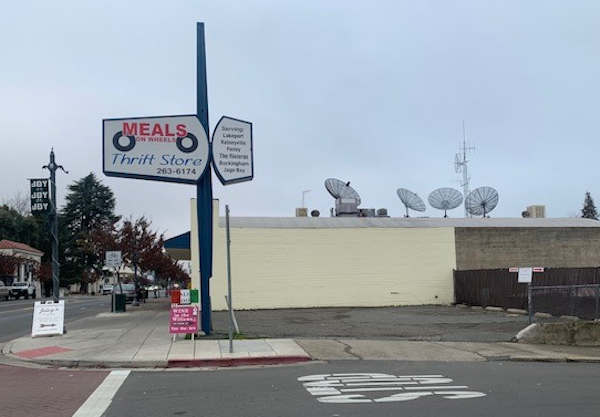
LAKEPORT, Calif. – Another mural is being planned in downtown Lakeport, this one in honor of the community’s essential workers.
The Lake County Arts Council, in collaboration with the city of Lakeport, Lake County Rural Arts Initiative and the Lake Family Resource Center, is planning the installation of the new mural.
The Meals on Wheels Thrift Store at 120 N. Main St. has been selected for its prominent location with a large wall facing First Street.
“The COVID pandemic has hit our community hard in so many ways since March 2020,” according to Lakeport Mayor Pro Tem Mireya Turner, a leader in the effort to express appreciation for the service, strength and fortitude of our local essential workers.
“Some of us were able to shelter in place, while others could not do so because we depended on them to keep our economy and community moving. Many of us left home every day to keep our supermarkets open, our gas stations operating, to treat our sick, make deliveries, and harvest our gardens, orchards and vineyards,” Turner said.
“As we return to a sense of normalcy, now is the perfect time for our community to come together and express gratitude to our residents who have given so much of themselves to get us all through this pandemic,” she added.
Barbara Clark, executive director of the Lake County Arts Council, announced an award of $8,000 to cover an artist’s labor and materials will be made available through a competitive process.
A call for artists to submit proposals will be published and distributed locally and outside Lake County.
The selection of an artist or artists will be made by March 1 with mural completion expected by May 1.
As part of the selection process, local essential workers will be able to vote for their favorite from among the qualified proposals.
Artists will be encouraged to be creative and submit works that are inspiring to the entire community.
“We are calling on our community to financially support this mural project to recognize our friends, neighbors and family members who, through their actions, kept us strong through the pandemic,” said Clark. “All funds collected will be used for the mural and related expenses. When the $8,000 goal has been reached, the donation button will be removed from the Arts Council’s website. Any excess funds will be retained for the next public mural project.”
“Help us thank the police officers, the firefighters, the doctors and nurses and health care professionals, the people who kept food on our tables and gas in our cars; help us show all these essential workers and others how much we appreciate them and their service,” said Clark.
More information about the essential workers mural project is available from Clark at
Donations may be made online through the Lake County Arts Council, https://lakearts.org/joingive/donate/.
LAKE COUNTY, Calif. – The Upper Lake Unified School District is inviting interested community members to apply to fill a vacant seat on its board of trustees.
The district intends to appoint a qualified candidate to the seat rather than pursue a special election.
Community members interested in applying for the position may obtain an application online at www.ulusd.org or applications are available to pick up at the district office at 675 Clover Valley Road, Upper Lake.
Completed applications must be received in the district office no later than 4 p.m. on Friday, Jan. 7.
The current members of the board of trustees will interview applicants in open session at a meeting to be determined.
Qualified applicants will be notified of the meeting date after Jan. 7.
For questions please contact Dina McCrea at 707-275-2655.
The district intends to appoint a qualified candidate to the seat rather than pursue a special election.
Community members interested in applying for the position may obtain an application online at www.ulusd.org or applications are available to pick up at the district office at 675 Clover Valley Road, Upper Lake.
Completed applications must be received in the district office no later than 4 p.m. on Friday, Jan. 7.
The current members of the board of trustees will interview applicants in open session at a meeting to be determined.
Qualified applicants will be notified of the meeting date after Jan. 7.
For questions please contact Dina McCrea at 707-275-2655.