 How to resolve AdBlock issue?
News
Traditionally, March 17 was a day to remember St Patrick, who ministered Christianity in Ireland during the 5th century. But over time, the day has evolved to represent a celebration of Irish culture more generally. Today, as with Halloween and Christmas, the true meaning of the celebration has been watered down even further. Now, it is just as likely to be marked by non-Irish people who use it as an excuse to consume large quantities of alcohol and dress as leprechauns.
Amid the dyed-green rivers and pints of Guinness, it can be easy to forget the symbolic importance of St Patrick’s Day to Irish people in the early 20th century. This was a turbulent period, when Ireland was seeking political autonomy from British rule. At a time when the British considered any form of Irish public gathering to be “a front for Fenian [nationalist] activities, a license for drunkenness and a catalyst to violent disorder” it became of national concern to make St Patrick’s Day a respectable holiday. This was achieved thanks to the efforts of the Gaelic League.
The Gaelic League, or Conradh na Gaeilge, was established in 1893 by Eoin MacNeill to encourage the use of Irish in everyday life and counter the ongoing anglicisation of the country. It was formed as part of the Gaelic revival, or Athbheochan na Gaeilge, which promoted a national revival of interest in Irish language and culture. The League aimed to “leave politics outside the door” and work together to further the cause of the revival and preservation of Irish language and culture.
The League played an important role in making Irishness something of which people were proud. It organised weekly gatherings to discuss Irish culture, established its own newspaper (An Claidheamh Soluis), provided Irish alternatives to imported pastimes and entertainment, encouraged Irish people to buy Irish goods only and successfully campaigned to have Irish included in the school curriculum.
At this time, Irish people could still be imprisoned by order of British law for using their native language on official documents. So the League protested by encouraging citizens to address all letters and record all census returns in Irish. Edmund Kent became Éamonn Ceannt, for example, and Oscar Traynor became Osgar Ua Tréinfhir.
Making a national holiday
Although Saint Patrick’s feast day had been celebrated in Ireland since the 9th century it was still not a national holiday. Campaigning to make St Patrick’s Day a bank holiday became one of the League’s top concerns. March 17 represented a symbolic occasion for Irish people to reflect on their sense of self and look back with nostalgia at ancient Ireland.

The figure of St Patrick driving snakes out of Ireland became a metaphor for the struggle against British rule. As an advert in The Gael journal stated, one of the aims of celebrating St Patrick’s Day was “to meet the encroachment of vile anglicisation and hurl it back into the sea, as Patrick hurled the snakes from our land”. In 1903, the Bank Holiday (Ireland) Act 1903 was finally passed in Parliament. The national holiday of St Patrick’s Day was officially enshrined into law.
The Bank Holiday Act had immediately noticeable effects. Before, people marked March 17 by attending church services and wearing shamrocks. Now, parades and processions took place all over the land. In 1903, the Gaelic League arranged the first St Patrick’s Parade in Waterford. They also declared the entire week “Irish Language Week” – organising “language processions”, feiseanna (traditional dances) and concerts to promote the Irish language.
Fundraising was also an integral part of St Patrick’s Day, with money raised from concerts and processions going to the Irish Language Fund. As the League stated:
the Irish language is the one remaining link which connects the Ireland of to-day with the Ireland of the past.
So, it was essential to use St Patrick’s Day to promote it. The Gaelic League was also credited with restoring order and sobriety to St Patrick’s Day. It encouraged the closure of public houses which they believed diminished the purity of the holiday – perhaps ironic given the celebrations that now surround the day.
Grand Irish nights
The Gaelic League also promoted the “correct” celebration of St Patrick’s Day amongst Irish communities in England, particularly in Liverpool and London. They argued that organising language processions and Gaelic masses was necessary in countering the “sham patriotism” of “Grand Irish Nights” that tended more to “denationalise and demoralise our people than provide healthy amusement”. These concerns show that, even in the early 20th century, some of the arguments we hear today about St Patrick’s Day were already being raised.
In 1915, the Gaelic League became infiltrated by the Irish Republican Brotherhood and by 1918 it had been declared an illegal operation by the British government. It saw the League as a “grave menace designed to terrorise the peaceful and law-abiding subjects of His Majesty in Ireland”.
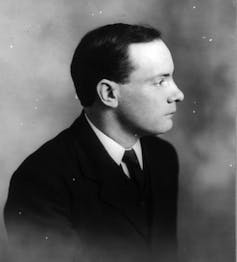
Despite these claims, it is undeniable that the Gaelic League played an integral role in the promotion of Irish language and culture across the world and, as the writer and nationalist Pádraic Pearse claimed, was one of the “the most revolutionary influences that has ever come into Ireland”.
Commercialism or nostalgia? Celebration or farce? Cultural appropriation or cultural appreciation? Whatever your view, we have the Gaelic League to thank for the fact that St Patrick’s Day remains a much-loved national holiday which keeps Irish culture at the forefront around the world.
Lauren Alex O' Hagan, Research Associate in the Centre for Language and Communication Research, Cardiff University
This article is republished from The Conversation under a Creative Commons license. Read the original article.
The California Governor’s Office of Emergency Services and Homeland Security earlier this month sent a letter to all California sheriffs, police chiefs and law enforcement executives asking for the donation of ballistic helmets and vests, goggles and gloves, which the Ukrainian government requested.
Cal OES and the California National Guard are coordinating the collection of those items.
Last week, at the request of Sheriff Brian Martin, the Board of Supervisors voted to approve donating surplus equipment to the effort.
The sheriff’s office subsequently sent 20 pairs of ballistic helmets and vests for use in Ukraine, said public information officer Lauren Berlinn.
Berlinn said the equipment was scheduled to be picked up on Monday.
During the Tuesday evening Lakeport City Council meeting, Lakeport Police Chief Brad Rasmussen said this week his department donated its surplus gear to help Ukraine.
He said they had a “fair amount” of the equipment available to donate.
“Hopefully it will help save lives there,” he said.
Clearlake Police Chief Andrew White said his agency has not donated any gear to the effort.
On Tuesday, Gov. Gavin Newsom visited the state's disaster logistics warehouse in Solano County to help pack emergency relief supplies for Ukraine.
Newsom’s office said the needed medical aid is being prepared for an upcoming shipment by Direct Relief, a California-based humanitarian aid organization that has been coordinating with the government of Ukraine and on-the-ground partners to provide support during the current crisis.
“California is united in our support for Ukraine,” said Gov. Newsom. “Throughout this crisis, the state and nonprofits, businesses, the faith community and individuals across California have stepped up in solidarity with the Ukrainian community, a heartening reminder of our common humanity. We’ll continue to support the brave people of Ukraine and reaffirm our commitment to fundamental rights and freedoms around the world.”
The supplies packaged on Tuesday include a California Medical Station that includes beds, wound and IV kits, a defibrillator, wheelchairs and other necessary supplies; 100 oxygen concentrators; and personal protective equipment to supply refugee camps.
Email Elizabeth Larson at
There are eight county offices and one school district that will have seats on the June primary ballot. All but two had filing deadlines on Friday.
Several incumbents seeking reelection are running unopposed.
They include Sheriff-Coroner Brian Martin, District 2 Supervisor Bruno Sabatier, District 3 Supervisor Eddie “E.J.” Crandell and Superintendent of Schools Brock Falkenberg.
Several races will be contested this year.
Assessor-Recorder Rich Ford is being challenged by Hannah Faith Lee and District Attorney Susan Krones will run against Anthony Farrington.
The filings for county clerk/auditor-controller and treasurer-tax collector are not yet closed, as the incumbents have not filed to reelection.
Both Cathy Saderlund, county clerk/auditor-controller, and Barbara Ringen, treasurer-tax collector, are retiring and did not file by the deadline last week, leading to a filing extension that runs until 5 p.m. Wednesday.
However, the elections office confirmed that Jenavive Herrington, who has worked for Saderlund’s office since May, has filed to run for county clerk/auditor-controller, and Paul Flores and Patrick Sullivan are running for the treasurer-tax collector’s job.
In the special election for a vacant seat on the Middletown Unified School District Board, Bryan Pullman and Charise Reynolds are running.
Cobb resident Gene Yoon also has filed to run for the Second District seat in the state Senate.
Email Elizabeth Larson at
On Tuesday, Gov. Gavin Newsom announced $181 million in funding for 13 new Homekey projects across the state.
When fully operational, the projects will provide 605 housing units for people experiencing, or at risk of experiencing, homelessness.
“Every Californian deserves a safe place to call home,” Gov. Newsom said Tuesday. “Since the start of the pandemic, we’ve housed thousands of individuals, and nearly every week we’re approving more Homekey projects — including today’s projects, which will bring hundreds more people off the streets and into a supportive environment with the critical resources they need.”
The Scotts Valley Band of Pomo Indians will receive $1.9 million to acquire and rehabilitate a scattered site project, including two sites in Lakeport.
The project will provide 11 units total of permanent supportive housing, serving a mixture of the target population, including chronically homeless, homeless, homeless youth and at-risk of homelessness.
Off-site amenities, located within two miles of the project, include a grocery store, health facility, pharmacy, library and public transportation.
The governor’s Tuesday announcement, when added to recent Homekey Round 2 awards, means the state has funded 39 projects statewide so far this year, for a total allocation of more than $695 million.
Since announcing the $2.75 billion extension of Homekey back in September, the state has already approved projects that — when completed — will create over 2,400 units of housing for Californians most in need of a home.
“People experiencing homelessness need a safe place to call home as soon as possible,” said Business, Consumer Services and Housing Agency Secretary Lourdes Castro Ramírez. “Homekey continues to show that we can rapidly create these homes by converting hotels, offices and even empty lots into permanent housing. Thanks to this program and partnership with local communities, this week an additional 605 families and individuals will have a roof over their heads and access to the services they need.”
“It’s exciting to see so many good Homekey projects moving forward — projects that will ultimately create more than 600 units of quality housing to positively impact the lives of people across California,” said Department of Housing and Community Development Director Gustavo Velasquez. “These 13 projects showcase innovation, a variety of housing types and most importantly, our determination to solve our state’s housing crisis.”
The other projects receiving awards in this latest round of funding include the following:
• The county of Tulare will receive $14.5 million to acquire and rehabilitate a 57-unit hotel currently operating as a Project Roomkey site for permanent supportive housing. The project will serve chronically homeless and homeless households.
• The city of Merced will receive $4.2 million to construct a 21-unit modular, shipping container housing project, providing permanent supportive housing to homeless veterans.
• The county of Orange has been awarded more than $6 million to acquire a motel and convert it into a 21-unit, permanent supportive housing project. This motel shares a courtyard with a Homekey Round 1 motel, The Tahiti, which is a 60-unit project. The grantees are building a community structure funded by the Tahiti project that will serve residents in both projects.
• The city of Redlands has been awarded $30 million to purchase a project that proposes the rehabilitation of a 99-room hotel into a 98-room residence to provide supportive housing and serve individuals experiencing homelessness, chronically homeless or at-risk of homelessness with incomes equal to or less than 30% of area median Income.
• The county of Riverside has been awarded almost $12 million to purchase a project that proposes the conversion of a 53-room hotel into a 52-room residence to provide permanent housing for chronically homeless and homeless individuals. All units will be subsidized by project-based Section 8 vouchers and will receive on-site, specific, targeted supportive services designed to help residents stabilize and thrive.
• The county of Los Angeles will receive $7.3 million to acquire and rehabilitate a 21-unit former hotel in Redondo Beach, providing permanent supportive housing to chronically homeless households.
• The county of Los Angeles will also receive $25.2 million to acquire and rehabilitate a 76-unit hotel for permanent supportive housing, serving entirely chronically homeless households.
• The county of Los Angeles will also receive $14.7 million for a 44-unit hotel conversion project in Westlake. The Lyfe Inn will provide interim housing serving medium to large homeless and chronically homeless families. Seven units will be accessible for those with mobility disabilities and five units will be accessible for those with audiovisual disabilities. Comprehensive on-site services will include a commissary that provides three meals a day, case management, housing navigation, crisis intervention and conflict resolution. The site is within easy walking distance to MacArthur Park, the metro rail station, a large grocery store, a pharmacy and two large medical centers.
• The county of Los Angeles has also been awarded $13.8 million to purchase a project that proposes the conversion of a 40-room housing facility located in the heart of the Boyle Heights neighborhood to provide interim housing for youth at-risk of homelessness. This is a historic property that formerly served as a boardinghouse for repatriated Japanese Americans, who had been forced to leave Los Angeles and move into internment camps during WW2, to get back on their feet and to rebuild their lives. The grantees intend to continue the legacy of providing hope and opportunity through the program. As such, they have named this new property, “Dunamis House.” The ancient Greek translation of Dunamis is power and potential.
• The Housing Authority of the city of Los Angeles will receive $12 million to acquire a newly constructed 41-unit multifamily housing project for permanent supportive housing. The 6521 Brynhurst project is centrally located to amenities and will be serving homeless and at-risk of homeless households.
• The city of Culver City will receive $26.6 million to acquire and rehabilitate two adjacent motels into 76-units of permanent and interim supportive housing, including two manager units. By co-locating the interim units with permanent supportive housing, the project provides an innovative approach to streamlining service delivery and responding to requests from stakeholders for more coordinated responses to homelessness.
• The city of King City will receive $12.4 million to acquire and rehabilitate a hotel with 45-units to provide permanent supportive housing for people experiencing at-risk of homelessness or chronic homelessness. The project includes on-site wraparound supportive services and ample space for indoor and outdoor community services.
Additional Homekey awards will be announced in the coming weeks. Completed applications will be accepted on a rolling basis until funds are exhausted or May 2, 2022, whichever comes first.
The Department of Housing and Community Development has created the Homekey Awards Dashboard where Californians can track Homekey project awards by dollar totals, project type, progress and region. The dashboard is updated in real time as additional projects are approved.
Why the Fed can’t stop prices from going up anytime soon – but may have more luck over the long term

The Federal Reserve is about to begin its most challenging inflation-fighting campaign in four decades. And a lot is at stake for consumers, companies and the U.S. economy.
Most economists predict the Fed will raise interest rates by a quarter point on March 16, 2022, the first of many increases the U.S. central bank is expected to make over the coming months. The aim is to tamp down inflation that has been running at a year-over-year pace of 7.9%, the fastest since February 1982.
The challenge for the Fed is to do this without sending the economy into recession. Some economists and observers are already raising the specter of stagflation, which means high inflation coupled with a stagnating economy.
As an expert on financial markets, I believe there’s good news and bad when it comes to the Fed’s upcoming battle against inflation. Let’s start with the bad.
Inflation is worse than you think
Inflation began accelerating in fall 2021 when a stimulus-fueled demand for goods met a COVID-19-induced drop in supply.
In all, Congress spent US$4.6 trillion trying to counter the economic effects of COVID-19 and the lockdowns. While that may have been necessary to support struggling businesses and people, it unleashed an unprecedented bump in the U.S. money supply.
At the same time, supply chains have been in disarray since early in the pandemic. Lockdowns and layoffs led to closures of factories, warehouses and shipping ports, and shortages of key components like microchips have made it harder to finish a wide range of goods, from cars to fridges. These factors have contributed to a worldwide shortage of goods and services.
Any economist will tell you that when demand exceeds supply, prices will rise too. And to make matters worse, businesses around the world have been struggling to hire more workers, which has further exacerbated supply chain problems. The labor shortage also worsens inflation because workers are able to demand higher wages, which is typically paid for with higher prices on the goods they make and the services they provide.
This clearly caught the Fed off guard, which as recently as November 2021 was calling the rise in inflation “transitory.”
And now Russia’s war in Ukraine is compounding the problems. This is mostly because of the conflict’s impact on the supply of gas and oil, but also because of the sanctions placed on Russia’s economy and the ancillary effects that will ripple throughout the global economy.
The latest inflation data, released on March 10, 2022, is for the month of February and therefore doesn’t account for the impact of Russia’s invasion of Ukraine, which sent U.S. gas prices soaring. The prices of other commodities, such as wheat, also spiked. Russia and Ukraine produce a quarter of the world’s wheat supply.

Inflation won’t be slowing anytime soon
And so the Fed has little choice but to raise interest rates – one of its few tools available to curb inflation.
But now it’s in a very tough situation. After arguably coming late to the inflation-fighting party, the Fed is now tasked with a job that seems to get harder by the day. That’s because the main drivers of today’s inflation – the war in Ukraine, the global shortage of goods and workers – are outside of its control.
So even dramatic rate hikes over the coming months, perhaps increasing rates from about zero now to 1%, will be unlikely to make an appreciable impact on inflation. This will remain true at least until supply chains begin to return to normal, which is still a ways off.

Cars and condos
There are a few areas of the U.S. economy where the Fed could have more of an impact on inflation – eventually.
For example, demand for goods that are typically purchased with a loan, such as a house or car, is more closely tied to interest rates. The Fed’s policy of ultra-low interest rates is one key factor that has driven inflation in those sectors in recent months. As such, an increase in borrowing costs through higher interest rates should prompt a drop in demand, thus reducing inflation.
But changing consumer behavior can take time, and it’ll require more than a quarter-point increase in rates at the Fed. So consumers should expect prices to continue to climb at an above-normal pace for some time.
Higher interest rates also tend to reduce stock prices, as other investments like bonds may become more attractive to investors. This in turn may lead people invested in stock markets to reduce their spending because they feel less wealthy, which may help reduce overall demand and inflation. The effect is minimal, however, and would take time before you see the impact in prices.
The good news
That is the bad news. The good news is that the U.S. economy has been roaring at the fastest pace in decades, and unemployment is just about down to its pre-pandemic level, which was the lowest since the 1960s.
That’s why I think it’s unlikely the U.S. will experience stagflation – as it did in the 1970s and early 1980s. A very aggressive increase in interest rates could possibly induce a recession, and lead to stagflation, but by sapping economic activity it could also bring down inflation. At the moment, a recession seems unlikely.
In my view, what the Fed is beginning to do now is less taking a big bite out of inflation and more about signaling its intent to begin the inflation battle for real. So don’t expect overall prices to come down for quite a while.
Jeffery S. Bredthauer, Associate Professor Of Finance, Banking and Real Estate,, University of Nebraska Omaha
This article is republished from The Conversation under a Creative Commons license. Read the original article.
Cathy Saderlund confirmed to Lake County News that she won’t run for another term.
Saderlund has worked for the county of Lake for more than 40 years, beginning as an account clerk.
In October 2011, the Board of Supervisors appointed Saderlund county clerk/auditor-controller to fill the unexpired term of Pam Cochrane.
She would go on to appear on the ballot twice, in 2014 and 2018, running unopposed both times.
In January, Saderlund filed a candidate intention statement. However, when the deadline arrived on Friday to submit declaration of candidacy and nomination papers, she did not file for reelection.
Saderlund said personal reasons over the past month have led her to decide to retire.
She said her assistant, Jenavive Herrington, filed papers on Friday to run for the county clerk/auditor-controller’s job.
Herrington will have been with the county clerk/auditor-controller’s office a year on May 1, Saderlund said.
In cases where incumbents don’t file to run for reelection, the nomination period is extended.
That was the case for the county clerk/auditor-controller’s position, with the nomination period now ending at 5 p.m. Wednesday, the Registrar of Voters Office reported.
In addition to Saderlund, Treasurer-Tax Collector Barbara Ringen also is not running for another term and will retire at the end of this year, so the nomination period also has been extended for that office.
Additional information about running for the offices is available by contacting the elections office at 707-263-2372.
Email Elizabeth Larson at