 How to resolve AdBlock issue?
News
The board will meet beginning at 9 a.m. Tuesday, Dec. 13, in the board chambers on the first floor of the Lake County Courthouse, 255 N. Forbes St., Lakeport.
The meeting can be watched live on Channel 8, online at https://countyoflake.legistar.com/Calendar.aspx and on the county’s Facebook page. Accompanying board documents, the agenda and archived board meeting videos also are available at that link.
To participate in real-time, join the Zoom meeting by clicking this link.
The meeting ID is 958 1876 4276, pass code 820080. The meeting also can be accessed via one tap mobile at +16694449171,,95818764276#,,,,*820080#.
All interested members of the public that do not have internet access or a Mediacom cable subscription are encouraged to call 669-900-6833, and enter the Zoom meeting ID and pass code information above.
To submit a written comment on any agenda item visit https://countyoflake.legistar.com/Calendar.aspx and click on the eComment feature linked to
the meeting date. If a comment is submitted after the meeting begins, it may not be read during the meeting but will become a part of the record.
At 10 a.m., the board, sitting as the Lake County Sanitation District Board of Directors, will hold the second reading, consideration of an ordinance increasing sewer use fees for all properties that discharge to the Middletown Wastewater Treatment Plant, excluding Anderson Springs.
At 10:15 a.m., the board will hear Monte Cristo Vineyards LLC’s appeal of the Lake County Planning Commission’s decision earlier this year to deny a major use permit and initially study for 22 acres of outdoor cannabis cultivation at 11250 Cerrito Drive, Clearlake Oaks.
In other business, at 9:15 a.m. the board is scheduled to consider a resolution declaring the intention to renew the Lake County Tourism Improvement District and establishing the time and place of a public meeting and a public hearing.
At 11 a.m., the board will present commendations to retiring county employees, including Sheriff Brian Martin, County Clerk/Auditor Controller Cathy Saderlund, Treasurer-Tax Collector Barbara Ringen and Michelle “Micki” Dolby.
The full agenda follows.
CONSENT AGENDA
5.1: a) Adopt proclamation commending Michelle “Micki” Dolby on her retirement after over 16 years of service to the county of Lake; and b) adopt proclamation commending Sheriff-Coroner Brian Martin for his 15 years of service to Lake County; and c) adopt proclamation commending Treasurer-Tax Collector Barbara Ringen for her 32 years of service to Lake County; and d) adopt proclamation commending County Clerk/Auditor Controller Cathy Saderlund for her 41 years of service to Lake County.
5.2: Adopt proclamation commending Clearlake Police Chief Andrew White for his outstanding commitment and impact to Lake County.
5.3: Approve continuation of proclamation of the existence of a local emergency due to pervasive tree mortality.
5.4: Approve the bylaws of the Lake County Agriculture Advisory Committee.
5.5: Approve closure of Animal Care and Control on Saturday, Dec. 31, to observe the county winter holiday.
5.6: Approve Board of Supervisors minutes for Nov. 22.
5.7: Approve continuation of resolution authorizing teleconferenced meetings during a state of emergency continue to exist.
5.8: (a) Adopt “Resolution Accepting Official Canvass of the General Election held on November 8, 2022”; and (b) accept the “Certification of County Elections Official of Results of the Official Canvass of the Election Returns” with the official Statement of Votes prepared by the Registrar of Voters office.
5.9: Approve continuation of a local health emergency related to the 2019 Coronavirus (COVID-19) as proclaimed by the Lake County Public Health officer.
5.10: Approve continuation of a local emergency due to COVID-19.
5.11: Approve continuation of an emergency declaration for drought conditions.
5.12: Approve amendment four to the agreement between the county of Lake and Quincy Engineering for engineering services for replacement of St. Helena Creek Bridge at Wardlaw Street (14C-0035) and rehabilitation of Cooper Creek Bridge at Witter Springs Road (14C-0102) in Lake County for a revised contract amount of $494,246.46 (an increase of $127,276.46).
5.13: Approve out of state travel for the Public Works director from April 15 to 19, 2023, to Orange Beach, Alabama.
5.14: Approve purchase orders for the purchase of two vehicles for the Central Garage Fleet at revised prices, and authorize the Public Works director/assistant purchasing agent to sign the purchase orders.
5.15: Approve the Department of Boating and Waterways 2023/24 application for financial aid in the amount of $539,085.17; and authorize the sheriff to sign the application and the chair to sign the resolution.
5.16: (A) Approve the FY 2022 Homeland Security application in the amount of $126,761; (B) Authorize Sheriff Brian Martin to sign the grant subaward face sheet, the authorized agent document and the subrecipient grants management assessment form; (C) authorize County Administrative Officer Susan Parker to act as the authorized agent on behalf of the county to sign the standard assurances and initial each page, the lobbying certification and the FFATA Financial Disclosure document; and (D) authorize the chairperson of the Board of Supervisors to sign the certification of the governing body resolution.
5.17: (a) Approve budget transfer allocating money from object code 62.74 to 61.60; (b) waive the competitive bid process under Ordinance #2406, Section 38.2 as it is not in the public interest due to the unique nature of goods; and (c) approve the Special Districts administrator acting as the assistant purchasing agent to issue and sign a purchase order in the amount not to exceed $297,325.00 to DXP Enterprises Inc., the authorized distributor for the purchase and installation of an Industrial Flow Solutions, OverWatch Direct In-Line Pump Systems Model OW28CP/4VV.
5.18: Sitting as the Lake County Sanitation District Board of Directors, a) waive the competitive bidding process, pursuant to Lake County Code Section 2-38.4 Cooperative Purchases; b) authorize Special Districts administrator/assistant purchasing agent to issue a purchase order not to exceed $275,000.00 to U-Rock Utility Equipment for the purchase of a Ford E450 Camera Van and a Rovver X Portable Mainline Camera.
5.19: Sitting as the Board of Directors of the Kelseyville County Waterworks District #3, (a) adopt resolution revising the Fiscal Year 2022-2023 Adopted Budget of the County of Lake by canceling reserves in Fund 293 Kelseyville County Waterworks District #3 O&M Reserve Designation, in the amount of $1,500 to make appropriations in the Budget Unit 8593, Object Code 785.62-74 Capital FA-Equipment/Other for the purchase of an ATV; (b) approve the purchase of a Polaris ATV and authorize the Special Districts administrator/assistant purchasing agent to issue and sign a purchase order not to exceed $10,500 to Twin Rivers Polaris.
TIMED ITEMS
6.2, 9:15 a.m.: Discussion and Consideration of a resolution declaring the intention to renew the Lake County Tourism Improvement District and establishing the time and place of a public meeting and a public hearing.
6.3, 10 a.m.: Sitting as the Lake County Sanitation District Board of Directors, second reading, consideration of an ordinance increasing sewer use fees for all properties that discharge to the Middletown Wastewater Treatment Plant excluding Anderson Springs.
6.4, 10:15 a.m.: Public hearing, consideration of appeal (AB 22-03) of Planning Commission's denial of major use permit (UP 21-14) and initial study (IS 21-15) for 22 acres of outdoor cannabis cultivation. Applicant: Monte Cristo Vineyards LLC; located at 11250 Cerrito Drive, Clearlake Oaks (APNs 006-007-17, 23 & 30).
6.5, 11 a.m.: a) Presentation of proclamation commending Michelle “Micki” Dolby on her retirement after over 16 years of service to the county of Lake; and b) presentation of proclamation commending Sheriff-Coroner Brian Martin for his 15 years of service to Lake County; and c) presentation of proclamation commending Treasurer-Tax Collector Barbara Ringen for her 32 years of service to Lake County; and d) presentation of proclamation commending County Clerk/Auditor Controller Cathy Saderlund for her 41 years of service to Lake County.
UNTIMED ITEMS
7.2: Sitting as the Lake County Watershed Protection District, consider and discuss $5,000 financial commitment to the Risk Reduction Authority.
7.3: Public review and approval of the county of Lake Homeless Housing, Assistance, and Prevention (HHAP) Round 4 application.
CLOSED SESSION
8.1: Public Employee Evaluation: Health Services Director Jonathan Portney.
8.2: Conference with Legal Counsel: Significant exposure to litigation pursuant to Gov. Code section 54956.9(d)(2), (e)(1) — One potential case.
Email Elizabeth Larson at
The public is invited to these candle-lighting ceremonies that celebrate the memories of family, friends and loved ones who have gone before us.
Ceremonies will be in Lakeport on Tuesday, Dec. 13, and in Lower Lake on Thursday, Dec. 15.
Community members are invited to participate in the ceremony and reception on Tuesday, Dec. 13, at the Hospice Services Bereavement Center, 1862 Parallel Drive, Lakeport, at 5 p.m.
A special tribute to military veterans will be presented by the Lake County Honor Guard at this event and include a reading by Lake County Poet Laureate Georgina Marie Guardado.
The Lower Lake event on Thursday will include a candle lighting, musical duet with Barbara Christwitz and Jim Leonardis, a message of remembrance presented by Adventist Health Director of Community Wellbeing Don Smith and a reading by the Lake County poet laureate.
Festivities will start at 6:30 p.m. at the Lower Lake Historical School House Museum,16435 Main St.
“Holidays can be extremely difficult for those who have experienced the death of a loved one, especially during the first year after a death,” said Kathleen Bradley, manager of bereavement services for Hospice Services of Lake County. “At a time when we may feel that everyone is supposed to be happy and enjoying themselves, the griever can feel sad, lonely and depressed. Taking time out during these holidays to remember our loved ones, instead of trying just to distract ourselves, can be helpful in reintroducing meaning.
“Through our candle lighting ceremonies, we are connecting to the symbolism of light; a connection to the light that our loved ones brought into our lives and that our memories of them continue to provide,” explained Bradley. “The light of the stars, the log aflame in the fireplace, as well as the flame of the candles that we light in their honor, can all be ways that we can remind ourselves during the holidays of the light of love we share with our loved ones.”
For more information, call the Hospice Services of Lake County office at 707-263-6222 or visit the agency’s website, www.lakecountyhospice.org.
Janine Smith-Citron is director of development for Hospice Services of Lake County.

The annual pattern of winter depression and melancholy – better known as seasonal affective disorder, or SAD – suggests a strong link between your mood and the amount of light you get during the day.
To put it simply: The less light exposure one has, the more one’s mood may decline.
Wintertime blues are common, but about 10 million Americans are affected every year by a longer lasting depression called seasonal affective disorder. Along with low mood, symptoms include anxious feelings, low self-esteem, longer sleep duration, constant craving for carbohydrates and low physical activity levels.
I am a nutritional neuroscientist, and my research focuses on the effects of diet and lifestyle factors on mood and brain functions such as mental distress, resilience and motivation.
Through my research, I have learned that seasonal affective disorder can strike anyone. However, people with a history of mood disorders are at a higher risk. In particular, young adults and women of all ages have an increased susceptibility.
Why seasonal depression happens
When daylight saving time ends each fall, the one-hour shift backward reduces the amount of light exposure most people receive in a 24-hour cycle. As the days get shorter, people can experience general moodiness or a longer-term depression that is tied to a shorter exposure to daylight.
This happens due to a misalignment between the sleep-wake cycle, eating schedules and other daily tasks. Research shows that this mismatch may be associated with poor mental health outcomes, such as anxiety and depression.
Our sleep-wake cycle is controlled by the circadian rhythm, an internal clock regulated by light and darkness. Like a regular clock, it resets nearly every 24 hours and controls metabolism, growth and hormone release.
When our brain receives signals of limited daylight, it releases the hormone melatonin to support sleep – even though we still have hours left before the typical bedtime. This can then affect how much energy we have, and when and how much we eat. It can also alter the brain’s ability to adapt to changes in environment. This process, called neuronal plasticity, involves the growth and organization of neural networks. This is crucial for brain repair, maintenance and overall function.
It is possible to readjust the circadian rhythm to better align with the new light and dark schedule. This means getting daylight exposure as soon as possible upon waking up, as well as maintaining sleep, exercise and eating routines that are more in sync with your routine prior to the time change. Eventually, people can gradually transition into the new schedule.
The intimate connection between serotonin and melatonin
Serotonin is a chemical messenger in the brain that is a key player in regulating several functions such as mood, appetite and the circadian rhythm. Serotonin also converts to melatonin with lower light intensity. As mentioned above, melatonin is a hormone that regulates the sleep-wake cycle and signals the brain that it’s time to sleep.
Less daylight exposure during winter months leads to the conversion of serotonin into melatonin earlier in the evening, since it gets dark earlier. As a result, this untimely melatonin release causes a disruption in the sleep-wake cycle. For some people this can cause moodiness, daytime sleepiness and loss of appetite regulation, typically leading to unhealthy snacking. People with seasonal affective disorder often crave foods rich in simple sugars, such as sweets, because there is an intimate connection between carbohydrate consumption, appetite regulation and sleep.
Strategies to combat the winter blues
In winter, most people leave work when it’s turning dark. For this reason, light therapy is typically recommended for those who experience seasonal affective disorder, or even shorter periods of seasonal funk.
This can be as simple as getting some light shortly after awakening. Try to get at least one hour of natural light during the early morning hours, preferably about one hour after your usual morning wake-up time when the circadian clock is most sensitive to light. This is true no matter what your wake-up time is, as long as it’s morning. For people living at northern latitudes where there’s very little sun in winter, light therapy boxes – which replicate outdoor light – can be effective.
You can also improve your sleep quality by avoiding stimulants like coffee, tea or heavy meals close to bedtime. Exercising during the day is also good – it increases serotonin production and supports circadian regulation. A balanced diet of complex carbs and healthy proteins supports steady serotonin and melatonin production, and practicing downtime before bed can reduce stress.
Taking these small steps may help the circadian rhythm adjust faster. For the millions with mood disorders, that could mean happier times during what are literally the darkest days.
Lina Begdache, Associate Professor of Health and Wellness Studies, Binghamton University, State University of New York
This article is republished from The Conversation under a Creative Commons license. Read the original article.
Call Lake County Animal Care and Control at 707-263-0278 or visit the shelter online for information on visiting or adopting.
The following cats at the shelter have been cleared for adoption.

‘Cris’
“Cris” is a 6-month-old orange tabby with a short coat.
He is in cat room kennel No. 57, ID No. LCAC-A-4375.
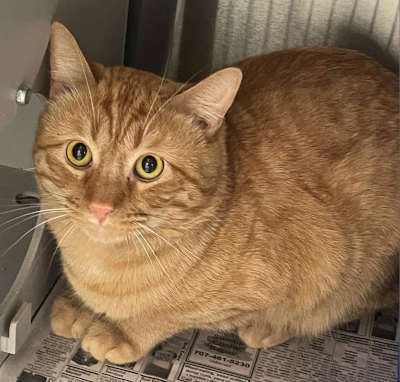
‘Sonny’
“Sonny” is a 2-year-old male orange tabby with a short coat.
He is in cat room kennel No. 84, ID No. LCAC-A-4372.

‘Cher’
“Cher” is a female domestic shorthair with a calico coat.
She is in cat room kennel No. 107a, ID No. LCAC-A-4376.

‘Billy’
“Billy” is a 6-month-old male orange tabby with a short coat.
He is in cat room kennel No. 107b, ID No. LCAC-A-4377.
Email Elizabeth Larson at

LAKE COUNTY, Calif. — The Redbud Audubon Society will conduct its 48th annual Christmas Bird Count on Saturday, Dec. 17.
The Christmas Bird Count is a traditional project of Audubon societies around the country.
In preparation for the count, the group will present a comprehensive bird identification program on Thursday, Dec. 15, starting at 7 p.m.
The program will be presented on Zoom by Donna Mackiewicz who is an avid birder and naturalist.
To register for the program, click on the registration link on the homepage at www.redbudaudubon.org. The link will be sent on the day of the presentation.

Previous participants in the Christmas Bird Count have been sent information about meeting times and places by the count organizers, Brad and Kathy Barnwell, but new participants are welcome.
Participants this year can meet at either Anderson Marsh State Historic Park or Clear Lake State Park at 8 a.m. or may participate in smaller individual groups.
National Audubon has been holding a Christmas Bird Count for 125 years.

The official count period usually starts around the middle of December and ends the first week of January.
Local Audubon societies can decide what day they conduct their counts within this time frame.
Every individual bird and species encountered during the day is recorded. Each count group has a designated circle of 15 miles in diameter and tries to cover as much ground as possible within a certain period of time.
Count volunteers follow specified routes through the designated 15-mile (24-kilometer) diameter circle, counting every bird they see or hear all day.

It's not just a species tally — all birds are counted all day, giving an indication of the total number of birds in the circle that day.
The data collected by each count group are then sent to the National Audubon Headquarters in New York and is made available online.
Scientists rely on the remarkable trend data of Audubon’s Christmas Bird Count to better understand how birds and the environment are faring throughout North America — and what needs to be done to protect them.
Roberta Lyons is president of the Redbud Audubon Society.

You’re not alone. Many people struggle with morning alertness, but a new study demonstrates that awaking refreshed each day is not just something a lucky few are born with. Scientists at the University of California, Berkeley, have discovered that you can wake up each morning without feeling sluggish by paying attention to three key factors: sleep, exercise and breakfast.
The findings come from a detailed analysis of the behavior of 833 people who, over a two-week period, were given a variety of breakfast meals; wore wristwatches to record their physical activity and sleep quantity, quality, timing and regularity; kept diaries of their food intake; and recorded their alertness levels from the moment they woke up and throughout the day. Twins — identical and fraternal — were included in the study to disentangle the influence of genes from environment and behavior.
The researchers found that the secret to alertness is a three-part prescription requiring substantial exercise the previous day, sleeping longer and later into the morning, and eating a breakfast high in complex carbohydrates, with limited sugar. The researchers also discovered that a healthy controlled blood glucose response after eating breakfast is key to waking up more effectively.
“All of these have a unique and independent effect,” said UC Berkeley postdoctoral fellow Raphael Vallat, first author of the study. “If you sleep longer or later, you're going to see an increase in your alertness. If you do more physical activity on the day before, you're going to see an increase. You can see improvements with each and every one of these factors.”
Morning grogginess is more than just an annoyance. It has major societal consequences: Many auto accidents, job injuries and large-scale disasters are caused by people who cannot shake off sleepiness. The Exxon Valdez oil spill in Alaska, the Three Mile Island nuclear meltdown in Pennsylvania and an even worse nuclear accident in Chernobyl, Ukraine, are well-known examples.
“Many of us think that morning sleepiness is a benign annoyance. However, it costs developed nations billions of dollars every year through loss of productivity, increased health care utilization, work absenteeism. More impactful, however, is that it costs lives — it is deadly,” said senior author Matthew Walker, UC Berkeley professor of neuroscience and psychology. “From car crashes to work-related accidents, the cost of sleepiness is deadly. As scientists, we must understand how to help society wake up better and help reduce the mortal cost to society’s current struggle to wake up effectively each day.”
Vallat, Walker and their colleagues published their findings last week in the journal Nature Communications. Walker, the author of the international bestseller, Why We Sleep, runs one of the world’s preeminent sleep research labs, the Center for Human Sleep Science, and is a member of the Helen Wills Neuroscience Institute at UC Berkeley.
A personalized approach to eating
Walker and Vallat teamed up with researchers in the United Kingdom, the U.S and Sweden to analyze data acquired by a U.K. company, Zoe Ltd., that has followed hundreds of people for two-week periods in order to learn how to predict individualized metabolic responses to foods based on a person’s biological characteristics, lifestyle factors and the foods’ nutritional composition.
The participants were given preprepared meals, with different amounts of nutrients incorporated into muffins, for the entire two weeks to see how they responded to different diets upon waking. A standardized breakfast, with moderate amounts of fat and carbohydrates, was compared to a high protein (muffins plus a milkshake), high carbohydrate or high sugar (glucose drink) breakfast. The subjects also wore continuous glucose monitors to measure blood glucose levels throughout the day.
The worst type of breakfast, on average, contained high amounts of simple sugar; it was associated with an inability to wake up effectively and maintain alertness. When given this sugar-infused breakfast, participants struggled with sleepiness.
In contrast, the high carbohydrate breakfast — which contained large amounts of carbohydrates, as opposed to simple sugar, and only a modest amount of protein — was linked to individuals revving up their alertness quickly in the morning and sustaining that alert state.
“A breakfast rich in carbohydrates can increase alertness, so long as your body is healthy and capable of efficiently disposing of the glucose from that meal, preventing a sustained spike in blood sugar that otherwise blunts your brain's alertness,” Vallat said
“We have known for some time that a diet high in sugar is harmful to sleep, not to mention being toxic for the cells in your brain and body,” Walker added. “However, what we have discovered is that, beyond these harmful effects on sleep, consuming high amounts of sugar in your breakfast, and having a spike in blood sugar following any type of breakfast meal, markedly blunts your brain’s ability to return to waking consciousness following sleep.”
It wasn’t all about food, however. Sleep mattered significantly. In particular, Vallat and Walker discovered that sleeping longer than you usually do, and/or sleeping later than usual, resulted in individuals ramping up their alertness very quickly after awakening from sleep. According to Walker, between seven and nine hours of sleep is ideal for ridding the body of “sleep inertia,” the inability to transition effectively to a state of functional cognitive alertness upon awakening. Most people need this amount of sleep to remove a chemical called adenosine that accumulates in the body throughout the day and brings on sleepiness in the evening, something known as sleep pressure.
“Considering that the majority of individuals in society are not getting enough sleep during the week, sleeping longer on a given day can help clear some of the adenosine sleepiness debt they are carrying,” Walker speculated.
“In addition, sleeping later can help with alertness for a second reason,” he said. “When you wake up later, you are rising at a higher point on the upswing of your 24-hour circadian rhythm, which ramps up throughout the morning and boosts alertness.”
It's unclear, however, what physical activity does to improve alertness the following day.
“It is well known that physical activity, in general, improves your alertness and also your mood level, and we did find a high correlation in this study between participants' mood and their alertness levels,” Vallat said. “Participants that, on average, are happier also feel more alert.”
But Vallat also noted that exercise is generally associated with better sleep and a happier mood.
“It may be that exercise-induced better sleep is part of the reason exercise the day before, by helping sleep that night, leads to superior alertness throughout the next day,” Vallat said.
Walker noted that the restoration of consciousness from non-consciousness — from sleep to wake — is unlikely to be a simple biological process.
“If you pause to think, it is a non-trivial accomplishment to go from being nonconscious, recumbent and immobile to being a thoughtful, conscious, attentive and productive human being, active, awake, and mobile. It's unlikely that such a radical, fundamental change is simply going to be explained by tweaking one single thing,” he said. “However, we have discovered that there are still some basic, modifiable yet powerful ingredients to the awakening equation that people can focus on — a relatively simple prescription for how best to wake up each day.”
It's not in your genes
Comparisons of data between pairs of identical and non-identical twins showed that genetics plays only a minor and insignificant role in next-day alertness, explaining only about 25% of the differences across individuals.
“We know there are people who always seem to be bright-eyed and bushy-tailed when they first wake up,” Walker said. “But if you’re not like that, you tend to think, ‘Well, I guess it's just my genetic fate that I'm slow to wake up. There's really nothing I can do about it, short of using the stimulant chemical caffeine, which can harm sleep.
“But our new findings offer a different and more optimistic message. How you wake up each day is very much under your own control, based on how you structure your life and your sleep. You don’t need to feel resigned to any fate, throwing your hands up in disappointment because, ‘… it's my genes, and I can't change my genes.’ There are some very basic and achievable things you can start doing today, and tonight, to change how you awake each morning, feeling alert and free of that grogginess.”
Walker, Vallat and their colleagues continue their collaboration with the Zoe team, examining novel scientific questions about how sleep, diet and physical exercise change people’s brain and body health, steering them away from disease and sickness.
Other co-authors of the paper are Sarah Berry, Paul Franks and Tim Spector of King’s College London; Neli Tsereteli of Lund University in Malmö, Sweden; Joan Capdevila, Haya Al Khatib and Jonathan Wolf of Zoe Ltd.; Ana Valdes of the University of Nottingham in the U.K.; and Linda Delahanty, David Drew and Andrew Chan of Massachusetts General Hospital and Harvard Medical School in Boston. The study was funded by Zoe Ltd. and the Department of Twin Studies at King College London.
Robert Sanders writes for the UC Berkeley News Center.