How to resolve AdBlock issue?
News
The National Weather Service said that, following the storm systems moving through the region this week, a colder storm will likely impact Lake County and the North Coast with more beneficial rain and mountain snow early next week.
National Weather Service observation stations showed that the most rain fell in the southern part of the county on Tuesday, recording nearly 2 inches of rain on Boggs Mountain on Tuesday.
Snowfall on Cobb also was reported on Tuesday night.
The rainfall was causing road issues on Tuesday evening, when the California Highway Patrol said a vehicle was reported to have hit a boulder on Highway 29 at Hofacker Lane near Middletown.
Lighter rainfall amounts are expected through the weekend, based on the forecast.
The forecast also calls for light winds through Wednesday, with winds picking up on Thursday, with gusts of more than 30 miles per hour, and Friday, with gusts of more than 20 miles per hour.
Daytime temperatures will be in the low 50s this week, dropping into the high 40s on Monday.
During the nighttime hours, temperatures will drop into the low 30s through early next week.
Email Elizabeth Larson at
“Getting big money out of elections for smaller community offices is essential,” Sen. Dodd said. “These well-financed campaigns favor the wealthy at the exclusion of grassroots candidates and people of color. My bill puts a cap on donations to ensure fairness while encouraging a more diverse field that is more reflective of the population.”
California has thousands of publicly elected governing boards managing an assortment of agencies including schools, community colleges and special districts.
Elections often receive little media coverage and even less scrutiny of campaign donations, which are not limited by state law and can exceed money given to candidates for higher office.
Currently the default is to allow unlimited contributions, and only three special districts statewide have adopted voluntary limits.
In response, Sen. Dodd introduced Senate Bill 328, which sets an individual donation limit of $5,500 by a person, business or committee to a candidate for school board, community college board or special district board. The contribution limits are equal to those set for the state Legislature.
The bill would allow local governments to vote to adjust the limits, but the default would no longer be unlimited.
The bill uses the framework of then-Assemblymember Kevin Mullin’s Assembly Bill 571 that set the same limits for city and county offices in 2019.
SB 328 was approved in the Senate elections committee on a 6-0 vote.
“This is a good governance measure that will help maintain the public trust in our local elections,” said U.S. Rep. Mullin, who was elected to Congress last year. “I appreciate Sen. Dodd carrying on that legacy and I’m proud to support this important reform.”
A second bill written by Sen. Dodd in partnership with Secretary of State Shirley Weber also was approved by the committee.
SB 437 would increase transparency in presidential elections by establishing a statutory deadline for political parties to supply the names of party nominees.

It’s easy to feel pessimistic when scientists around the world are warning that climate change has advanced so far, it’s now inevitable that societies will either transform themselves or be transformed. But as two of the authors of a recent international climate report, we also see reason for optimism.
The latest reports from the Intergovernmental Panel on Climate Change, including the synthesis report released March 20, 2023, discuss changes ahead, but they also describe how existing solutions can reduce greenhouse gas emissions and help people adjust to impacts of climate change that can’t be avoided.
The problem is that these solutions aren’t being deployed fast enough. In addition to pushback from industries, people’s fear of change has helped maintain the status quo.
To slow climate change and adapt to the damage already underway, the world will have to shift how it generates and uses energy, transports people and goods, designs buildings and grows food. That starts with embracing innovation and change.
Fear of change can lead to worsening change
From the industrial revolution to the rise of social media, societies have undergone fundamental changes in how people live and understand their place in the world.
Some transformations are widely regarded as bad, including many of those connected to climate change. For example, about half the world’s coral reef ecosystems have died because of increasing heat and acidity in the oceans. Island nations like Kiribati and coastal communities, including in Louisiana and Alaska, are losing land into rising seas.
Other transformations have had both good and bad effects. The industrial revolution vastly raised standards of living for many people, but it spawned inequality, social disruption and environmental destruction.
People often resist transformation because their fear of losing what they have is more powerful than knowing they might gain something better. Wanting to retain things as they are – known as status quo bias – explains all sorts of individual decisions, from sticking with incumbent politicians to not enrolling in retirement or health plans even when the alternatives may be rationally better.
This effect may be even more pronounced for larger changes. In the past, delaying inevitable change has led to transformations that are unnecessarily harsh, such as the collapse of some 13th-century civilizations in what is now the U.S. Southwest. As more people experience the harms of climate change firsthand, they may begin to realize that transformation is inevitable and embrace new solutions.
A mix of good and bad
The IPCC reports make clear that the future inevitably involves more and larger climate-related transformations. The question is what the mix of good and bad will be in those transformations.
If countries allow greenhouse gas emissions to continue at a high rate and communities adapt only incrementally to the resulting climate change, the transformations will be mostly forced and mostly bad.
For example, a riverside town might raise its levees as spring flooding worsens. At some point, as the scale of flooding increases, such adaptation hits its limits. The levees necessary to hold back the water may become too expensive or so intrusive that they undermine any benefit of living near the river. The community may wither away.

The riverside community could also take a more deliberate and anticipatory approach to transformation. It might shift to higher ground, turn its riverfront into parkland while developing affordable housing for people who are displaced by the project, and collaborate with upstream communities to expand landscapes that capture floodwaters. Simultaneously, the community can shift to renewable energy and electrified transportation to help slow global warming.
Optimism resides in deliberate action
The IPCC reports include numerous examples that can help steer such positive transformation.
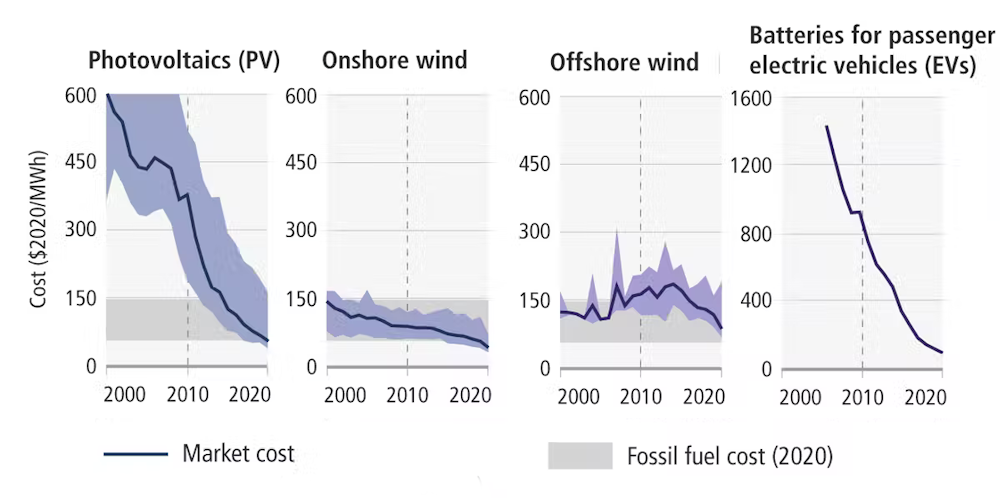
For example, renewable energy is now generally less expensive than fossil fuels, so a shift to clean energy can often save money. Communities can also be redesigned to better survive natural hazards through steps such as maintaining natural wildfire breaks and building homes to be less susceptible to burning.
Land use and the design of infrastructure, such as roads and bridges, can be based on forward-looking climate information. Insurance pricing and corporate climate risk disclosures can help the public recognize hazards in the products they buy and companies they support as investors.
No one group can enact these changes alone. Everyone must be involved, including governments that can mandate and incentivize changes, businesses that often control decisions about greenhouse gas emissions, and citizens who can turn up the pressure on both.
Transformation is inevitable
Efforts to both adapt to and mitigate climate change have advanced substantially in the last five years, but not fast enough to prevent the transformations already underway.
Doing more to disrupt the status quo with proven solutions can help smooth these transformations and create a better future in the process.
Editor’s note: This is an update to an article originally published April 18, 2022.
Robert Lempert, Professor of Policy Analysis, Pardee RAND Graduate School and Elisabeth Gilmore, Associate Professor of Climate Change, Technology and Policy, Carleton University
This article is republished from The Conversation under a Creative Commons license. Read the original article.
USDA Forest Service funds wildfire risk reduction efforts; Lake County project receives $9.8 million
Agriculture Secretary Tom Vilsack announced Monday that the U.S. Department of Agriculture’s Forest Service is investing nearly $78 million in wildfire protection projects across California, as part of the Community Wildfire Defense Grant, or CWDG, program.
The CWDG program is designed to assist communities — including tribal communities, nonprofit organizations, state forestry agencies, and Alaska Native corporations — with planning for and mitigating wildfire risks on tribal, state, and privately managed land.
In California, almost $78 million will fund 29 projects across the state with first-round grants.
Among the selected proposals is the Clear Lake Environmental Research Center’s Lake County Wildfire Risk Reduction Project Phase 1.
That project received $9,805,642, the third largest award in California.
The project will reduce fuels and restore fire-adapted ecosystems on private lands and roadways to lessen wildfire risk of damage to property while improving firefighter safety. It will be accomplished in part by funding a fuels team employed by the Northshore Fire Protection District.
Other projects around the North Coast received funding, including $959,648 allocated to the Coyote Valley Band of Pomo Indians for the Coyote Valley Community Fire Defense Project.
The project will restore and maintain landscapes making them resilient to fire-related disturbances, to create a fire adapted community to withstand a wildfire without loss of life and property, and to responsibly make and implement safe, effective, efficient risk-based wildfire management decisions. A fire mitigation specialist will be hired by the Coyote Valley Band of Pomo Indians to lead and coordinate the project, as well as develop a tribal evacuation plan and conduct outreach and education.
The city of Ukiah also received $7,214,766 for the Ukiah Valley and Mendocino Hazardous Fuels Reduction Project on 200 acres.
That project will conduct 200 defensible space inspections; maintain seven current fuel breaks in shaded and non-shaded areas; perform 125 defensible space projects; conduct prescribed burns in appropriate areas to restore fire adapted ecosystems; conduct five project assessments; engage the relevant impacted communities to maximize project effectiveness; and increase community fire resiliency in the Ukiah Valley area and throughout Mendocino County, California, over the next five years.
Proposals underwent a competitive selection process that included review panels made up of tribal representatives and state forestry agencies.
Guidelines within the law prioritized at-risk communities that have been impacted by a severe disaster, are at a high or very high potential for wildfire hazard and classified as low income.
“Projects were selected using a collaborative, inclusive process that engaged Tribes and state forestry agencies,” said Forest Service Chief Randy Moore. “All projects include at least two of the primary selection criteria mandated in the legislation. And in all cases, these projects are taking critical steps to protect homes, property, businesses and people’s lives from catastrophic wildfires.”
This initial round of investments will assist communities in developing Community Wildfire Protection Plans — key roadmaps for addressing wildfire risks locally — as well as fund immediate actions to lower the risk of wildfire on non-federal land for communities where a Community Wildfire Protection Plan is already in place.
“With programs like the Community Wildfire Defense Grant, we continue our work throughout California to restore natural forest health and diversity with thoughtful, science-based fuels treatments,” said Jennifer Eberlien, regional forester for the Pacific Southwest Region. “With our partners, we are doing this work in the right place, at the right time and right scale — to reduce risk to communities, critical infrastructure, and natural resources from wildfires across the state.”
The Forest Service will announce another round of funding later in 2023, and additional communities can apply. The number of selected proposals in future rounds will depend on available funding.
More information about funded proposals and announcements are available on the Community Wildfire Defense Grants website.
Along with establishing the CWDG program, the Bipartisan Infrastructure Law provides an historic $3.5 billion investment in wildfire management through a suite of programs aimed at reducing wildfire risks, detecting wildfires, instituting firefighter workforce reforms, and increasing pay for federal wildland firefighters.
This announcement also comes on the heels of the president’s fiscal year 2024 budget, which proposes a permanent pay solution for wildland firefighters, increased capacity for mental and physical health services, and funds for housing repair, renovation, and construction.
The association said a total of 51 homes were sold through the multiple listing service, or MLS, in February, compared to 55 in January and 86 in February 2022.
Those sales include traditionally built “stick-built” houses as well as manufactured homes on land.
There were five sales of mobile homes in parks, compared to seven in January and one sold during the same time period last year.
The association said there also were 18 sales of bare land (lots and acreage) last month, compared to 21 in January and 50 in February 2022.
Currently, the association said there are 269 stick built and manufactured homes on the market, compared to 285 in January.
If the rate of sales stays the same at 51 homes sold per month, there are currently 5.2 months of inventory on the market at the moment compared to 5.1 months of inventory a month ago in January, and 4.26 months of inventory in December.
That means that if no new homes are brought to the market for sale, in 5.2 months all of these homes would be sold and there would be none available.
Less than six months of inventory is generally considered to be a “sellers’ market” while more than six months of inventory is often called a “buyers’ market, the association said.
The association said the interest rate hikes and inflation have played a major role in reducing the number of active buyers.
In February, 47% of all home sales were for cash, compared to 16% for January and 36% for this same time last year.
Of those total sales, 24% were financed by Fannie Mae or Freddie Mac — which are considered “conventional loans” — compared to 36% in January and 38% in a year-over comparison.
Sixteen percent of the homes sold in February were financed by the Federal Housing Administration, or FHA, compared to 20% in January and 20% in February 2022, and 15% were financed by the Department of Veterans Affairs of or CalVet, compared to 4% for December and 6% for this time last year.
Another 6 percent had other financing such as private loans, US Department of Agriculture or seller-financed notes, compared to 11% in January. No such financing was used in February 2022, the association said.
The association reported that the homes in February sold at an average of 96% of the asking price at the time the property went under contract, but an average of 91% when compared to the original asking price when the property first came on the market.
In January, homes sold at an average of 95% of the asking price at the time the property went under contract, but an average of 88% when compared to the original asking price when the property first came on the market, according to the report.
And a year ago during February, homes were selling at 100% of the asking price at the time the properties went under contract, and 95% of the original list price when the properties first came on the market, the association reported.
The median time on the market in February was 99 days, compared to 57 days for January and also 57 days for this time last year.
The median sale price of a single family home in Lake County in February was $235,000, lower than the $292,000 for January and lower than the median sale price of $324,950 during this time period last year.
The association said this indicates that the lower priced homes are selling in greater numbers than the higher priced homes.
In February, 30% of homes sold had seller concessions for an average of $10,085. That’s compared to 47% of homes in January that had seller concessions for an average concession of $9,100 and a year ago 16% of homes sold had an average seller concession of $8,225.

On Monday, following a visit to the San Ysidro Port of Entry, Gov. Gavin Newsom released his administration’s master plan for tackling the fentanyl and opioid crisis.
Recognizing the opioid and fentanyl crisis as a multifaceted public health and public safety issue, the master plan provides a comprehensive approach to save lives, Newsom’s office said.
The master plan builds on the governor's $1 billion investment to tackle this crisis — including an expansion of California National Guard-supported operations that last year led to a 594% increase in seized fentanyl.
The plan outlines aggressive steps to support overdose prevention efforts, hold the opioid pharmaceutical industry accountable, crack down on drug trafficking, and raise awareness about the dangers of opioids, including fentanyl.
“Over 150 people die every day in our nation from overdoses and poisonings related to synthetic opioids like fentanyl. Enough,” said Newsom. “With this master olan, California is doubling down to combat this crisis and save lives. Our comprehensive approach will expand enforcement efforts to crack down on transnational criminal organizations trafficking this poison into our communities — while prioritizing harm reduction strategies to reduce overdoses and compassionately help those struggling with substance use and addiction.”
Newsom has invested over $1 billion to crack down on opioid trafficking and enforce the law, combat overdoses, support those with opioid use disorder, and raise awareness about the dangers of opioids.
The master plan provides a comprehensive framework to deepen the impact of these investments — including through a new CalRx effort where California will seek to manufacture its own opioid overdose reversal drug Naloxone.
California will further save lives through an additional $96 million in funding in the Governor’s 2023-24 proposed budget:
• $79 million for the Naloxone Distribution Project to meet increased demand and provide more Naloxone to communities than ever before;
• $10 million for grants for education, testing, recovery, and support services;
• $4 million to make fentanyl test strips more widely available; and
• $3.5 million in Prop 98 funding to provide overdose medication to all middle and high schools.
These new investments, coupled with the extensive abatement, enforcement, and treatment efforts outlined in the master plan will save lives and make California safer, Newsom’s office said.
The U.S. has faced an evolving crisis of opioid addiction, overdose and death for over two decades, driven by Big Pharma’s irresponsible marketing of prescription opioids – bringing us to today’s fentanyl crisis.
Millions of Americans suffer from opioid use disorder and more than 71,000 Americans died in 2022 alone from fentanyl-linked overdoses and drug poisonings.
According to the Drug Enforcement Administration, a vast majority of fentanyl in the U.S. comes via ports of entry at the border – through trafficking by organized crime rings, not by migrants.
Under Newsom’s leadership, and through the state’s efforts to hold Big Pharma accountable, California has worked aggressively to tackle the opioid crisis.
In the current fiscal year alone, the California Health and Human Services agency is investing $450 million in treatment, abatement and prevention efforts.
The 2022 Budget Act Governor Newsom signed into law included $30 million to expand the California Military Department’s existing drug interdiction efforts to thwart drug-trafficking transnational criminal organizations throughout the state, with a particular focus on assisting federal, state, local, and tribal law enforcement agencies in combatting fentanyl.
To support the governor’s initiative to reduce deadly fentanyl in communities, the California National Guard has hired, trained, and embedded 144 new members.
View the master plan here.