 How to resolve AdBlock issue?
News
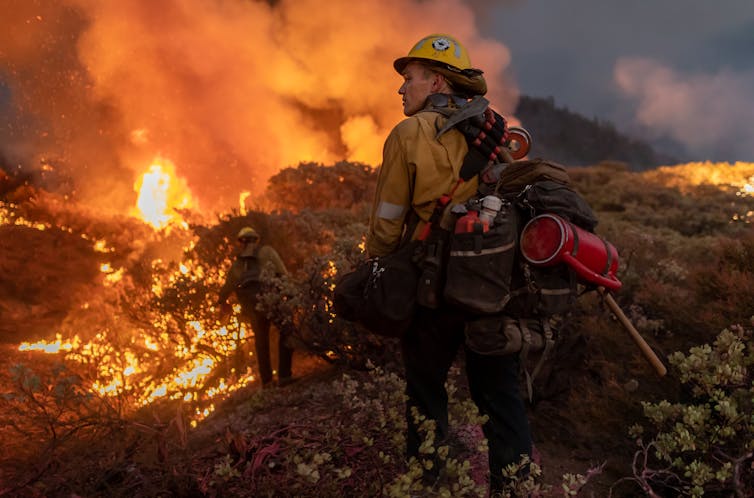
Reading the latest international climate report can feel overwhelming. It describes how rising temperatures caused by increasing greenhouse gas emissions from human activities are having rapid, widespread effects on the weather, climate and ecosystems in every region of the planet, and it says the risks are escalating faster than scientists expected.
Global temperatures are now 1.1 degree Celsius (2 degrees Fahrenheit) warmer than at the start of the industrial era. Heat waves, storms, fires and floods are harming humans and ecosystems. Hundreds of species have disappeared from regions as temperatures rise, and climate change is causing irreversible changes to sea ice, oceans and glaciers. In some areas, it’s becoming harder to adapt to the changes, the authors write.
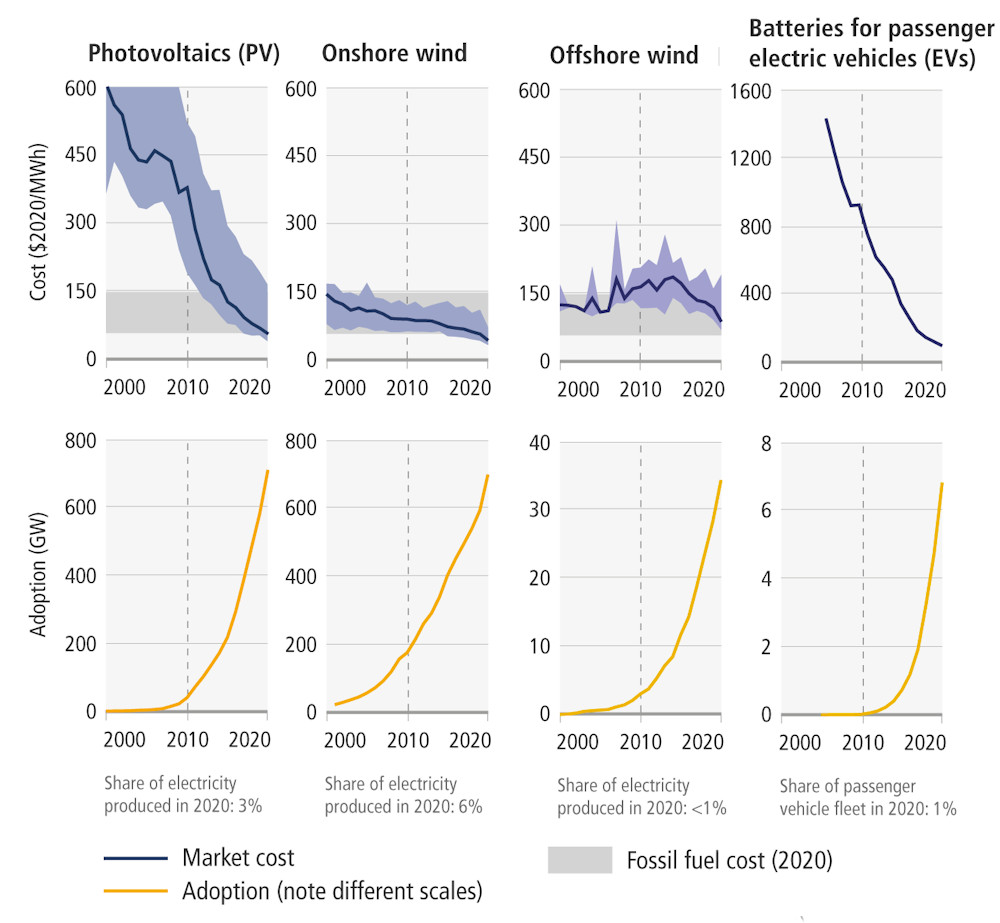
Still, there are reasons for optimism – falling renewable energy costs are starting to transform the power sector, for example, and the use of electric vehicles is expanding. But change aren’t happening fast enough, and the window for a smooth transition is closing fast, the Intergovernmental Panel on Climate Change report warns. To keep global warming below 1.5 C (2.7 F), it says global greenhouse gas emissions will have to drop 60% by 2035 compared with 2019 levels.
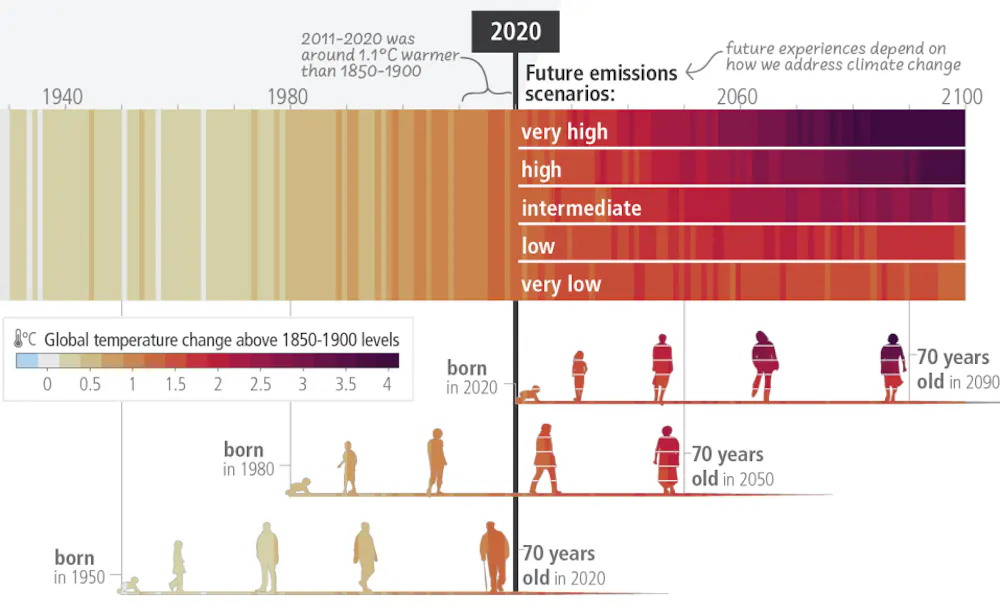
In the new report, released March 20, 2023, the IPCC summarizes findings from a series of assessments written over the past eight years and discusses how to stop the damage. In them, hundreds of scientists reviewed the evidence and research.
Here are four essential reads by co-authors of some of those reports, each providing a different snapshot of the changes underway and discussing solutions.
1. More intense storms and flooding
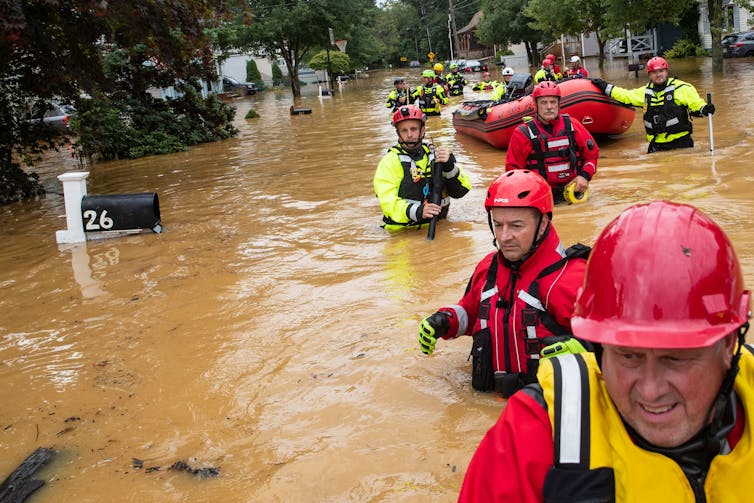
Many of the most shocking natural disasters of the past few years have involved intense rainfall and flooding.
In Europe, a storm in 2021 set off landslides and sent rivers rushing through villages that had stood for centuries. In 2022, about a third of Pakistan was underwater, and several U.S. communities were hit with extreme flash flooding.
The IPCC warns in the sixth assessment report that the water cycle will continue to intensify as the planet warms. That includes extreme monsoon rainfall, but also increasing drought, greater melting of mountain glaciers, decreasing snow cover and earlier snowmelt, wrote UMass-Lowell climate scientist Mathew Barlow, a co-author of the report examining physical changes.
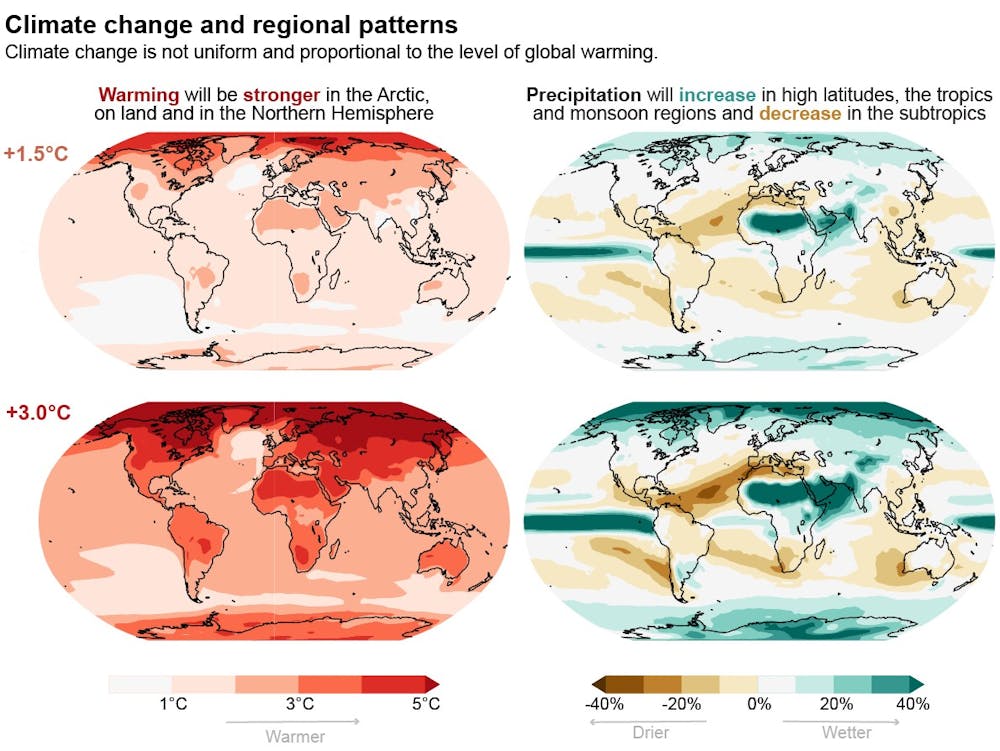
“An intensifying water cycle means that both wet and dry extremes and the general variability of the water cycle will increase, although not uniformly around the globe,” Barlow wrote.
“Understanding this and other changes in the water cycle is important for more than preparing for disasters. Water is an essential resource for all ecosystems and human societies.”
2. The longer the delay, the higher the cost
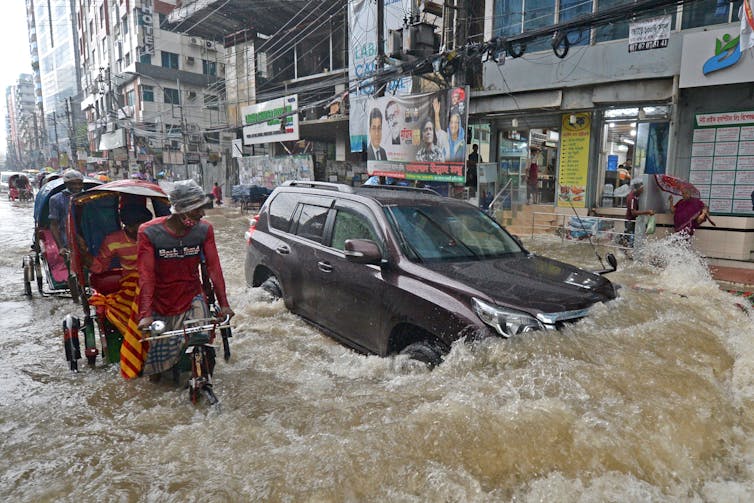
The IPCC stressed in its reports that human activities are unequivocally warming the planet and causing rapid changes in the world’s atmosphere, oceans and icy regions.
“Countries can either plan their transformations, or they can face the destructive, often chaotic transformations that will be imposed by the changing climate,” wrote Edward Carr, a Clark University scholar and co-author of the IPCC report focused on adaptation.
The longer countries wait to respond, the greater the damage and cost to contain it. One estimate from Columbia University put the cost of adaptation needed just for urban areas at between US$64 billion and $80 billion a year – and the cost of doing nothing at 10 times that level by mid-century.
“The IPCC assessment offers a stark choice,” Carr wrote. “Does humanity accept this disastrous status quo and the uncertain, unpleasant future it is leading toward, or does it grab the reins and choose a better future?”
3. Transportation is a good place to start
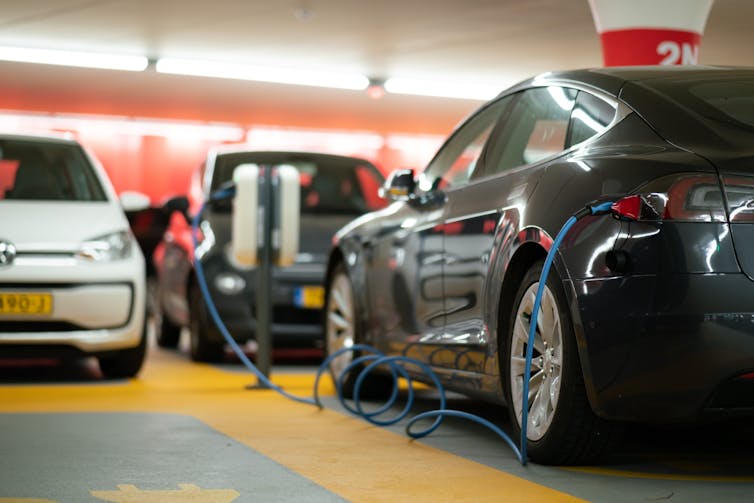
One crucial sector for reducing greenhouse gas emissions is transportation.
Cutting greenhouse gas emissions to net-zero by mid-century, a target considered necessary to keep global warming below 1.5 C, will require “a major, rapid rethinking of how people get around globally,” wrote Alan Jenn, a transportation scholar at the University of California Davis and co-author on the IPCC report on mitigation.
There are positive signs. Battery costs for electric vehicles have fallen, making them increasingly affordable. In the U.S., the 2022 Inflation Reduction Act offers tax incentives that lower the costs for EV buyers and encourage companies to ramp up production. And several states are considering following California’s requirement that all new cars and light trucks be zero-emissions by 2035.
“Behavioral and other systemic changes will also be needed to cut greenhouse gas emissions dramatically from this sector,” Jenn wrote.
For example, many countries saw their transportation emissions drop during COVID-19 as more people were allowed to work from home. Bike sharing in urban areas, public transit-friendly cities and avoiding urban sprawl can help cut emissions even further. Aviation and shipping are more challenging to decarbonize, but efforts are underway.
He adds, however, that it’s important to remember that the effectiveness of electrifying transportation ultimately depends on cleaning up the electricity grid.
4. Reasons for optimism
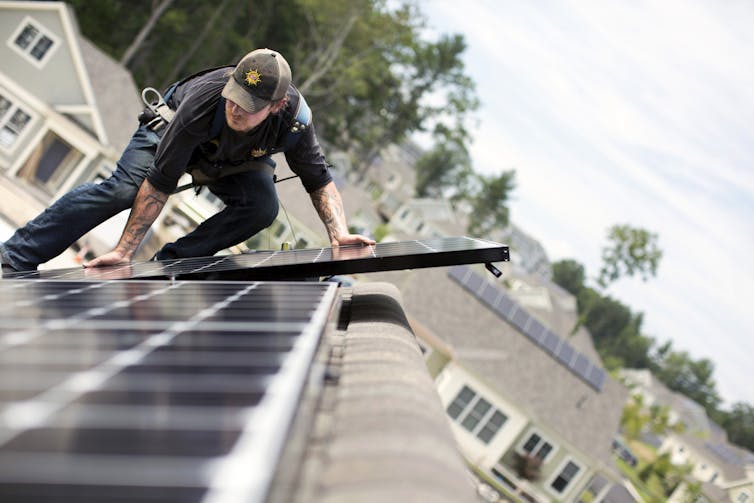
The IPCC reports discuss several other important steps to reduce greenhouse gas emissions, including shifting energy from fossil fuels to renewable sources, making buildings more energy efficient and improving food production, as well as ways to adapt to changes that can no longer be avoided.
There are reasons for optimism, wrote Robert Lempert and Elisabeth Gilmore, co-authors on the IPCC’s report focused on mitigation.
“For example, renewable energy is now generally less expensive than fossil fuels, so a shift to clean energy can often save money,” they wrote. Electric vehicle costs are falling. Communities and infrastructure can be redesigned to better manage natural hazards such as wildfires and storms. Corporate climate risk disclosures can help investors better recognize the hazards and push those companies to build resilience and reduce their climate impact.
“The problem is that these solutions aren’t being deployed fast enough,” Lempert and Gilmore wrote. “In addition to pushback from industries, people’s fear of change has helped maintain the status quo.” Meeting the challenge, they said, starts with embracing innovation and change.
Editor’s note: This story is a roundup of articles from The Conversation’s archives.
Stacy Morford, Environment + Climate Editor, The Conversation
This article is republished from The Conversation under a Creative Commons license. Read the original article.
Dogs available for adoption this week include mixes of Australian cattle dog, blue heeler, border collie, boxer, Cardigan Welsh Corgi, Chihuahua, German shepherd, Great Pyrenees, hound, Labrador retriever, mastiff, pit bull and treeing walker coonhound.
Dogs that are adopted from Lake County Animal Care and Control are either neutered or spayed, microchipped and, if old enough, given a rabies shot and county license before being released to their new owner. License fees do not apply to residents of the cities of Lakeport or Clearlake.
The following dogs at the Lake County Animal Care and Control shelter have been cleared for adoption.
Call Lake County Animal Care and Control at 707-263-0278 or visit the shelter online for information on visiting or adopting.

Female Chihuahua puppy
This 2-month-old female Chihuahua puppy has a short tan coat with black markings.
She is in kennel No. B3, ID No. LCAC-A-4946.

Female pit bull terrier puppy
This 3-month-old female American pit bull terrier puppy has a short brindle coat.
She is in kennel No. 4a, ID No. LCAC-A-4787.

Female pit bull terrier puppy
This 3-month-old female American pit bull terrier puppy has a short black and white coat.
She is in kennel No. 4b, ID No. LCAC-A-4788.
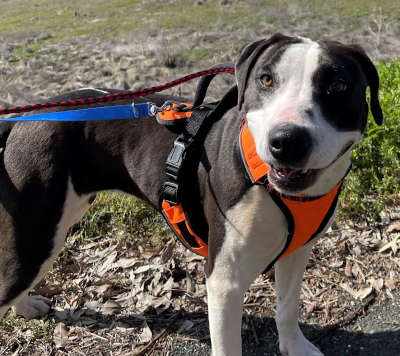
Female pit bull terrier
This 1-year-old female pit bull terrier has a short black and white coat.
She is in kennel No. 5, ID No. LCAC-A-4873.

Male Labrador retriever mix
This 1-year-old male Labrador retriever mix has a short black coat with white markings.
He is in kennel No. 6, ID No. 4841.

‘Able’
“Able” is a 6-year-old male coonhound mix with a short black and tan coat.
He is in kennel No. 7, ID No. LCAC-A-4773.
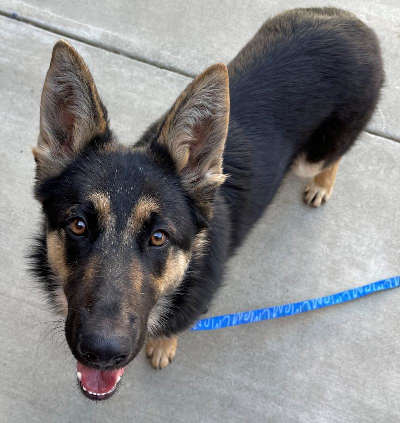
Female German shepherd
This one and a half year old female German shepherd has a black and tan coat.
She is in kennel No. 8, ID No. LCAC-A-4898.
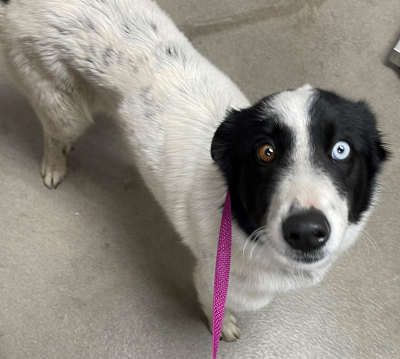
Female border collie
This 1-year-old female border collie has a black and white coat, and one brown eye and one blue eye.
She is in kennel No. 11, ID No. LCAC-A-4903.

‘Luigi’
“Luigi” is a 2-year-old male pit bull terrier with a short red and white coat.
He is in kennel No. 12, ID No. LCAC-A-4742.

‘Oreo’
“Oreo” is a 2-year-old male treeing walker coonhound with a short tricolor coat.
He is in kennel No. 13, ID No. LCAC-A-4738.

Female German shepherd-hound mix
This 2-year-old female German shepherd-hound mix has a black and tan coat.
She is in kennel No. 15, ID No. LCAC-A-4816.

Male German shepherd mix
This 2-year-old male German shepherd mix has a red and white coat.
He is in kennel No. 16, ID No. LCAC-A-4835.

Female pit bull-Labrador retriever mix
This female pit bull-Labrador retriever mix has a short tricolor coat.
She is in kennel No. 17, ID No. LCAC-A-4692.
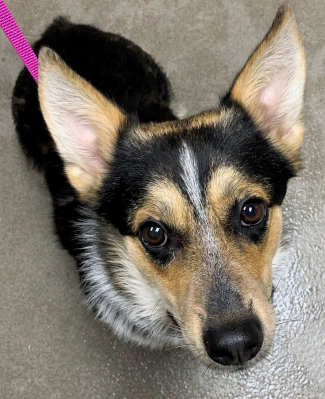
‘Rusty’
“Rusty” is a 2-year-old male Cardigan Welsh Corgi with a short tricolor coat.
He is in kennel No. 18, ID No. LCAC-A-4418.

Male pit bull terrier
This one and a half year old male pit bull terrier has a black coat with white markings.
He is in kennel No. 19, ID No. LCAC-A-4843.
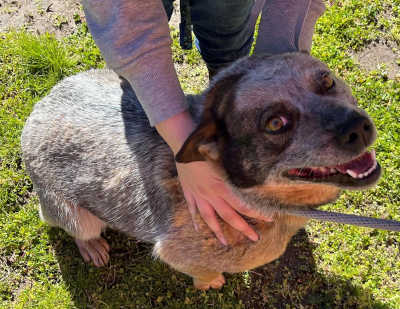
Female Australian cattle dog-blue heeler
This 2-year-old female Australian cattle dog-blue heeler has a short blue and black coat.
She is in kennel No. 20, ID No. LCAC-A-4836.
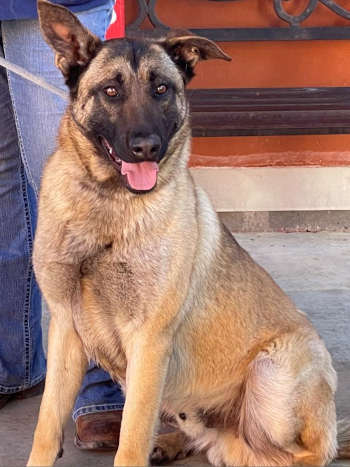
Male Anatolian shepherd
This 1-year-old male Anatolian shepherd has a black and tan coat.
He is in kennel No. 22, ID No. LCAC-A-4844.

‘Bruno’
“Bruno” is a 9-month-old male mastiff-pit bull mix with a short tan coat.
He is in kennel No. 23, ID No. LCAC-A-4789.

Male boxer-pit bull mix
This 8-year-old male boxer-pit bull mix has a short brown brindle coat.
He is in kennel No. 26, ID No. LCAC-A-4678.
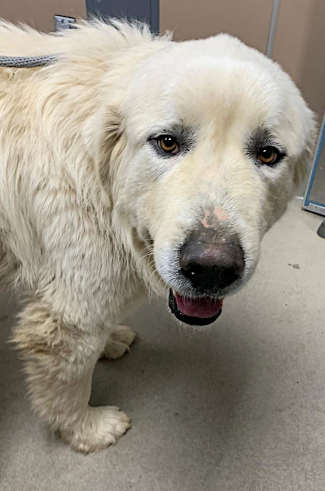
Male Great Pyrenees
This 2-year-old male Great Pyrenees has a long white coat.
He is in kennel No. 28, ID No. LCAC-A-4821.

Male German shepherd
This 1-year-old male German shepherd has a short black and tan coat.
He is in kennel No. 29, ID No. LCAC-A-4710.
Email Elizabeth Larson at

Without water, life on Earth could not exist as it does today. Understanding the history of water in the universe is critical to understanding how planets like Earth come to be.
Astronomers typically refer to the journey water takes from its formation as individual molecules in space to its resting place on the surfaces of planets as “the water trail.” The trail starts in the interstellar medium with hydrogen and oxygen gas and ends with oceans and ice caps on planets, with icy moons orbiting gas giants and icy comets and asteroids that orbit stars. The beginnings and ends of this trail are easy to see, but the middle has remained a mystery.
I am an astronomer who studies the formation of stars and planets using observations from radio and infrared telescopes. In a new paper, my colleagues and I describe the first measurements ever made of this previously hidden middle part of the water trail and what these findings mean for the water found on planets like Earth.
How planets are formed
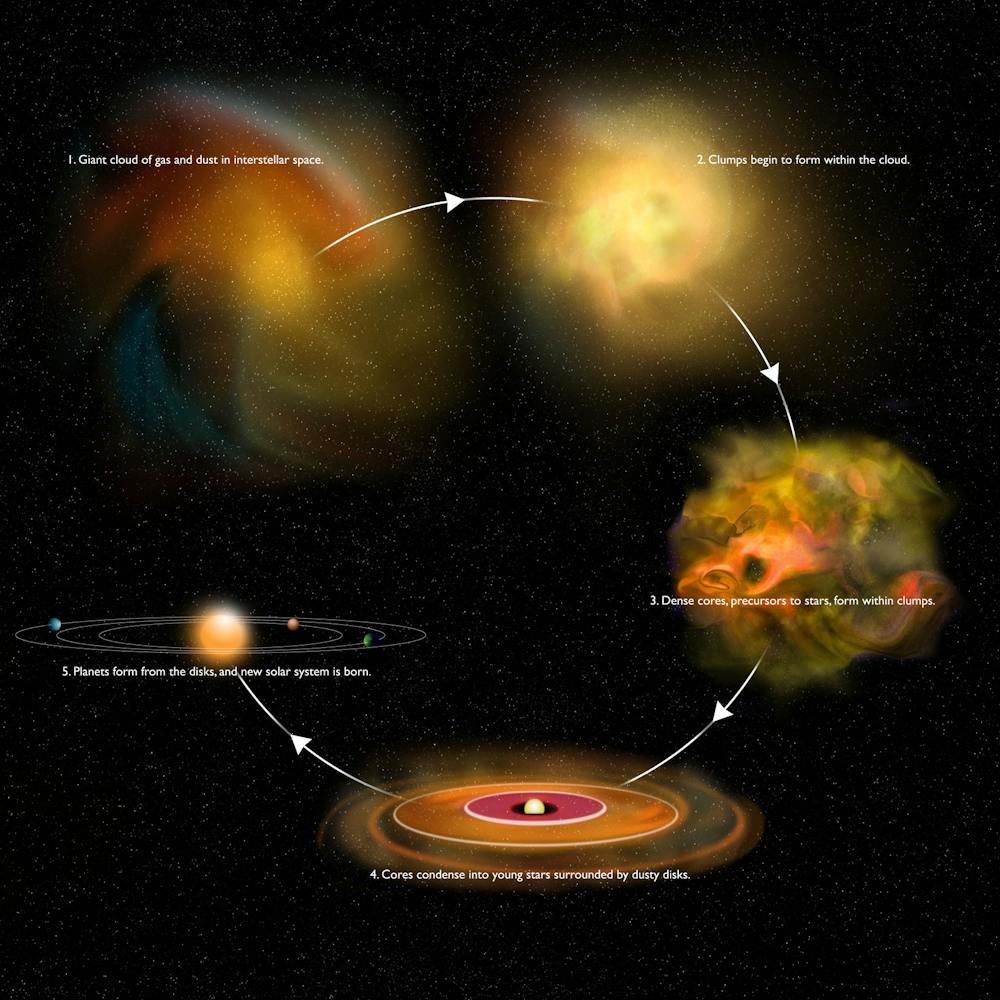
The formation of stars and planets is intertwined. The so-called “emptiness of space” – or the interstellar medium – in fact contains large amounts of gaseous hydrogen, smaller amounts of other gasses and grains of dust. Due to gravity, some pockets of the interstellar medium will become more dense as particles attract each other and form clouds. As the density of these clouds increases, atoms begin to collide more frequently and form larger molecules, including water that forms on dust grains and coats the dust in ice.
Stars begin to form when parts of the collapsing cloud reach a certain density and heat up enough to start fusing hydrogen atoms together. Since only a small fraction of the gas initially collapses into the newborn protostar, the rest of the gas and dust forms a flattened disk of material circling around the spinning, newborn star. Astronomers call this a proto-planetary disk.
As icy dust particles collide with each other inside a proto-planetary disk, they begin to clump together. The process continues and eventually forms the familiar objects of space like asteroids, comets, rocky planets like Earth and gas giants like Jupiter or Saturn.

Two theories for the source of water
There are two potential pathways that water in our solar system could have taken. The first, called chemical inheritance, is when the water molecules originally formed in the interstellar medium are delivered to proto-planetary disks and all the bodies they create without going through any changes.
The second theory is called chemical reset. In this process, the heat from the formation of the proto-planetary disk and newborn star breaks apart water molecules, which then reform once the proto-planetary disk cools.
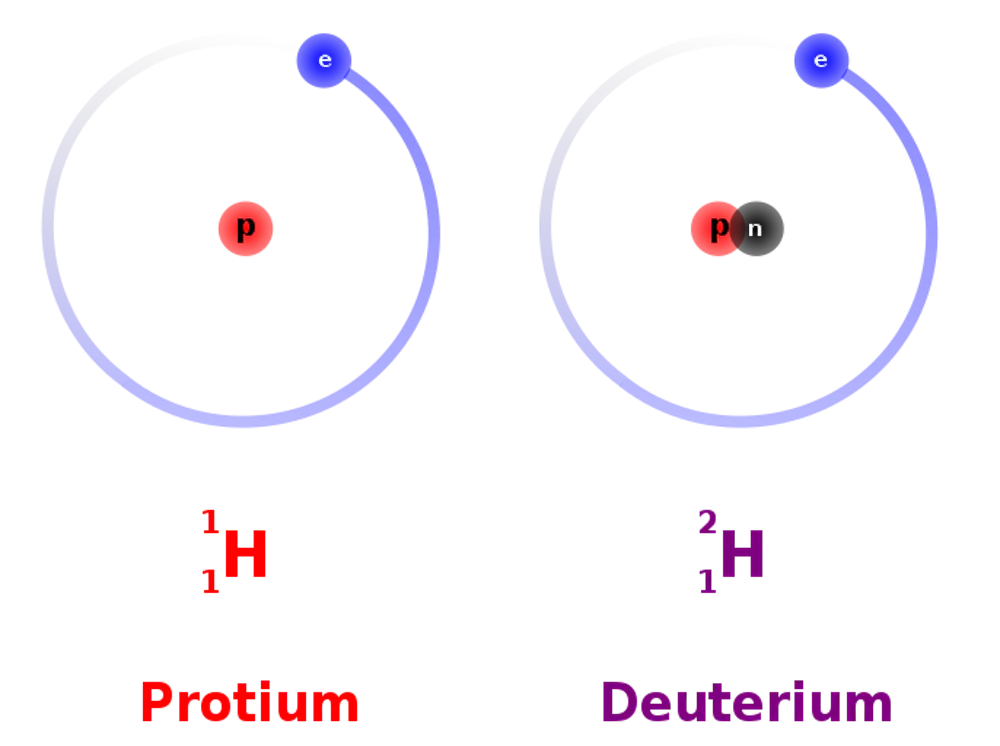

To test these theories, astronomers like me look at the ratio between normal water and a special kind of water called semi-heavy water. Water is normally made of two hydrogen atoms and one oxygen atom. Semi-heavy water is made of one oxygen atom, one hydrogen atom and one atom of deuterium – a heavier isotope of hydrogen with an extra neutron in its nucleus.
The ratio of semi-heavy to normal water is a guiding light on the water trail – measuring the ratio can tell astronomers a lot about the source of water. Chemical models and experiments have shown that about 1,000 times more semi-heavy water will be produced in the cold interstellar medium than in the conditions of a protoplanetary disk.
This difference means that by measuring the ratio of semi-heavy to normal water in a place, astronomers can tell whether that water went through the chemical inheritance or chemical reset pathway.
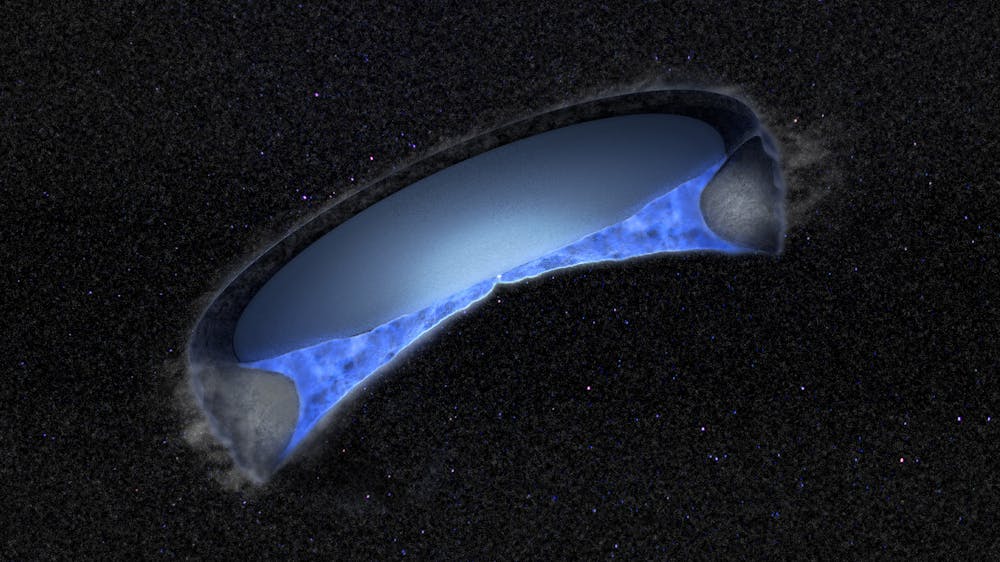
Measuring water during the formation of a planet
Comets have a ratio of semi-heavy to normal water almost perfectly in line with chemical inheritance, meaning the water hasn’t undergone a major chemical change since it was first created in space. Earth’s ratio sits somewhere in between the inheritance and reset ratio, making it unclear where the water came from.
To truly determine where the water on planets comes from, astronomers needed to find a goldilocks proto-planetary disk – one that is just the right temperature and size to allow observations of water. Doing so has proved to be incredibly difficult. It is possible to detect semi-heavy and normal water when water is a gas; unfortunately for astronomers, the vast majority of proto-plantary disks are very cold and contain mostly ice, and it is nearly impossible to measure water ratios from ice at interstellar distances.
A breakthrough came in 2016, when my colleagues and I were studying proto-planetary disks around a rare type of young star called FU Orionis stars. Most young stars consume matter from the proto-planetary disks around them. FU Orionis stars are unique because they consume matter about 100 times faster than typical young stars and, as a result, emit hundreds of times more energy. Due to this higher energy output, the proto-planetary disks around FU Orionis stars are heated to much higher temperatures, turning ice into water vapor out to large distances from the star.
Using the Atacama Large Millimeter/submillimeter Array, a powerful radio telescope in northern Chile, we discovered a large, warm proto-planetary disk around the Sunlike young star V883 Ori, about 1,300 light years from Earth in the constellation Orion.
V883 Ori emits 200 times more energy than the Sun, and my colleagues and I recognized that it was an ideal candidate to observe the semi-heavy to normal water ratio.

Completing the water trail
In 2021, the Atacama Large Millimeter/submillimeter Array took measurements of V883 Ori for six hours. The data revealed a strong signature of semi-heavy and normal water coming from V883 Ori’s proto-planetary disk. We measured the ratio of semi-heavy to normal water and found that the ratio was very similar to ratios found in comets as well as the ratios found in younger protostar systems.
These results fill in the gap of the water trail forging a direct link between water in the interstellar medium, protostars, proto-planetary disks and planets like Earth through the process of inheritance, not chemical reset.
The new results show definitively that a substantial portion of the water on Earth most likely formed billions of years ago, before the Sun had even ignited. Confirming this missing piece of water’s path through the universe offers clues to origins of water on Earth. Scientists have previously suggested that most water on Earth came from comets impacting the planet. The fact that Earth has less semi-heavy water than comets and V883 Ori, but more than chemical reset theory would produce, means that water on Earth likely came from more than one source.
John Tobin, Scientist, National Radio Astronomy Observatory
This article is republished from The Conversation under a Creative Commons license. Read the original article.
It will take place from 9 a.m. to 2 p.m. at 6264 E. Highway 20, at the corner of 11th Avenue and Highway 20.
Join in for a day of readiness. Get to know some of Northshore Fire’s firefighters and community organizations that are great resources in preparing for emergencies.
Learn about evacuation checklists, zone codes, firewise communities, fuel mitigation, fire safety, home hardening and defensible space.
Participants also can learn how to help their families, friends and community to be a safer place and to be ready for potential public safety power shutoff events or evacuation needs.
There also will be a barbecue from 11 a.m. to 2 p.m, while supplies last.
Donations to the Northshore Fire Fund will be accepted during the event.
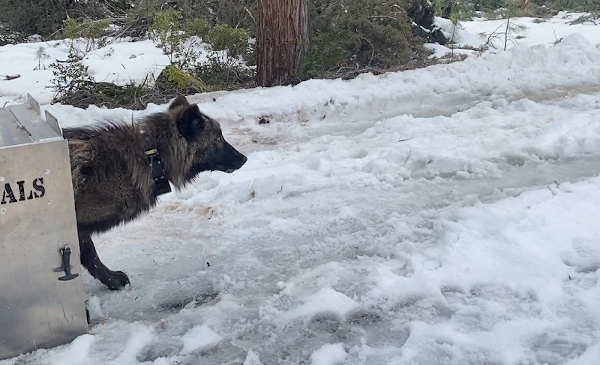
NORTHERN CALIFORNIA — The California Department of Fish and Wildlife, or CDFW, has announced the safe and successful capture and collar of two gray wolves in Siskiyou County.
The two wolves were captured March 17, fitted with satellite collars, measured and sampled for DNA and disease surveillance, and safely released back to the wild.
“The capture of these wolves is fantastic since we lost the only functioning satellite collar last summer, and ground capture efforts since then have been unsuccessful,” said Kent Laudon, a senior environmental scientist and CDFW’s wolf specialist. “A lot of people have worked hard to make this happen and we’re excited about the new collars and data. We’re already seeing interesting movements on agriculture lands and sharing that information with local folks to install fladry and other deterrent measures around cattle pastures.”
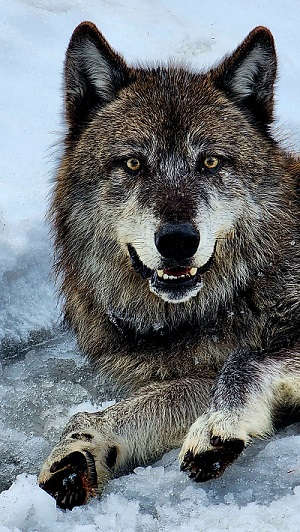
One of the captured wolves was OR85, a four-year-old black, 98-pound male originally collared by the Oregon Department of Fish and Wildlife in February 2020 in northeastern Oregon. OR85 dispersed from his natal pack in 2020, making it to Siskiyou County in November of that year.
OR85 paired with a gray female wolf that had dispersed from a pack in southwestern Oregon to form the Whaleback Pack in Siskiyou County.
The pair produced litters of seven pups in 2021 and eight pups in 2022.
Capture teams, using a contracted helicopter and capture crew and fixed-wing aircraft from CDFW’s Air Services Unit, were able to locate the wolves through intermittent signals coming from OR85’s original collar, which was thought to be non-functioning. CDFW crews removed OR85’s original collar and replaced it with a new unit.
The other wolf captured and collared was a black, 97-pound, yearling male from the 2021 litter.
The capture and collar effort, which began last month, marks the first time CDFW has used helicopters to capture and collar gray wolves.
The capture and collar of gray wolves is an important management and research tool, along with other tools and methods, used throughout the West to help monitor populations, understand landscape use patterns and minimize livestock conflicts.
Each morning, under optimal conditions, the satellite collars will transmit four new locations to CDFW since the previous day’s download. Ground capture attempts to collar additional wolves will resume later this spring.
DWR now expects to deliver 75% of requested water supplies, up from 35% announced in February.
The increase translates to an additional 1.7 million acre-feet of water for the 29 public water agencies that serve 27 million Californians.
Consistent storms in late February and March have built up the Sierra snowpack to more than double the amount that California typically sees this time of year.
Rainfall has also allowed for robust flows through the system, providing adequate water supply for the environment and endangered fish species while allowing the State Water Project, or SWP, to pump the maximum amount of water allowed under state and federal permits into reservoir storage south of the Sacramento-San Joaquin Delta.
“California continues to experience weather whiplash, going from extreme drought to at least 19 atmospheric rivers since late December. It really demonstrates that in times of plenty, we need to move as much water into storage as is feasible,” said DWR Director Karla Nemeth. “We’ve been able to manage the system to the benefit of communities, agriculture and the environment. It’s certainly been a welcome improvement following the three driest years on record for California.”
Taking advantage of the extreme high flows in the system, the SWP is making additional water available to any contractor that has the ability to store the water in its own system, including through groundwater recharge.
Formally known as Article 21 water, this water does not count toward formal SWP allocation amounts.
The SWP typically evaluates the allocation forecasts monthly using the latest snow survey data, reservoir storage and spring runoff forecasts.
The 75% forecasted allocation announced today takes into account that data from March. Further adjustments to the forecasted allocation are likely following the milestone April snow survey measurements.
April 1 is traditionally when California’s snowpack peaks and starts to melt. DWR is planning to host its April snow survey on Monday, April 3, at Phillips Station, weather conditions permitting.
DWR now expects San Luis Reservoir in Merced County to end the wet season at capacity. Lake Oroville, the State Water Project’s largest reservoir, is at 119 percent of average for this time of year and currently releasing water through the Oroville Spillway to reduce flood risk for downstream communities in anticipation of the spring snowmelt.
The SWP will continue to optimize water storage in Lake Oroville to support environmental needs in the summer and allow for carryover storage for next year if dry conditions return.
Preparing California for extreme weather swings will require the rehabilitation and modernization of SWP infrastructure. As the backbone of water supply delivery, California must address subsidence along the California Aqueduct in the Central Valley and advance the Delta Conveyance Project so that the state can move as much water as possible during high flow events.
While California’s surface water conditions have greatly improved this year following three years of historic drought, several water supply challenges remain in parts of the state.
The Colorado River Basin, which is a critical water supply source for Southern California, is still in the midst of a 23-year drought. Millions of Californians also rely on groundwater supplies as a sole source of water, and the state’s groundwater basins will be slow to recover following the extreme drought. Californians should continue to use water wisely to help the state adapt to a hotter, drier future.