How to resolve AdBlock issue?
News
LAKEPORT, Calif. — The work of first responders to protect the community will be honored once again in May.
The Lake County First Responder Memorial Ceremony will be held on Friday, May 12.
It will take place beginning at 5:30 p.m. at Lake County Museum Park, 255 N. Main St. in Lakeport.
Join local leaders and officials as they come together to honor and remember those who made the ultimate sacrifice for their community in the line of duty and service.
Among Lake County’s fallen heroes are Sheriff George Kemp, Deputy Henry Valentine Snowbelt, Deputy William Hoyt, Sgt. Richard Helbush, Deputy Robert Rumfelt, and firefighters Michael Mattioda and Matthew Black.
For more information contact Deputy Cynthia Radoumis at telephone 707-262-4200.
The Lake County First Responder Memorial Ceremony will be held on Friday, May 12.
It will take place beginning at 5:30 p.m. at Lake County Museum Park, 255 N. Main St. in Lakeport.
Join local leaders and officials as they come together to honor and remember those who made the ultimate sacrifice for their community in the line of duty and service.
Among Lake County’s fallen heroes are Sheriff George Kemp, Deputy Henry Valentine Snowbelt, Deputy William Hoyt, Sgt. Richard Helbush, Deputy Robert Rumfelt, and firefighters Michael Mattioda and Matthew Black.
For more information contact Deputy Cynthia Radoumis at telephone 707-262-4200.
LAKE COUNTY, Calif. — The Board of Supervisors this week will present several proclamations and hear updates about the library and community visioning forum.
The board will meet beginning at 9 a.m. Tuesday, May 9, in the board chambers on the first floor of the Lake County Courthouse, 255 N. Forbes St., Lakeport.
The meeting can be watched live on Channel 8, online at https://countyoflake.legistar.com/Calendar.aspx and on the county’s Facebook page. Accompanying board documents, the agenda and archived board meeting videos also are available at that link.
To participate in real-time, join the Zoom meeting by clicking this link.
The meeting ID is 910 1753 0628, pass code 402874. The meeting also can be accessed via one tap mobile at +16694449171,,91017530628#,,,,*402874#.
All interested members of the public that do not have internet access or a Mediacom cable subscription are encouraged to call 669-900-6833, and enter the Zoom meeting ID and pass code information above.
At the start of the meeting, the board will meet the pet of the week and get an update from the Lake County Library staff on what is new and noteworthy at the library.
Beginning at 9:09 a.m., the board will present several proclamations designating May as Military Appreciation Month, CalFresh Awareness Month and Tourism Month; the week of May 7 to 13, 2023, as Correctional Officers Week in Lake County; the day of May 9, 2023, as Fentanyl Awareness Day in Lake County; and a presentation by the Lake County FFA on their work and accomplishments.
At 10:30 a.m., the board will consider an update on the broadband action planning process.
At 11:15 a.m., there will be an update on the countywide Community Visioning Forum Planning Committee update.
The full agenda follows.
CONSENT AGENDA
5.1: Adopt proclamation designating the month of May 2023 as Military Appreciation Month.
5.2: Approve contract between Tyler Recording and county of Lake for a five-year contract in the amount of $84,756 initial and $41,256 annually thereafter and authorize chair to sign.
5.3. Approve Amendment No. 1 to the agreement between the county of Lake and Willow Glen Care Center for adult residential support services and specialty mental health services for fiscal year 2023-2025 in the amount of $885,500 and authorize the board chair to sign.
5.4: Approve Amendment No. 1 to the agreement between county of Lake and the SmithWaters Group for patient rights advocacy services for fiscal years 2022-2025 in the amount of $135,000 and authorize the board chair to sign.
5.5: Approve Amendment No. 1 to the agreement between county of Lake and Clover Valley Guest Home for adult residential support services and specialty mental health services for fiscal years 2022-2025 in the amount of $550,000 and authorize the board chair to sign the agreement.
5.6: Adopt proclamation designating the day of May 9, 2023, as Fentanyl Awareness Day in Lake County.
5.7: a) Pursuant to Section 2-38 of the Lake County Code, waive the competitive bidding process for enhanced elements of the scope of services with Walnut Creek Consulting; and b) approve Amendment No. 1 to agreement for Behavioral Health contract management services with Walnut Creek Consulting to increase the not to exceed amount to $45,900, update scope of services, and authorize the chair to sign.
5.8: Approve Amendment No. 2 to the contract between the county of Lake and the Lake County Office of Education with no change to the contract maximum for fiscal years 2021-26 and authorize the board chair to sign.
5.9: Adopt proclamation designating the month of May as Tourism Month in Lake County.
5.10: Ratify the proposed rule changes of the Lake County/City Area Planning Council as outlined in the adopted Resolution 19-20-11 of the Lake County/City Area Planning Council.
5.11: Second reading, adopt ordinance amending Chapter 5 of the Lake County Code relating to exempt agricultural building permitting for temporary hoop structures for cannabis cultivation.
5.12: Approve request to waive 900-hour limit for extra-help accountant, Cindy Silva-Brackett and Public Health Nurse Kathleen (Kitty) Wertz.
5.13: Adopt resolution approving an agreement between the state of California Department of Healthcare Services and county of Lake Health Services Department for the Medi-Cal County Inmate Program for Administrative Services and authorize the Health Services director to sign said agreement.
5.14: Approve amendment to the agreement between the county of Tehama and county of Lake for the housing of juvenile offenders for an amount not to exceed $250,000; and authorize the chair to sign.
5.15: Adopt resolution to establish a list of projects proposed to be funded in FY 2023/2024 Pursuant to the Road Repair and Accountability Act of 2017 (SB1) .
5.16: Approve engineering/inspection agreement with Big Valley Band of Pomo Indians.
5.17: (a) Approve Amendment No. 1 to the agreement between the county of Lake and Mountain G. Enterprises Inc. for consulting services related to the development of an application to the U.S. Department of Agriculture for grant funds, and authorize the chair to sign the agreement, and (b) authorize the application to U.S. Geological Survey for grant funds.
5.18: Adopt resolution delegating to the county Public Works Director authority to negotiate and acquire certain real estate up to $7,000; the purchase of a portion of certain parcel (APN 027-221-110), is part of the bridge replacement project on First Street over Clover Creek.
5.19: Adopt proclamation designating the week of May 7 to 13, 2023, as Correctional Officers Week in Lake County.
5.20: Approve long distance travel for Diana Duran, Adult Services Program manager; Thomas Swanson, APS supervisor Catherine Sims, APS social worker to attend the NAPSA Annual Conference training in Boston, Massachusetts from Aug. 27 to Sept. 1, 2023.
5.21: Approve contract between county of Lake and Shore Side Electric for Electrical Services, in the Amount of $49,000 from April 1, 2023, to June 30, 2024, and authorize the chair to sign.
5.22: Adopt proclamation designating the month of May 2023, as CalFresh Awareness Month.
5.23: Sitting as the Board of Directors of the Lake County Watershed Protection District, approve the memorandum of understanding: Implementation of the Westside Sacramento Integrated Regional Water Management Plan for the Westside Subregion of the Sacramento River Funding Area, and authorize the chair to sign.
TIMED ITEMS
6.2, 9:07 a.m.: Pet of the Week.
6.3, 9:08 a.m.: New and noteworthy at the Library.
6.4, 9:09 a.m.: Presentation of proclamation designating the month of May 2023 as Military Appreciation Month.
6.5, 9:10 a.m.: Presentation of proclamation designating the month of May 2023 as CalFresh Awareness Month.
6.6, 9:11 a.m.: Presentation of proclamation designating the week of May 7 to 13, 2023, as Correctional Officers Week in Lake County.
6.7, 9:12 a.m.: Presentation of proclamation designating the month of May as Tourism Month in Lake County.
6.8, 9:13 a.m.: Presentation of proclamation designating the day of May 9, 2023, as Fentanyl Awareness Day in Lake County.
6.9, 9:14 a.m.: Presentation by the Lake County FFA on their work and accomplishments.
6.10, 10 a.m.: Consideration of the March 31, 2023, report of Lake County Pooled Investments.
6.11, 10:30 a.m.: Consideration of an update on the broadband action planning process by CBG Communications Inc.
6.12, 11:15 a.m.: Consideration of Lake Countywide Community Visioning Forum Planning Committee update.
6.13, 11:30 a.m.: Consideration of Scotts Valley Community Advisory Council project requests and prior allocation of discretionary cannabis tax funds.
UNTIMED ITEMS
7.2: Consideration of one-time dedication of 1% of Local Assistance and Tribal Consistency Funding (LATCF, $30,607.51) to Support Establishment of a National Center for Public Lands Counties.
7.3: Consideration of the following advisory board appointments: Lower Lake Cemetery District.
CLOSED SESSION
8.1, 2 p.m.: Public employee appointment pursuant to Gov. Code Section 54957(b) (1): Interviews for Child Support Services director; appointment of Child Support Services director.
Email Elizabeth Larson atThis email address is being protected from spambots. You need JavaScript enabled to view it. . Follow her on Twitter, @ERLarson, or Lake County News, @LakeCoNews.
The board will meet beginning at 9 a.m. Tuesday, May 9, in the board chambers on the first floor of the Lake County Courthouse, 255 N. Forbes St., Lakeport.
The meeting can be watched live on Channel 8, online at https://countyoflake.legistar.com/Calendar.aspx and on the county’s Facebook page. Accompanying board documents, the agenda and archived board meeting videos also are available at that link.
To participate in real-time, join the Zoom meeting by clicking this link.
The meeting ID is 910 1753 0628, pass code 402874. The meeting also can be accessed via one tap mobile at +16694449171,,91017530628#,,,,*402874#.
All interested members of the public that do not have internet access or a Mediacom cable subscription are encouraged to call 669-900-6833, and enter the Zoom meeting ID and pass code information above.
At the start of the meeting, the board will meet the pet of the week and get an update from the Lake County Library staff on what is new and noteworthy at the library.
Beginning at 9:09 a.m., the board will present several proclamations designating May as Military Appreciation Month, CalFresh Awareness Month and Tourism Month; the week of May 7 to 13, 2023, as Correctional Officers Week in Lake County; the day of May 9, 2023, as Fentanyl Awareness Day in Lake County; and a presentation by the Lake County FFA on their work and accomplishments.
At 10:30 a.m., the board will consider an update on the broadband action planning process.
At 11:15 a.m., there will be an update on the countywide Community Visioning Forum Planning Committee update.
The full agenda follows.
CONSENT AGENDA
5.1: Adopt proclamation designating the month of May 2023 as Military Appreciation Month.
5.2: Approve contract between Tyler Recording and county of Lake for a five-year contract in the amount of $84,756 initial and $41,256 annually thereafter and authorize chair to sign.
5.3. Approve Amendment No. 1 to the agreement between the county of Lake and Willow Glen Care Center for adult residential support services and specialty mental health services for fiscal year 2023-2025 in the amount of $885,500 and authorize the board chair to sign.
5.4: Approve Amendment No. 1 to the agreement between county of Lake and the SmithWaters Group for patient rights advocacy services for fiscal years 2022-2025 in the amount of $135,000 and authorize the board chair to sign.
5.5: Approve Amendment No. 1 to the agreement between county of Lake and Clover Valley Guest Home for adult residential support services and specialty mental health services for fiscal years 2022-2025 in the amount of $550,000 and authorize the board chair to sign the agreement.
5.6: Adopt proclamation designating the day of May 9, 2023, as Fentanyl Awareness Day in Lake County.
5.7: a) Pursuant to Section 2-38 of the Lake County Code, waive the competitive bidding process for enhanced elements of the scope of services with Walnut Creek Consulting; and b) approve Amendment No. 1 to agreement for Behavioral Health contract management services with Walnut Creek Consulting to increase the not to exceed amount to $45,900, update scope of services, and authorize the chair to sign.
5.8: Approve Amendment No. 2 to the contract between the county of Lake and the Lake County Office of Education with no change to the contract maximum for fiscal years 2021-26 and authorize the board chair to sign.
5.9: Adopt proclamation designating the month of May as Tourism Month in Lake County.
5.10: Ratify the proposed rule changes of the Lake County/City Area Planning Council as outlined in the adopted Resolution 19-20-11 of the Lake County/City Area Planning Council.
5.11: Second reading, adopt ordinance amending Chapter 5 of the Lake County Code relating to exempt agricultural building permitting for temporary hoop structures for cannabis cultivation.
5.12: Approve request to waive 900-hour limit for extra-help accountant, Cindy Silva-Brackett and Public Health Nurse Kathleen (Kitty) Wertz.
5.13: Adopt resolution approving an agreement between the state of California Department of Healthcare Services and county of Lake Health Services Department for the Medi-Cal County Inmate Program for Administrative Services and authorize the Health Services director to sign said agreement.
5.14: Approve amendment to the agreement between the county of Tehama and county of Lake for the housing of juvenile offenders for an amount not to exceed $250,000; and authorize the chair to sign.
5.15: Adopt resolution to establish a list of projects proposed to be funded in FY 2023/2024 Pursuant to the Road Repair and Accountability Act of 2017 (SB1) .
5.16: Approve engineering/inspection agreement with Big Valley Band of Pomo Indians.
5.17: (a) Approve Amendment No. 1 to the agreement between the county of Lake and Mountain G. Enterprises Inc. for consulting services related to the development of an application to the U.S. Department of Agriculture for grant funds, and authorize the chair to sign the agreement, and (b) authorize the application to U.S. Geological Survey for grant funds.
5.18: Adopt resolution delegating to the county Public Works Director authority to negotiate and acquire certain real estate up to $7,000; the purchase of a portion of certain parcel (APN 027-221-110), is part of the bridge replacement project on First Street over Clover Creek.
5.19: Adopt proclamation designating the week of May 7 to 13, 2023, as Correctional Officers Week in Lake County.
5.20: Approve long distance travel for Diana Duran, Adult Services Program manager; Thomas Swanson, APS supervisor Catherine Sims, APS social worker to attend the NAPSA Annual Conference training in Boston, Massachusetts from Aug. 27 to Sept. 1, 2023.
5.21: Approve contract between county of Lake and Shore Side Electric for Electrical Services, in the Amount of $49,000 from April 1, 2023, to June 30, 2024, and authorize the chair to sign.
5.22: Adopt proclamation designating the month of May 2023, as CalFresh Awareness Month.
5.23: Sitting as the Board of Directors of the Lake County Watershed Protection District, approve the memorandum of understanding: Implementation of the Westside Sacramento Integrated Regional Water Management Plan for the Westside Subregion of the Sacramento River Funding Area, and authorize the chair to sign.
TIMED ITEMS
6.2, 9:07 a.m.: Pet of the Week.
6.3, 9:08 a.m.: New and noteworthy at the Library.
6.4, 9:09 a.m.: Presentation of proclamation designating the month of May 2023 as Military Appreciation Month.
6.5, 9:10 a.m.: Presentation of proclamation designating the month of May 2023 as CalFresh Awareness Month.
6.6, 9:11 a.m.: Presentation of proclamation designating the week of May 7 to 13, 2023, as Correctional Officers Week in Lake County.
6.7, 9:12 a.m.: Presentation of proclamation designating the month of May as Tourism Month in Lake County.
6.8, 9:13 a.m.: Presentation of proclamation designating the day of May 9, 2023, as Fentanyl Awareness Day in Lake County.
6.9, 9:14 a.m.: Presentation by the Lake County FFA on their work and accomplishments.
6.10, 10 a.m.: Consideration of the March 31, 2023, report of Lake County Pooled Investments.
6.11, 10:30 a.m.: Consideration of an update on the broadband action planning process by CBG Communications Inc.
6.12, 11:15 a.m.: Consideration of Lake Countywide Community Visioning Forum Planning Committee update.
6.13, 11:30 a.m.: Consideration of Scotts Valley Community Advisory Council project requests and prior allocation of discretionary cannabis tax funds.
UNTIMED ITEMS
7.2: Consideration of one-time dedication of 1% of Local Assistance and Tribal Consistency Funding (LATCF, $30,607.51) to Support Establishment of a National Center for Public Lands Counties.
7.3: Consideration of the following advisory board appointments: Lower Lake Cemetery District.
CLOSED SESSION
8.1, 2 p.m.: Public employee appointment pursuant to Gov. Code Section 54957(b) (1): Interviews for Child Support Services director; appointment of Child Support Services director.
Email Elizabeth Larson at
Editor’s note: This story has been updated with information regarding sales and acquisitions.
CLEARLAKE, Calif. — The Clearlake Planning Commission this week will consider the city’s plans to sell or acquire several properties.
The commission will meet beginning at 6 p.m. Tuesday, May 9, in the council chambers at Clearlake City Hall, 14050 Olympic Drive.The agenda can be found here.
Submit comments and questions in writing for commission consideration by sending them to Administrative Services Director/City Clerk Melissa Swanson at
Community members also can participate via Zoom. The webinar ID is 867 6869 4451. Dial in at 1 669 444 9171 or use phone one-tap at 16694449171,,86768694451# or +17207072699,,86768694451#.
The meeting also can be watched on the city’s YouTube account.
To give the planning commission adequate time to review your questions and comments, please submit written comments before 4 p.m. Tuesday, May 9.
During the Tuesday meeting, the commission will hold a public hearing to determine general plan consistency and make an environmental determination for the city’s plans to sell the following properties:
• 14709 Palmer Ave.
• 6820 Old Highway 53.
• 6840 Old Highway 53.
• 6860 Old Highway 53.
• 16178 35th Ave.
• 16336 29th Ave.
• 16137 12th Ave.
• 16147 12th Ave.
City Manager said the use the properties is “diverse.” The only one to be sold by the city is on 35th Avenue, and all of the others are purchase or donations.
“Several are related to code enforcement issues and the end use is likely to be housing. Some are more likely for commercial use,” he said.
Email Elizabeth Larson at
Avian flu cases have spiked around the globe in recent weeks, devastating bird populations and making headlines.
The spread of the illness, caused by the H5N1 virus, has resulted in 58 million bird deaths since last fall — driving up poultry and egg prices and raising public concerns about it spreading to other species.
“People are worried that it’s circulating a ton in birds and, now, some in mammals,” explains UC San Francisco infectious disease fellow Natasha Spottiswoode, MD, PhD. “There’s a concern that it might spill over into humans, as previous influenzas have.”
But how likely is it that bird flu spurs the next pandemic? We asked Spottiswoode and UCSF biochemist Joe DeRisi, who combines genetics, computer science and biochemistry to track viruses.
What is bird flu?
Spottiswoode: Bird flu is the common name for a particular strain of what we call highly pathogenic avian influenza, or HPAI. It occurs in wild and domesticated birds across the world.
Flu gets subdivided into influenza A — which includes bird flu — and influenza B, which is less of an issue. Influenza A is further named by the two proteins on its surface, hemagglutinin (H) and neuraminidase (N), but that’s just a fancy way of saying that this particular virus is called H5N1. The numbers in its name refer to its clade, or branch of the influenza A family.
How does bird flu spread to humans?
Spottiswoode: Bird flu can spread to humans if people come in contact with fluids or feces from infected birds and can cause flu-like symptoms. It’s treated with antiviral medication.
There have been no documented cases of human-to-human transmission of H5N1. As of April 2023, only a single person had been potentially infected in the U.S., but this could have been a misdiagnosis because they had been culling birds. If someone is working with birds and getting their fluids on them, it’s possible that very sensitive tests could detect the simple presence of the virus — rather than the patient having a true infection.
How can we prevent future epidemics of bird flu or other animal-borne viruses?
Spottiswoode: There are several ways pandemics emerge, and one of them is by putting different animals and people close together. This includes wet markets and the pet trade, but it’s also becoming more common as wild places shrink.
DeRisi: The 2003 severe acute respiratory syndrome (SARS) outbreak was traced to animals sold in a wet market. There are significant U.S. regulations against wet markets for this reason, but they’re still allowed in other countries.
Spottiswoode: The U.S. is one of the largest importers of wild animals through the exotic pet trade. There was a massive Mpox outbreak this year, which usually affects rodents but can – through close contact – spread to humans, leading to painful rashes, for example. The 2003 U.S. Mpox outbreak originated through the pet trade as breeders kept prairie dogs next to imported pouched rats carrying Mpox.
Will bird flu be the next COVID-19?
Spottiswoode: Bird flu is fairly unlikely to be the next pandemic. To become a pandemic, a virus has to be able to pass from person to person effectively — as COVID-19 does. This virus has not shown the propensity to do that yet.
DeRisi: There have been thousands of outbreaks in birds and dozens in other animals, and the virus hasn’t spilled over into humans. That gives us some confidence that the biological barrier that the virus would have to cross between birds and us is high. That doesn’t mean it can’t be surpassed — we know it can — but it isn’t likely. There’s reason not to panic, but there’s also reason to be cautious.
Spottiswoode: Pandemics are a bit like avalanches — they are both individually low probability, but extremely high consequence events. On a grand scale, with the number of viruses that circulate, there is a very large chance that one of them will become an avalanche. You can ski the same slope every year and nothing will happen. It becomes tempting to say, “I’ll go out today without safety equipment.” Then, one day, everything just comes down on you.
We really should be working on our safety systems to prevent them or stop them in their tracks.
Laura Lopez Gonzalez writes for the University of California, San Francisco.
The spread of the illness, caused by the H5N1 virus, has resulted in 58 million bird deaths since last fall — driving up poultry and egg prices and raising public concerns about it spreading to other species.
“People are worried that it’s circulating a ton in birds and, now, some in mammals,” explains UC San Francisco infectious disease fellow Natasha Spottiswoode, MD, PhD. “There’s a concern that it might spill over into humans, as previous influenzas have.”
But how likely is it that bird flu spurs the next pandemic? We asked Spottiswoode and UCSF biochemist Joe DeRisi, who combines genetics, computer science and biochemistry to track viruses.
What is bird flu?
Spottiswoode: Bird flu is the common name for a particular strain of what we call highly pathogenic avian influenza, or HPAI. It occurs in wild and domesticated birds across the world.
Flu gets subdivided into influenza A — which includes bird flu — and influenza B, which is less of an issue. Influenza A is further named by the two proteins on its surface, hemagglutinin (H) and neuraminidase (N), but that’s just a fancy way of saying that this particular virus is called H5N1. The numbers in its name refer to its clade, or branch of the influenza A family.
How does bird flu spread to humans?
Spottiswoode: Bird flu can spread to humans if people come in contact with fluids or feces from infected birds and can cause flu-like symptoms. It’s treated with antiviral medication.
There have been no documented cases of human-to-human transmission of H5N1. As of April 2023, only a single person had been potentially infected in the U.S., but this could have been a misdiagnosis because they had been culling birds. If someone is working with birds and getting their fluids on them, it’s possible that very sensitive tests could detect the simple presence of the virus — rather than the patient having a true infection.
How can we prevent future epidemics of bird flu or other animal-borne viruses?
Spottiswoode: There are several ways pandemics emerge, and one of them is by putting different animals and people close together. This includes wet markets and the pet trade, but it’s also becoming more common as wild places shrink.
DeRisi: The 2003 severe acute respiratory syndrome (SARS) outbreak was traced to animals sold in a wet market. There are significant U.S. regulations against wet markets for this reason, but they’re still allowed in other countries.
Spottiswoode: The U.S. is one of the largest importers of wild animals through the exotic pet trade. There was a massive Mpox outbreak this year, which usually affects rodents but can – through close contact – spread to humans, leading to painful rashes, for example. The 2003 U.S. Mpox outbreak originated through the pet trade as breeders kept prairie dogs next to imported pouched rats carrying Mpox.
Will bird flu be the next COVID-19?
Spottiswoode: Bird flu is fairly unlikely to be the next pandemic. To become a pandemic, a virus has to be able to pass from person to person effectively — as COVID-19 does. This virus has not shown the propensity to do that yet.
DeRisi: There have been thousands of outbreaks in birds and dozens in other animals, and the virus hasn’t spilled over into humans. That gives us some confidence that the biological barrier that the virus would have to cross between birds and us is high. That doesn’t mean it can’t be surpassed — we know it can — but it isn’t likely. There’s reason not to panic, but there’s also reason to be cautious.
Spottiswoode: Pandemics are a bit like avalanches — they are both individually low probability, but extremely high consequence events. On a grand scale, with the number of viruses that circulate, there is a very large chance that one of them will become an avalanche. You can ski the same slope every year and nothing will happen. It becomes tempting to say, “I’ll go out today without safety equipment.” Then, one day, everything just comes down on you.
We really should be working on our safety systems to prevent them or stop them in their tracks.
Laura Lopez Gonzalez writes for the University of California, San Francisco.
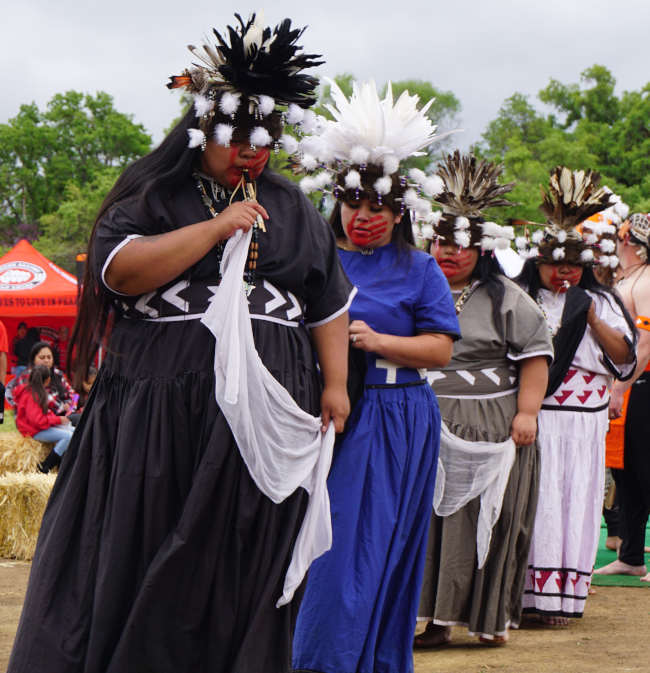
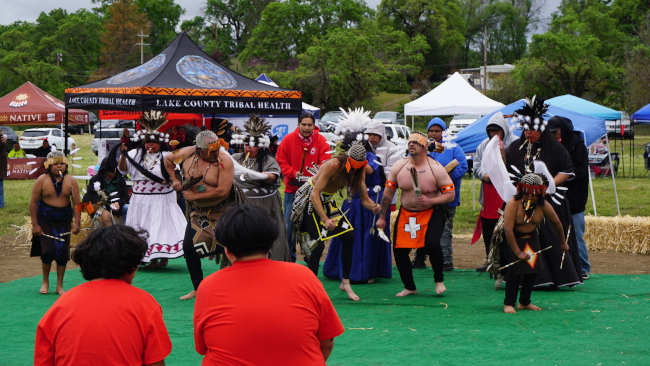
LAKEPORT, Calif. — As rain clouds darkened overhead, a group of Pomo dancers moved in a rhythmic line to a dance circle in Lakeport late Friday afternoon.
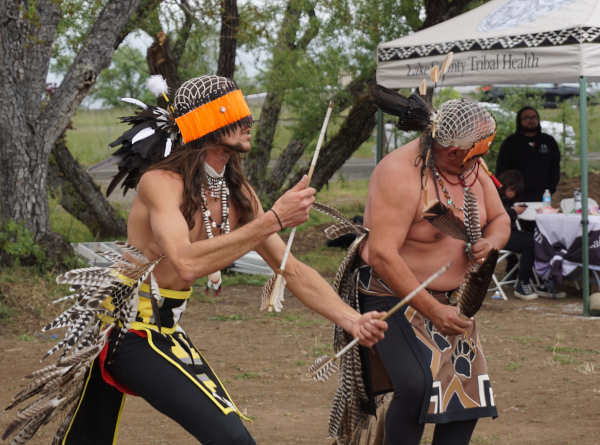
The young men and children danced as the feathers in their regalia rustled in the afternoon breeze.
Young women, wearing beaded and feathered headdresses, twirled, their bright dresses swirling around their legs as they played bone whistles.
As the young women raised their heads in the dance, one could see a red palm print across their faces.
That palm print is a symbol of the Missing and Murdered Indigenous People, or Women, variously known as MMIP or MMIW.
Lake County Tribal Health organized the afternoon-long event at 1950 Parallel Drive on Friday, which was National Missing and Murdered Indigenous People’s Day, to put a spotlight on the MMIP crisis, a long-known phenomenon in Indian Country that over the past decade has begun to gain greater nationwide and statewide attention.
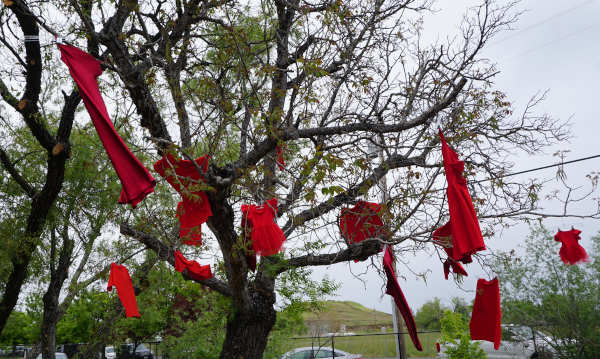
Numerous local organizations — from law enforcement to education to health — came to share information. There were games, and a tree was filled with bright red dresses and shirts, also symbolizing the missing.
With centuries of abuse and genocide comes deep and lasting mistrust, which has made it difficult for Indigenous peoples to easily trust law enforcement when reporting their missing loved ones.
The result is that thousands of Indigenous people from across the United States remain missing, their cases unsolved.
The Bureau of Indian Affairs estimates that there are 4,200 missing and murdered cases that remain unsolved nationwide.
“These investigations remain unsolved often due to a lack of investigative resources available to identify new information from witness testimony, re-examine new or retained material evidence, as well as reviewing fresh activities of suspects,” the agency stated on its website.
The solved cases are no less tragic.
In Lake County, the face of MMIP has become Habematolel Pomo tribal member Vanessa Niko.
Niko, 35, a mother of six, was killed on June 30, 2017, beaten fatally by the father of three of her children. A mural of her now graces downtown Upper Lake.
In neighboring Mendocino County, in February 2018, 23-year-old Khadijah Rose Britton was kidnapped at gunpoint in Covelo by her ex-boyfriend.
Britton has not been seen since, and the Federal Bureau of Investigation is offering $10,000 for information leading to the arrest and conviction of those responsible for her disappearance.
In April 2021, Department of the Interior Secretary Deb Haaland created a new Missing and Murdered Unit within the Bureau of Indian Affairs Office of Justice Services to investigate MMIP cases.
In July 2021, President Joe Biden issued a proclamation naming Wednesday, May 5, as Missing and Murdered Indigenous Persons Awareness Day, and said addressing the issues surrounding MMIP is a priority for his administration.
The MMIP situation also has led to action by state lawmakers.
In August, the state Legislature approved AB 1314, a bill by Assemblymember James C. Ramos — the first and only Native American to serve in the Legislature — to establish the “Feather Alert,” a state endangered missing advisory to help law enforcement and tribes locate missing Indigenous people. Gov. Gavin Newsom signed the bill in September.
“The rates of murdered and missing people in Native American communities is a shameful tragedy and does not receive the scrutiny and attention it deserves,” Ramos said in August.
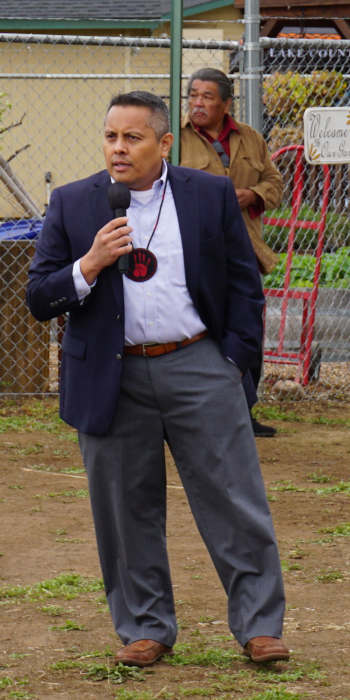
Using technology and science to fight the crisis
At Friday’s event, the keynote speaker was Mark Pooley, a retired police detective whose tribal affiliations are Navajo and Hopi. His heritage is one of the drivers in his fight against the MMIP crisis.
He’s been working to help dozens of families around the United States and in Canada and Italy find their missing loved ones through his investigative skills and use of technology, specifically, DNA. Pooley also credits prayer to the Creator with helping bring breakthroughs.
More than a quarter of those cases have been resolved, either through helping identify human remains or showing people how to successfully find their relatives.
Pooley is director of investigative support for the University of North Texas Center for Human Identification, or UNTCHI, in Fort Worth.
In December, UNTCHI received a nearly $1 million grant through the Missing and Unidentified Human Remains Program from the U.S. Department of Justice’s Bureau of Justice Assistance.
The grant proposal said the university “will implement a comprehensive, multi-disciplinary, multi-agency collaboration to improve the reporting, transportation, processing, and identification of missing person (MP) and unidentified human remains (UHR) cases.”
In addition, UNTCHI intends to offer services to assist small, rural, and/or tribal entities and to support American Indian and Alaska Native communities “which have historically been underserved, and the associated tribal law enforcement agencies that often face unique resource and/or jurisdictional challenges that impede case resolutions.”
Pooley said collecting DNA to help small agencies with solving MMIP cases is a motivation for the three-year grant.
During his talk, Pooley gave five reasons Indigenous people go missing: addiction; domestic violence; runaway children, which he attributes to too many native children living in foster and group homes; human trafficking; and mental illness.
In so many cases, Pooley said it comes down to individuals not understanding how much they are loved.
Pooley offered five priority actions for people to take when a loved one goes missing: make a police report, request police put the missing person into the National Crime Information Center, or NCIC, system; reach out to a local MMIP advocacy group for help getting the word out, including through using social media; start looking in places they frequently go; and use technology in the search.
He’s hopeful that native peoples will get the help and advocacy they need through the growing awareness of the MMIP crisis.
“I’ve never seen the MMIP movement like it is today,” he said.
The dancers came after the speakers, moving slowly to the beat of drummers and singers, spinning, moving around each other in their sacred, steadfast choreography.
Despite the weight of the afternoon event and what it signified, the dance was a reminder that native cultures remain, and that their young people — in the face of the challenges — continue to dance in hope.
Email Elizabeth Larson at
Dear Lady of the Lake,
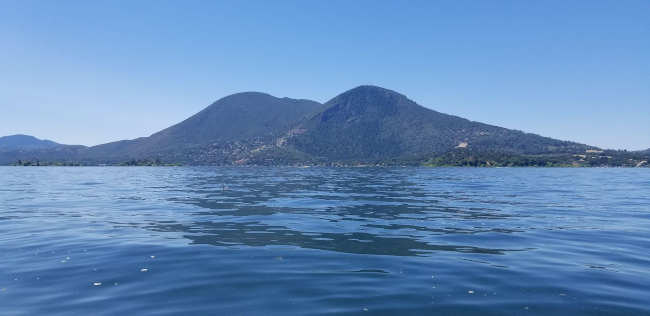
It’s spring on Clear Lake. The days are getting warmer. How does temperature affect Clear Lake and are the patterns in temperature changing?
Thanks!
— Temperature Time Toma
Hello Toma,
What a great question! I am very happy to be able to chat about lake temperature today as it's very important when studying lakes and trying to understand how to manage a lake.
Today’s column will be about one of the basic principles in limnology, or the study of inland freshwaters, like lakes, ponds, wetlands, creeks and streams. Temperature is part of a group of physical factors when talking about lake science, as opposed to biological (i.e. fish or algae) or chemical factors (i.e. nutrients or metals).
In limnology, the majority of lakes that are studied and were used to form the base of limnological principles that are applied to lake science today are mostly those that include lakes that ice over. That is because the majority of lakes studied by the first limnologists were located near universities in northern latitudes such as Europe, Canada, and the Upper midwest and North Eastern regions of the US.
The study of shallow lakes, and lakes in temperate and tropical climates, is still developing, and many of the principles of these types of lakes are very different then those traditionally included in the history of limnology. Clear Lake is a prime example in that it’s relatively shallow (average about 27 feet in depth) and located in a temperate, or mediterranean, climate and does not experience ice over.
In fact, Clear Lake is very shallow when compared to the majority of other lakes and reservoirs in California and in North America. Lake depth influences water temperature and temperature is important for physical, biological and chemical processes throughout a lake. One of the most important physical processes that occurs in a lake is called lake mixing, or when layered temperatures throughout the water column are “mixed” and the entire water column becomes homogeneous in temperature.
Lake turnover and thermal stratification
A shallow lake, like Clear Lake, can mix many times a year, and sometimes the water column will completely mix for many days in the spring and summer due to wind events. The wind on the surface of the water will literally push the rest of the water in the water column around, causing complete mixing from the top of the surface to the bottom.
A lake that is well-mixed, or mixes multiple times a year, is called polymictic, and acts and behaves very differently than a lake that is polymictic, meaning it doesn't mix more than two times a year.
When you think of a story-book “traditional” deep lake, it’s probably in the dimictic category. For example, large lakes like Lake Superior, Lake Champlain, can be deep and cold and are dimictic. Sometimes dimictic lakes ice over, but not all of them, like Lake Tahoe. Lake mixing happens when there is a change in temperature to the surface layer of a lake, usually a warming, that causes a shift of the surface water into the bottom zone. Density also plays a factor as colder, denser water will want to sink, and displace, or turnover, warmer, less dense water.
If you want a quick tutorial in temperature, density, and lake stratification check out this 3 minute video produced by student members of the North American Lake Management Society, or NALMS.
The first mixing happens in fall as the colder air temperatures makes the surface layer (epilimnion) of the lake colder, and more dense, then the warmer bottom layer (hypolimnion). The top layer rotates with the bottom layer and the entire water column becomes mixed.
Then during winter, the lake stabilizes, or thermally stratified, with distinct layers separated by temperature and density. The top layer is cold, being exposed to freezing winter temperatures and the bottom layer, while still cold, is not freezing at 4o F, which is the temperature where water is the most dense.
When a lake is thermally stratified, there is a middle layer, called the metalimnion. And this layer is a middle temperature between the surface and bottom. Not all lakes have a metalimnion, Clear Lake for example, when it’s fully stratified, will not have a metalimnion, because it’s so shallow, there literally is not room, the transition zone in the lake from the top, epilimnion to the bottom, hypolimnion layer is at most smaller than a meter thick.
During the spring, when warmer, strong winds move the surface of the water, you can actually get the entire water column to be the same temperature, which leads to what's called “spring turnover”. This turnover event happens when the lake water column becomes mixed due to the equalized temperature between top and bottom layers, due to the strong warm winds increase the temperature of the cold surface layer and force it into the bottom layer, warming the entire water column.
Then in summer, the top layer is warmest, and the least dense, and sits on top of the cooler, more dense middle and bottom layer, making the lake stratified once again. Until fall when cooling air temperatures facilitate the whole cycle all over again.
Now this mixing cycle refers to a typical deep lake, and while it doesn’t always apply to Clear Lake, the Oaks and Lower arm sometimes are stratified.
Lake mixing in Clear Lake
Monthly monitoring by the Water Resources Department includes sampling a temperature profile. Where a probe, with a temperature gauge, is dropped down into the water column every meter to determine the temperature profile of the water column from the surface to the bottom.
A stratified lake is determined when at some point before the bottom there is a significant change, or decrease in temperature. This can sometimes be 5 or even 10 degrees in Clear Lake! In deeper lakes this can be 20 degrees or more. Technically, this is called a thermocline, which is the depth or depth range where the temperature changes between the epilimnion top layer and the bottom hypolimnetic layer.
Clear lake experiences polymixis, which means Clear Lake is mixed more than twice a year. In the summer, thanks to wind activity combined with shallow water, Clear Lake mixes very readily. According to current research by UC Davis, Clear Lake mixes on a daily and weekly basis throughout summer.
To see current and past wind conditions on Clear Lake, visit the UC Davis Tahoe Environmental Research Center, or TERC’s data page for Clear Lake Wind Maps. Scroll to the bottom of the page and you can visit real time wind animations, vector, and streamlines wind data, along with the station locations collecting the data.
Now lake mixing is a physical process, with biological impacts. Every time a lake turns over, or mixes, the process of water moving from top to bottom brings bottom nutrients, like nitrogen and phosphorus, to the surface of the lake. In an oligotrophic lake (or low productive lakes, opposite of Clear Lake) or the ocean, this is extremely beneficial because this process moves needed nutrients from the bottom to the top, where, combined with light and warm temperatures, the nutrients provide a valuable food source for algae — the base building block of the aquatic food web.
Likewise, turnover can move particles and materials at the surface of the water (think abundant algae and cyanobacteria cells in Clear Lake) to the bottom of the lake, where they will break down with bacterial microbes back into nutrients and wait to be mixed back into the water column during the next mixing event.
As one can imagine for Clear Lake, when you have warm, high winds in summer, accompanied by long daylight hours and warm air temperatures, you can see how there is a temperature-induced cycle of algae and cyanobacteria positive feedback loop throughout the water column.
Temperature trends in Clear Lake
Toma you also asked about the changes in temperature over time. Well thankfully, there is a long data record for Clear Lake. Since the 1960s, the California Department of Water Resources, with support from other state and local agencies, has been monitoring the lake temperature on a monthly basis. That data is freely accessible on the DWR Water Data Library page.
When I started working in Lake County (in 2018), I wanted to conduct some research that identified impacts of climate and wildfire on Clear Lake water quality. One of the major results of the research was an investigation on the warming trends of surface and bottom water temperatures in Clear Lake.
I partnered with a couple of limnologist researchers, Dr. Ian McCullough from Michigan State University, and Dr. Jennie Brentrup of the Cary Institute of Ecosystem Studies, to identify how temperatures have changed in Clear Lake and what could be the impacts.
We published the findings of this investigation in the publically accessible online peer-reviewed journal, Ecosphere, in the article “Turning up the heat: Long-term water quality responses to wildfires and climate change in a hypereutrophic lake.”
We wanted to specifically investigate if temperature was connected to a specific nutrient, phosphorus. Phosphorus has been shown to drive the formation of harmful algae blooms (or HABs) of cyanobacteria in Clear Lake.
You can learn more about cyanobacteria in Clear Lake by referring to my July 2021 Column, Concerned about Cyanobacteria in Soda Bay.
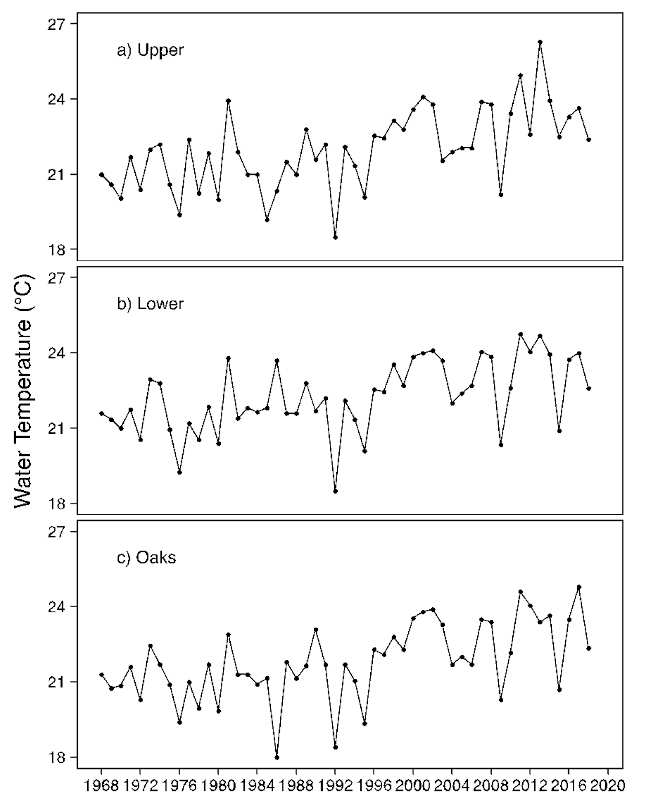
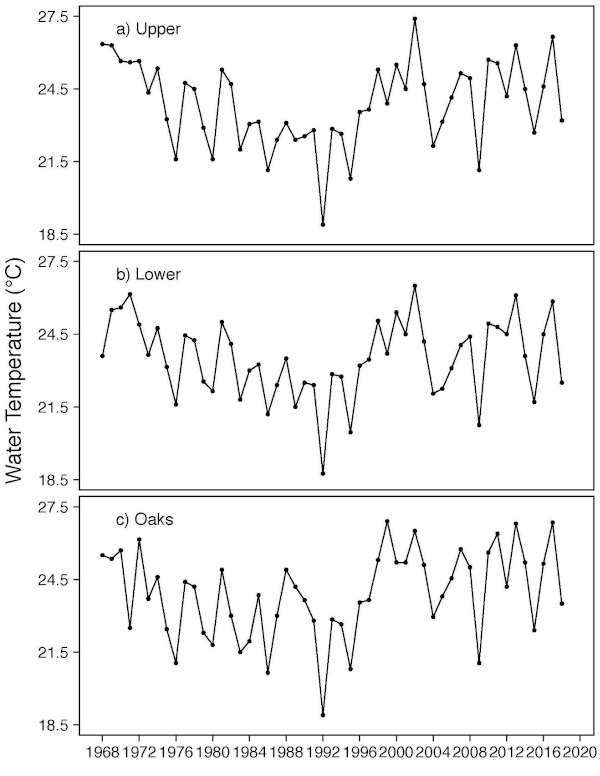
Cyanobacteria are majorly a problem in the summer and fall months, so to gain insights to the temperature during these time periods we focused our study on monthly temperature data collected between July and October from 1968 - 2019.
The DWR collected temperature profiles in Clear Lake, so we were able to look at the trends in not just surface epilimnetic temperature but also bottom hypolimnetic temperature. Now here is the fun math talk! We plotted monthly median temperatures and to see if there was rate of change, we used a special non-parametric statistical analysis called Thiel-Sen Slopes Estimator.
Thiel-Sen slopes represent medians of all pairwise differences between each annual timestep (change between the medians for each year), which can result in a calculated rate of change, either an increase or a decrease over time. To identify if this rate of change was meaningful, or statistically significant, we used Kendall’s p value (which treats the temperature and date data as a correlation to see if the rate of change is significant compared to no rate of change).
We used medians for this analysis as opposed to means or averages and Thiel-Sen is created for median datasets. We used medians because this descriptive statistic does a better job of capturing the typical temperature values and is more ecologically meaningful. The wild swings at the high / low ends in a natural set of data can influence mean calculations and makes for messy data that can’t be easily interpreted.
What we found wasn’t too surprising. Surface water temperatures have increased in Clear Lake, most significantly since 1985, and bottom temperatures have also increased significantly over the entire sampling period. Air temperatures globally are increasing, so it makes sense that water temperatures are also following suit.
Warmer waters, at the surface and bottom of Clear Lake, can lead to increased algae and cyanobacteria growth. Increased green algae, or phytoplankton, growth is good news for our fisheries, as phytoplankton is the base of the food web in Clear Lake, meaning more food is available for all the fish species throughout the lake. Likewise, warmer temperatures mean more cyanobacteria growth is also occurring, which means more HABs and nuisance conditions caused by the blooms.
Additional side effects of increasingly warmer waters is a decrease in oxygen in the water column. Oxygen is important for all biological processes as living things, such as insects and fish, that live in the lake and need oxygen to breathe. Warmer water holds less oxygen in colder water, meaning the warmer the water gets the less oxygen it can hold and the less life it can support.
So even if we have more phytoplankton, or food for fish, the system can’t support more fish because the oxygen will be limited due to the warmer temperatures. Sometimes fish mortality events, or fish kills, can occur when enough oxygen is depleted from the water.
Learn more about fish kills in my column Lady of the Lake: Figuring out Fish Kills (August 2021) and how temperature and oxygen play an important role in fish ecology. This is a very important concept as recent, unpublished research by the USGS has demonstrated that a majority of fish species in Clear Lake have been decreasing in numbers in recent years, and warmer waters and lower oxygen concentrations could be potential, but very important, factors for this alarming decline.
Sincerely,
Lady of the Lake
Angela De Palma-Dow is a limnologist (limnology = study of fresh inland waters) who lives and works in Lake County. Born in Northern California, she has a Master of Science from Michigan State University. She is a Certified Lake Manager from the North American Lake Management Society, or NALMS, and she is the current president/chair of the California chapter of the Society for Freshwater Science. She can be reached at
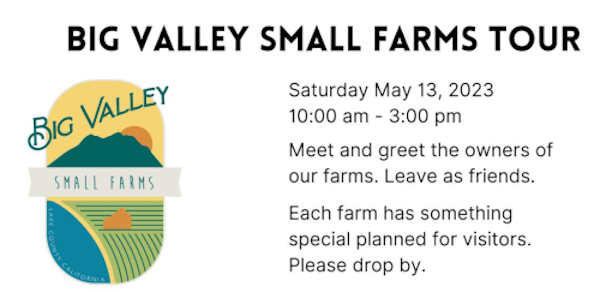
The Lady of the Lake will be available in-person to answer your lake questions on Saturday, May 13, at the Big Valley Small Farms Tour. The booths will be at Ripe Choice Farm from 10 a.m. to 3 p.m. The tour is open to the public. The Lady of the Lake wil see you there!