 How to resolve AdBlock issue?
News
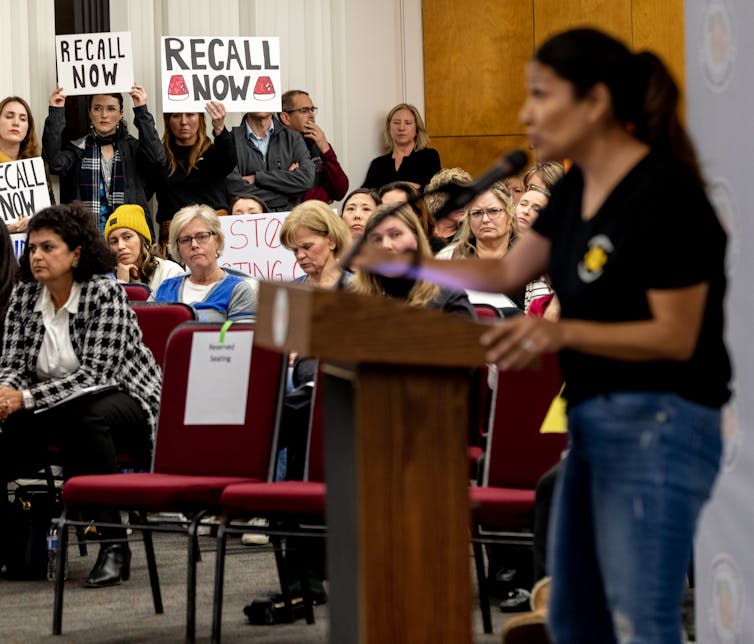
Public school superintendents are having a moment, and for many of them, the moment is neither super nor what they intended.
During the last several years, tense school board meetings where superintendents were fired erupted in Arizona, California, Colorado, Florida, Oregon, South Carolina and Virginia.
Contributing to this tension are politically divisive issues that many school superintendents have had to navigate over the last three years, including the teaching of race, book bans and providing access to athletics and bathrooms for students who identify as transgender.
Within this tense environment, a recent study found that nearly 40% of superintendents reported being threatened or feeling threatened on the job. And, 63% of superintendents reported feeling worried about their mental health and well-being over the past two years.
But while superintendents are feeling the heat, policymakers are unable to accurately determine the impact of pressure on superintendent well-being, performance and willingness to stay on the job.
In fact, the U.S. Department of Education does not collect such data on superintendents, and a nationally comprehensive, annually updated superintendent database has never existed.
As an education researcher who studies superintendents, I decided to create the data set myself by collecting data, one district at a time.
New insights into superintendent turnover
Since 2019, my research team has dedicated as many as 400 hours each year to collect the names of superintendents of nearly all traditional public school districts in the United States.
And for a newly published research study in the academic journal Educational Researcher, I conducted a comprehensive, national analysis of superintendent turnover in over 12,500 public school districts since 2019.
My analyses revealed an increase in turnover of nearly 3 percentage points – from 14.2% between 2019-20 and 2020-21 to 17.1% between 2021-22 and 2022-23. More than one out of every three states (37%) had a turnover rate greater than 20% between the last two school years.
A superintendent change occurred at least one time in 35% of districts nationwide, and 6% of districts experienced two or more turnover events.
Though we are unable to determine the exact cause, my research also shows that districts serving larger proportions of students of color were significantly more likely to experience superintendent turnover.
This finding is especially troubling given that frequent churn of leadership can disrupt a school district’s stability and culture, ultimately impacting students’ academic performance.
The role of gender
Superintendent turnover rates vary tremendously across states and districts.
Town and suburban districts were significantly more likely to experience superintendent turnover than urban and rural districts. New research suggests that contentious politics may contribute to superintendent fatigue.
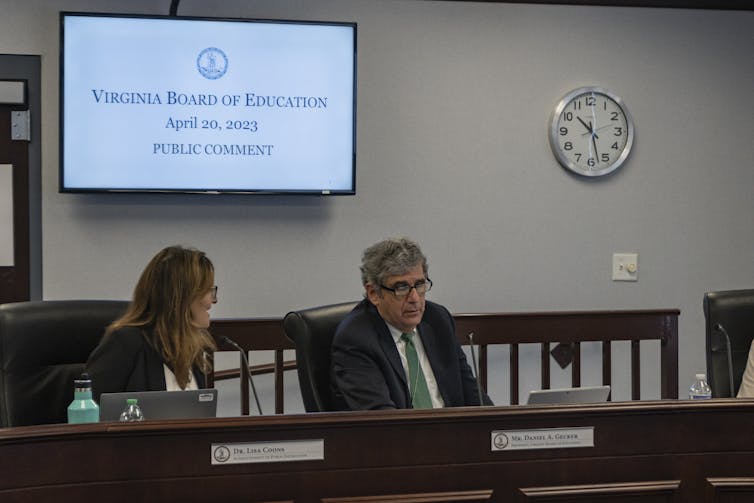
Sixty-five percent of suburban superintendents, for instance, agreed or strongly agreed that school board meetings have become more contentious, compared to 55% of urban superintendents and 47% of rural superintendents.
My research also revealed that superintendent turnover rates for men increased at nearly twice the rate of that for women.
The turnover rate for men jumped 3.2 percentage points, from 13.8% to 17.0%, while the increase for women was 1.8 percentage points, from 15.3% to 17.1%.
Though the jump in turnover rate for men could have narrowed the superintendent gender gap, the gap barely budged. Among districts that experienced turnover, very few hired a new superintendent who was a different gender than their prior superintendent.
As it is currently, the ratio between male and female superintendents nationally is 3-to-1. In some states, that ratio is as large as 8-to-1.
There are also differences in the characteristics of districts where superintendent jobs turned over.
Among districts led by men, those that experienced turnover had significantly larger proportions of students receiving free or reduced price lunches, students of color and students classified as English language learners
Women-led districts that experienced turnover had significantly smaller proportions of students classified as English language learners and students receiving free or reduced-price lunches.
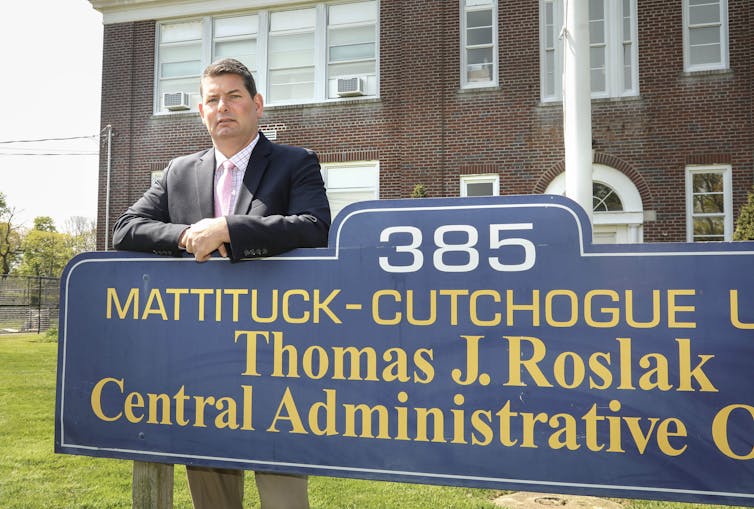
Moreover, districts that experienced superintendent turnover involving either a man or woman with larger proportions of white students were consistently more likely to hire a man to be their next leader.
Why superintendent data matters
This research only begins to fill an expansive void in our basic understanding of American superintendency.
Currently, the most commonly referenced data or reports on superintendents come from the American Association of School Administrators; the RAND Corporation, a nonprofit research institution; and the ILO Group, a women-owned national education strategy and policy firm.
These sources do provide valuable insight into the superintendency.
For example, ILO Group’s analyses show that half of the nation’s largest 500 districts have experienced superintendent turnover since March 2020.
Based on a survey of 222 district leaders, the RAND Corporation found that 13% of superintendents planned to leave their position after the 2020-21 school year.
Yet, this source is quite restricted in what it can reveal about superintendent turnover due to low response rates, small samples and respondent anonymity that does not allow superintendents to be linked to districts.
Additionally, the RAND surveys asked about superintendents’ intentions to leave their current position, a measure known to be largely inaccurate for determining actual turnover.
Due to the limitations of existing data, divergent claims have emerged of both “projected normal turnover rates” and a “mass exodus” of superintendents.
Some states are making an effort to support the collection and analysis of data on superintendents. However, states often make it incredibly challenging for researchers, for example, by charging a substantial fee for data access – in some cases as much as $10,000 a year.
Having this data would provide a timely, comprehensive picture of the superintendency – not just a brief snapshot of a few superintendents at a point in time. Moreover, national, longitudinal superintendent data would allow for deeper examination of the contributors to and consequences of superintendent turnover.
If ensuring some teachers and students are not disproportionately at risk of undesirable superintendent churn, sustained support for and efforts to collect and analyze national longitudinal superintendent data must be prioritized.
Rachel S. White, Assistant Professor of Educational Leadership and Policy Studies, University of Tennessee
This article is republished from The Conversation under a Creative Commons license. Read the original article.
Melinda Fred, 39, has been arrested in the case, according to a report from Lt. Luke Bingham.
Bingham identified the murder victim as Christopher Aaron Burrows.
At 4:40 a.m. Tuesday, the sheriff’s office received a 911 call reporting a person had been stabbed on Red Feather Lane in Lakeport, Bingham reported.
Bingham said sheriff’s deputies responded to the area and located Burrows lying on the ground with a stab wound.
Deputies immediately began lifesaving measures until the arrival of paramedics. However, Bingham said Burrows ultimately succumbed to his injuries and was pronounced deceased at the scene.
Bingham said deputies secured the scene and requested the assistance of the Lake County Sheriff’s Office Major Crimes Unit, which responded and assumed the investigation.
After conducting a lengthy investigation, several interviews and review of surrounding video surveillance, Bingham said investigators questioned Fred and arrested her for murder, Bingham said.
Bingham said Fred was booked into the Lake County Correctional Facility for first-degree murder and assault with a deadly weapon that was not a firearm.
The Major Crimes Unit is asking anyone with additional information regarding this investigation to contact Det. Dean Preader at
The council will meet at 6 p.m. Thursday, May 18, in the council chambers at Clearlake City Hall, 14050 Olympic Drive.
The meeting will be broadcast live on the city's YouTube channel or the Lake County PEGTV YouTube Channel. Community members also can participate via Zoom or can attend in person. The webinar ID is 859 5455 1871.
One tap mobile is available at 16694449171,,85954551871# or join by phone at 669 444 9171 or 720 707 2699.
The agenda can be found here.
Comments and questions can be submitted in writing for City Council consideration by sending them to City Clerk Melissa Swanson at
To give the council adequate time to review your questions and comments, please submit your written comments before 4 p.m. Thursday, May 18.
Each public comment emailed to the city clerk will be read aloud by the mayor or a member of staff for up to three minutes or will be displayed on a screen. Public comment emails and town hall public comment submissions that are received after the beginning of the meeting will not be included in the record.
At Thursday’s council meeting, there will be a presentation of May’s adoptable dogs and on the pavement management plan, and proclamations declaring May 2023 as California Tourism Month and Safe Boating Month.
Under business, the council will consider entering into a contract with Argonaut Constructors for the 18th Avenue Improvement Project in the amount of $4,632,295 and
authorize the city manager to approve up to 10% for additional unforeseen contract amendments.
The project will connect 18th Avenue to Highway 53, crossing the city’s former Pearce Field airport property.
The council previously had awarded the project on April 6, 2023, but the action was later rescinded due to a delay from the funding source, specifically, the California Transportation Commission.
On the meeting's consent agenda — items that are considered routine in nature and usually adopted on a single vote — are minutes of the January, February and March meetings; approval of Resolution No. 2023-21 authorizing the road closure for the Dam Road Extension/South Center Drive Bike/Project; receive and file the minutes of the April 12 Lake County Vector Control District Board meeting; approval of a leave of absence without pay through June 7 for Maintenance Worker II Johnny Miskill; adopt Resolution No. 2023-22 for a lease with Dell Financial Services for computer workstations for administration departments; adoption of Resolution No. 2023-22 for the fifth amendment to the fiscal year 2022/23 budget.
The council also will hold a closed session to discuss labor negotiations regarding the Clearlake Middle Management Association and for conference with legal counsel regarding a case of existing litigation, Koi Nation of Northern California v. City of Clearlake, et al., Lake County Superior Court.
Email Elizabeth Larson at
The forest reported that the off-highway vehicle and Deer Valley campground closure order (Order No. 08-23-02) on the Upper Lake Ranger District are lifted effective at 9 a.m. on Tuesday, May 16.
Agency and volunteer crews have been clearing trails after severe storm damage this winter. Fire-killed and fire-injured trees may continue to fall, so riders should be prepared and exercise caution.
Road access remains limited across the forest due to storm damage, though some temporary fixes are in place for emergency vehicles.
“Last week Lake County Department of Public Works crews completed temporary repairs to Elk Mountain Road (County Road 301) to provide quicker response time for first responders in the event of an incident,” said Upper Lake District Ranger Frank Aebly.
“This temporary fix is for emergency vehicles only,” said Aebly. “To access the OHV trail system or Deer Valley Campground, the public will need to take the longer alternate route via Potter Valley (Mendocino County Rd 240 / Lake County Rd 301). The gate above Middle Creek Campground will remain closed and locked.”
The public can also access Deer Valley campground and the trail system via Forest Roads 16N01 and 16N30 out of Sam Alley, but these roads are very narrow in many places and only drivable with a high-clearance, four-wheel drive vehicle. Officials advise the public not to haul trailers up these roads.
A timeframe for the permanent repair to Elk Mountain Road is not yet available. Officials ask the public to obey all posted signs and never drive around barriers or locked gates.
Alerts and conditions in the Mendocino National Forest are available online.
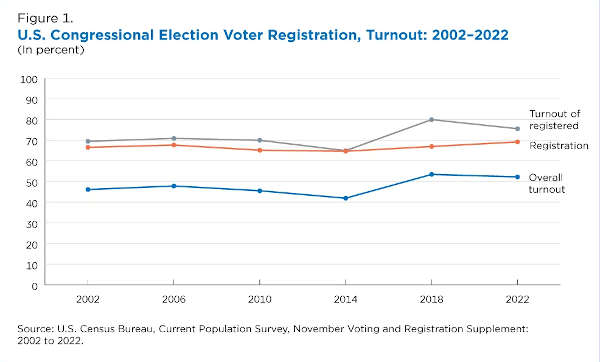
More than half of the nation’s citizen, voting-age population (CVAP) voted in 2022 — the second highest turnout for a congressional election in two decades.
The 52.2% voter turnout was just 1.2 percentage points lower than in 2018 (53.4%) and significantly higher than in 2014 (41.9%) and in 2010 (45.5%).
Despite lower turnout in 2022 than in 2018, the share of voting-age citizens who were registered to vote was 69.1% — the highest registration rate in a midterm election since at least 2002.
As a result, turnout as a share of those registered to vote in 2022 was down 4.4 percentage points from 2018 (Figure 1).
The newly released data are based on the Voting and Registration Supplement which surveyed non-institutionalized civilians about their voting and registration behavior in the 2022 congressional elections.
Due to the nature of survey responses, these estimates may differ from administrative reports and estimates from other data sources but provide a unique look at the characteristics of American voters.

Why did many who registered not vote?
The most common reasons reported for not voting in 2022: “Too busy, conflicting work or school schedule” (26.5%); “Not interested, felt my vote wouldn’t make a difference” (17.6%); and “Illness or disability,” (12.5%) (Figure 2).
The share that reported being “too busy” to vote did not change significantly from 2018 (Figure 2).
However, more registered nonvoters said they “forgot to vote” in 2022, up 2.2 percentage points from 2018. Those who said they were “not interested, felt my vote wouldn’t make a difference” also increased by 2.1 percentage points from 2018 to 2022. These increases did not differ statistically from one another.

The shares of White non-Hispanic and Black non-Hispanic registered nonvoters who were too busy to vote were not significantly different (Figure 3).
But these groups were less likely to report being “too busy” than Asian non-Hispanic and Hispanic nonvoters (these two groups’ rates also did not significantly differ). The share of “other race, non-Hispanic” voters who were too busy was not statistically different from any other group’s share.
The Census Bureau has asked registered nonvoters why they did not vote after every election since 1996, and from 1972 to 1980 before that.
A new voting supplement visualization, Questions on the Voting Supplement of the Current Population Survey (census.gov), shows how the survey questions have changed over time.

How did people vote?
The share of voters who voted early, by mail or a combination of both in 2022 remained high for a midterm election following record high rates in the 2020 presidential election (Figure 4).
Of those who voted, 49.8% used these voting methods — 10 percentage points higher than in 2018 (39.8%) and 18.7 percentage points higher than in 2014 (31.1%).
Nearly a third (31.8%) of all U.S. voters cast ballots by mail, up 8.6 percentage points from 2018 but down 11.2 percentage points from 2020.

Almost half (47.1%) of all voters voted early. While this was 20.4 percentage points lower than the early voting rate in 2020, it was 9.3 percentage points higher than the early voting rate in 2018.
The use of early and mail-in voting varied by race and ethnicity (Figure 5):
• Two-thirds (66.7%) of Asian non-Hispanic voters used these voting methods — the highest rate across race and ethnicity.
• A majority of Hispanic voters (58.1%) voted either early or by mail.
• White non-Hispanic (48.3%) and Black non-Hispanic voters (46.0%) — the lowest rates among all race/ethnic groups.

Geography of voting
There was significant variation in the 2022 turnout of registered voters at the state level (Figure 6).
For example, in Colorado 85.0% of registered voters cast their ballots, among the highest rates in the nation. In contrast, registered turnout in West Virginia was 61.4%.
In the South, Georgia stood out with 82.0% of registered voters voting — the highest turnout in the region.
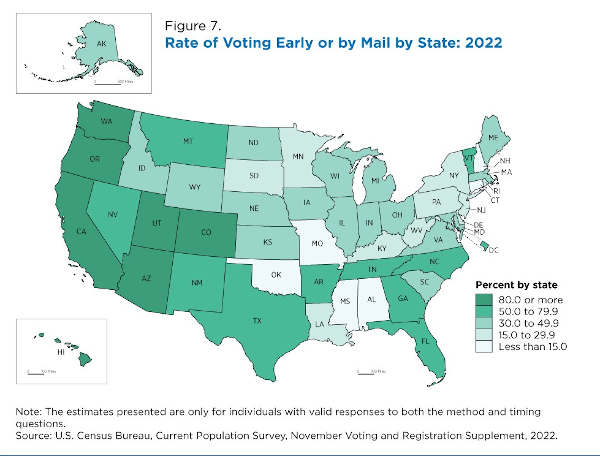
Voting method also varied greatly by state because state mail-in and early voting laws differ (Figure 7).
The highest rates of early and mail-in voting were in Colorado, Hawaii, Oregon and Washington, where 95% or more of those who voted did so by mail, before Election Day or both. (While rates were higher in Oregon and Washington, neither Oregon and Washington or Colorado and Hawaii differed statistically.)
The lowest rate of early and mail-in voting was in Alabama (3.6%). Other states with low (12% or lower) rates: Connecticut, Mississippi, Missouri, Oklahoma and New Hampshire (rates in these states did not differ statistically).
Tables with additional information about voters are available.
Note: More information on confidentiality protection, sampling error, nonsampling error and definitions is available in the technical documentation. All comparative statements in this story have undergone statistical testing, and, unless otherwise noted, all comparisons are statistically significant at the 10 percent significance level.
Jacob Fabina is an economist in the Census Bureau’s Social, Economic, and Housing Statistics Division.
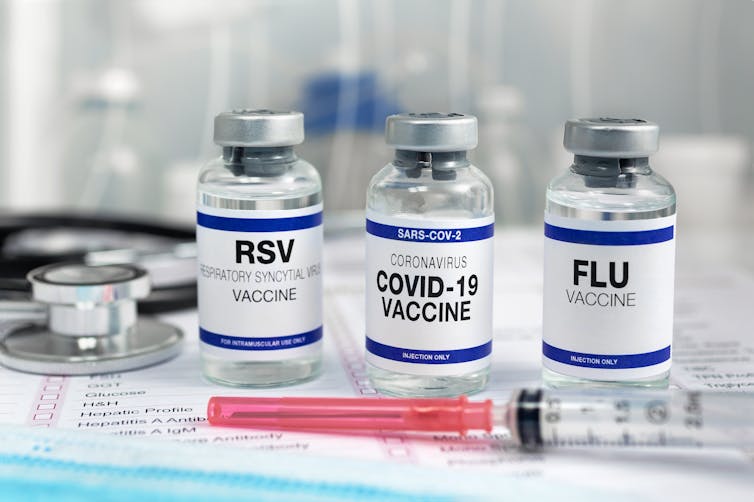
The U.S. Food and Drug Administration approved the world’s first vaccine to prevent the respiratory infection RSV, short for respiratory syncytial virus, on May 3, 2023. The new shot represents six decades of starts and stops in the hunt for a vaccine to curb one of the most common winter respiratory viruses. RSV leads to around 14,000 deaths in older adults every year and can cause severe illness in infants and children as well.
The vaccine, called Arexvy, made by the biopharmaceutical company GSK, is approved for use in adults ages 60 and over. Now that it is FDA-approved, it must still be endorsed by the Centers for Disease Control and Prevention, a move that’s expected in summer 2023.
The Conversation asked Annette Regan, an epidemiologist and vaccine specialist, to discuss the significance of the first vaccine against RSV and the other RSV vaccine candidates that are in the pipeline.
1. How does the new vaccine protect against the virus?
The vaccine targets a protein known as RSV F glycoprotein, which is found on the surface of the virus. The F protein enables the RSV virus to enter host cells.
By stimulating antibodies against this protein, the vaccine should protect against infection. Clinical trial data suggests this is the case, since Arexvy was 80% effective at protecting against RSV-related disease and 94% effective at protecting against severe disease.
The vaccine also includes an adjuvant, a substance that helps amplify the effect of the vaccine by boosting the immune system’s response.
2. When and for whom will it be available?
The RSV vaccine has been developed for and tested in adults age 60 and older. While the FDA has approved the vaccine – which means it has deemed it safe and effective – the shot will not be administered by health care professionals until it is reviewed by an independent expert group coordinated by the CDC called the Advisory Committee on Immunization Practice, which makes vaccine recommendations to the CDC.
The committee’s recommendations will cover how the vaccine should be used – including the ages at which the vaccine should be given – the number of doses needed, the time between doses and precautions and contraindications.
The committee is expected to meet in June 2023 to make a recommendation on the new RSV vaccine, after which the CDC would officially endorse it. The vaccine could be rolled out to the public as soon as late summer 2023, well before the typical RSV season, which usually starts in the fall and peaks in winter.
It’s hard to say what the committee’s recommendation will be. It could recommend the vaccine for all adults 60 and older, or a subset of older adults. While the clinical trial showed the vaccine was 81% effective among adults ages 60 to 69 and 94% effective among adults ages 70 to 79, it was only 34% effective among adults 80 and older. Given the lower efficacy for adults ages 80 and older, the committee could place an age cap on the recommendations.
3. Why has the first RSV vaccine been so long in coming?
A vaccine against RSV has been in the works for decades. One problem that has plagued vaccine manufacturers is the difficulty of identifying an antigen – the piece of the virus that the vaccine targets – that doesn’t change, or shape-shift. The F protein of the RSV virus is notorious for changing its shape once it fuses with a host’s cell.
In 2013 and 2014, the National Institutes of Health worked out how to “freeze” the F protein into a fixed shape before fusing with a cell so that a vaccine could target it well. This was a game-changer that allowed the development of effective vaccines using this target.
In addition to challenges in identifying a good antigen, there were earlier setbacks. Early attempts to create an inactivated RSV vaccine in the 1960s were stalled after they caused an enhanced form of RSV disease. Children who had never had RSV before and received the vaccine experienced very severe illness when they encountered the virus in the community, and two children died. This tragic outcome sidetracked vaccine development for decades, as researchers needed to investigate the cause and ensure that the problem wouldn’t occur again for future vaccines.
4. What other RSV vaccine candidates are coming down the line?
In addition to Arexvy, many other promising RSV candidates are under development, some of which are likely to become available later this year or in early 2024.
The next RSV vaccine under review with the FDA is Pfizer’s RSV vaccine. It is similar to the recently approved vaccine except that it has no adjuvant and is bivalent, meaning that it targets both RSV A and RSV B – the two strains of RSV. This vaccine is meant not only for adults ages 60 and older, but also for pregnant people – with the aim of protecting young infants through maternal antibodies.
Data from a phase 3 clinical trial – the last stage of clinical trials before a company would apply for a license – shows that when given during pregnancy, the Pfizer vaccine was 82% effective in protecting infants less than 3 months old against severe RSV infection. The FDA will be making a determination on the Pfizer vaccine for older adults later in May 2023 and for pregnant people in August 2023. The CDC advisory committee is scheduled to discuss vaccine recommendations in October 2023, making this the likely next possible vaccine available.
A few other biopharmaceutical companies have developed alternative RSV vaccines, some of which are in phase 3 clinical trials. For example, Moderna has an mRNA vaccine against RSV with promising preliminary results. Regardless of which companies make it to the finish line next, it is clear that in the near future there will be a variety of new tools to help protect against RSV infection.
Annette Regan, Associate Professor of Epidemiology, University of San Francisco
This article is republished from The Conversation under a Creative Commons license. Read the original article.