 How to resolve AdBlock issue?
News
The list of participating park units can be found here.
Included among the participating parks are Anderson Marsh State Historic Park in Lower Lake and Clear Lake State Park in Kelseyville.
“State Parks invites these brave people and their families to enjoy the beauty, peace, and rich history of their public lands,” said California State Parks Director Armando Quintero. “Thank you for sacrificing so much for your nation, for your families, and for our freedom.”
Veterans, active duty, and reserve military personnel must show a valid military ID, or proof of discharge other than dishonorable or bad conduct, to receive free admission.
AB 150 (Olsen), signed by Governor Edmund G. Brown, Jr. in 2013, authorized California State Parks to offer veterans, active duty, and reserve military personnel from the United States Armed Forces and the National Guard of any state a reduced or free day use at participating state parks.
State Parks is reminding the public that there are other free passes available including the California State Park Adventure Pass for California fourth graders and their families.
Since the three-year pilot program began in 2021, almost 37,000 fourth graders have signed up for their free Adventure Pass that allows them and their families free access to 19 select state parks.
There is still time to sign up. This year’s fourth graders have until Aug. 31 to enjoy their Adventure Pass.
Learn more about the Adventure Pass here and other free passes here.
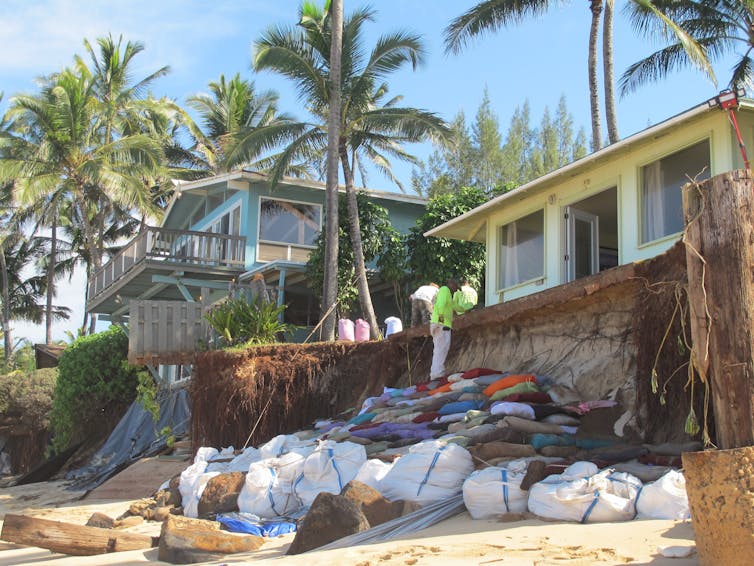
Honolulu has lost more than 5 miles of its famous beaches to sea level rise and storm surges. Sunny-day flooding during high tides makes many city roads impassable, and water mains for the public drinking water system are corroding from saltwater because of sea level rise.
The damage has left the city and county spending millions of dollars on repairs and infrastructure to try to adapt to the rising risks.
Future costs will almost certainly be higher. More than US$19 billion in property value, at today’s dollars, is at risk by 2100 from projected sea level rise, driven by greenhouse gas emissions largely from the burning of fossil fuels. Elsewhere in Honolulu County, which covers all of Oahu, many coastal communities will be cut off or uninhabitable.
Unwilling to have their taxpayers bear the full brunt of these costs, the city and county sued Sunoco LP, Exxon Mobil Corp. and other big oil companies in 2020.
Their case – one of more than two dozen involving U.S. cities, counties and states suing the oil industry over climate change – just got a break from the U.S. Supreme Court. That has significantly increased their odds of succeeding.
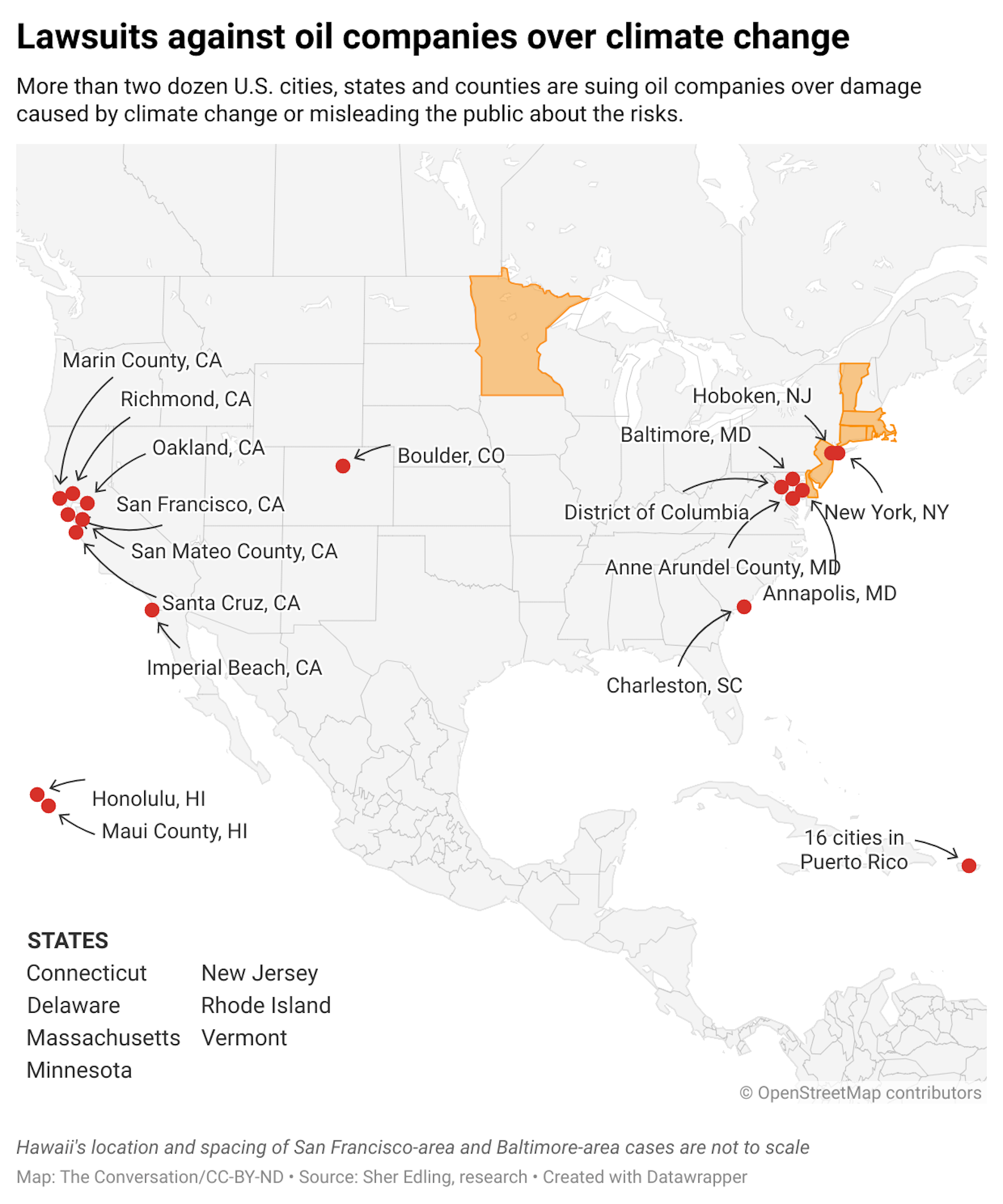
Suing over the cost of climate change
At stake in all of these cases is who pays for the staggering cost of a changing climate.
Local and state governments that are suing want to hold the major oil companies responsible for the costs of responding to disasters that scientists are increasingly able to attribute to climate disruption and tie back to the fossil fuel industry. Several of the plaintiffs accuse the companies of lying to the public about their products’ risks in violation of state or local consumer protection laws that prohibit false advertising.
The governments in the Honolulu case allege that the oil companies “are directly responsible” for a substantial rise in carbon dioxide emissions that have been driving climate change. They say the companies should contribute their fair share to defray some of the costs.
The gist of Honolulu’s complaint is that the big oil companies have known for decades that their products cause climate change, yet their public statements continued to sow doubts about what was known, and they failed to warn their customers, investors and the public about the dangers posed by their products.
Were it not for this deception, the lawsuit says, the city and county would not be facing mounting costs of abating the damage from climate change.
Importantly, the complaint is based on state – not federal – law. It alleges that the defendants have violated established common law rules long recognized by the courts involving nuisance, failure to warn and trespass.
The city and county want the companies to help fund climate adaptation measures – everything from building seawalls and raising buildings to buying flood-prone properties and restoring beaches and dunes.
Supreme Court could have killed these cases
Not surprisingly, the oil companies have thrown their vast legal resources into fighting these cases.
On April 24, however, they lost one of their most powerful arguments.
The U.S. Supreme Court declined to hear challenges in the Hawaii case and four others involving the seemingly technical question of which court should hear these cases: state or federal.
The oil companies had “removed” the cases from state court to federal court, arguing that damage lawsuits for climate change go beyond the limits of state law and are governed by federal law.
That theory would have derailed all five cases – because there is no federal common law for greenhouse gases.
The court made that position clear in 2011 in American Electric Power Co. v. Connecticut. Several state and local governments had sued five major power companies for violating the federal common law of interstate nuisance and asked for a court order forcing these companies to reduce their emissions. The Supreme Court refused, holding that the federal Clean Air Act displaced federal common law for these gases.
In Native Village of Kivalina v. Exxon Mobil Corp., a federal court of appeals extended that holding to also bar claims for monetary damages based on federal common law.
To avoid this fate, Honolulu and the other plaintiffs focused on violations of state law, not federal law. Without exception, the federal courts of appeals sided with them and sent the cases back to state court.
What happens next?
The Honolulu case leads the pack at this point.
In 2022, the 1st Circuit Court in Hawaii denied the oil companies’ motion to dismiss the case based on the argument that the Clean Air Act also preempts state common law. This could open the door for discovery to begin sometime this year.
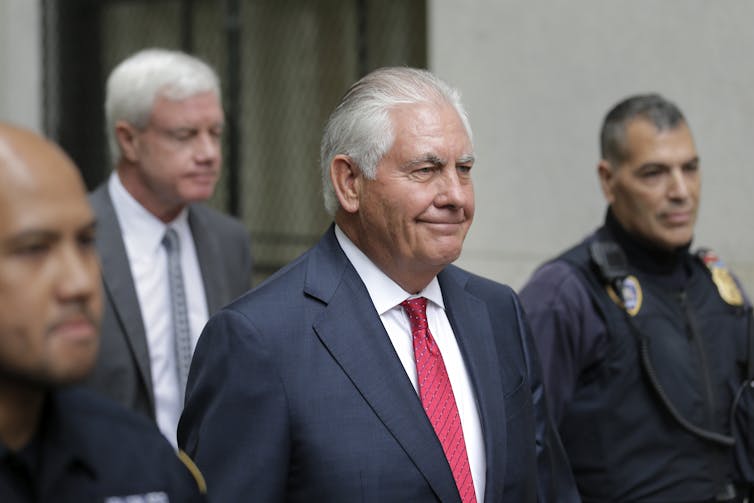
In discovery, senior corporate officers – perhaps including former Exxon Mobil CEO Rex Tillerson, who was secretary of state under Donald Trump – will be required to answer questions under oath about what the companies knew about climate change versus what they disclosed to the public.
Evidence from Exxon documents, described in a recent study by science historians Naomi Oreskes and Geoffrey Supran, shows that the company’s own scientists “knew as much as academic and government scientists knew” about climate change going back decades. But instead of communicating what they knew, “Exxon worked to deny it,” Supran and Oreskes write. The company overemphasized uncertainties and cast doubt on climate models.
This is the kind of evidence that could sway a jury. The standard of proof in a civil case like Honolulu’s is “preponderance of the evidence,” which roughly translates to 51%. Ten of the 12 jurors must agree on a verdict.
Any verdict likely would be appealed, perhaps all the way to the U.S. Supreme Court, and it could be years before the Honolulu case is resolved.
Lawsuits don’t begin to cover the damage
It is unlikely that even substantial verdicts in these cases will come close to covering the full costs of damage from climate change.
According to the National Oceanic and Atmospheric Administration, in 2022 alone the U.S. sustained 18 weather and climate disasters that each exceeded $1 billion in damage. Together, they cost over $165 billion.
But for many of the communities most at risk from these disasters, every penny counts. We believe establishing the oil companies’ responsibility may also discourage further investments in fossil fuel production by banks and brokerage houses already nervous about the financial risks of climate disruption.
Patrick Parenteau, Professor of Law Emeritus, Vermont Law & Graduate School and John Dernbach, Professor of Law, Widener University
This article is republished from The Conversation under a Creative Commons license. Read the original article.

CLEARLAKE OAKS, Calif. — The 39th Annual Catfish Derby drew 958 anglers — children and adults — this past weekend for the three-day event in Clearlake Oaks.
Many brought along their immediate and extended families and friends and most came in from outside of Lake County.
Derby Committee Chair Dennis Locke credited the lake conditions for the crowds. “These are the best lake conditions in my memory and we had a near record high for the total number of anglers registered.”
Locke said considering those that attended but didn’t fish the derby likely drew in well over 1,000 visitors. “That’s a real boost to our local economy,” he said.
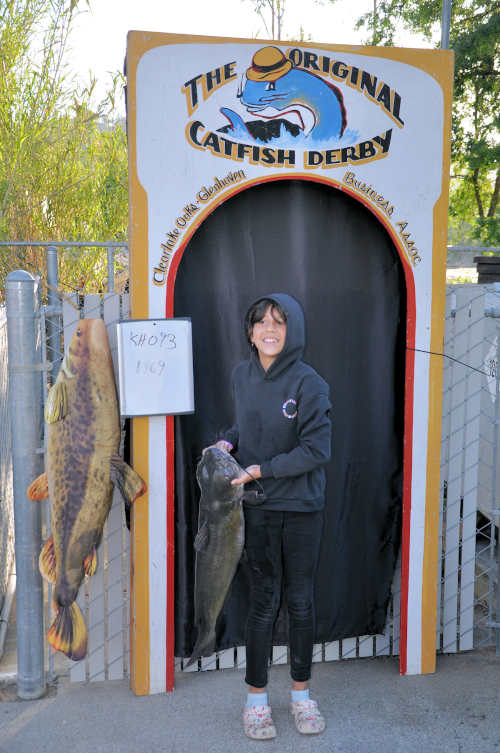
There are other catfishing derbies but none that bear the distinction of being the largest of its kind west of the Mississippi and occurring in an ancient lake considered the largest fresh warm water lake in the nation, Locke said.
The annual three-day derby is definitely a family affair and, for some, a long-time tradition. Locke estimates 80% fish as families.
Most that registered to fish, 60%, came from outside of Lake County, some traveling great distances to get here, as far away as Tennessee.
Many brought along family members that didn’t register to fish but who came to cheer on their dads, moms, sisters, brothers, cousins, and friends — and to enjoy the natural beauty of the area, especially the lake.
“It’s beautiful here; my entire family fishes the derby,” said Jeremy Cain, this year’s first place winner with his 25.87-pound catch.
Cain said his 8-year-old son registered as an adult and brought in an 18 pounder. “Neither he, my daughter or wife placed this year but we’ll be back next year for another try.”
Cain has been fishing with his dad since he was a youngster. “My dad’s here with us,” he said. “We were surprised to win and have no idea what we’ll do with the $5,000 prize money. We love the environment here and as much as anything we come for fun and relaxation. The cash is icing on the cake.”
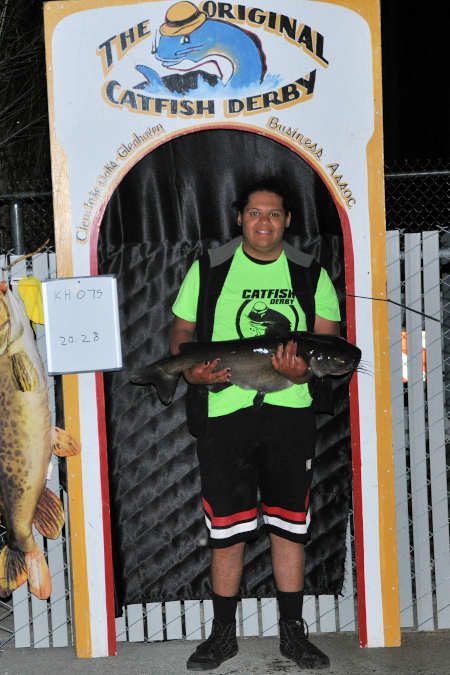
In the 11- to 15-year-old category, Cruz Gomez from Clearlake was the lucky winner with his 20.28-pound catch.
Cruz said he wanted to give a shout out to his brother-in-law, Orin, for the good bait. “It’s a secret family recipe,” he said.
Cruz is a first-time derby participant. “My sister placed last year and encouraged me to enter. I’m glad she did and I will definitely come back next year,” he said.
As to what Cruz will do with his $100 prize money, “I’ll probably put it towards a new phone,” he said.
Ten-year-old Alani Hickison from Sacramento won first prize in the “up to 10 years” category with her 19.69-pound catch.
She wasn’t present at the awards ceremony but her $100 prize money will be mailed to her, said Locke.
During the awards ceremony, Locke acknowledged two families — the Lanes and the Parishes.

“The Lane family hails from Oregon, they have been coming for 17 years. They represent four generations and we’re happy to see them here again,” he said.
As for the Parish family, this was a very special and somewhat emotional year. Kevin Parish Jr., the anointed leader of the group, said they were honoring the legacy of his father, Albert Parish Sr, who recently passed away and had led the pilgrimage to the derby for 18 years.
“There are 15 of us here this year,” Parish said.
Nine-year-old Nicholas Hughes Jr., the youngest of the group, placed second in the up to 10-year category with his 18.90-pound catch. “Nicholas is from Muskogee, Oklahoma,” Parish said.
“We’re from all over; Oklahoma, Kentucky, Tennessee, Texas and Southern California — Riverside, San Bernardino, and Los Angeles counties,” he said.
“We’ll be back next year, count on it,” Parish said. “It’s a family tradition and what my father would want us to do.”
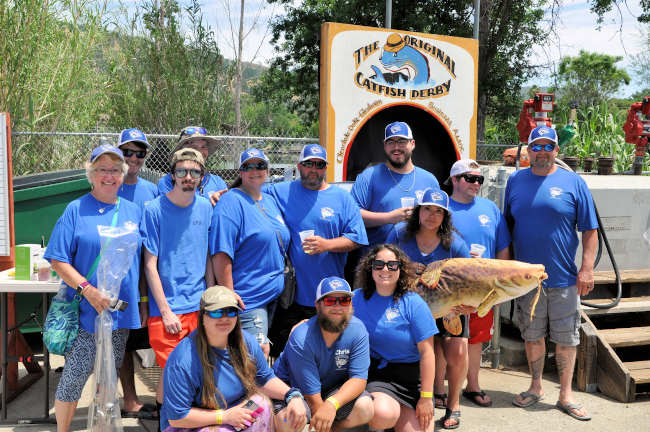
Association President Alvaro Valencia reminded everyone to thank the many volunteers who helped put on the 3-day event, also noting Locke’s leadership.
“He undoubtedly pulled some very long nights to make sure every detail was attended to and the results are outstanding,” Valencia said. “It’s a lot of work, but also fun. We are especially proud to host an event that brings families together. I like to think that families who fish together stay together.”
Locke also thanked and acknowledged the over 60 volunteers who worked long hours to run this year’s derby.
“There are always questions after the derby so call us at 707-596-0248 and we’ll respond,” Locke said. “Just give us a couple of days to rest up.”
For photos, final results and other details about the derby, visit www.clearlakeoaks.org/derby and catch some of the day-to-day postings and stories on the derby Facebook page, Catfish Derby in the Oaks.
2023 Catfish Derby Summary[11662] by LakeCoNews on Scribd

LAKE COUNTY, Calif. — A woman who authorities said fatally stabbed her boyfriend last week has been charged with murder.
Melinda Mildred Fred, 39, is being held on $1 million bail for the killing of 36-year-old Christopher Aaron Burrows.
Lake County Sheriff’s deputies responded to a report of a stabbing on Red Feather Lane in Lakeport at 4:40 a.m. May 16.
Deputies found Burrows lying on the ground with a single stab wound. Despite the efforts of deputies and paramedics, Burrows died of his injuries at the scene. Fred was arrested hours later.
Chief Deputy District Attorney Richard Hinchcliff told Lake County News that the investigation so far has confirmed that Burrows was Fred’s boyfriend.
Hinchcliff said Fred has been charged with murder, assault with a deadly weapon and domestic violence.
As for the motive in the killing, “Right now it’s still speculation,” said Hinchcliff. “There’s still investigation going on.”
At her May 18 arraignment, Fred’s bail was set at $1 million and defense attorney Tom Quinn was appointed to represent her, Hinchcliff said.
Hinchcliff said Fred will appear in Lake County Superior Court’s Department 3 at 8:15 a.m. Tuesday for the appearance of counsel and entry of her plea.
Email Elizabeth Larson at
“Visitors should recognize the inherent risks of recreating outdoors, especially after natural disasters,” said Mendocino National Forest Supervisor Wade McMaster.
“Road conditions, which are always dynamic, are especially changed given the post-fire hazards and storm damage. New reports are coming in every day from our crews and field staff of downed trees, plugged culverts and washouts,” McMaster said.
In areas where wildfire has occurred, significant rainfall and wind create hazards.
Roads within the August Complex and Ranch Fire footprints are subject to falling trees, landslides, rockfall, erosion, debris flows and flooding.
The M10 Road is impassable west of Fouts Campground. The road experienced multiple slides, rockfall and hillslope failure after prolonged winter storms.
There is access to the Letts Lake Campground from the east via the M5 Road and 17N02 Road, a detour that adds about 2 hours additional driving time.
The 17N02 Road has a lingering snowpack, and forest officials recommend driving high-clearance, four-wheel drive vehicles only. Trailers and RVs are not advised.
The road issues will also impact maintenance this summer. There will be no trash service or water supply at Letts Lake Campground until the M10 Road is repaired. The front portion of the campground will be open for primitive camping.
The M5 Road at the 17N02 Junction to Cedar Camp is also closed for the season due to several slides, blowdown and unstable roadbed.
Elk Mountain Road above Middle Creek Campground also has a slide and hillslope failure, though the county has put in a temporary repair for access by emergency responders only.
To reach the Upper Lake Ranger District OHV trail system and campgrounds on Elk Mountain Road, visitors will need to drive via Potter Valley (Mendocino County Rd 240 / Lake County Rd 301) or via Sam Alley (Forest Roads 16N01 and 16N30).
The Sam Alley alternate route is narrow in many places and only drivable with high-clearance, four-wheel drive vehicles. Officials advise the public not to haul trailers up these roads.
The M6 Road has a slide making it impassable approximately two miles north of the Bloody Rock Trailhead.
Before this winter’s storms, the M1 Road had been closed due to a slide at Bar Creek about three miles north of the Eel River Station. The detour to get to recreation areas above the slide is to take the M4 Road North to the M2 Road, then west on 23N29 (Espee Ridge Road).
Forest officials ask visitors to be prepared before traveling to the forest.
“Our staff is working extremely hard to get roads repaired, access restored and services ready for the public,” said McMaster. “We want everyone to enjoy these public lands, but visitors need to plan and be aware of their surroundings at all times. Never park or camp under dead trees or hanging limbs; stay alert if the wind picks up; know where you are going and any alternate routes; and carry emergency supplies.”
“Cell service is not reliable in the forest, so make sure you share your itinerary with a friend or relative and what time you can be expected to return.”
Forest staff continue to conduct storm damage assessments to identify hazards and road issues. As damage assessments continue, it is likely there could be more road closures and hazards.
Visitors are advised to check for forest closures, road conditions and other alerts at https://www.fs.usda.gov/alerts/mendocino/alerts-notices or by calling 530-934-1137.
Information about recreation areas is available at https://www.fs.usda.gov/recmain/mendocino/recreation.
Visitors can report storm damage and road conditions by sending an email to
One year in the next five will almost certainly be the hottest on record and there’s a two-in-three chance a single year will cross the crucial 1.5℃ global warming threshold, an alarming new report by the World Meteorological Organization predicts.
The report, known as the Global Annual to Decadal Climate Update, warns if humanity fails to reduce greenhouse gas emissions to net zero, increasingly worse heat records will tumble beyond this decade.
So what is driving the bleak outlook for the next five years? An expected El Niño, on top of the overall global warming trend, will likely push the global temperature to record levels.
Has the Paris Agreement already failed if the global average temperature exceeds the 1.5℃ threshold in one of the next five years? No, but it will be a stark warning of what’s in store if we don’t quickly reduce emissions to net zero.
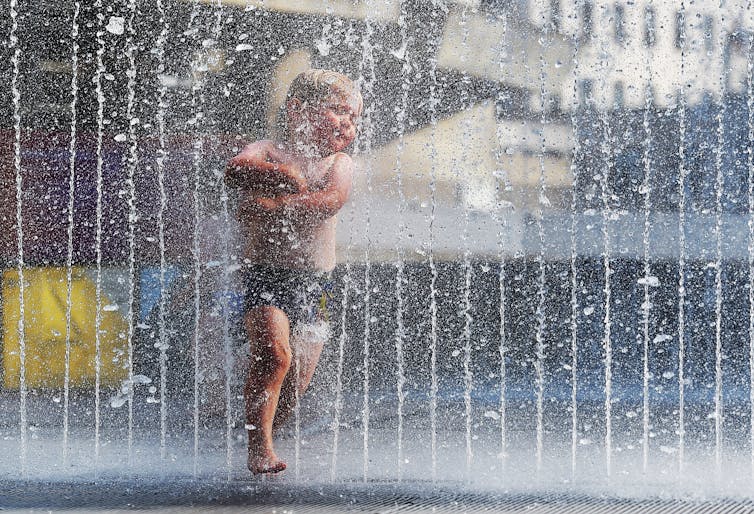
Warming makes record heat inevitable
The World Meteorological Organization update says there is a 98% chance at least one of the next five years will be the hottest on record. And there’s a 66% chance of at least one year over the 1.5℃ threshold.
There’s also a 32% chance the average temperature over the next five years will exceed the 1.5℃ threshold. The chance of temporarily exceeding 1.5℃ has risen steadily since 2015, when it was close to zero. For the years between 2017 and 2021, it was a 10% chance.
Human-caused greenhouse gas emissions have already driven up global average temperatures by more than 1℃ since the late 19th century. The update notes the 2022 average global temperature was about 1.15℃ above the 1850-1900 average, despite the cooling influence of La Niña conditions. Temperatures are now rising by about 0.2℃ per decade.
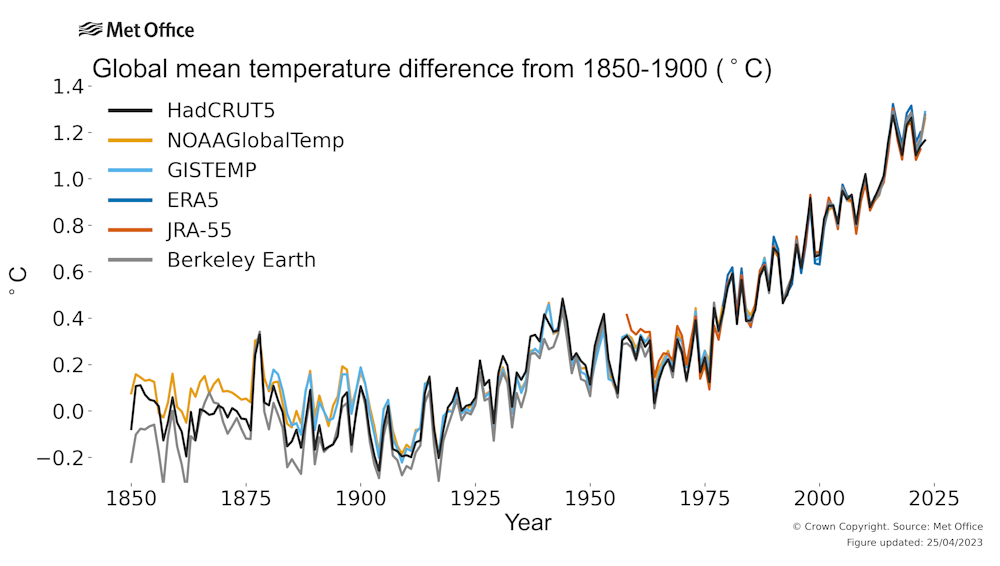
We now have more than a century of global mean temperature data. That means it should be getting harder, not easier, to achieve new records. If there was no trend, we would expect to see fewer records as time passes and the data we’ve collected better captures the full range of natural climate variability.
Instead, because we are warming the world so quickly, more heat records are being set globally and at the local level. The human influence on the climate is pushing temperatures to unprecedented highs with alarming frequency.
Add El Niño, then extreme highs are likely
The current record global average temperature dates back to 2016. A major El Niño event early that year pushed up the global average temperature.
El Niño events are associated with warmer-than-normal seas over much of the central and eastern Pacific. This helps warm the lower atmosphere and raise global temperatures by about 0.1℃. This might not sound like much, but with rapid background warming it’s often enough to break the previous record.
In the seven years since the current global temperature record, humanity has continued to intensify the greenhouse effect. This is making a new record ever more likely.
El Niño conditions are starting to form in the Pacific and are looking increasingly likely to take hold in June and July. This could be the first significant El Niño since 2016. An El Niño would greatly increase the chance of breaking that year’s record high global average temperature, particularly in 2024.
Does this mean the Paris Agreement has already failed?
Almost all nations around the world have signed the Paris Agreement. The aim is to limit global warming to well below 2℃ and preferably below 1.5℃ above pre-industrial levels.
The prediction that an individual year above 1.5℃ global warming is more likely than not is alarming. But it doesn’t mean we have failed to achieve the Paris Agreement’s goals. The agreement aims to limit long-term global warming to a level that avoids major climate impacts, including ecosystem loss. One or two years that pop over the 1.5℃ level don’t constitute failure.
However, the world is getting closer to the 1.5℃ global warming level due to our continuing high greenhouse gas emissions. The forecast of a probable year that exceeds that level should serve as a warning.
Yet another sign of humanity’s damage to the climate
Past inaction on reducing emissions and tackling climate change means we have already warmed the world by more than 1.2℃. Global emissions remain at near-record high levels, so we are continuing to intensify the greenhouse effect and warm the planet.
If we are to limit global warming to well below 2℃, then we must act so future generations don’t suffer a much less hospitable planet.
We have understood the solution for decades. We must reduce emissions to net zero to stop warming Earth. Countries such as Australia, with high historical emissions, have a leading role to play by decarbonising electricity supply and ramping down coal, oil and gas production in line with goals laid out by the United Nations.
Failure to act should not be considered an option. Otherwise we are locking in more record hot years and much worse climate change impacts for decades and centuries to come.
Andrew King, Senior Lecturer in Climate Science, The University of Melbourne
This article is republished from The Conversation under a Creative Commons license. Read the original article.